Reaction Kinetics Potential Energy Diagrams LT 7 2
- Slides: 23
Reaction Kinetics & Potential Energy Diagrams LT 7. 2 1
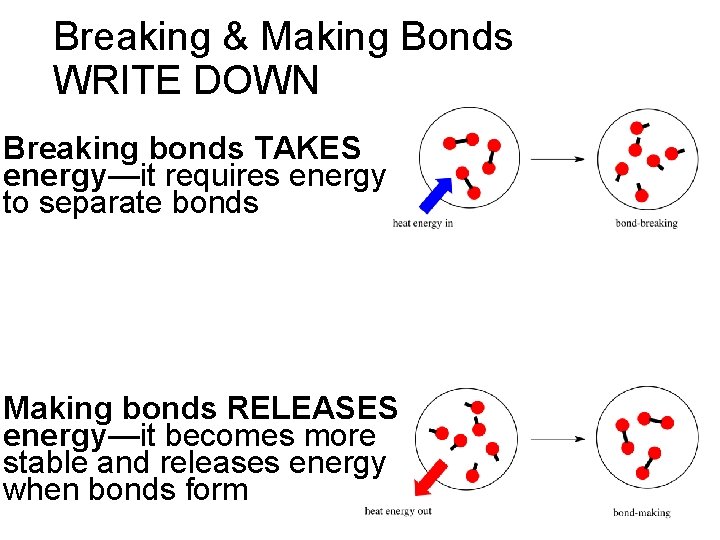
Breaking & Making Bonds WRITE DOWN Breaking bonds TAKES energy—it requires energy to separate bonds Making bonds RELEASES energy—it becomes more stable and releases energy when bonds form
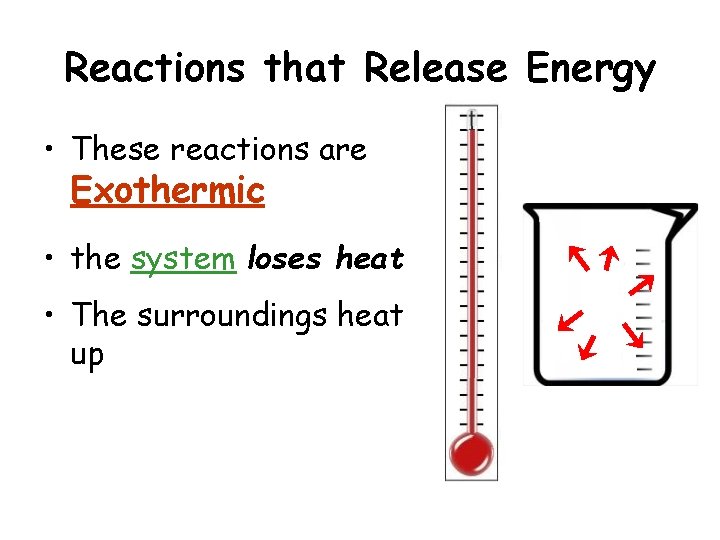
Reactions that Release Energy • These reactions are Exothermic • the system loses heat • The surroundings heat up
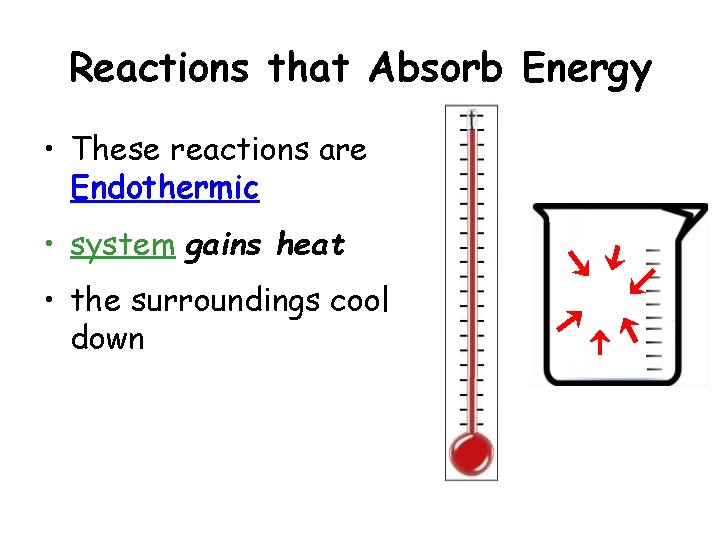
Reactions that Absorb Energy • These reactions are Endothermic • system gains heat • the surroundings cool down
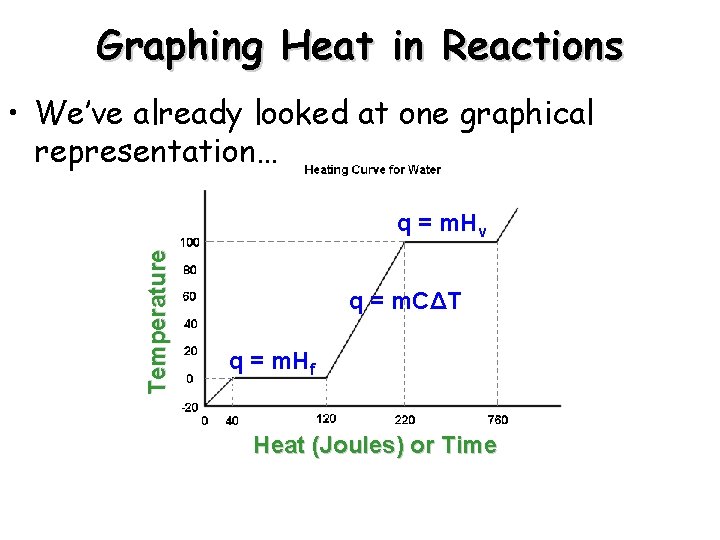
Graphing Heat in Reactions • We’ve already looked at one graphical representation… Temperature q = m. Hv q = m. CΔT q = m. Hf Heat (Joules) or Time
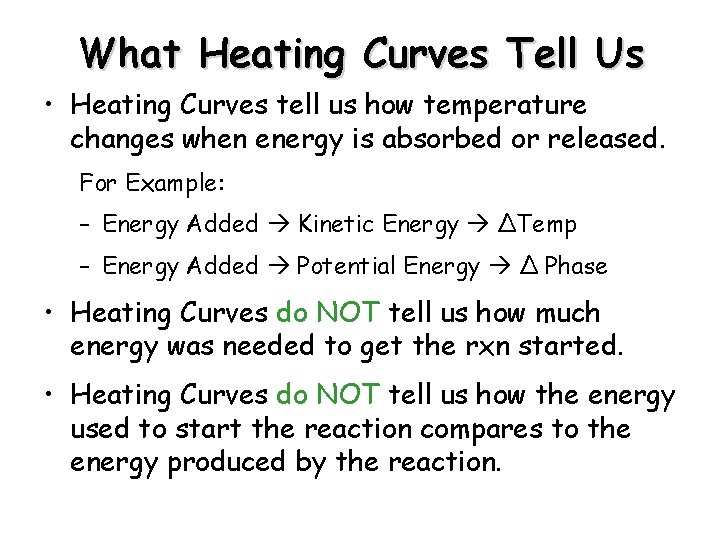
What Heating Curves Tell Us • Heating Curves tell us how temperature changes when energy is absorbed or released. For Example: – Energy Added Kinetic Energy ΔTemp – Energy Added Potential Energy Δ Phase • Heating Curves do NOT tell us how much energy was needed to get the rxn started. • Heating Curves do NOT tell us how the energy used to start the reaction compares to the energy produced by the reaction.
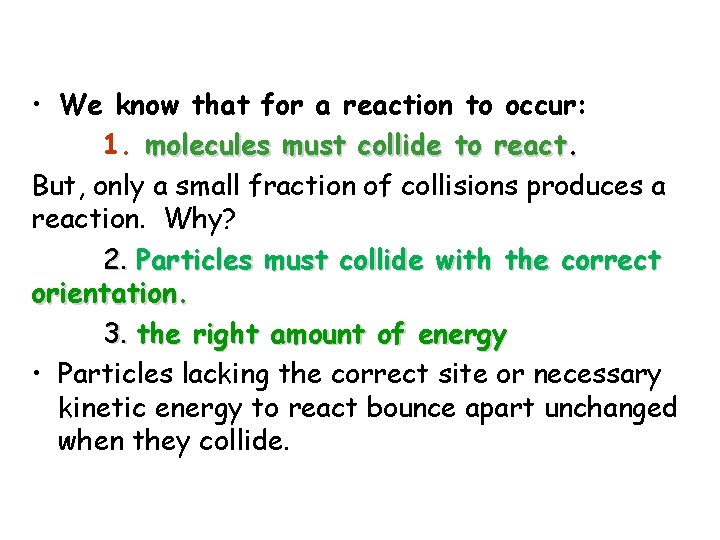
• We know that for a reaction to occur: 1. molecules must collide to react. But, only a small fraction of collisions produces a reaction. Why? 2. Particles must collide with the correct orientation. 3. the right amount of energy • Particles lacking the correct site or necessary kinetic energy to react bounce apart unchanged when they collide.
How Reactions Happen • Activation energy is the amount of energy needed to cause a reaction. • Collisions must equal or exceed the activation energy
Why are we learning this? • Energy diagrams show a reaction works. • Energy diagrams display – The energy of reactants and products – The energy needed for a reaction to occur – The energy absorbed or released due to reaction
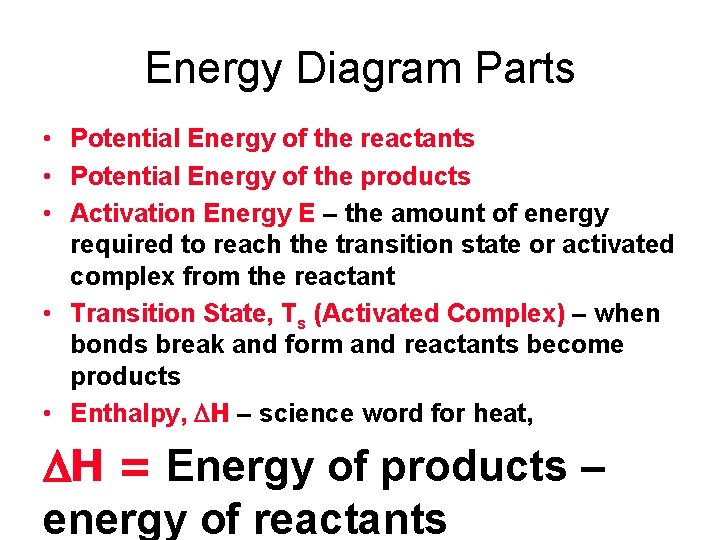
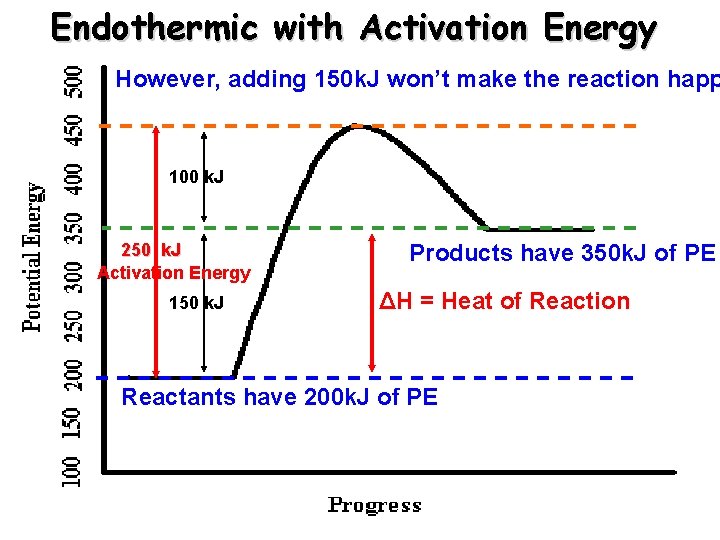
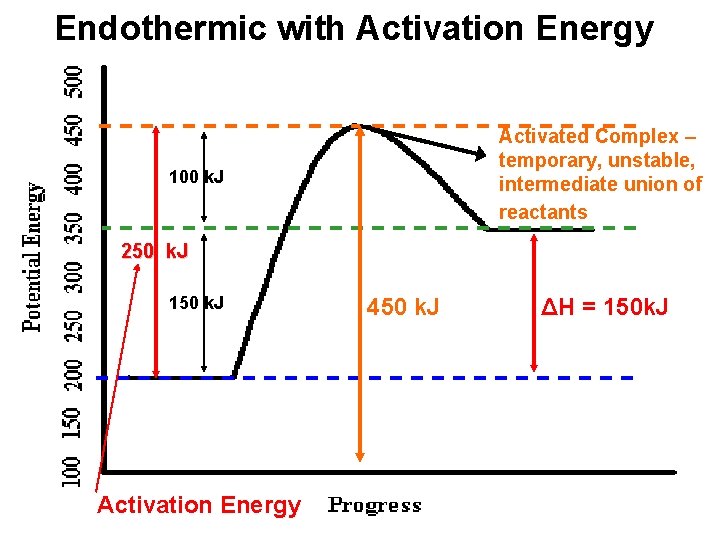
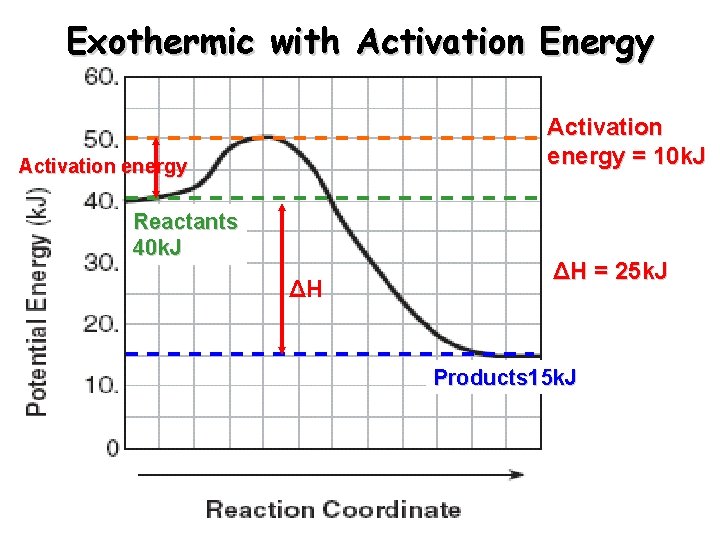
Energy Diagram Parts • Potential Energy of the reactants • Potential Energy of the products • Activation Energy E – the amount of energy required to reach the transition state or activated complex from the reactant • Transition State, Ts (Activated Complex) – when bonds break and form and reactants become products • Enthalpy, DH – science word for heat, DH = Energy of products – energy of reactants
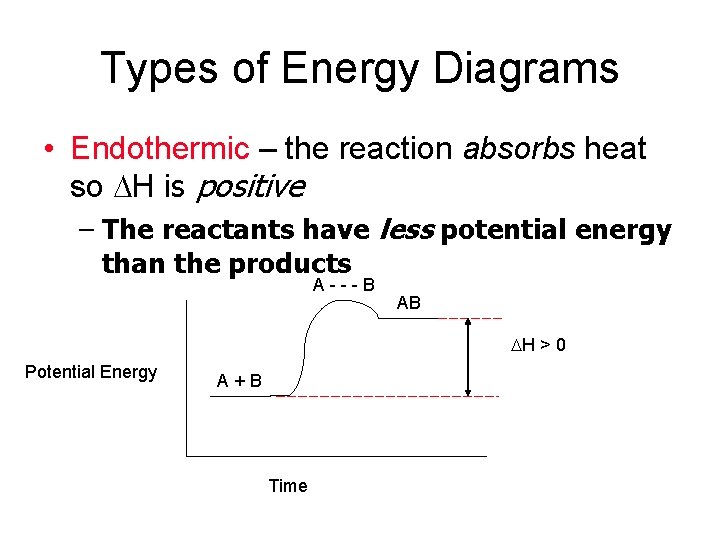
Types of Energy Diagrams • Endothermic – the reaction absorbs heat so DH is positive – The reactants have less potential energy than the products A---B AB DH > 0 Potential Energy A+B Time
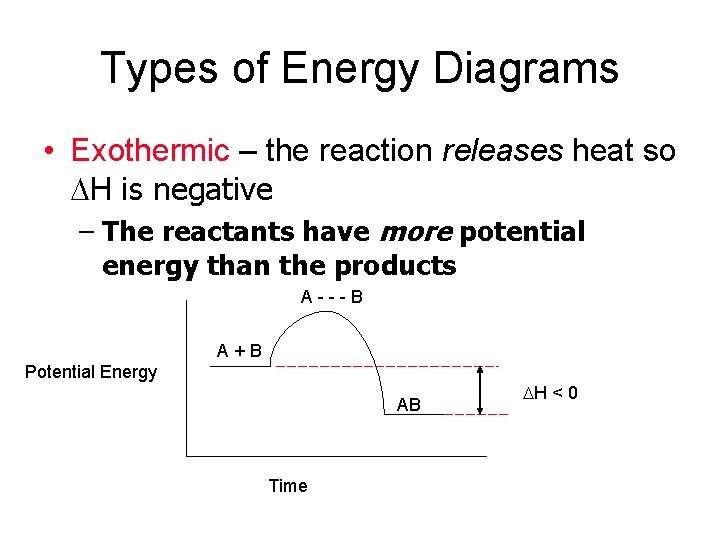
Types of Energy Diagrams • Exothermic – the reaction releases heat so DH is negative – The reactants have more potential energy than the products A---B A+B Potential Energy AB Time DH < 0
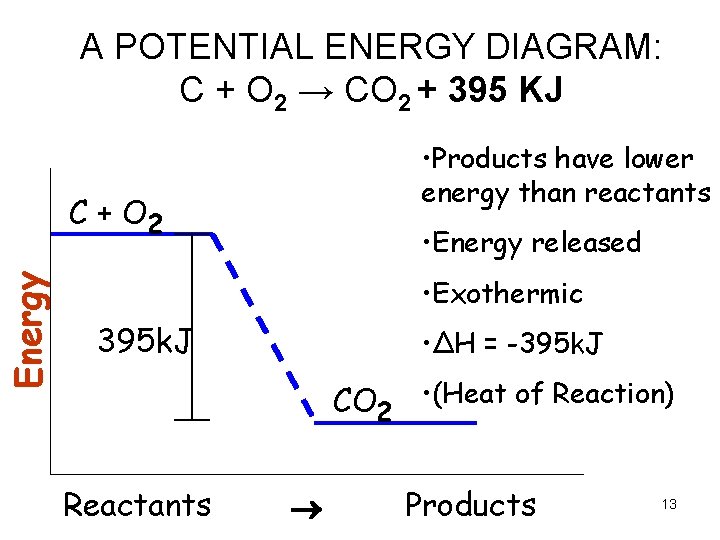
A POTENTIAL ENERGY DIAGRAM: C + O 2 → CO 2 + 395 KJ • Products have lower energy than reactants Energy C + O 2 • Energy released • Exothermic 395 k. J • ΔH = -395 k. J CO 2 • (Heat of Reaction) Reactants ® Products 13
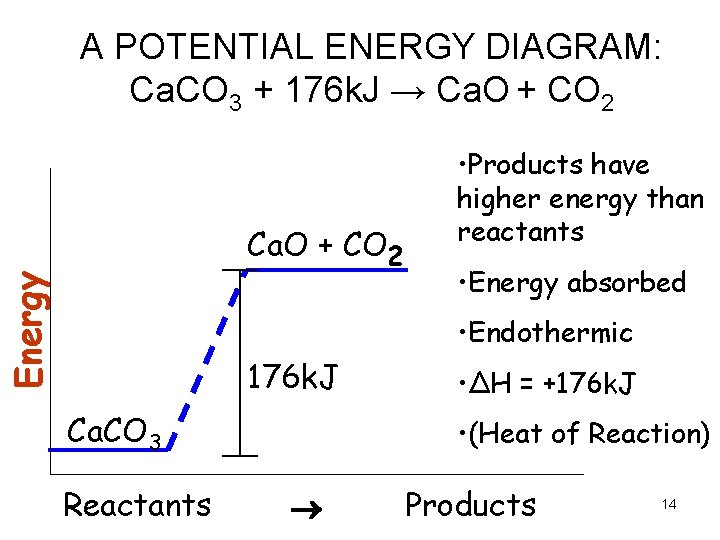
A POTENTIAL ENERGY DIAGRAM: Ca. CO 3 + 176 k. J → Ca. O + CO 2 Energy Ca. O + CO 2 • Products have higher energy than reactants • Energy absorbed • Endothermic 176 k. J Ca. CO 3 Reactants • ΔH = +176 k. J • (Heat of Reaction) ® Products 14
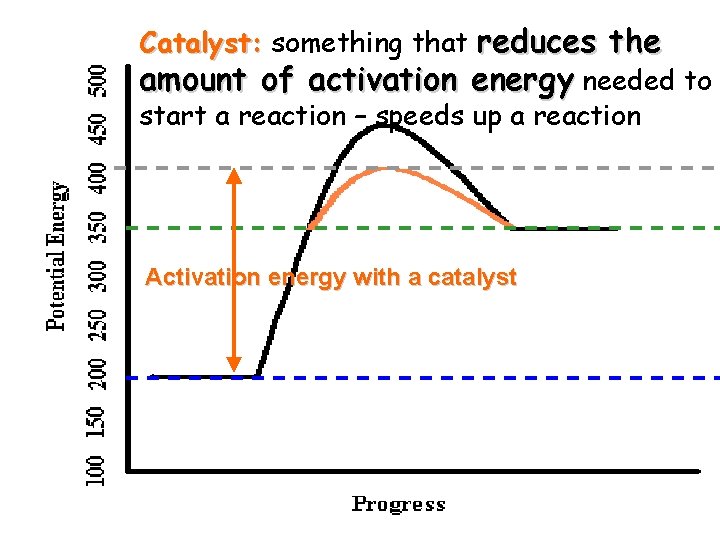
Potential Energy Diagrams • One thing that is not represented in these simple examples… Activation energy Minimum amount of energy required to start a reaction
Endothermic with Activation Energy However, adding 150 k. J won’t make the reaction happ 100 k. J 250 k. J Activation Energy 150 k. J Products have 350 k. J of PE ΔH = Heat of Reaction Reactants have 200 k. J of PE
Endothermic with Activation Energy Activated Complex – temporary, unstable, intermediate union of reactants 100 k. J 250 k. J 150 k. J Activation Energy 450 k. J ΔH = 150 k. J
Exothermic with Activation Energy Activation energy = 10 k. J Activation energy Reactants 40 k. J ΔH ΔH = 25 k. J Products 15 k. J
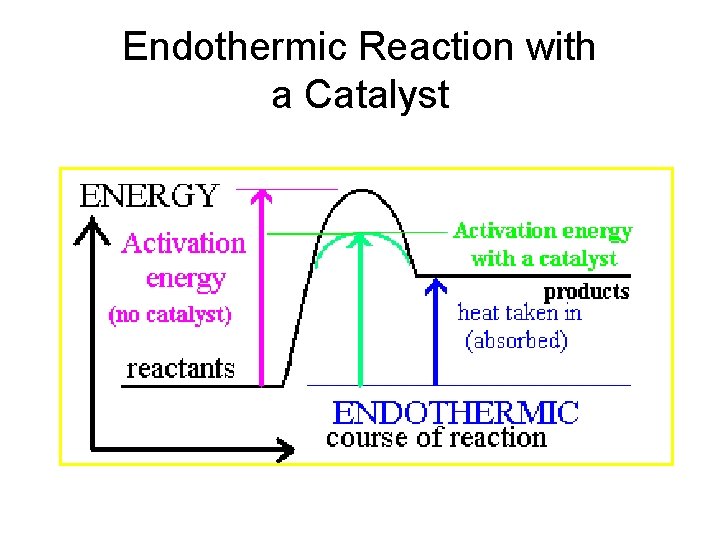
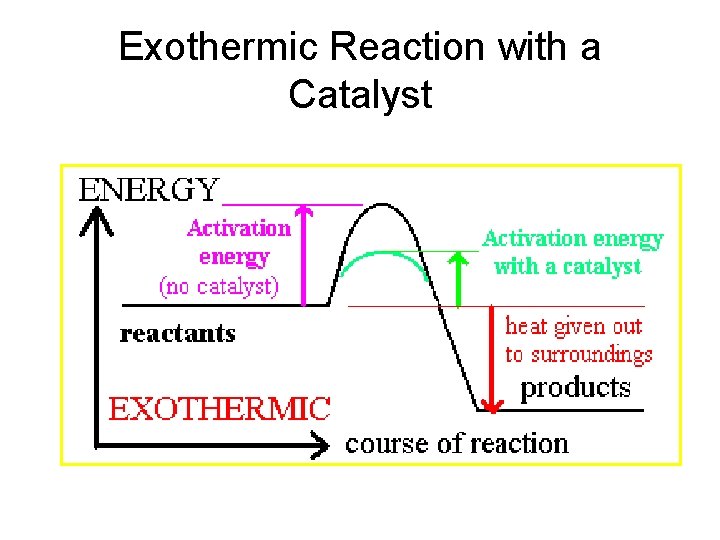
Catalyst: something that reduces the amount of activation energy needed to start a reaction – speeds up a reaction Activation energy with a catalyst
Endothermic Reaction with a Catalyst
Exothermic Reaction with a Catalyst
Five Factors Affecting Reaction Rate 1) Nature of the Reactants: what the reactants are (solids, liquids or gases) 2) Temperature: Increasing temperature always increases the rate of a reaction. 3) Surface Area: Increasing surface area increases the rate of a reaction
Five Factors Affecting Reaction Rate 4) Concentration: Increasing concentration USUALLY increases the rate of a reaction 5) Presence of Catalysts Catalyst: A substance that speeds up a reaction, without being consumed itself in the reaction