QQ 1 How can the mnemonic Ape Man

- Slides: 26
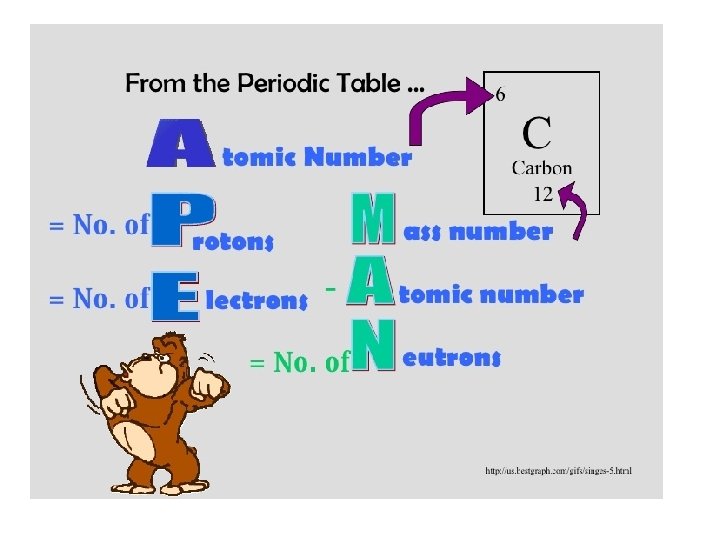
QQ: 1. How can the mnemonic “Ape Man” help you? 2. A neutral atom has 40 electrons. a) How many protons does it have? b) What is its atomic number? c) What element is it? d) What is its atomic mass? e) How many neutrons does it have? 3. How can you tell the atomic number from the mass number
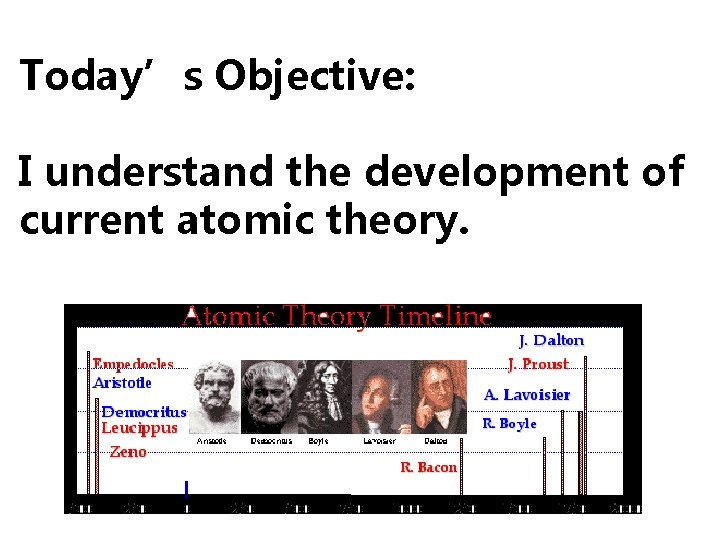
Today’s Objective: I understand the development of current atomic theory.
Is it possible to figure out what this is without unwrapping it?
Follow instructions carefully. Do not remove any papers or look underneath Figure out the phrase. Write down a guess. Remove the top sheet. Write down your new prediction.
How did the information on the sheets change as you moved through the stack?
How did the number of letters provided affect your ability to predict the phrase?
Describe another situation in which having more data makes it easier to make a prediction.
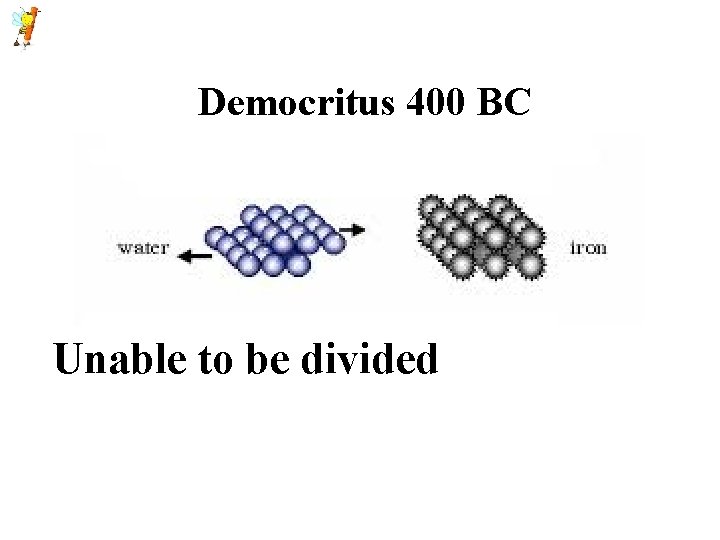
Democritus 400 BC Unable to be divided
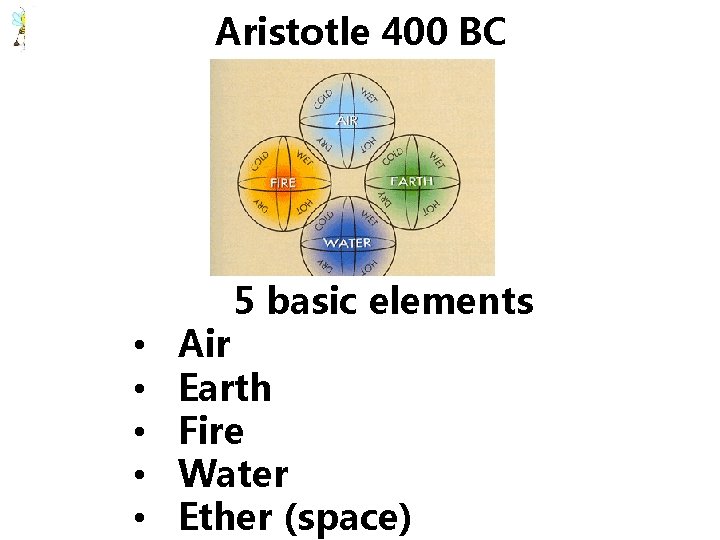
Aristotle 400 BC 5 basic elements • • • Air Earth Fire Water Ether (space)
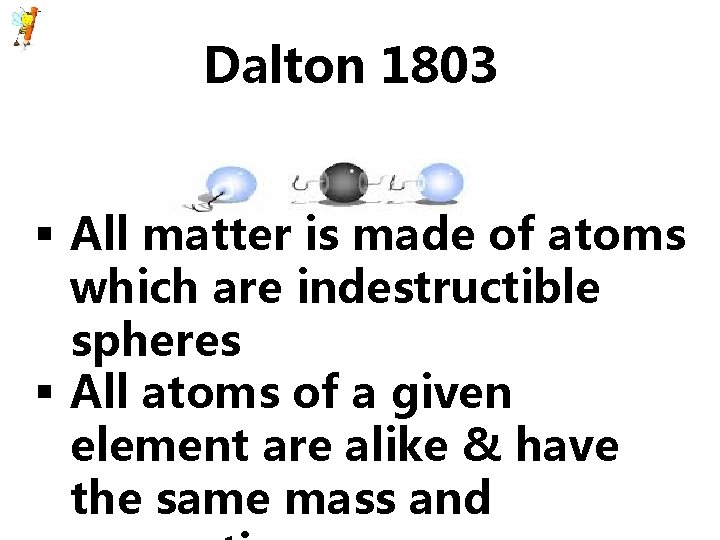
Dalton 1803 Dalton 1776 § All matter is made of atoms which are indestructible spheres § All atoms of a given element are alike & have the same mass and
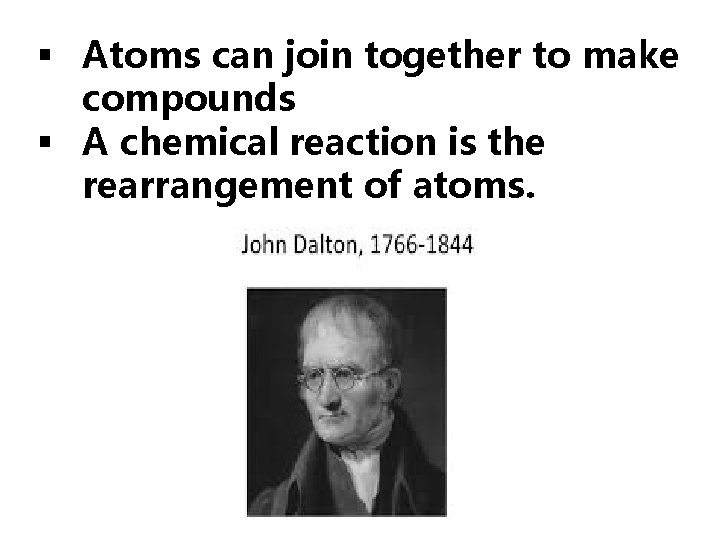
§ Atoms can join together to make compounds § A chemical reaction is the rearrangement of atoms.
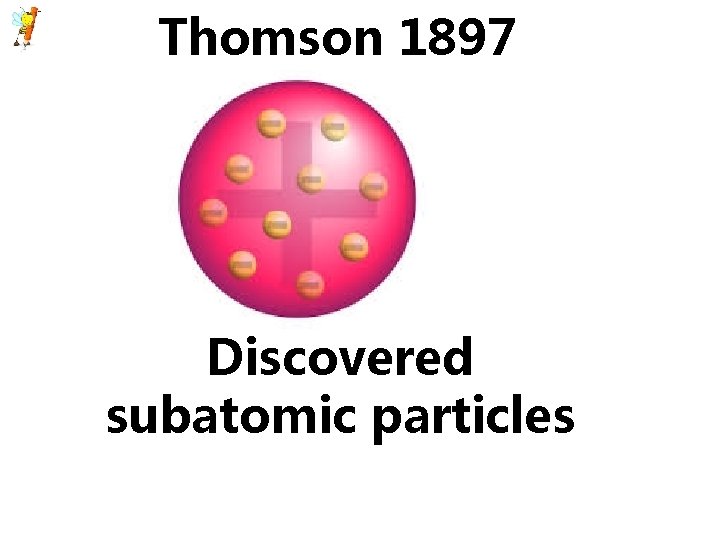
Thomson 1897 Discovered subatomic particles
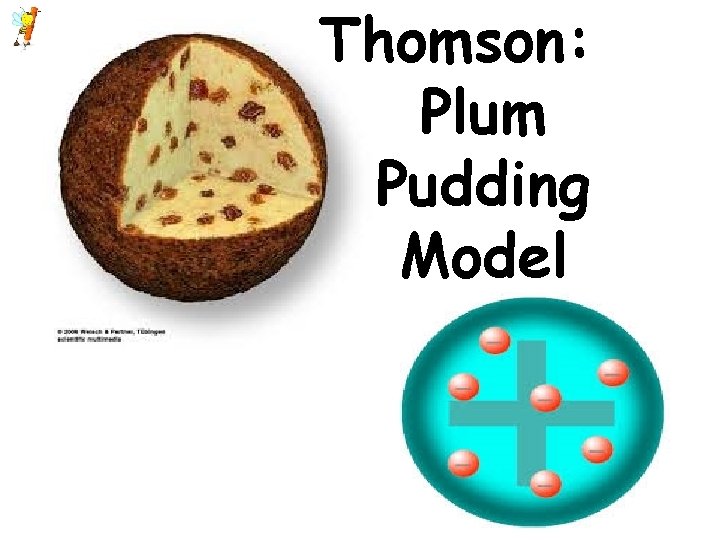
Thomson: Plum Pudding Model
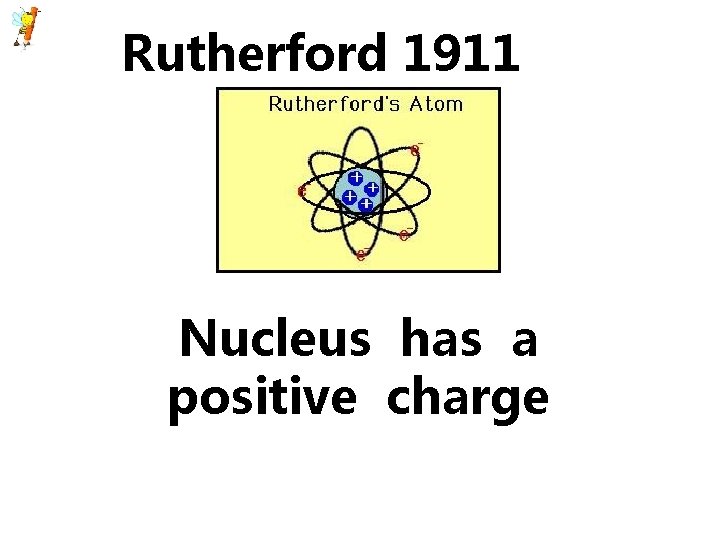
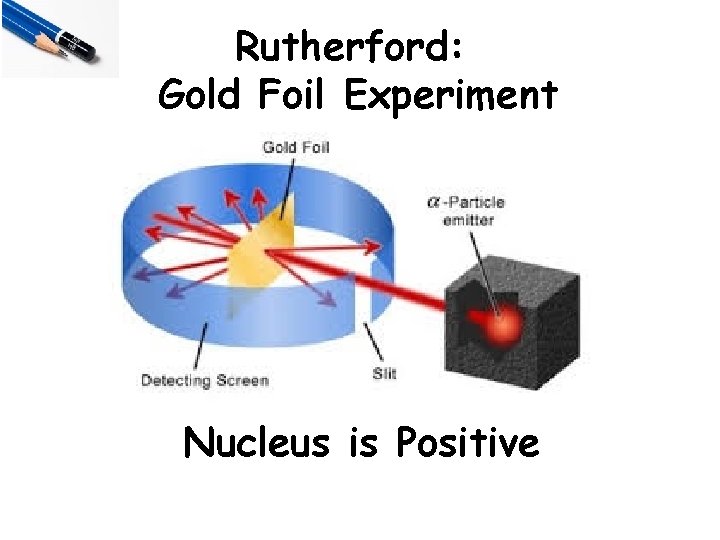
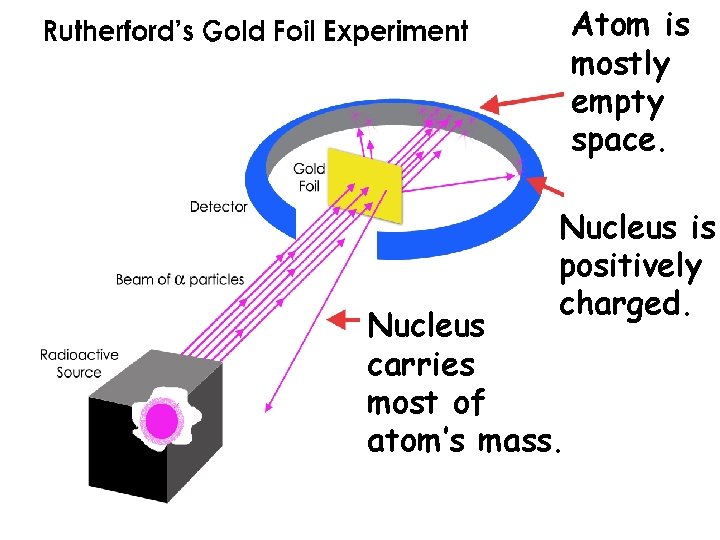
Rutherford 1911 Nucleus has a positive charge
Rutherford: Gold Foil Experiment Nucleus is Positive
Most is Atom particles mostly traveled empty through space. the foil. Some is Nucleus particles positively were charged. Nucleus Occasionally reflected carries bounced back. most back. of atom’s mass.
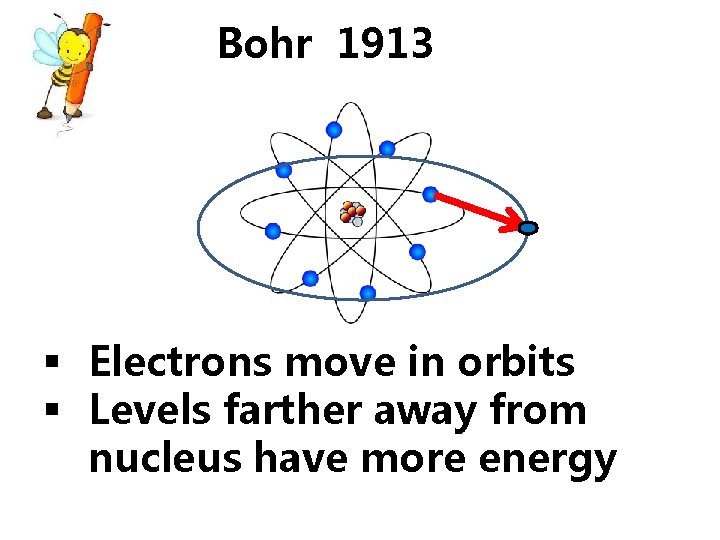
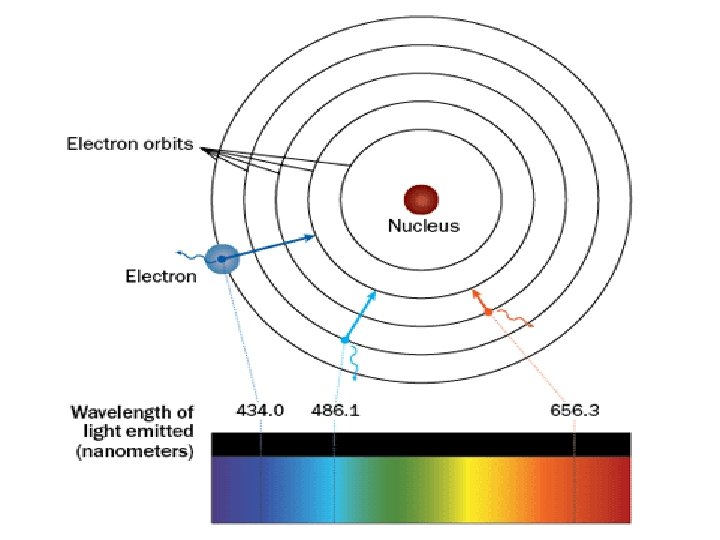
Bohr 1913 § Electrons move in orbits § Levels farther away from nucleus have more energy
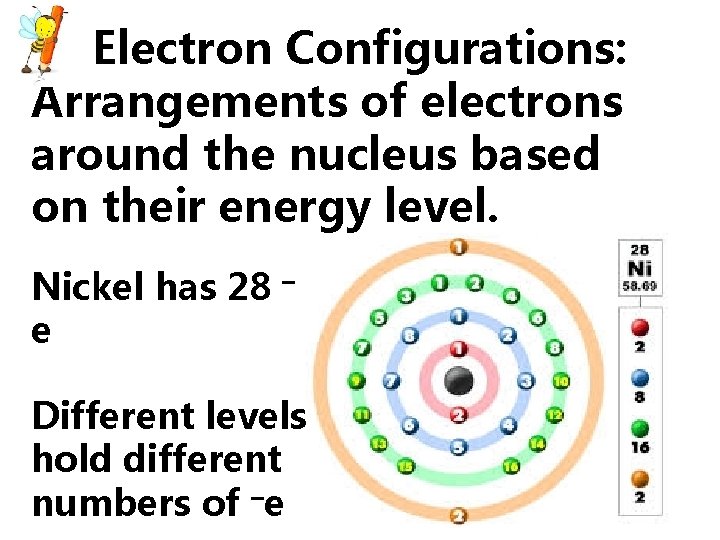
Electron Configurations: Arrangements of electrons around the nucleus based on their energy level. Nickel has 28 e – Different levels hold different numbers of –e
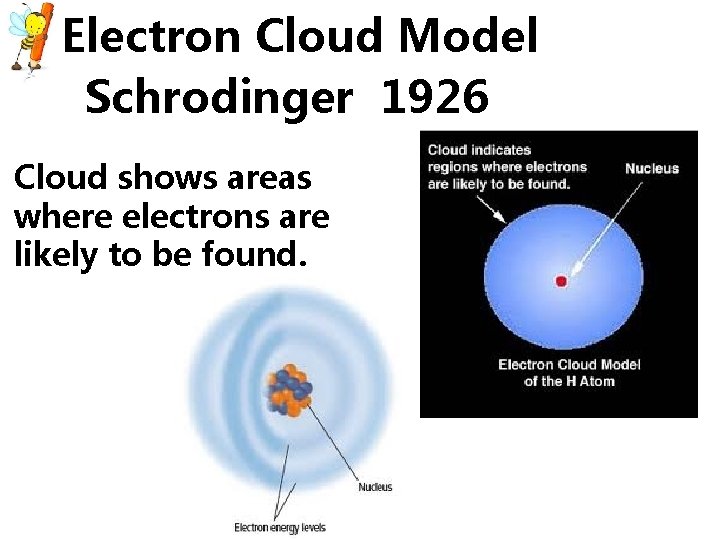
Electron Cloud Model Schrodinger 1926 Cloud shows areas where electrons are likely to be found.
Schrodinger's Cat
A Weird and Wondrous Place
Assignment: Make an article that would be printed in a newspaper of the time announcing the latest development in atomic theory. v Year v Explain theory v Scientist(s) involved in development v Summary of previous theories v Picture(s)