Providence Clinical Academy PERINATAL CURRICULUM LAST REVIEWED MAY

- Slides: 41
Providence Clinical Academy PERINATAL CURRICULUM LAST REVIEWED: MAY 2016
Newborn Assessment Atlas *ALL PICTURES, UNLESS OTHERWISE NOTED, FROM STANFORD UNIVERSITY PHOTO GALLERY (NEWBORNS. STANFORD. EDU/PHOTOGALLERY/)
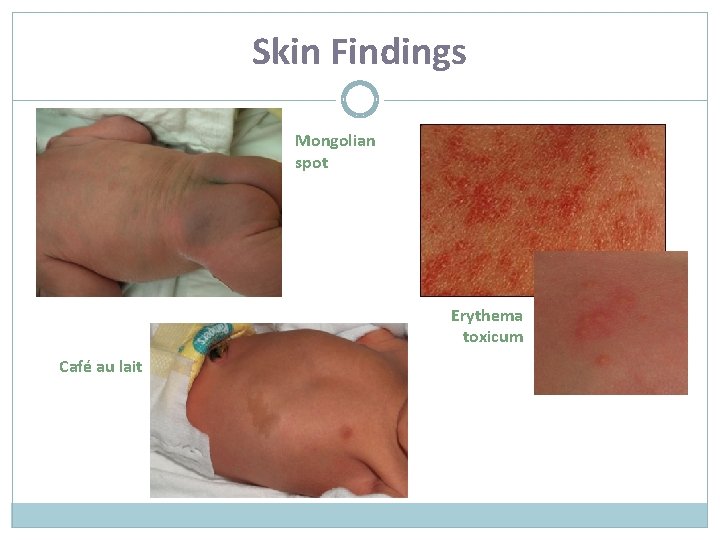
Skin Findings Mongolian spot Erythema toxicum Café au lait
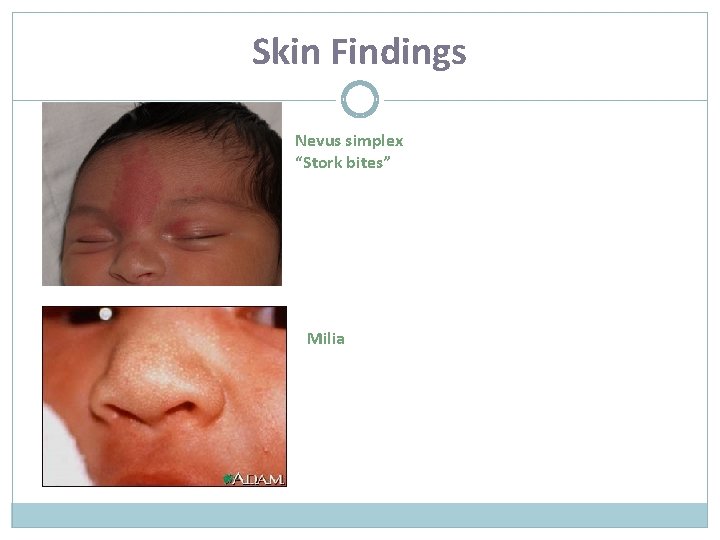
Skin Findings Nevus simplex “Stork bites” Milia
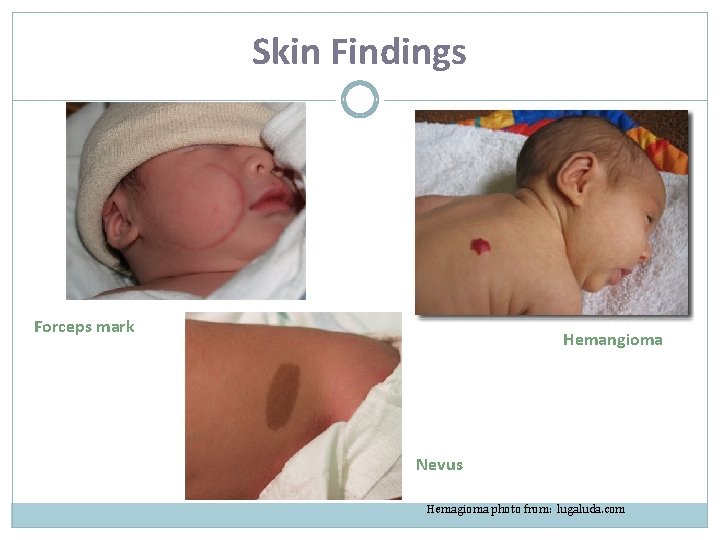
Skin Findings Forceps mark Hemangioma Nevus Hemagioma photo from: lugaluda. com
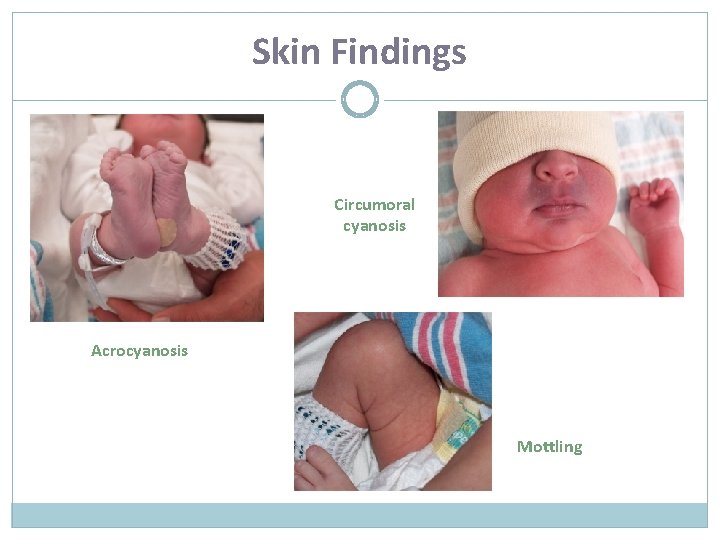
Skin Findings Circumoral cyanosis Acrocyanosis Mottling
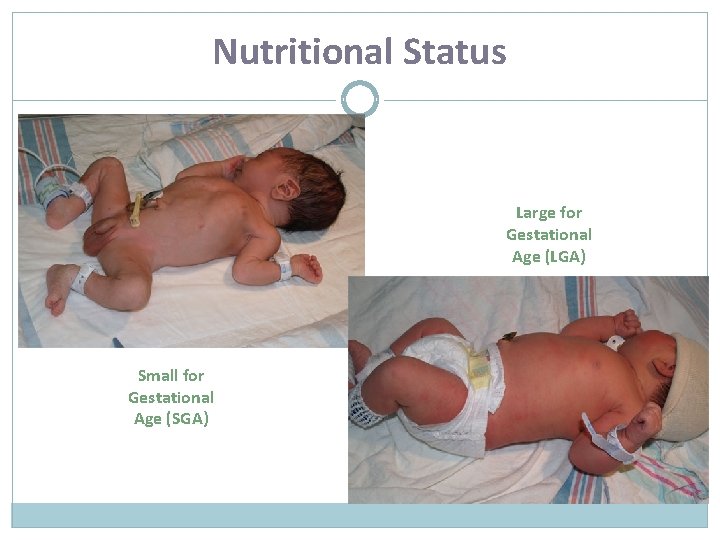
Nutritional Status Large for Gestational Age (LGA) Small for Gestational Age (SGA)
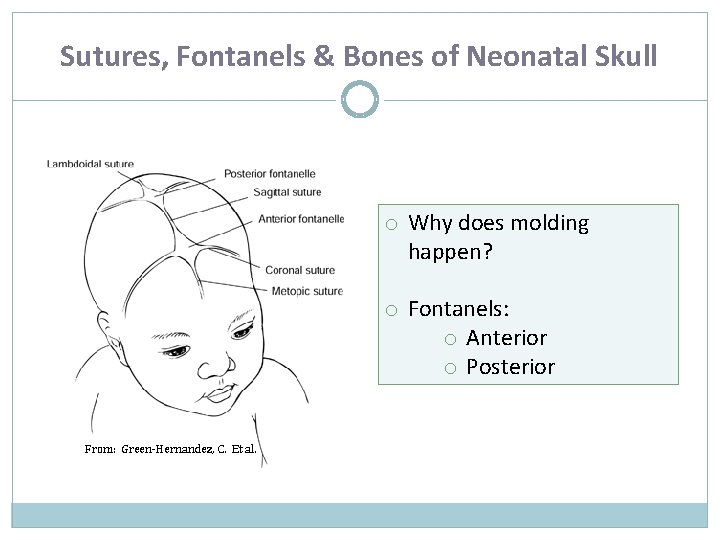
Sutures, Fontanels & Bones of Neonatal Skull o Why does molding happen? o Fontanels: o Anterior o Posterior From: Green-Hernandez, C. Et al.
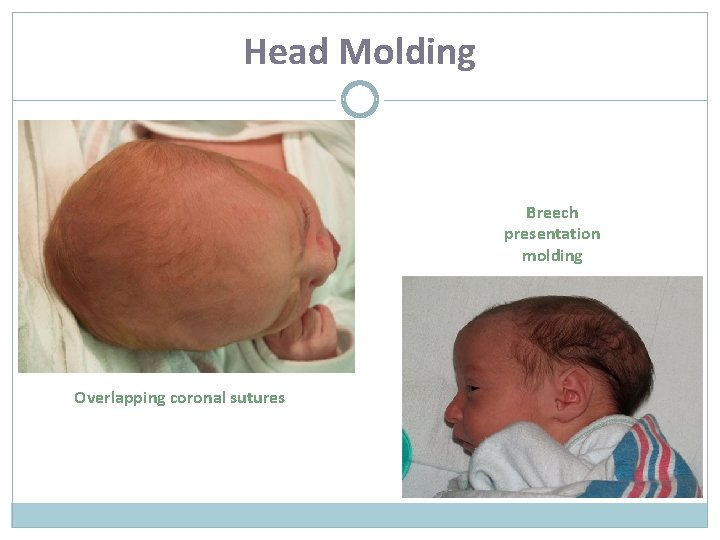
Head Molding Breech presentation molding Overlapping coronal sutures
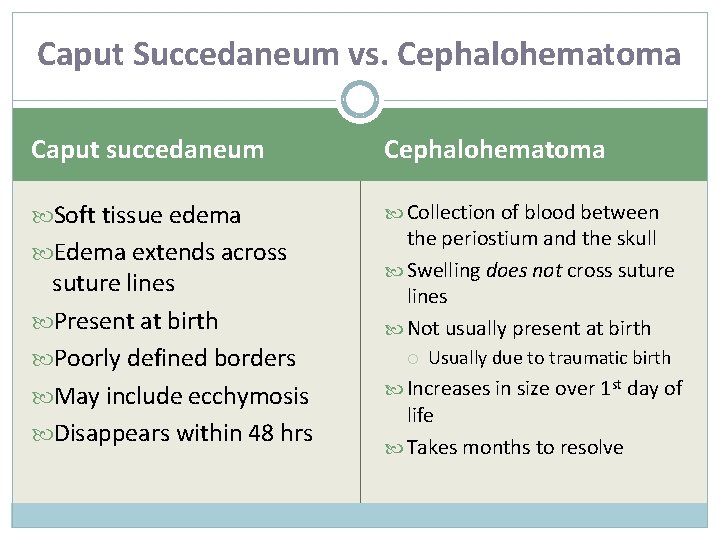
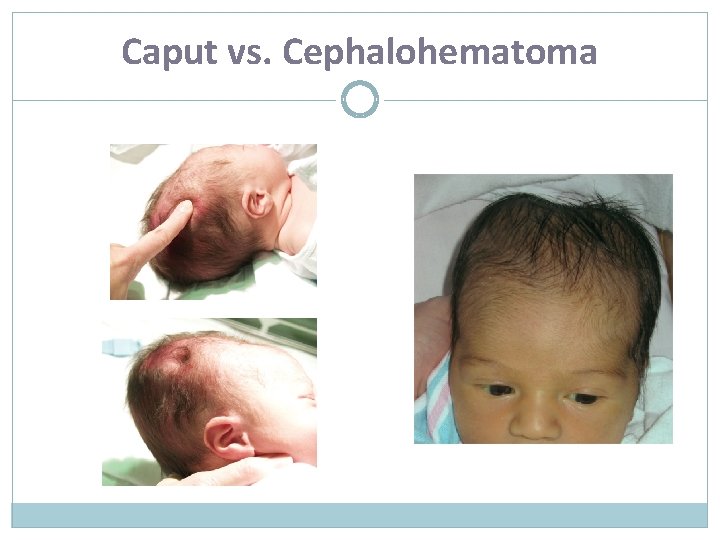
Caput Succedaneum vs. Cephalohematoma Caput succedaneum Cephalohematoma Soft tissue edema Collection of blood between Edema extends across suture lines Present at birth Poorly defined borders May include ecchymosis Disappears within 48 hrs the periostium and the skull Swelling does not cross suture lines Not usually present at birth Usually due to traumatic birth Increases in size over 1 st day of life Takes months to resolve
Caput vs. Cephalohematoma
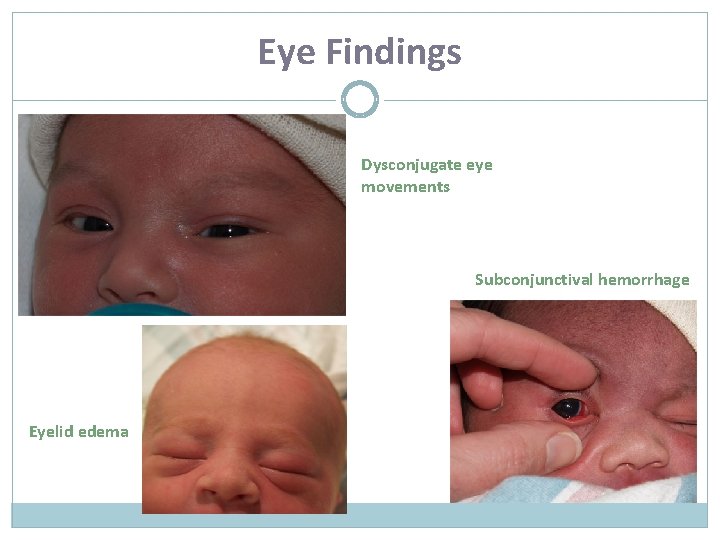
Eye Findings Dysconjugate eye movements Subconjunctival hemorrhage Eyelid edema
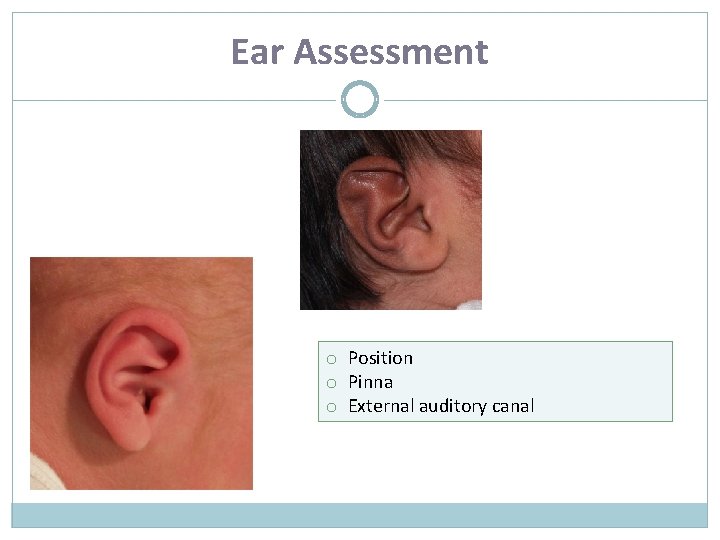
Ear Assessment o Position o Pinna o External auditory canal
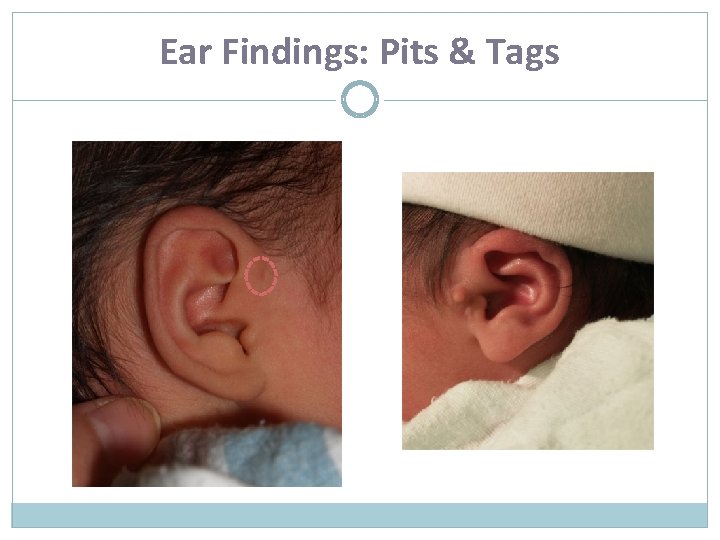
Ear Findings: Pits & Tags
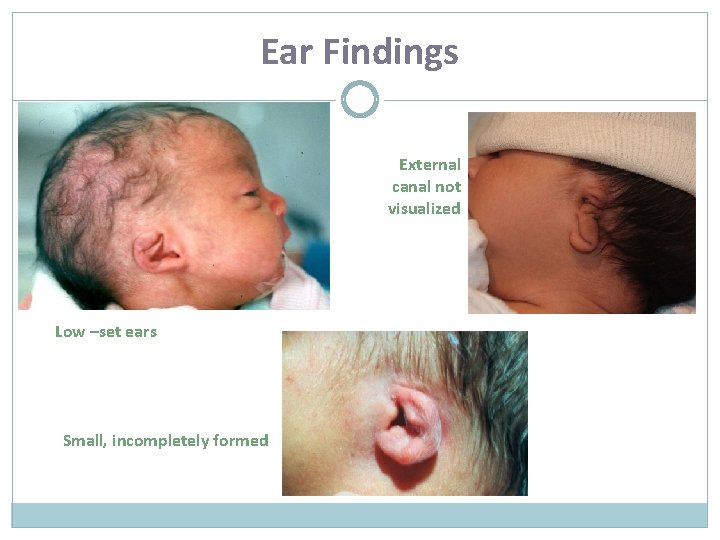
Ear Findings External canal not visualized Low –set ears Small, incompletely formed
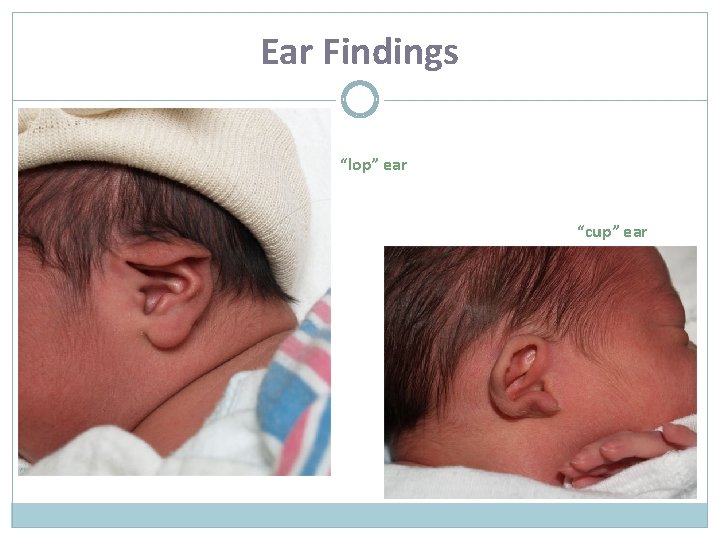
Ear Findings “lop” ear “cup” ear
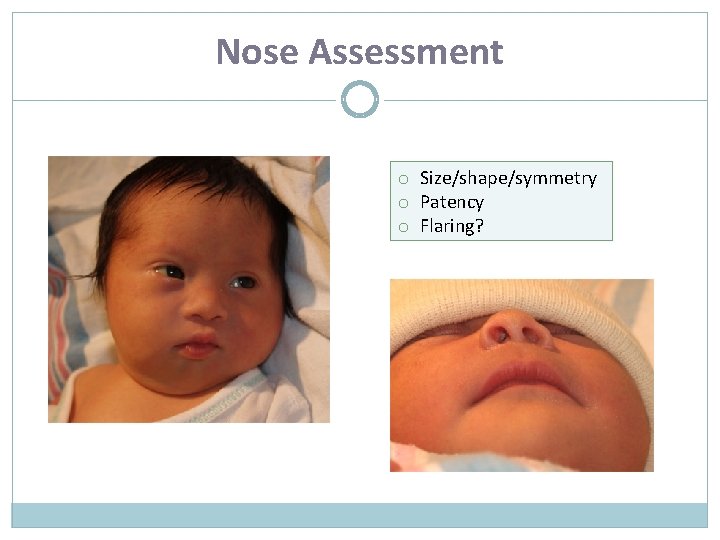
Nose Assessment o Size/shape/symmetry o Patency o Flaring?
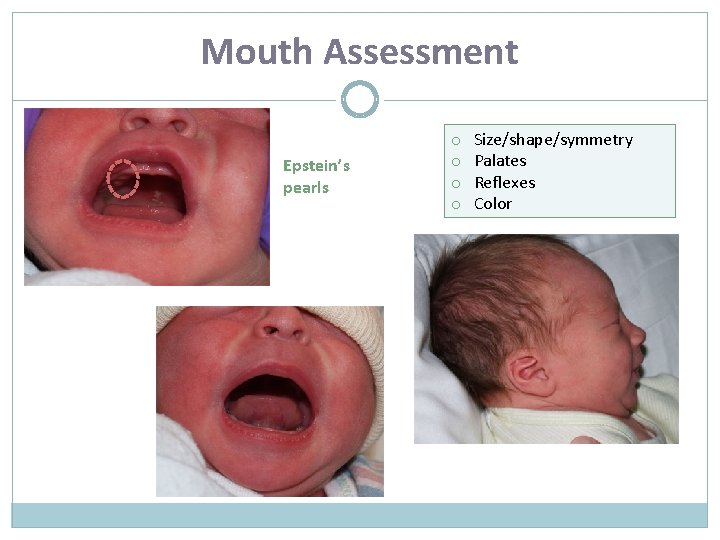
Mouth Assessment Epstein’s pearls o o Size/shape/symmetry Palates Reflexes Color
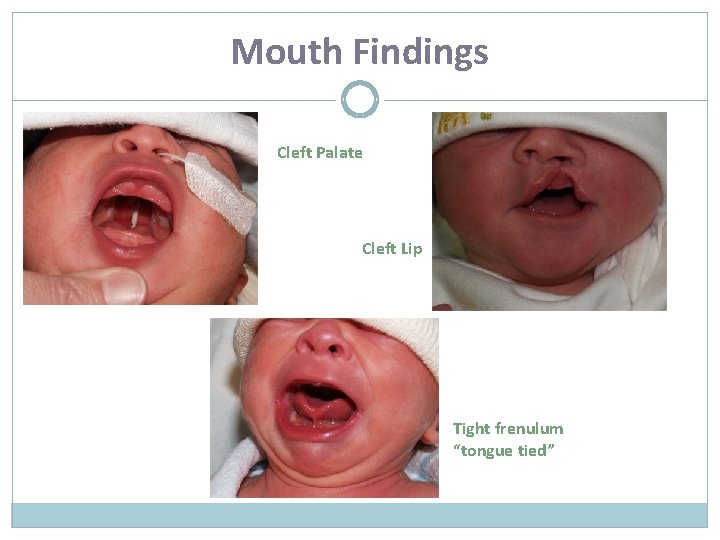
Mouth Findings Cleft Palate Cleft Lip Tight frenulum “tongue tied”
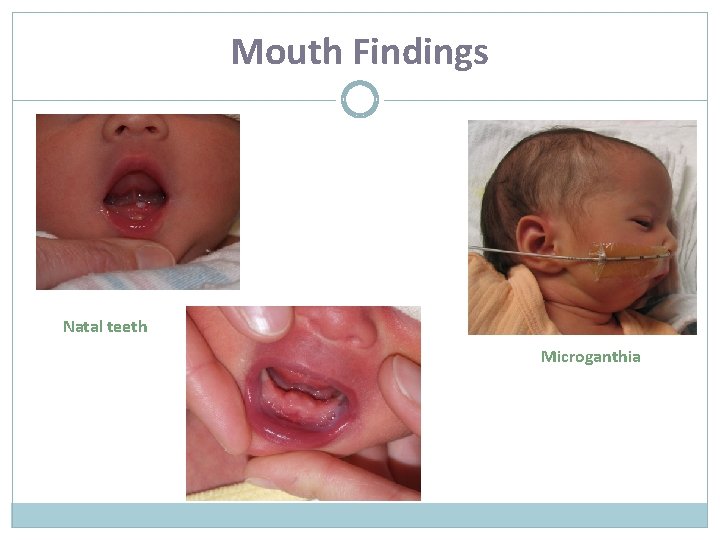
Mouth Findings Natal teeth Microganthia
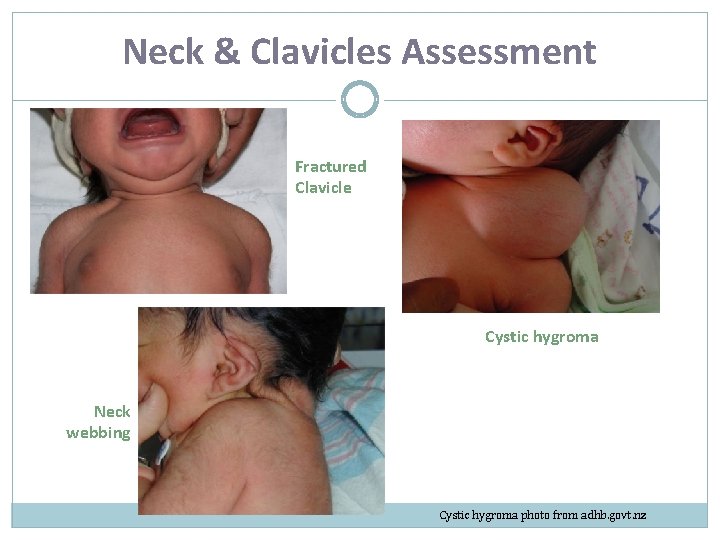
Neck & Clavicles Assessment Fractured Clavicle Cystic hygroma Neck webbing Cystic hygroma photo from adhb. govt. nz
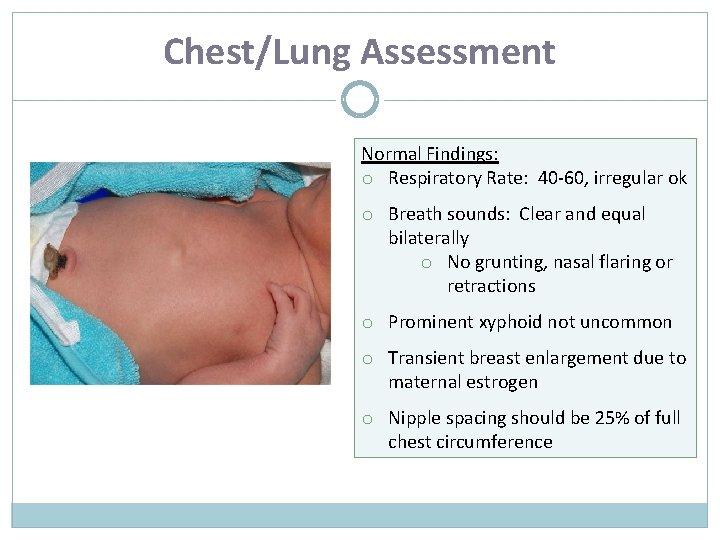
Chest/Lung Assessment Normal Findings: o Respiratory Rate: 40 -60, irregular ok o Breath sounds: Clear and equal bilaterally o No grunting, nasal flaring or retractions o Prominent xyphoid not uncommon o Transient breast enlargement due to maternal estrogen o Nipple spacing should be 25% of full chest circumference
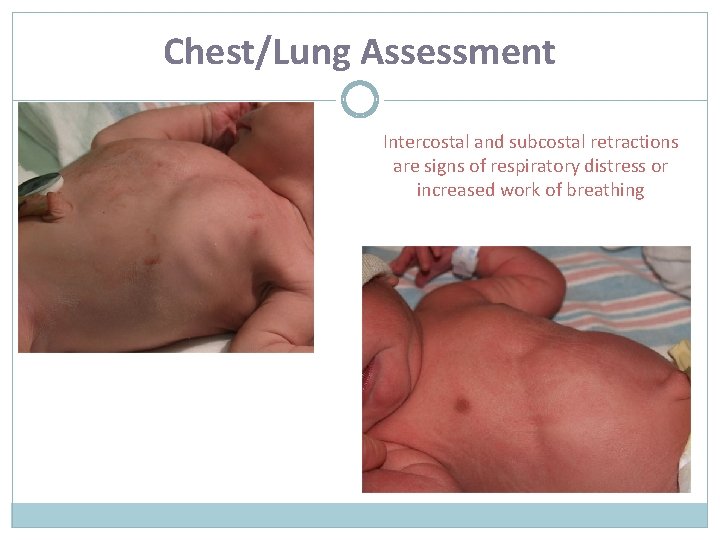
Chest/Lung Assessment Intercostal and subcostal retractions are signs of respiratory distress or increased work of breathing
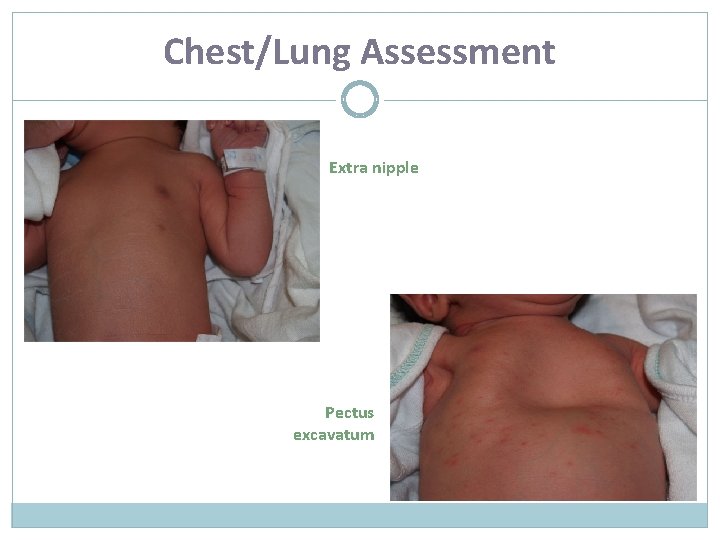
Chest/Lung Assessment Extra nipple Pectus excavatum
Cardiovascular Assessment Observe Color Visible precordial activity is okay during 1 st 6 hours of life Auscultate Heart rate & rhythm PMI location Murmurs http: //depts. washington. edu/physdx/heart/demo. html
Cardiovascular Assessment Palpate Capillary Refill Time (CRT) Pulses BP (if ordered): Cuff size should be 40 -50% of arm circumference (or thigh circumference for lower extremity BP) Systolic BP in thigh should be 5 -10 mm Hg higher than in arm.
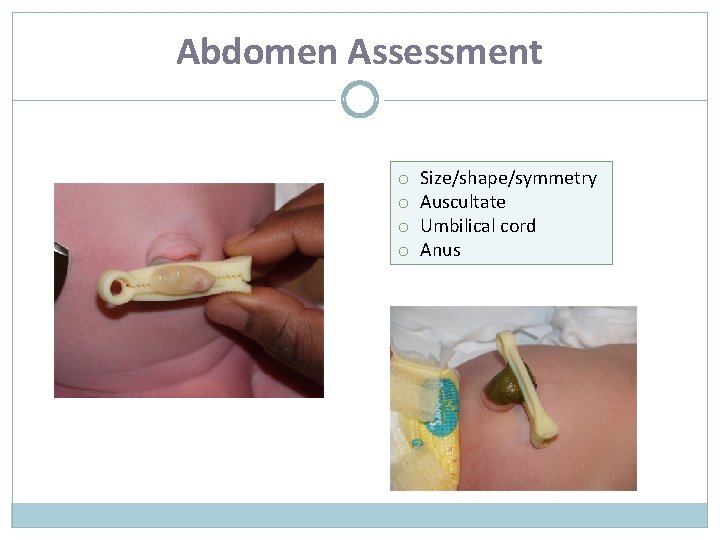
Abdomen Assessment o o Size/shape/symmetry Auscultate Umbilical cord Anus
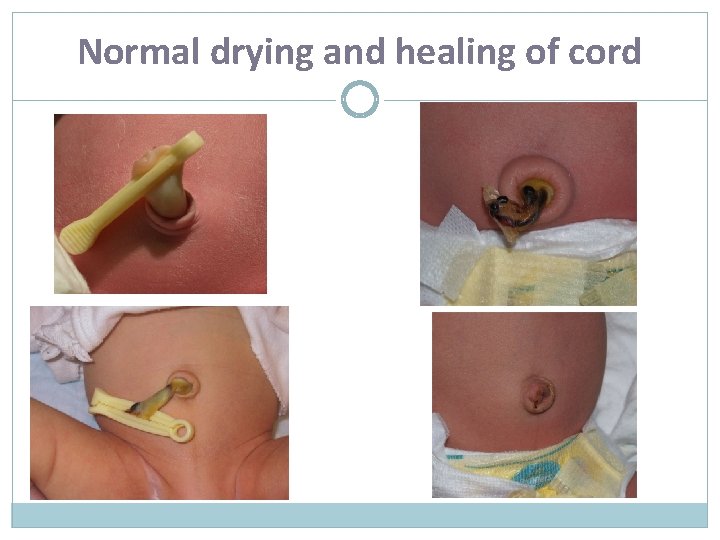
Normal drying and healing of cord
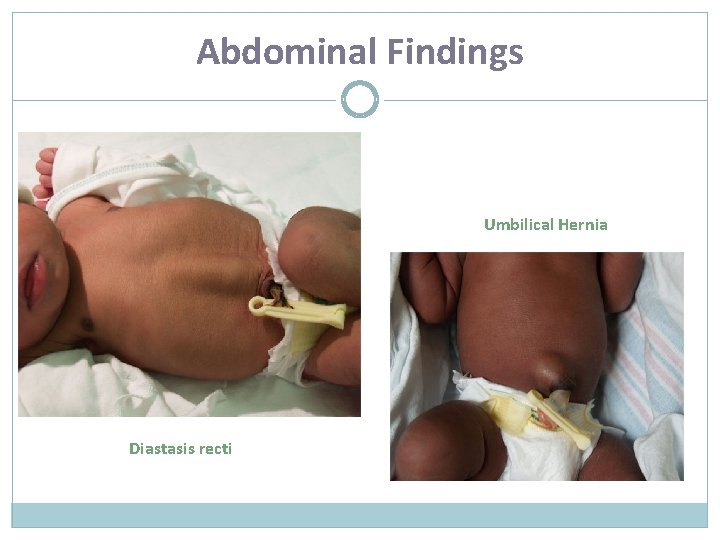
Abdominal Findings Umbilical Hernia Diastasis recti
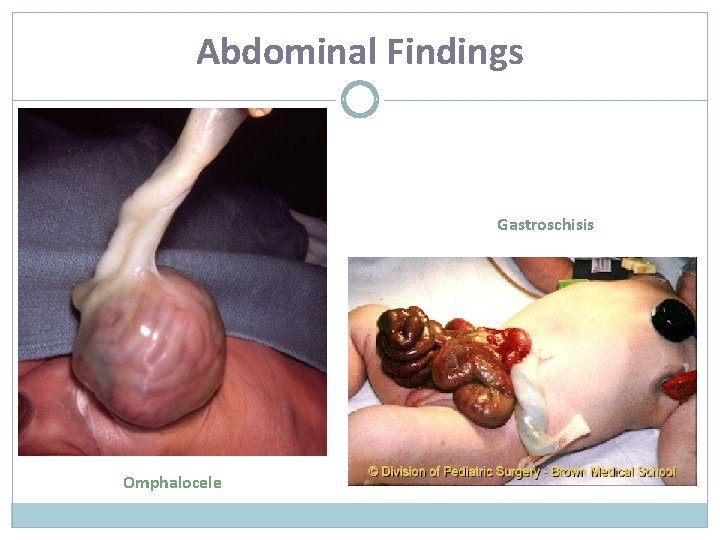
Abdominal Findings Gastroschisis Omphalocele
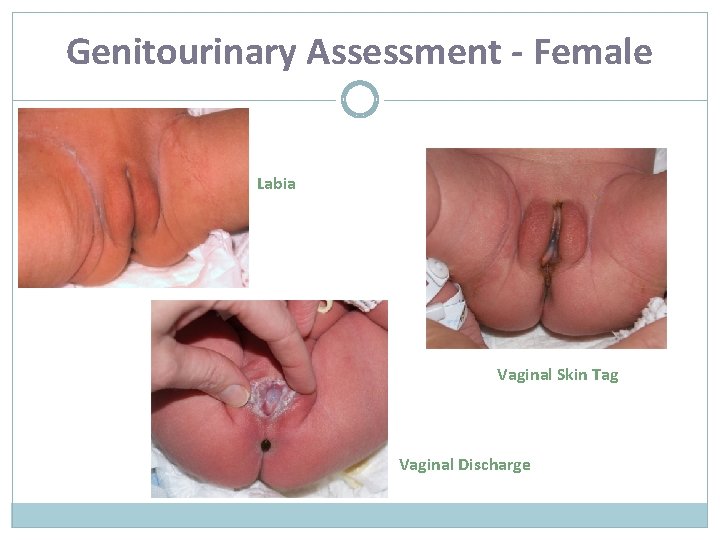
Genitourinary Assessment - Female Labia Vaginal Skin Tag Vaginal Discharge
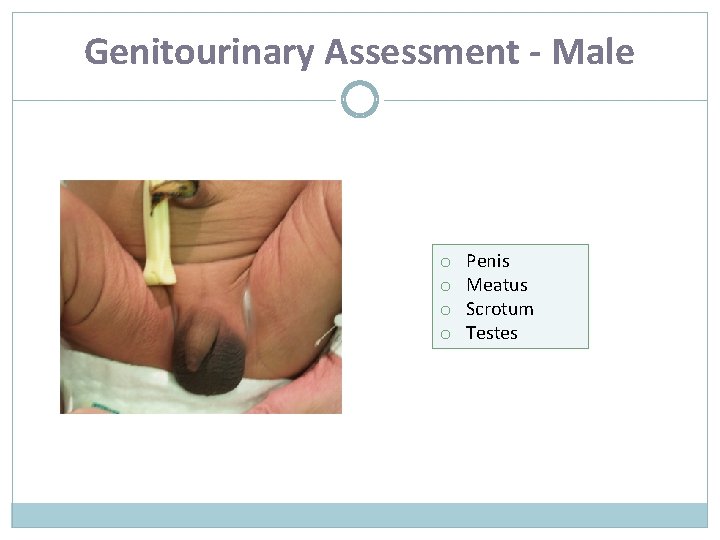
Genitourinary Assessment - Male o o Penis Meatus Scrotum Testes
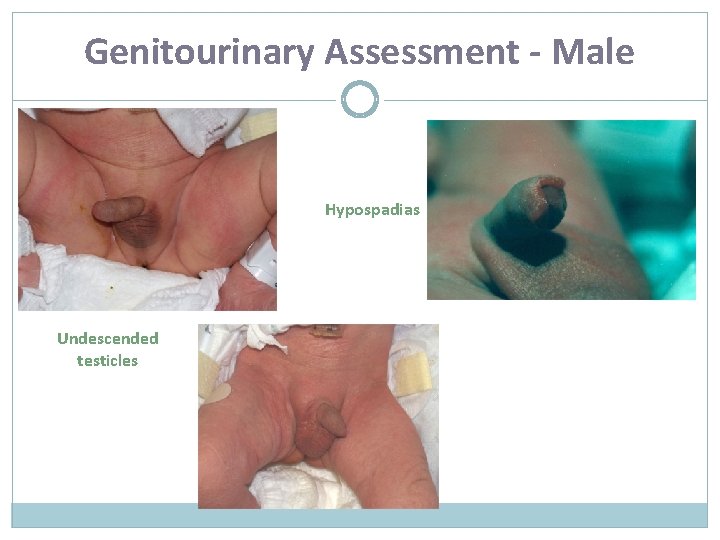
Genitourinary Assessment - Male Hypospadias Undescended testicles
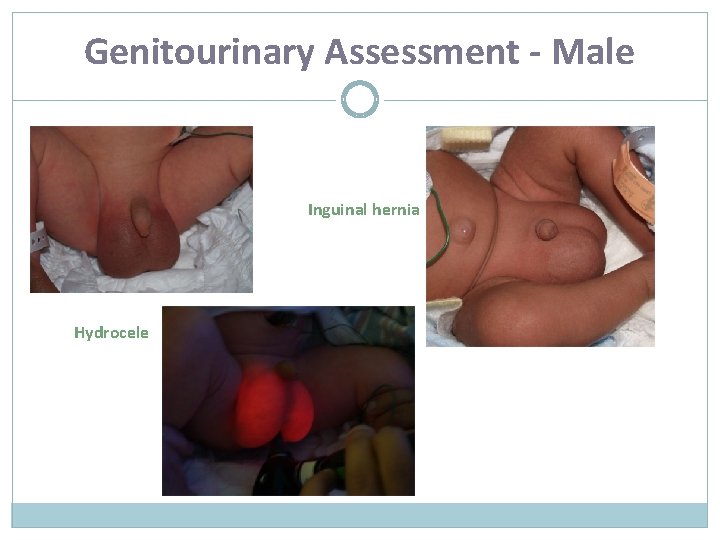
Genitourinary Assessment - Male Inguinal hernia Hydrocele
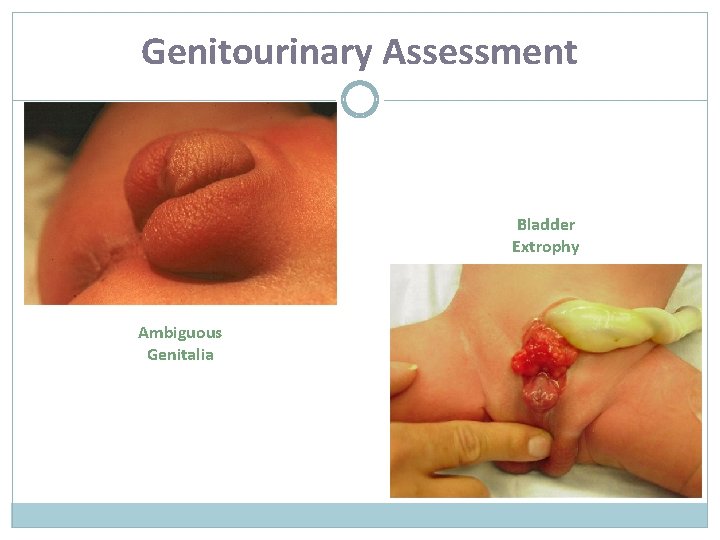
Genitourinary Assessment Bladder Extrophy Ambiguous Genitalia
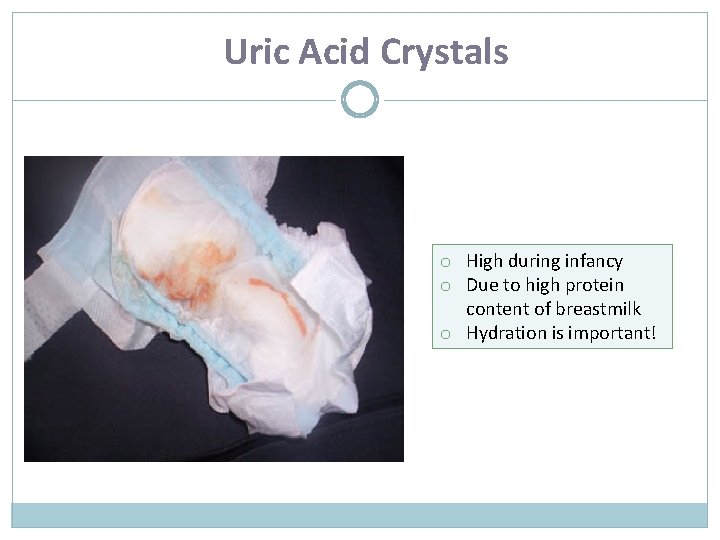
Uric Acid Crystals o High during infancy o Due to high protein content of breastmilk o Hydration is important!
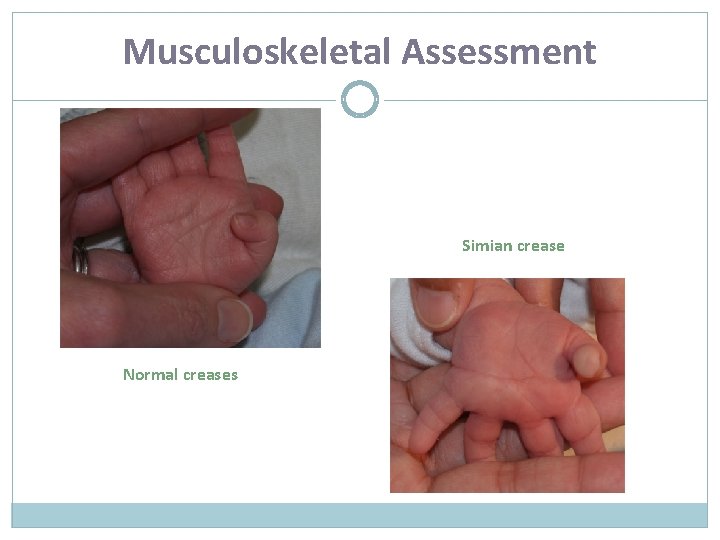
Musculoskeletal Assessment Simian crease Normal creases
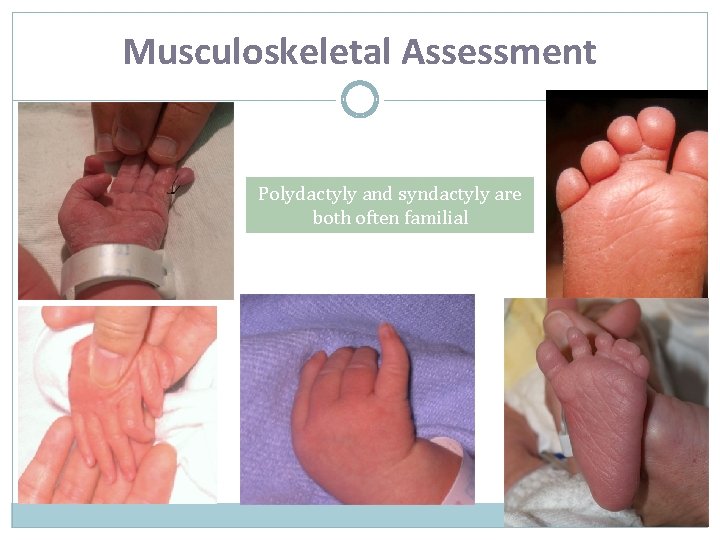
Musculoskeletal Assessment Polydactyly and syndactyly are both often familial
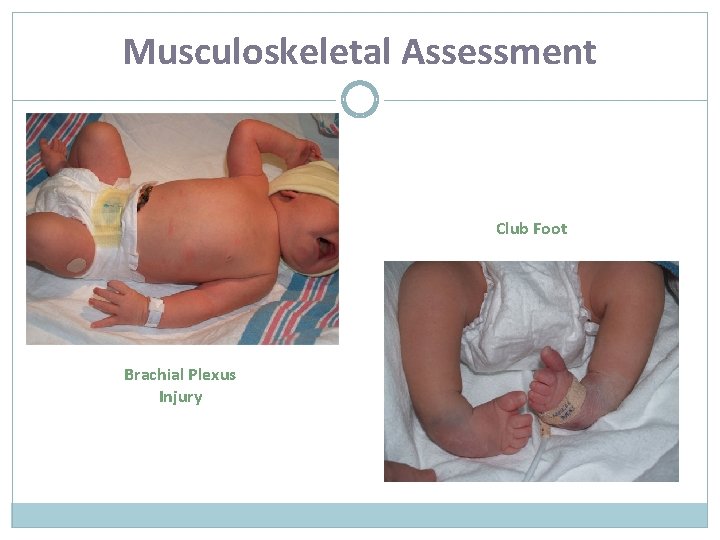
Musculoskeletal Assessment Club Foot Brachial Plexus Injury
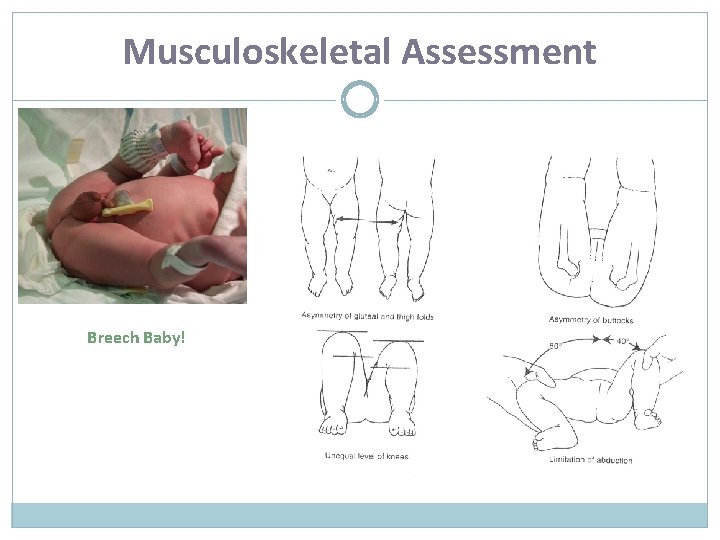
Musculoskeletal Assessment Breech Baby!
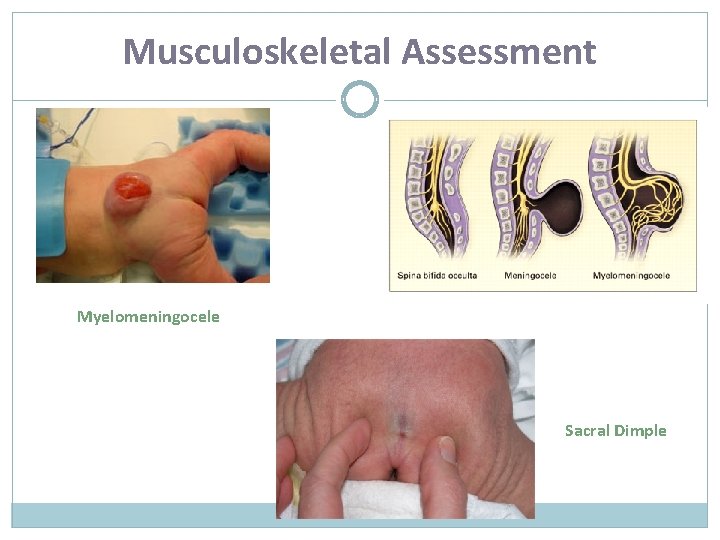
Musculoskeletal Assessment Myelomeningocele Sacral Dimple