
Perinatal mortality Congenital malformations Birth trauma Dr Renu
Perinatal mortality Congenital malformations Birth trauma Dr Renu Singh
Perinatal mortality(PNM) • Includes late fetal deaths &early neonatal deaths • Late fetal deaths (stillbirths): ≥ 28 weeks gestation till delivery • Early neonatal deaths: ≤ 7 days of birth • Perinatal mortality in developed nations : <10 per 1000 births • Developing countries: high, 32 -35 per 1000 in India
Definition • Perinatal mortality: all fetal & neonatal deaths weighing 1000 g or more between 28 weeks of gestation to first week of neonatal life(WHO) • Perinatal mortality rate: expressed in terms of perinatal deaths per 1000 total births
Factors affecting PNM • Maternal age – Teenage pregnancies, elderly gravida • Parity – Anemia, inadequate prenatal care, inadequate rest, Malpresentation, multiple births • Socioeconomic factors – Lower socioeconomic status vs upper strata • Obstetric factors – Placental insufficiency, APH, intrapartum care, malpresentation , multiple births
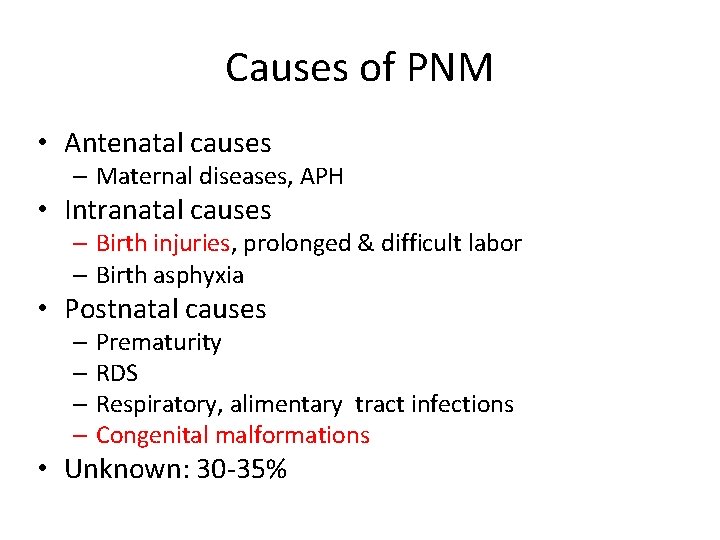
Causes of PNM • Antenatal causes – Maternal diseases, APH • Intranatal causes – Birth injuries, prolonged & difficult labor – Birth asphyxia • Postnatal causes – Prematurity – RDS – Respiratory, alimentary tract infections – Congenital malformations • Unknown: 30 -35%
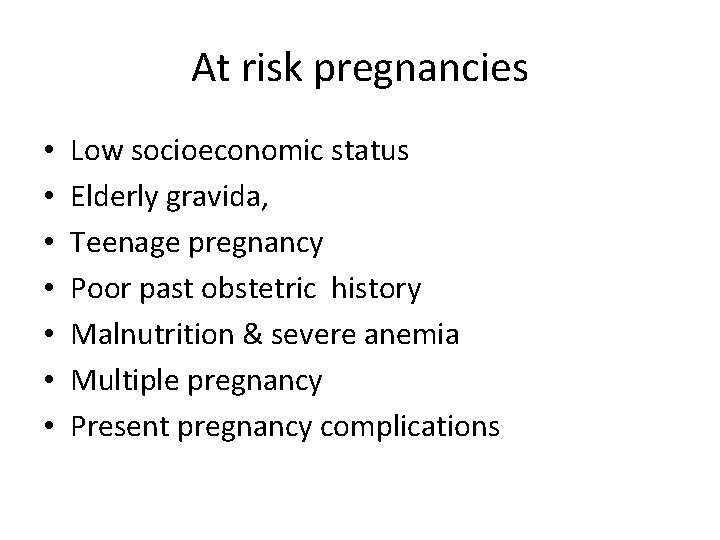
At risk pregnancies • • Low socioeconomic status Elderly gravida, Teenage pregnancy Poor past obstetric history Malnutrition & severe anemia Multiple pregnancy Present pregnancy complications
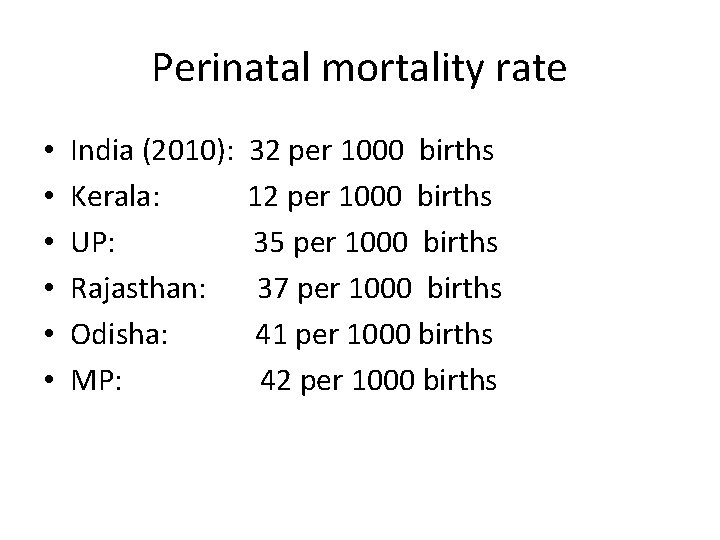
Perinatal mortality rate • • • India (2010): Kerala: UP: Rajasthan: Odisha: MP: 32 per 1000 births 12 per 1000 births 35 per 1000 births 37 per 1000 births 41 per 1000 births 42 per 1000 births
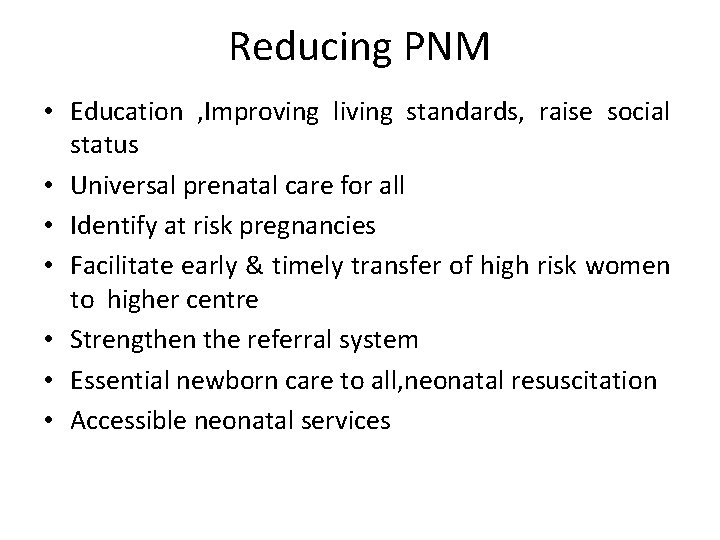
Reducing PNM • Education , Improving living standards, raise social status • Universal prenatal care for all • Identify at risk pregnancies • Facilitate early & timely transfer of high risk women to higher centre • Strengthen the referral system • Essential newborn care to all, neonatal resuscitation • Accessible neonatal services
Congenital malformations
Congenital malformations • Structural abnormality which is present at birth • Incidence of fetal malformations: 2 -5% • Account for 20% of perinatal deaths • WHO estimate: 2. 76 million perinatal deaths due to congenital malformations(2013)
Terminology • Malformation: an abnormality of the development process (spina bifida) • Deformation: mechanical interference with normal development (talipes) • Disruption: interference with normal growth after a period of normal development(bowel atresia)
etiology • Chromosomal abnormalities: Trisomy (21, 13, 18), XO • Single gene mutation: Achondroplasia(AD) • Genetic predisposition • Multifactorial: NTD, congenital heart defects, cleft lip, palate • Drugs : lithium, valproate • Infection during pregnancy: Rubella, CMV • Mechanical factors: Talipes, potter sequence
High risk pregnancies • • Uncontrolled diabetes in mother Elderly gravida Exposure to teratogenic drugs in 1 st trimester Maternal rubella in first trimester H/O an affected sibling Polyhydramnios/oligoamnios Fetal growth restriction Single umbilical artery
investigations • Biochemical screen: – MSAFP – Acetylcholine-esterase, h. CG, u. E 3, inhibin A • Ultrasound soft markers – Echogenic foci in heart, echogenic bowel, pyelactasis • Ultrasonography – detailed structural anatomy, 2 D/3 D • Targeted imaging for fetal anomalies(TIFA) – DM, hypothyroid, antiepileptic drugs
Investigations • Invasive procedures – CVS(chorionic villus sampling): obtain chorionic tissue – Amniocentesis: amniotic fluid – Cordocentesis: fetal blood – Fetoscopy : see fetal malformations • Fetal echocardiography: suspected CVS anomalies , diabetes
Congenital malformations • Malformations of the CNS: – spina bifida, anencephaly, hydrocephalus • Skeletal malformations – Clubfoot, congenital dislocation of hip, skeletal dysplasias • GIT malformations – Omphalocele, gastroschisis, ileal atresia, duodenal atresia, Tracheoesophageal fistula • Genitourinary abnormalities • CVS abnormalities
Spina bifida • Failure of closure of the neural tube • Spina bifida occulta: defect is covered with skin • Spina bifida aperta: swelling seen over the spinal defect with defective skin covering • Meningocele • Myelomeningocele(spinal cord is involved) • Cephaloencephalocele(brain tissue involved)
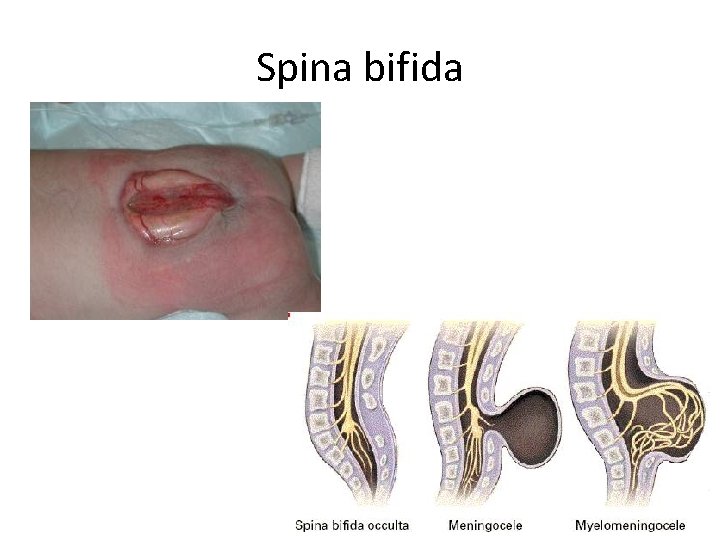
Spina bifida
Spina bifida • Lumbar defects : common • Complications associated are – Paralysis of lower limbs – Urinary , fecal incontinence – Hydrocephalus – Limb deformity • Prognosis: 60% survive with severe mental & physical handicap in 1/3 rd ( immediate closure of defect)
anencephaly • Rudimentary brain with absent cerebral hemispheres , absent vault • Most severe form of NTD • Prenatal diagnosis as early as 14 weeks • Offered MTP • Uniformly lethal
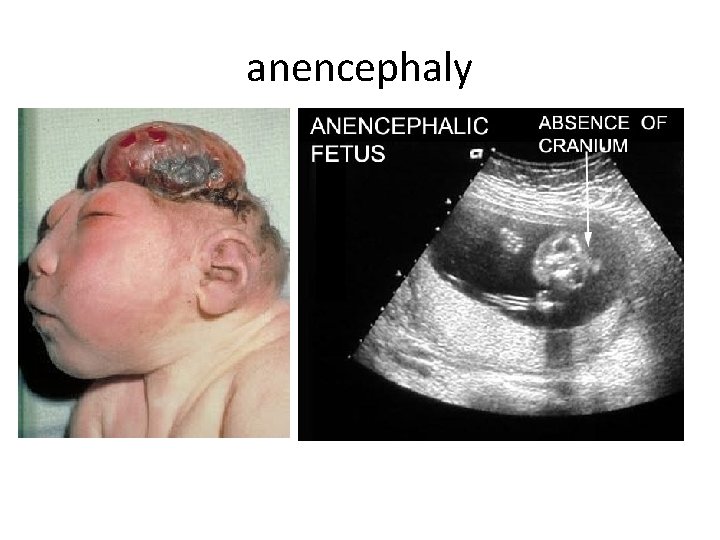
anencephaly
NTD: screening & prevention • MSAFP at 16 -18 weeks : elevated , 2. 5 Mo. M(95% DR) • Targeted Ultrasonography • Prognosis : Site &size of lesion, associated anomalies • Prevention: periconceptional administration of folic acid • Low risk women: 0. 4 -0. 5 mg /day • h/o NTD: 5 mg/day • Role of preconception counseling
Exomphalos • Midline abdominal wall defect • Herniation of bowel contents or liver into the umbilical stump with membranous covering • Raised MSAFP, USG, invasive prenatal procedures • Associated chromosomal abnormalities • Treatment is surgical
gastroschisis • Prolapse of intestine through paramedian abdominal wall defect • No covering membrane • Urgent surgical treatment
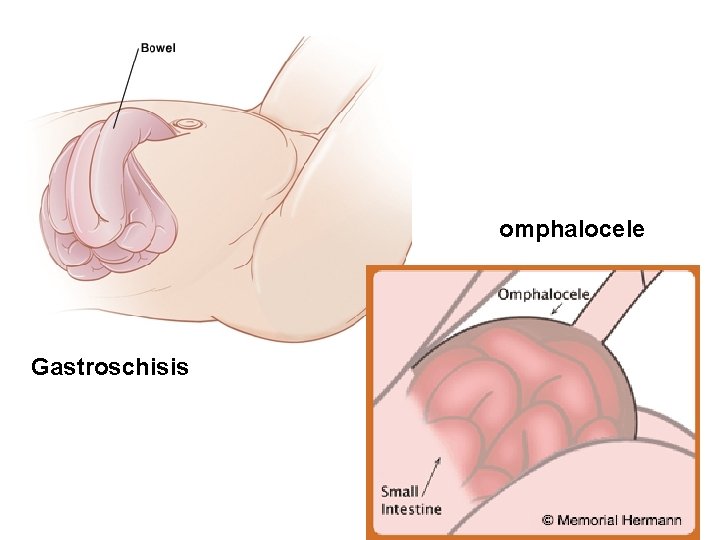
omphalocele Gastroschisis
Cleft lip , cleft palate • Cleft lip(hare lip): unilateral/bilateral • Cleft palate: defect in roof of hard palate • Associated abnormalities: micrognathia /retrognathia • Feeding difficulties , more with cleft palate • Small plastic plate , obturator fits into the roof blocks the opening , helps in feeding • Definitive t/t: surgery: 3 -4 mths(hare lip), 1 -1/2 yrs
Birth trauma • Injuries sustained during labor & delivery • Stillbirth, neonatal deaths, morbidities • Important cause of PNM
Predisposing factors • • Prolonged labor, obstructed labor Fetal macrosomia CPD Malpresentation(breech) Instrumental delivery(forceps/ventouse) Shoulder dystocia Precipitate labor Internal podalic version
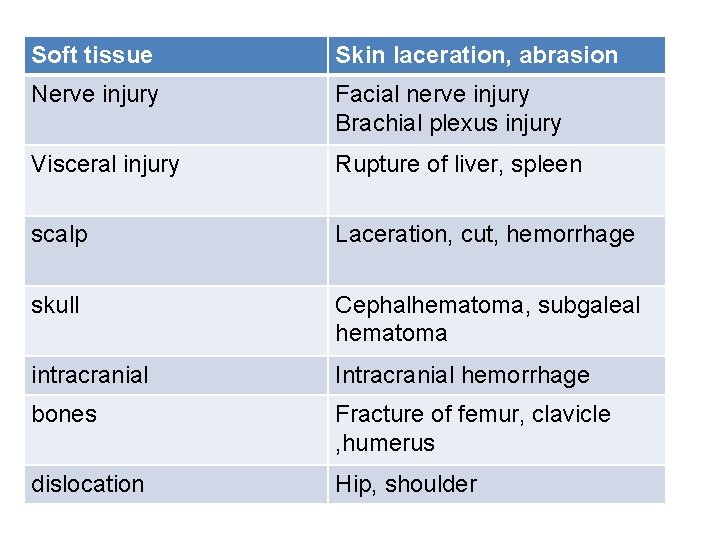
Soft tissue Skin laceration, abrasion Nerve injury Facial nerve injury Brachial plexus injury Visceral injury Rupture of liver, spleen scalp Laceration, cut, hemorrhage skull Cephalhematoma, subgaleal hematoma intracranial Intracranial hemorrhage bones Fracture of femur, clavicle , humerus dislocation Hip, shoulder
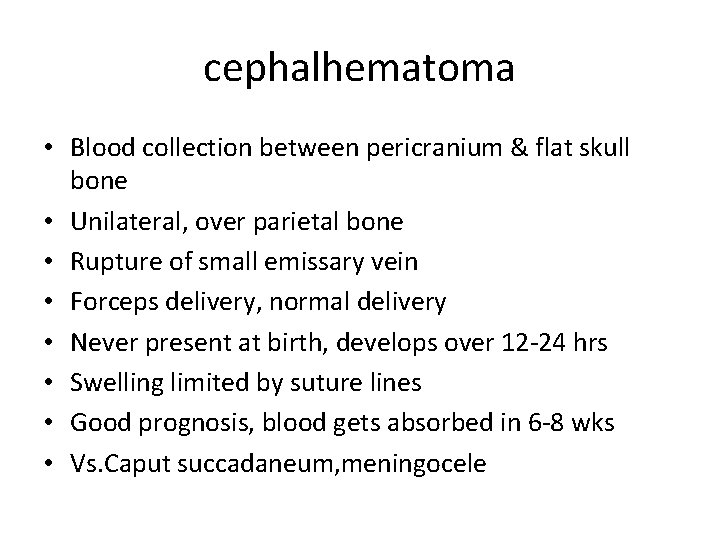
cephalhematoma • Blood collection between pericranium & flat skull bone • Unilateral, over parietal bone • Rupture of small emissary vein • Forceps delivery, normal delivery • Never present at birth, develops over 12 -24 hrs • Swelling limited by suture lines • Good prognosis, blood gets absorbed in 6 -8 wks • Vs. Caput succadaneum, meningocele
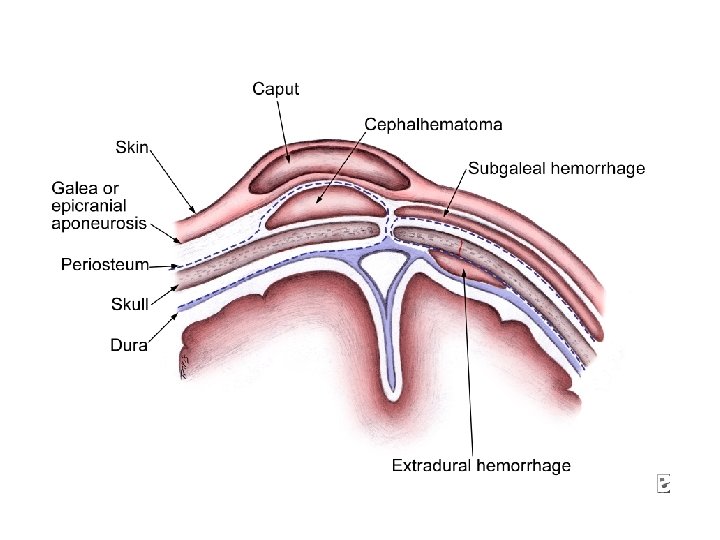
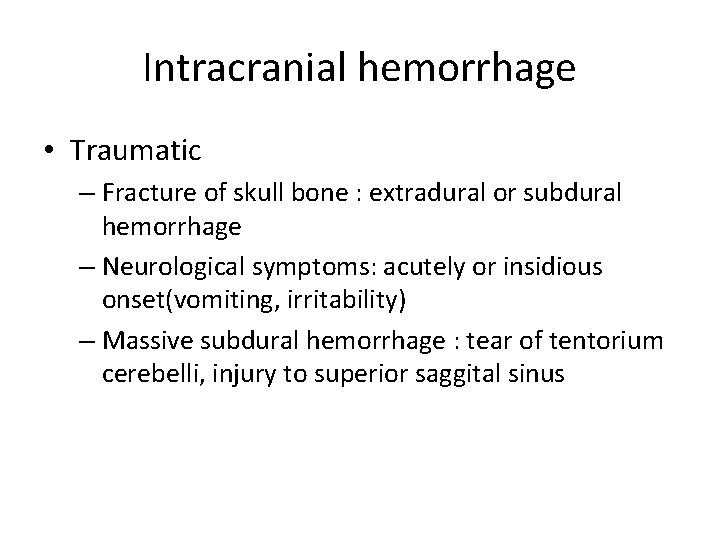
Intracranial hemorrhage • Traumatic – Fracture of skull bone : extradural or subdural hemorrhage – Neurological symptoms: acutely or insidious onset(vomiting, irritability) – Massive subdural hemorrhage : tear of tentorium cerebelli, injury to superior saggital sinus
Intracranial hemorrhage • Mechanism of tentorial tear – Excessive moulding in deflexed vertex with gross CPD – Rapid compression & decompression of after coming head of breech – Forcible forceps traction after wrong application of blades • Outcome: fatal, severe respiratory depression
Anoxic ICH • Intraventricular : intense congestion of fragile choroidal plexus due to anoxia • Subarachnoid: tear of tributary veins from brain to sinuses • Intracerebral: petechial hemorrhage in brain substance due to anoxia
Prevention of intracranial injuries • Comprehensive antenatal & intranatal care • Intensive fetal monitoring during labor : early detection of fetal hypoxia • Avoid difficult or traumatic vaginal delivery • Breech delivery: liberal use of CS, precautions while delivering limbs & aftercoming head • Vit. K 1 mg IM after birth
Treatment of ICH • Supportive treatment – Maintain temperature, humidity, oxygen – Feeding by nasogastric tube, maintain fluid balance • Anticonvulsants: phenobarbitone(510 mg/kg/day in divided doses) , 6 hrly intervals, IM • Subdural tap/surgical removal of clot
Skin & subcutaneous tissue • Bruises & lacerations over Face • Edematous & bruised scalp • Buttocks, genitalia gets edematous & bruised in breech presentation • Eyelids, nose, lips get bruised in face presentation • Needs no treatment
Muscles Sternomastoid hematoma Junction of upper & middle third Appears 7 -10 days after birth Rupture of muscle fibres & blood vessels Difficult breech delivery, excessive lateral flexion of neck in normal delivery, shoulder dystocia • Conservative, disappears by 6 mths age • • •
Nerve injuries • Facial nerve palsy – Direct pressure of forceps blade – Hemorrhage & edema around nerve – Eye of affected side remains open – Angle of mouth drawn to unaffected side – Usually disappears in weeks, if isolated • Erb’s palsy – 5 th & 6 th cervical nerve roots involved – Waiter’s tip(extension of elbow, pronation of forearm, flexion of wrist)
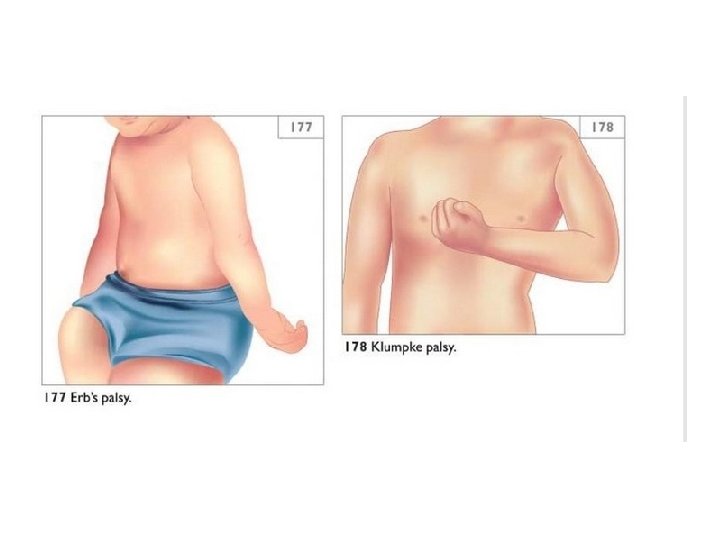
Nerve injuries • Klumpke’s palsy – 7 th , 8 th cervical or 1 st thoracic nerve roots – Arm flexed at elbow, forearm supinated , claw like deformity of hand – Horner’s syndrome(homolateral ptosis, small pupil) • treatment – Splint – Full recovery, permanent disability
Fracture long bones • • • Fracture femur, humerus, radius, ulna Breech delivery Greenstick or complete type: X-ray Rapid union occurs with callus formation Deformity is rare Treatment: splinting, closed reduction & casting
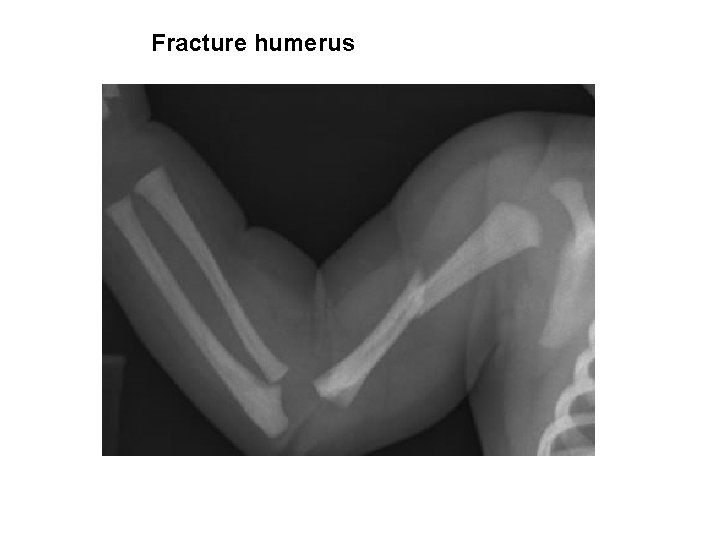
Fracture humerus
Prevention of newborn injuries • Screen out the high risk women in antenatal period: CPD, malpresentation: : CS • Intranatal period – Continuous fetal monitoring – Difficult forceps to be avoided – Judicious selection of suitable candidates for instrumental delivery – Breech delivery by skilled personnel
Perinatal mortality • Role of fetal autopsy: ability to pick up minor anomalies /anomalies not detected on USG • Ethical, religious concerns • Careful examination, photograph & radiograph of fetus • Postmortem MR imaging : structural information of CNS anomalies • Helps in identifying the cause of fetal loss • Facilitates genetic counseling
Summary • Perinatal mortality is high in developing countries • India : 32 per 1000 births(rural: 35, urban: 22) • Comprehensive antenatal and intranatal care is key to success in reduction of birth trauma & subsequently reduction in perinatal mortality • At birth , essential newborn care to all
MCQ 1 • Babies chosen for perinatal statistics include all except 1. Late fetal deaths 2. Early neonatal deaths 3. Body length (CHL) of 35 cm 4. 800 g at birth
MCQ 1 • Babies chosen for perinatal statistics include all except 1. Late fetal deaths 2. Early neonatal deaths 3. Body length (CHL) of 35 cm 4. 800 g at birth
MCQ 2 • One of the following drug is safe in pregnancy 1. Thalidomide 2. Sodium valproate 3. Ferrous sulfate 4. coumarins
MCQ 2 • One of the following drug is safe in pregnancy 1. Thalidomide 2. Sodium valproate 3. Ferrous sulfate 4. coumarins
MCQ 3 • One of the following is not true in relation to cephalhematoma 1. Present at birth 2. usually unilateral 3. Limited by suture line 4. Resolves in few weeks
MCQ 3 • One of the following is not true in relation to cephalhematoma 1. Present at birth 2. usually unilateral 3. Limited by suture line 4. Resolves in few weeks
MCQ 4 • Which of the following malformations in a newborn is specific for maternal insulin dependent diabetes mellitus 1. Transposition of great vessels 2. Caudal regression 3. Holoprosencephaly 4. meningomyelocele
MCQ 4 • Which of the following malformations in a newborn is specific for maternal insulin dependent diabetes mellitus 1. Transposition of great vessels 2. Caudal regression 3. Holoprosencephaly 4. meningomyelocele
MCQ 5 • Thalidomide tragedy has been associated with this congenital anomaly 1. Cleft lip &palate 2. Vaginal adenoma 3. Microcephaly 4. phocomelia
MCQ 5 • Thalidomide tragedy has been associated with this congenital anomaly 1. Cleft lip &palate 2. Vaginal adenoma 3. Microcephaly 4. Phocomelia
MCQ 6 • The perinatal mortality rate(per 1000 births) of India(urban) at present is 1. 22 2. 32 3. 35 4. 40
MCQ 6 • The perinatal mortality rate(per 1000 births) of India(urban) at present is 1. 22 2. 32 3. 35 4. 40
- Slides: 58