Prison Life Corrections Ch 14 An enclosed facility
- Slides: 26
Prison Life - Corrections Ch. 14
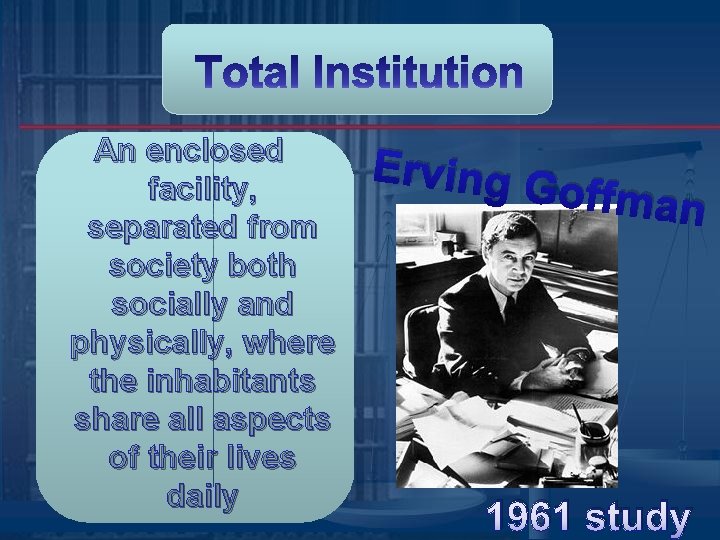
An enclosed facility, separated from society both socially and physically, where the inhabitants share all aspects of their lives daily Erving G offman 1961 study
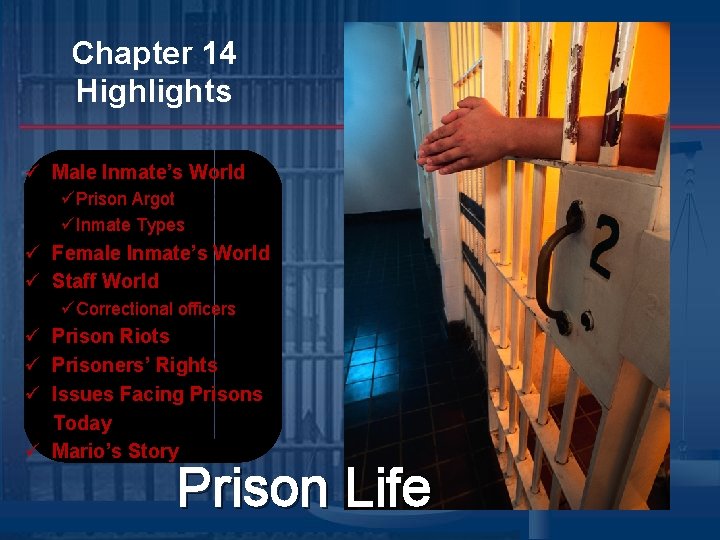
Chapter 14 Highlights ü Male Inmate’s World üPrison Argot üInmate Types ü Female Inmate’s World ü Staff World üCorrectional officers ü Prison Riots ü Prisoners’ Rights ü Issues Facing Prisons Today ü Mario’s Story Prison Life
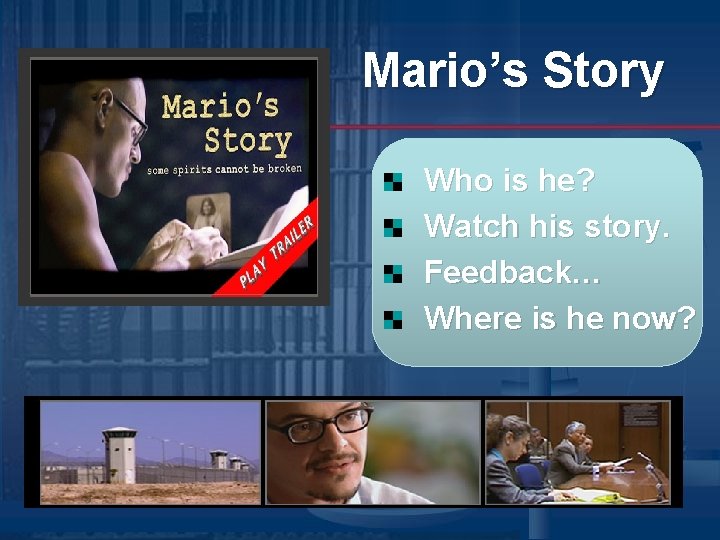
Mario’s Story Who is he? Watch his story. Feedback… Where is he now?
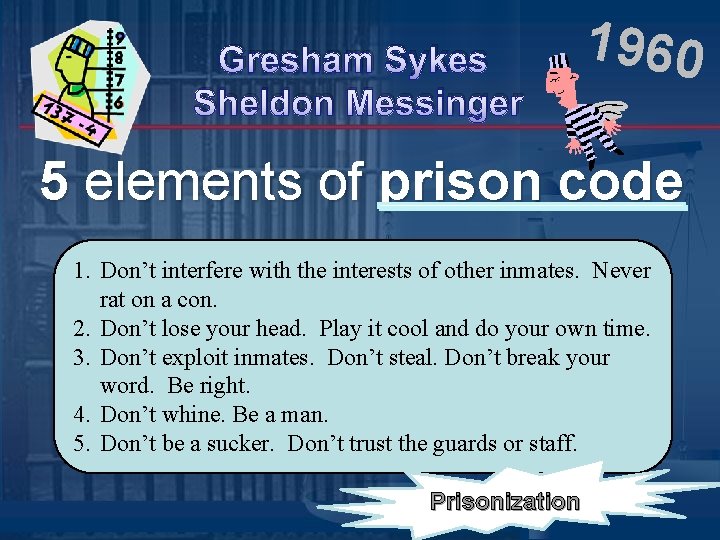
Gresham Sykes Sheldon Messinger 1960 5 elements of prison code 1. Don’t interfere with the interests of other inmates. Never rat on a con. 2. Don’t lose your head. Play it cool and do your own time. 3. Don’t exploit inmates. Don’t steal. Don’t break your word. Be right. 4. Don’t whine. Be a man. 5. Don’t be a sucker. Don’t trust the guards or staff. Prisonization
Prison Argot: The Language of Confinement ng i h c t a M Game C: Examples of Prison Argot
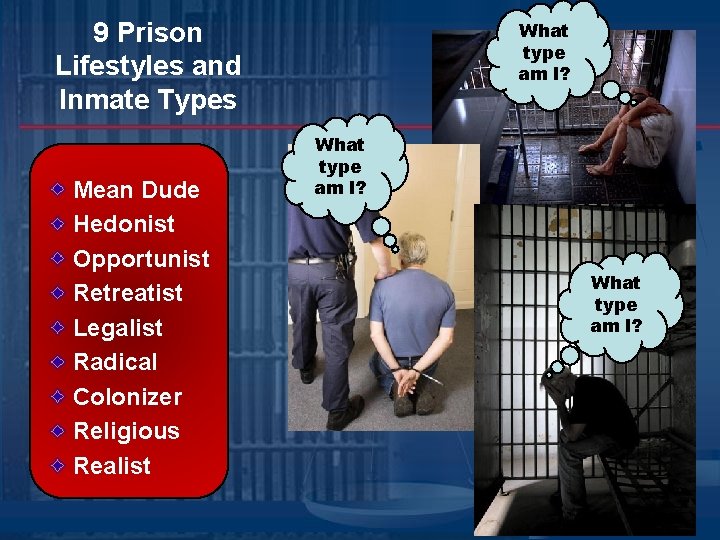
9 Prison Lifestyles and Inmate Types Mean Dude Hedonist Opportunist Retreatist Legalist Radical Colonizer Religious Realist What type am I?
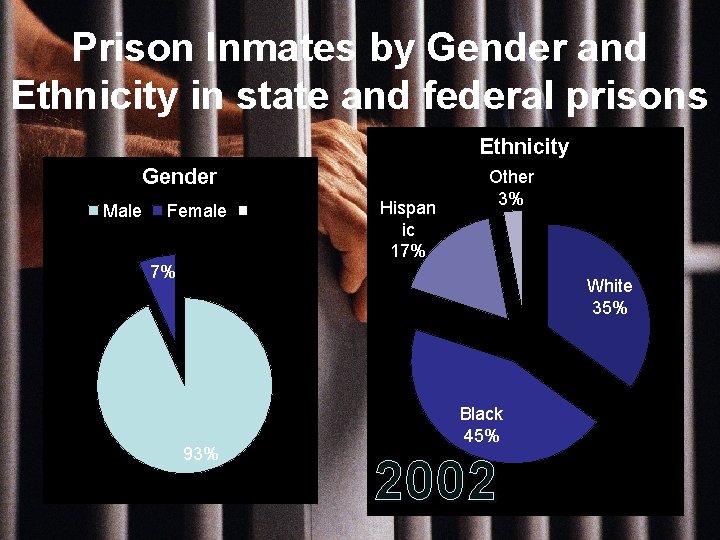
Prison Inmates by Gender and Ethnicity in state and federal prisons Ethnicity Gender Male Female Hispan ic 17% Other 3% 7% White 35% 93% Black 45% 2002
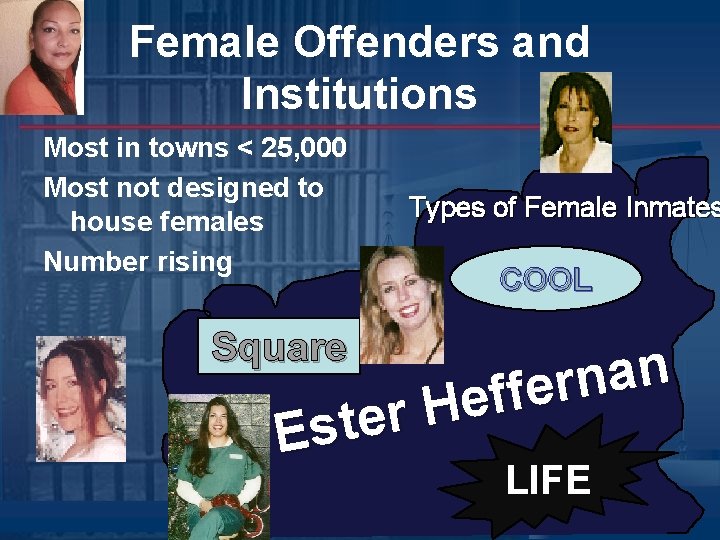
Female Offenders and Institutions Most in towns < 25, 000 Most not designed to house females Number rising Types of Female Inmates Square r e t s E COOL n a n r e f f He LIFE
Female Inmate’s World Social Structure in Women’s Prison
The Staff World
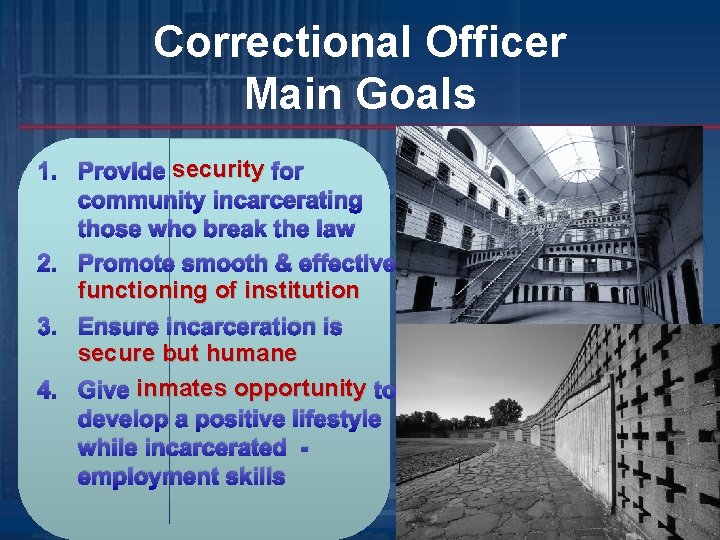
Correctional Officer Main Goals 1. Provide security for community incarcerating those who break the law 2. Promote smooth & effective functioning of institution 3. Ensure incarceration is secure but humane 4. Give inmates opportunity to develop a positive lifestyle while incarcerated employment skills
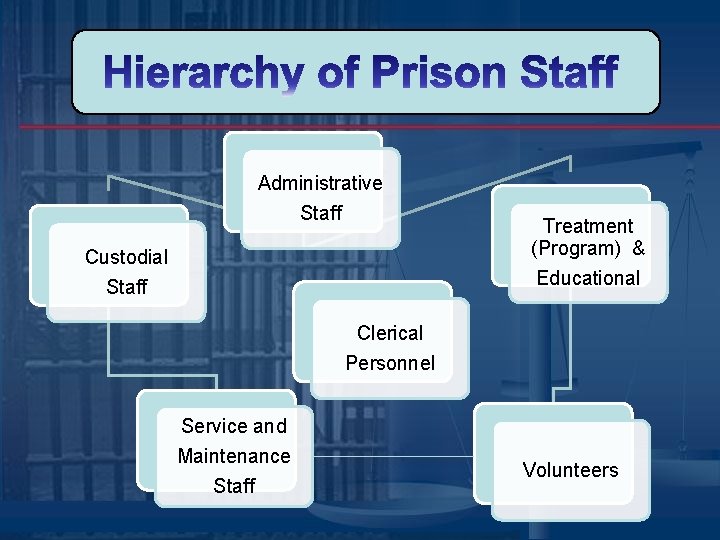
Administrative Staff Custodial Staff Treatment (Program) & Educational Clerical Personnel Service and Maintenance Staff Volunteers
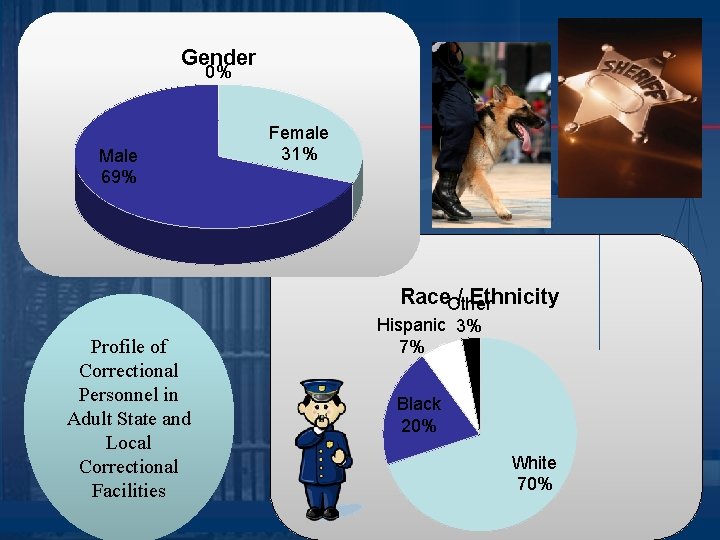
Gender 0% Male 69% Female 31% Race. Other / Ethnicity Profile of Correctional Personnel in Adult State and Local Correctional Facilities Hispanic 3% 7% Black 20% White 70%
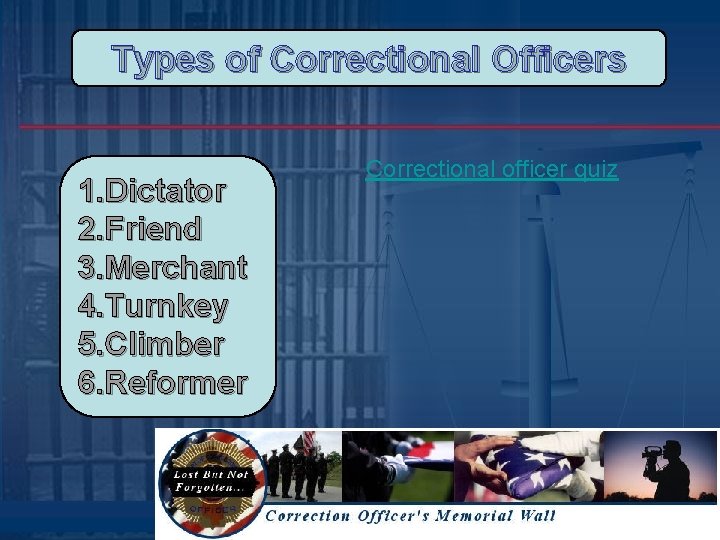
Types of Correctional Officers 1. Dictator 2. Friend 3. Merchant 4. Turnkey 5. Climber 6. Reformer Correctional officer quiz
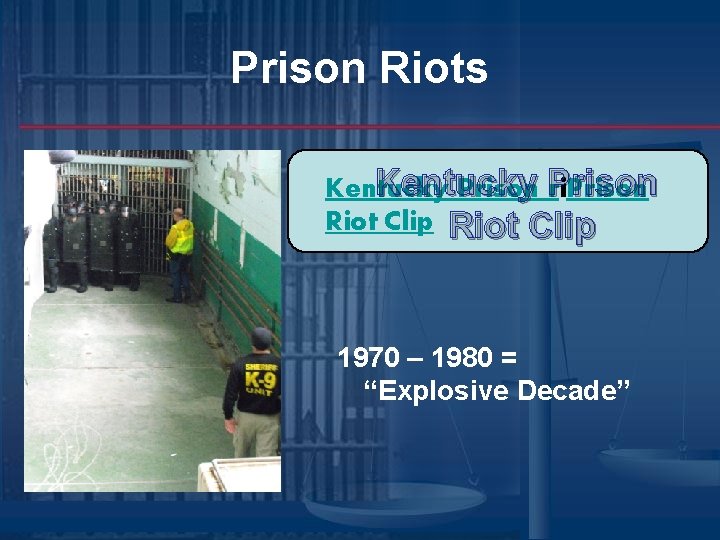
Prison Riots Kentucky Prison ri. Prison Riot Clip 1970 – 1980 = “Explosive Decade”
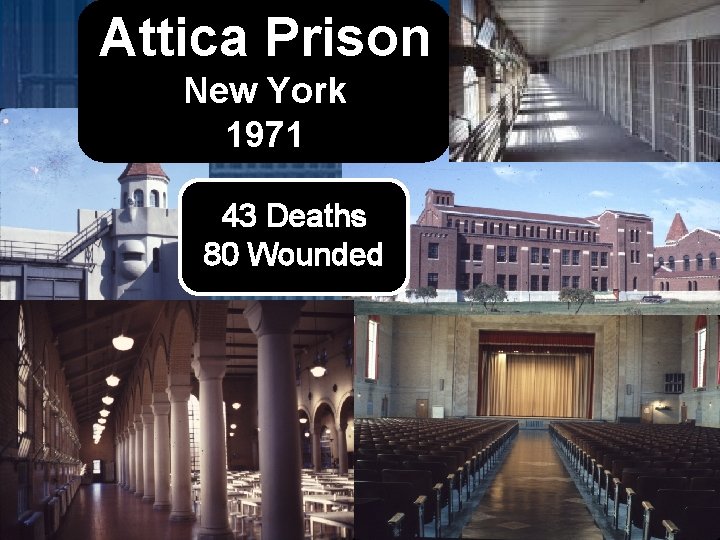
Attica Prison New York 1971 43 Deaths 80 Wounded
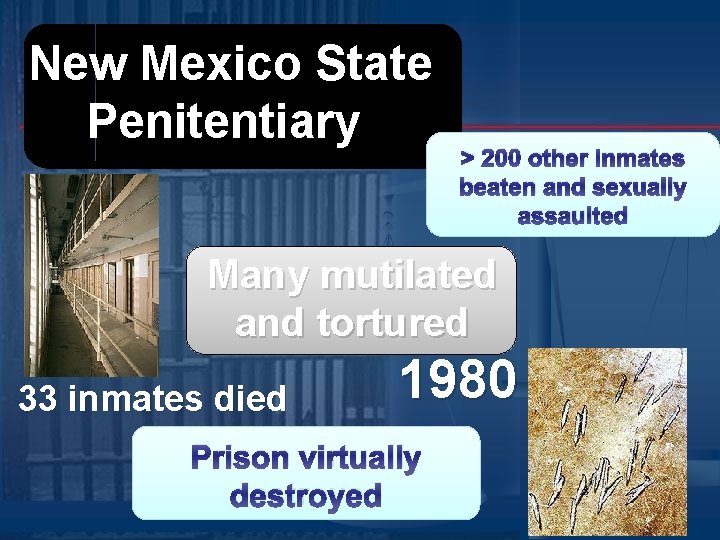
New Mexico State Penitentiary > 200 other inmates beaten and sexually assaulted Many mutilated and tortured 33 inmates died 1980 Prison virtually destroyed
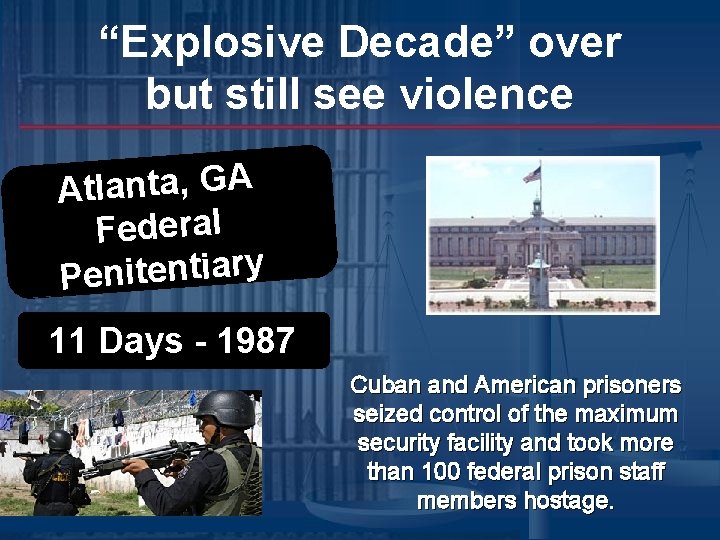
“Explosive Decade” over but still see violence Atlanta, GA Federal y r a i t n e t i n e P 11 Days - 1987 Cuban and American prisoners seized control of the maximum security facility and took more than 100 federal prison staff members hostage.
Oakdale, Louisiana Federal Detention Center Similar to Atlanta But less intense 1993 Dissatisfaction of Cuban Inmates
Causes of Riots Insensitive prison admin. and neglected inmates’ demands Lifestyles most inmates are familiar with on the streets Dehumanizing prison conditions To regulate inmate society and redistribute power balances among inmate groups “Power vacuums” created by changes in prison admin. , transfer of influential inmates
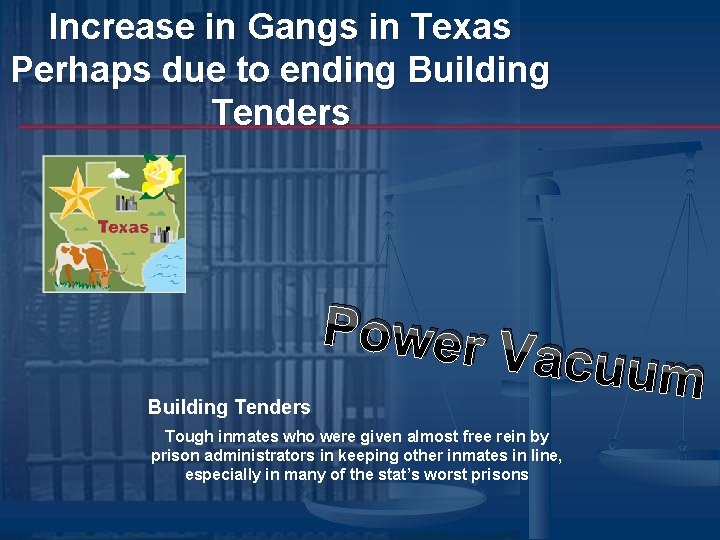
Increase in Gangs in Texas Perhaps due to ending Building Tenders Power V acuum Tough inmates who were given almost free rein by prison administrators in keeping other inmates in line, especially in many of the stat’s worst prisons
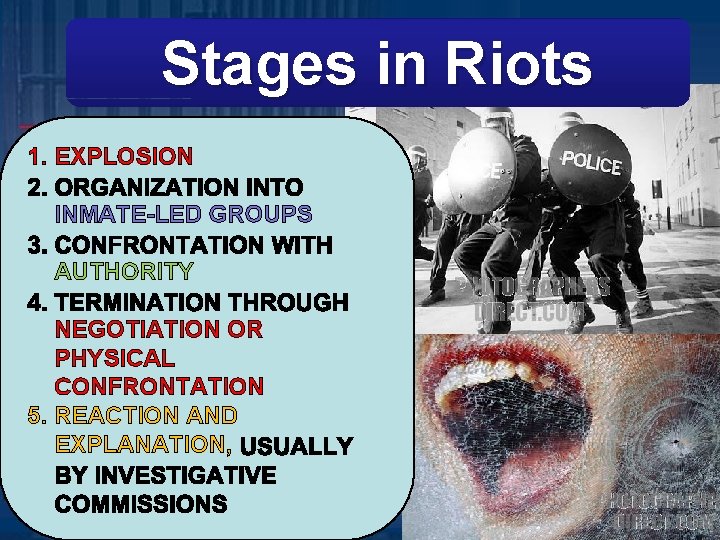
Stages in Riots 1. EXPLOSION INMATE-LED GROUPS AUTHORITY NEGOTIATION OR PHYSICAL CONFRONTATION 5. REACTION AND EXPLANATION,
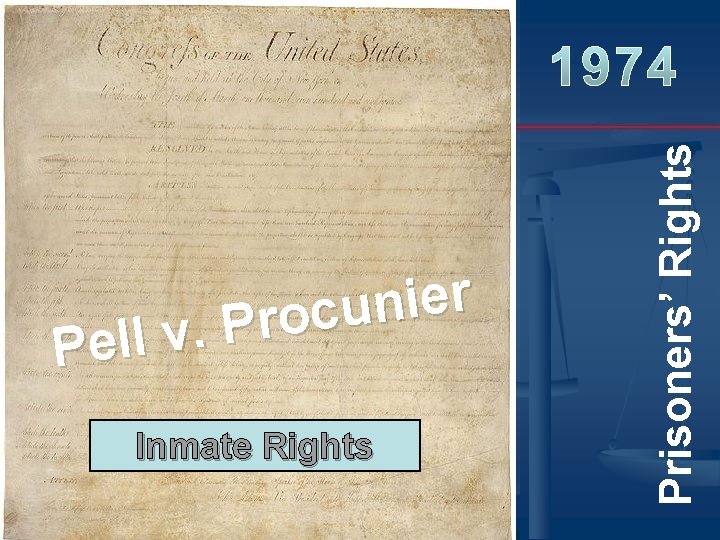
Inmate Rights Prisoners’ Rights r e i n u c o r P. v l Pel
Issues facing prisons today AIDS Geriatric Offenders Mentally Ill
Procunier v. Martinez 2 3 9 1 1 s t ammendment rights Visitations Censoring Mail