Preclinical Systematic Reviews and MetaAnalyses Nadia Soliman NadiaSoliman

- Slides: 19
Preclinical Systematic Reviews and Meta-Analyses Nadia Soliman Nadia_Soliman_ n. soliman 16@imperial. ac. uk
Systematic Reviews and Meta-Analyses • A systematic review identifies and summarises all available and relevant studies to answer a specific research question • A meta-analysis is the statistical integration of the included studies’ quantitative data
Importance of Systematic Reviews and Meta-Analyses • Can provide empirical evidence to support: – Provide an overview of available evidence – Identify knowledge gaps – Improve methodological quality of studies – Identify factors influencing treatment efficacy – Inform experimental design of new studies – Translation of animal data to the clinic – Implementation of the 3 Rs (replacement, reduction and refinement) • Ethical • Prevent research waste
Experimental Rigour Internal validity; how was the study conducted? Selection Bias Performance Bias Detection Bias Attrition Bias
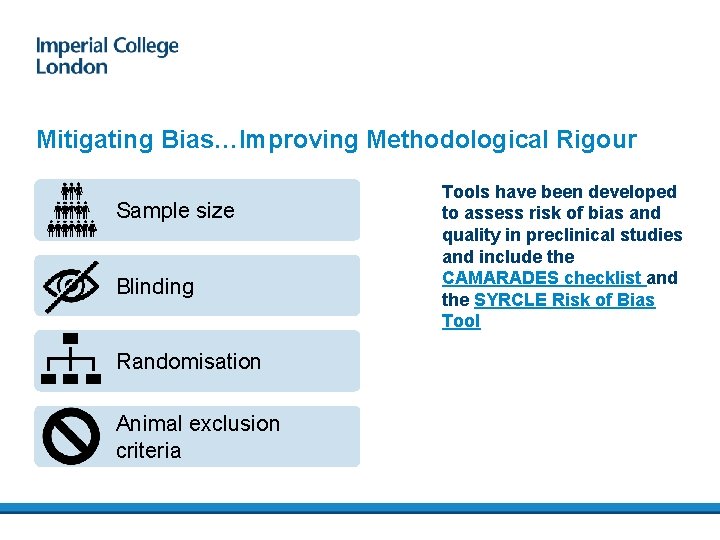
Mitigating Bias…Improving Methodological Rigour Sample size Blinding Randomisation Animal exclusion criteria Tools have been developed to assess risk of bias and quality in preclinical studies and include the CAMARADES checklist and the SYRCLE Risk of Bias Tool
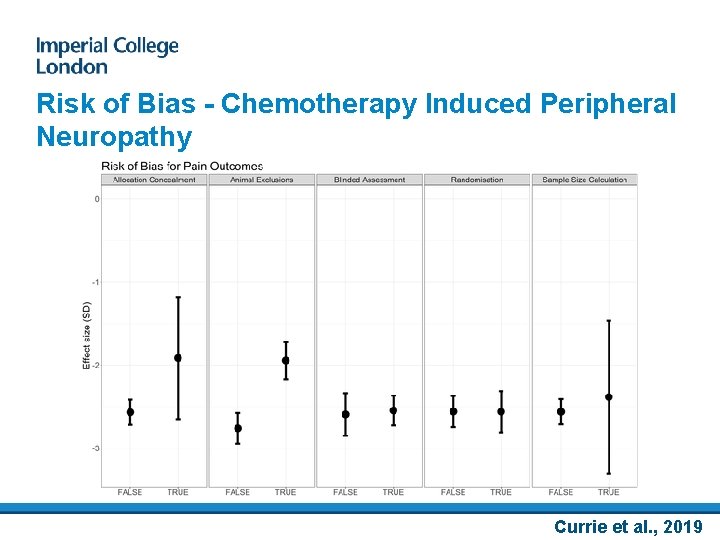
Risk of Bias - Chemotherapy Induced Peripheral Neuropathy Currie et al. , 2019
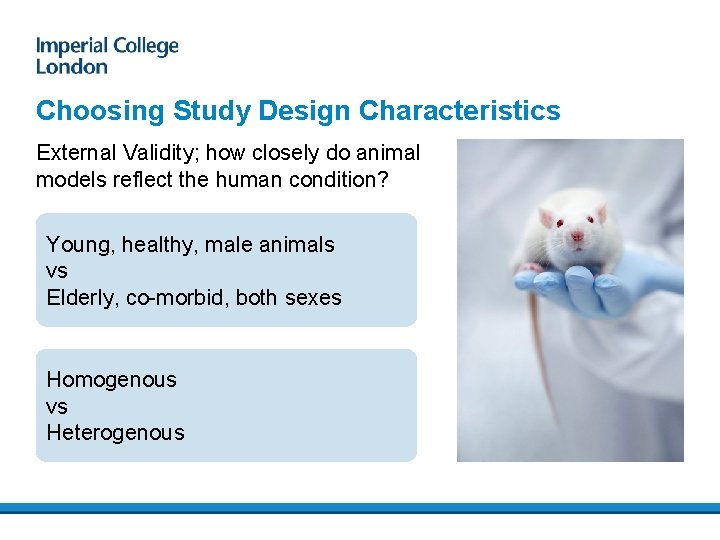
Choosing Study Design Characteristics External Validity; how closely do animal models reflect the human condition? Young, healthy, male animals vs Elderly, co-morbid, both sexes Homogenous vs Heterogenous
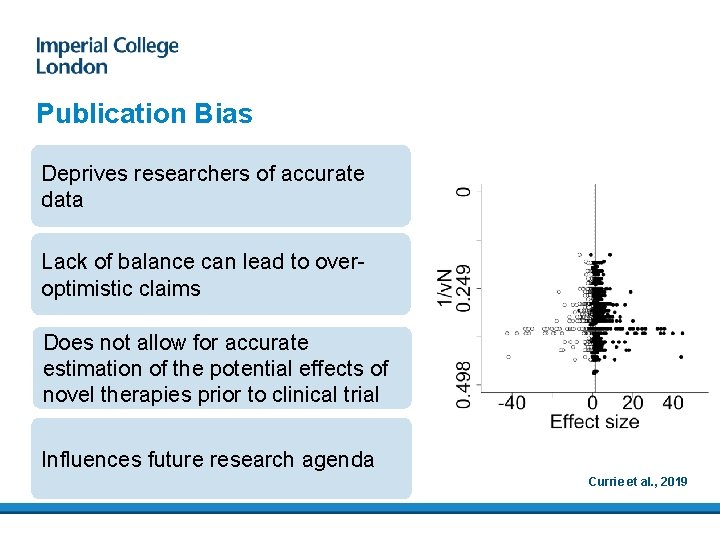
Publication Bias Deprives researchers of accurate data Lack of balance can lead to overoptimistic claims Does not allow for accurate estimation of the potential effects of novel therapies prior to clinical trial Influences future research agenda Currie et al. , 2019
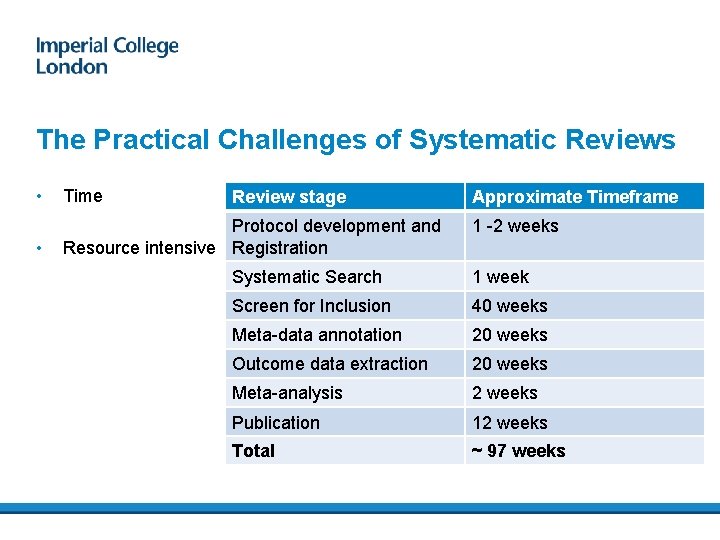
The Practical Challenges of Systematic Reviews • Time • Protocol development and Resource intensive Registration Review stage Approximate Timeframe 1 -2 weeks Systematic Search 1 week Screen for Inclusion 40 weeks Meta-data annotation 20 weeks Outcome data extraction 20 weeks Meta-analysis 2 weeks Publication 12 weeks Total ~ 97 weeks
Review Platform Secure screening database, data repository and analysis applications Educational resources on how to conduct and report a systematic review Guidance on any aspect of a preclinical systematic review and meta-analysis
1. Protocol development Defines the research question and the methods that you will use Methodological transparency and reduce risk of introducing bias Registering allows other to locate reviews in progress and enables future replication SYRCLE have developed a template for the preparation of preclinical systematic reviews (Vries et al. , 2015)
2. Search Strategy Aims to identify all relevant literature specific to your research question Databases differ in their coverage of journals and how articles are indexed. Need to construct individual search strategies for each database SYRCLE have developed animal search filters (de Vries et al. , 2011)
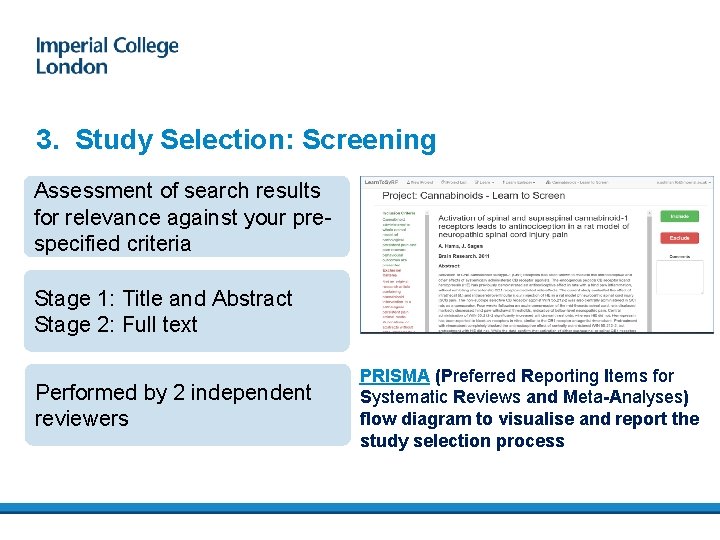
3. Study Selection: Screening Assessment of search results for relevance against your prespecified criteria Stage 1: Title and Abstract Stage 2: Full text Performed by 2 independent reviewers PRISMA (Preferred Reporting Items for Systematic Reviews and Meta-Analyses) flow diagram to visualise and report the study selection process
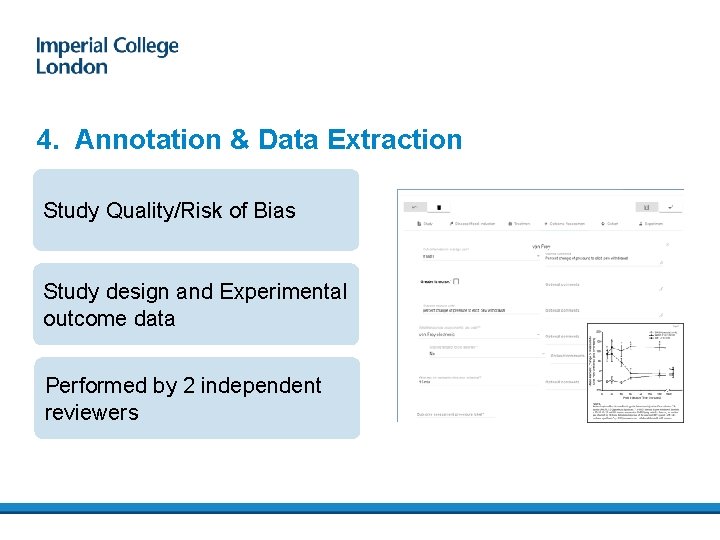
4. Annotation & Data Extraction Study Quality/Risk of Bias Study design and Experimental outcome data Performed by 2 independent reviewers
5. Analysis and Reporting Narrative summary The results of all analyses should be considered as a whole Meta-analysis Discuss effect sizes, related confidence intervals and biological significance Publication Bias Report all aspects of the review process Guidelines for reporting systematic reviews and meta-analyses of animal studies (Sena et al. , 2014)
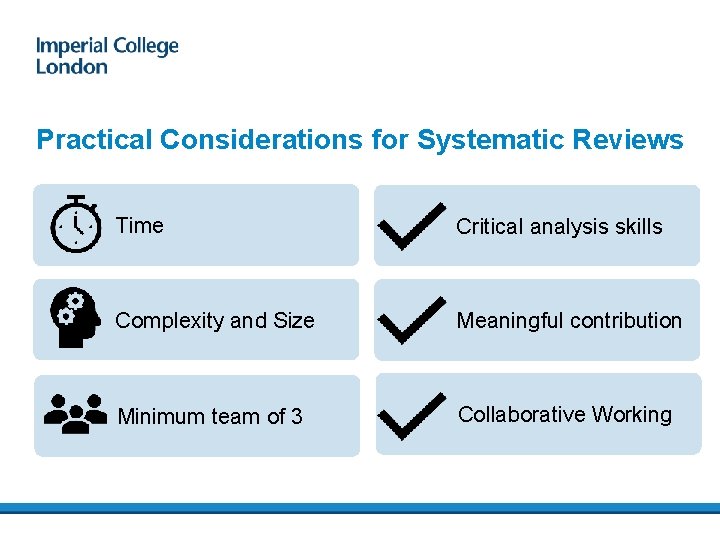
Practical Considerations for Systematic Reviews Time Critical analysis skills Complexity and Size Meaningful contribution Minimum team of 3 Collaborative Working
Recommended Reading • Sena et al. , 2014 Systematic reviews and meta-analysis of preclinical studies: why perform them and how to appraise them critically • Macleod et al. , 2014 Risk of Bias in Reports of In Vivo Research: A Focus for Improvement • Vesterinen et al. , 2016 Meta-analysis of data from animal studies: a practical guide • Preclinical systematic reviews e. g. Federico et al. , 2020, Currie et al. , 2019, Mc. Cann et al. , 2014
Acknowledgements • Prof Andrew Rice and the Pain Research Group @ Imperial College London • Prof Malcolm Macleod and the CAMARADES Group @ the University of Edinburgh • Prof James Thomas and Eppi Centre @ University College London