Please refer to Salome Scholtens Dept of Health
- Slides: 16
Please refer to “Salome Scholtens, Dept of Health Sciences, University Medical Center Groningen, the Netherlands” when used. See more info at: www. seedsandleaves. nl Systemic training for medical students October 2018 s. scholtens@umcg. nl
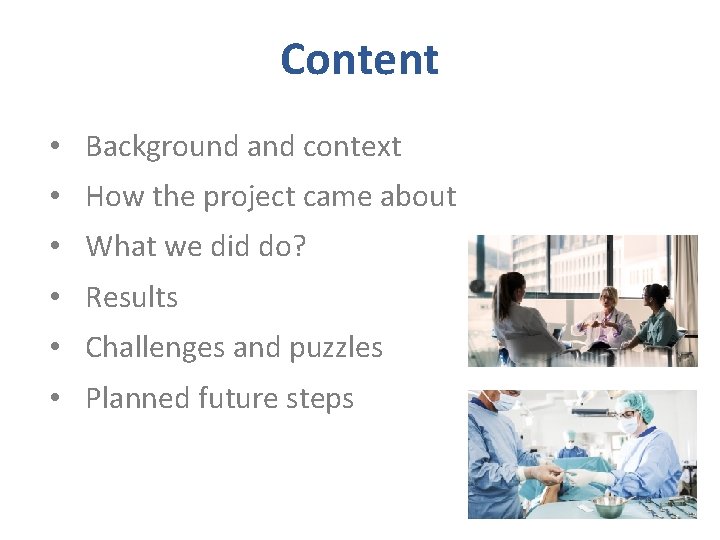
Content • Background and context • How the project came about • What we did do? • Results • Challenges and puzzles • Planned future steps
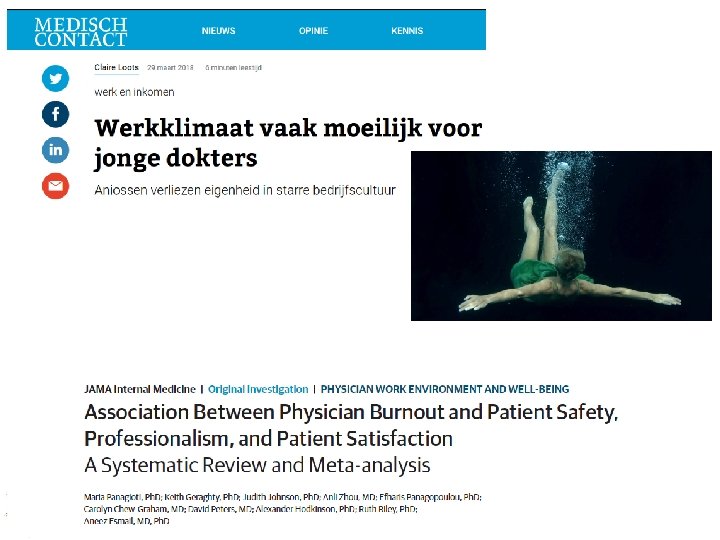
Background • High burn-out and depression rate among (young) doctors and students. Call for medical leadership. • Set-up ‘Leadership in Practice’ educational line in medical curriculum in Groningen, the Netherlands • Focus on: Know yourself (self-leadership) Know your environment (systemic-leadership) • Based in Transformative Learning
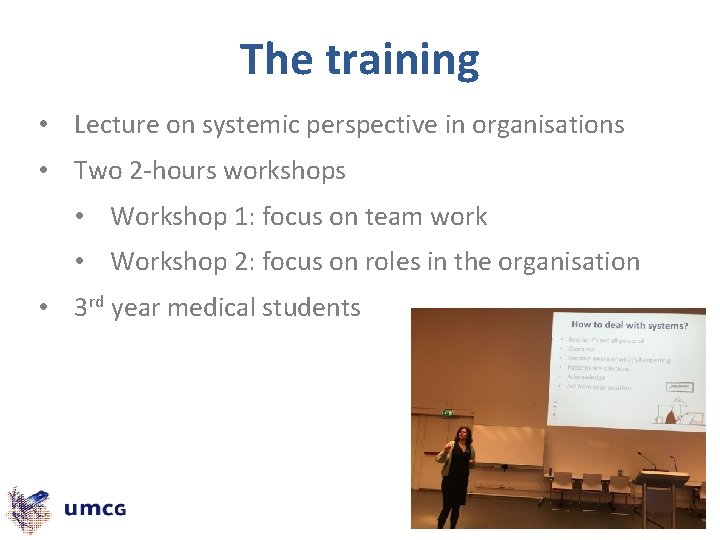
The training • Lecture on systemic perspective in organisations • Two 2 -hours workshops • Workshop 1: focus on team work • Workshop 2: focus on roles in the organisation • 3 rd year medical students
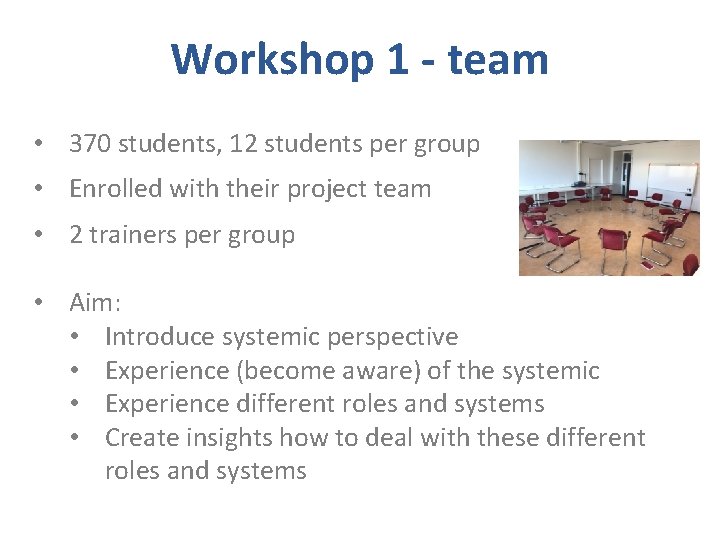
Workshop 1 - team • 370 students, 12 students per group • Enrolled with their project team • 2 trainers per group • Aim: • Introduce systemic perspective • Experience (become aware) of the systemic • Experience different roles and systems • Create insights how to deal with these different roles and systems
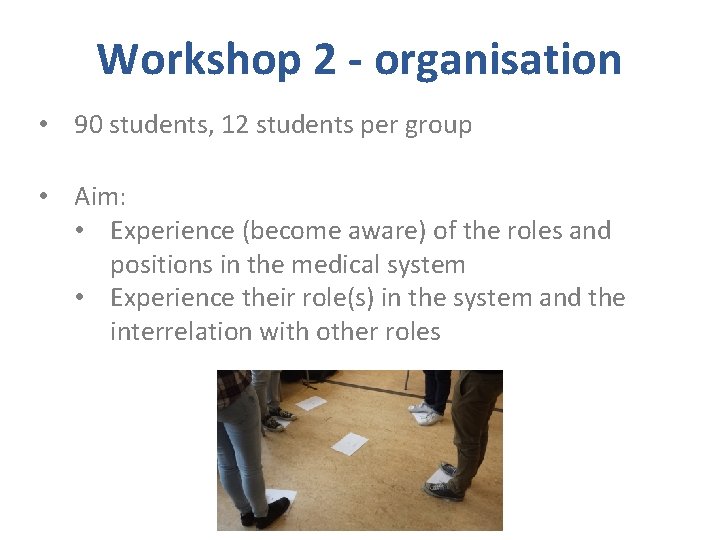
Workshop 2 - organisation • 90 students, 12 students per group • Aim: • Experience (become aware) of the roles and positions in the medical system • Experience their role(s) in the system and the interrelation with other roles
Results • Students have tremendous systemic awareness • Overall: very willing to participate • Only short introduction needed • The trainer must be trustworthy • It has to be highly professional
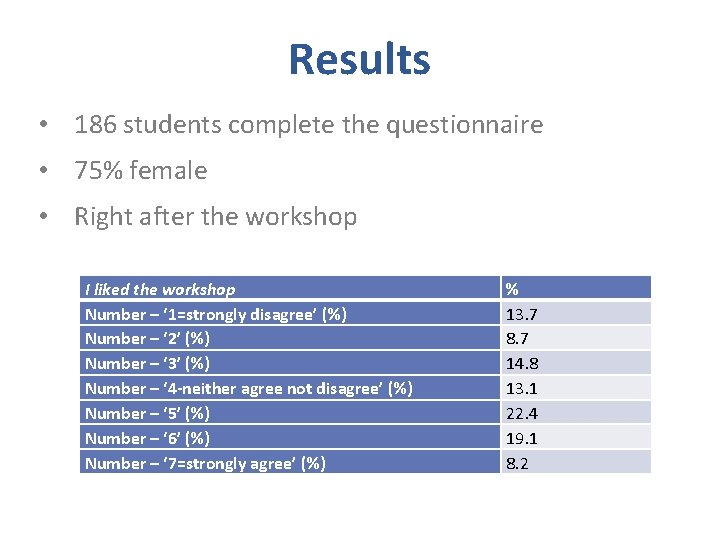
Results • 186 students complete the questionnaire • 75% female • Right after the workshop I liked the workshop Number – ‘ 1=strongly disagree’ (%) Number – ‘ 2’ (%) Number – ‘ 3’ (%) Number – ‘ 4 -neither agree not disagree’ (%) Number – ‘ 5’ (%) Number – ‘ 6’ (%) Number – ‘ 7=strongly agree’ (%) % 13. 7 8. 7 14. 8 13. 1 22. 4 19. 1 8. 2
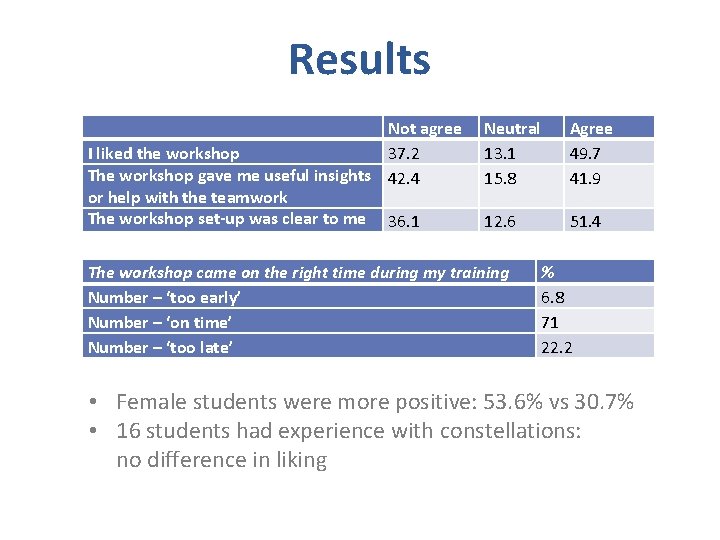
Results Not agree I liked the workshop 37. 2 The workshop gave me useful insights 42. 4 or help with the teamwork The workshop set-up was clear to me 36. 1 Neutral 13. 1 15. 8 Agree 49. 7 41. 9 12. 6 51. 4 The workshop came on the right time during my training Number – ‘too early’ Number – ‘on time’ Number – ‘too late’ % 6. 8 71 22. 2 • Female students were more positive: 53. 6% vs 30. 7% • 16 students had experience with constellations: no difference in liking
Challenges and puzzles How to connect with the medical system? • They have experienced stress, pressure, dysfunctional teams, etc • They know about physical systems (systemic diseases) • It’s a practice-based profession • Use to ratio, linearity and causation • Focused, highly motivated, and result driven • Allergy for esoteric methods
Challenges and puzzles • Not on their request. We came to them (delegate clients). • How to motivate the student and get them involved? • Keep it light, airy and lively. It’s easy to get sucked in. • How and when is training effective? • How and where to expand the training?
Future steps (2018 -2020) Training • Continuation in the Bachelor phase • Introduction in the Master phase (co-assistant) • Development of a minor: Leadership in complex environments Create systemic hub inside UMCG • Train trainers in systemic work in UMCG • Create an expertise group • Connect with leadership training for employees
Future steps Ongoing • Evaluation of the training effect • English review of the current research publications Research questions • What is systemic intelligence? • How to study systemic ‘effects’? • How/when is training most effective? • What are the working ingredients? Research line and blog • www. seedsandleaves. nl
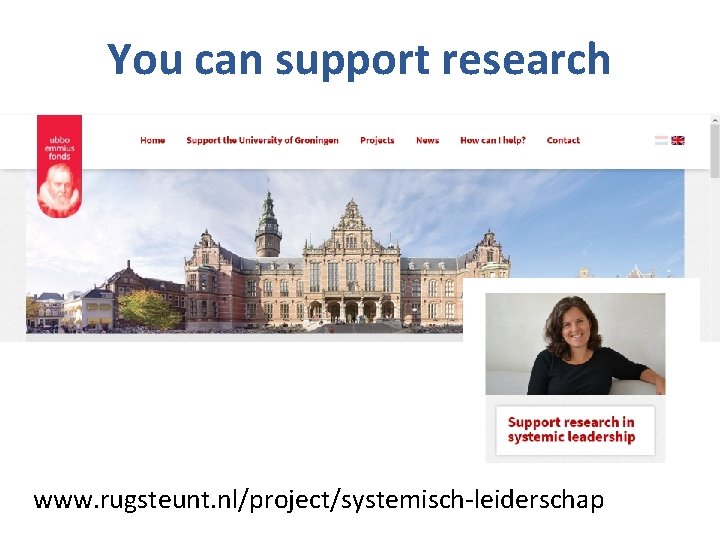
You can support research www. rugsteunt. nl/project/systemisch-leiderschap
Please refer to “Salome Scholtens, Dept of Health Sciences, University Medical Center Groningen, the Netherlands” when used. See more info at: www. seedsandleaves. nl Questions?