Pitfalls and difficulties of thyroid FNA cytology Saeed

- Slides: 9
Pitfalls and difficulties of thyroid FNA cytology Saeed Samie MD Pathologist
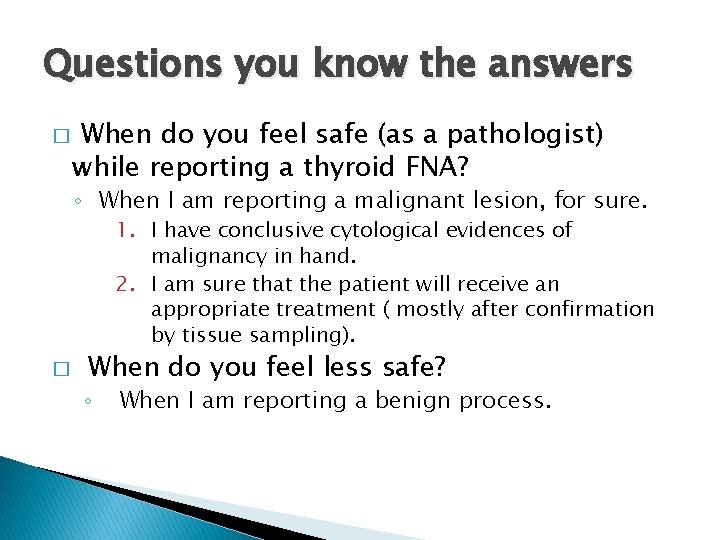
Questions you know the answers � When do you feel safe (as a pathologist) while reporting a thyroid FNA? ◦ When I am reporting a malignant lesion, for sure. 1. I have conclusive cytological evidences of malignancy in hand. 2. I am sure that the patient will receive an appropriate treatment ( mostly after confirmation by tissue sampling). � When do you feel less safe? ◦ When I am reporting a benign process.
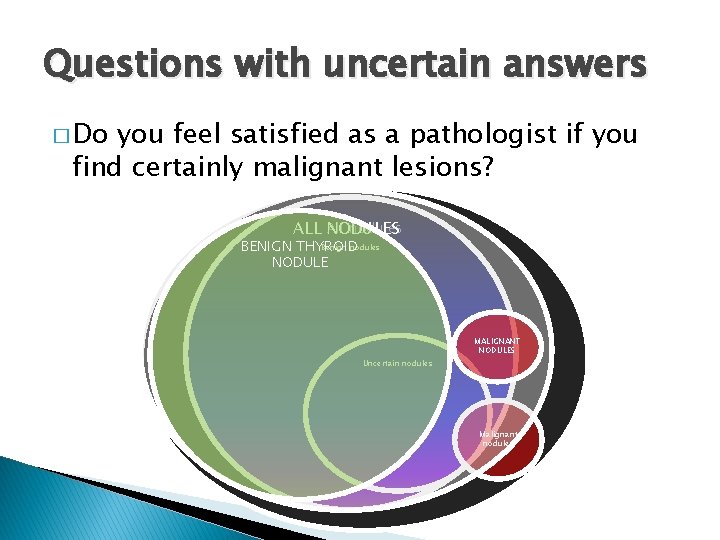
Questions with uncertain answers � Do you feel satisfied as a pathologist if you find certainly malignant lesions? All nodules ALL NODULES Benign nodules BENIGN THYROID NODULE MALIGNANT NODULES Uncertain nodules Malignant nodules
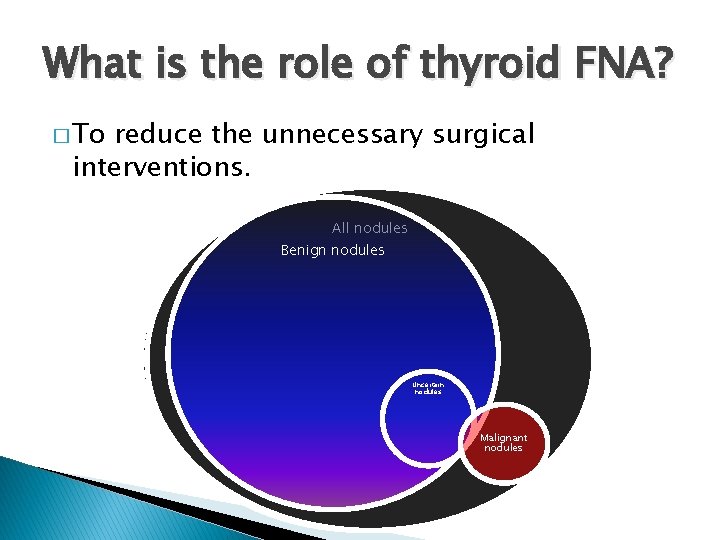
What is the role of thyroid FNA? � To reduce the unnecessary surgical interventions. Allnodules Benign nodules Uncertain nodules Malignant nodules
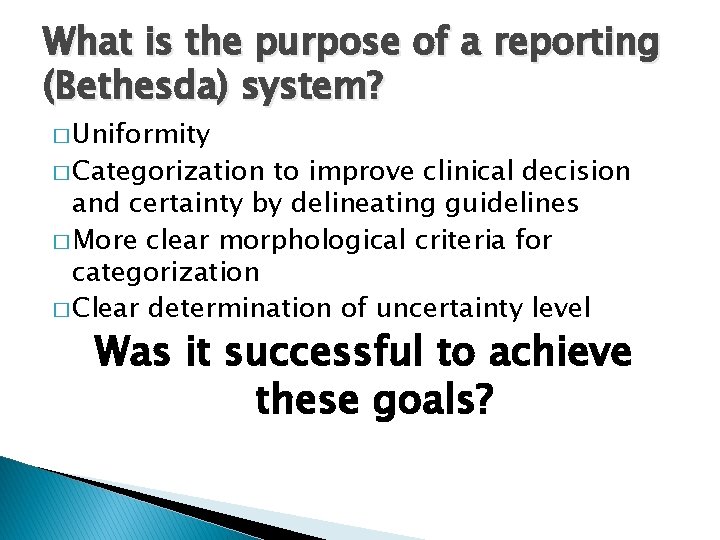
What is the purpose of a reporting (Bethesda) system? � Uniformity � Categorization to improve clinical decision and certainty by delineating guidelines � More clear morphological criteria for categorization � Clear determination of uncertainty level Was it successful to achieve these goals?
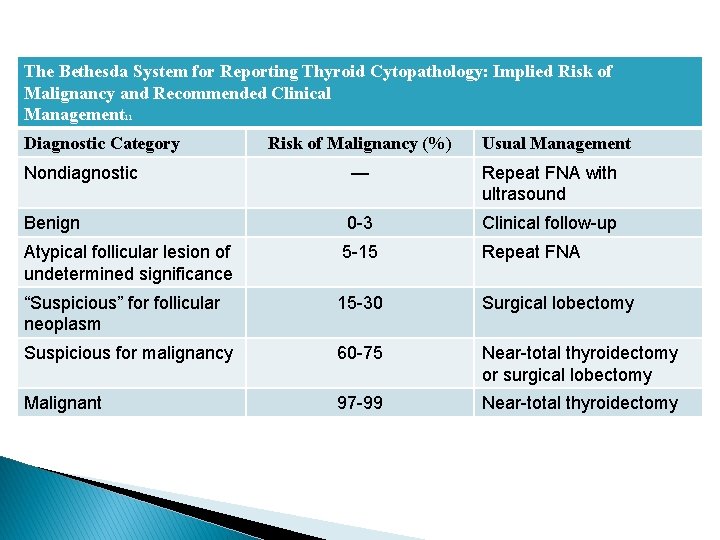
The Bethesda System for Reporting Thyroid Cytopathology: Implied Risk of Malignancy and Recommended Clinical Management 11 FNA, fine-needle aspiration. Diagnostic Category Risk of Malignancy (%) Usual Management Nondiagnostic — Repeat FNA with ultrasound Benign 0 -3 Clinical follow-up Atypical follicular lesion of undetermined significance 5 -15 Repeat FNA “Suspicious” for follicular neoplasm 15 -30 Surgical lobectomy Suspicious for malignancy 60 -75 Near-total thyroidectomy or surgical lobectomy Malignant 97 -99 Near-total thyroidectomy
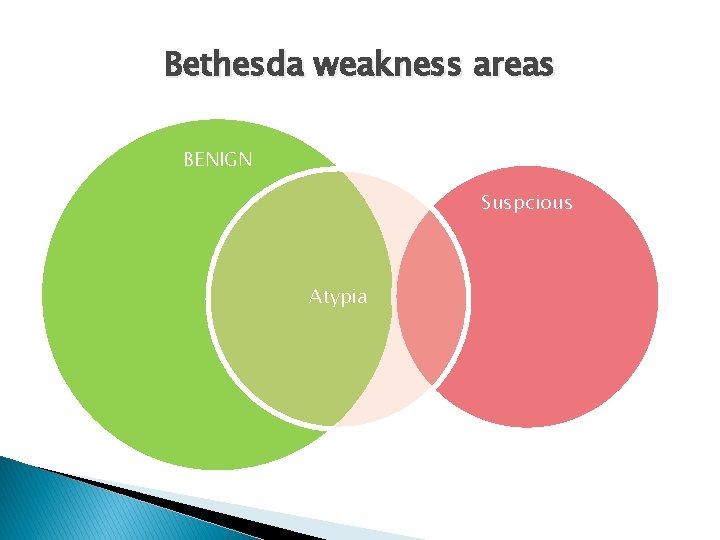
Bethesda weakness areas BENIGN Suspcious Atypia
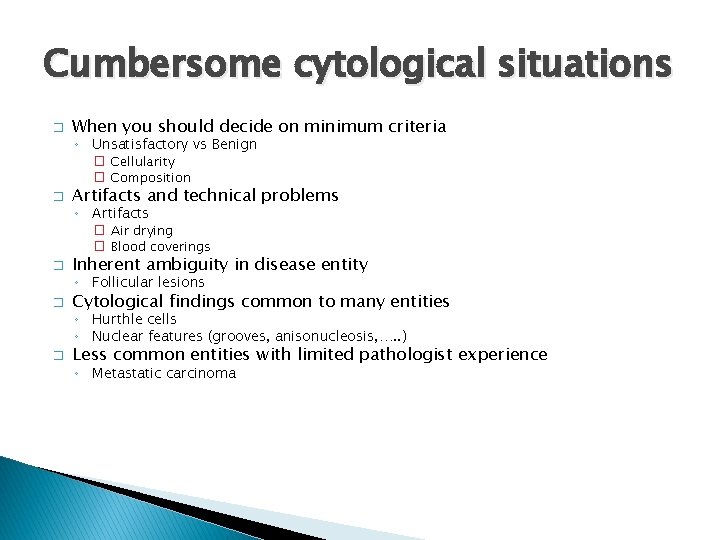
Cumbersome cytological situations � When you should decide on minimum criteria ◦ Unsatisfactory vs Benign � Cellularity � Composition � Artifacts and technical problems ◦ Artifacts � Air drying � Blood coverings � Inherent ambiguity in disease entity ◦ Follicular lesions � Cytological findings common to many entities ◦ Hurthle cells ◦ Nuclear features (grooves, anisonucleosis, …. . ) � Less common entities with limited pathologist experience ◦ Metastatic carcinoma