Perception Chapter 6 1 Perception The process of

- Slides: 13
Perception Chapter 6 1
Perception The process of selecting, organizing, and interpreting sensory information, which enables us to recognize meaningful objects and events. 2
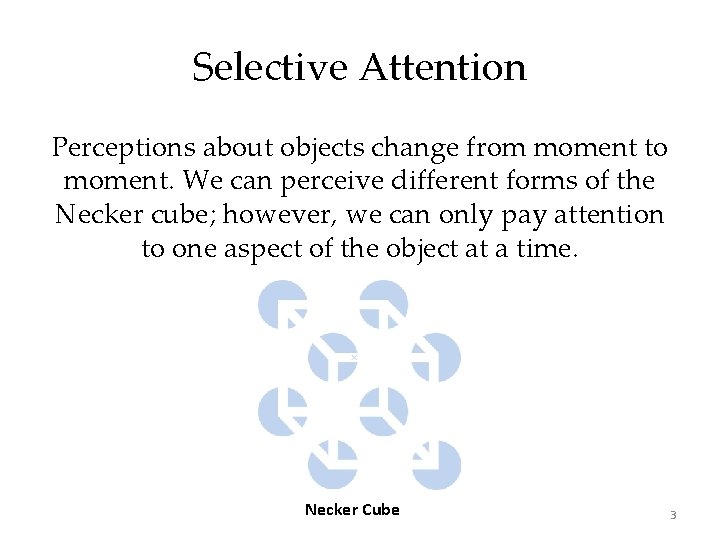
Selective Attention Perceptions about objects change from moment to moment. We can perceive different forms of the Necker cube; however, we can only pay attention to one aspect of the object at a time. Necker Cube 3
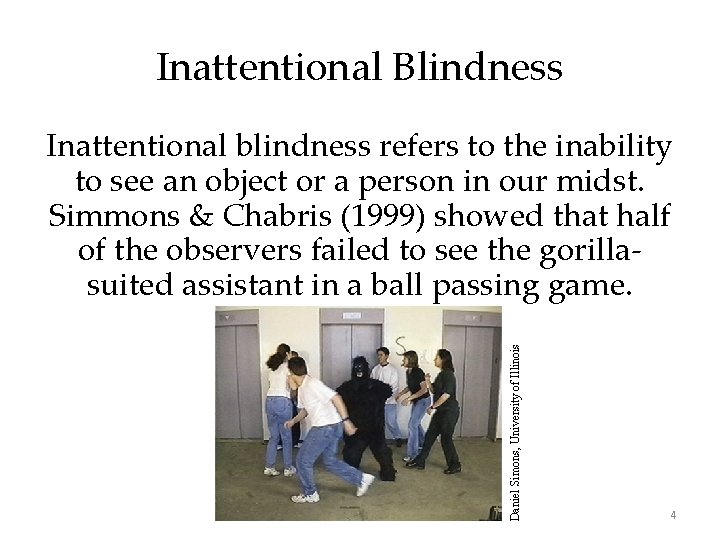
Inattentional Blindness Daniel Simons, University of Illinois Inattentional blindness refers to the inability to see an object or a person in our midst. Simmons & Chabris (1999) showed that half of the observers failed to see the gorillasuited assistant in a ball passing game. 4
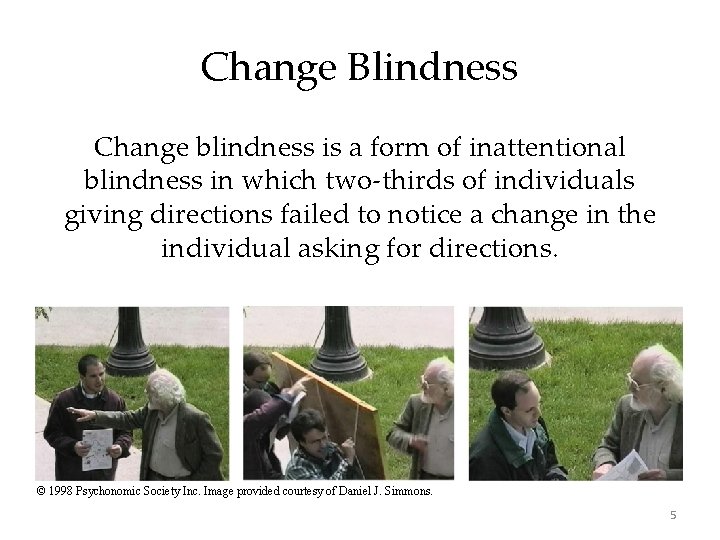
Change Blindness Change blindness is a form of inattentional blindness in which two-thirds of individuals giving directions failed to notice a change in the individual asking for directions. © 1998 Psychonomic Society Inc. Image provided courtesy of Daniel J. Simmons. 5
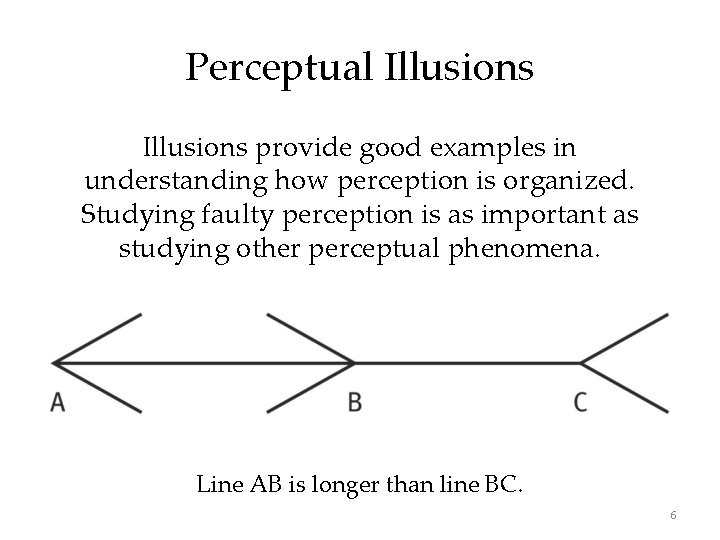
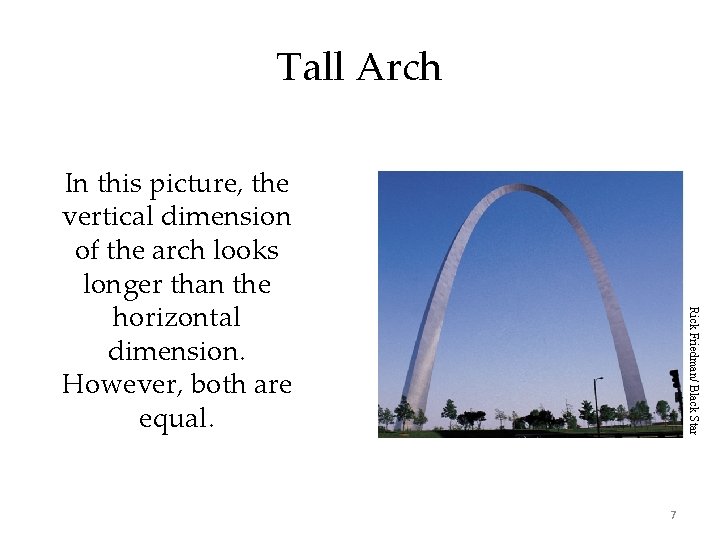
Perceptual Illusions provide good examples in understanding how perception is organized. Studying faulty perception is as important as studying other perceptual phenomena. Line AB is longer than line BC. 6
Tall Arch Rick Friedman/ Black Star In this picture, the vertical dimension of the arch looks longer than the horizontal dimension. However, both are equal. 7
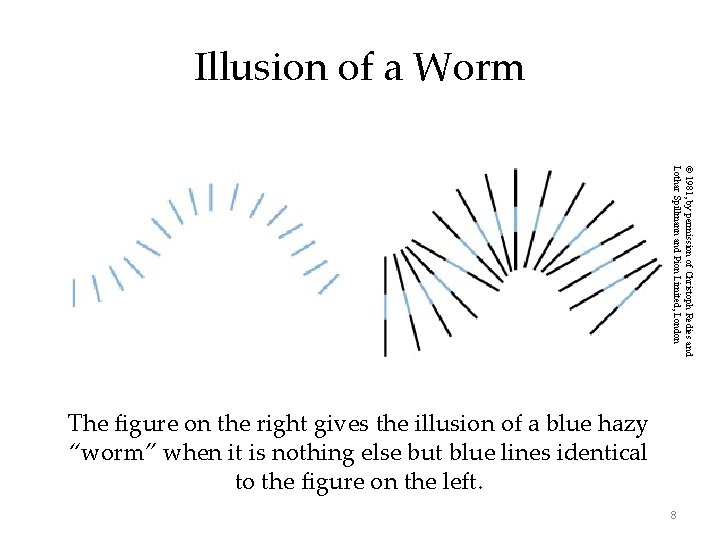
Illusion of a Worm © 1981, by permission of Christoph Redies and Lothar Spillmann and Pion Limited, London The figure on the right gives the illusion of a blue hazy “worm” when it is nothing else but blue lines identical to the figure on the left. 8
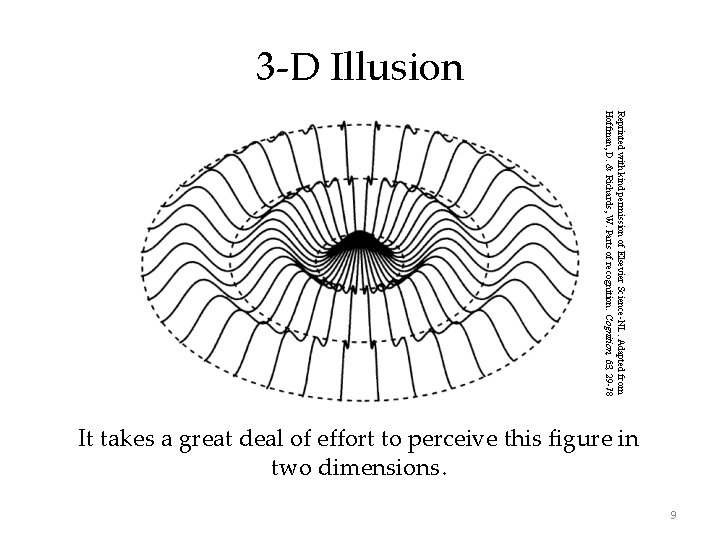
3 -D Illusion Reprinted with kind permission of Elsevier Science-NL. Adapted from Hoffman, D. & Richards, W. Parts of recognition. Cognition, 63, 29 -78 It takes a great deal of effort to perceive this figure in two dimensions. 9
Perceptual Organization When vision competes with our other senses, vision usually wins – a phenomena called visual capture. How do we form meaningful perceptions from sensory information? We organize it. Gestalt psychologists showed that a figure formed a “whole” different than its surroundings. 10
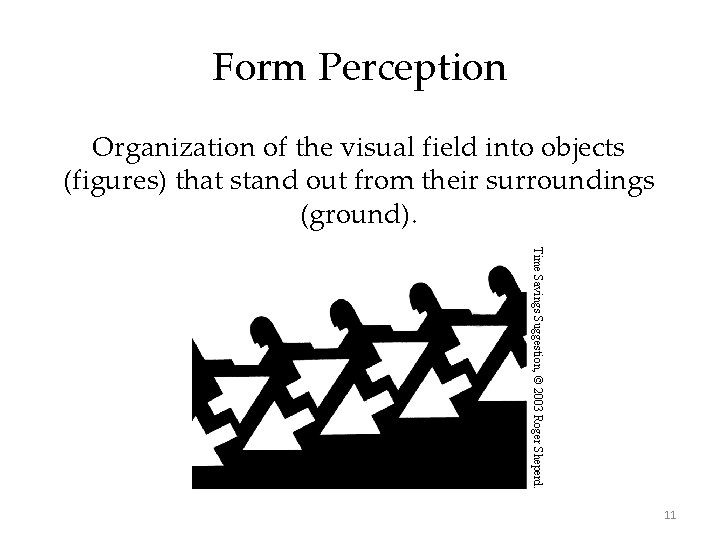
Form Perception Organization of the visual field into objects (figures) that stand out from their surroundings (ground). Time Savings Suggestion, © 2003 Roger Sheperd. 11
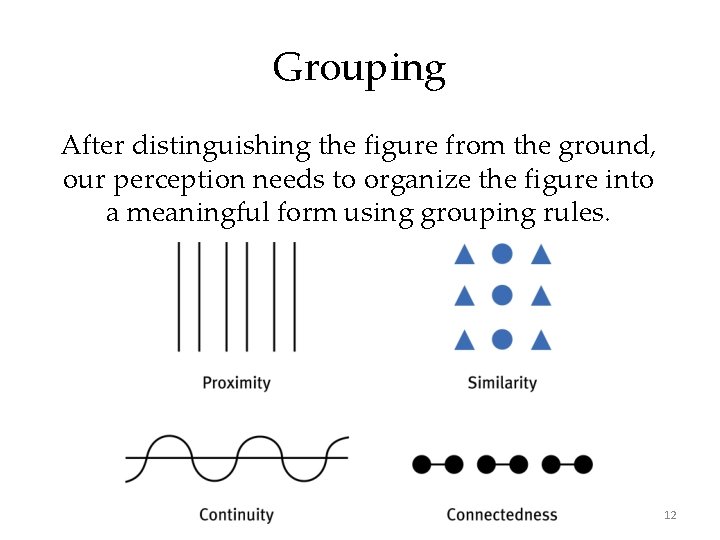
Grouping After distinguishing the figure from the ground, our perception needs to organize the figure into a meaningful form using grouping rules. 12
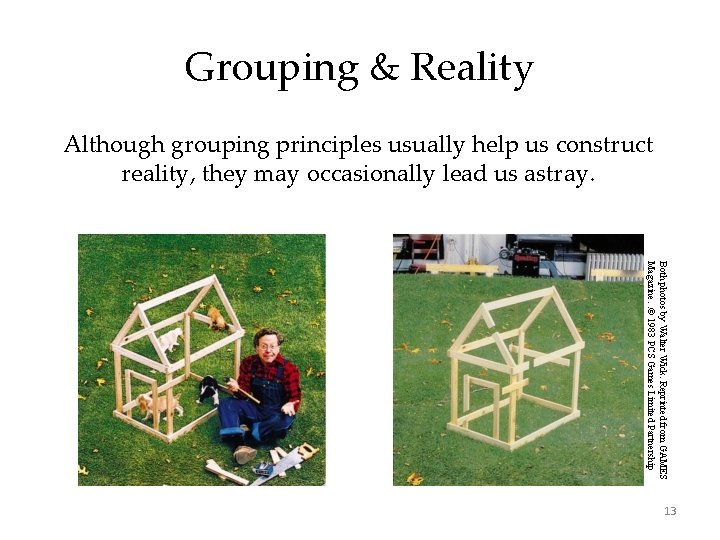
Grouping & Reality Although grouping principles usually help us construct reality, they may occasionally lead us astray. Both photos by Walter Wick. Reprinted from GAMES Magazine. . © 1983 PCS Games Limited Partnership 13