PATTERNS OF INTERACTION SOCIOLOGY Socialization We interact with



- Slides: 17
PATTERNS OF INTERACTION SOCIOLOGY Socialization
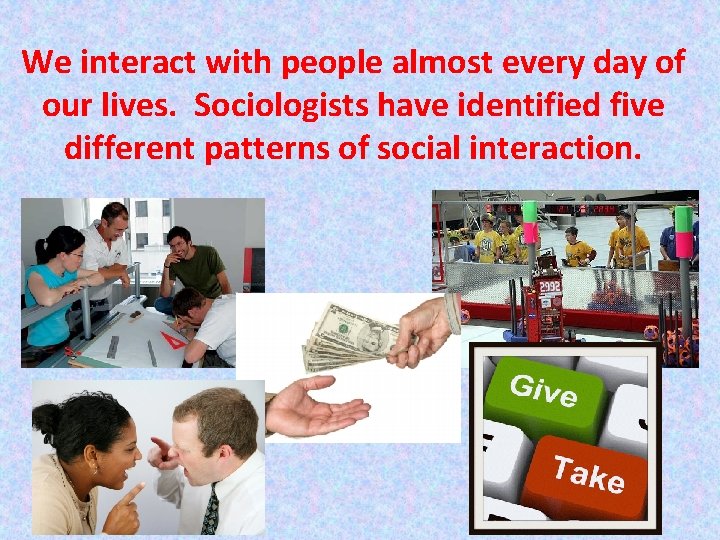
We interact with people almost every day of our lives. Sociologists have identified five different patterns of social interaction.
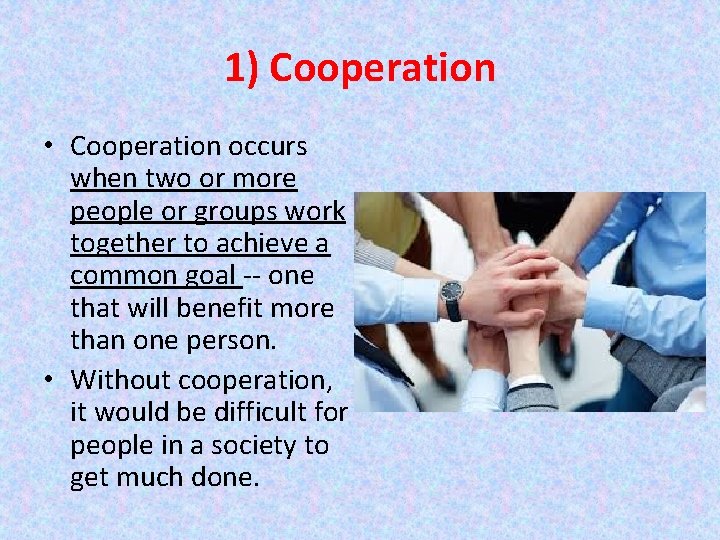
1) Cooperation • Cooperation occurs when two or more people or groups work together to achieve a common goal -- one that will benefit more than one person. • Without cooperation, it would be difficult for people in a society to get much done.
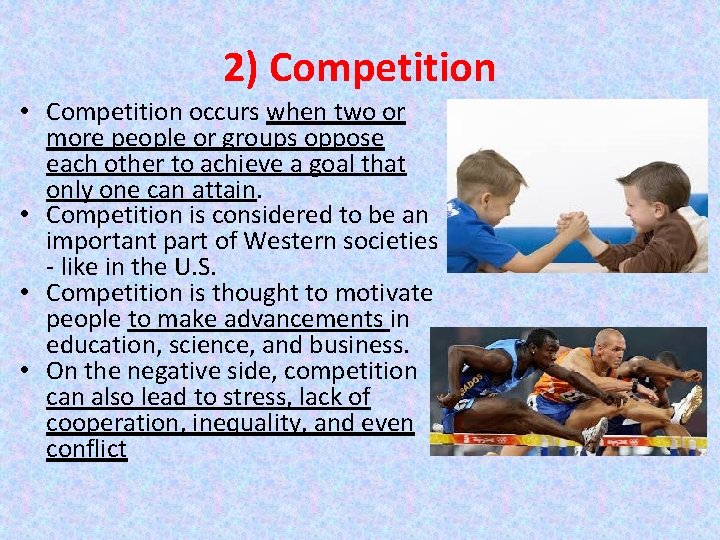
2) Competition • Competition occurs when two or more people or groups oppose each other to achieve a goal that only one can attain. • Competition is considered to be an important part of Western societies - like in the U. S. • Competition is thought to motivate people to make advancements in education, science, and business. • On the negative side, competition can also lead to stress, lack of cooperation, inequality, and even conflict
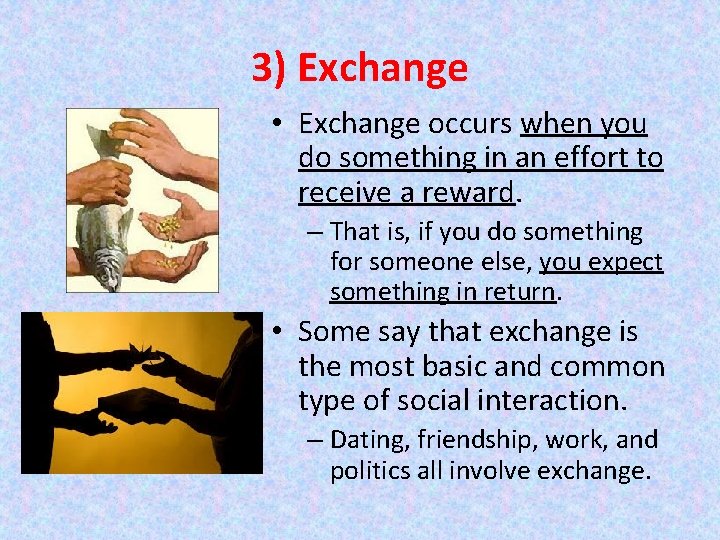
3) Exchange • Exchange occurs when you do something in an effort to receive a reward. – That is, if you do something for someone else, you expect something in return. • Some say that exchange is the most basic and common type of social interaction. – Dating, friendship, work, and politics all involve exchange.
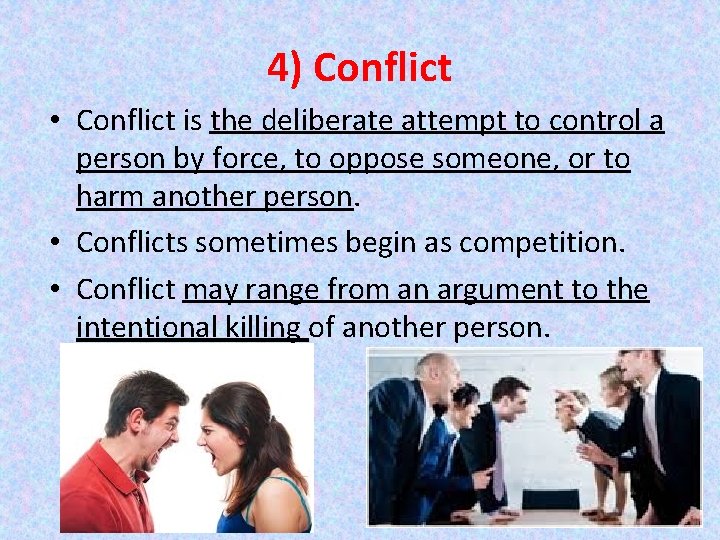
4) Conflict • Conflict is the deliberate attempt to control a person by force, to oppose someone, or to harm another person. • Conflicts sometimes begin as competition. • Conflict may range from an argument to the intentional killing of another person.
• Conflict occurs in different situations, including: - wars/armed conflicts between nations - legal disputes - disagreements within groups - clashes over ideology -- often religion or politics
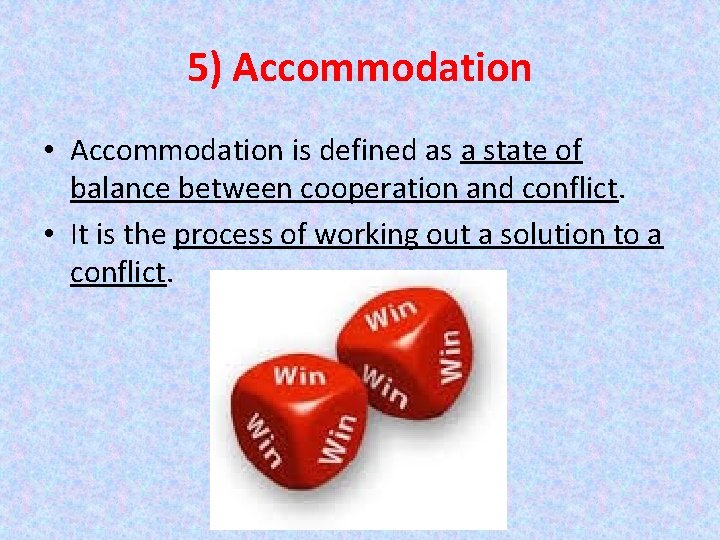
5) Accommodation • Accommodation is defined as a state of balance between cooperation and conflict. • It is the process of working out a solution to a conflict.
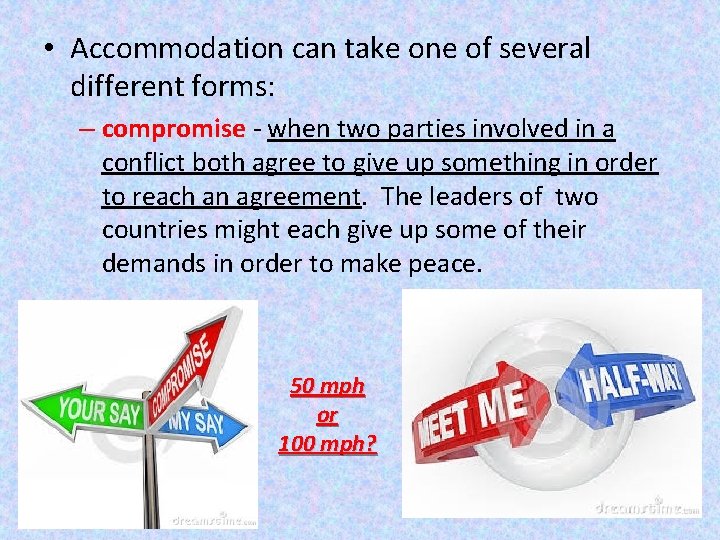
• Accommodation can take one of several different forms: – compromise - when two parties involved in a conflict both agree to give up something in order to reach an agreement. The leaders of two countries might each give up some of their demands in order to make peace. 50 mph or 100 mph?
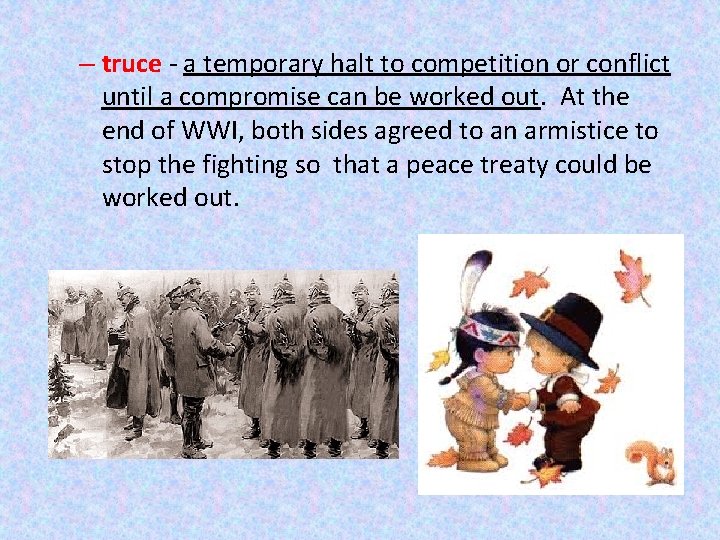
– truce - a temporary halt to competition or conflict until a compromise can be worked out. At the end of WWI, both sides agreed to an armistice to stop the fighting so that a peace treaty could be worked out.
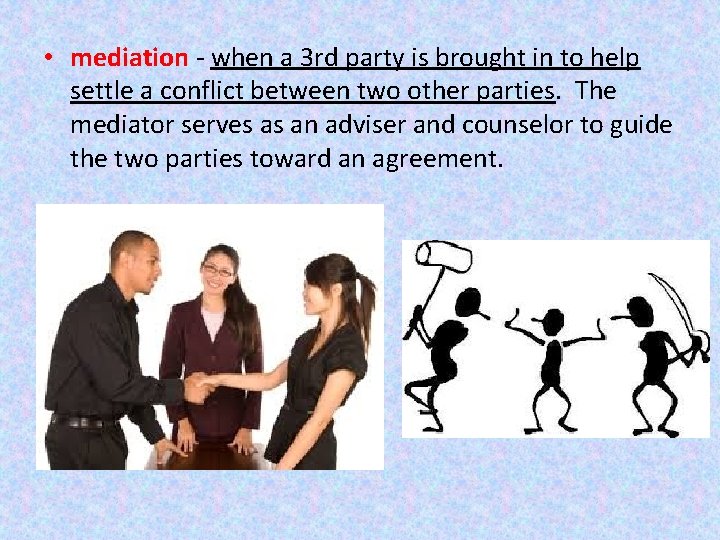
• mediation - when a 3 rd party is brought in to help settle a conflict between two other parties. The mediator serves as an adviser and counselor to guide the two parties toward an agreement.
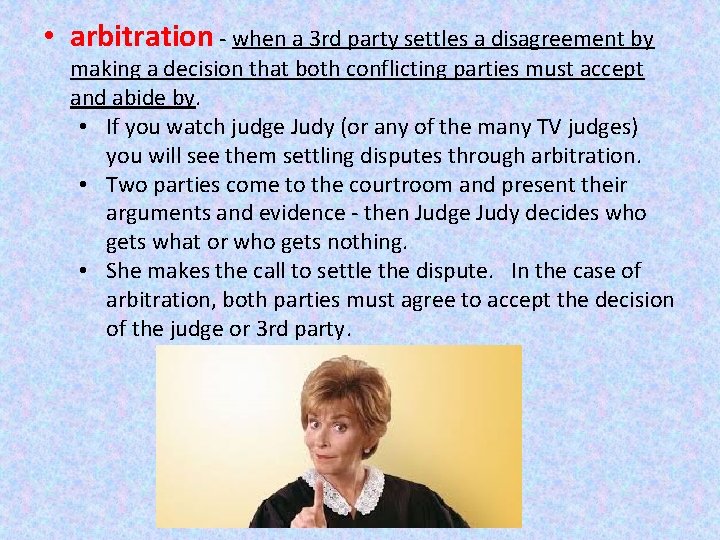
• arbitration - when a 3 rd party settles a disagreement by making a decision that both conflicting parties must accept and abide by. • If you watch judge Judy (or any of the many TV judges) you will see them settling disputes through arbitration. • Two parties come to the courtroom and present their arguments and evidence - then Judge Judy decides who gets what or who gets nothing. • She makes the call to settle the dispute. In the case of arbitration, both parties must agree to accept the decision of the judge or 3 rd party.
END
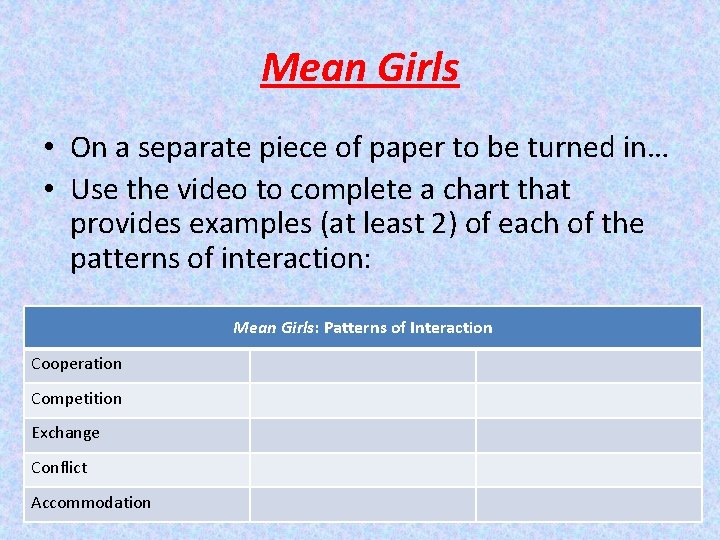
Mean Girls • On a separate piece of paper to be turned in… • Use the video to complete a chart that provides examples (at least 2) of each of the patterns of interaction: Mean Girls: Patterns of Interaction Cooperation Competition Exchange Conflict Accommodation
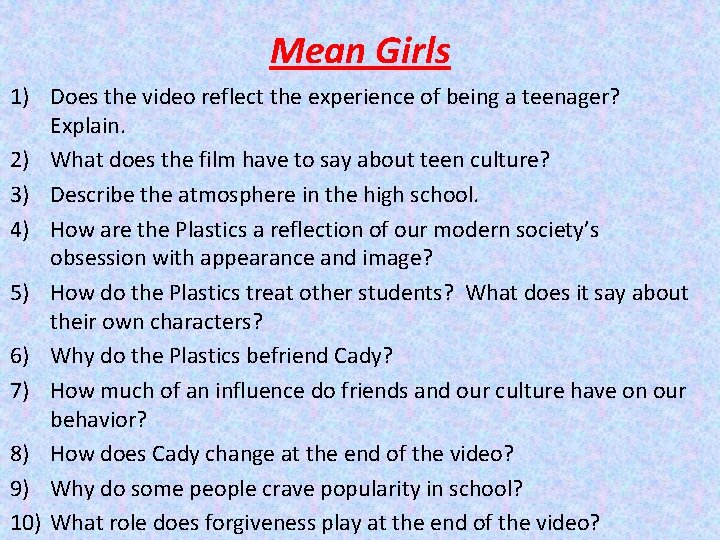
Mean Girls 1) Does the video reflect the experience of being a teenager? Explain. 2) What does the film have to say about teen culture? 3) Describe the atmosphere in the high school. 4) How are the Plastics a reflection of our modern society’s obsession with appearance and image? 5) How do the Plastics treat other students? What does it say about their own characters? 6) Why do the Plastics befriend Cady? 7) How much of an influence do friends and our culture have on our behavior? 8) How does Cady change at the end of the video? 9) Why do some people crave popularity in school? 10) What role does forgiveness play at the end of the video?
• https: //sites. google. com/site/mrmooressociol ogy/pictures/chapter-3 ---patterns-of-socialinteraction