Parliament Limits the English Monarchy Pg 156 159
- Slides: 10
Parliament Limits the English Monarchy Pg. 156 -159
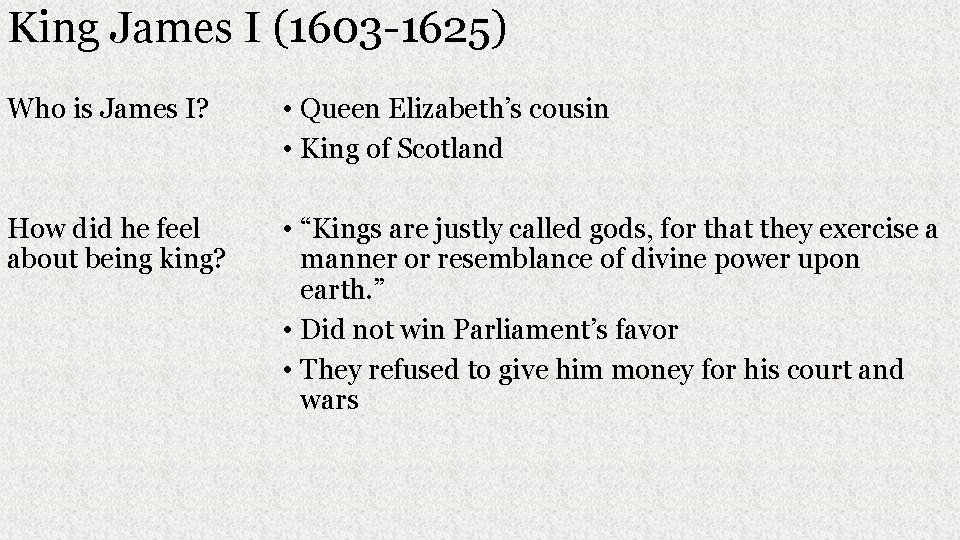
King James I (1603 -1625) Who is James I? • Queen Elizabeth’s cousin • King of Scotland How did he feel about being king? • “Kings are justly called gods, for that they exercise a manner or resemblance of divine power upon earth. ” • Did not win Parliament’s favor • They refused to give him money for his court and wars
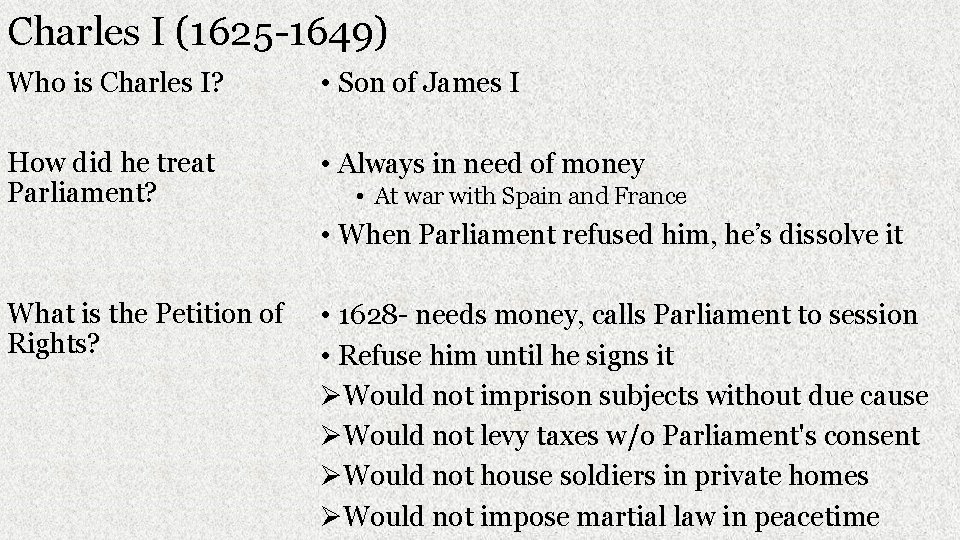
Charles I (1625 -1649) Who is Charles I? • Son of James I How did he treat Parliament? • Always in need of money • At war with Spain and France • When Parliament refused him, he’s dissolve it What is the Petition of Rights? • 1628 - needs money, calls Parliament to session • Refuse him until he signs it ØWould not imprison subjects without due cause ØWould not levy taxes w/o Parliament's consent ØWould not house soldiers in private homes ØWould not impose martial law in peacetime
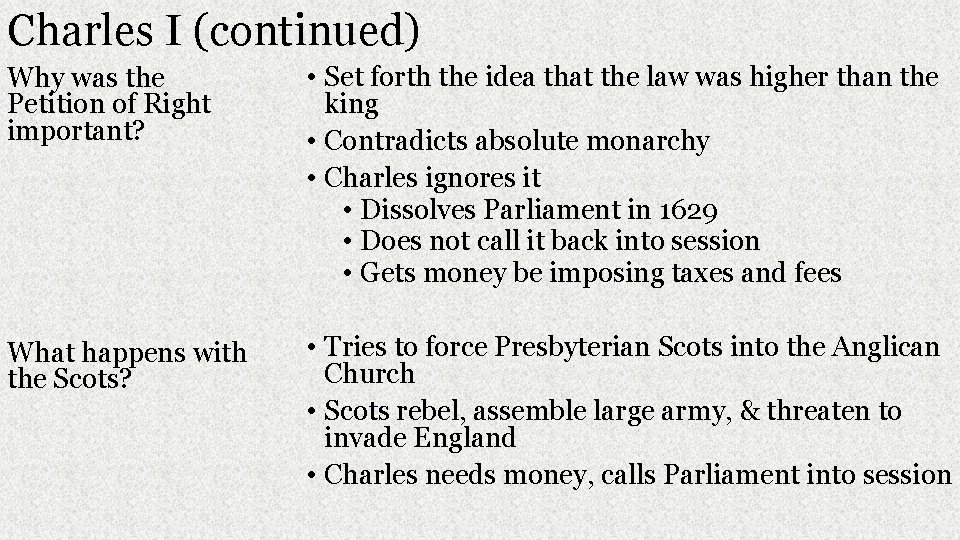
Charles I (continued) Why was the Petition of Right important? • Set forth the idea that the law was higher than the king • Contradicts absolute monarchy • Charles ignores it • Dissolves Parliament in 1629 • Does not call it back into session • Gets money be imposing taxes and fees What happens with the Scots? • Tries to force Presbyterian Scots into the Anglican Church • Scots rebel, assemble large army, & threaten to invade England • Charles needs money, calls Parliament into session
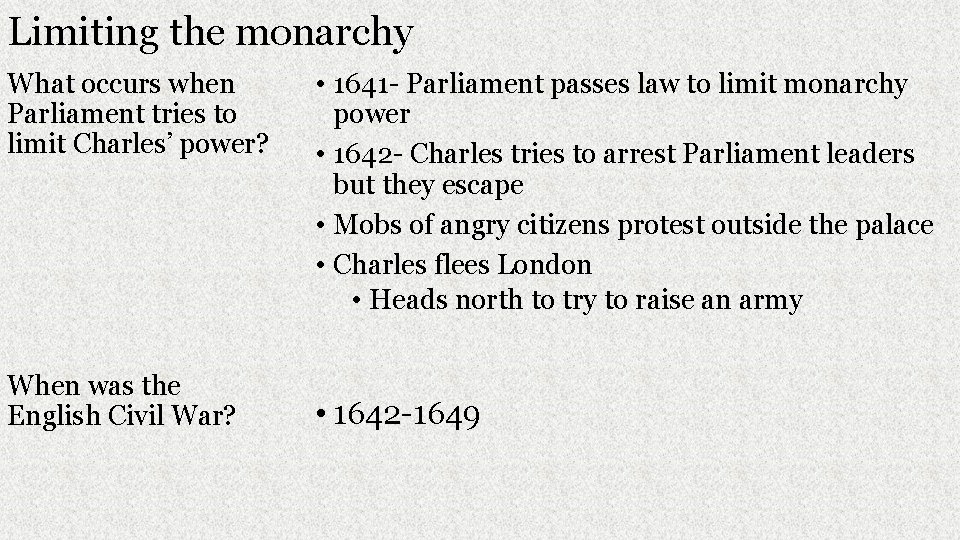
Limiting the monarchy What occurs when Parliament tries to limit Charles’ power? When was the English Civil War? • 1641 - Parliament passes law to limit monarchy power • 1642 - Charles tries to arrest Parliament leaders but they escape • Mobs of angry citizens protest outside the palace • Charles flees London • Heads north to try to raise an army • 1642 -1649
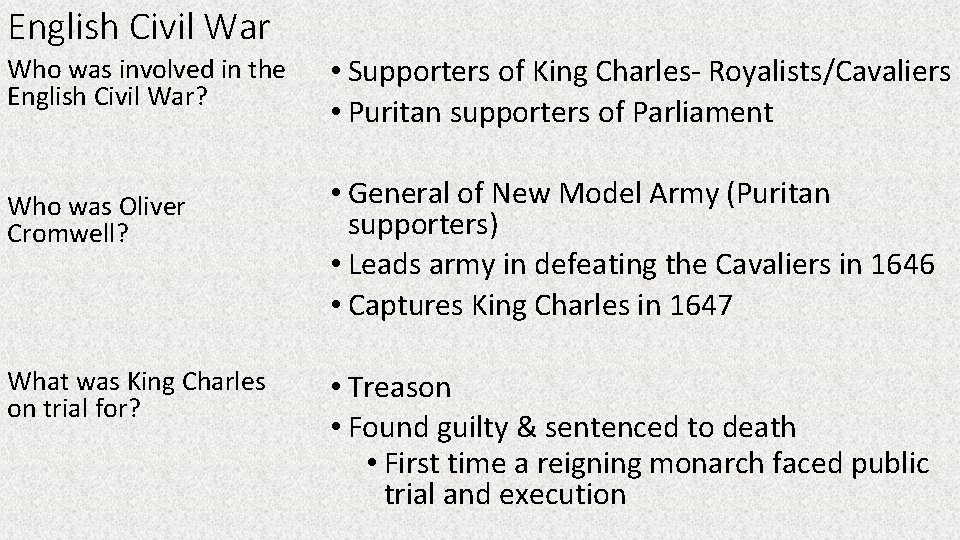
English Civil War Who was involved in the English Civil War? Who was Oliver Cromwell? What was King Charles on trial for? • Supporters of King Charles- Royalists/Cavaliers • Puritan supporters of Parliament • General of New Model Army (Puritan supporters) • Leads army in defeating the Cavaliers in 1646 • Captures King Charles in 1647 • Treason • Found guilty & sentenced to death • First time a reigning monarch faced public trial and execution
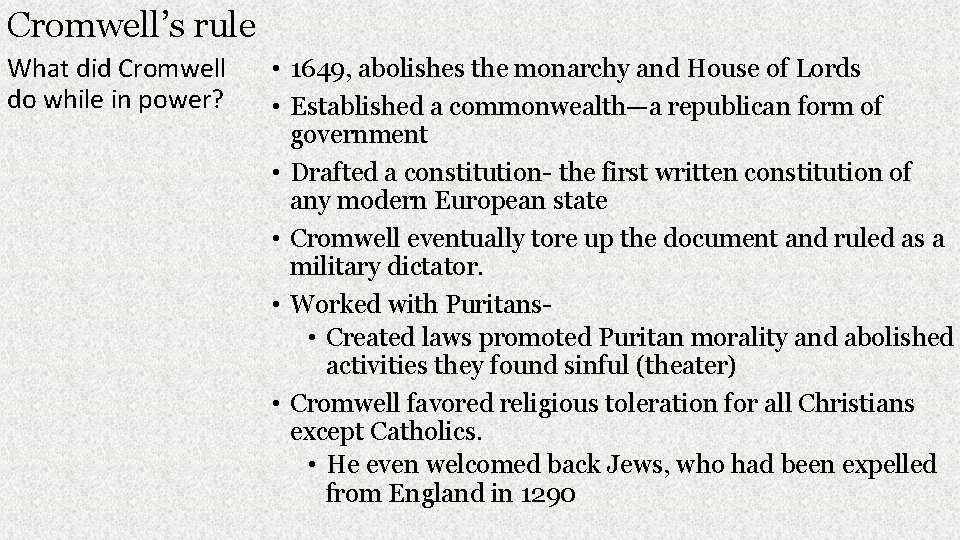
Cromwell’s rule What did Cromwell do while in power? • 1649, abolishes the monarchy and House of Lords • Established a commonwealth—a republican form of government • Drafted a constitution- the first written constitution of any modern European state • Cromwell eventually tore up the document and ruled as a military dictator. • Worked with Puritans • Created laws promoted Puritan morality and abolished activities they found sinful (theater) • Cromwell favored religious toleration for all Christians except Catholics. • He even welcomed back Jews, who had been expelled from England in 1290
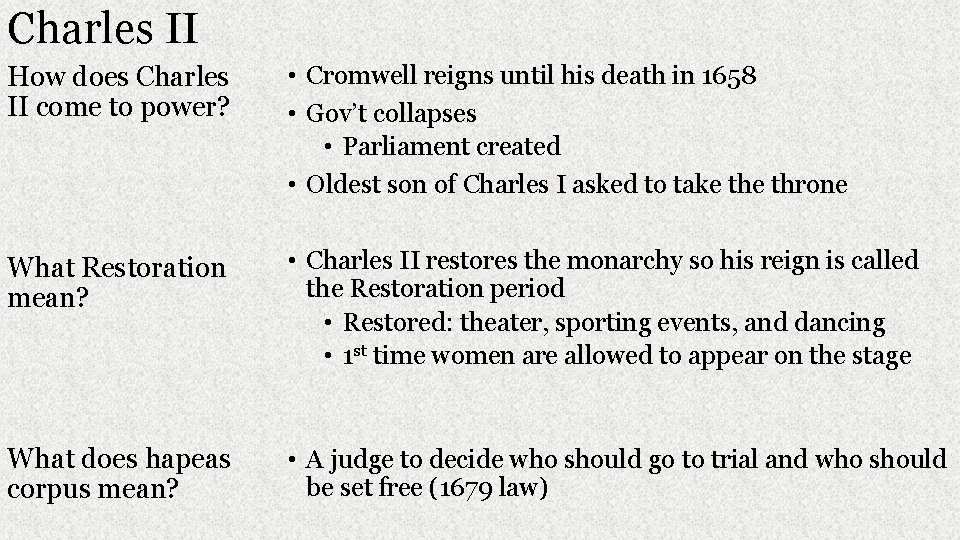
Charles II How does Charles II come to power? • Cromwell reigns until his death in 1658 • Gov’t collapses • Parliament created • Oldest son of Charles I asked to take throne What Restoration mean? • Charles II restores the monarchy so his reign is called the Restoration period • Restored: theater, sporting events, and dancing • 1 st time women are allowed to appear on the stage What does hapeas corpus mean? • A judge to decide who should go to trial and who should be set free (1679 law)
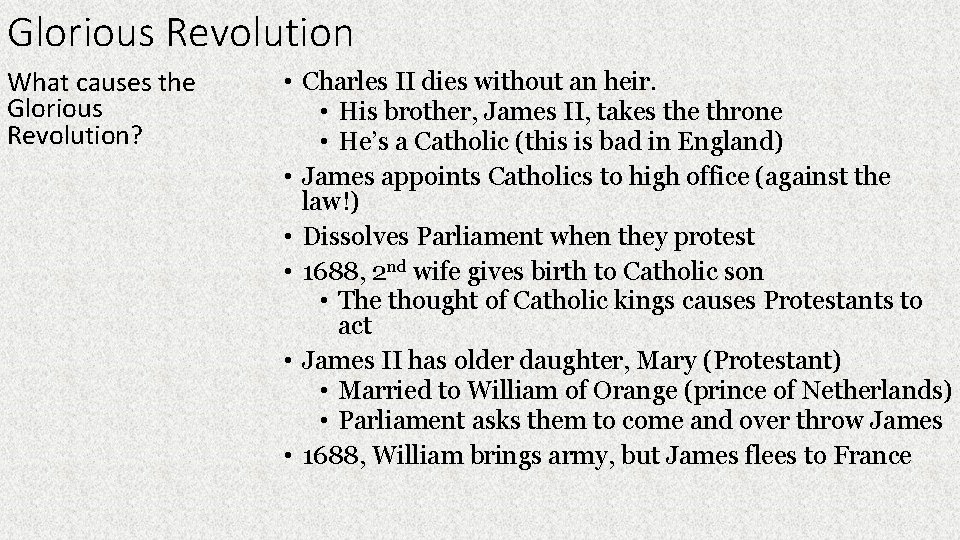
Glorious Revolution What causes the Glorious Revolution? • Charles II dies without an heir. • His brother, James II, takes the throne • He’s a Catholic (this is bad in England) • James appoints Catholics to high office (against the law!) • Dissolves Parliament when they protest • 1688, 2 nd wife gives birth to Catholic son • The thought of Catholic kings causes Protestants to act • James II has older daughter, Mary (Protestant) • Married to William of Orange (prince of Netherlands) • Parliament asks them to come and over throw James • 1688, William brings army, but James flees to France
Political Changes What changes occurred under William and Mary’s rule? What was the cabinet system? • Constitutional Monarchy • Laws that limit the rulers power • Bill of Rights (1689). • No suspending of Parliament’s laws • No levying of taxes without a specific grant from Parliament • No interfering with freedom of speech in Parliament • No penalty for a citizen who petitions the king about grievances • Monarchy could not rule without Parliament approval/Parliament could not rule without monarchy approval • Cabinet developed • Acted in the rulers name but represented a party of the Parliament