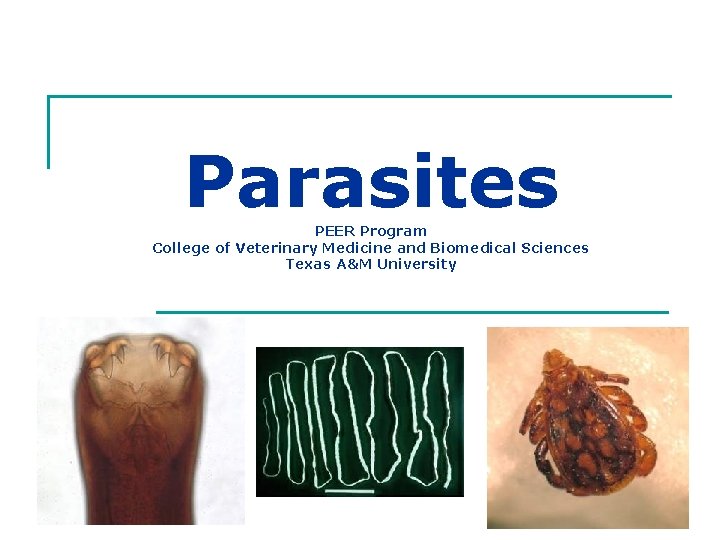
Parasites PEER Program College of Veterinary Medicine and
- Slides: 24
Parasites PEER Program College of Veterinary Medicine and Biomedical Sciences Texas A&M University
What is a Parasite? Organism that lives within or upon a different host species and may cause harm to the host
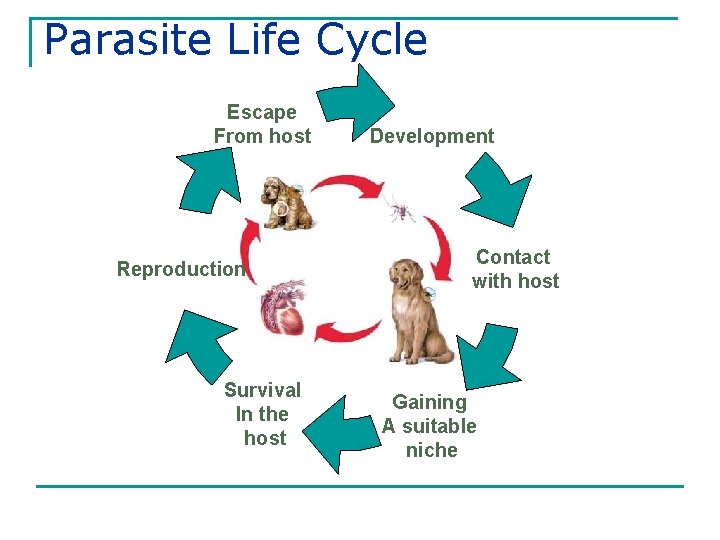
Parasite Life Cycle Escape From host Reproduction Survival In the host Development Contact with host Gaining A suitable niche
Parasitic Life Cycle Why is there a stage in the cycle when the host is abandoned.
Parasite Intermediate Hosts Why do so many parasite species need an intermediate host?
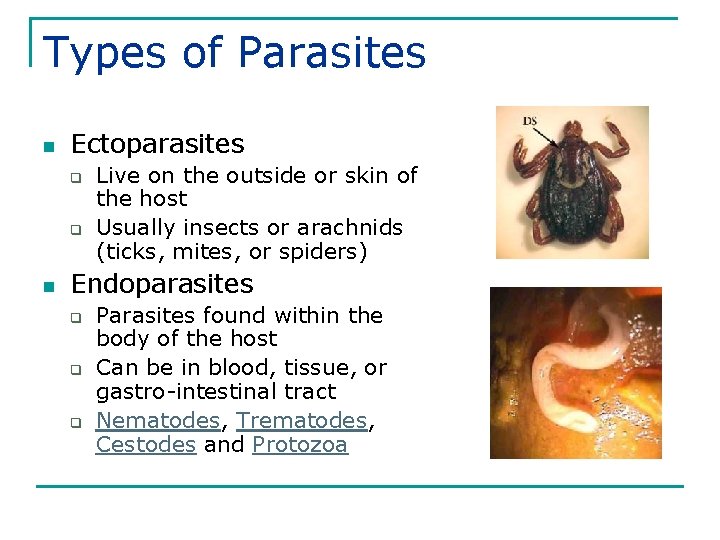
Types of Parasites n Ectoparasites q q n Live on the outside or skin of the host Usually insects or arachnids (ticks, mites, or spiders) Endoparasites q q q Parasites found within the body of the host Can be in blood, tissue, or gastro-intestinal tract Nematodes, Trematodes, Cestodes and Protozoa
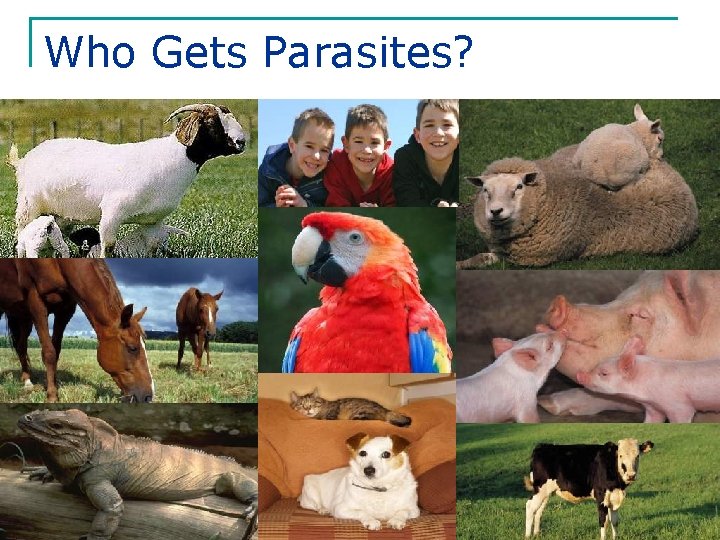
Who Gets Parasites?
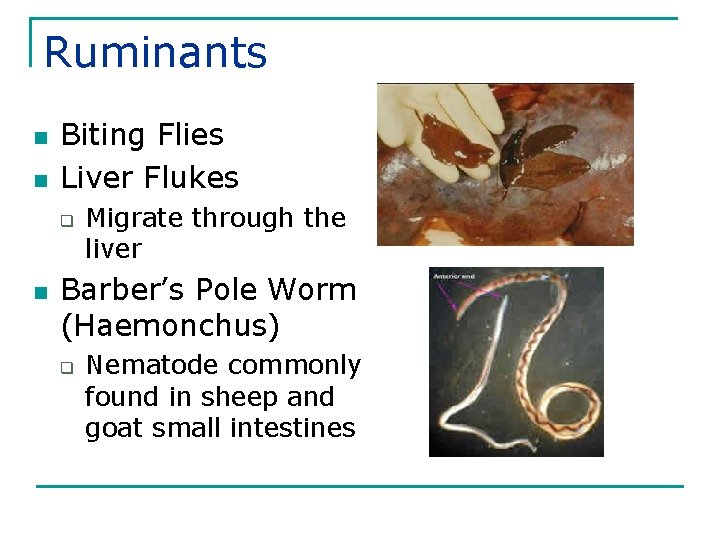
Ruminants n n Biting Flies Liver Flukes q n Migrate through the liver Barber’s Pole Worm (Haemonchus) q Nematode commonly found in sheep and goat small intestines
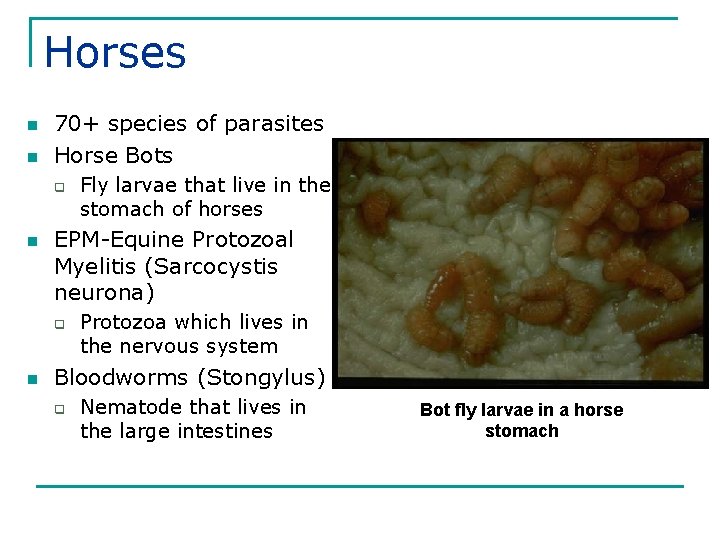
Horses n n 70+ species of parasites Horse Bots q n EPM-Equine Protozoal Myelitis (Sarcocystis neurona) q n Fly larvae that live in the stomach of horses Protozoa which lives in the nervous system Bloodworms (Stongylus) q Nematode that lives in the large intestines Bot fly larvae in a horse stomach
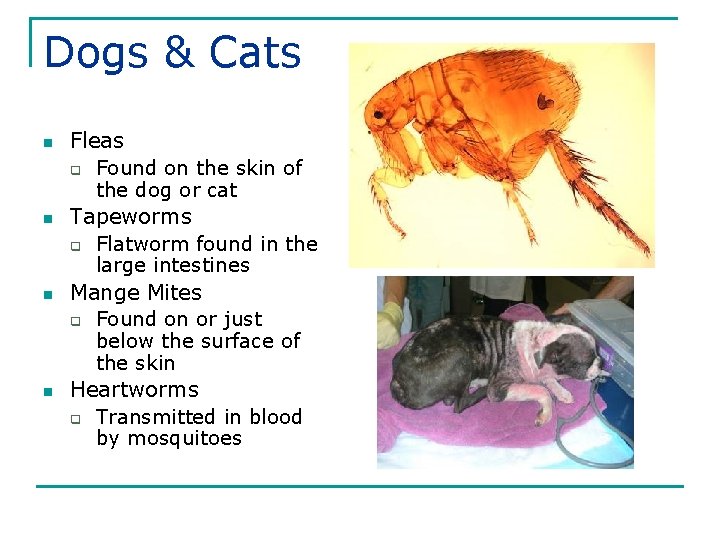
Dogs & Cats n n Fleas q Found on the skin of the dog or cat Tapeworms q Flatworm found in the large intestines Mange Mites q Found on or just below the surface of the skin Heartworms q Transmitted in blood by mosquitoes
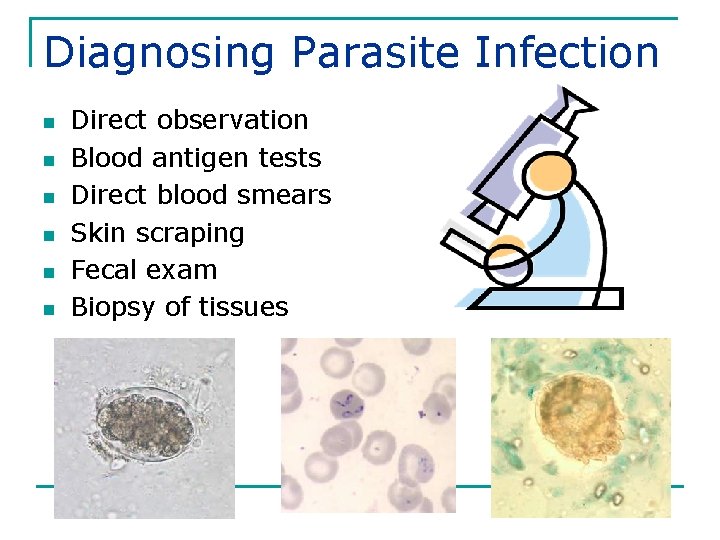
Diagnosing Parasite Infection n n n Direct observation Blood antigen tests Direct blood smears Skin scraping Fecal exam Biopsy of tissues
Why Do Parasites Matter Disease and Death Zoonotic Potential Production Loss
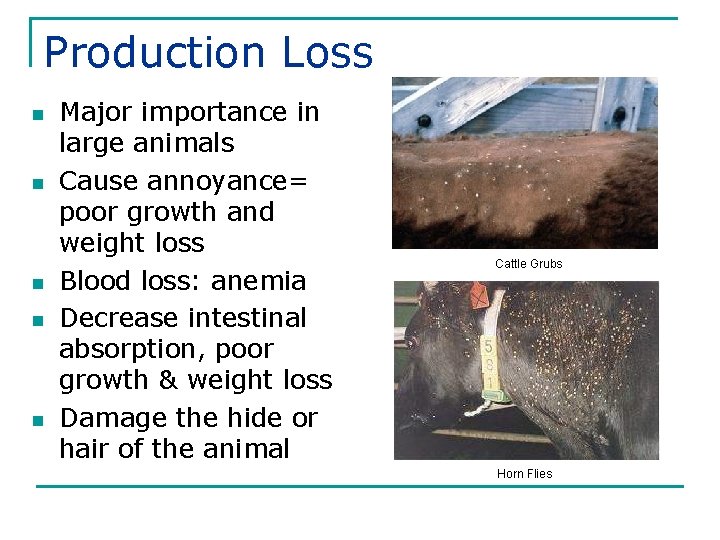
Production Loss n n n Major importance in large animals Cause annoyance= poor growth and weight loss Blood loss: anemia Decrease intestinal absorption, poor growth & weight loss Damage the hide or hair of the animal Cattle Grubs Horn Flies
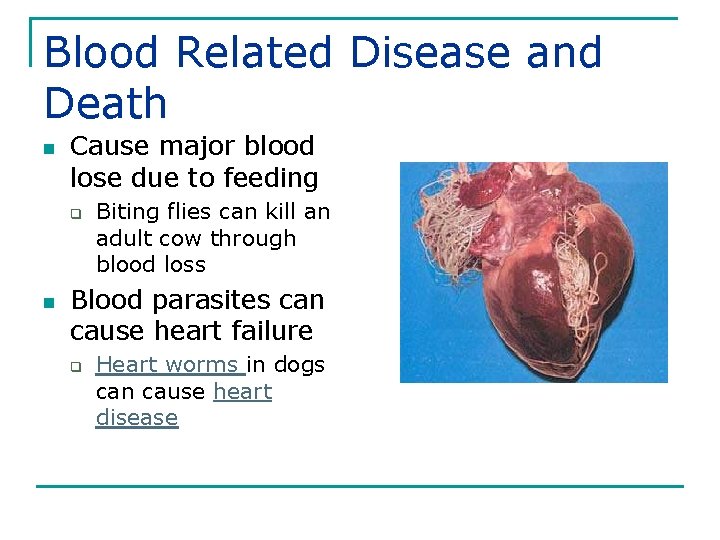
Blood Related Disease and Death n Cause major blood lose due to feeding q n Biting flies can kill an adult cow through blood loss Blood parasites can cause heart failure q Heart worms in dogs can cause heart disease
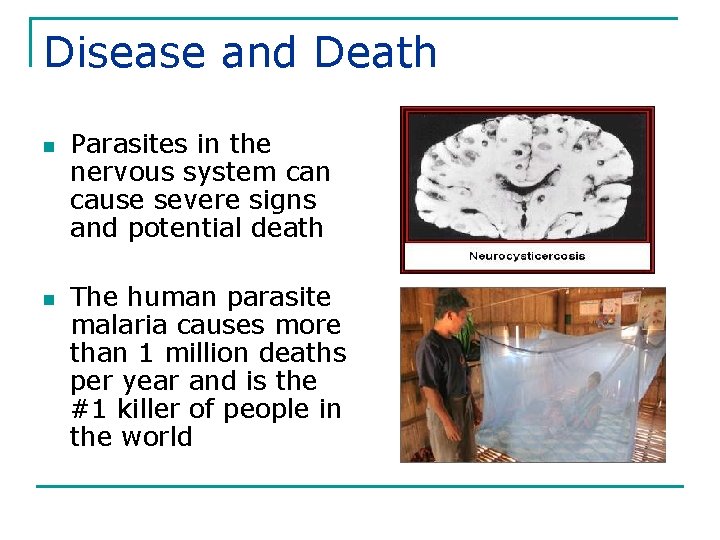
Disease and Death n n Parasites in the nervous system can cause severe signs and potential death The human parasite malaria causes more than 1 million deaths per year and is the #1 killer of people in the world
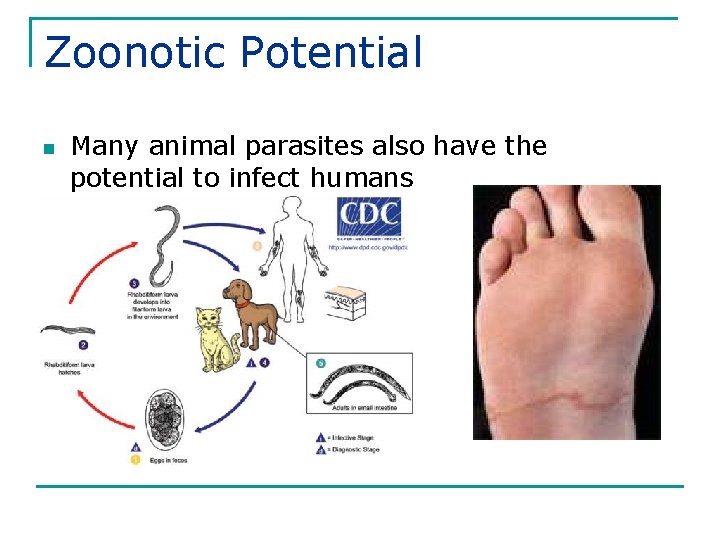
Zoonotic Potential n Many animal parasites also have the potential to infect humans
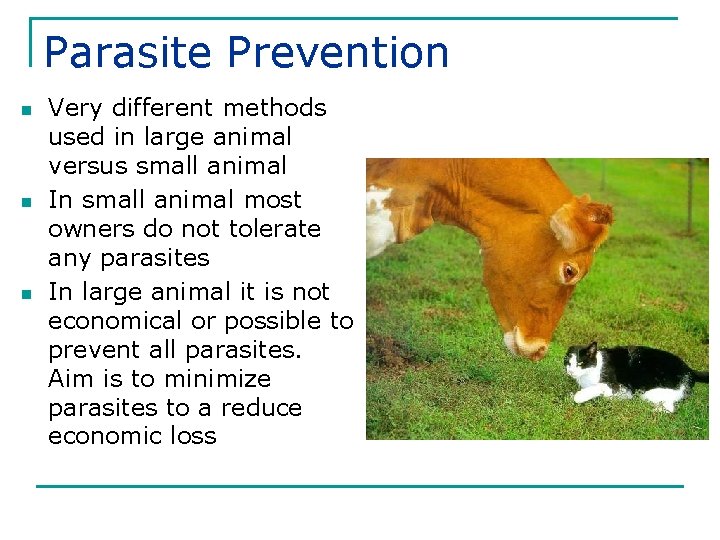
Parasite Prevention n Very different methods used in large animal versus small animal In small animal most owners do not tolerate any parasites In large animal it is not economical or possible to prevent all parasites. Aim is to minimize parasites to a reduce economic loss
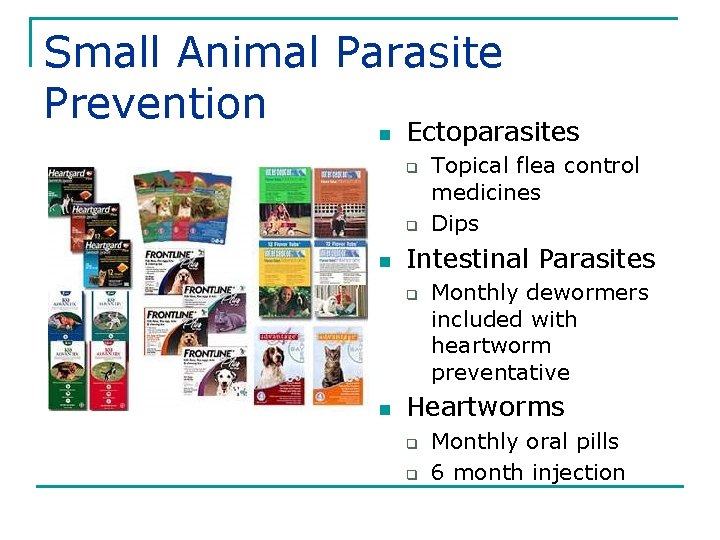
Small Animal Parasite Prevention n Ectoparasites q q n Intestinal Parasites q n Topical flea control medicines Dips Monthly dewormers included with heartworm preventative Heartworms q q Monthly oral pills 6 month injection
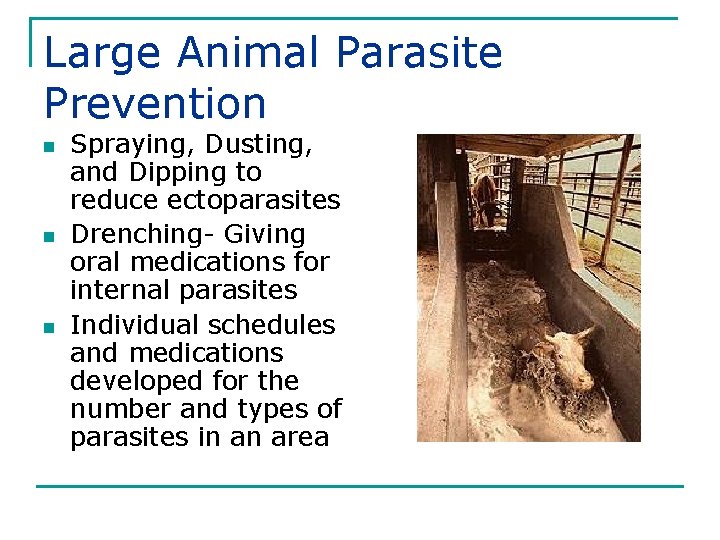
Large Animal Parasite Prevention n Spraying, Dusting, and Dipping to reduce ectoparasites Drenching- Giving oral medications for internal parasites Individual schedules and medications developed for the number and types of parasites in an area
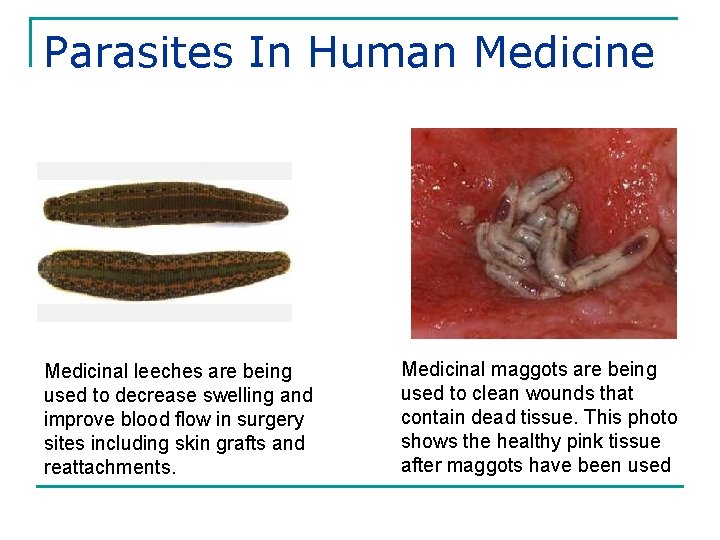
Parasites In Human Medicine Medicinal leeches are being used to decrease swelling and improve blood flow in surgery sites including skin grafts and reattachments. Medicinal maggots are being used to clean wounds that contain dead tissue. This photo shows the healthy pink tissue after maggots have been used
Parasite Research n Parasite Resistance q q q Increased numbers of parasites resistant to current drugs Documented problem in small ruminants Growing problem in horses and cattle No new anthelminthics on the horizon Management practices are more important than ever to reduce parasite loads
Parasite Research n Parasite vaccines q q q None currently on the market Difficult to develop because of complex anatomy of parasites Close to developing a vaccine for malaria
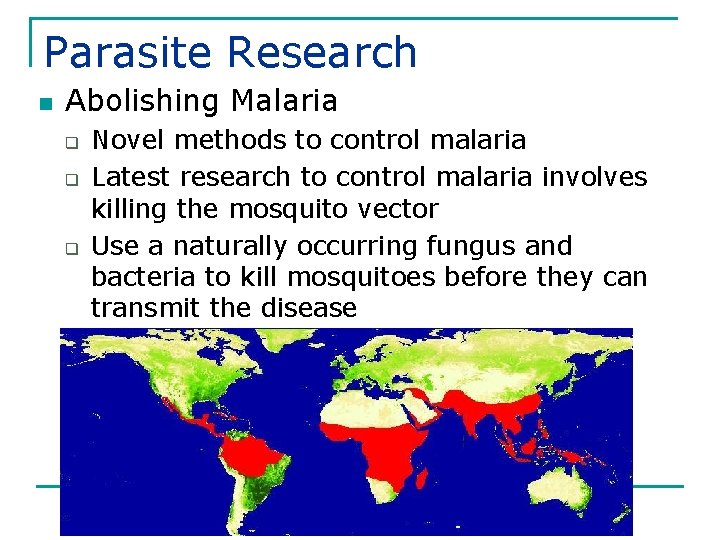
Parasite Research n Abolishing Malaria q q q Novel methods to control malaria Latest research to control malaria involves killing the mosquito vector Use a naturally occurring fungus and bacteria to kill mosquitoes before they can transmit the disease
References n n n www. entomology. cornell. edu www. ansi. okstate. edu/breeds www. usda. gov www. dpd. cdc. gov/DPDx www. nihrecord. od. nih. gov www. insects. tamu. edu