
Operating Systems Lecture 9 Agenda for Today n
![pipe() Call § int pipe (int pipedes[2]); § Call fails § At least two](https://slidetodoc.com/presentation_image_h2/b6e8672a8a998ab04ff42fed1c9a0da0/image-19.jpg "pipe() Call § int pipe (int pipedes[2]); § Call fails § At least two")
![Sample Code if (pid == 0) { /* Child’s Code */ close(pipefd[0]); write(pipefd[1], test.](https://slidetodoc.com/presentation_image_h2/b6e8672a8a998ab04ff42fed1c9a0da0/image-24.jpg "Sample Code if (pid == 0) { /* Child’s Code */ close(pipefd[0]); write(pipefd[1], test.")
![Sample Code /* Parent’s Code */ close(pipefd[1]); n = strlen(test. String); nr = read(pipefd[0],](https://slidetodoc.com/presentation_image_h2/b6e8672a8a998ab04ff42fed1c9a0da0/image-25.jpg "Sample Code /* Parent’s Code */ close(pipefd[1]); n = strlen(test. String); nr = read(pipefd[0],")
- Slides: 30
Operating Systems Lecture 9
Agenda for Today n Review of previous lecture n UNIX/Linux IPC tools and associated system calls n UNIX/Linux standard files and kernel’s mechanism for file access n Use of pipe in a program and at the command line n Recap of the lecture
Review of Lecture 8 n Interprocess n Establish n Issues communication (IPC) link and use send/recv about links: establishing links, link capacity, links per pair of processes, processes per link, message size, uni- or bi-directional n Direct communication n Indirect communication
Review of Lecture 8 n Process synchronization n Buffering capacity of a link n IPC in UNIX and Linux n Pipe, FIFO, Socket, etc. n Per process file descriptor table n pipe, read, write, close system calls
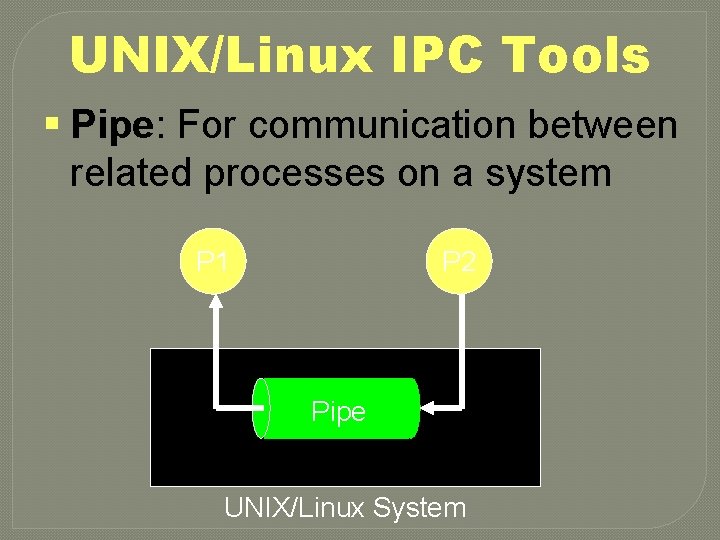
UNIX/Linux IPC Tools § Pipe: For communication between related processes on a system P 1 P 2 Pipe UNIX/Linux System
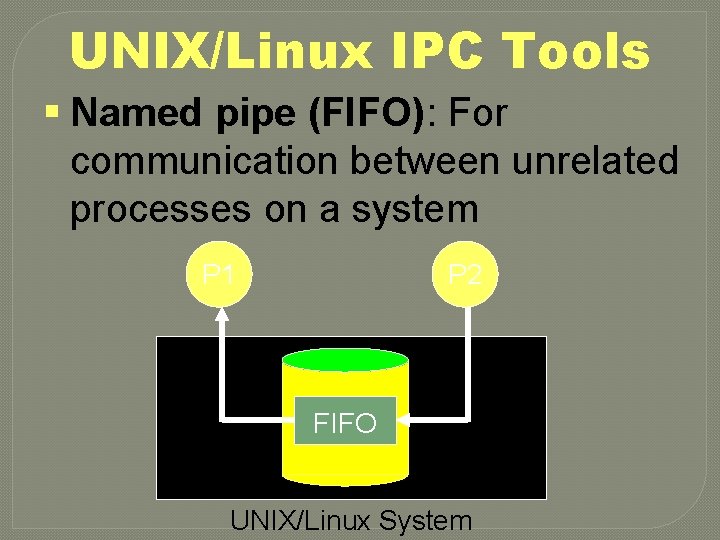
UNIX/Linux IPC Tools § Named pipe (FIFO): For communication between unrelated processes on a system P 1 P 2 FIFO UNIX/Linux System
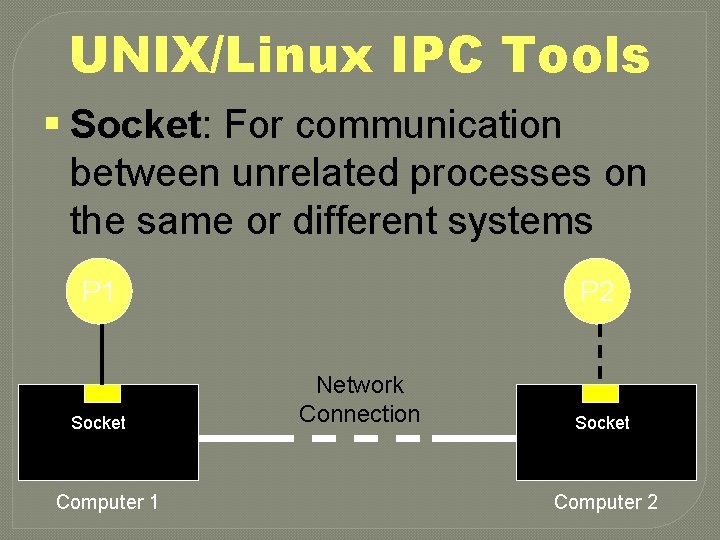
UNIX/Linux IPC Tools § Socket: For communication between unrelated processes on the same or different systems P 1 Socket Computer 1 P 2 Network Connection Socket Computer 2
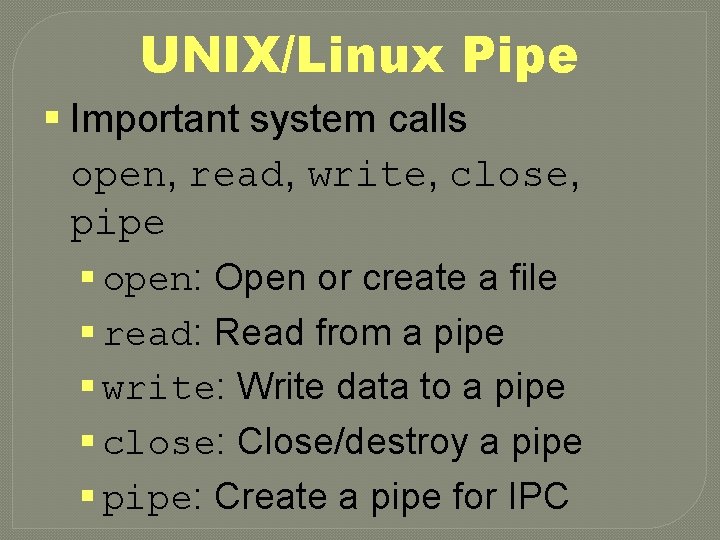
UNIX/Linux Pipe § Important system calls open, read, write, close, pipe § open: Open or create a file § read: Read from a pipe § write: Write data to a pipe § close: Close/destroy a pipe § pipe: Create a pipe for IPC
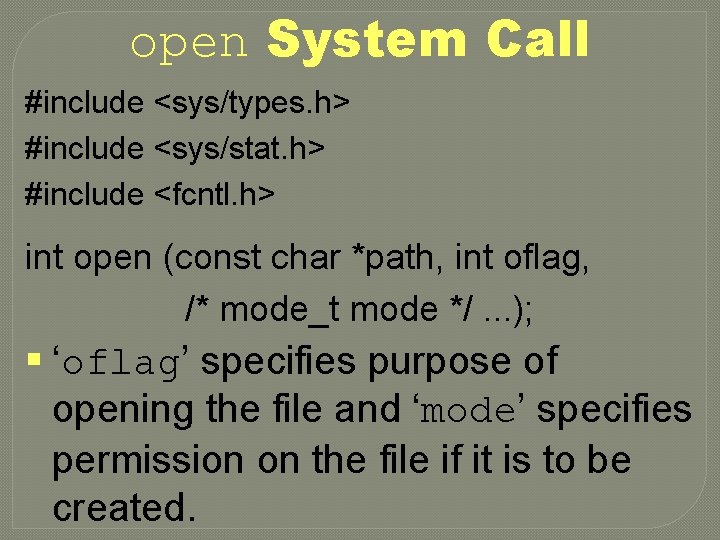
open System Call #include <sys/types. h> #include <sys/stat. h> #include <fcntl. h> int open (const char *path, int oflag, /* mode_t mode */. . . ); § ‘oflag’ specifies purpose of opening the file and ‘mode’ specifies permission on the file if it is to be created.
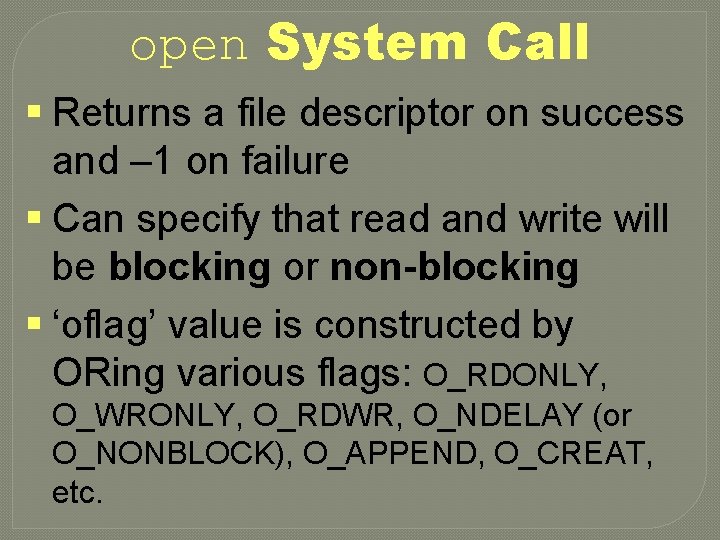
open System Call § Returns a file descriptor on success and – 1 on failure § Can specify that read and write will be blocking or non-blocking § ‘oflag’ value is constructed by ORing various flags: O_RDONLY, O_WRONLY, O_RDWR, O_NDELAY (or O_NONBLOCK), O_APPEND, O_CREAT, etc.
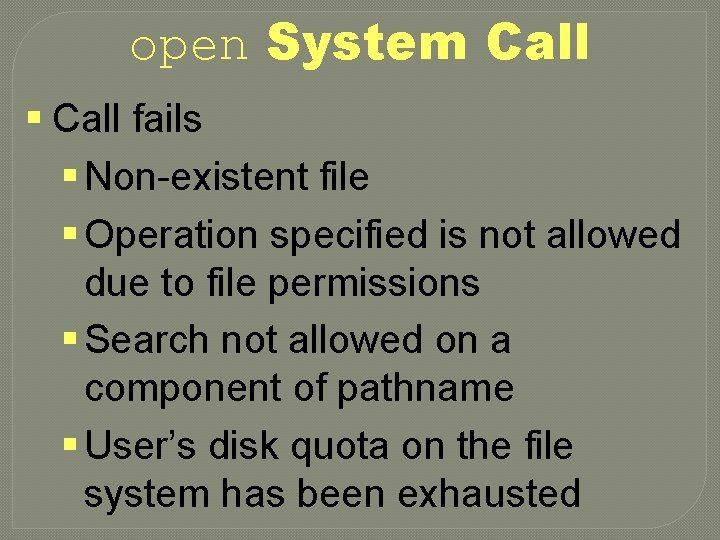
open System Call § Call fails § Non-existent file § Operation specified is not allowed due to file permissions § Search not allowed on a component of pathname § User’s disk quota on the file system has been exhausted
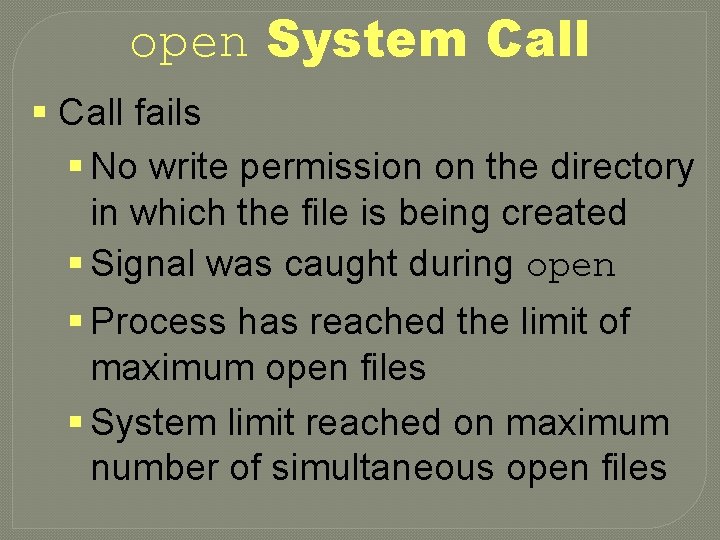
open System Call § Call fails § No write permission on the directory in which the file is being created § Signal was caught during open § Process has reached the limit of maximum open files § System limit reached on maximum number of simultaneous open files
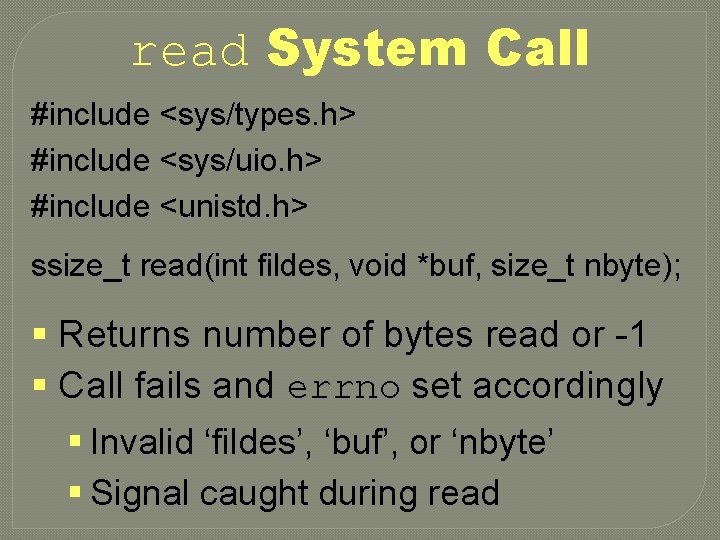
read System Call #include <sys/types. h> #include <sys/uio. h> #include <unistd. h> ssize_t read(int fildes, void *buf, size_t nbyte); § Returns number of bytes read or -1 § Call fails and errno set accordingly § Invalid ‘fildes’, ‘buf’, or ‘nbyte’ § Signal caught during read
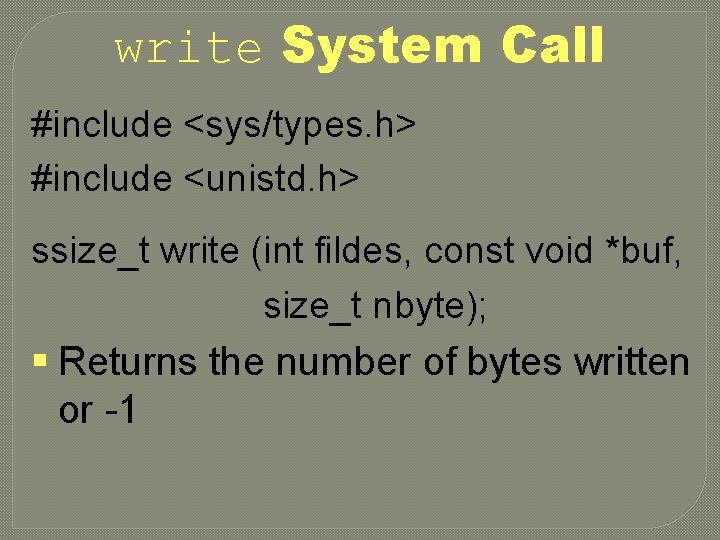
write System Call #include <sys/types. h> #include <unistd. h> ssize_t write (int fildes, const void *buf, size_t nbyte); § Returns the number of bytes written or -1
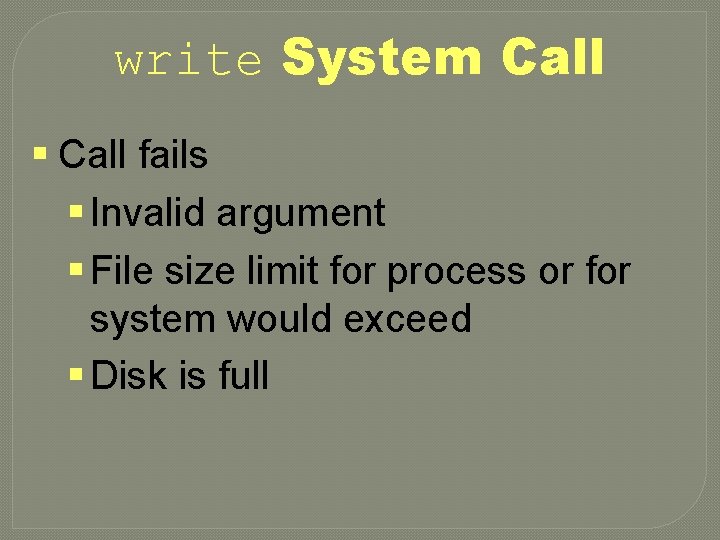
write System Call § Call fails § Invalid argument § File size limit for process or for system would exceed § Disk is full
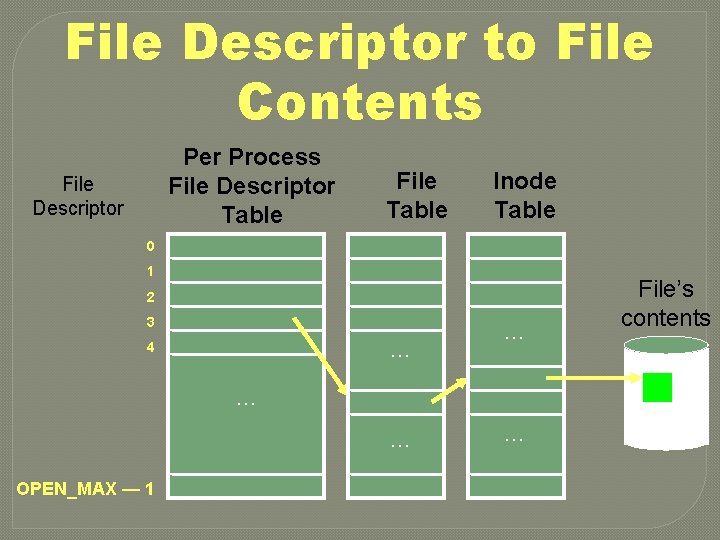
File Descriptor to File Contents Per Process File Descriptor Table File Descriptor File Table Inode Table 0 1 2 3 … 4 … … … OPEN_MAX — 1 … File’s contents
Standard Descriptors in UNIX/Linux § Three files are automatically opened for every process for the process to read its input from and send its output and error messages to. These files are called standard files: standard input, standard output, and standard error.
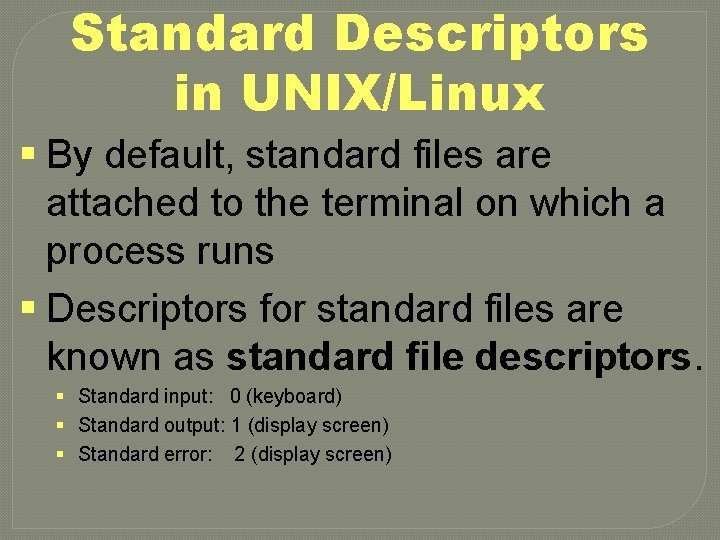
Standard Descriptors in UNIX/Linux § By default, standard files are attached to the terminal on which a process runs § Descriptors for standard files are known as standard file descriptors. § Standard input: 0 (keyboard) § Standard output: 1 (display screen) § Standard error: 2 (display screen)
pipe() Call § int pipe (int pipedes[2]); § Call fails § At least two slots not empty in the PPFDT—too many files or pipe open in the process § Buffer space not available in the kernel § File table is full
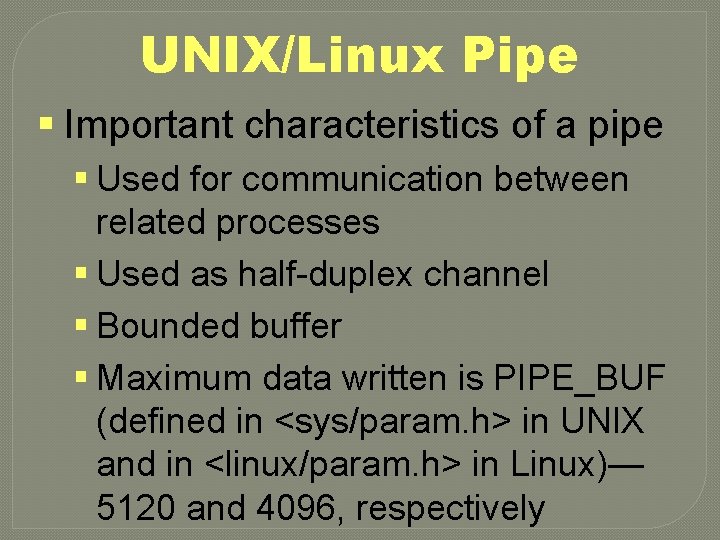
UNIX/Linux Pipe § Important characteristics of a pipe § Used for communication between related processes § Used as half-duplex channel § Bounded buffer § Maximum data written is PIPE_BUF (defined in <sys/param. h> in UNIX and in <linux/param. h> in Linux)— 5120 and 4096, respectively
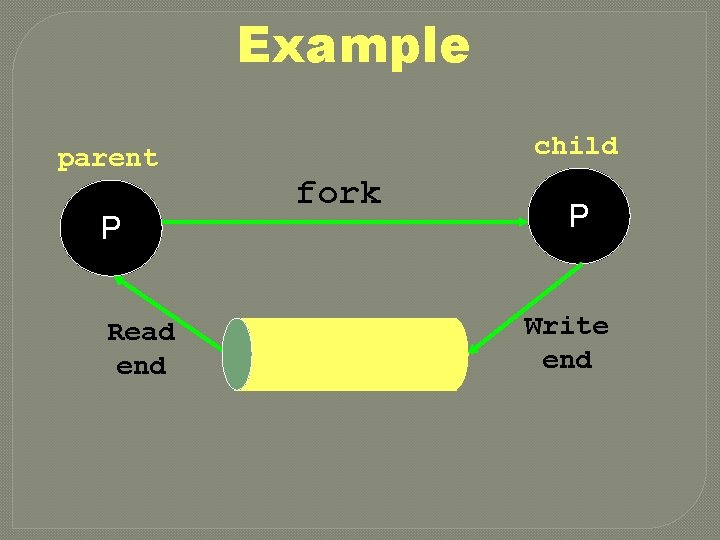
Example parent P Read end child fork P Write end
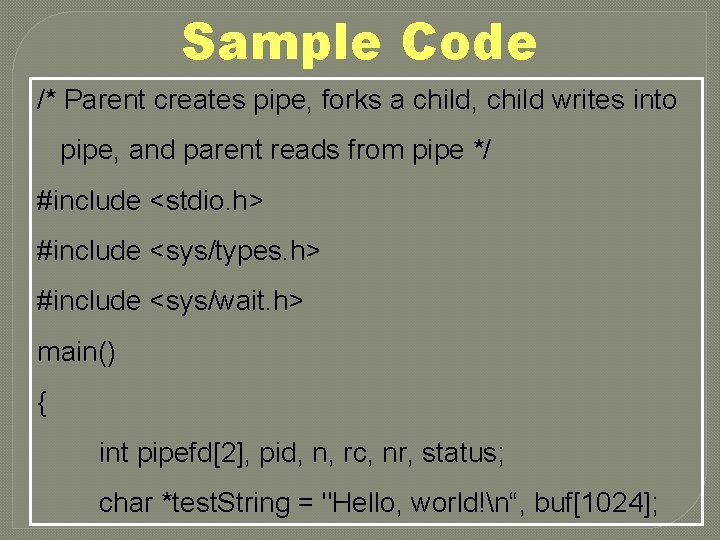
Sample Code /* Parent creates pipe, forks a child, child writes into pipe, and parent reads from pipe */ #include <stdio. h> #include <sys/types. h> #include <sys/wait. h> main() { int pipefd[2], pid, n, rc, nr, status; char *test. String = "Hello, world!n“, buf[1024];
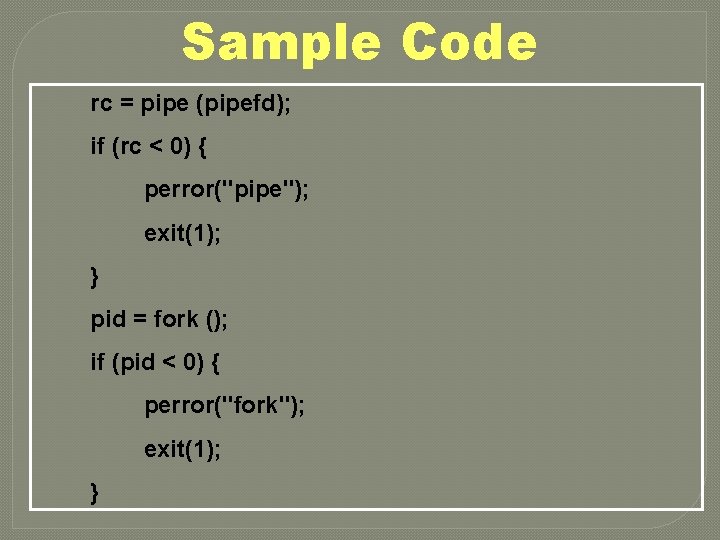
Sample Code rc = pipe (pipefd); if (rc < 0) { perror("pipe"); exit(1); } pid = fork (); if (pid < 0) { perror("fork"); exit(1); }
Sample Code if (pid == 0) { /* Child’s Code */ close(pipefd[0]); write(pipefd[1], test. String, strlen(test. String)); close(pipefd[1]); exit(0); }
Sample Code /* Parent’s Code */ close(pipefd[1]); n = strlen(test. String); nr = read(pipefd[0], buf, n); rc = write(1, buf, nr); wait(&status); printf("Good work child!n"); return(0); }
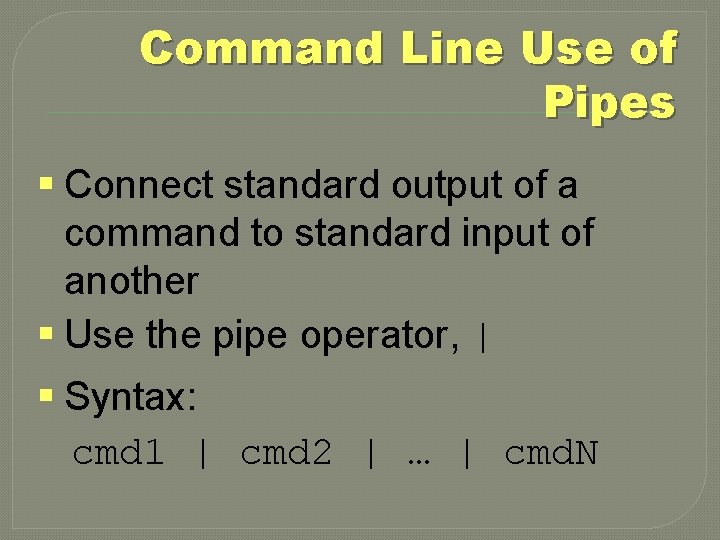
Command Line Use of Pipes § Connect standard output of a command to standard input of another § Use the pipe operator, | § Syntax: cmd 1 | cmd 2 | … | cmd. N
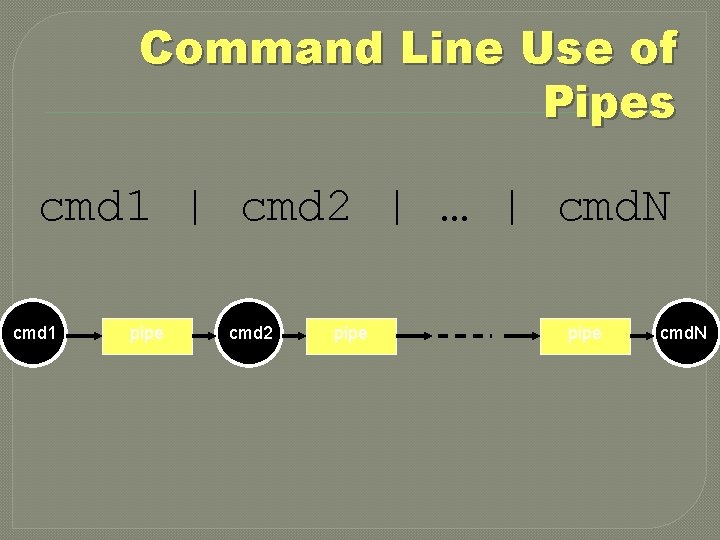
Command Line Use of Pipes cmd 1 | cmd 2 | … | cmd. N cmd 1 pipe cmd 2 pipe cmd. N
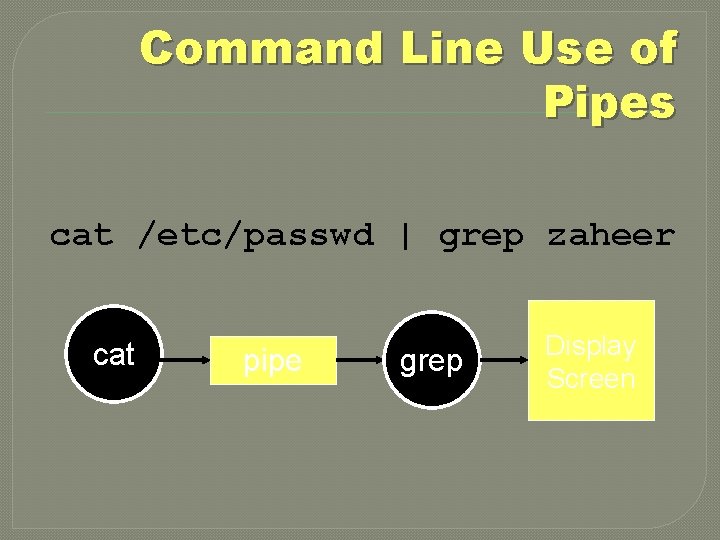
Command Line Use of Pipes cat /etc/passwd | grep zaheer cat pipe grep Display Screen
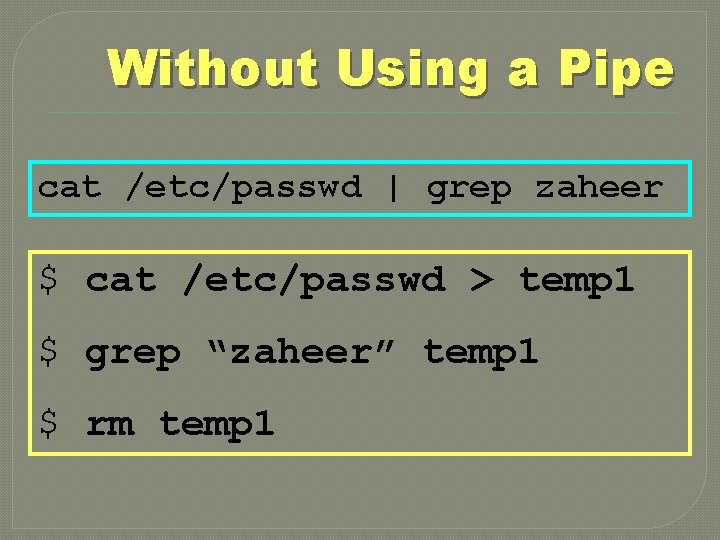
Without Using a Pipe cat /etc/passwd | grep zaheer $ cat /etc/passwd > temp 1 $ grep “zaheer” temp 1 $ rm temp 1
Recap of Lecture n Review of previous lecture n UNIX/Linux IPC tools and associated system calls n UNIX/Linux standard files and kernel’s mechanism for file access n Use of pipe in a program and at the command line n Recap of the lecture