Open Systems Figure 15 5 The layers of



- Slides: 8
Open Systems Figure 15. 5 The layers of the OSI Reference Model The International Organization for Standardization (ISO) established the Open Systems Interconnection (OSI) Reference Model Each layer deals with a particular aspect of network communication
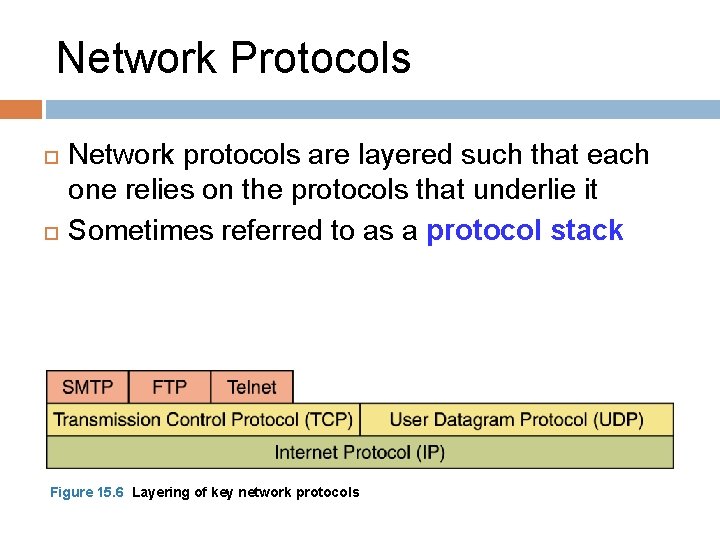
Network Protocols Network protocols are layered such that each one relies on the protocols that underlie it Sometimes referred to as a protocol stack Figure 15. 6 Layering of key network protocols
TCP/IP TCP stands for Transmission Control Protocol TCP software breaks messages into packets, hands them off to the IP software for delivery, and then orders and reassembles the packets at their destination IP stands for Internet Protocol IP software deals with the routing of packets through the maze of interconnected networks to their final destination
TCP/IP (cont. ) UDP stands for User Datagram Protocol � It is an alternative to TCP � The main difference is that TCP is highly reliable, at the cost of decreased performance, while UDP is less reliable, but generally faster
High-Level Protocols Other protocols build on the foundation established by the TCP/IP protocol suite � Simple � File Mail Transfer Protocol (SMTP) Transfer Protocol (FTP) � Telnet � Hyper Text Transfer Protocol (http)
MIME Types Related to the idea of network protocols and standardization is the concept of a file’s MIME type � MIME stands for Multipurpose Internet Mail Extension � Based on a document’s MIME type, an application program can decide how to deal with the data it is given
MIME Types Figure 15. 7 Some protocols and the ports they use
Firewalls Firewall A machine and its software that serve as a special gateway to a network, protecting it from inappropriate access � Filters the network traffic that comes in, checking the validity of the messages as much as possible and perhaps denying some messages altogether � Enforces an organization’s access control policy