Oh So Mysterious Egyptian Mathematics Lecture One 1

- Slides: 28
Oh, So Mysterious Egyptian Mathematics! Lecture One 1
Outline o o o Where did numbers come from? Counting Base of a number system Egyptian numerals Calculation with Egyptian numbers Achievement of Egyptian Mathematics 2
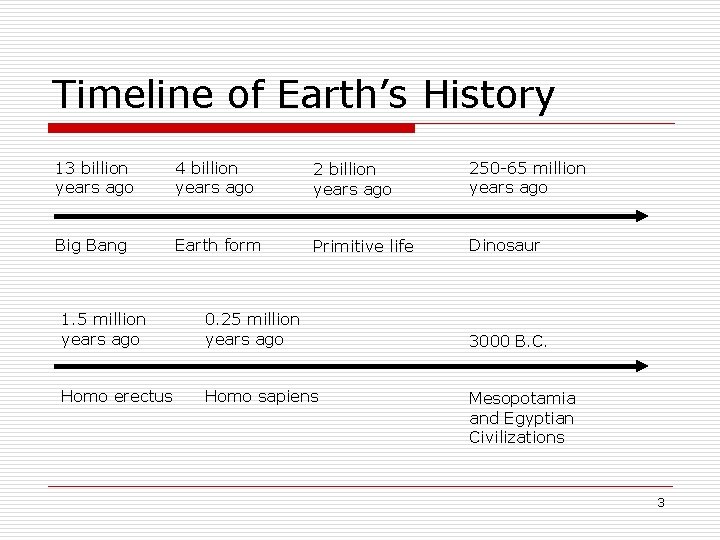
Timeline of Earth’s History 13 billion years ago 4 billion years ago 250 -65 million years ago Big Bang Earth form Primitive life Dinosaur 1. 5 million years ago 0. 25 million years ago Homo erectus Homo sapiens 3000 B. C. Mesopotamia and Egyptian Civilizations 3
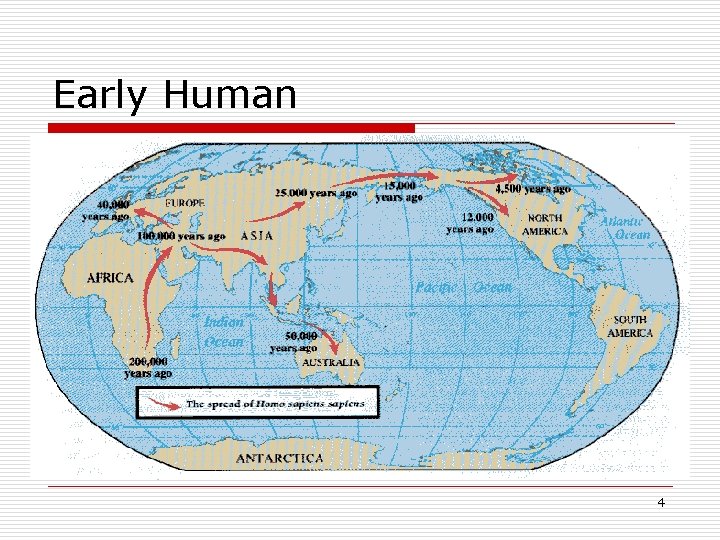
Early Human 4
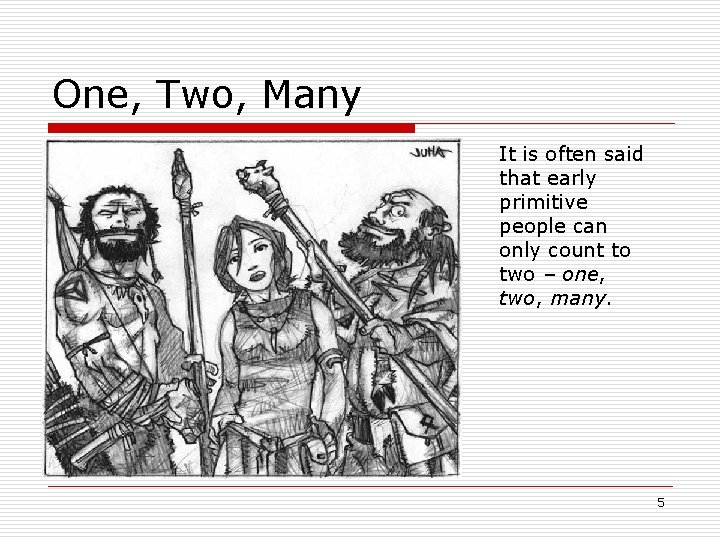
One, Two, Many It is often said that early primitive people can only count to two – one, two, many. 5
Where did numbers come from? o Thimshian language of a group of British Columbia Indians has seven distinct sets of words for numbers: one for use when counting flat objects and animals, one for round objects and time, one for people, one for long objects and trees, one for canoes, one for measures, and one for counting when no particular object is being numerated. 6
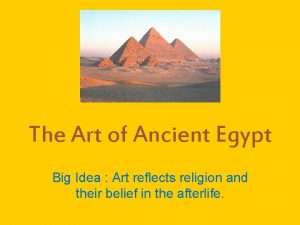
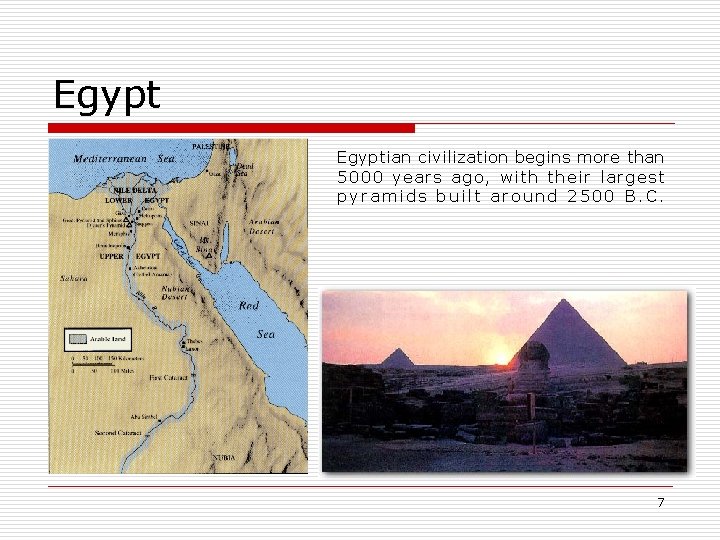
Egyptian civilization begins more than 5000 years ago, with their largest pyramids built around 2500 B. C. 7
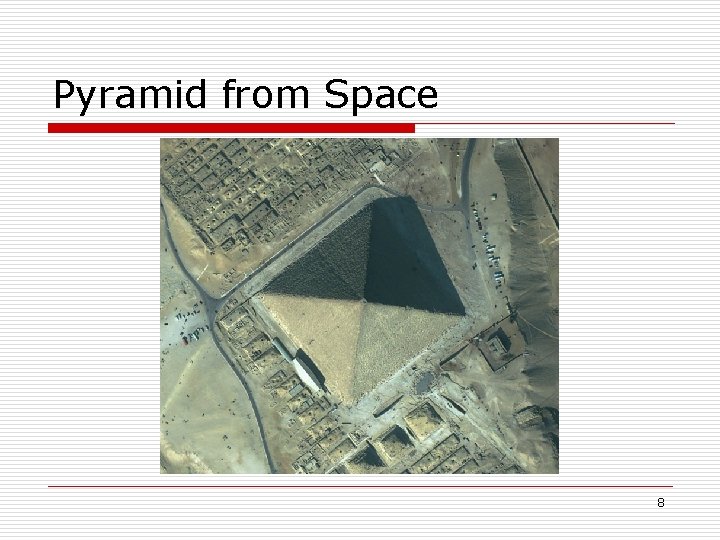
Pyramid from Space 8
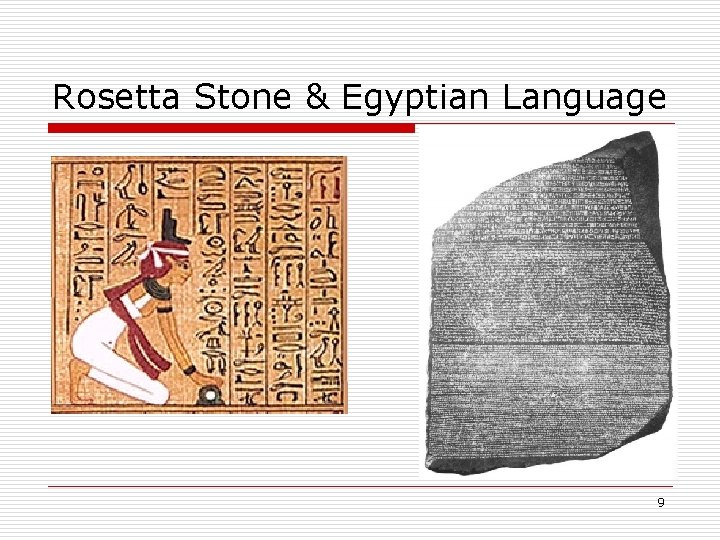
Rosetta Stone & Egyptian Language 9
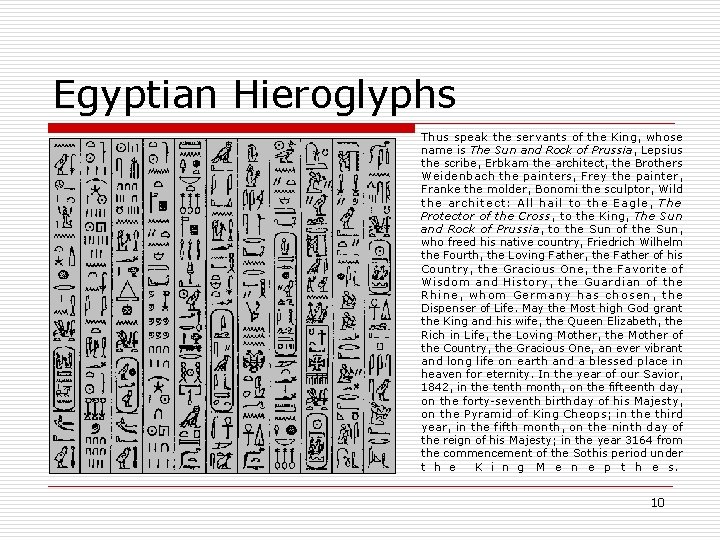
Egyptian Hieroglyphs Thus speak the servants of the King, whose name is The Sun and Rock of Prussia, Lepsius the scribe, Erbkam the architect, the Brothers Weidenbach the painters, Frey the painter, Franke the molder, Bonomi the sculptor, Wild the architect: All hail to the Eagle, T h e Protector of the Cross, to the King, The Sun and Rock of Prussia, to the Sun of the Sun, who freed his native country, Friedrich Wilhelm the Fourth, the Loving Father, the Father of his Country, the Gracious One, the Favorite of Wisdom and History, the Guardian of the Rhine, whom Germany has chosen, the Dispenser of Life. May the Most high God grant the King and his wife, the Queen Elizabeth, the Rich in Life, the Loving Mother, the Mother of the Country, the Gracious One, an ever vibrant and long life on earth and a blessed place in heaven for eternity. In the year of our Savior, 1842, in the tenth month, on the fifteenth day, on the forty-seventh birthday of his Majesty, on the Pyramid of King Cheops; in the third year, in the fifth month, on the ninth day of the reign of his Majesty; in the year 3164 from the commencement of the Sothis period under t h e K i n g M e n e p t h e s. 10
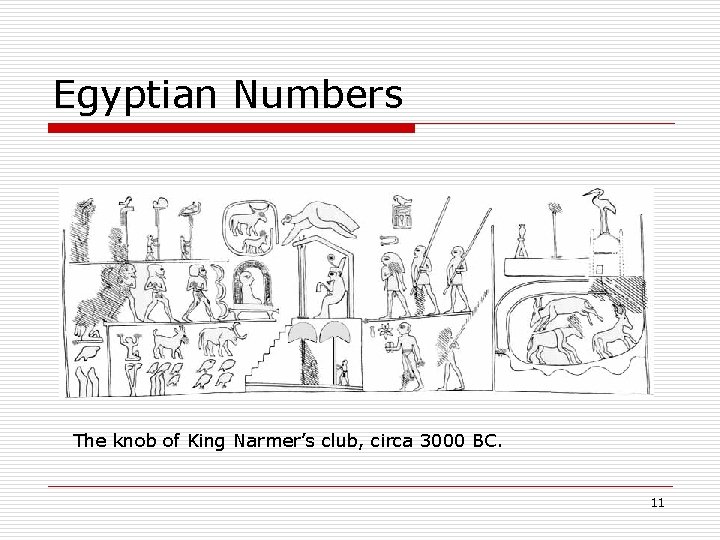
Egyptian Numbers The knob of King Narmer’s club, circa 3000 BC. 11
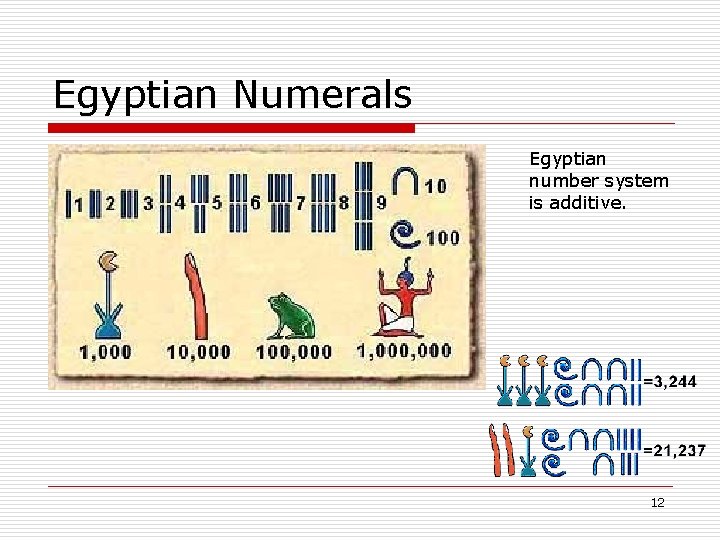
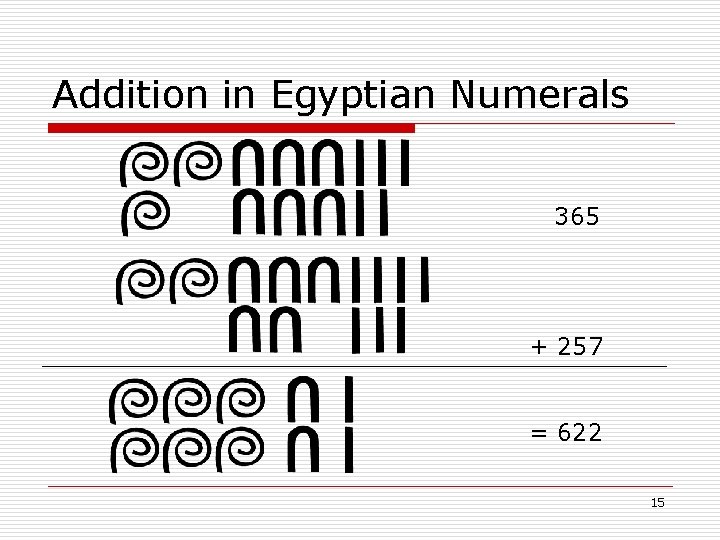
Egyptian Numerals Egyptian number system is additive. 12
Base of a Number System o Count in group of ten (base 10) is very common in many cultures o Base 20, 6, 12, even 60 are also used o Modern computer system uses base 2 13
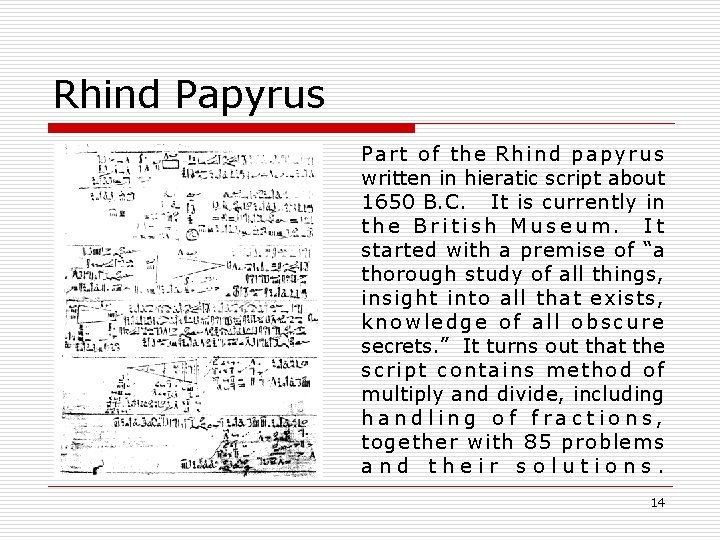
Rhind Papyrus Part of the R h i n d p a p y r u s written in hieratic script about 1650 B. C. It is currently in the British Museum. It started with a premise of “a thorough study of all things, insight into all that exists, knowledge of all obscure secrets. ” It turns out that the script contains method of multiply and divide, including handling of fractions, together with 85 problems and their solutions. 14
Addition in Egyptian Numerals 365 + 257 = 622 15
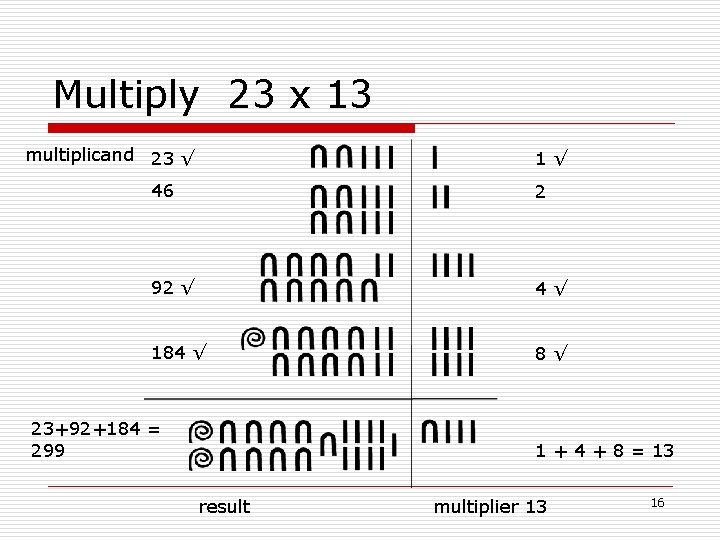
Multiply 23 х 13 multiplicand 23 √ 1√ 46 2 92 √ 4√ 184 √ 8√ 23+92+184 = 299 1 + 4 + 8 = 13 result multiplier 13 16
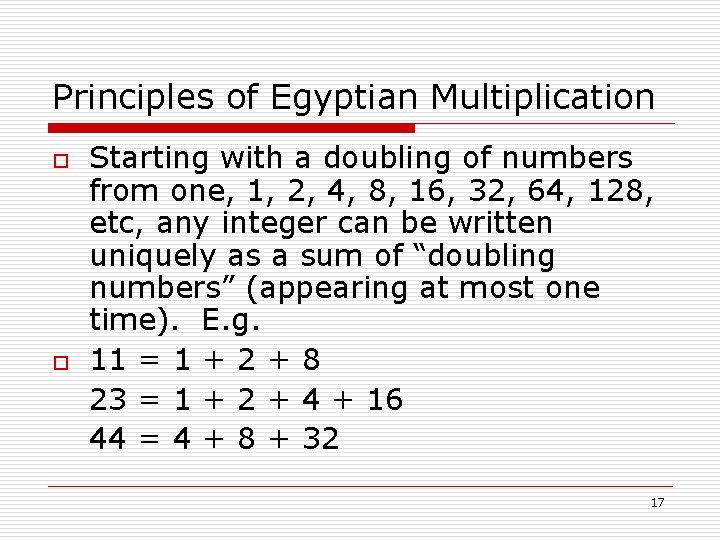
Principles of Egyptian Multiplication o o Starting with a doubling of numbers from one, 1, 2, 4, 8, 16, 32, 64, 128, etc, any integer can be written uniquely as a sum of “doubling numbers” (appearing at most one time). E. g. 11 = 1 + 2 + 8 23 = 1 + 2 + 4 + 16 44 = 4 + 8 + 32 17
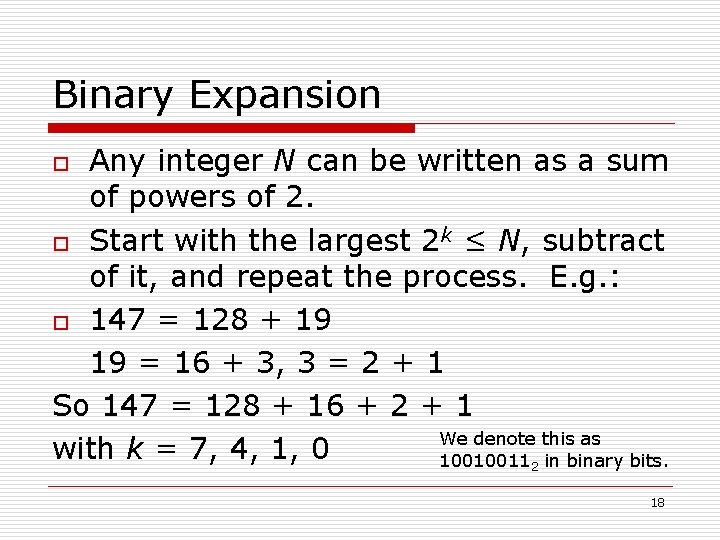
Binary Expansion Any integer N can be written as a sum of powers of 2. o Start with the largest 2 k ≤ N, subtract of it, and repeat the process. E. g. : o 147 = 128 + 19 19 = 16 + 3, 3 = 2 + 1 So 147 = 128 + 16 + 2 + 1 We denote this as with k = 7, 4, 1, 0 10010011 in binary bits. o 2 18
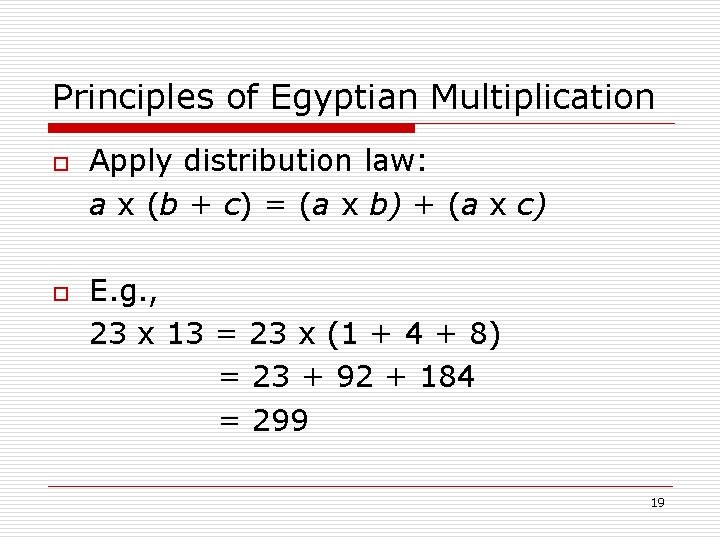
Principles of Egyptian Multiplication o o Apply distribution law: a x (b + c) = (a x b) + (a x c) E. g. , 23 x 13 = 23 x (1 + 4 + 8) = 23 + 92 + 184 = 299 19
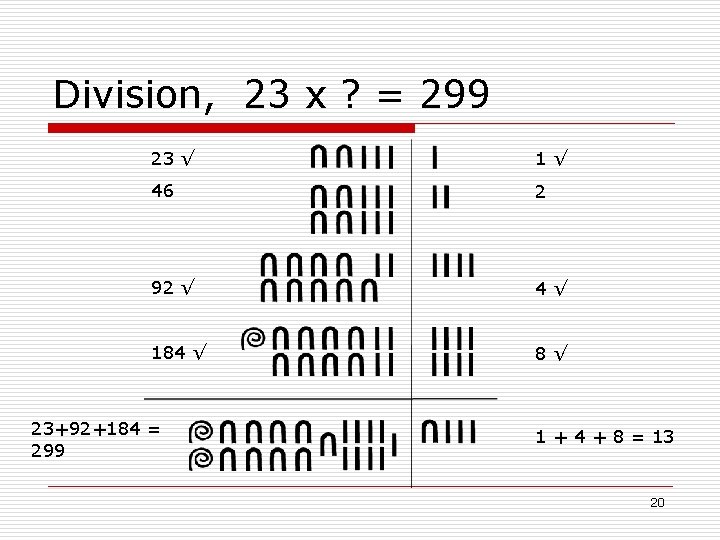
Division, 23 х ? = 299 23 √ 1√ 46 2 92 √ 4√ 184 √ 8√ 23+92+184 = 299 1 + 4 + 8 = 13 20
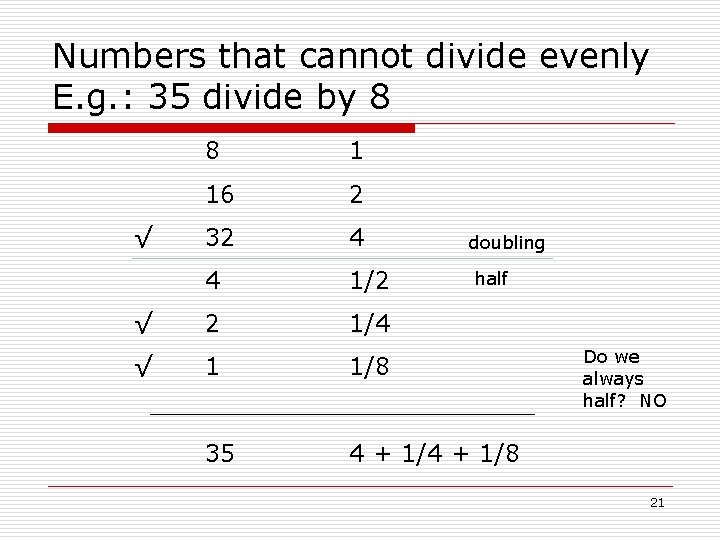
Numbers that cannot divide evenly E. g. : 35 divide by 8 8 1 16 2 32 4 4 1/2 √ 2 1/4 √ 1 1/8 35 4 + 1/8 √ doubling half Do we always half? NO 21
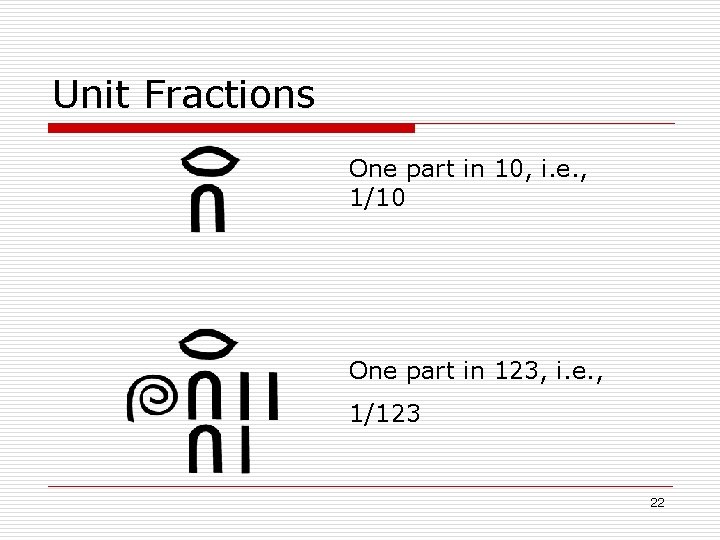
Unit Fractions One part in 10, i. e. , 1/10 One part in 123, i. e. , 1/123 22
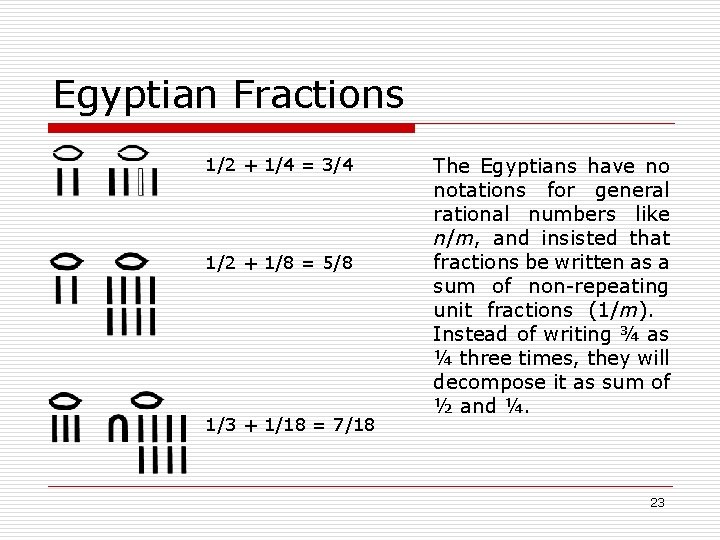
Egyptian Fractions 1/2 + 1/4 = 3/4 1/2 + 1/8 = 5/8 1/3 + 1/18 = 7/18 The Egyptians have no notations for general rational numbers like n/m, and insisted that fractions be written as a sum of non-repeating unit fractions (1/m). Instead of writing ¾ as ¼ three times, they will decompose it as sum of ½ and ¼. 23
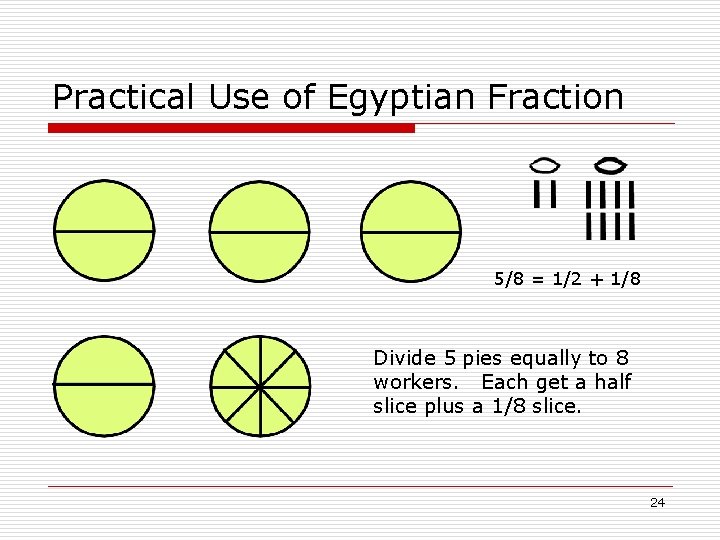
Practical Use of Egyptian Fraction 5/8 = 1/2 + 1/8 Divide 5 pies equally to 8 workers. Each get a half slice plus a 1/8 slice. 24
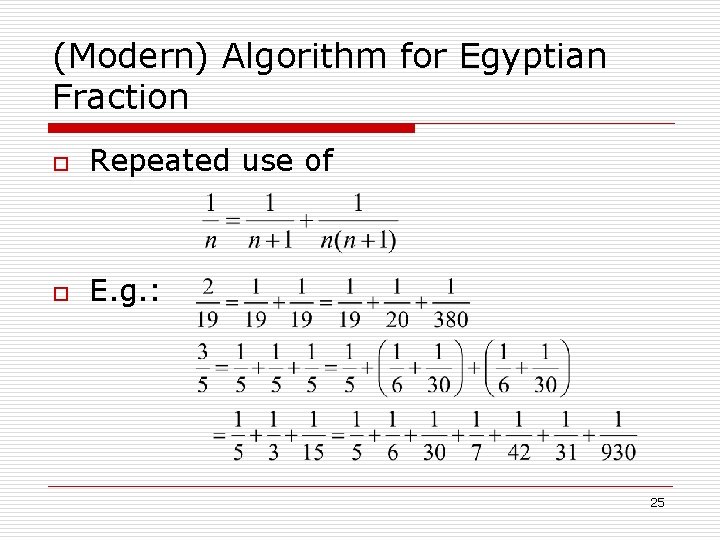
(Modern) Algorithm for Egyptian Fraction o Repeated use of o E. g. : 25
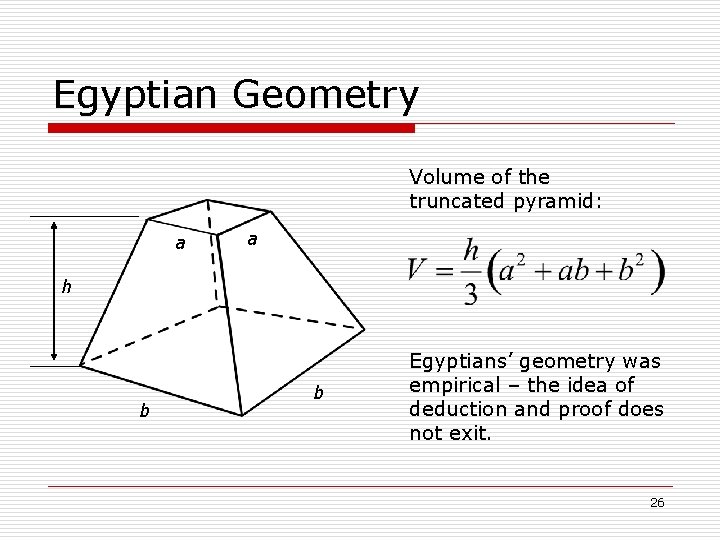
Egyptian Geometry Volume of the truncated pyramid: a a h b b Egyptians’ geometry was empirical – the idea of deduction and proof does not exit. 26
Summary o o o Computation begins with counting Egyptian number system is additive, grouping in units of 10. Multiplication uses a method of doubling. Fraction is complicated because of a rejection of the general notion of n/m, and accepting only unit fractions. Geometry is at an intuitive stage. 27
Tutorial Starts Next Week o o Choose one of the seven sessions on CORS The venue is S 16 #03 -03 Download tutorial sheet from http: //web. cz 3. nus. edu. sg/GEM/gem. html Read the web reading materials 28