Oak Specialist Independent Living Unit 5 World of
- Slides: 22
Oak Specialist Independent Living Unit 5 - World of Work Applying Learning
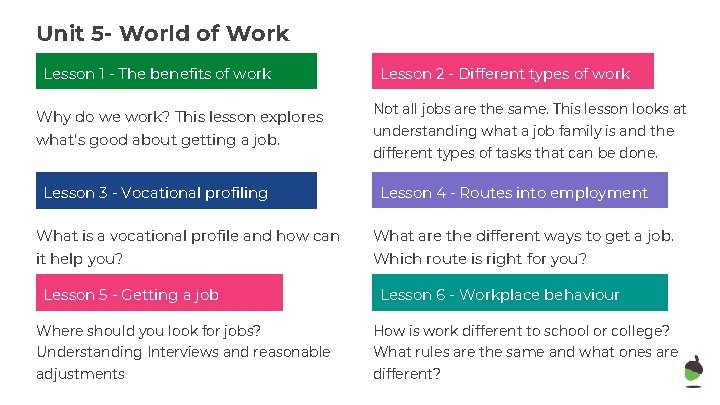
Unit 5 - World of Work Lesson 1 - The benefits of work Why do we work? This lesson explores what’s good about getting a job. Lesson 2 - Different types of work Not all jobs are the same. This lesson looks at understanding what a job family is and the different types of tasks that can be done. Option Lesson 33 - Vocational profiling Option Lesson 44 - Routes into employment What is a vocational profile and how can What are the different ways to get a job. it help you? Which route is right for you? Lesson 35 - Getting a job Option Lesson 46 - Workplace behaviour Option Where should you look for jobs? How is work different to school or college? Understanding Interviews and reasonable What rules are the same and what ones are adjustments different?
Lesson 4 - Routes into employment
Teacher notes- Lesson 4 -Learning intention: ● To understand that there are many different routes into employment ● To know some of these and identify the one that best suits the student’s needs, aspirations and learning style. This lesson should is best taught after the vocational profiling lesson in this unit as we will be drawing on personal preferences, aspirations and needs all of which should be contained in their vocational profile. Resources needed: Pen, paper, scissors 4
World of Work Routes into employment Applying Learning
Lesson Activity Stages This lesson will be taught in 3 parts- 6 1. What are the different routes? 1. What is the benefit of each one? 1. Which one is right for me?
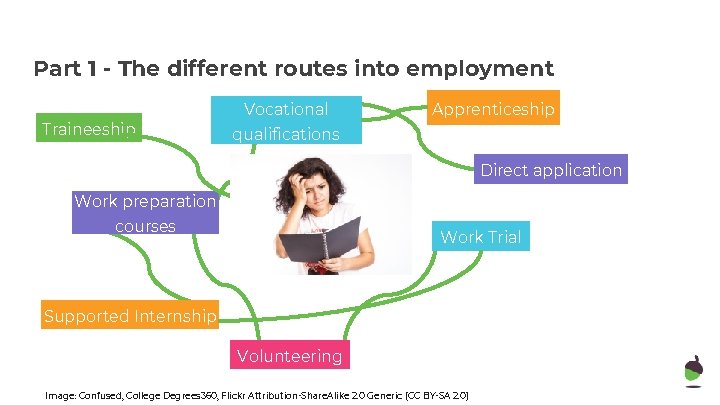
Part 1 - The different routes into employment Traineeship Vocational Apprenticeship qualifications Direct application Work preparation courses Work Trial Supported Internship Volunteering 7 Image: Confused, College Degrees 360, Flickr Attribution-Share. Alike 2. 0 Generic (CC BY-SA 2. 0)
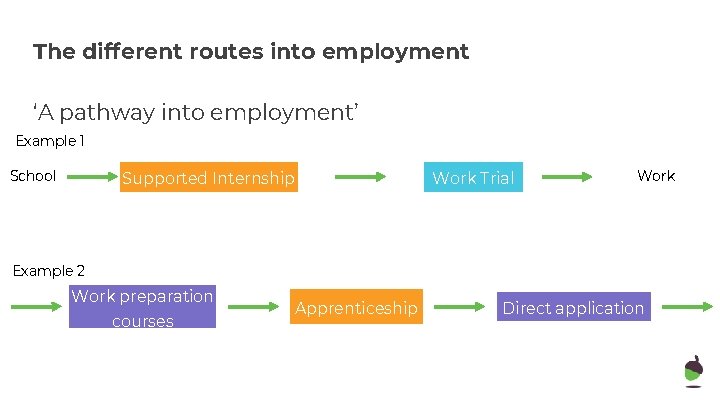
The different routes into employment ‘A pathway into employment’ Example 1 School Supported Internship Work Trial Work Example 2 Work preparation courses 8 Apprenticeship Direct application
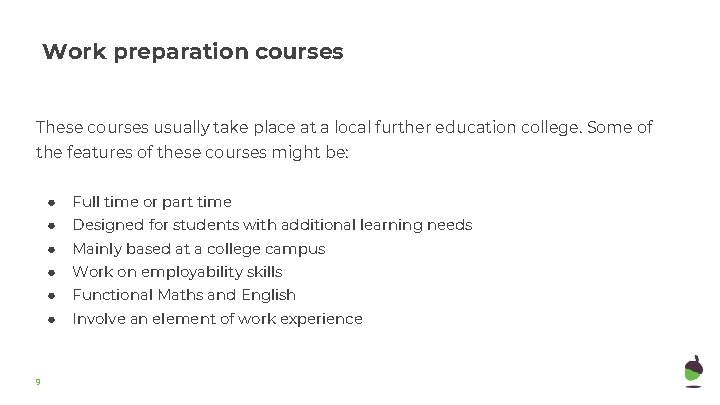
Work preparation courses These courses usually take place at a local further education college. Some of the features of these courses might be: 9 ● Full time or part time ● Designed for students with additional learning needs ● Mainly based at a college campus ● Work on employability skills ● Functional Maths and English ● Involve an element of work experience
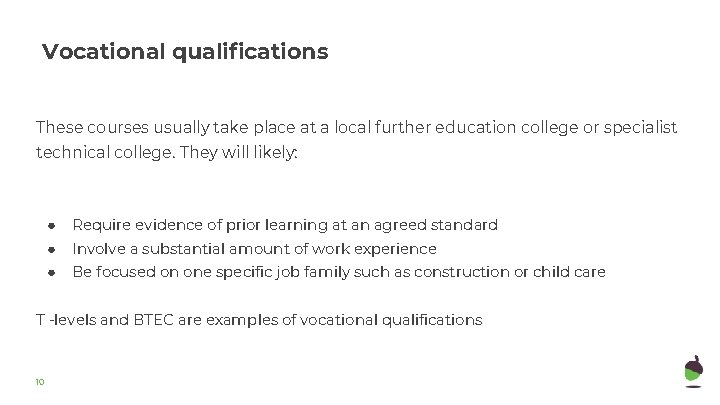
Vocational qualifications These courses usually take place at a local further education college or specialist technical college. They will likely: ● Require evidence of prior learning at an agreed standard ● Involve a substantial amount of work experience ● Be focused on one specific job family such as construction or child care T -levels and BTEC are examples of vocational qualifications 10
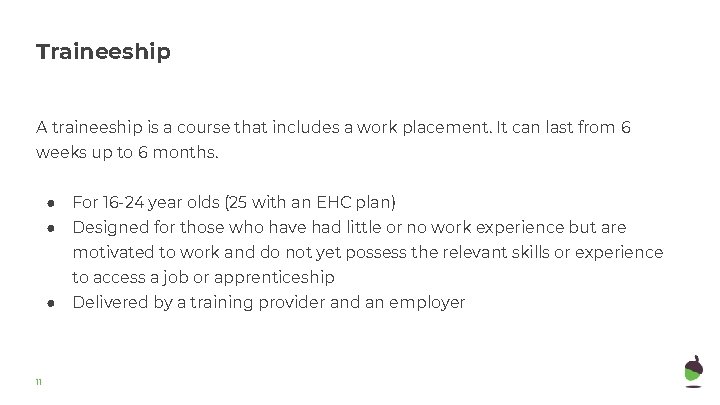
Traineeship A traineeship is a course that includes a work placement. It can last from 6 weeks up to 6 months. ● For 16 -24 year olds (25 with an EHC plan) ● Designed for those who have had little or no work experience but are motivated to work and do not yet possess the relevant skills or experience to access a job or apprenticeship ● 11 Delivered by a training provider and an employer
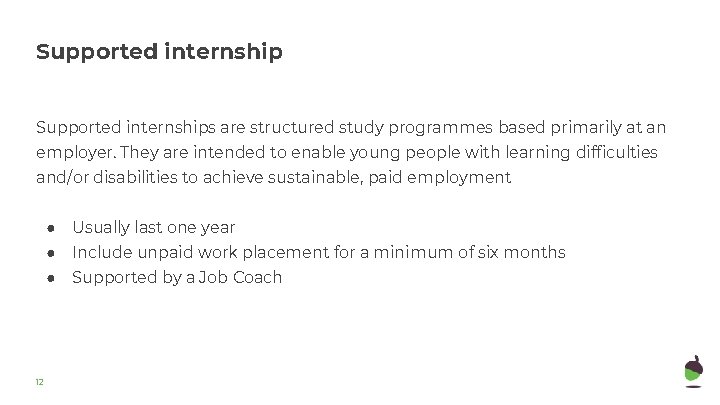
Supported internships are structured study programmes based primarily at an employer. They are intended to enable young people with learning difficulties and/or disabilities to achieve sustainable, paid employment 12 ● Usually last one year ● Include unpaid work placement for a minimum of six months ● Supported by a Job Coach
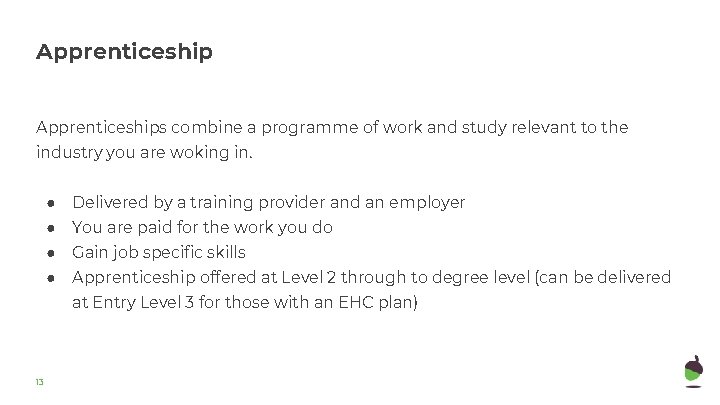
Apprenticeships combine a programme of work and study relevant to the industry you are woking in. ● Delivered by a training provider and an employer ● You are paid for the work you do ● Gain job specific skills ● Apprenticeship offered at Level 2 through to degree level (can be delivered at Entry Level 3 for those with an EHC plan) 13
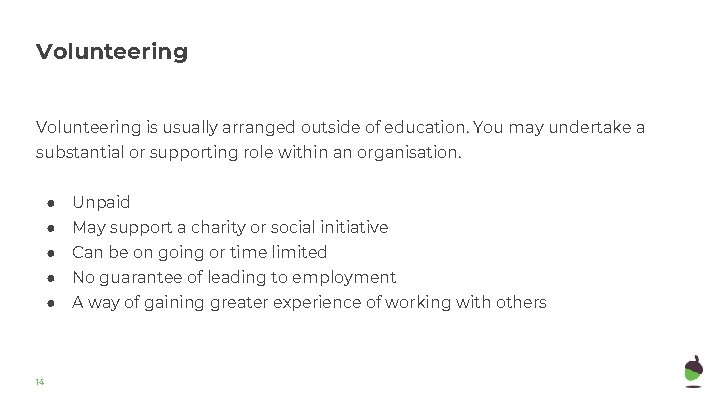
Volunteering is usually arranged outside of education. You may undertake a substantial or supporting role within an organisation. 14 ● Unpaid ● May support a charity or social initiative ● Can be on going or time limited ● No guarantee of leading to employment ● A way of gaining greater experience of working with others
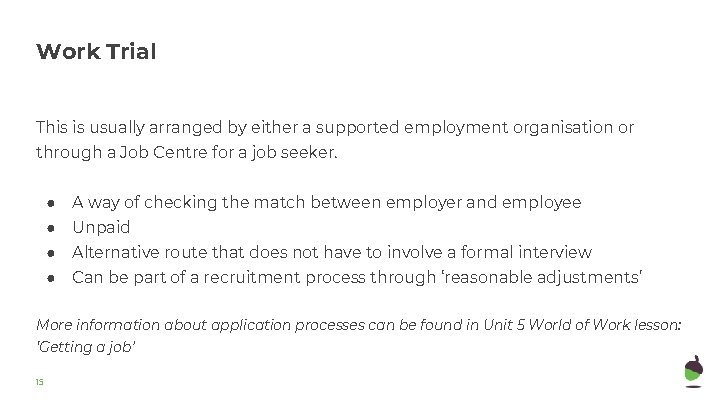
Work Trial This is usually arranged by either a supported employment organisation or through a Job Centre for a job seeker. ● A way of checking the match between employer and employee ● Unpaid ● Alternative route that does not have to involve a formal interview ● Can be part of a recruitment process through ‘reasonable adjustments’ More information about application processes can be found in Unit 5 World of Work lesson: ‘Getting a job’ 15
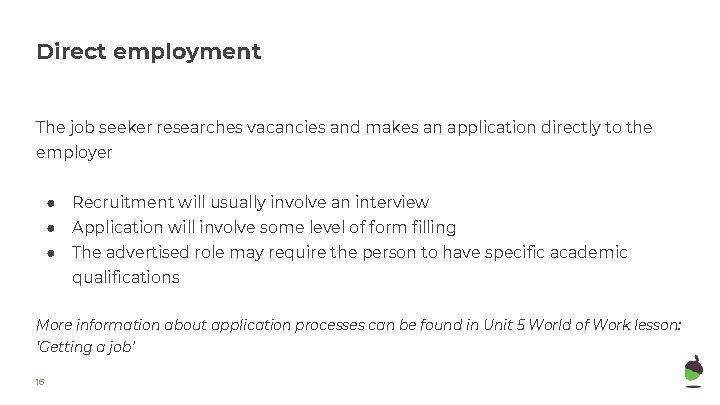
Direct employment The job seeker researches vacancies and makes an application directly to the employer ● Recruitment will usually involve an interview ● Application will involve some level of form filling ● The advertised role may require the person to have specific academic qualifications More information about application processes can be found in Unit 5 World of Work lesson: ‘Getting a job’ 16
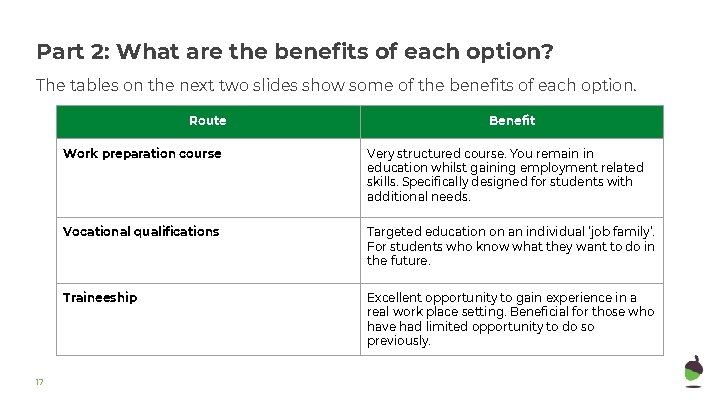
Part 2: What are the benefits of each option? The tables on the next two slides show some of the benefits of each option. Route 17 Benefit Work preparation course Very structured course. You remain in education whilst gaining employment related skills. Specifically designed for students with additional needs. Vocational qualifications Targeted education on an individual ‘job family’. For students who know what they want to do in the future. Traineeship Excellent opportunity to gain experience in a real work place setting. Beneficial for those who have had limited opportunity to do so previously.
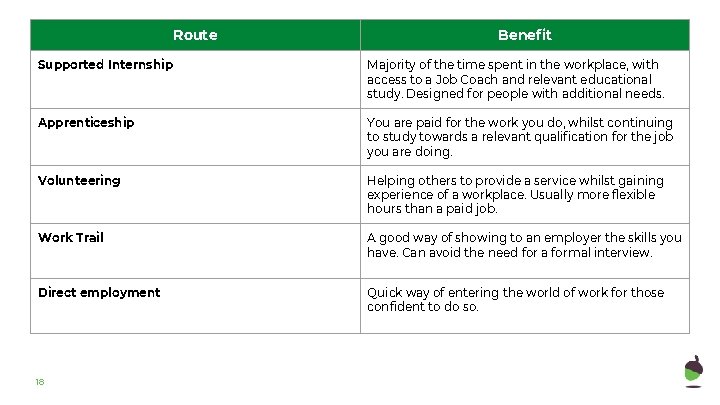
Route Benefit Supported Internship Majority of the time spent in the workplace, with access to a Job Coach and relevant educational study. Designed for people with additional needs. Apprenticeship You are paid for the work you do, whilst continuing to study towards a relevant qualification for the job you are doing. Volunteering Helping others to provide a service whilst gaining experience of a workplace. Usually more flexible hours than a paid job. Work Trail A good way of showing to an employer the skills you have. Can avoid the need for a formal interview. Direct employment Quick way of entering the world of work for those confident to do so. 18
Match the route to the benefit ● Can you identify the route into employment from the description of the benefit? 19
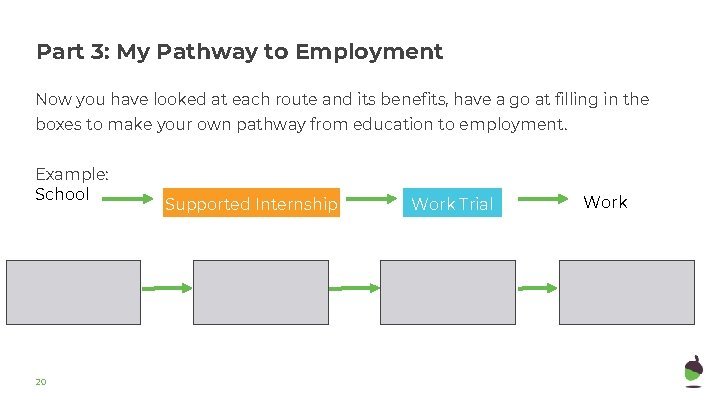
Part 3: My Pathway to Employment Now you have looked at each route and its benefits, have a go at filling in the boxes to make your own pathway from education to employment. Example: School 20 Supported Internship Work Trial Work
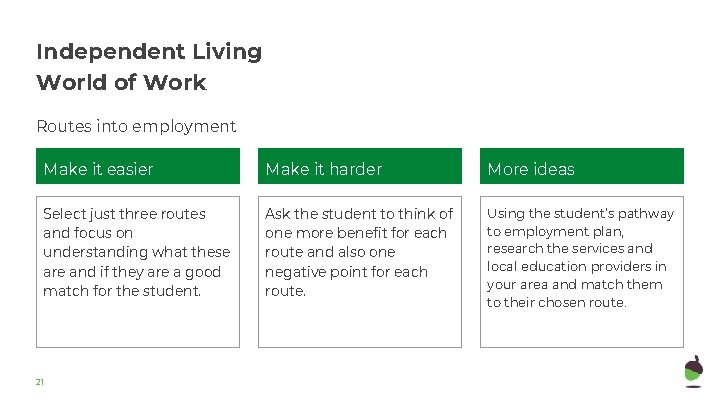
Independent Living World of Work Routes into employment Make it easier Make it harder More ideas Select just three routes and focus on understanding what these are and if they are a good match for the student. Ask the student to think of one more benefit for each route and also one negative point for each route. Using the student’s pathway to employment plan, research the services and local education providers in your area and match them to their chosen route. 21
Further Learning with Oak National Independent Living: ● World of Work: What jobs do I like? (Unit 5) ● World of Work: Different types of work (Unit 5) ● World of Work: Getting a job (Unit 5) ● World of Work: Vocational profiling (Unit 5) External Websites: ● Preparing for Adulthood ● Local Authority 16 -25 years old offer (put into a search engine the name of your council and ‘local offer’ ‘ 16 -25’) ● 22 Department for Education: ‘Apprenticeships’ ‘Traineeships’ ‘Supported internships’