Nouns Kinds of Nouns Definition A NOUN is






- Slides: 34
Nouns & Kinds of Nouns
Definition A NOUN is a word that names a person, a place, a thing, or an idea. thing person ? idea place
Person Ø A noun can name a person by name: Ø A noun can name a kind of a person:
Place Ø A noun can name a place: ØA noun can name a kind of place: classroom
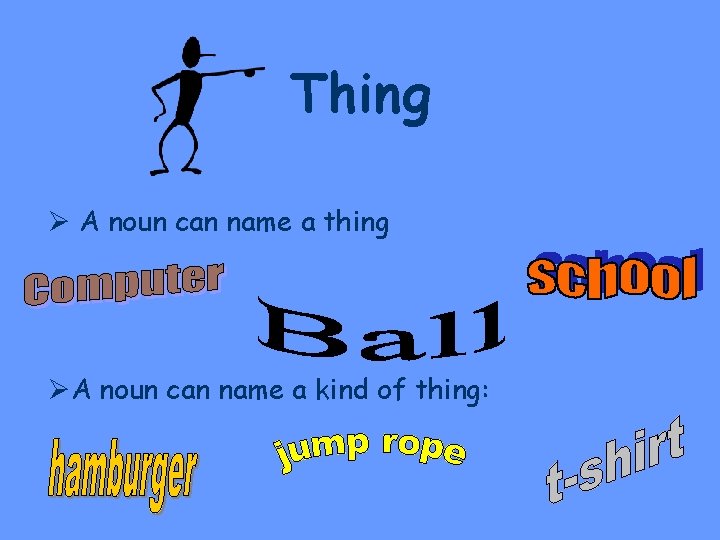
Thing Ø A noun can name a thing ØA noun can name a kind of thing:
IDEA? Why can’t we identify the idea in this picture? Ideas are thoughts and cannot be seen. Examples of ideas include happiness, joy, pain, and fairness. What ideas might this person have?
Kinds of Nouns There are two basic kinds of nouns: 1. Common 2. Proper
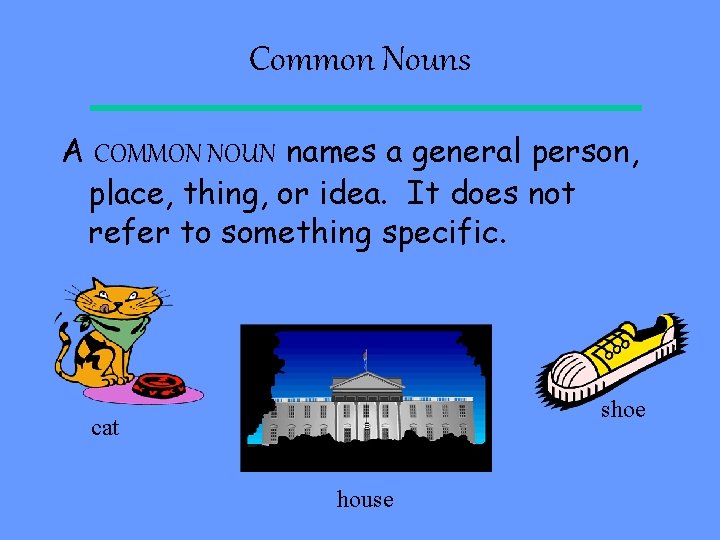
Common Nouns A COMMON NOUN names a general person, place, thing, or idea. It does not refer to something specific. shoe cat house
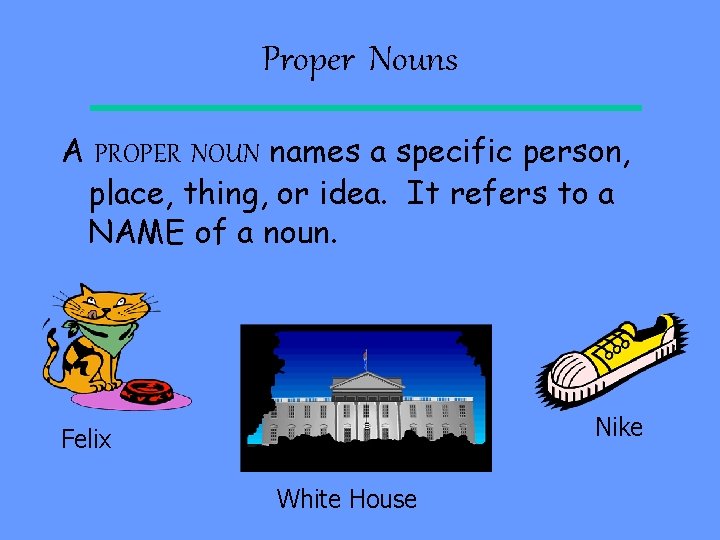
Proper Nouns A PROPER NOUN names a specific person, place, thing, or idea. It refers to a NAME of a noun. Nike Felix White House
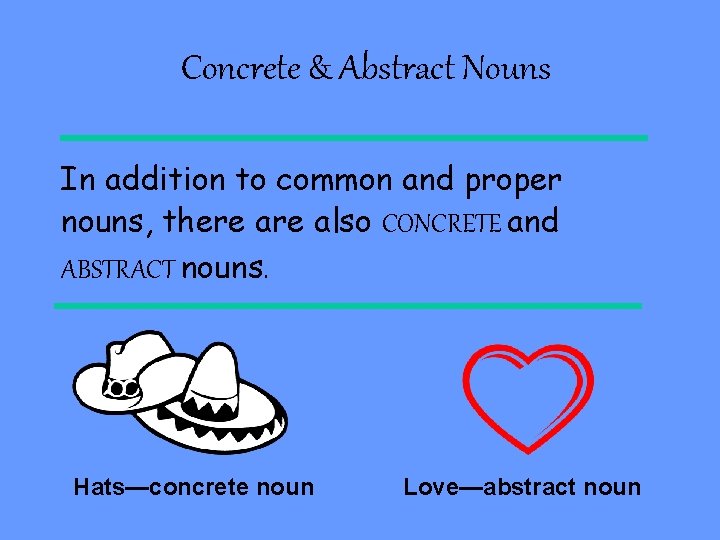
Concrete & Abstract Nouns In addition to common and proper nouns, there also CONCRETE and ABSTRACT nouns. Hats—concrete noun Love—abstract noun
CONCRETE NOUNS are nouns that you can see, hear, touch, smell, or taste.
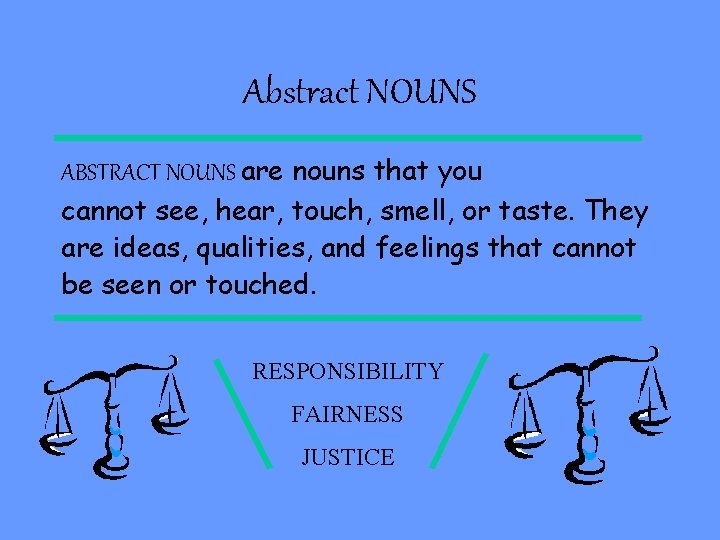
Abstract NOUNS ABSTRACT NOUNS are nouns that you cannot see, hear, touch, smell, or taste. They are ideas, qualities, and feelings that cannot be seen or touched. RESPONSIBILITY FAIRNESS JUSTICE
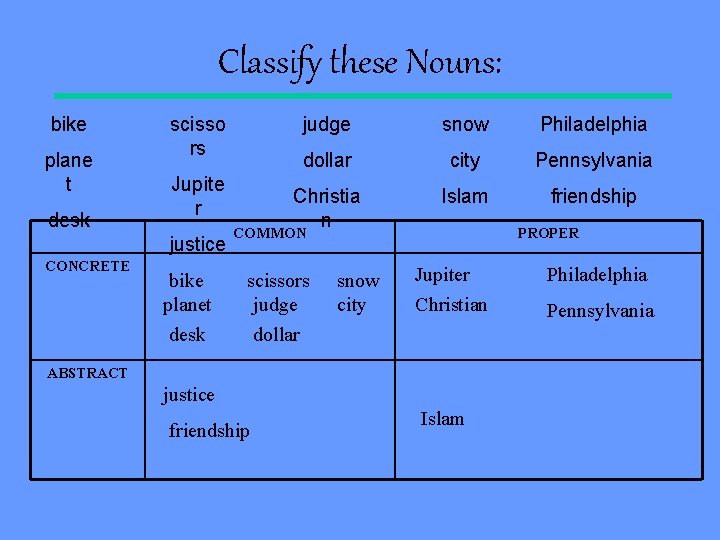
Classify these Nouns: bike plane t desk scisso rs Jupite r justice CONCRETE bike planet desk judge snow Philadelphia dollar city Pennsylvania Christia n Islam friendship COMMON scissors judge dollar snow city PROPER Jupiter Christian ABSTRACT justice friendship Islam Philadelphia Pennsylvania
Practice Identify the nouns in each sentence. Then classify it as cc (common concrete), ca (common abstract), pc (proper concrete), or pa (proper abstract). 1. The children play with their toys. 2. Skylar rides the bus to Spring Cove Middle School. 3. Ramadan is celebrated by Muslims around the world.
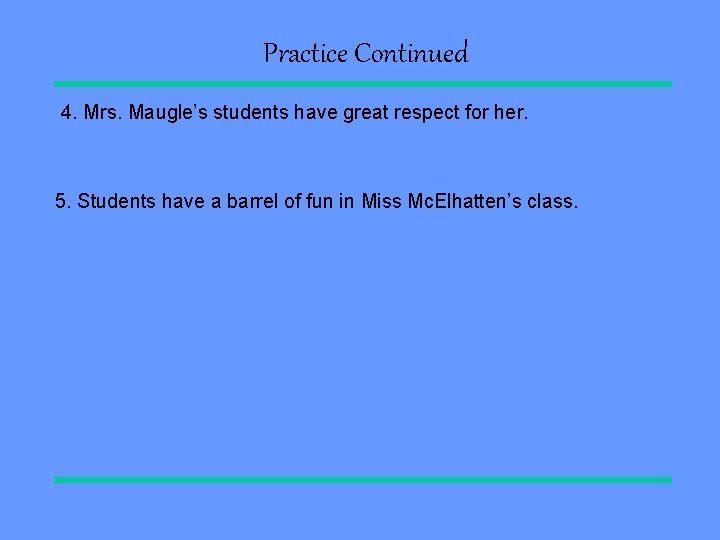
Practice Continued 4. Mrs. Maugle’s students have great respect for her. 5. Students have a barrel of fun in Miss Mc. Elhatten’s class.
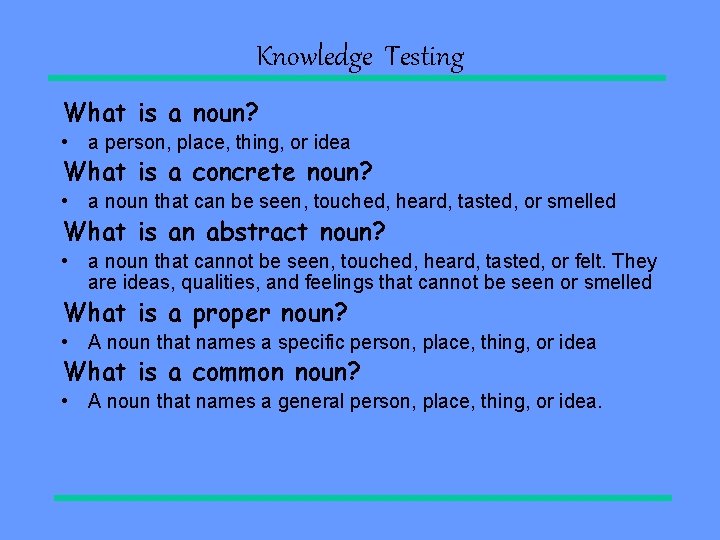
Knowledge Testing What is a noun? • a person, place, thing, or idea What is a concrete noun? • a noun that can be seen, touched, heard, tasted, or smelled What is an abstract noun? • a noun that cannot be seen, touched, heard, tasted, or felt. They are ideas, qualities, and feelings that cannot be seen or smelled What is a proper noun? • A noun that names a specific person, place, thing, or idea What is a common noun? • A noun that names a general person, place, thing, or idea.
www. learninglinksindia. org
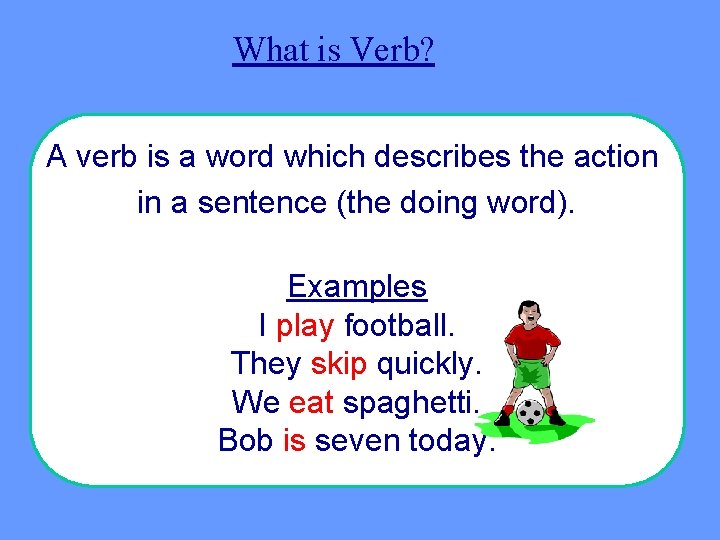
What is Verb? A verb is a word which describes the action in a sentence (the doing word). Examples I play football. They skip quickly. We eat spaghetti. Bob is seven today.
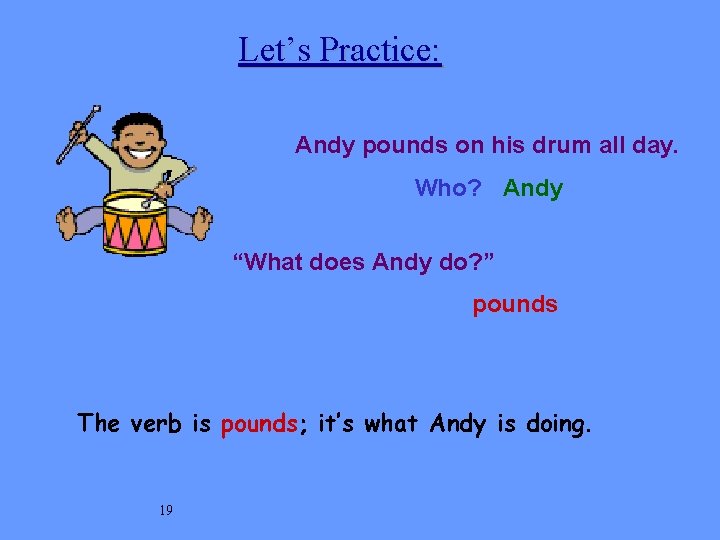
Let’s Practice: Andy pounds on his drum all day. Who? Andy “What does Andy do? ” pounds The verb is pounds; it’s what Andy is doing. 19
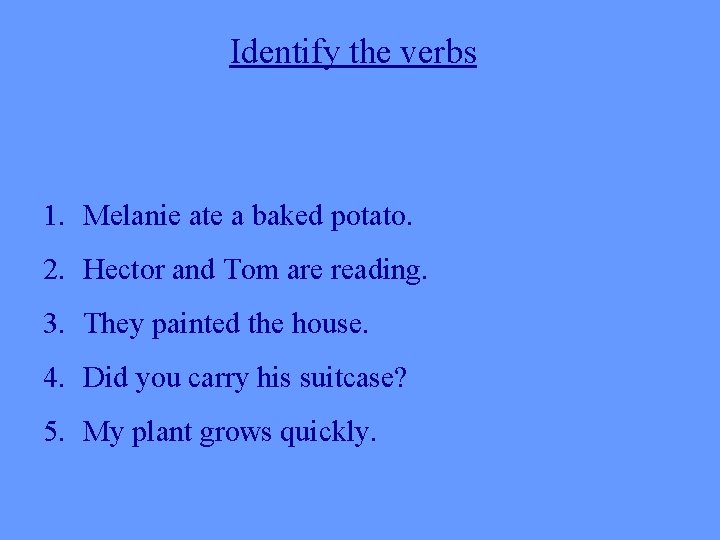
Identify the verbs 1. Melanie ate a baked potato. 2. Hector and Tom are reading. 3. They painted the house. 4. Did you carry his suitcase? 5. My plant grows quickly.
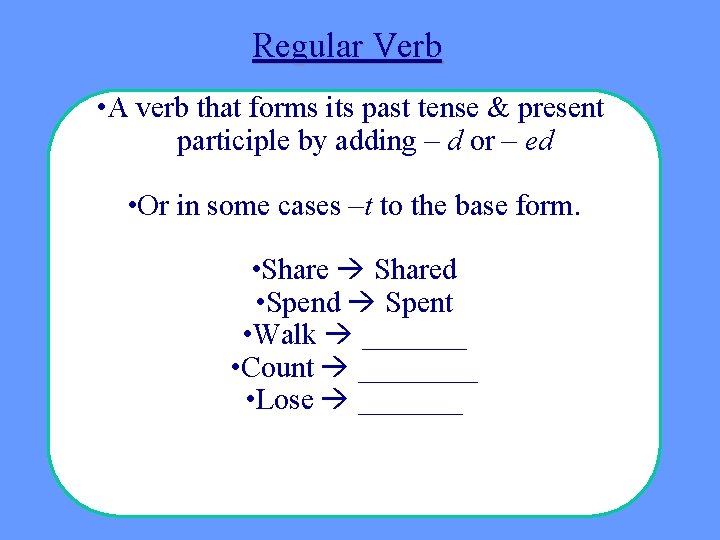
Regular Verb • A verb that forms its past tense & present participle by adding – d or – ed • Or in some cases –t to the base form. • Shared • Spend Spent • Walk _______ • Count ____ • Lose _______
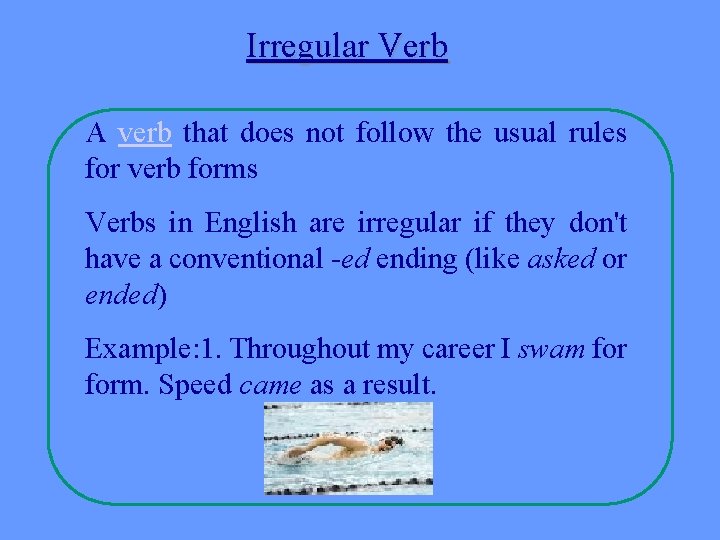
Irregular Verb A verb that does not follow the usual rules for verb forms Verbs in English are irregular if they don't have a conventional -ed ending (like asked or ended) Example: 1. Throughout my career I swam form. Speed came as a result.
Past Verb Those verbs that undergo substantial changes when changing forms between tenses are irregular verbs. PRESENT TENSE PAST TENSE Go Went Run Ran Sing Sang Bring Brought Think Thought
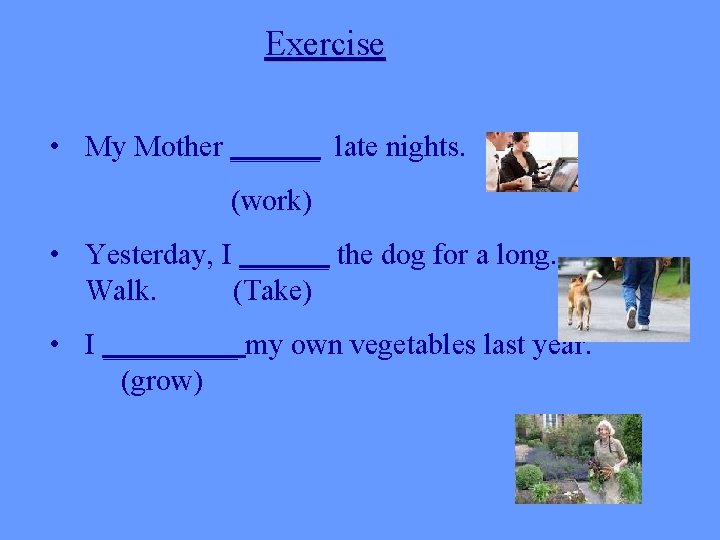
Exercise • My Mother ______ late nights. (work) • Yesterday, I ______ the dog for a long. Walk. (Take) • I _____ my own vegetables last year. (grow)
Auxiliary Verbs • • Also called helping verbs. They are necessary for the grammatical structure of a sentence, but they do not tell us very much alone. We usually use helping verbs with main verbs. They “help” the main verb (which has the real meaning). There are only 23 helping verbs in English
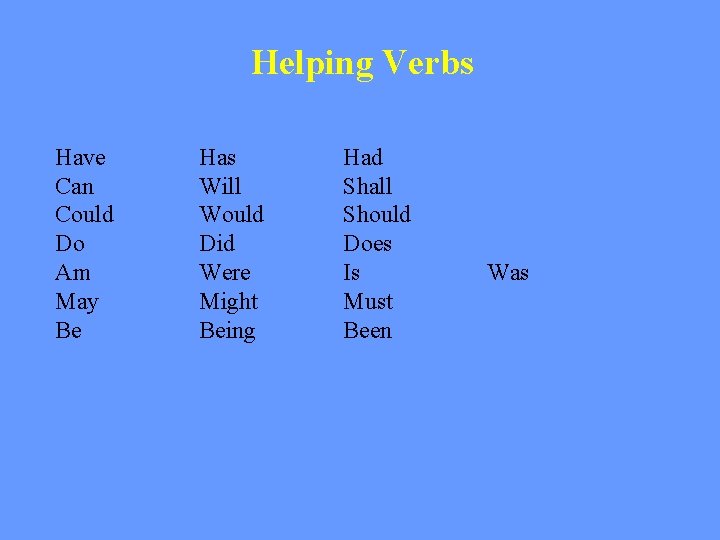
Helping Verbs Have Can Could Do Am May Be Has Will Would Did Were Might Being Had Shall Should Does Is Must Been Was
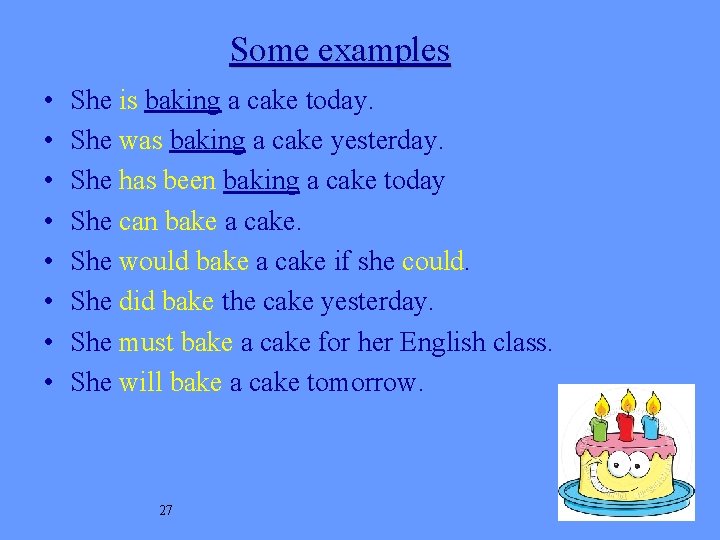
Some examples • • She is baking a cake today. She was baking a cake yesterday. She has been baking a cake today She can bake a cake. She would bake a cake if she could. She did bake the cake yesterday. She must bake a cake for her English class. She will bake a cake tomorrow. 27
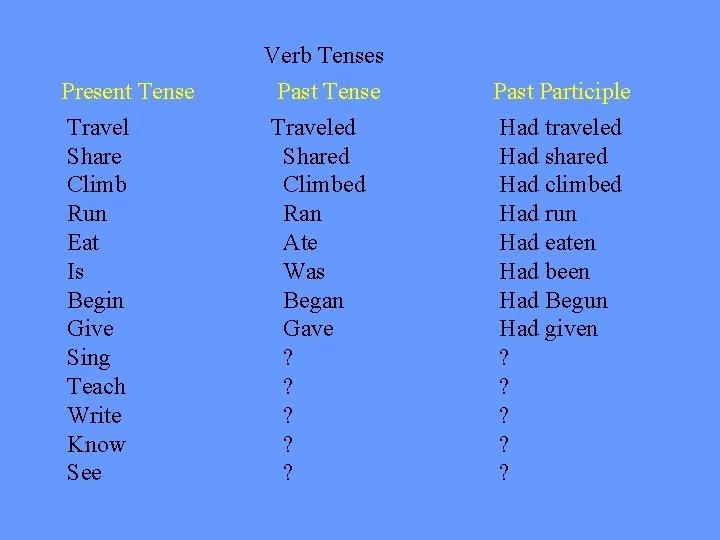
Present Tense Travel Share Climb Run Eat Is Begin Give Sing Teach Write Know See Verb Tenses Past Tense Traveled Shared Climbed Ran Ate Was Began Gave ? ? ? Past Participle Had traveled Had shared Had climbed Had run Had eaten Had been Had Begun Had given ? ? ?
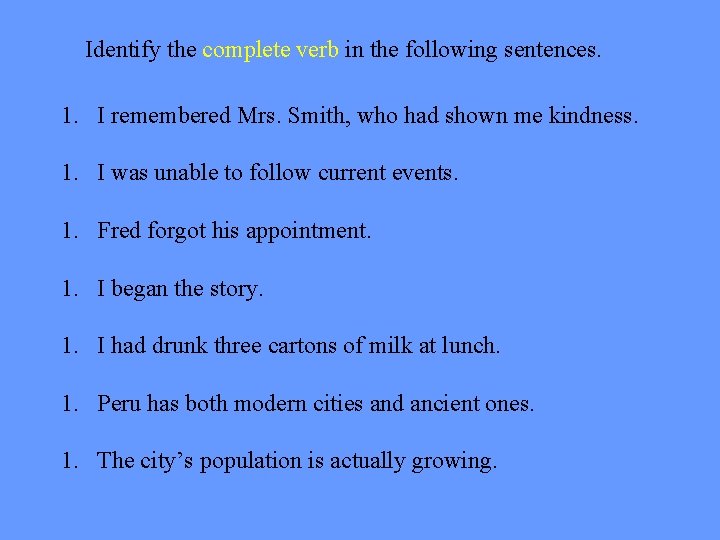
Identify the complete verb in the following sentences. 1. I remembered Mrs. Smith, who had shown me kindness. 1. I was unable to follow current events. 1. Fred forgot his appointment. 1. I began the story. 1. I had drunk three cartons of milk at lunch. 1. Peru has both modern cities and ancient ones. 1. The city’s population is actually growing.
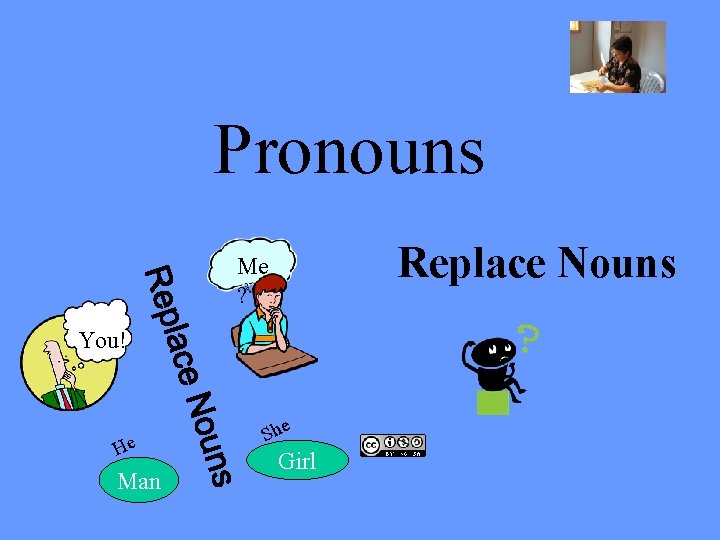
Pronouns Replace Nouns Me ? You! He Man She Girl
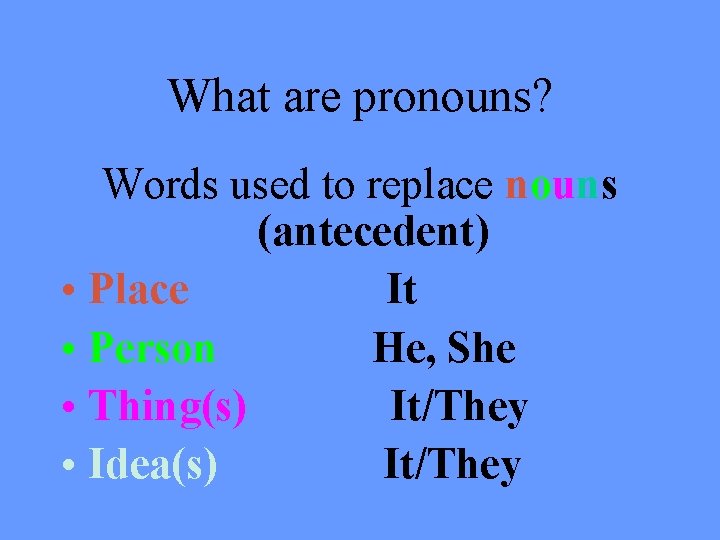
What are pronouns? Words used to replace nouns (antecedent) • Place It • Person He, She • Thing(s) It/They • Idea(s) It/They
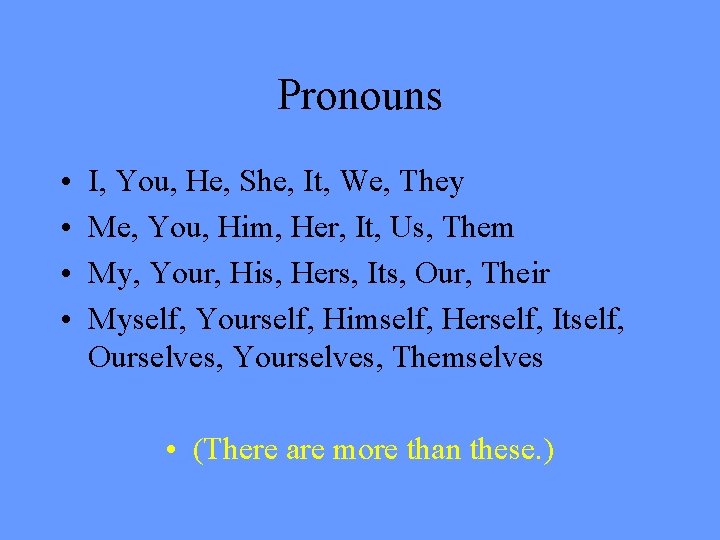
Pronouns • • I, You, He, She, It, We, They Me, You, Him, Her, It, Us, Them My, Your, His, Hers, Its, Our, Their Myself, Yourself, Himself, Herself, Itself, Ourselves, Yourselves, Themselves • (There are more than these. )
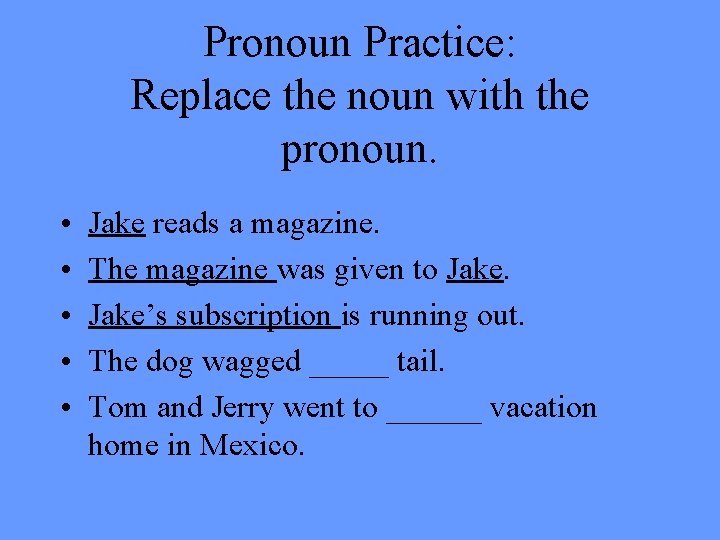
Pronoun Practice: Replace the noun with the pronoun. • • • Jake reads a magazine. The magazine was given to Jake’s subscription is running out. The dog wagged _____ tail. Tom and Jerry went to ______ vacation home in Mexico.
QUIZ TOMORROW! • Nouns and pronouns • Verbs and verb tenses