NORINT 0500 Norwegian Life and Society Religion in
- Slides: 36
NORINT 0500 Norwegian Life and Society Religion in Norway 16. 04. 2018 Hallgeir Elstad
Religion, state and society in Norway • The Church of Norway has represented the main expression of religious belief in Norway for a thousand years. • It has belonged to the Evangelical Lutheran branch of the Christian church since the 16 th century, and became a state church. • The long tradition of having a Lutheran state church • This situation was changed by the Norwegian Parliament’s changes of the Constitution in May 2012 • From 1 January 2017 the Church of Norway is not a state church anymore
The Norwegian Constitution and Religion • The Evangelical-Lutheran Religion is no longer the public religion of the state • All Norwegians have freedom of religion • The Church of Norway is an Evangelical-Lutheran Church and remains as Norway’s Folk Church • For this reason it shall be supported by the state, and all life stand communities shall according to their number of members be supported in same way. • The King is member of the Church of Norway
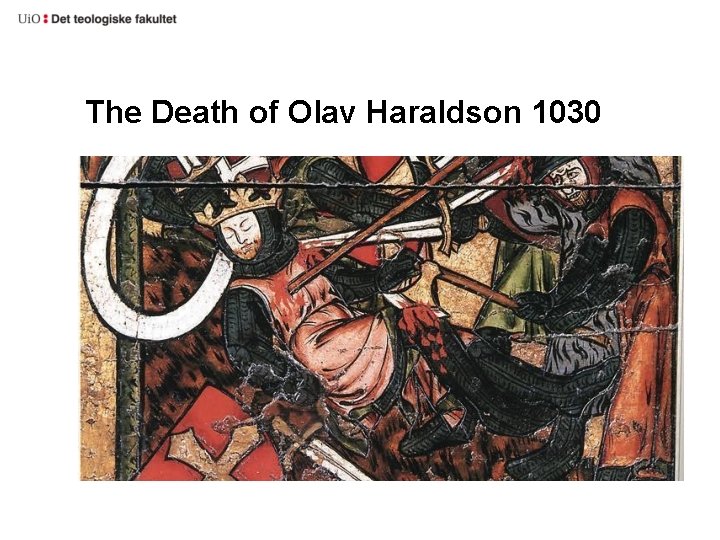
The Death of Olav Haraldson 1030
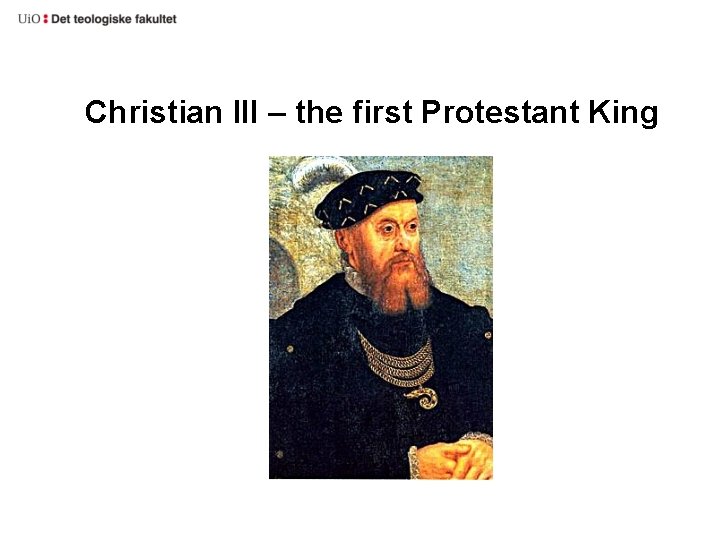
Christian III – the first Protestant King
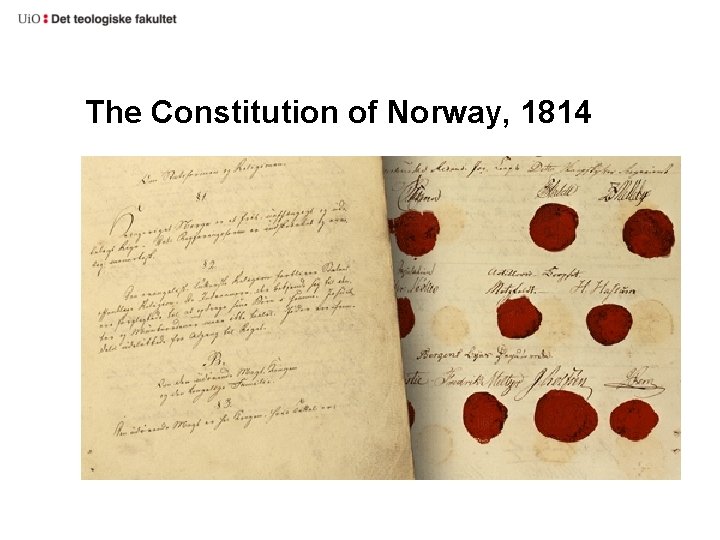
The Constitution of Norway, 1814
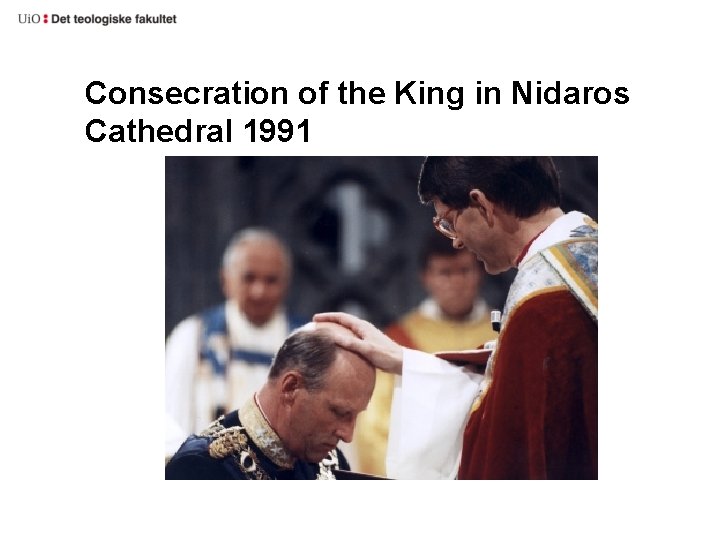
Consecration of the King in Nidaros Cathedral 1991
Consecration of the King and Queen • https: //www. youtube. com/watch? v=S 23 W 0 A a 1 p 7 Q
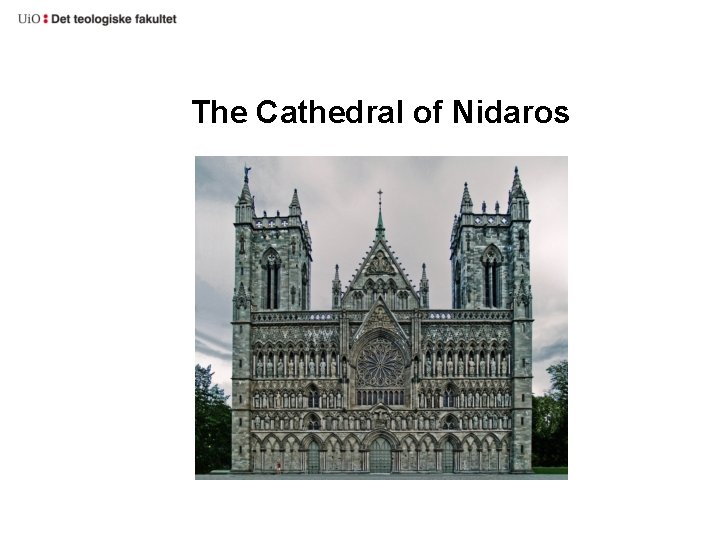
The Cathedral of Nidaros
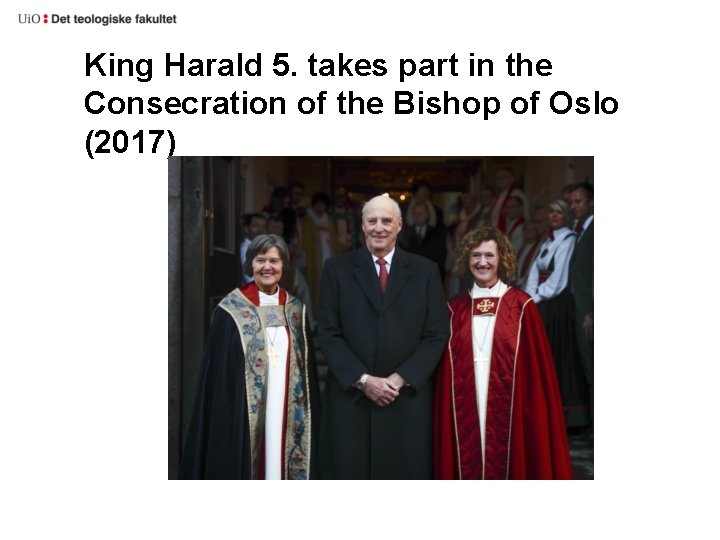
King Harald 5. takes part in the Consecration of the Bishop of Oslo (2017)
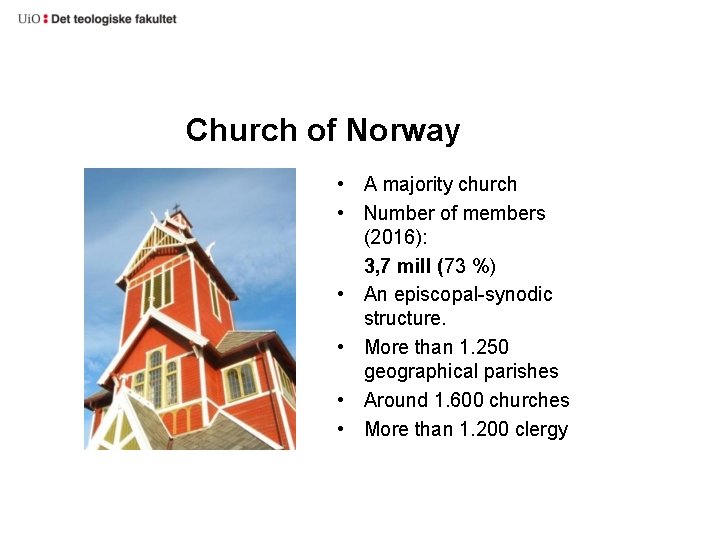
Church of Norway • A majority church • Number of members (2016): 3, 7 mill (73 %) • An episcopal-synodic structure. • More than 1. 250 geographical parishes • Around 1. 600 churches • More than 1. 200 clergy
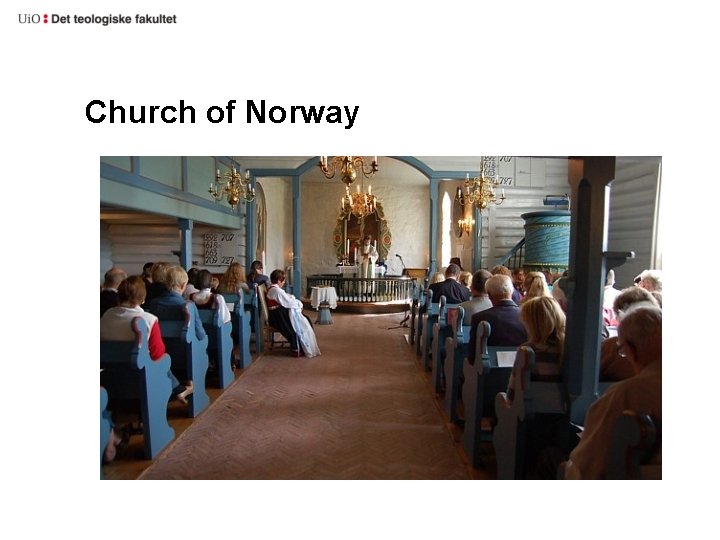
Church of Norway
Church of Norway • The General Synod convenes once a year and is the highest representative body. • The National Council is the executive body of the Synod, consists of 15 members. • The Bishops' Conference convenes three times a year • The Council on Ecumenical and International Relations deals with international and ecumenical matters. • The Sami Church Council deals with church work among the indigenous Sami people.
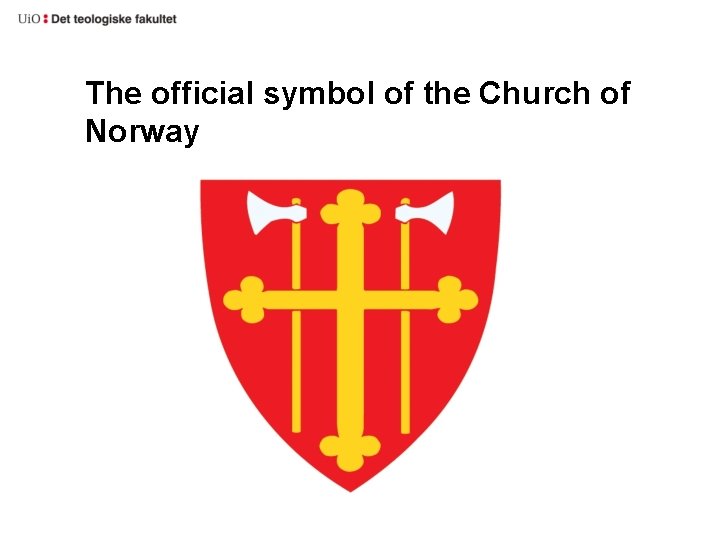
The official symbol of the Church of Norway
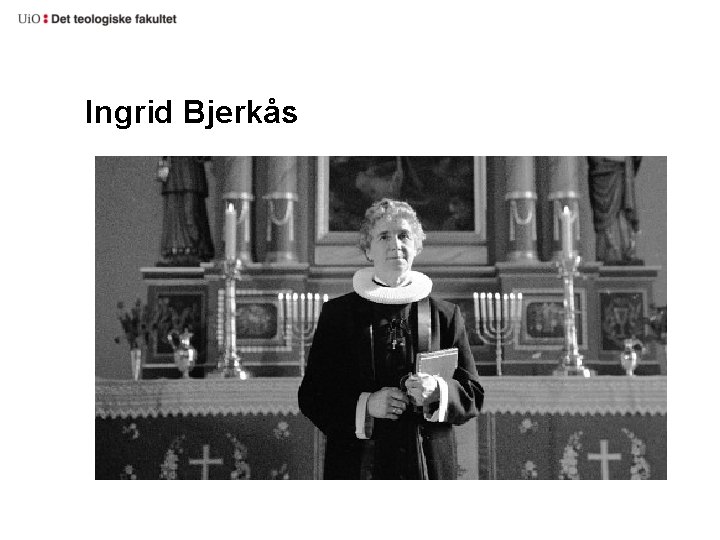
Theological tensions • There are strong theological tensions between different groups in the Church • Over several decades of the second half of the 20 th the church conflict revolved around the question of legitimacy of female pastors • The first female pastor, Ingrid Bjerkås, was ordained in 1961 • The first female bishop, Rosemarie Køhn, was ordained in 1993.
Ingrid Bjerkås
• Ingrid Bjerkås was ordained in Vang Church, near Hamar, as Norway's first female priest: • http: //www. nrk. no/skole/klippdetalj? topic=nrk: klipp/717317
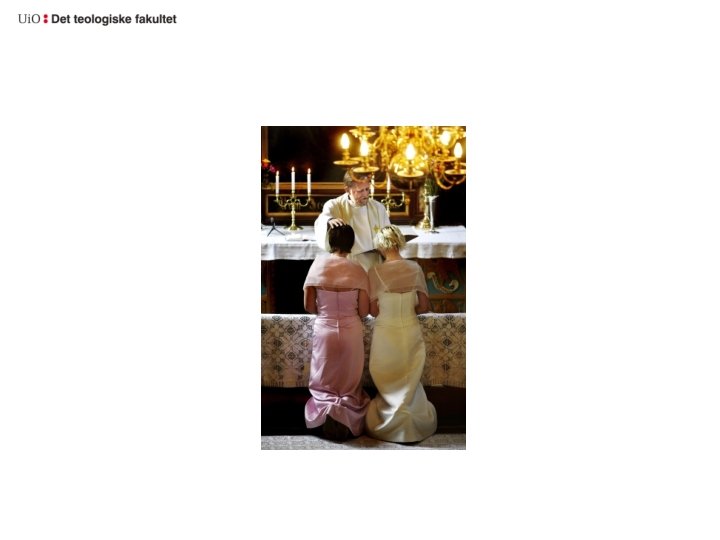
Theological Tensions • Strong resistance against the Registered Partnership Act of 1993 and same sex marriages of 2008 • Earlier the Norwegian Bishops' Conference and the General Synod have not wanted to introduce a liturgy for such marriages. • In April 2016 a great majority in the General Synod voted in favour of allowing same-sex marriage • In October 2016 the Bishop’s Conference approved a gender neutral liturgy for marriages
Folk Church • This concept came to Scandinavia from Germany (Volkskirche). • Schleiermacher: Volkskirche was a church of freedom from ecclesiastical power and bureaucracy, a church for freedom and pluralism. • Later 'Volkskirche' got another shaping in the program for a home mission. • In addition to these two concepts of ‘Volkskirche’, the 'Norwegian folk church' contains some of the same ambiguity as the concepts of people and nation
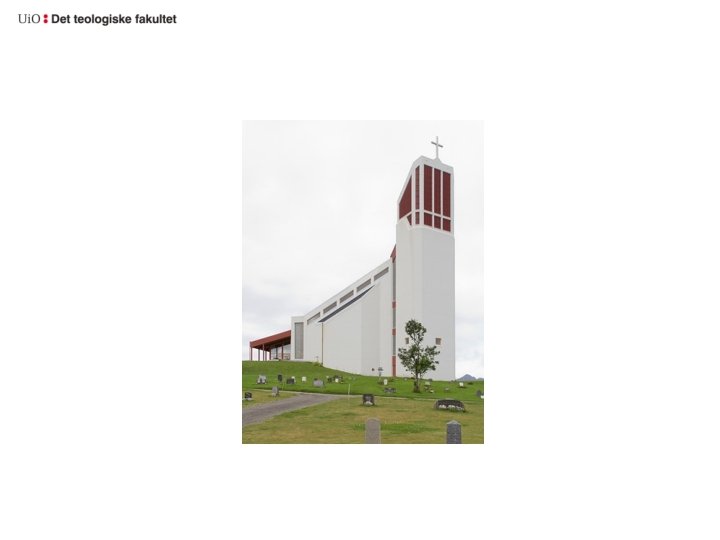
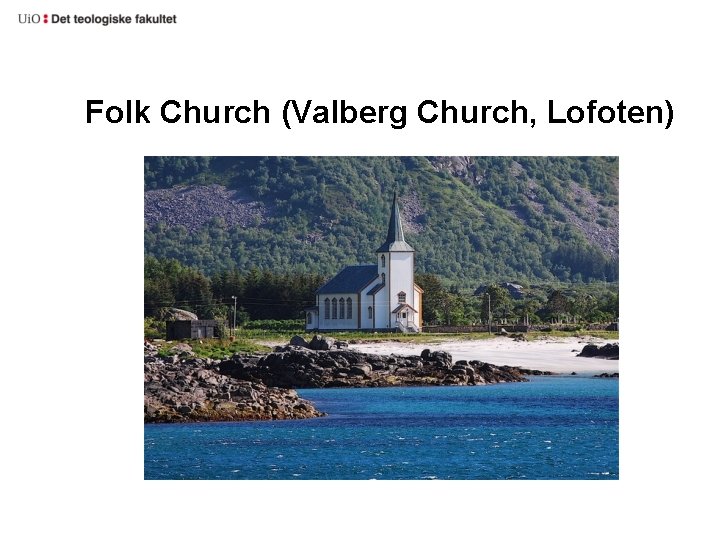
Folk Church (Valberg Church, Lofoten)
Church and welfare state • A historical relation between the Lutheran tradition and the Nordic welfare states • An important precondition building a welfare state is literacy among the people. • The church administered the schools and the poor relief • The Lutheranism has been one of several important factors that have contributed to the building of the Nordic welfare states.
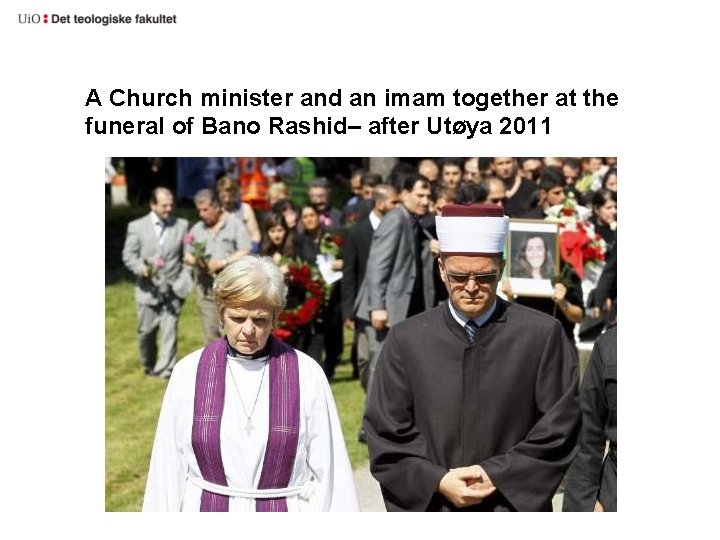
The church and July 22 • Traces of a mentality linked to the historical Norwegian church were displayed after the terror attacks in Oslo and on Utøya July 22 2011 • On Sunday July 24, the Sunday service in the Cathedral of Oslo became a Mourning Service • The Cathedral of Oslo became the focal point for grief • The importance of church rituals
• Sunday July 24, the sunday service in the Cathedral of Oslo: • https: //www. youtube. com/watch? v=k. NN 2 vu. P 2 Nm 0
Cathedral of Oslo became the focal point for grief: https: //www. youtube. com/watch? v=Nlzeu 9 OKlvk
A Church minister and an imam together at the funeral of Bano Rashid– after Utøya 2011
Some consequences of changed relations • The responsibility for appointments of bishops and deans is no longer a task for the Government but for diocesan councils (appointment of deans) and the board of the National Council (appointment of bishops). • For the time being, Church of Norway has no proper church order
Religion is more than Church of Norway • Although Church of Norway has an important role concerning religious life in Norway the concept of religion and life stance has become much wider. • This process of pluralization started in the middle of the 19 th century with the first steps towards freedom of religion • It accelerated from the 1970 s at the same time as the Norwegian society went through strong changes.
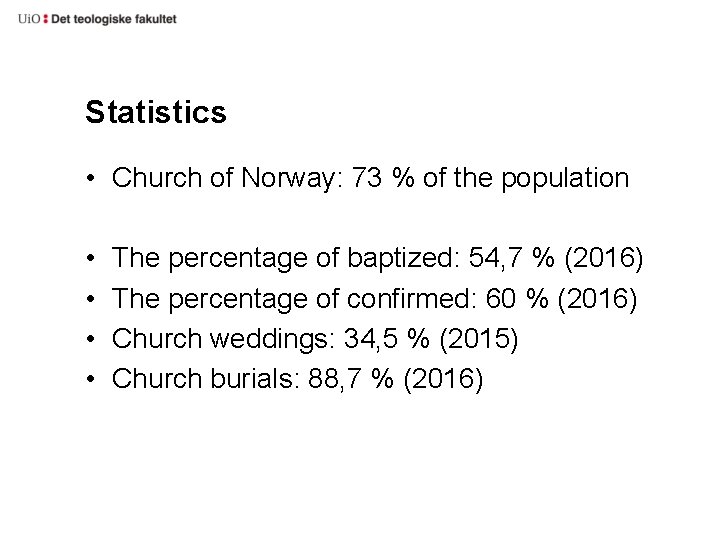
Statistics • Church of Norway: 73 % of the population • • The percentage of baptized: 54, 7 % (2016) The percentage of confirmed: 60 % (2016) Church weddings: 34, 5 % (2015) Church burials: 88, 7 % (2016)
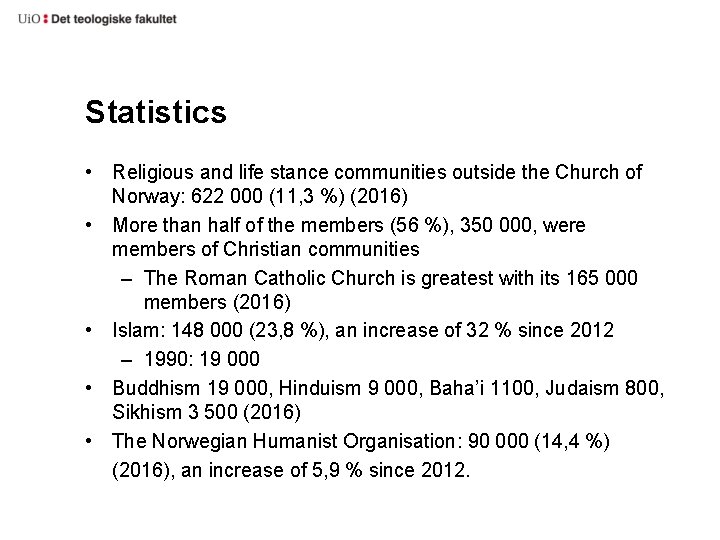
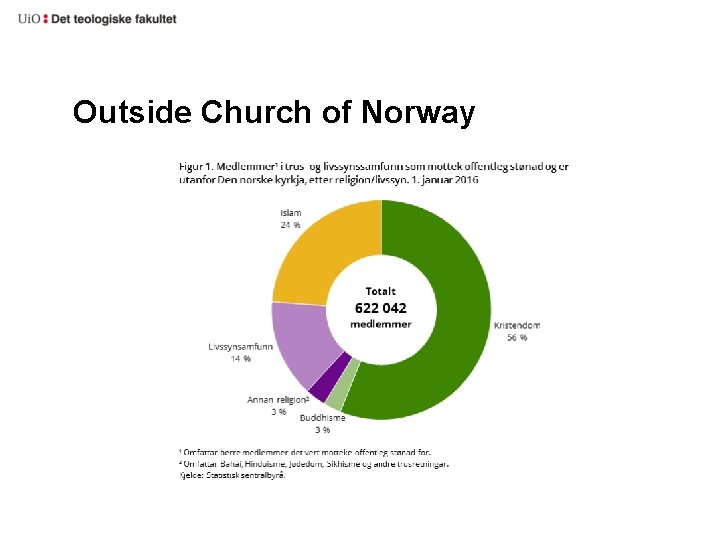
Statistics • Religious and life stance communities outside the Church of Norway: 622 000 (11, 3 %) (2016) • More than half of the members (56 %), 350 000, were members of Christian communities – The Roman Catholic Church is greatest with its 165 000 members (2016) • Islam: 148 000 (23, 8 %), an increase of 32 % since 2012 – 1990: 19 000 • Buddhism 19 000, Hinduism 9 000, Baha’i 1100, Judaism 800, Sikhism 3 500 (2016) • The Norwegian Humanist Organisation: 90 000 (14, 4 %) (2016), an increase of 5, 9 % since 2012.
Outside Church of Norway
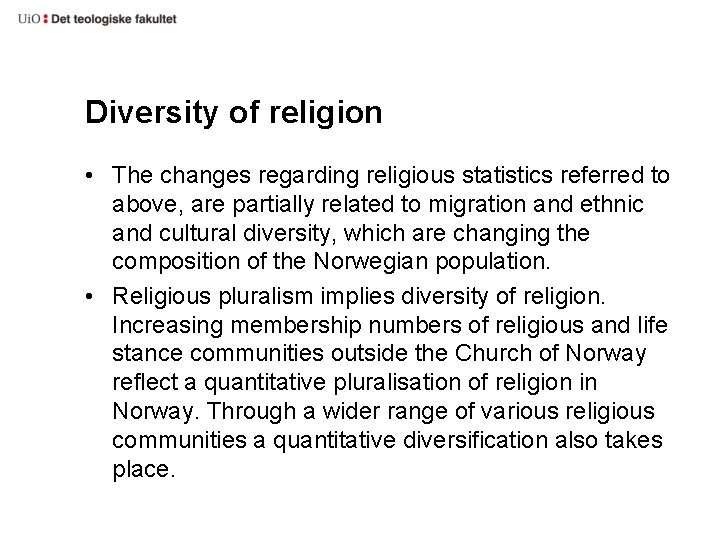
Diversity of religion • The changes regarding religious statistics referred to above, are partially related to migration and ethnic and cultural diversity, which are changing the composition of the Norwegian population. • Religious pluralism implies diversity of religion. Increasing membership numbers of religious and life stance communities outside the Church of Norway reflect a quantitative pluralisation of religion in Norway. Through a wider range of various religious communities a quantitative diversification also takes place.
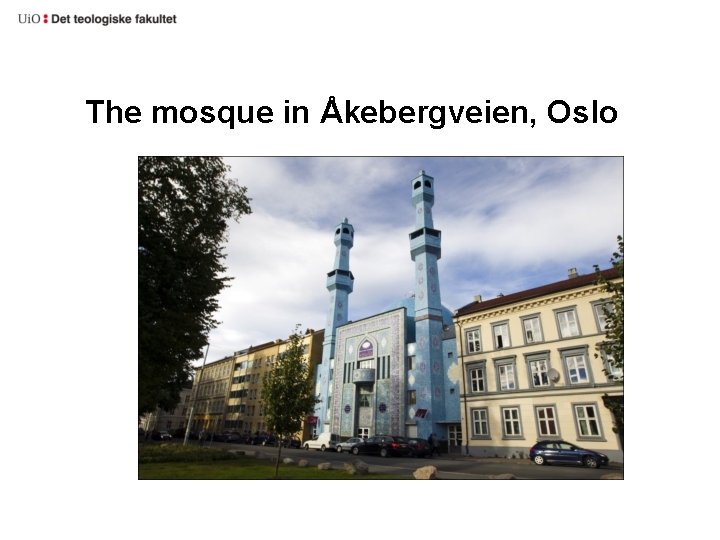
The mosque in Åkebergveien, Oslo
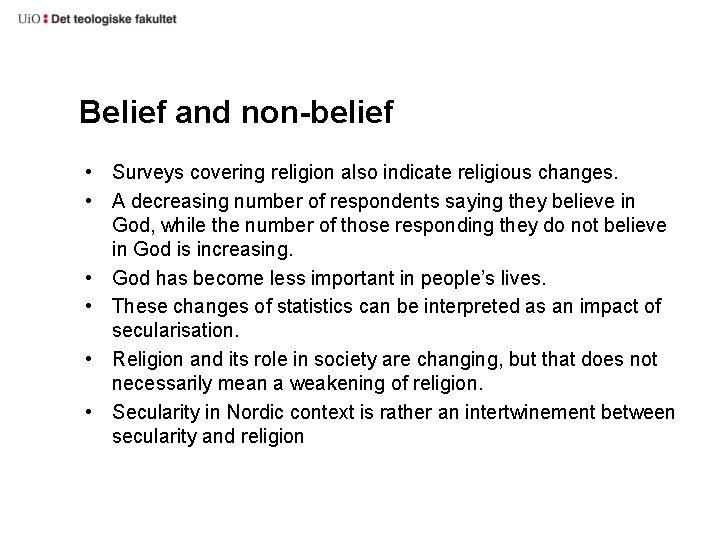
Belief and non-belief • Surveys covering religion also indicate religious changes. • A decreasing number of respondents saying they believe in God, while the number of those responding they do not believe in God is increasing. • God has become less important in people’s lives. • These changes of statistics can be interpreted as an impact of secularisation. • Religion and its role in society are changing, but that does not necessarily mean a weakening of religion. • Secularity in Nordic context is rather an intertwinement between secularity and religion
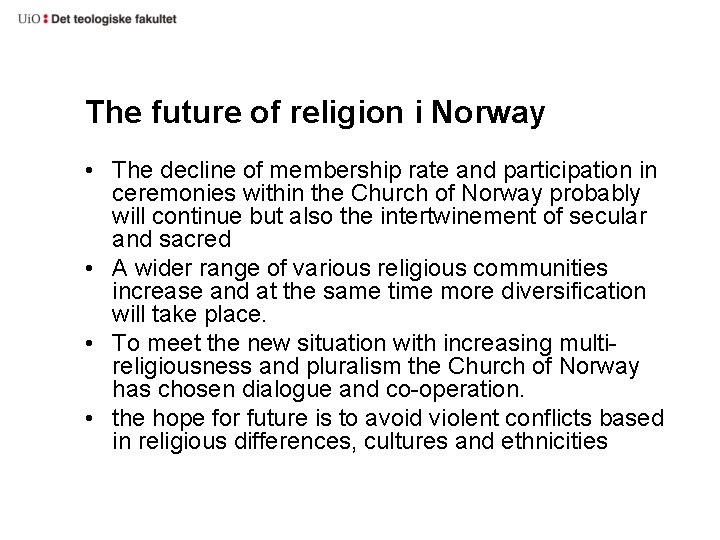
The future of religion i Norway • The decline of membership rate and participation in ceremonies within the Church of Norway probably will continue but also the intertwinement of secular and sacred • A wider range of various religious communities increase and at the same time more diversification will take place. • To meet the new situation with increasing multireligiousness and pluralism the Church of Norway has chosen dialogue and co-operation. • the hope for future is to avoid violent conflicts based in religious differences, cultures and ethnicities