Neurologic Examination Kefah AlHayek MD Assistant Prof of
- Slides: 21
Neurologic Examination Kefah Al-Hayek, MD Assistant Prof. of Neurology J. U. S. T ABPN, ABCNP, ABEM, ABNM
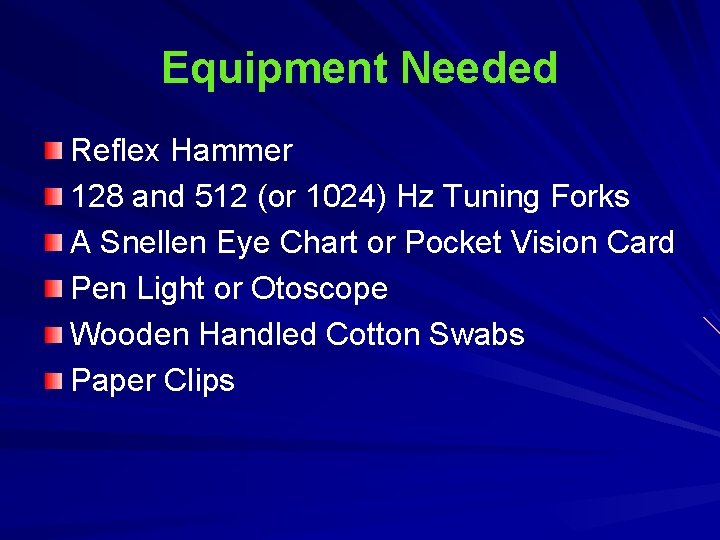
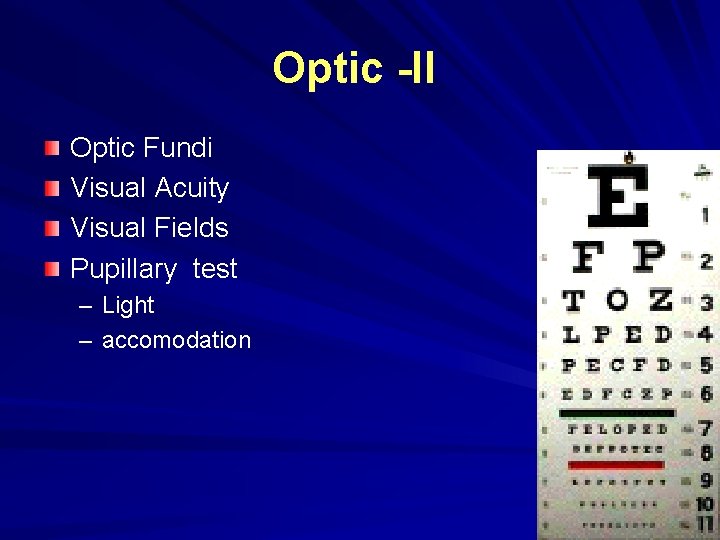
Equipment Needed Reflex Hammer 128 and 512 (or 1024) Hz Tuning Forks A Snellen Eye Chart or Pocket Vision Card Pen Light or Otoscope Wooden Handled Cotton Swabs Paper Clips
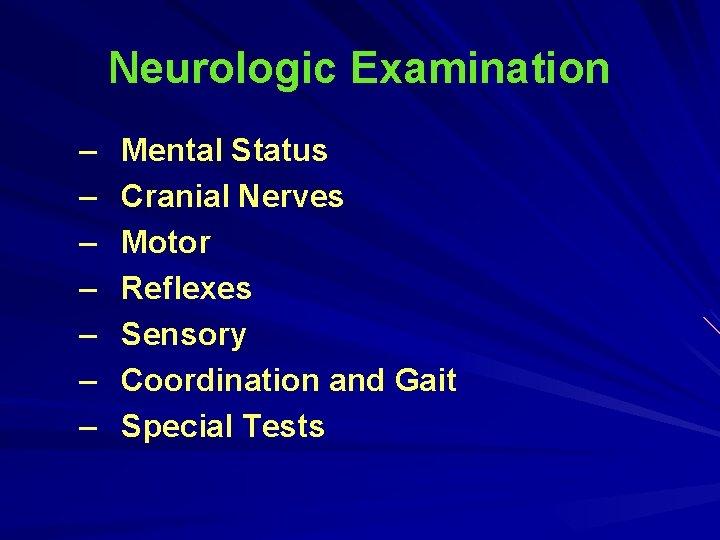
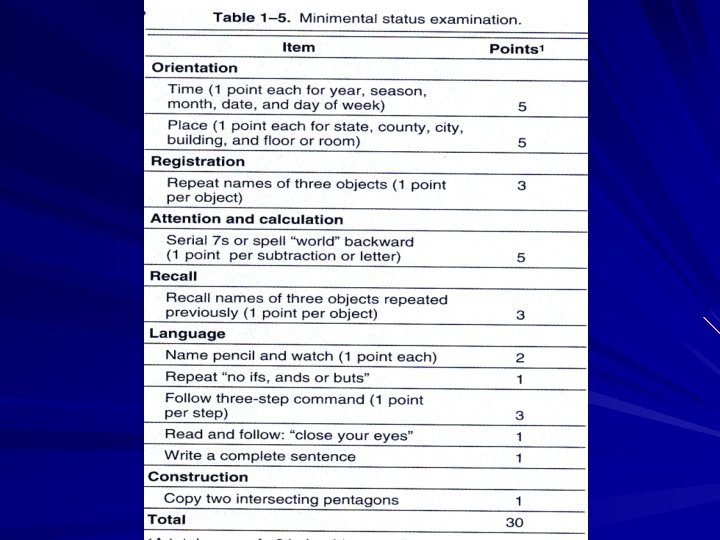
Neurologic Examination – – – – Mental Status Cranial Nerves Motor Reflexes Sensory Coordination and Gait Special Tests
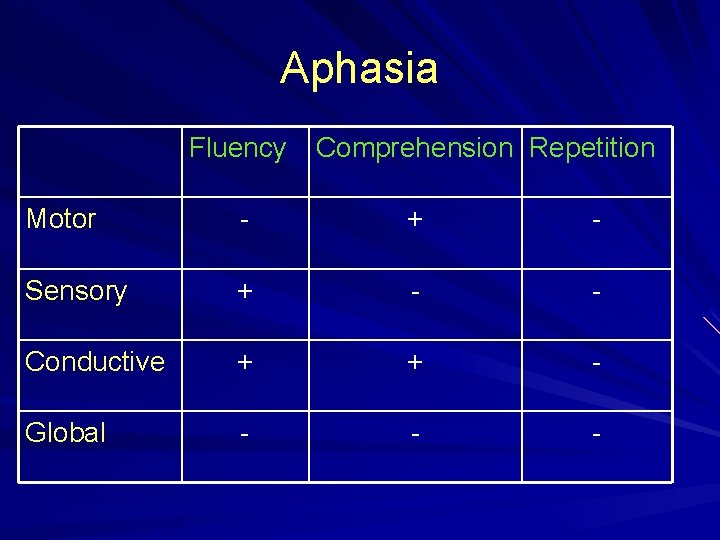
Aphasia Fluency Comprehension Repetition Motor - + - Sensory + - - Conductive + + - Global - - -
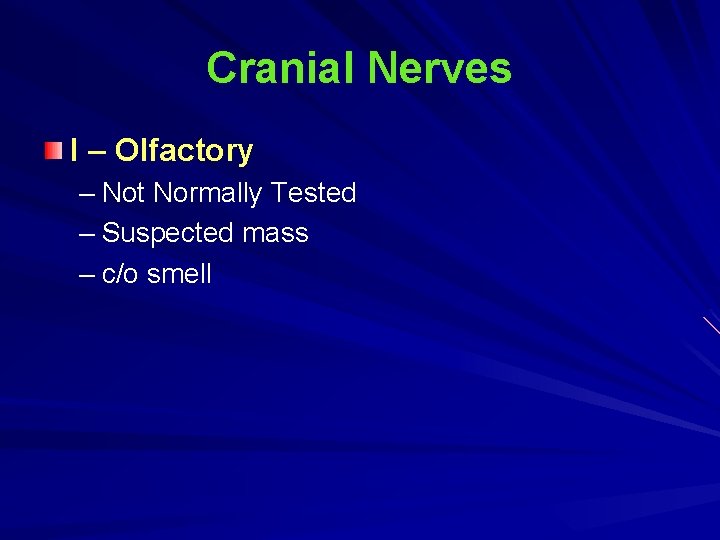
Cranial Nerves I – Olfactory – Not Normally Tested – Suspected mass – c/o smell
Optic -II Optic Fundi Visual Acuity Visual Fields Pupillary test – Light – accomodation
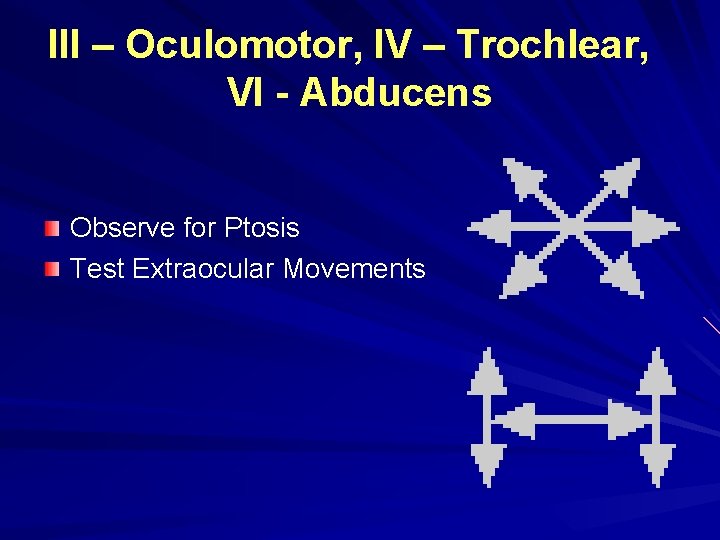
III – Oculomotor, IV – Trochlear, VI - Abducens Observe for Ptosis Test Extraocular Movements
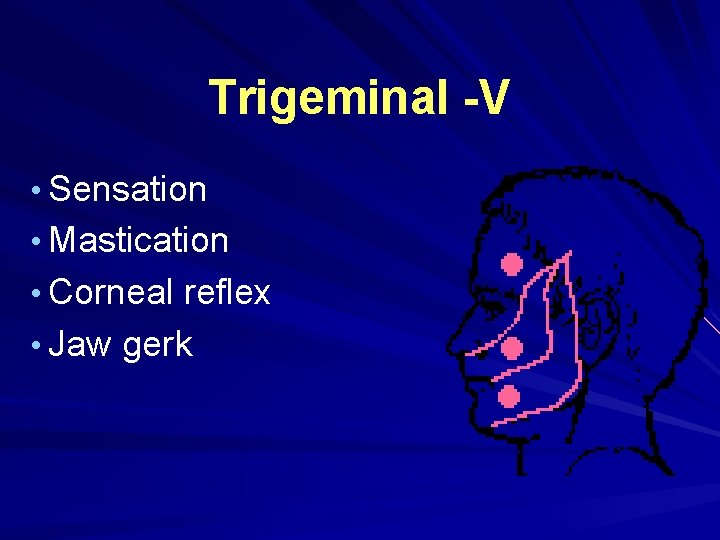
Trigeminal -V • Sensation • Mastication • Corneal reflex • Jaw gerk
Facial -VII Observe for Any Facial Droop or Asymmetry Ask Patient to do the following, note any lag, weakness, or assymetry: – – – Raise eyebrows [8] Close both eyes to resistance Smile Frown Show teeth Puff out cheeks UMN Vs LMN
Acoustic -VIII Screen Hearing Lateralization (Weber) Compare Air and Bone Conduction (Rinne) Vestibular Function – Not Normally Tested
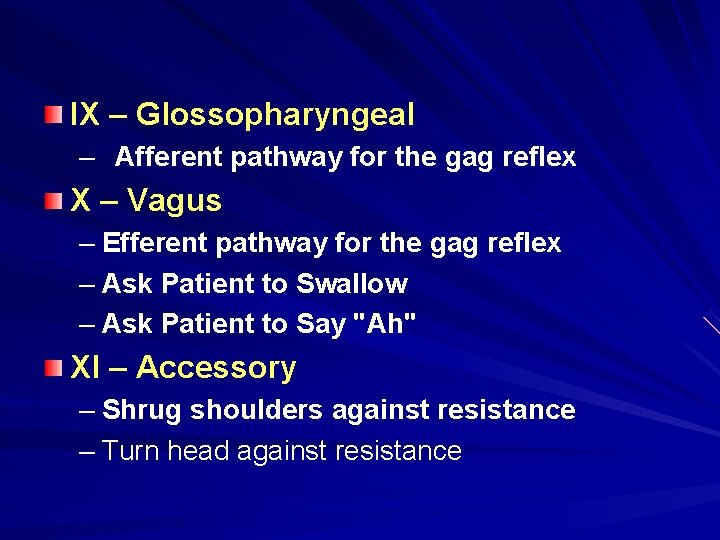
IX – Glossopharyngeal – Afferent pathway for the gag reflex X – Vagus – Efferent pathway for the gag reflex – Ask Patient to Swallow – Ask Patient to Say "Ah" XI – Accessory – Shrug shoulders against resistance – Turn head against resistance
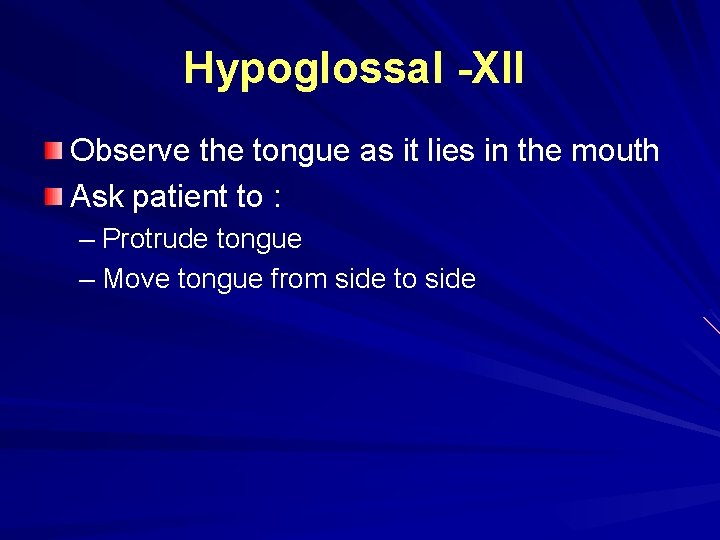
Hypoglossal -XII Observe the tongue as it lies in the mouth Ask patient to : – Protrude tongue – Move tongue from side to side
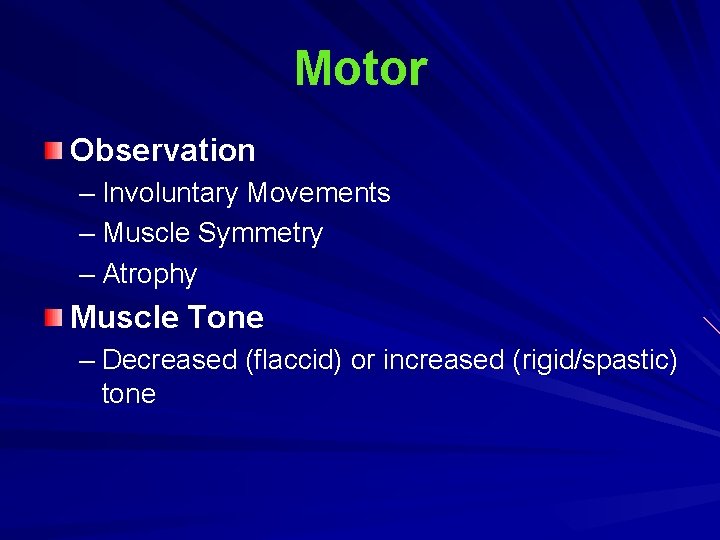
Motor Observation – Involuntary Movements – Muscle Symmetry – Atrophy Muscle Tone – Decreased (flaccid) or increased (rigid/spastic) tone
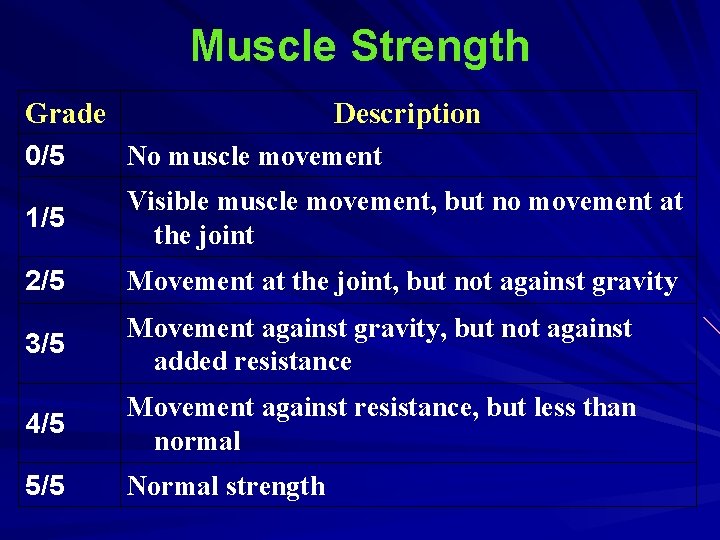
Muscle Strength Grade Description 0/5 No muscle movement 1/5 Visible muscle movement, but no movement at the joint 2/5 Movement at the joint, but not against gravity 3/5 Movement against gravity, but not against added resistance 4/5 Movement against resistance, but less than normal 5/5 Normal strength
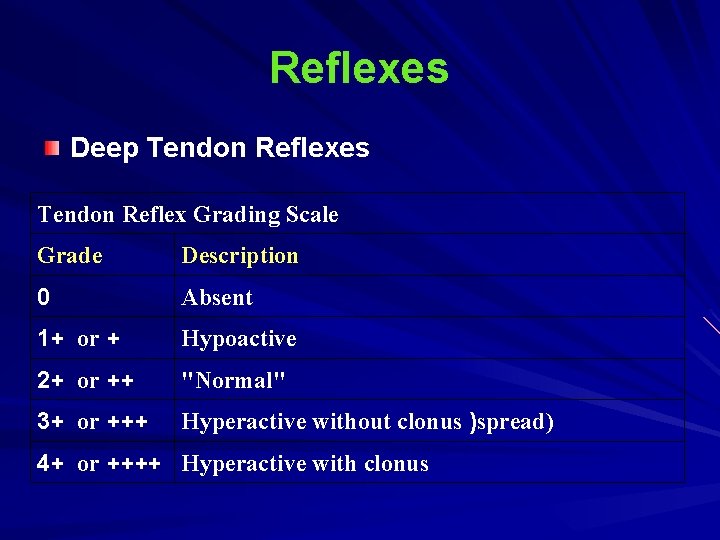
Reflexes Deep Tendon Reflexes Tendon Reflex Grading Scale Grade Description 0 Absent 1+ or + Hypoactive 2+ or ++ "Normal" 3+ or +++ Hyperactive without clonus )spread) 4+ or ++++ Hyperactive with clonus
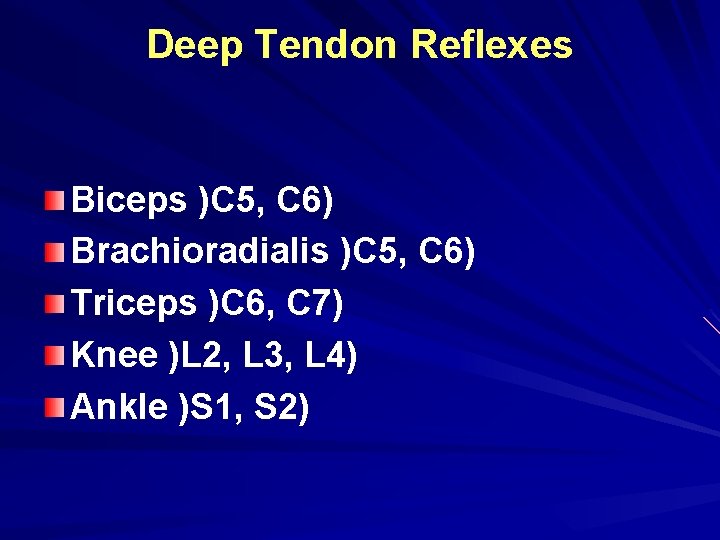
Deep Tendon Reflexes Biceps )C 5, C 6) Brachioradialis )C 5, C 6) Triceps )C 6, C 7) Knee )L 2, L 3, L 4) Ankle )S 1, S 2)
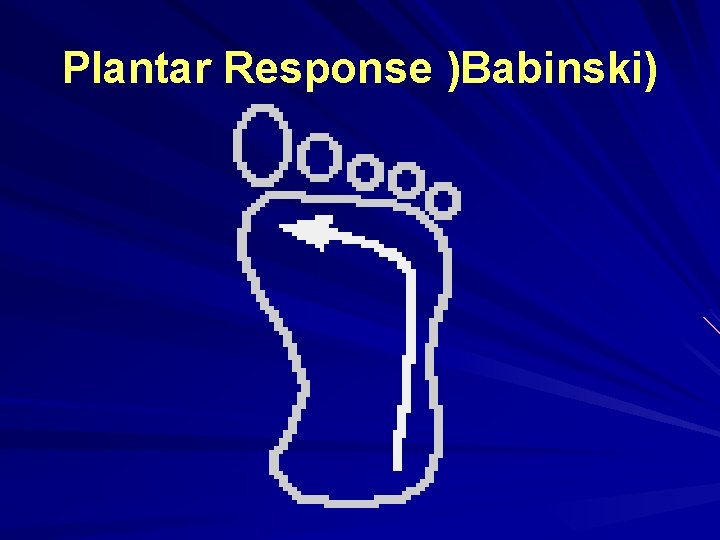
Plantar Response )Babinski)
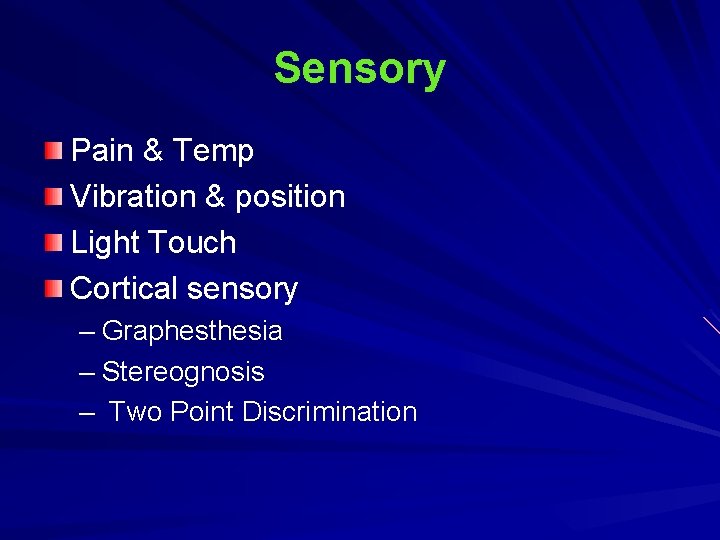
Sensory Pain & Temp Vibration & position Light Touch Cortical sensory – Graphesthesia – Stereognosis – Two Point Discrimination
Coordination Rapid Alternating Movements Point-to-Point Movements – F-N-F – H-K-S
Romberg – Sensory ataxia Gait – Walk across the room, turn and come back – Walk heel-to-toe in a straight line – Walk on their toes in a straight line – Walk on their heels in a straight line