Neoclassicism and Restoration Comedy NeoClassicism A movement in
- Slides: 23
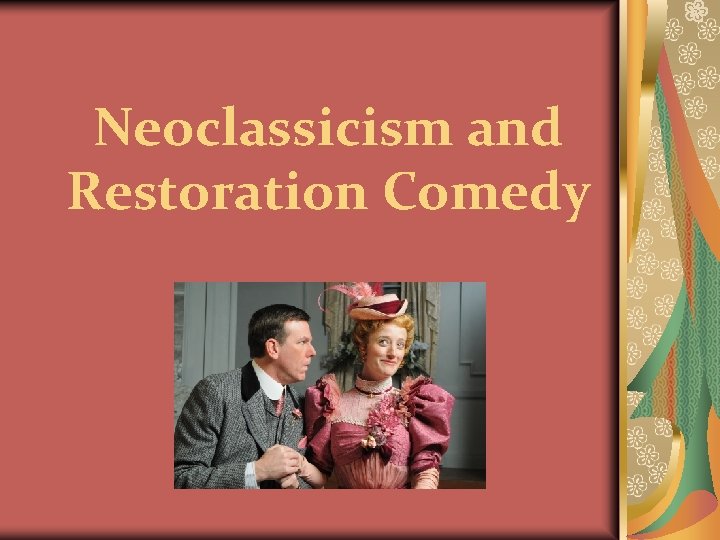
Neoclassicism and Restoration Comedy
Neo-Classicism A movement in the arts mid-1600 s through 1700 s Europe neo-classical = “new classical”; returning to the structure, order, and style of classic Greece and Rome
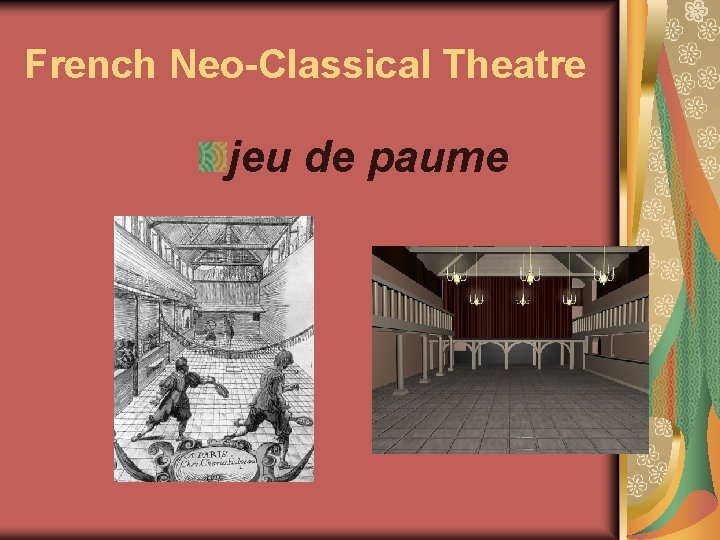
French Neo-Classical Theatre jeu de paume
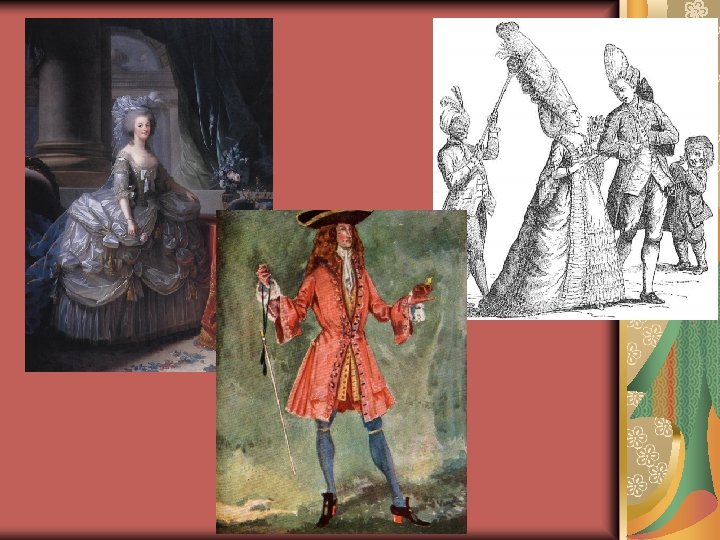
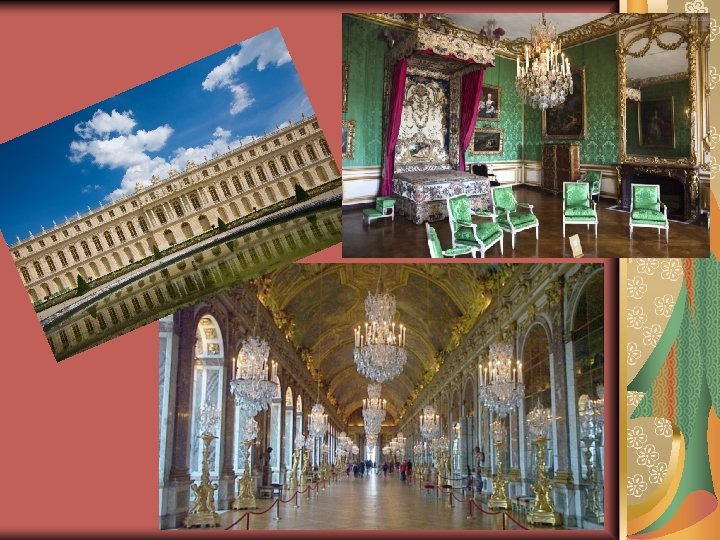
French Neo-Classical Theatre Audience was mainly people of the court (aristocracy) Influenced by Italian theatre and opera Elaborate costumes Elaborate scenery Had to impress and amaze rich audience!
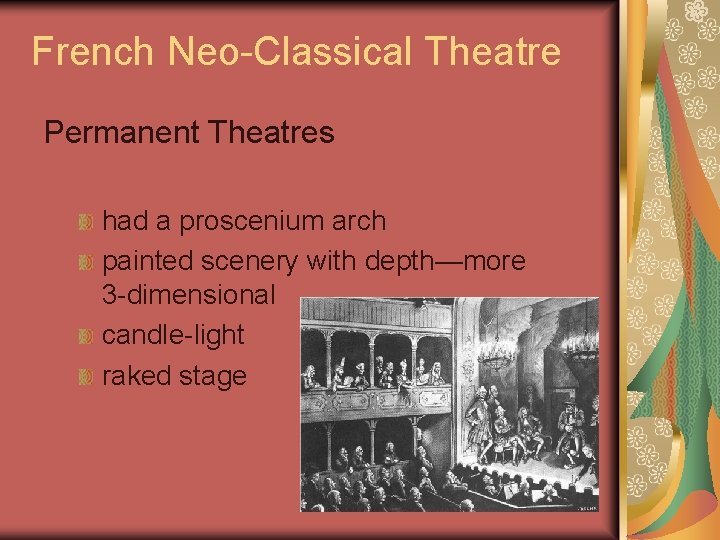
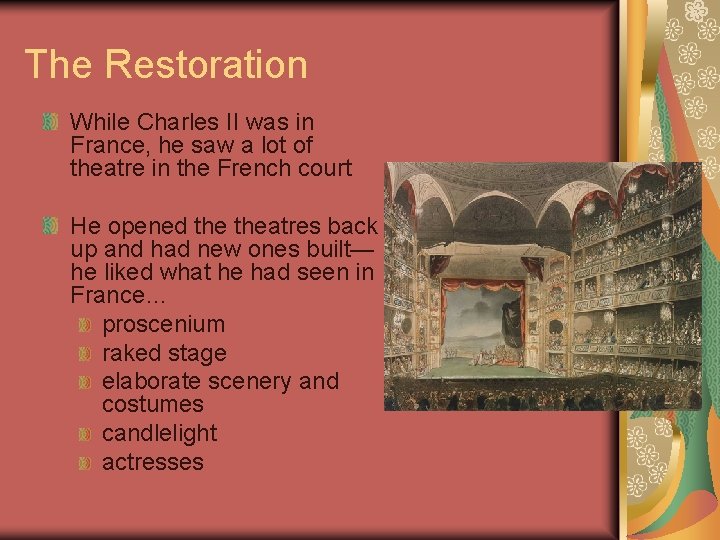
French Neo-Classical Theatre Permanent Theatres had a proscenium arch painted scenery with depth—more 3 -dimensional candle-light raked stage
French Neo-Classical Theatre Professional actors, part of companies or troupes; provided own costumes Women actors allowed onstage Begin to have theatrical specialists, like lighting and scenic designers
L’Académie Française Established in 1635 by Cardinal Richelieu (advisor to King Louis XIII) Regulated which plays followed the “rules of acceptable drama” (based on ancient Greek and Roman writings) During the Neoclassical Age, if the Academy reviewed a play and decided it broke a rule, the playwright could face imprisonment and bankruptcy.
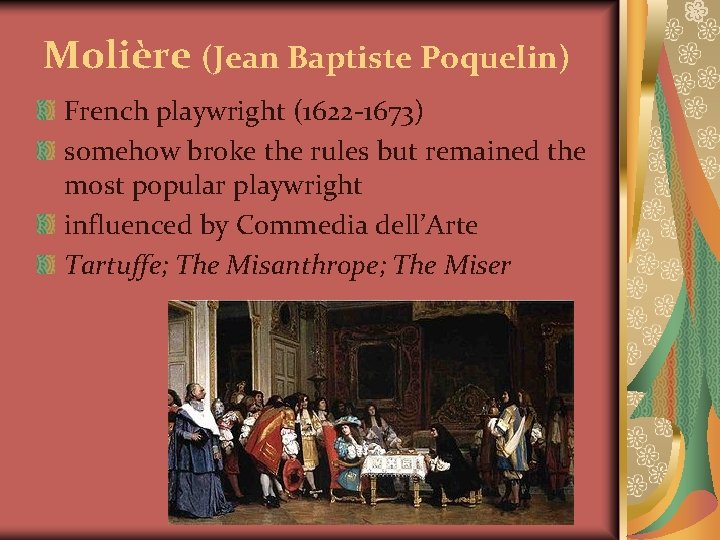
Molière (Jean Baptiste Poquelin) French playwright (1622 -1673) somehow broke the rules but remained the most popular playwright influenced by Commedia dell’Arte Tartuffe; The Misanthrope; The Miser
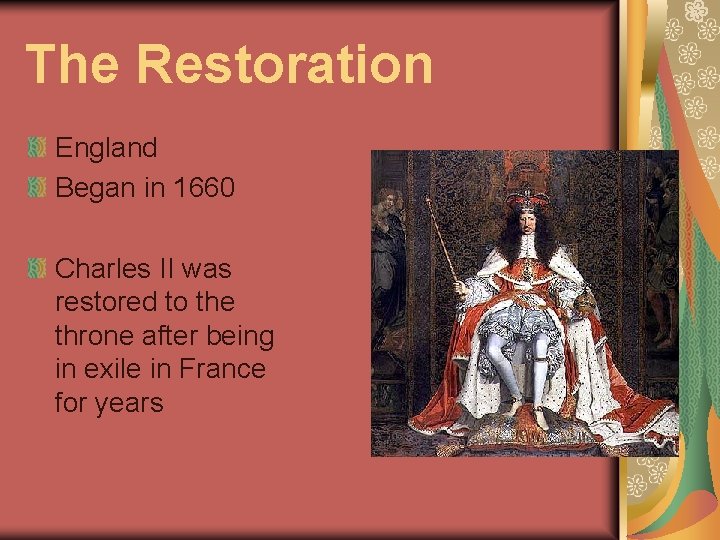
The Restoration England Began in 1660 Charles II was restored to the throne after being in exile in France for years
The Restoration While Charles II was in France, he saw a lot of theatre in the French court He opened theatres back up and had new ones built— he liked what he had seen in France… proscenium raked stage elaborate scenery and costumes candlelight actresses
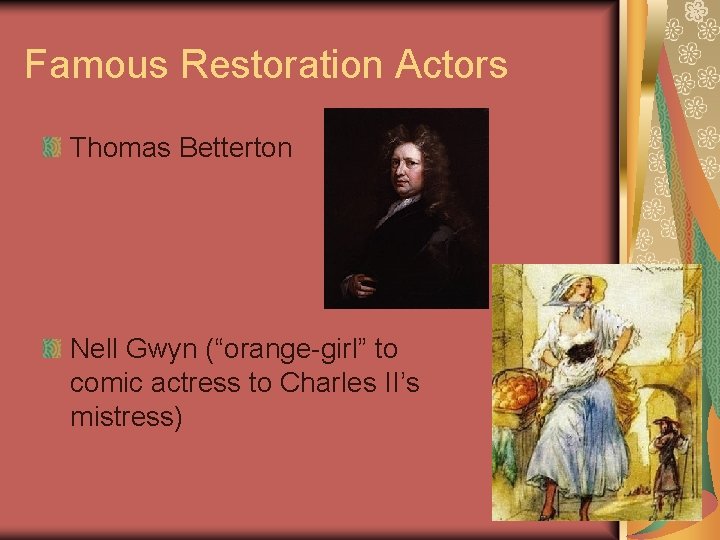
Famous Restoration Actors Thomas Betterton Nell Gwyn (“orange-girl” to comic actress to Charles II’s mistress)
Restoration Theatre Some Well-Known Restoration Comedy Playwrights… William Congreve, The Way of the World William Wycherly, The Country Wife Apra Behn, The Rover (first British female playwright!)
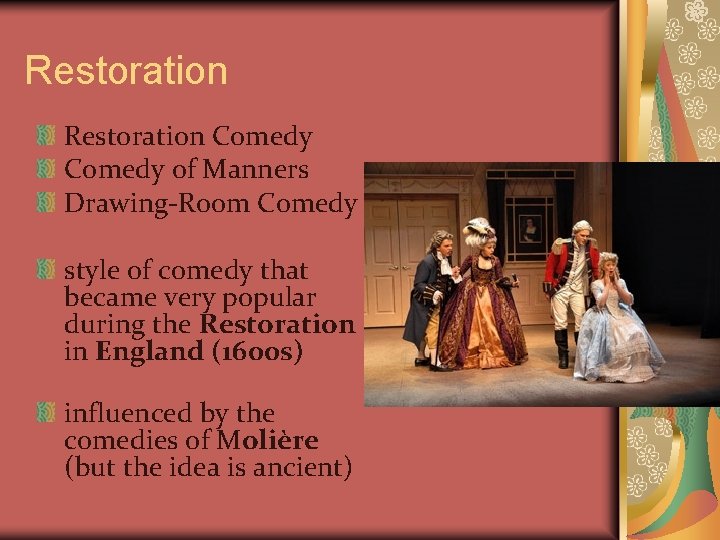
Restoration Comedy of Manners Drawing-Room Comedy style of comedy that became very popular during the Restoration in England (1600 s) influenced by the comedies of Molière (but the idea is ancient)
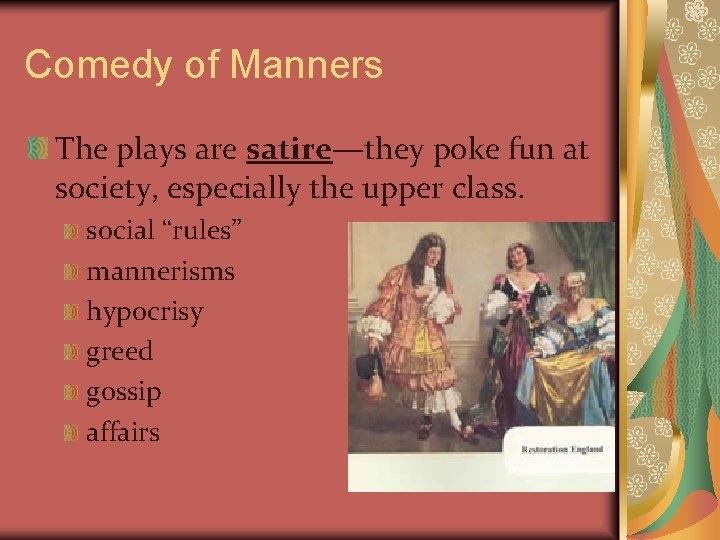
Comedy of Manners The plays are satire—they poke fun at society, especially the upper class. social “rules” mannerisms hypocrisy greed gossip affairs
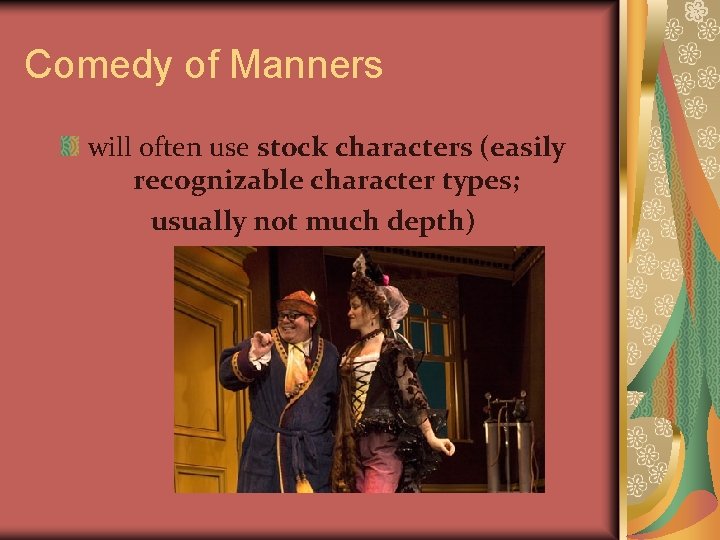
Comedy of Manners will often use stock characters (easily recognizable character types; usually not much depth)
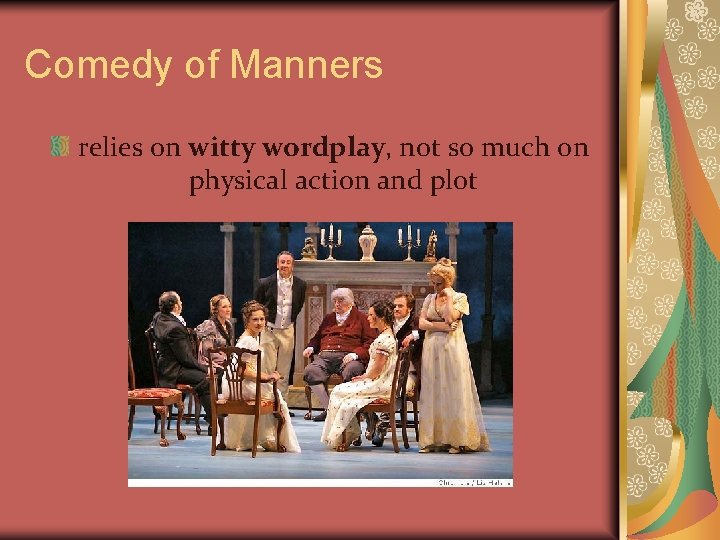
Comedy of Manners relies on witty wordplay, not so much on physical action and plot
“To lose one parent, Mr. Worthing, may be regarded as a misfortune. To lose both looks like carelessness. ” “The only way to behave to a woman is to make love to her if she is pretty and to someone else if she is plain. ” “ 35 is a very attractive age. London society is full of women of the very highest birth who have, of their own free choice, remained 35 for years. ”
Comedy of Manners The names often tells us about the characters: Lady Fidget or Lady Squeamish VERY sexual and suggestive (King Charles liked that!)
Comedy of Manners The playwrights would write for specific people they knew would be in the audience Audiences were mainly aristocratic Audiences would drink, yell out, pinch orange girls, etc. during the shows
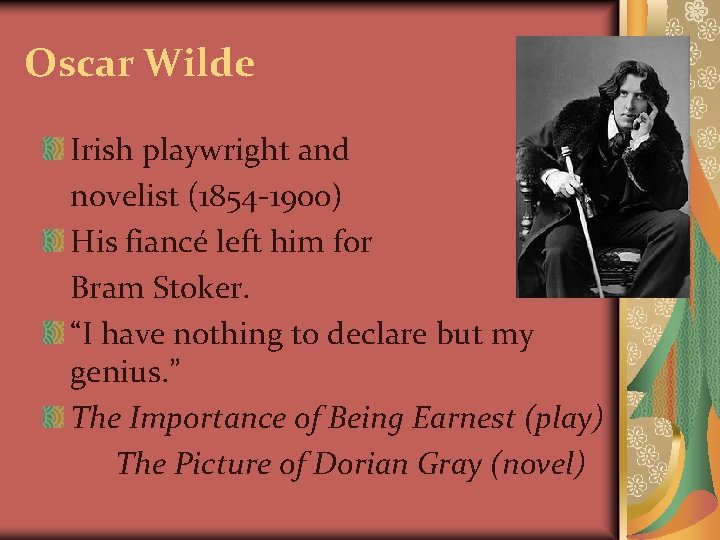
Oscar Wilde Irish playwright and novelist (1854 -1900) His fiancé left him for Bram Stoker. “I have nothing to declare but my genius. ” The Importance of Being Earnest (play) The Picture of Dorian Gray (novel)
Comedy of Manners began in ancient times and has appeared throughout many periods of history—it is just most strongly associated with the 1600 s-1800 s.