Natural History Spectrum of Diseases Dr Salwa A
- Slides: 21
Natural History & Spectrum of Diseases Dr. Salwa A. Tayel & Dr. Ibrahim Gossady KSU Department of Family & Community Medicine September, 2015 September 1, 2015 1
OBJECTIVES OF THE LECTURE By the end of this lecture students will be able to: • Describe natural history of diseases and their implications for public health. • Describe spectrum of diseases and their implications for public health. September 1, 2015 2
Natural History of Disease September 1, 2015 3
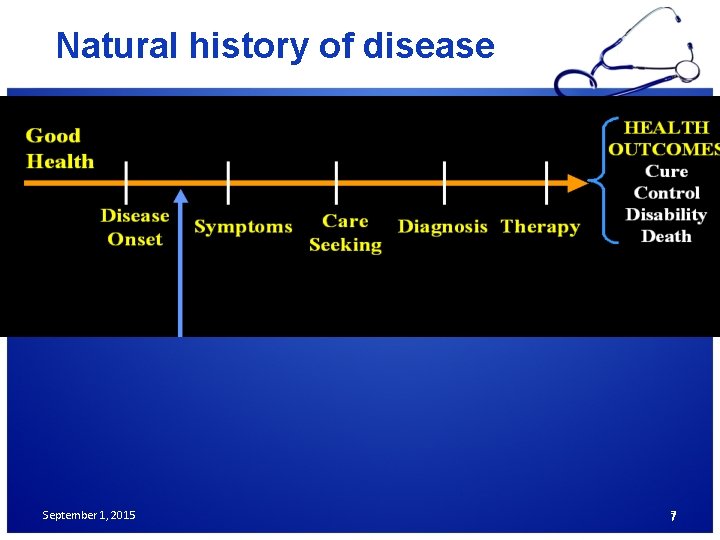
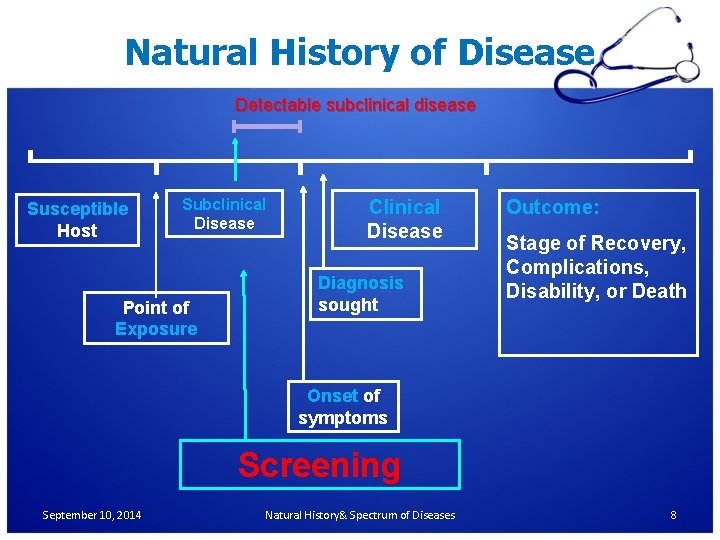
Natural history of disease • Natural history of disease refers to the progress of a disease process in an individual over time, in the absence of intervention. • The natural history of a disease describes the course of the disease in an individual starting from the moment of exposure to the causal agents till one of the possible outcomes occurs. September 1, 2015 44
Natural history Phenomena • Induction : time to disease initiation • Incubation: – time to symptoms (infectious disease) • Latency: time to detection (for noninfectious disease) or to infectiousness September 1, 2015 5
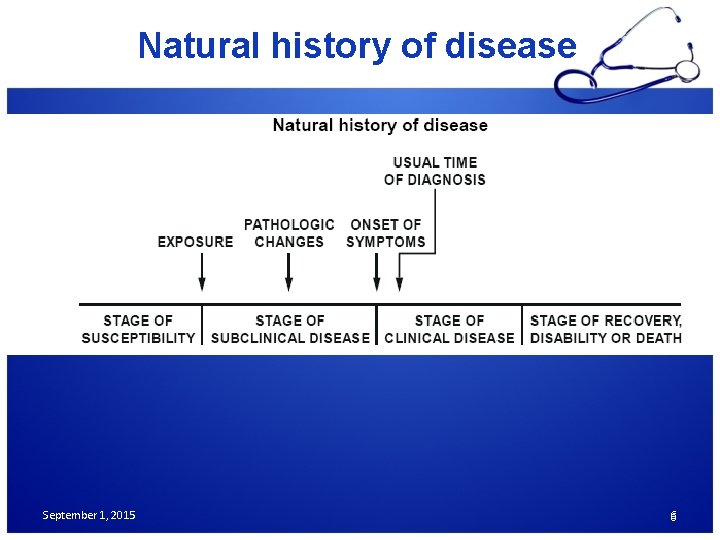
Natural history of disease September 1, 2015 66
Natural history of disease September 1, 2015 77
Natural History of Disease Detectable subclinical disease Susceptible Host Subclinical Disease Point of Exposure Clinical Disease Diagnosis sought Outcome: Stage of Recovery, Complications, Disability, or Death Onset of symptoms Screening September 10, 2014 Natural History& Spectrum of Diseases 8
The problem • The problem is that we might know about disease onset when symptoms occur but most likely we will only know about the disease when a person seeks care for the symptoms. • In some situations an investigator will only become aware of a case after a diagnosis is made. September 1, 2015 9
Importance of studying Natural history of disease • The understanding of this progression from disease onset to cure or death is important for epidemiologists. • Natural history is as important as causal understanding for the prevention and control of disease. • The earlier you can become aware of the attack the more likely you will be able to intervene and save lives. September 1, 2015 10
Spectrum of disease • The idea that an exposure can lead to varying signs, symptoms and severity of the same disease in the population is the spectrum of disease. • Why do we have varying degrees of severity or outcome? • The outcome will depend on the interactions of host, agent and environmental factors. September 1, 2015 11 11
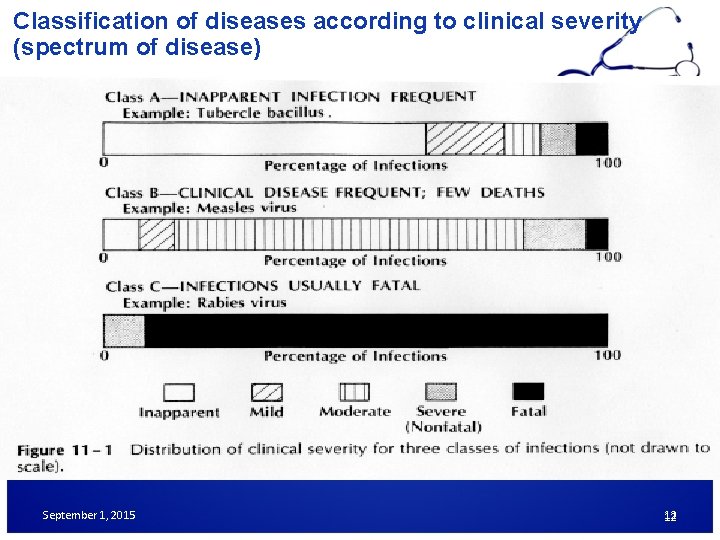
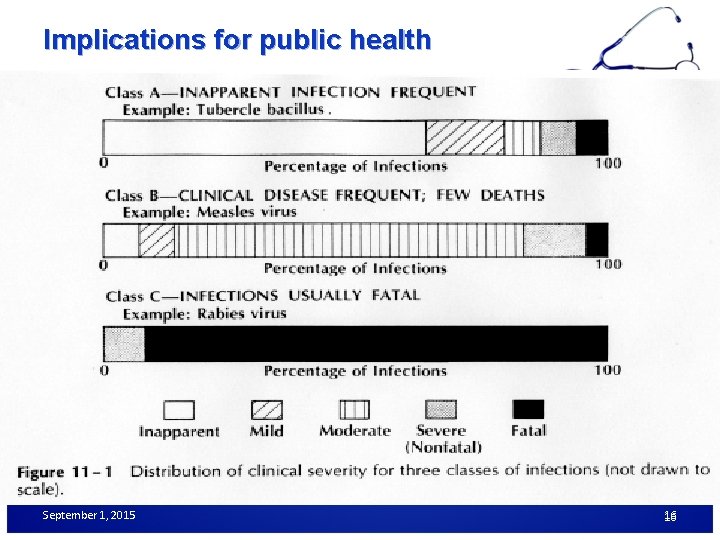
Classification of diseases according to clinical severity (spectrum of disease) September 1, 2015 12 12
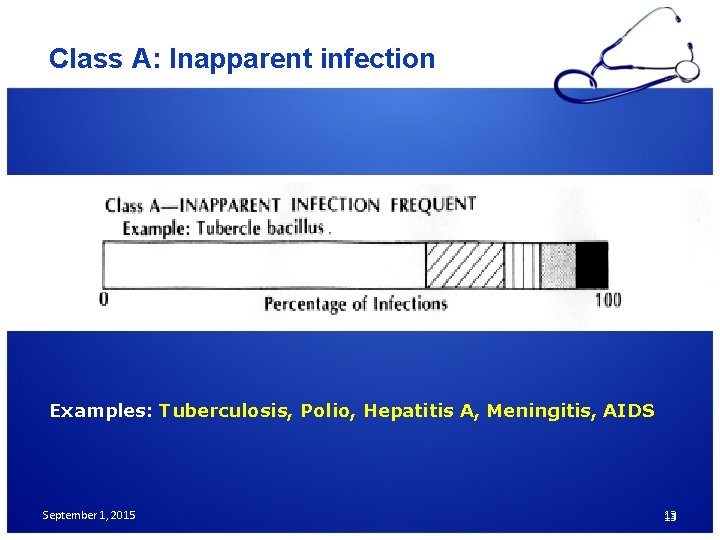
Class A: Inapparent infection Examples: Tuberculosis, Polio, Hepatitis A, Meningitis, AIDS September 1, 2015 13 13
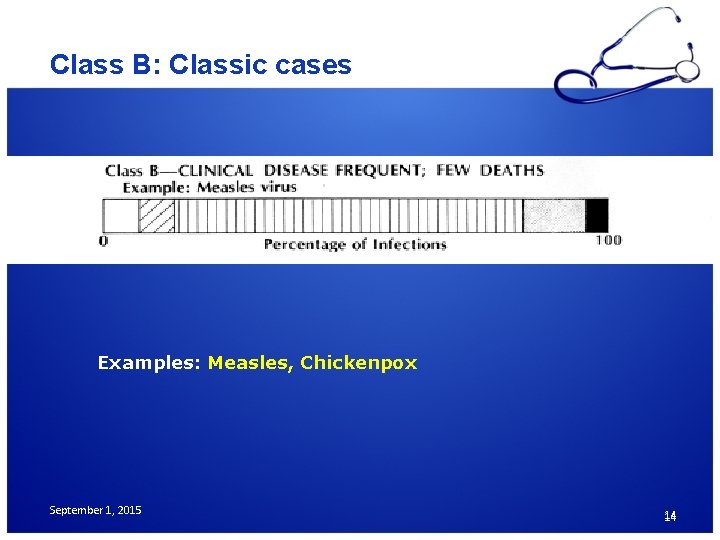
Class B: Classic cases Examples: Measles, Chickenpox September 1, 2015 14 14
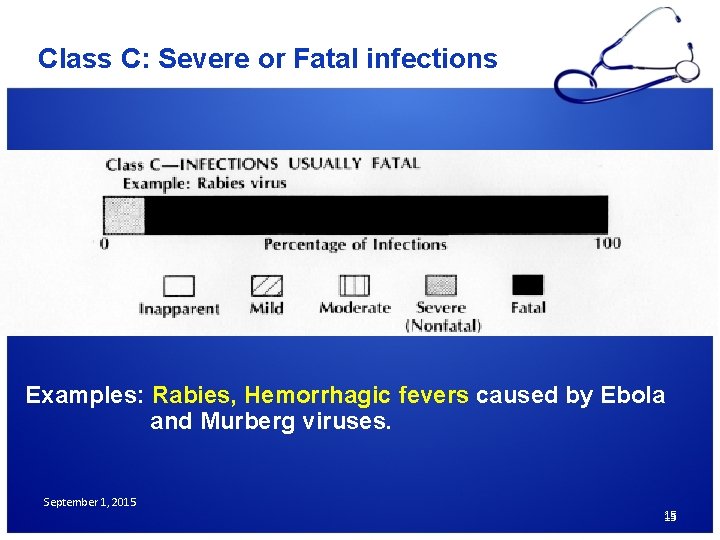
Class C: Severe or Fatal infections Examples: Rabies, Hemorrhagic fevers caused by Ebola and Murberg viruses. September 1, 2015 15 15
Implications for public health September 1, 2015 16 16
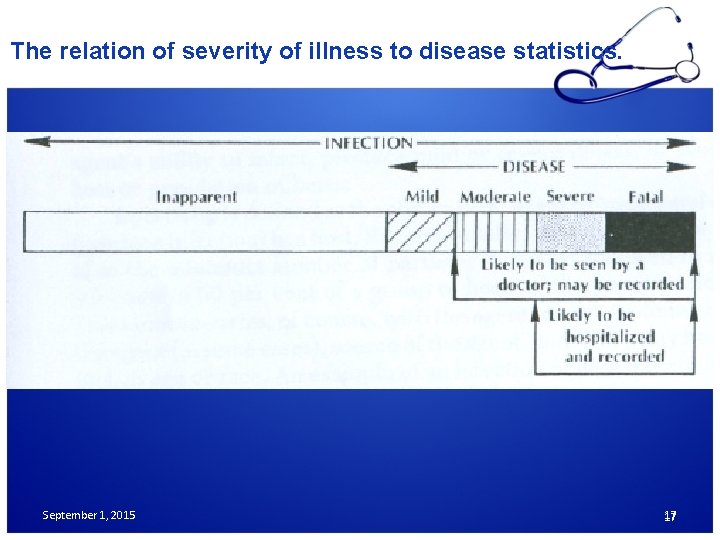
The relation of severity of illness to disease statistics. September 1, 2015 17 17
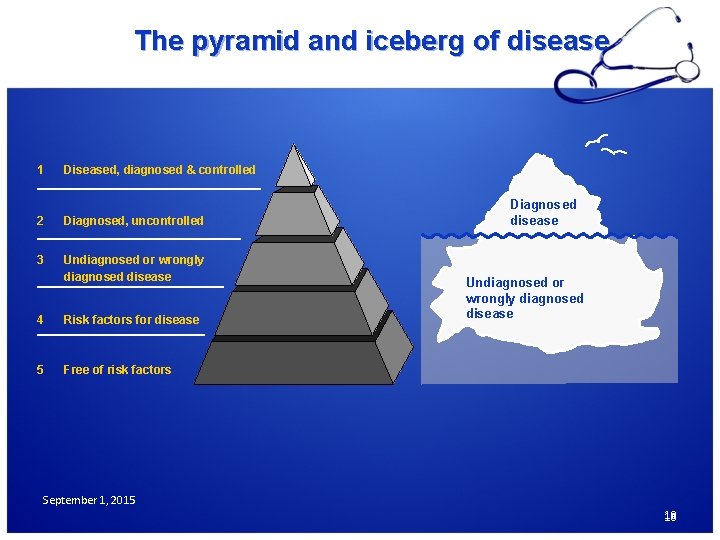
The pyramid and iceberg of disease 1 Diseased, diagnosed & controlled 2 Diagnosed, uncontrolled 3 Undiagnosed or wrongly diagnosed disease 4 Risk factors for disease 5 Free of risk factors Diagnosed disease Undiagnosed or wrongly diagnosed disease September 1, 2015 18 18
Iceberg Phenomenon • Cases of illness correctly diagnosed by clinicians in the community often represent only the “tip of the iceberg. ” • Many additional cases may be too early to diagnose or may remain asymptomatic. • Examples: Tuberculosis, meningitis, polio, hepatitis A, AIDS. • The risk is that persons with in-apparent or undiagnosed infections may be able to transmit infection to others. September 1, 2015 19 19
Implications of the concepts of natural history and spectrum of disease • Persons with in-apparent or undiagnosed infections can transmit infections to others. • Control measures must be directed toward all infections capable of being transmitted to others; – both clinically apparent cases and – those with in-apparent or undiagnosed infections. September 1, 2015 20 20
Reference books • Principles of Epidemiology in Public Health Practice. Third Edition. An Introduction to Applied Epidemiology and Biostatistics. Centers for Disease Control and Prevention (CDC) • Gordis L. Epidemiology. 2009 September 1, 2015 21