MR PORTERS APUSH CHAPTER ONE POWERPOINT Early European


- Slides: 17
MR. PORTER’S APUSH CHAPTER ONE POWERPOINT Early European Settlement
Europeans Cross Africa Ø 1295 – Marco Polo returned from 20 years in China l l l Told stories (and wrote a book) of adventures Evidence actually in China is weak Stimulated European interest in cheaper route to East
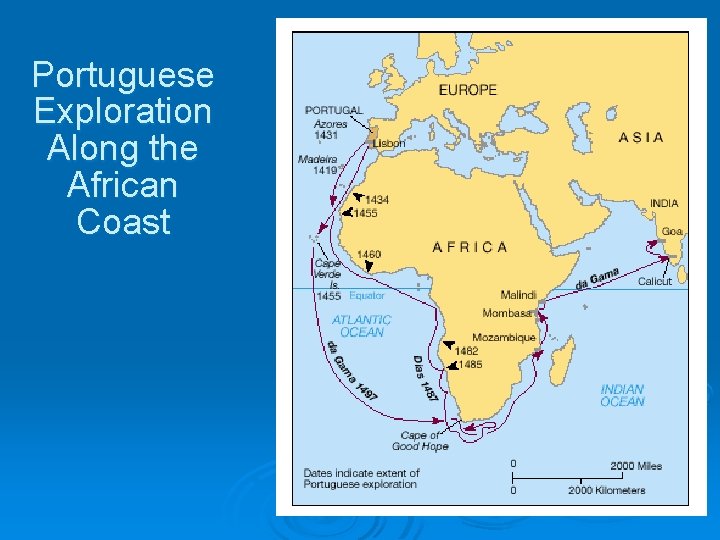
Ø 1450 – Portuguese 2 breakthroughs in sailing l Before – European sailors refused to sail southward along coast of West Africa • Could not sail back (north) against wind and currents (both flowing from north to south) l l 1. Caravel – ship that could sail more closely into (against) the wind 2. Discovered they could sail back to Europe by sailing northwest to Azores (islands off coast of Spain) and then to Europe
Portuguese Exploration Along the African Coast
Columbus Comes upon a New World Ø Events leading up to discovery of New World l Europeans wanted more products from Asia l Africa established as source of cheap slave labor l Portuguese show feasibility of long-range voyages l Spain – modern nation-state took shape with unity, wealth, power to explore faraway places l Renaissance (began in 1300 s) gave Europeans adventurous spirit and thirst for knowledge l Printing presses (1450) allowed spread of scientific knowledge l Mariner’s compass invented (Arabs? )
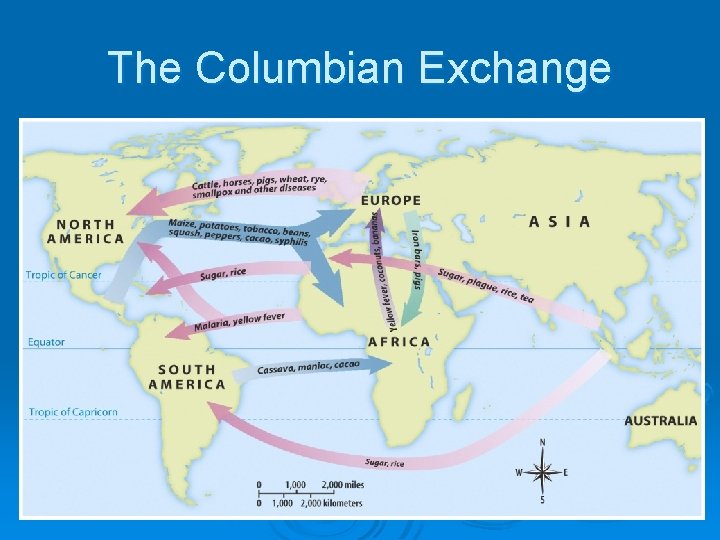
Ø From New World to Old World l Tobacco, beans, tomatoes, potato transformed European diet and economy • 3/5 of crops today originally came from Americas l Maize, manioc (starchy tuberous root, similar to a potato), sweet potatoes fed Africa • Ironically may have fed African population boom that offset the population loss from the slave trade l New animals like iguana and rattlesnake l Syphilis introduced in Old World for 1 st time
Ø From Old World to New World l Cattle, swine, horses • Horses spread to Mexico and up to Canada • Great Plains Indians – Apaches, Sioux, Blackfoot adopted the horse and were transformed into highly mobile, wide-ranging hunter societies l Sugar cane • Brought by Columbus and thrived in Caribbean • “sugar revolution” in European diet, fueled by slave labor l Seeds of Kentucky bluegrass, dandelions, daisies l Smallpox, yellow fever, malaria
The Columbian Exchange
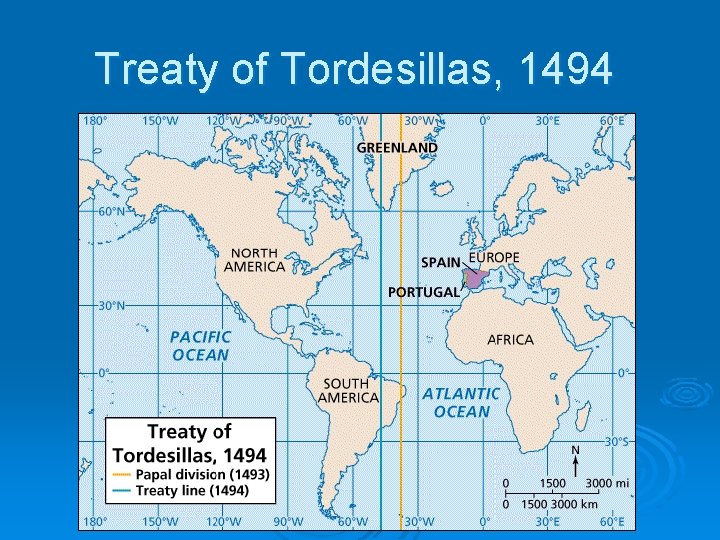
Treaty of Tordesillas, 1494
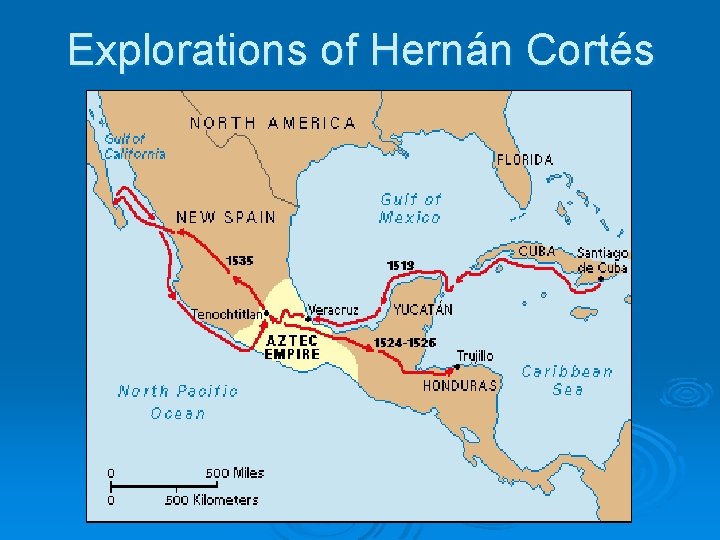
The Conquest of Mexico Ø 1519 – Hernán Cortés sailed from Cuba to Mexico to conquer Aztecs l Ø 16 fresh horses and several hundred men On Yucatán Peninsula l Rescued a female Indian slave who knew both Mayan and Aztec languages l Cortés had advantage of superior firepower and ability to understand speech of the Indians he was about to conquer
Explorations of Hernán Cortés
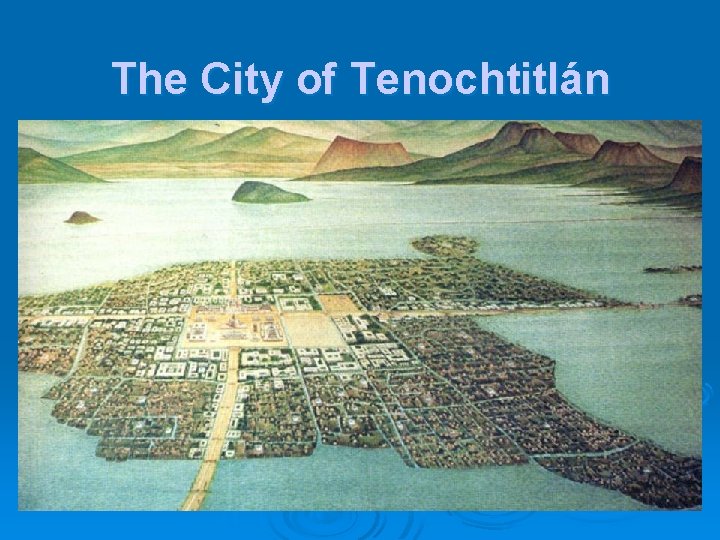
The City of Tenochtitlán
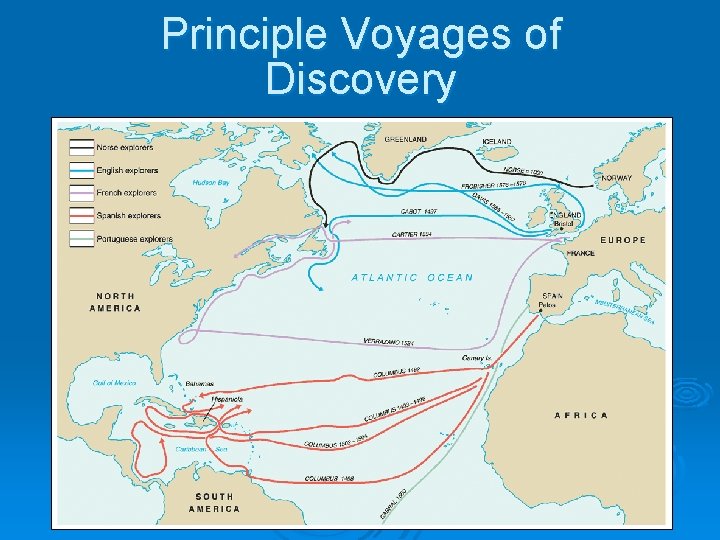
Principle Voyages of Discovery
The Spread of Spanish America Ø 1680 – Popé’s Rebellion Pueblo Indians in New Mexico rebelled against Spanish rule and forced Catholic conversion l Pueblos destroyed churchs, killed scores of priests, and hundreds of Spanish settlers Ø Took nearly 50 years for Spanish to reconquer Pueblos after Popé’s Rebellion l
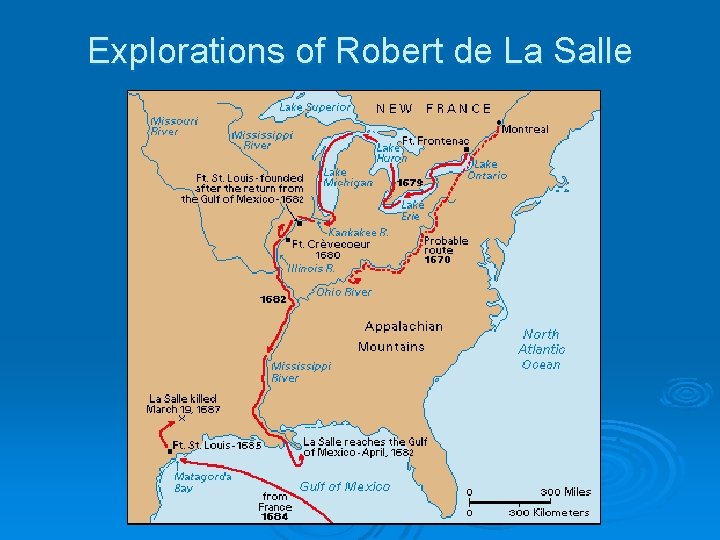
Explorations of Robert de La Salle
Ø Spanish did kill, enslave, infect countless natives l But this was not a systematic slaughter (like the Holocaust) l l Spain also brought some benefits to natives • Technology, law, culture, religion Natives brought some benefits to Spanish • Spanish intermarried with natives and fused native cultures into their own
KEYS TO THE CHAPTER Spanish intermarry and assimilate English will push Indians away Columbian Exchanges world trade and begins 1 st stage of globalization 4. Spanish headed West because Portugal had headed East but both were seeking to expand trade 5. Three G’s and an S 1. 2. 3.