Mr Jason S Martinez Insects VARIETY OF LIVING



- Slides: 28
Mr. Jason S. Martinez Insects VARIETY OF LIVING ORGANISMS Mr. Jason S. Martinez
Mr. Jason S. Martinez Objective Describe distinguishing features of Coleoptera, Lepidoptera, Diptera and Hymenoptera
Mr. Jason S. Martinez Insects
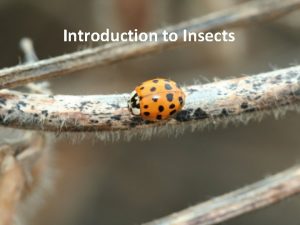
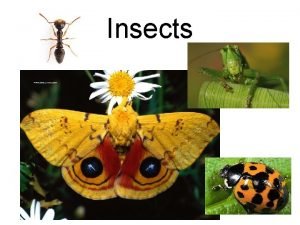
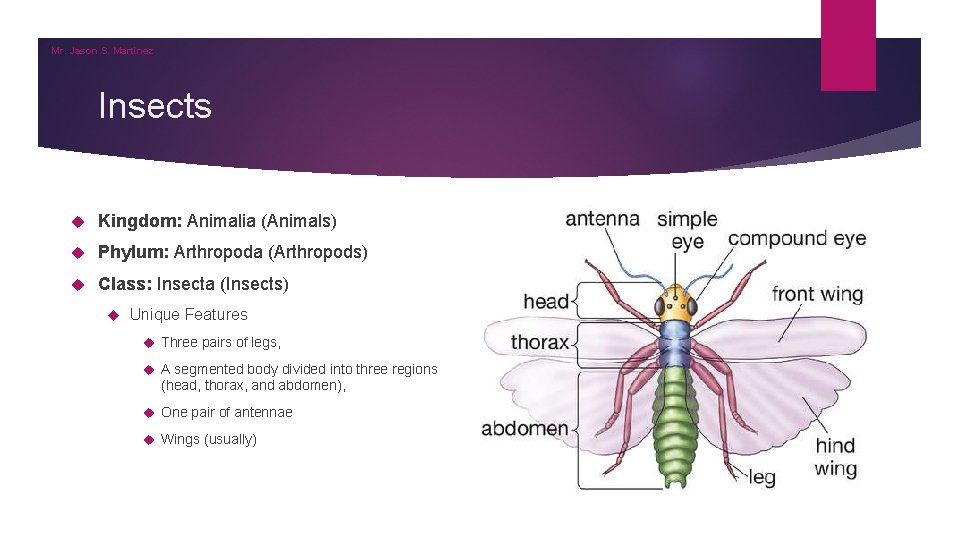
Mr. Jason S. Martinez Insects Kingdom: Animalia (Animals) Phylum: Arthropoda (Arthropods) Class: Insecta (Insects) Unique Features Three pairs of legs, A segmented body divided into three regions (head, thorax, and abdomen), One pair of antennae Wings (usually)
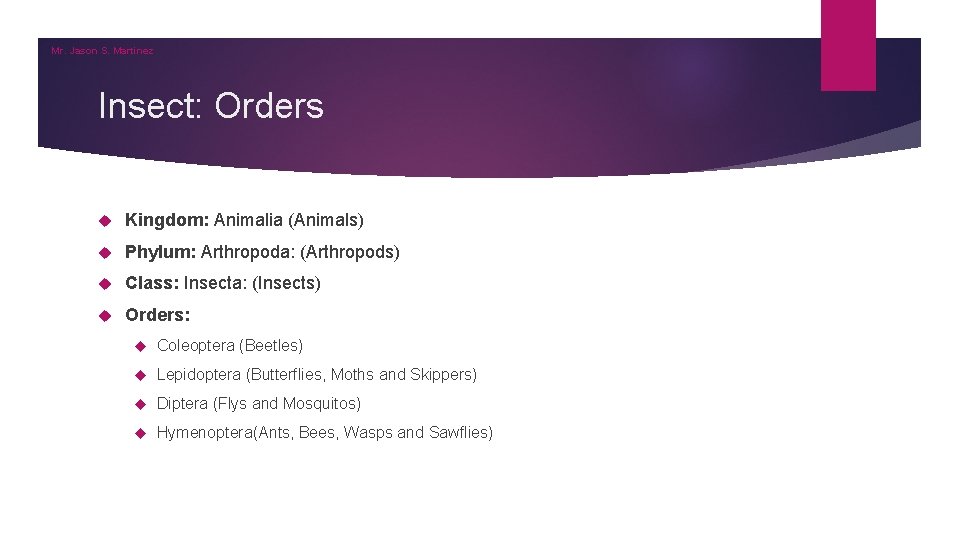
Mr. Jason S. Martinez Insect: Orders Kingdom: Animalia (Animals) Phylum: Arthropoda: (Arthropods) Class: Insecta: (Insects) Orders: Coleoptera (Beetles) Lepidoptera (Butterflies, Moths and Skippers) Diptera (Flys and Mosquitos) Hymenoptera(Ants, Bees, Wasps and Sawflies)
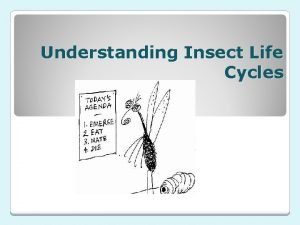
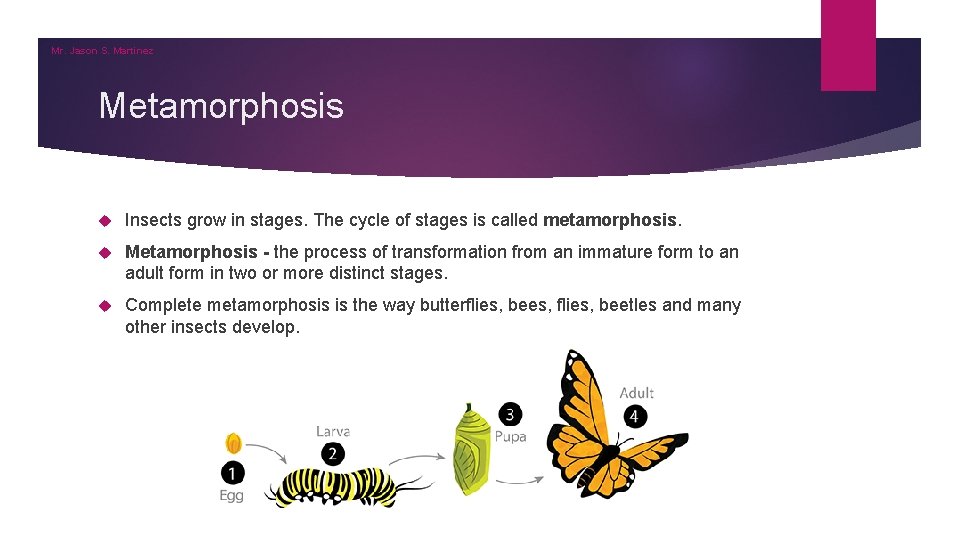
Mr. Jason S. Martinez Metamorphosis Insects grow in stages. The cycle of stages is called metamorphosis. Metamorphosis - the process of transformation from an immature form to an adult form in two or more distinct stages. Complete metamorphosis is the way butterflies, bees, flies, beetles and many other insects develop.
Mr. Jason S. Martinez Metamorphosis Complete metamorphosis has four stages: 1. Egg - The egg is the embryo stage 2. Larva - the eating and growing stage. Larvae don’t look like adults (caterpillars, grubs and maggots are larvae). A larva’s exoskeleton can’t stretch or grow, so the larva sheds its skin, or molts, several times as it grows. 3. Pupa - The pupa is the insect’s transforming stage. Outside, the pupa looks as if it’s resting. But inside, the entire body is rearranging. New organs, muscles and body parts develop. 4. Adult – the pupa molts one last time, emerging as an adult. The adult is the reproductive stage. The adult has all the identifiable insect features: three body sections, six legs, two antennae and usually wings.
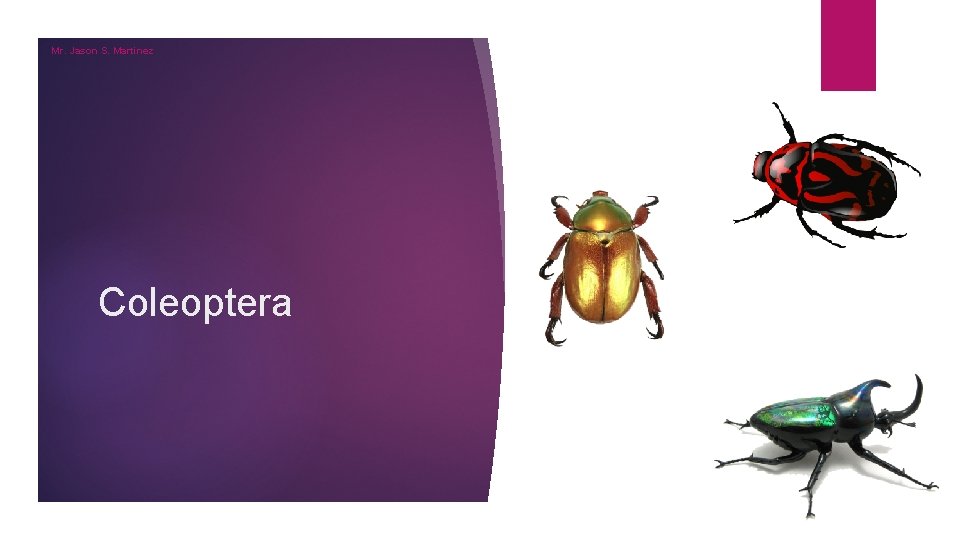
Mr. Jason S. Martinez Coleoptera
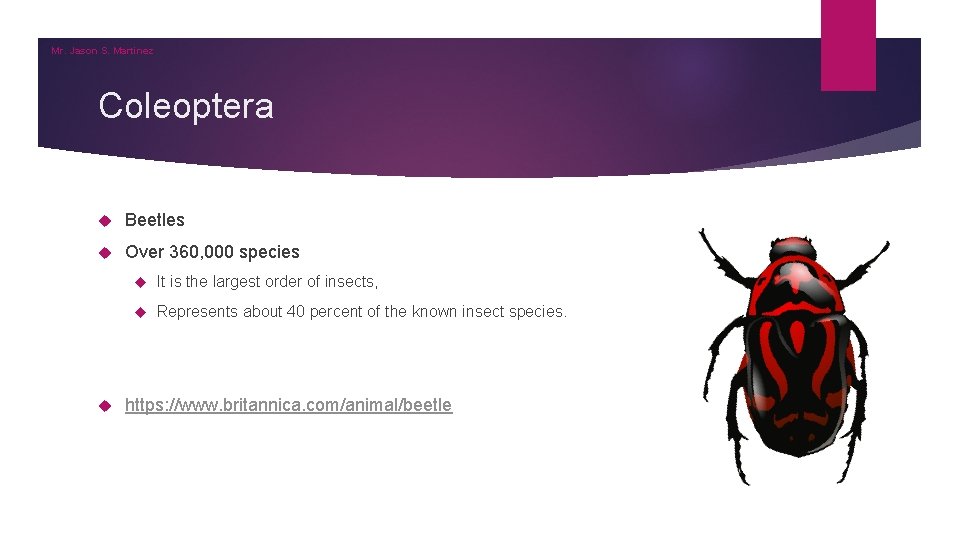
Mr. Jason S. Martinez Coleoptera Beetles Over 360, 000 species It is the largest order of insects, Represents about 40 percent of the known insect species. https: //www. britannica. com/animal/beetle
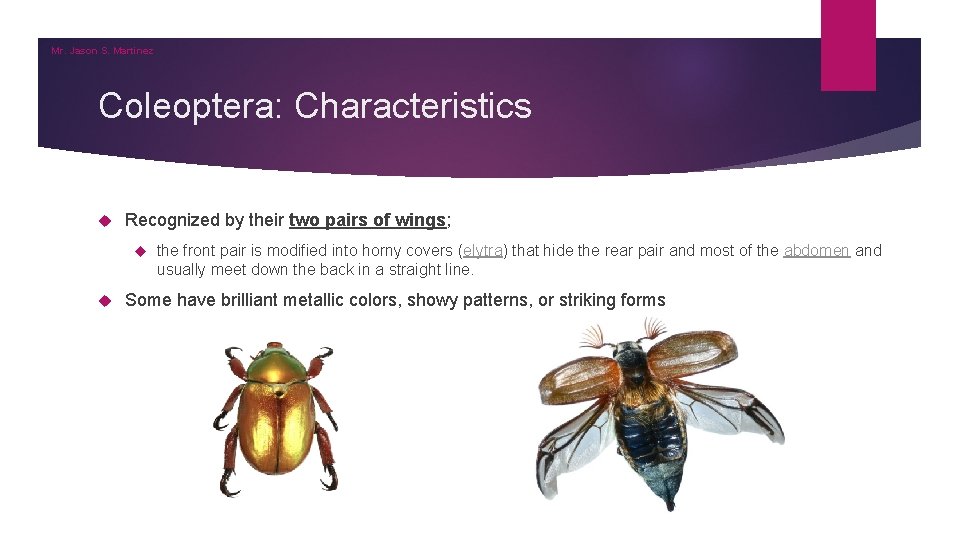
Mr. Jason S. Martinez Coleoptera: Characteristics Recognized by their two pairs of wings; the front pair is modified into horny covers (elytra) that hide the rear pair and most of the abdomen and usually meet down the back in a straight line. Some have brilliant metallic colors, showy patterns, or striking forms
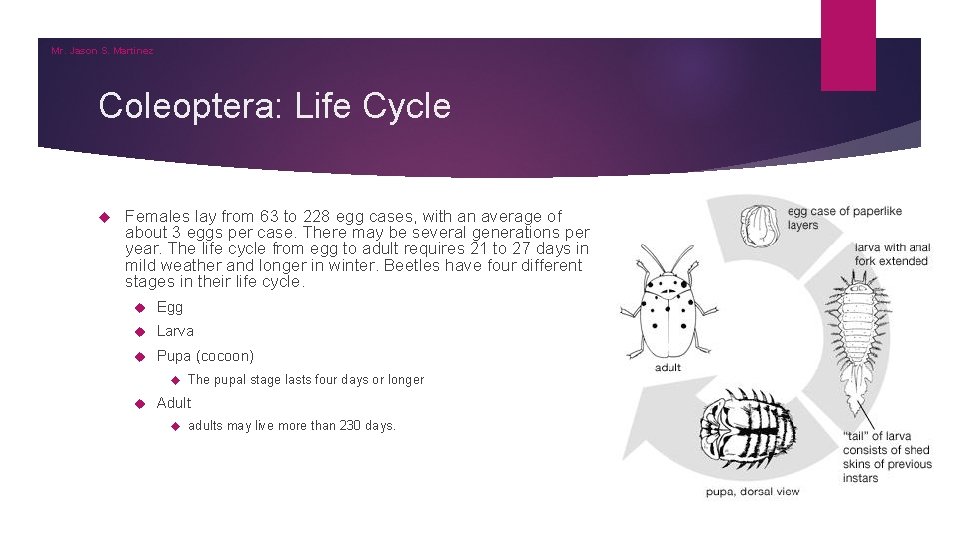
Mr. Jason S. Martinez Coleoptera: Life Cycle Females lay from 63 to 228 egg cases, with an average of about 3 eggs per case. There may be several generations per year. The life cycle from egg to adult requires 21 to 27 days in mild weather and longer in winter. Beetles have four different stages in their life cycle. Egg Larva Pupa (cocoon) The pupal stage lasts four days or longer Adult adults may live more than 230 days.
Mr. Jason S. Martinez Coleoptera: Groups They may be divided into four groups Archostemata Adephaga Myxophaga Polyphaga. the majority of beetles are placed in this group
Mr. Jason S. Martinez Lepidoptera
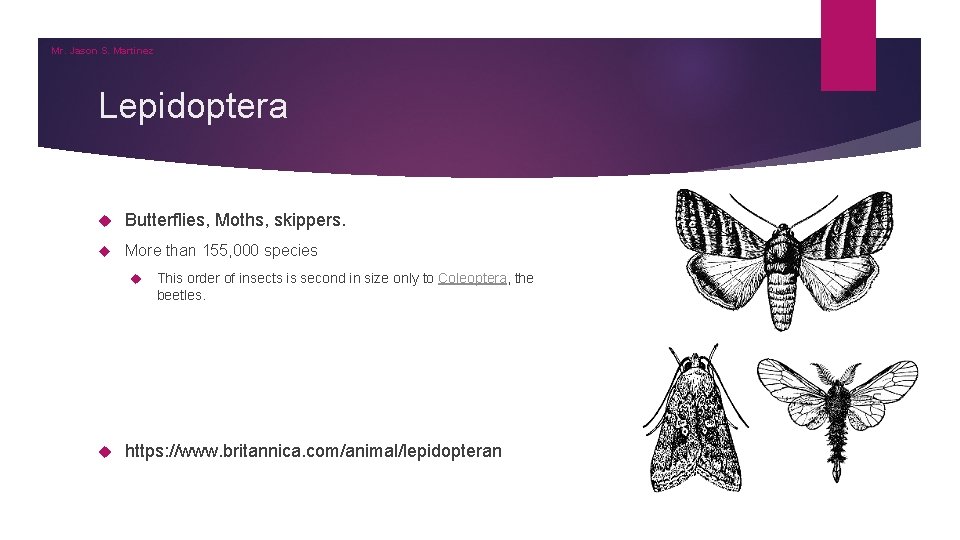
Mr. Jason S. Martinez Lepidoptera Butterflies, Moths, skippers. More than 155, 000 species This order of insects is second in size only to Coleoptera, the beetles. https: //www. britannica. com/animal/lepidopteran
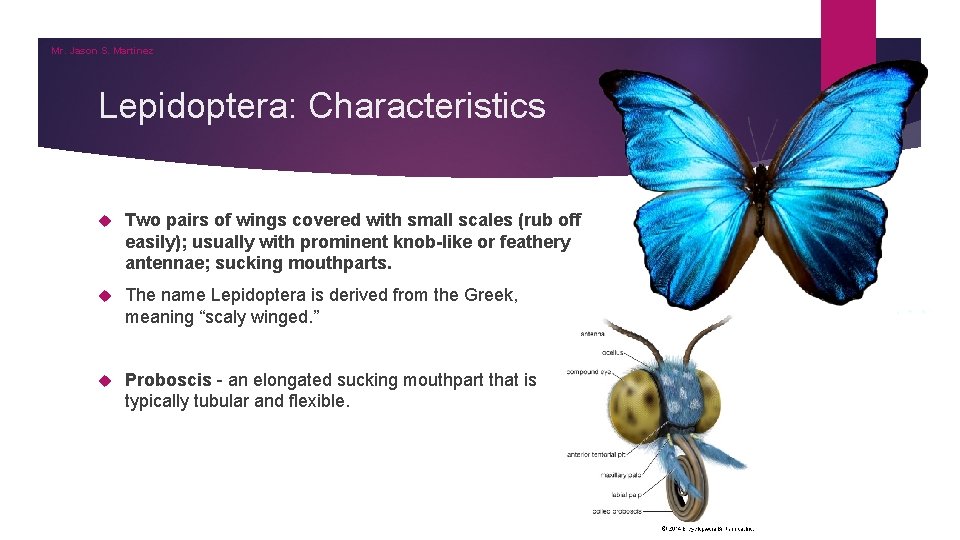
Mr. Jason S. Martinez Lepidoptera: Characteristics Two pairs of wings covered with small scales (rub off easily); usually with prominent knob-like or feathery antennae; sucking mouthparts. The name Lepidoptera is derived from the Greek, meaning “scaly winged. ” Proboscis - an elongated sucking mouthpart that is typically tubular and flexible.
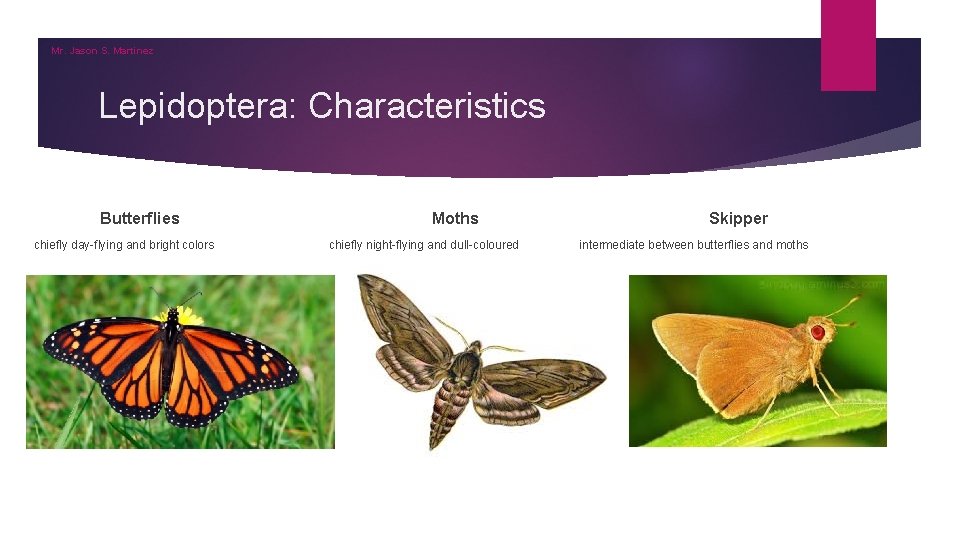
Mr. Jason S. Martinez Lepidoptera: Characteristics Butterflies Moths Skipper chiefly day-flying and bright colors chiefly night-flying and dull-coloured intermediate between butterflies and moths
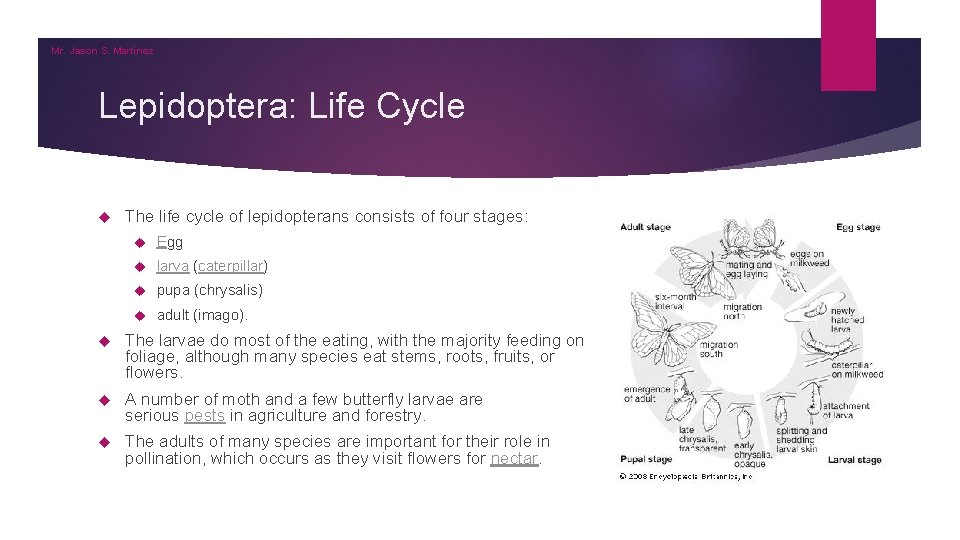
Mr. Jason S. Martinez Lepidoptera: Life Cycle The life cycle of lepidopterans consists of four stages: Egg larva (caterpillar) pupa (chrysalis) adult (imago). The larvae do most of the eating, with the majority feeding on foliage, although many species eat stems, roots, fruits, or flowers. A number of moth and a few butterfly larvae are serious pests in agriculture and forestry. The adults of many species are important for their role in pollination, which occurs as they visit flowers for nectar.
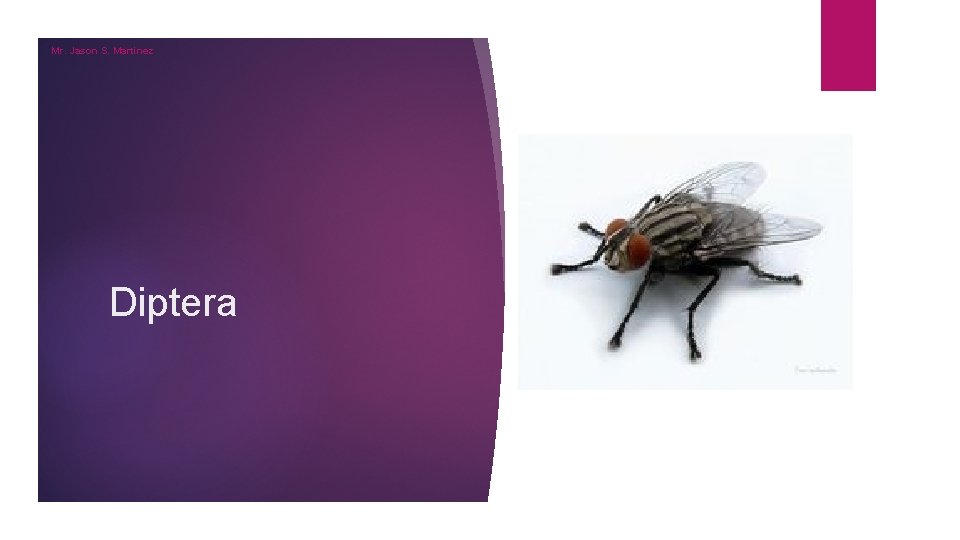
Mr. Jason S. Martinez Diptera
Mr. Jason S. Martinez Diptera Flies, mosquitos, More than 120, 000 species Some bloodsuckers are serious pests of man and other animals These insects, along with many scavenging flies, are important vectors of disease. https: //www. britannica. com/animal/dipteran
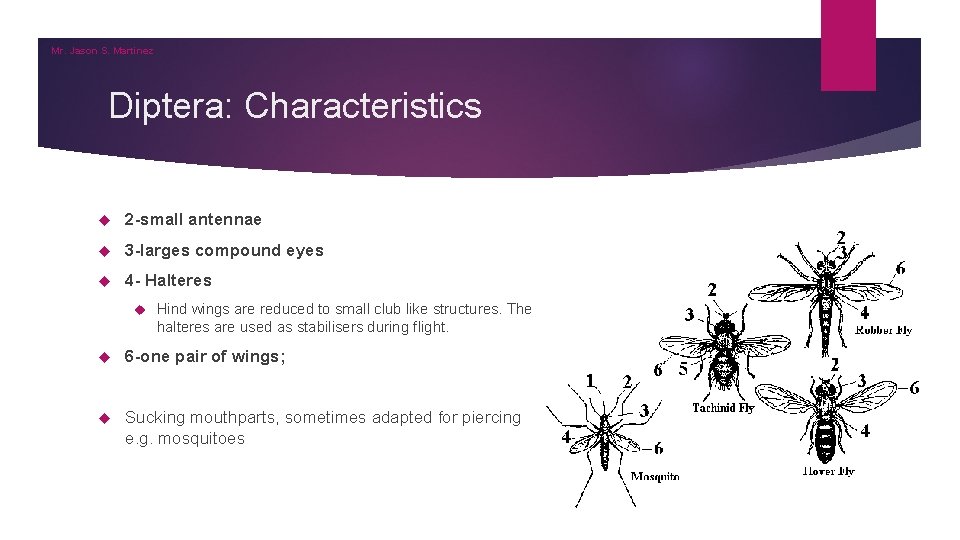
Mr. Jason S. Martinez Diptera: Characteristics 2 -small antennae 3 -larges compound eyes 4 - Halteres Hind wings are reduced to small club like structures. The halteres are used as stabilisers during flight. 6 -one pair of wings; Sucking mouthparts, sometimes adapted for piercing e. g. mosquitoes
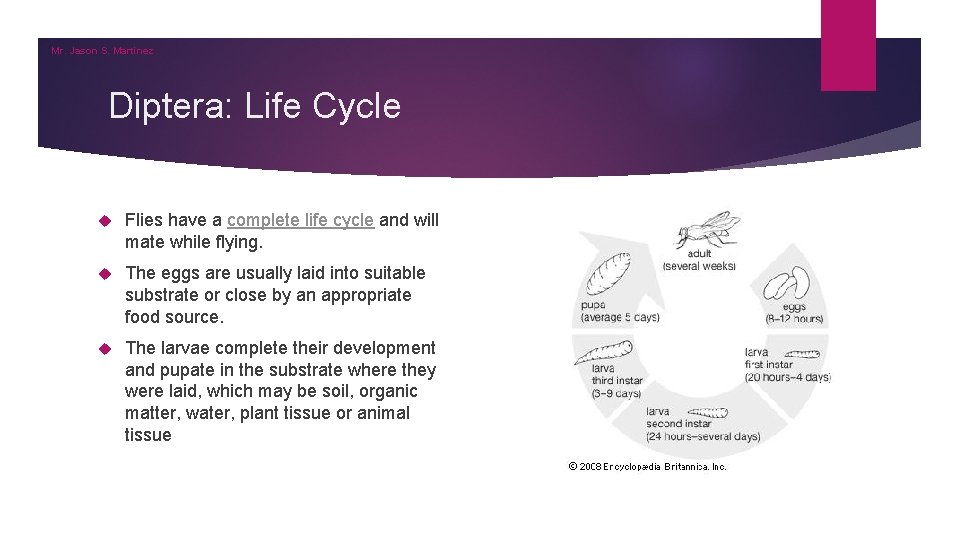
Mr. Jason S. Martinez Diptera: Life Cycle Flies have a complete life cycle and will mate while flying. The eggs are usually laid into suitable substrate or close by an appropriate food source. The larvae complete their development and pupate in the substrate where they were laid, which may be soil, organic matter, water, plant tissue or animal tissue
Mr. Jason S. Martinez Hymenoptera
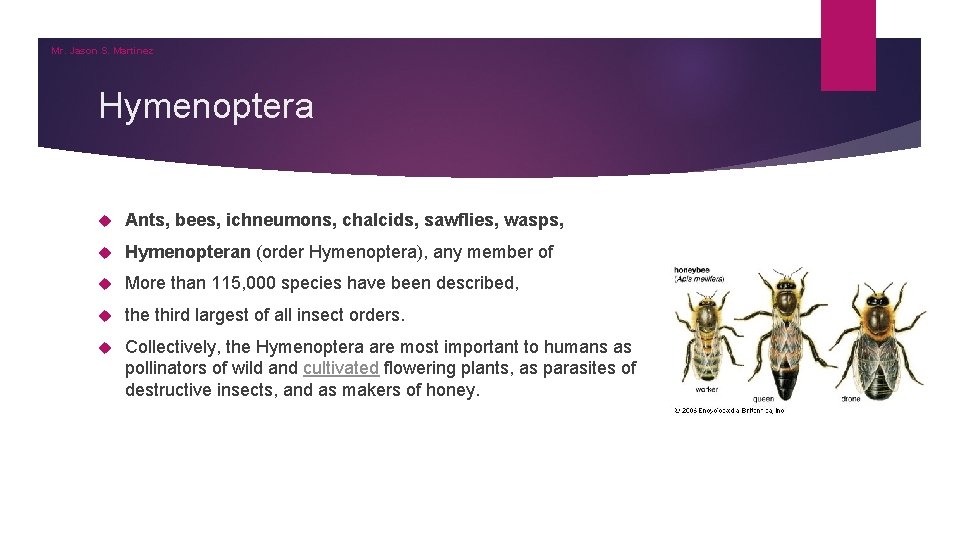
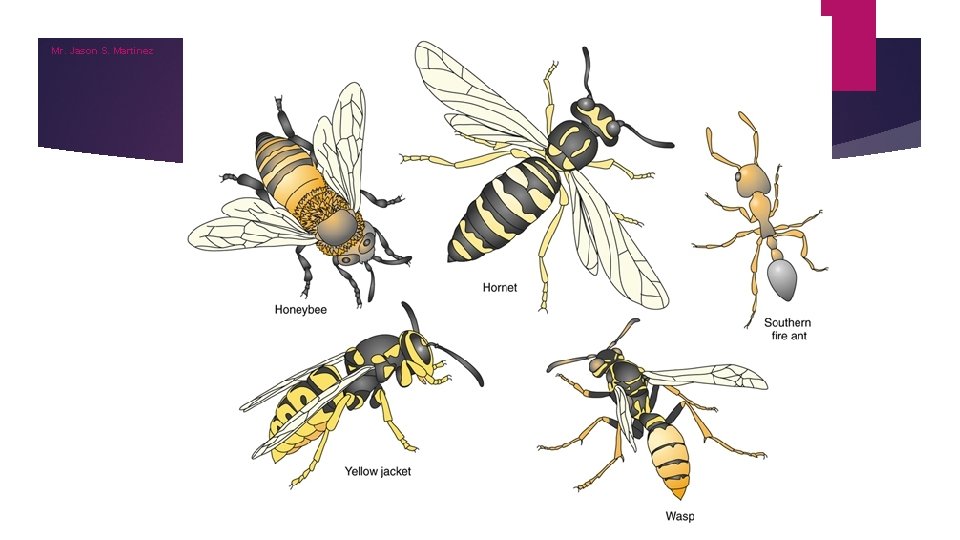
Mr. Jason S. Martinez Hymenoptera Ants, bees, ichneumons, chalcids, sawflies, wasps, Hymenopteran (order Hymenoptera), any member of More than 115, 000 species have been described, the third largest of all insect orders. Collectively, the Hymenoptera are most important to humans as pollinators of wild and cultivated flowering plants, as parasites of destructive insects, and as makers of honey.
Mr. Jason S. Martinez
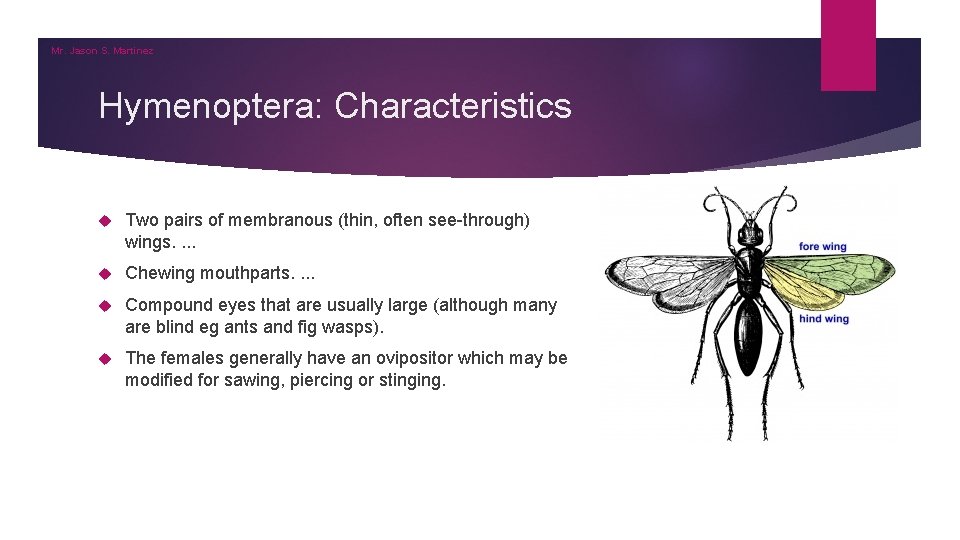
Mr. Jason S. Martinez Hymenoptera: Characteristics Two pairs of membranous (thin, often see-through) wings. . Chewing mouthparts. . Compound eyes that are usually large (although many are blind eg ants and fig wasps). The females generally have an ovipositor which may be modified for sawing, piercing or stinging.
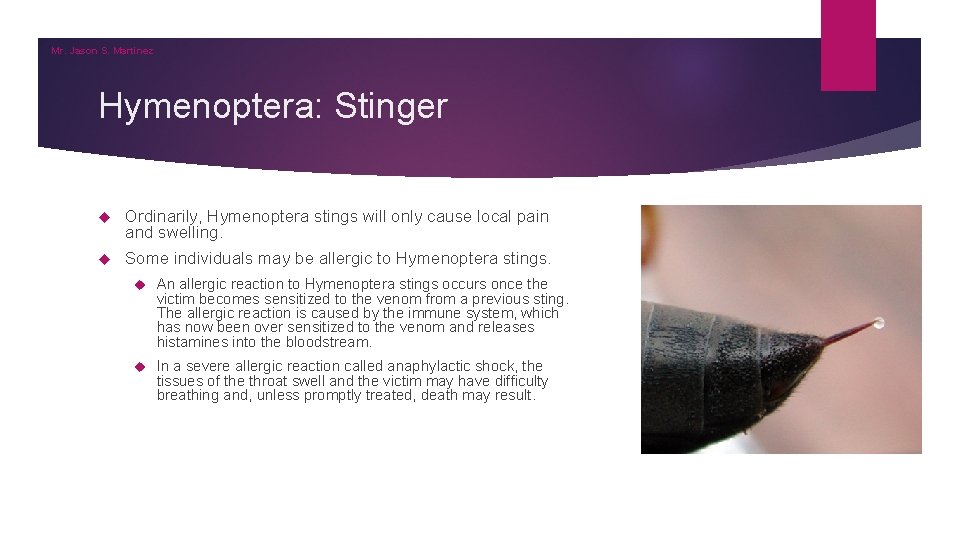
Mr. Jason S. Martinez Hymenoptera: Stinger Ordinarily, Hymenoptera stings will only cause local pain and swelling. Some individuals may be allergic to Hymenoptera stings. An allergic reaction to Hymenoptera stings occurs once the victim becomes sensitized to the venom from a previous sting. The allergic reaction is caused by the immune system, which has now been over sensitized to the venom and releases histamines into the bloodstream. In a severe allergic reaction called anaphylactic shock, the tissues of the throat swell and the victim may have difficulty breathing and, unless promptly treated, death may result.
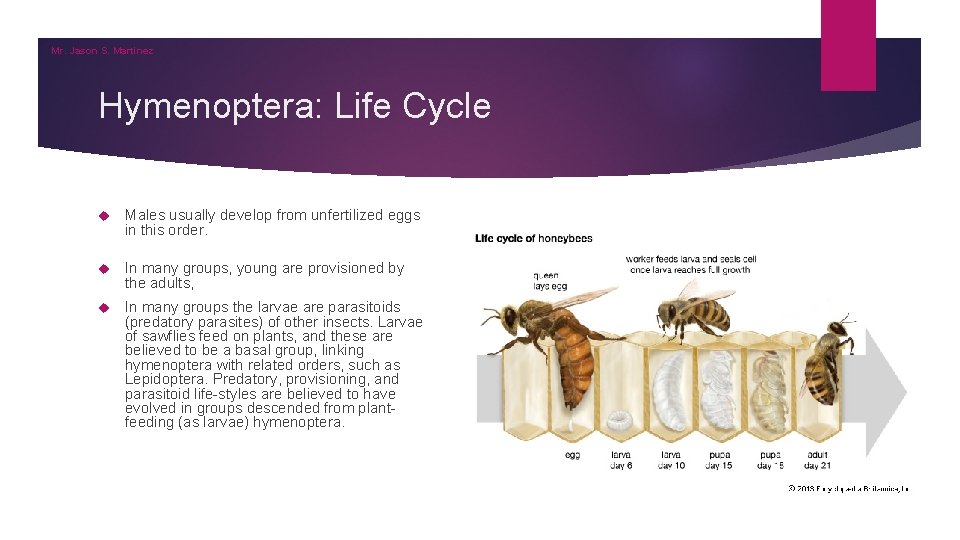
Mr. Jason S. Martinez Hymenoptera: Life Cycle Males usually develop from unfertilized eggs in this order. In many groups, young are provisioned by the adults, In many groups the larvae are parasitoids (predatory parasites) of other insects. Larvae of sawflies feed on plants, and these are believed to be a basal group, linking hymenoptera with related orders, such as Lepidoptera. Predatory, provisioning, and parasitoid life-styles are believed to have evolved in groups descended from plantfeeding (as larvae) hymenoptera.
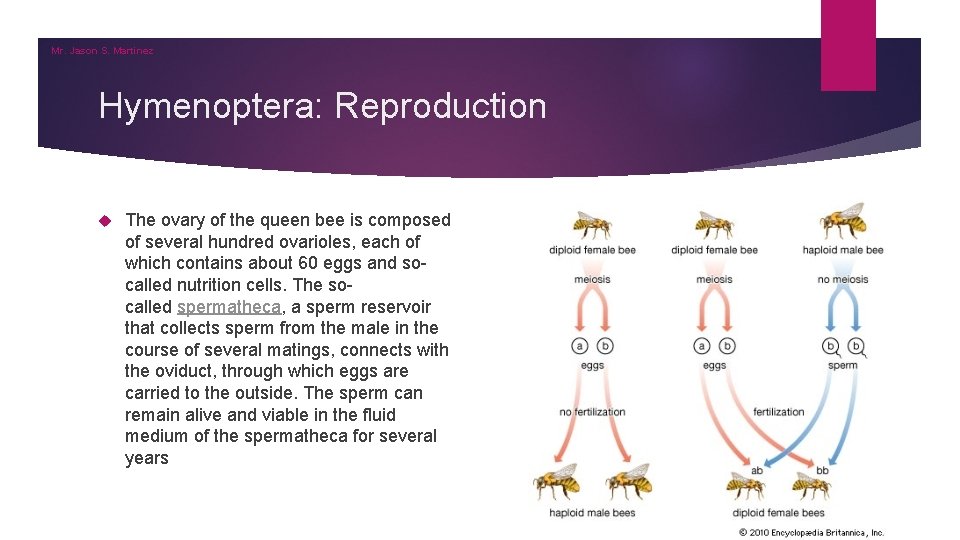
Mr. Jason S. Martinez Hymenoptera: Reproduction The ovary of the queen bee is composed of several hundred ovarioles, each of which contains about 60 eggs and socalled nutrition cells. The socalled spermatheca, a sperm reservoir that collects sperm from the male in the course of several matings, connects with the oviduct, through which eggs are carried to the outside. The sperm can remain alive and viable in the fluid medium of the spermatheca for several years