Chapter 28 Insects 28 3 I Insects n

- Slides: 18
Chapter 28 Insects 28 -3
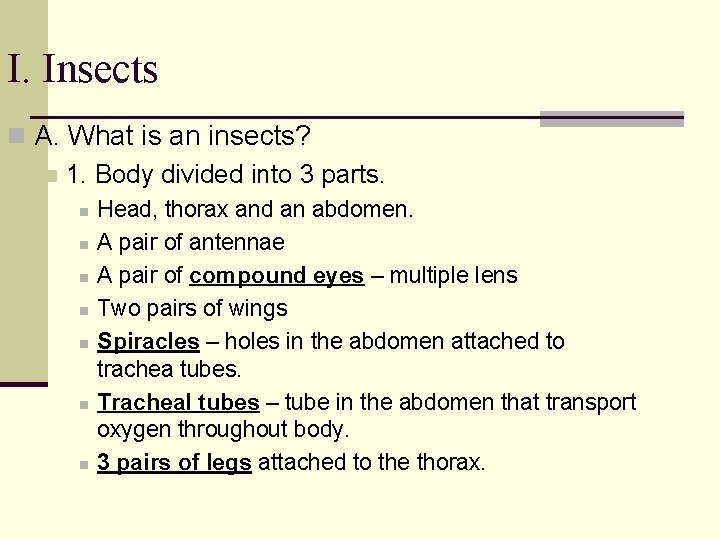
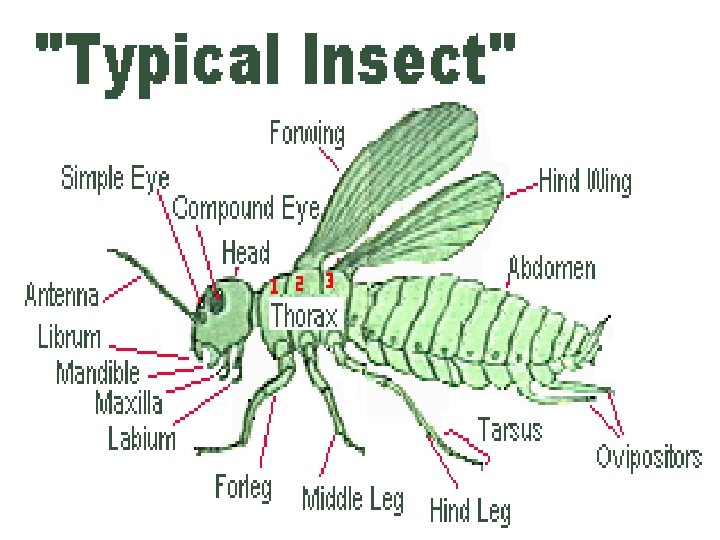
I. Insects n A. What is an insects? n 1. Body divided into 3 parts. n n n n Head, thorax and an abdomen. A pair of antennae A pair of compound eyes – multiple lens Two pairs of wings Spiracles – holes in the abdomen attached to trachea tubes. Tracheal tubes – tube in the abdomen that transport oxygen throughout body. 3 pairs of legs attached to the thorax.
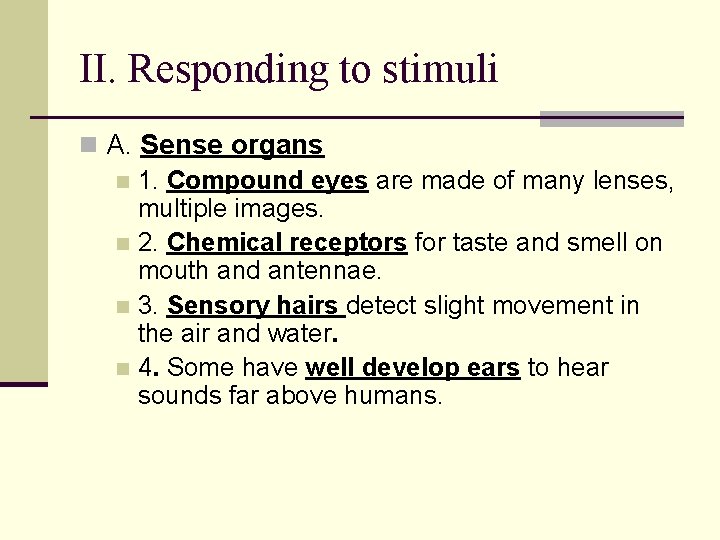
II. Responding to stimuli n A. Sense organs n 1. Compound eyes are made of many lenses, multiple images. n 2. Chemical receptors for taste and smell on mouth and antennae. n 3. Sensory hairs detect slight movement in the air and water. n 4. Some have well develop ears to hear sounds far above humans.
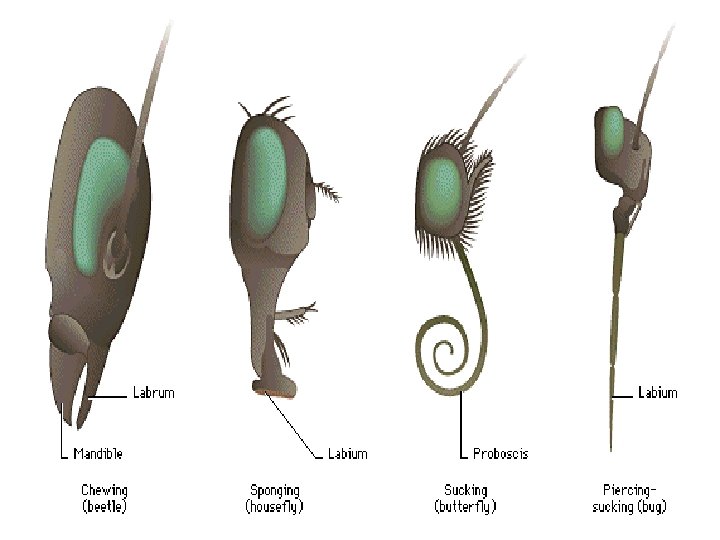
III. Adaptation for feeding n A. 3 pairs of appendages used for mouth parts. n 1. Mandibles for grinding food. (ant) n 2. Tube-like mouthpart used to suck nectar. (moth) n 3. Sponge-like mouthpart used to lap up food. (fly) n 4. Piercing-like for sucking blood or other material. (mosquito)
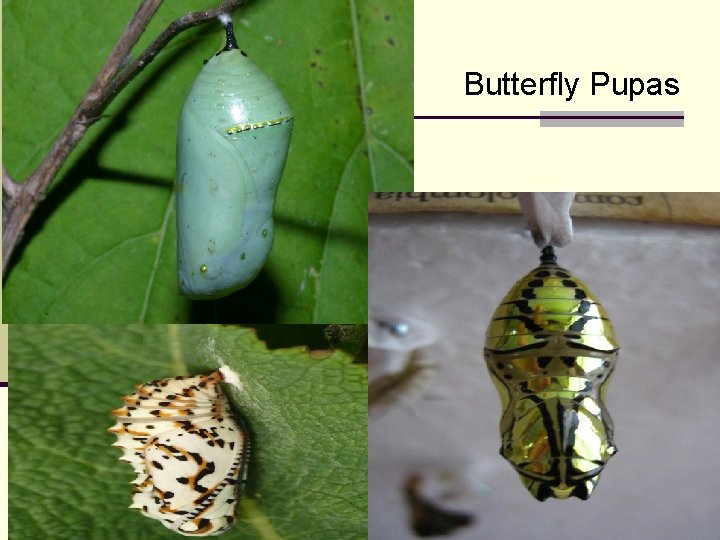
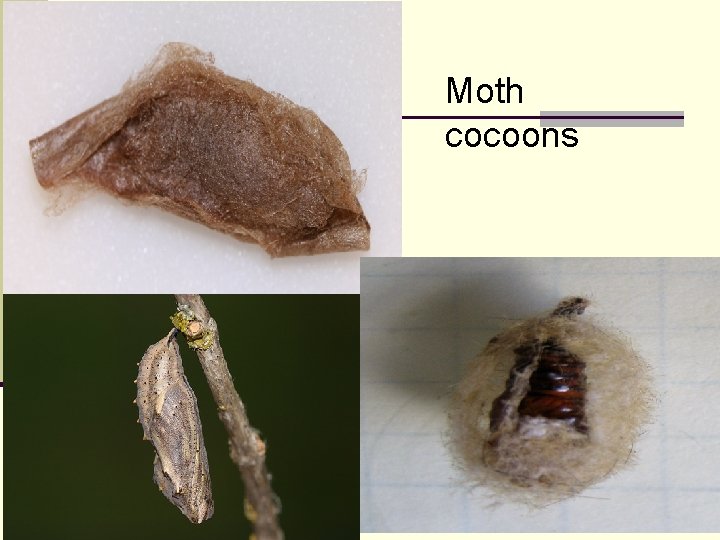
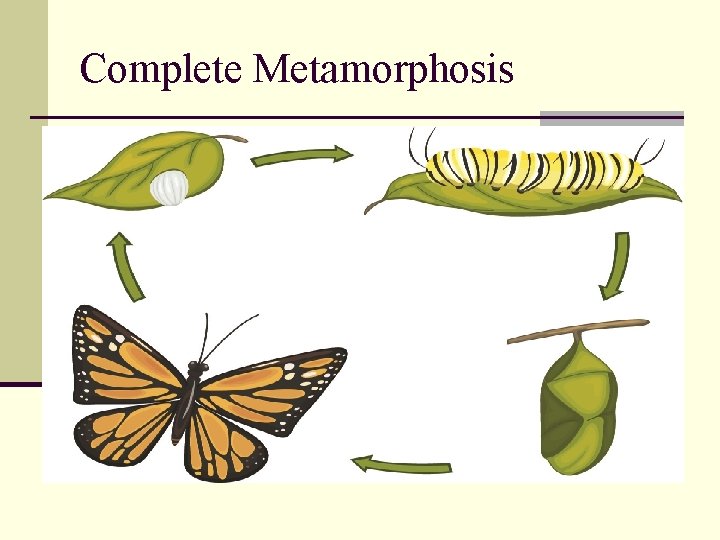
IV. Metamorphosis n A. Growth and development of insects where the body changes shape and form. n 1. Complete Metamorphosisa. Egg n b. Caterpillar- larvae n c. Cocoon – becomes a moth. n n Pupa – covered with chrysalis, becomes a butterfly. d. Adult
Butterfly Pupas
Moth cocoons
Complete Metamorphosis
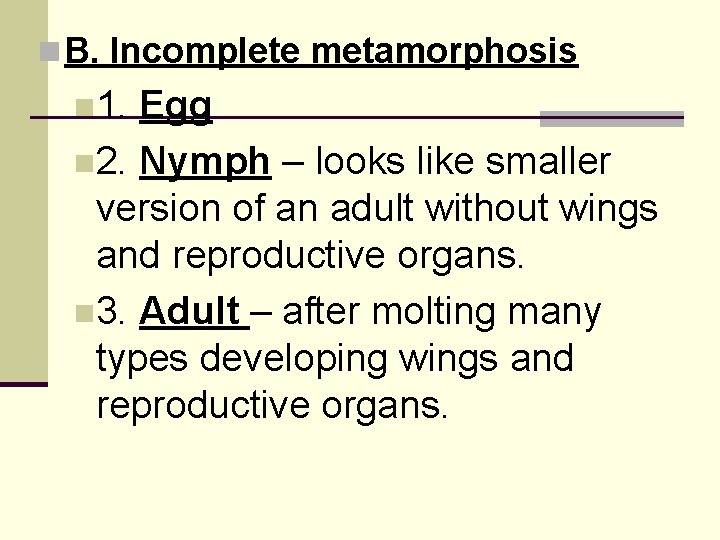
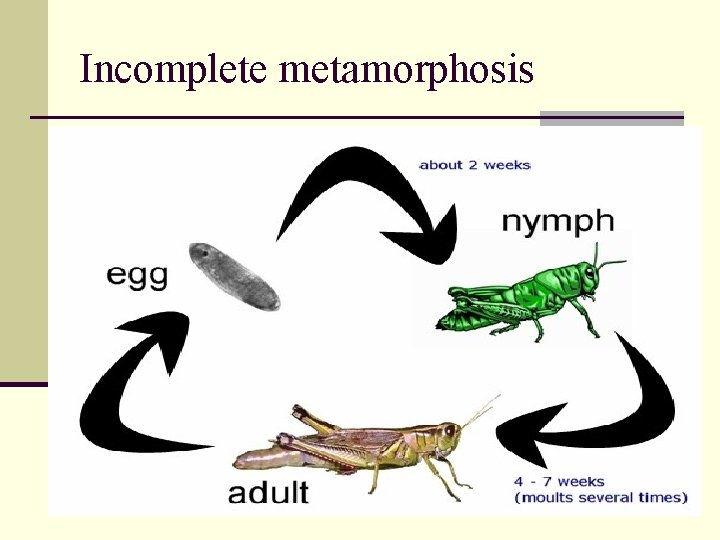
n B. Incomplete metamorphosis n 1. Egg n 2. Nymph – looks like smaller version of an adult without wings and reproductive organs. n 3. Adult – after molting many types developing wings and reproductive organs.
Incomplete metamorphosis
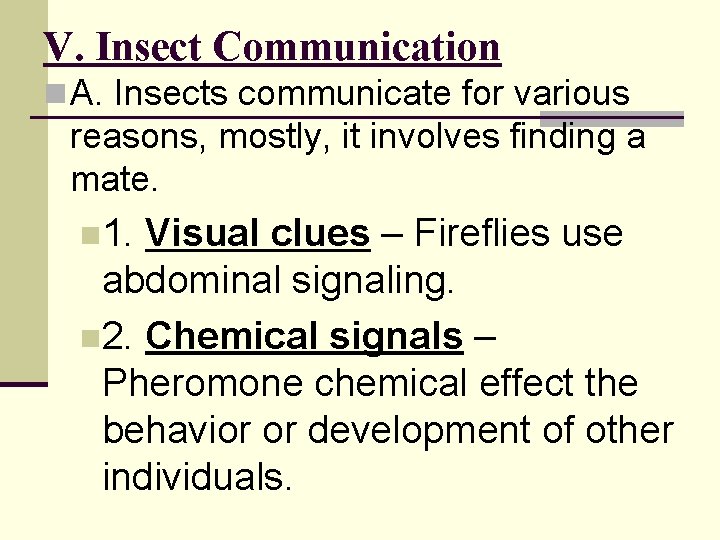
V. Insect Communication n A. Insects communicate for various reasons, mostly, it involves finding a mate. n 1. Visual clues – Fireflies use abdominal signaling. n 2. Chemical signals – Pheromone chemical effect the behavior or development of other individuals.
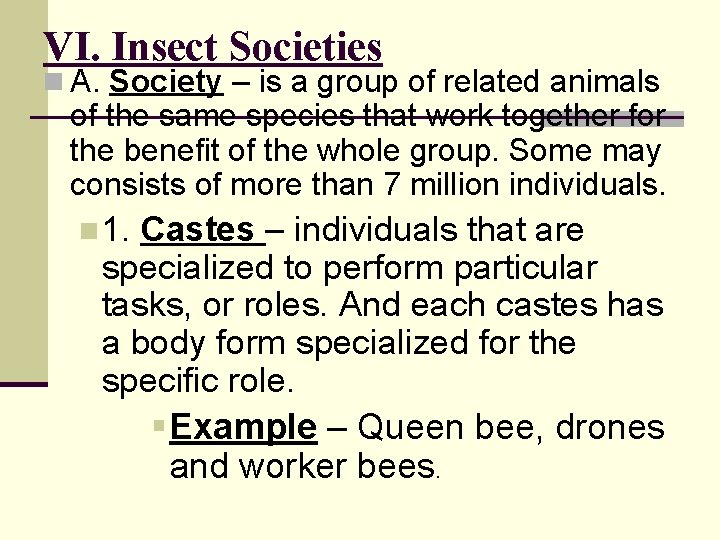
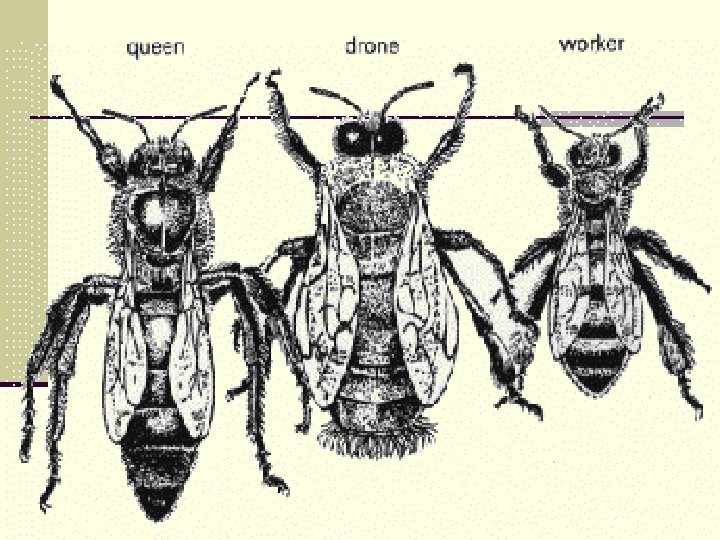
VI. Insect Societies n A. Society – is a group of related animals of the same species that work together for the benefit of the whole group. Some may consists of more than 7 million individuals. n 1. Castes – individuals that are specialized to perform particular tasks, or roles. And each castes has a body form specialized for the specific role. § Example – Queen bee, drones and worker bees.
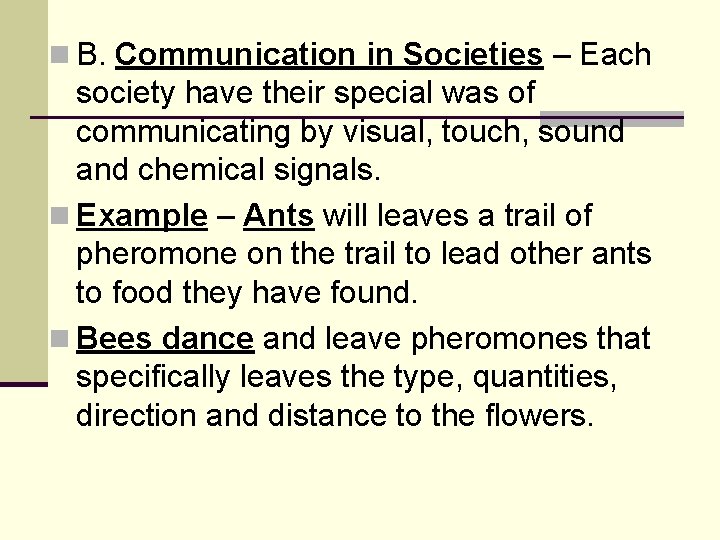
n B. Communication in Societies – Each society have their special was of communicating by visual, touch, sound and chemical signals. n Example – Ants will leaves a trail of pheromone on the trail to lead other ants to food they have found. n Bees dance and leave pheromones that specifically leaves the type, quantities, direction and distance to the flowers.
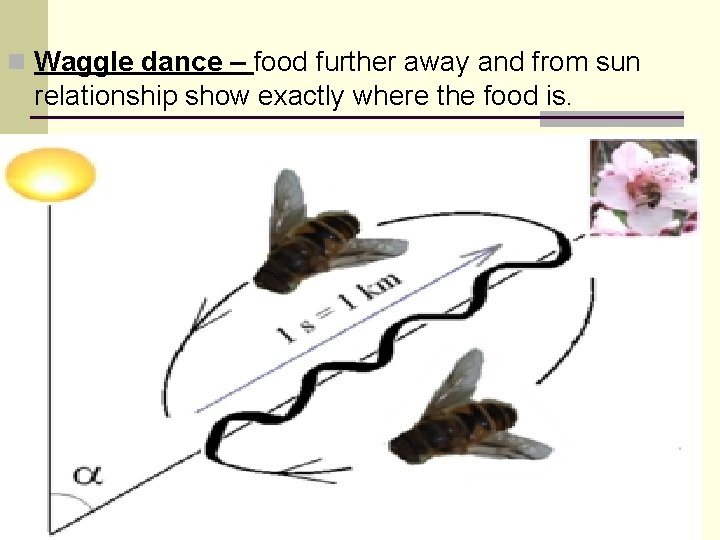
n Waggle dance – food further away and from sun relationship show exactly where the food is.
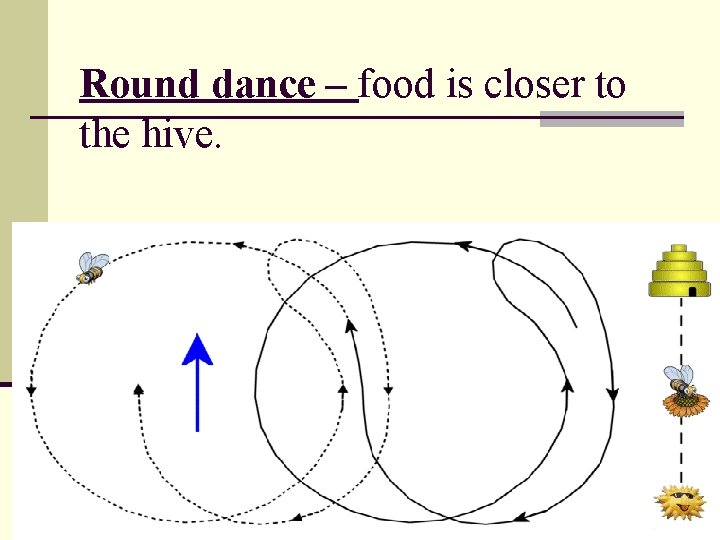
Round dance – food is closer to the hive.