The Grasshopper Introduction Insects are arthropods with jointed

- Slides: 15
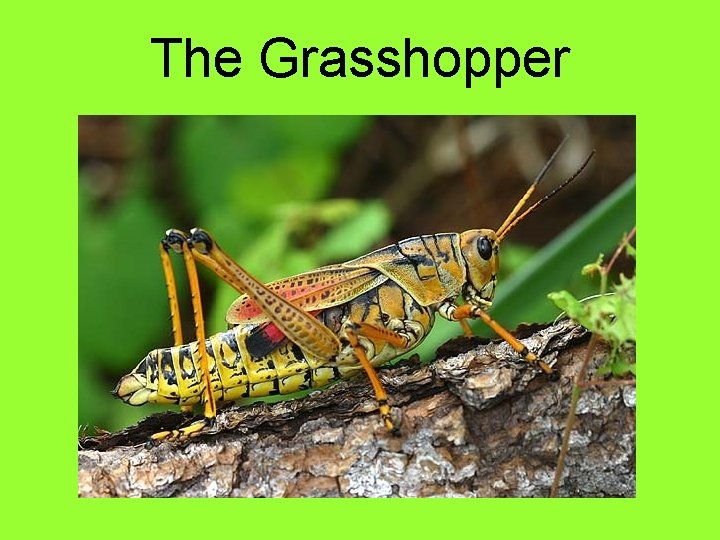
The Grasshopper
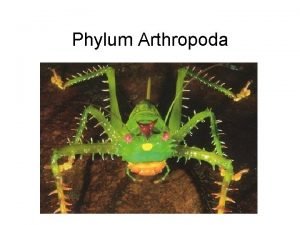
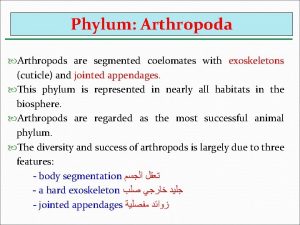
Introduction • Insects are arthropods with jointed appendages, segmented bodies, and an exoskeleton composed of chitin. Insects are in the class Insecta, & are the largest and most diverse group of animals on earth.
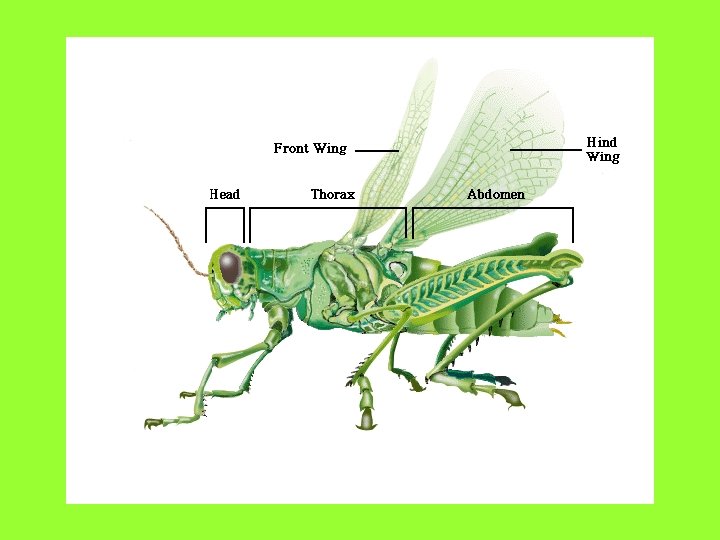
Characteristics • Insects have three body regions (head, thorax, & abdomen), 3 pairs of legs attached to the thorax, a single pair of antenna attached to the head, mouthparts adapted for chewing or sucking, and two pairs of wings. Some insects may have a single pair of wings or may be wingless.
Adaptations • Insect legs are often adapted for digging, crawling, jumping, or swimming. Insects are mostly terrestrial and breathe air which enters small lateral openings on the body called spiracles and circulates in a system of ducts to all organs and tissues. Their chewing or sucking mouth parts are adapted for feeding on plant or animal materials.
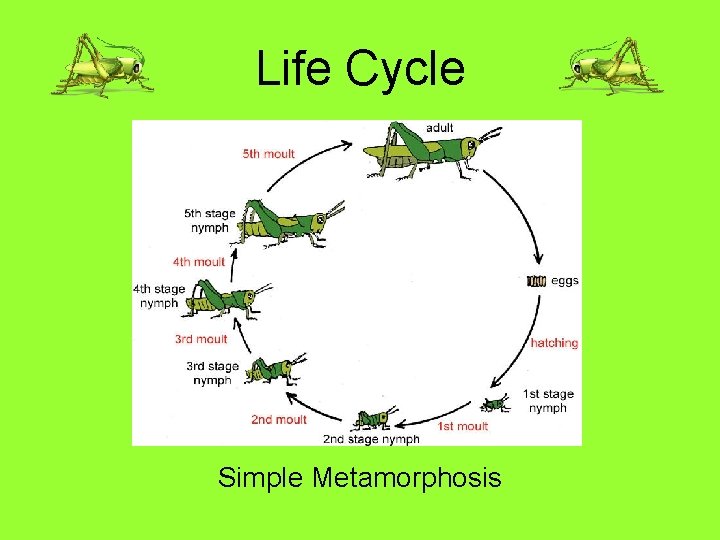
Life Cycle Simple Metamorphosis
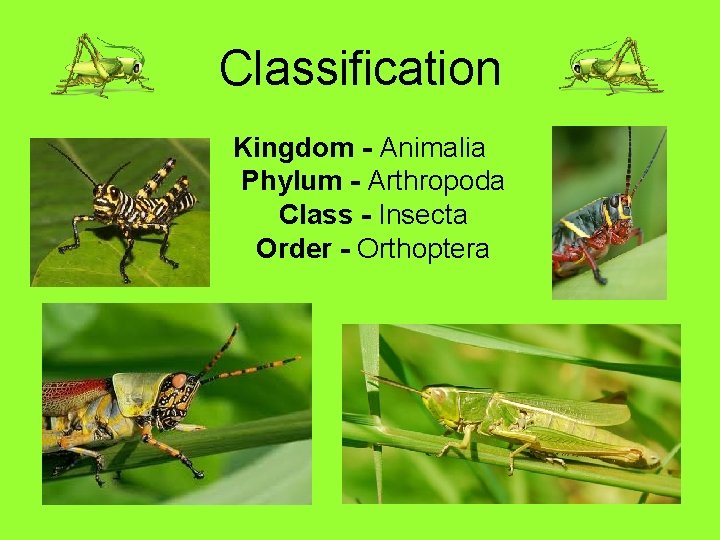
Classification Kingdom - Animalia Phylum - Arthropoda Class - Insecta Order - Orthoptera
Lab Objective • Identify & label the external & internal anatomy of a grasshopper.
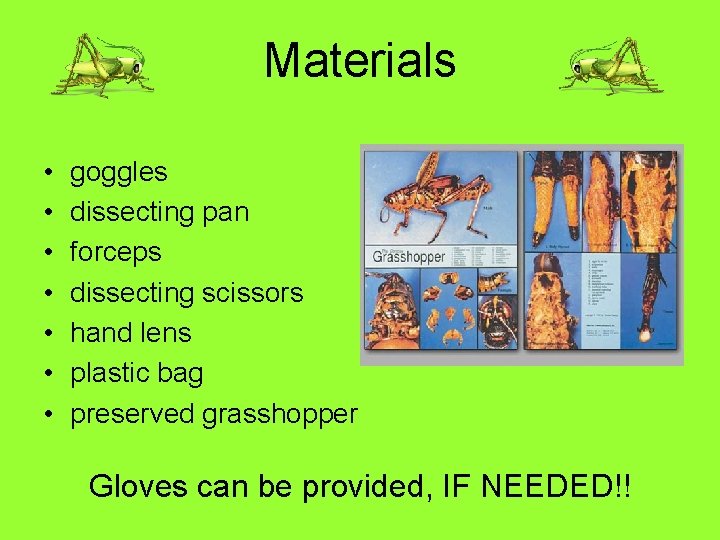
Materials • • goggles dissecting pan forceps dissecting scissors hand lens plastic bag preserved grasshopper Gloves can be provided, IF NEEDED!!
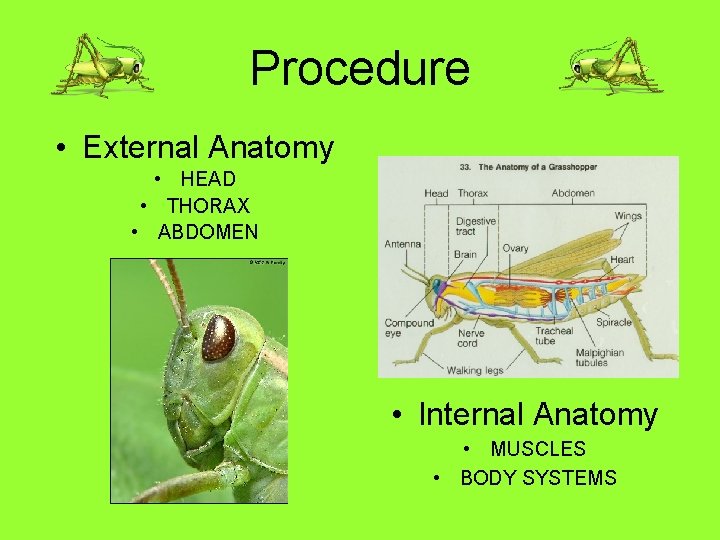
Procedure • External Anatomy • HEAD • THORAX • ABDOMEN • Internal Anatomy • MUSCLES • BODY SYSTEMS
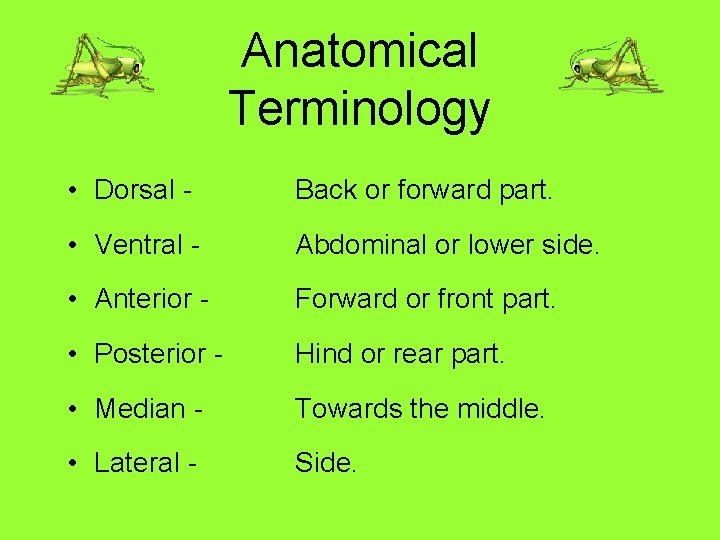
Anatomical Terminology • Dorsal - Back or forward part. • Ventral - Abdominal or lower side. • Anterior - Forward or front part. • Posterior - Hind or rear part. • Median - Towards the middle. • Lateral - Side.
Miscellaneous • Hand sanitizer will be provided for use at the end of the dissection. • Students should wash their hands with soap and water prior to eating lunch. • Please bring any injury sustained during the dissection to the attention of an adult immediately.
Clean Up DAY 1 DAY 2 • Biological material in plastic bag with class bag and trash bag. period & name. Place on dissecting tray. • Dissecting tray in trash. • Wash tools and return to table. • Clean lab bench and table.
Assessment LAB HANDOUT • Pre-Lab Questions – Completed in class • Anatomy Questions – Completed in class • Analysis & Conclusion Questions – Distributed at the end of the dissection to be completed for homework DIAGRAMS • External Features of the Grasshopper – Completed in class • Specialized Features of the Grasshopper Head – Completed in class • External Appendages of the Grasshopper – Completed in class
A good dissection takes. . . “Patience, young grasshoppers. . . patience!”