Mineral Resources Earth and Space Science Ms Pollock

- Slides: 21
Mineral Resources Earth and Space Science Ms. Pollock 2010 - 2011
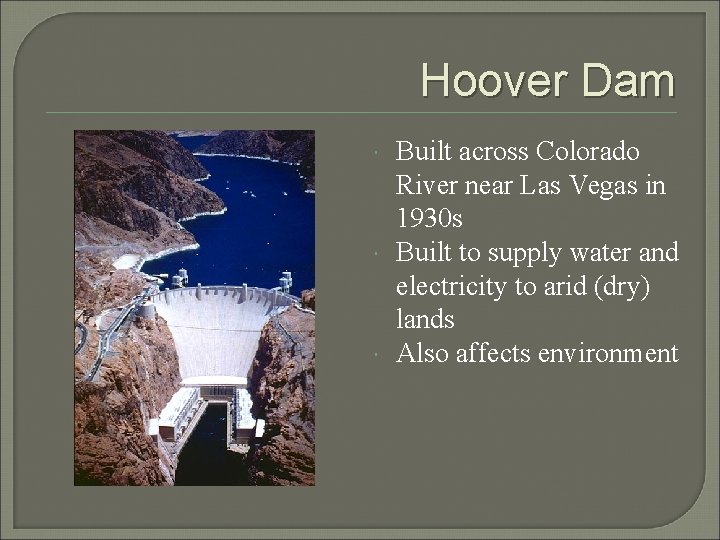
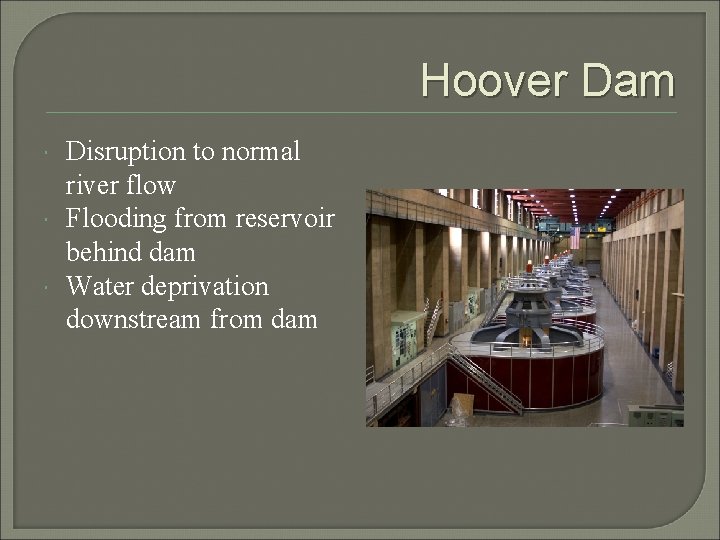
Hoover Dam Built across Colorado River near Las Vegas in 1930 s Built to supply water and electricity to arid (dry) lands Also affects environment
Hoover Dam Disruption to normal river flow Flooding from reservoir behind dam Water deprivation downstream from dam
Mineral Resources �Useful resources contained in Earth’s crust �Formation of many resources takes millions of years �Over 3, 000 identified minerals �Can be metals or nonmetals
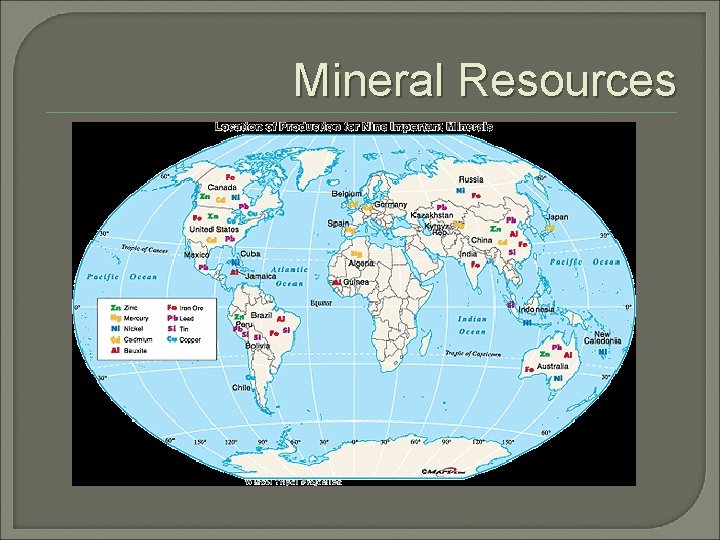
Mineral Resources
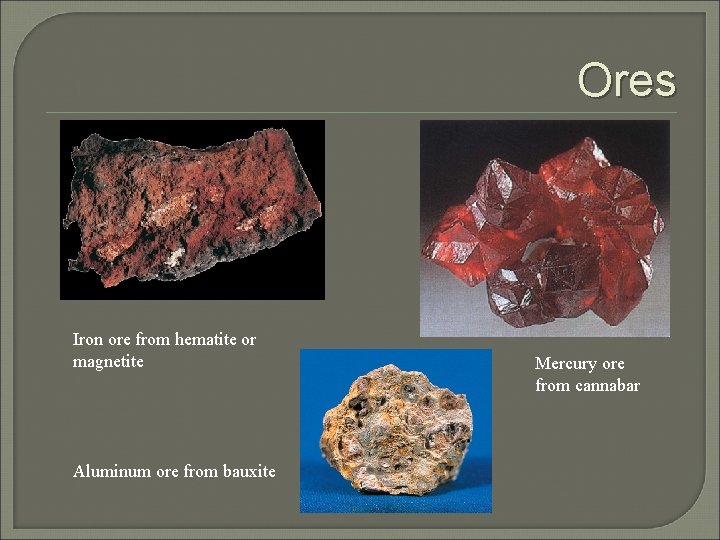
Ores �Metallic minerals also called native elements �Most minerals found in compound form, as they are unstable �Ores are mineral deposits from which metals and nonmetals can be removed profitably.
Ores Iron ore from hematite or magnetite Aluminum ore from bauxite Mercury ore from cannabar
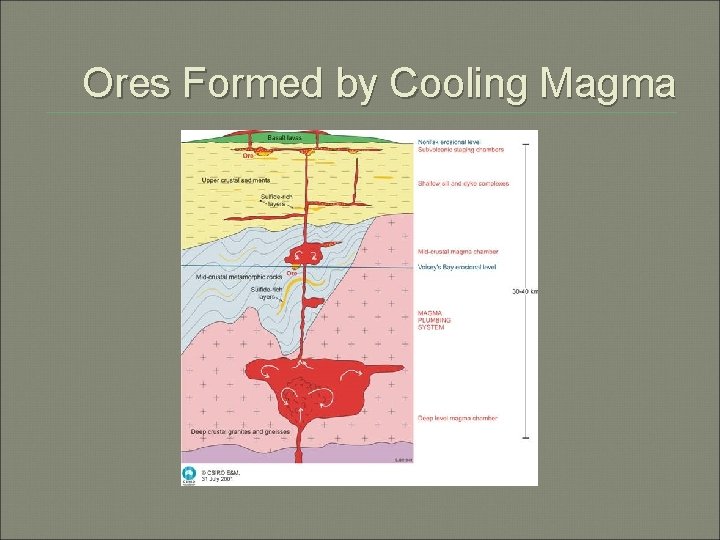
Ores Formed by Cooling Magma �As magma cools, dense metallic minerals sink and accumulate at the bottom of magma chambers to form ore deposits. • Chromium • Nickel • lead
Ores Formed by Cooling Magma
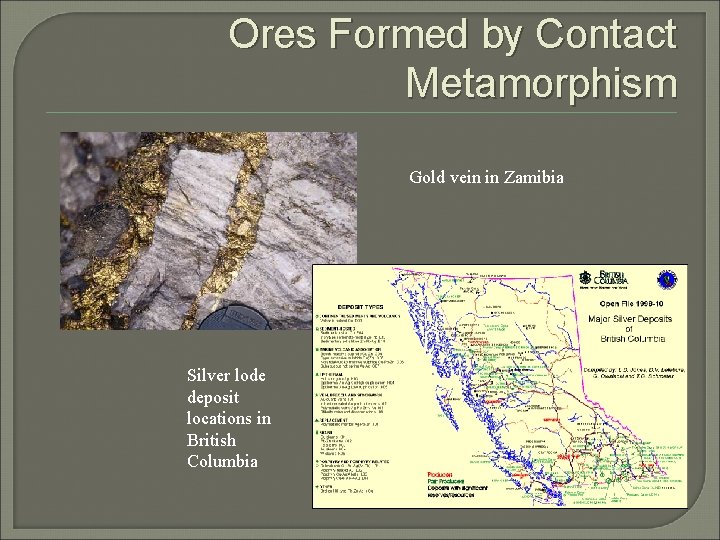
Ores Formed by Contact Metamorphism �Magma in contact with existing rock �Can be caused by hydrothermal solutions (hot water) passing through cracks in rock �Hydrothermal solutions cause formation of veins – narrow zones of ores. �Lode – many thick mineral veins formed in small region
Ores Formed by Contact Metamorphism Gold vein in Zamibia Silver lode deposit locations in British Columbia
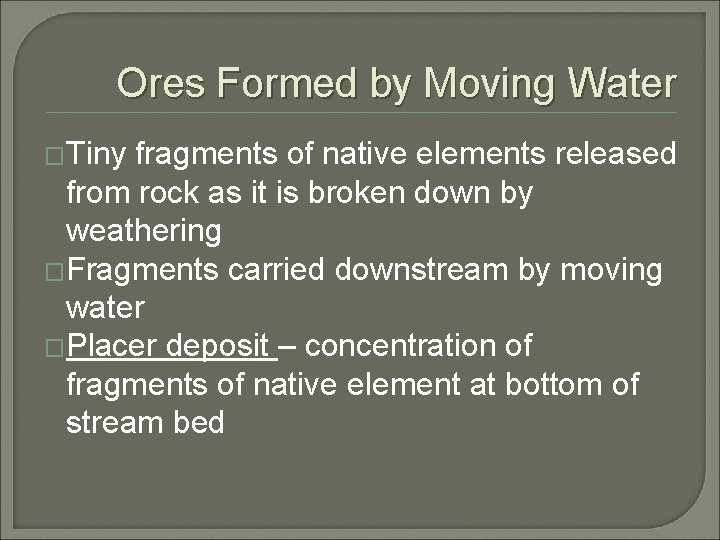
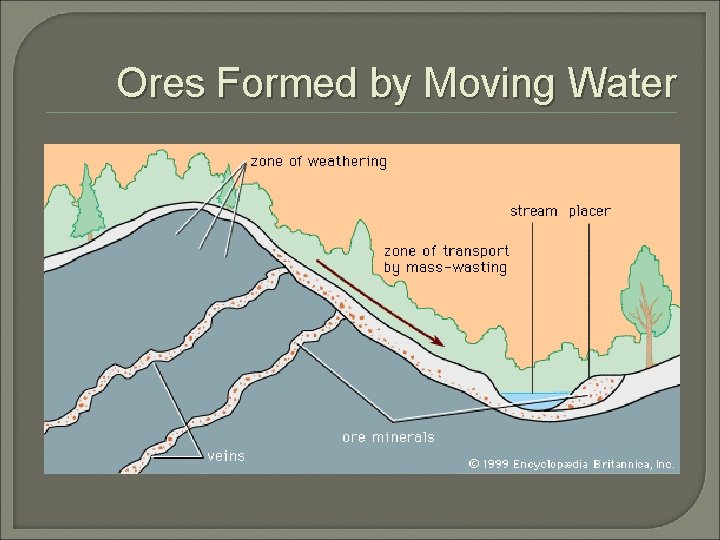
Ores Formed by Moving Water �Tiny fragments of native elements released from rock as it is broken down by weathering �Fragments carried downstream by moving water �Placer deposit – concentration of fragments of native element at bottom of stream bed
Ores Formed by Moving Water
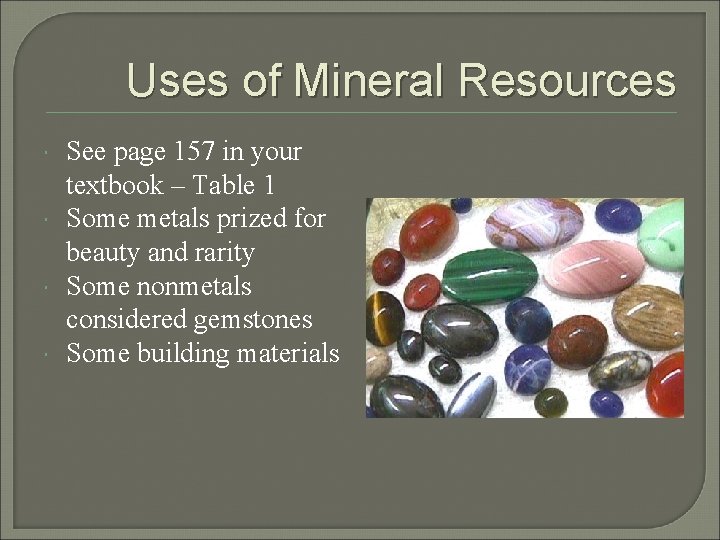
Uses of Mineral Resources See page 157 in your textbook – Table 1 Some metals prized for beauty and rarity Some nonmetals considered gemstones Some building materials
Mineral Exploration and Mining �Companies often in search of new mining areas �Area only good for mining if it contains 100 to 1, 000 times the amount of mineral found elsewhere �Local geology a factor • Aerial studies of magnetism, gravity, radioactivity, and rock color • Collection and testing of rock samples
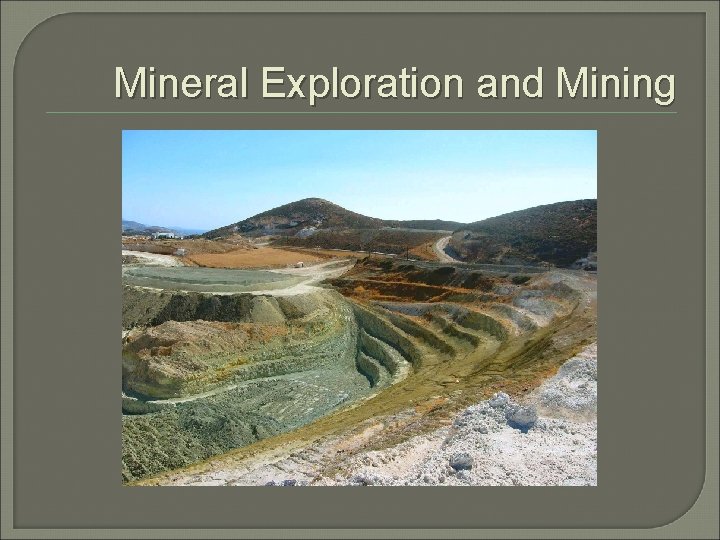
Mineral Exploration and Mining
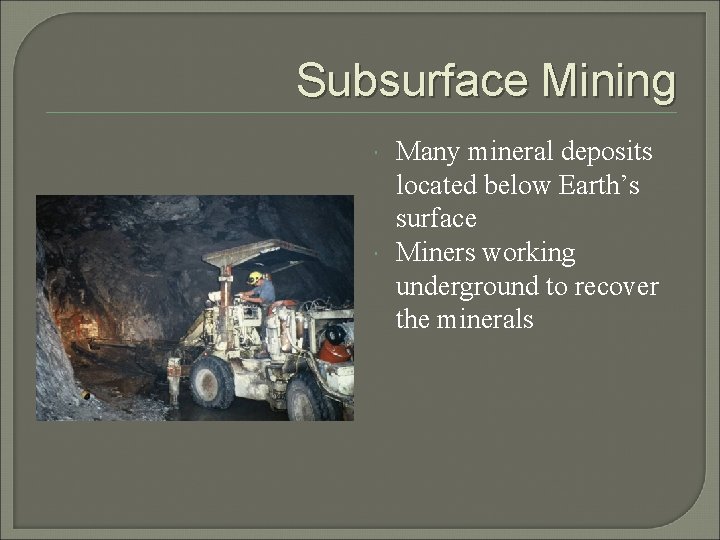
Subsurface Mining Many mineral deposits located below Earth’s surface Miners working underground to recover the minerals
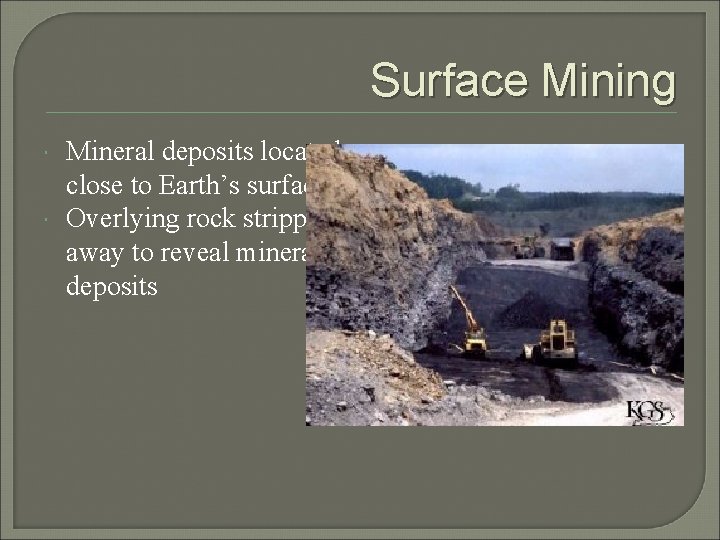
Surface Mining Mineral deposits located close to Earth’s surface Overlying rock stripped away to reveal mineral deposits
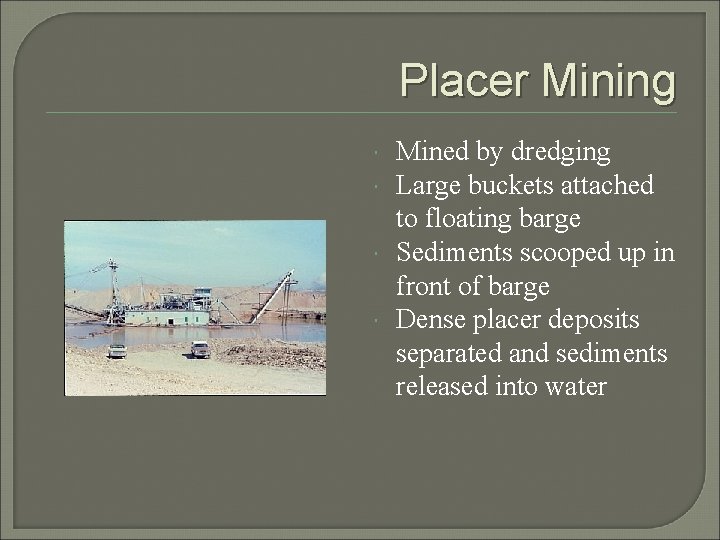
Placer Mining Mined by dredging Large buckets attached to floating barge Sediments scooped up in front of barge Dense placer deposits separated and sediments released into water
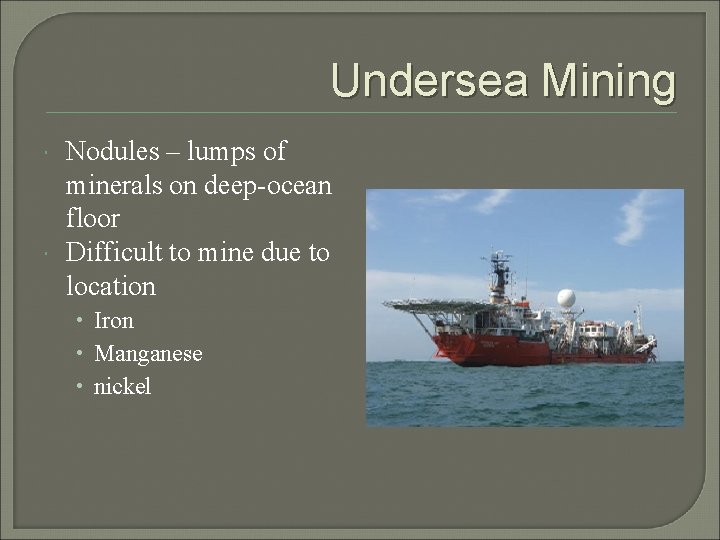
Undersea Mining Nodules – lumps of minerals on deep-ocean floor Difficult to mine due to location • Iron • Manganese • nickel
Assignment �Complete page 158 # 1 – 7. �You do not need to write the question.