
Meiosis Each organism must inherit a single copy
- Slides: 21
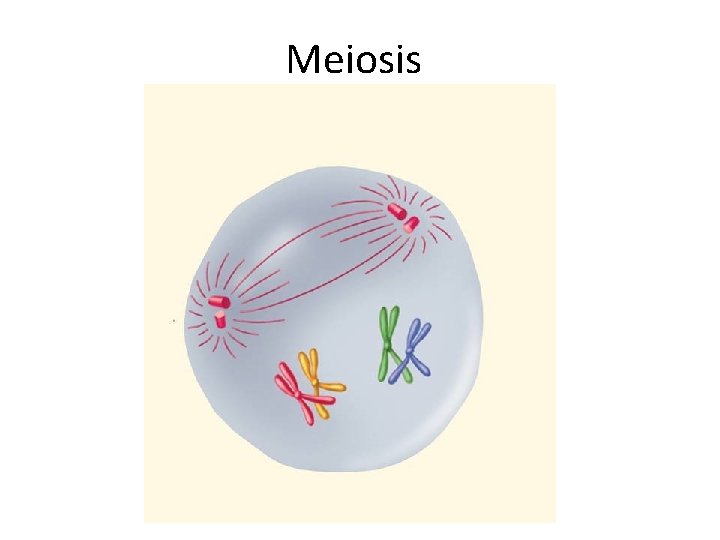
Meiosis
Each organism must inherit a single copy of every gene from each of its “parents. ” Gametes are formed by a process that separates the two sets of genes so that each gamete ends up with just one set.
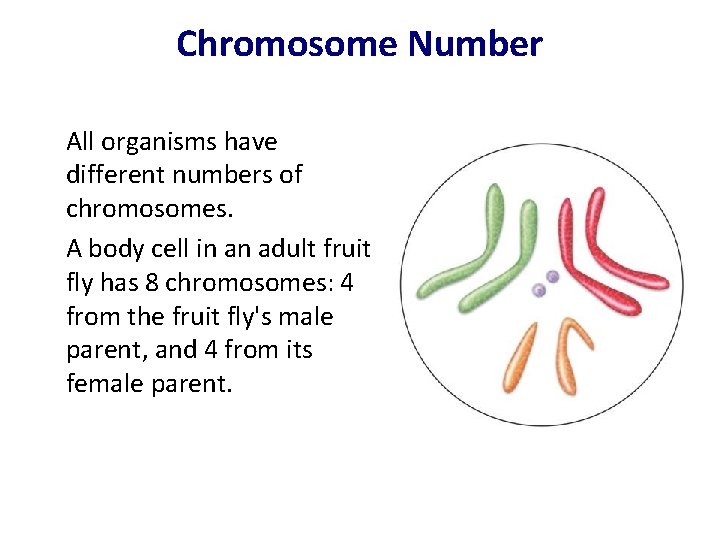
Chromosome Number All organisms have different numbers of chromosomes. A body cell in an adult fruit fly has 8 chromosomes: 4 from the fruit fly's male parent, and 4 from its female parent.
Chromosome Number • These sets of chromosomes are homologous. • Each of the 4 chromosomes that came from the male parent has a corresponding chromosome from the female parent. • A cell that contains both sets of homologous chromosomes is said to be diploid. • The number of chromosomes in a diploid cell is sometimes represented by the symbol 2 N. • For Drosophila, the diploid number is 8, which can be written as 2 N=8.
Chromosome Number • The gametes of sexually reproducing organisms contain only a single set of chromosomes, and therefore only a single set of genes. • These cells are haploid. Haploid cells are represented by the symbol N. • For Drosophila, the haploid number is 4, which can be written as N=4.
Phases of Meiosis is a process of reduction division in which the number of chromosomes per cell is cut in half through the separation of homologous chromosomes in a diploid cell.
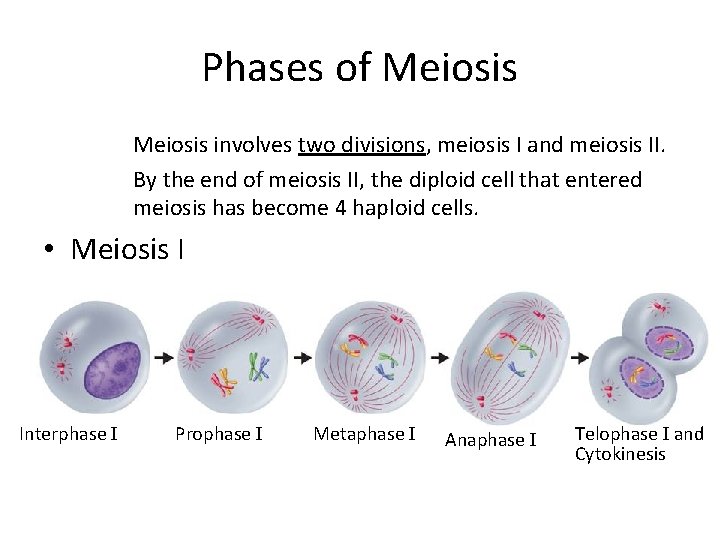
Phases of Meiosis involves two divisions, meiosis I and meiosis II. By the end of meiosis II, the diploid cell that entered meiosis has become 4 haploid cells. • Meiosis I Interphase I Prophase I Metaphase I Anaphase I Telophase I and Cytokinesis
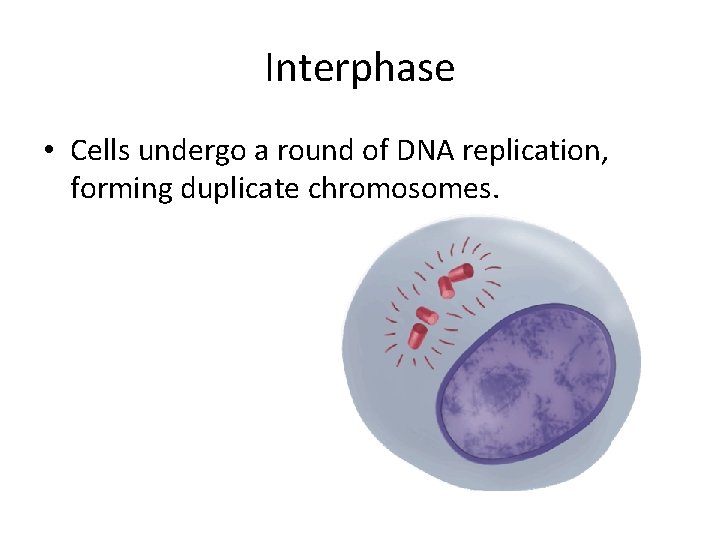
Interphase • Cells undergo a round of DNA replication, forming duplicate chromosomes.
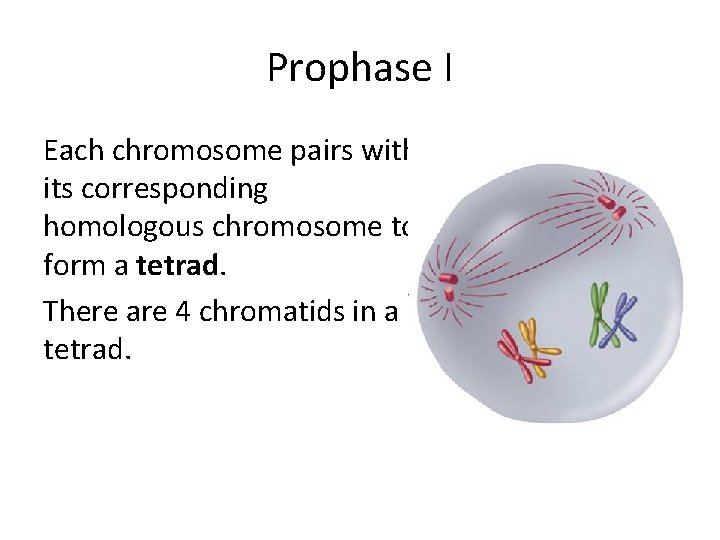
Prophase I Each chromosome pairs with its corresponding homologous chromosome to form a tetrad. There are 4 chromatids in a tetrad.
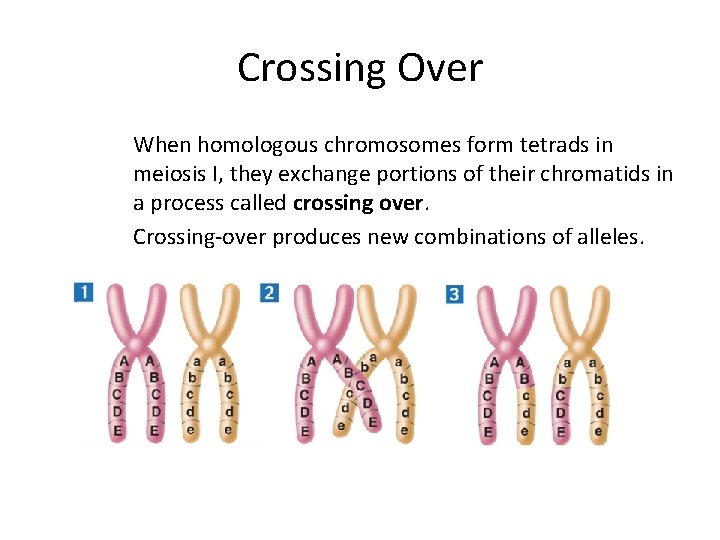
Crossing Over When homologous chromosomes form tetrads in meiosis I, they exchange portions of their chromatids in a process called crossing over. Crossing-over produces new combinations of alleles.
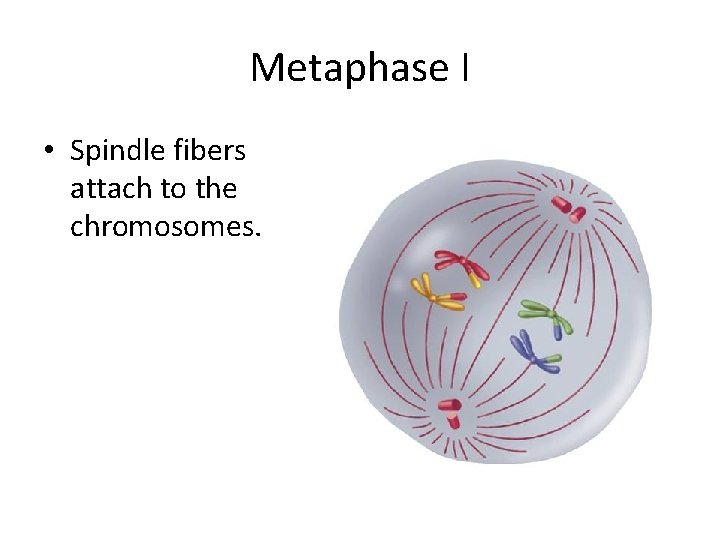
Metaphase I • Spindle fibers attach to the chromosomes.
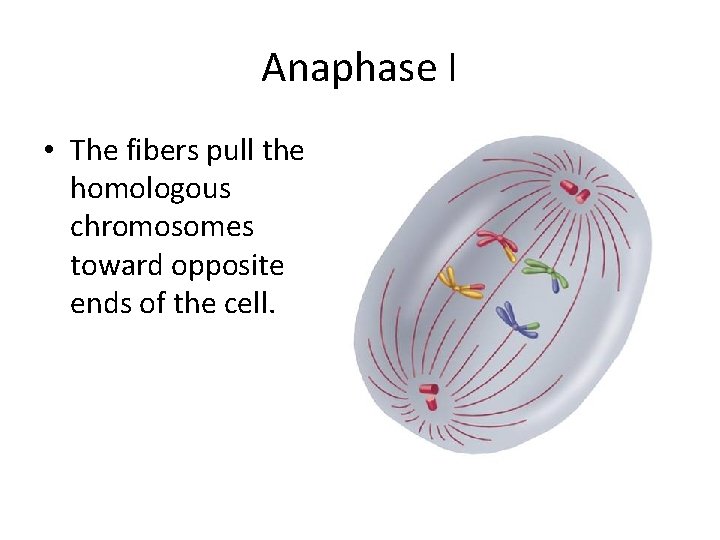
Anaphase I • The fibers pull the homologous chromosomes toward opposite ends of the cell.
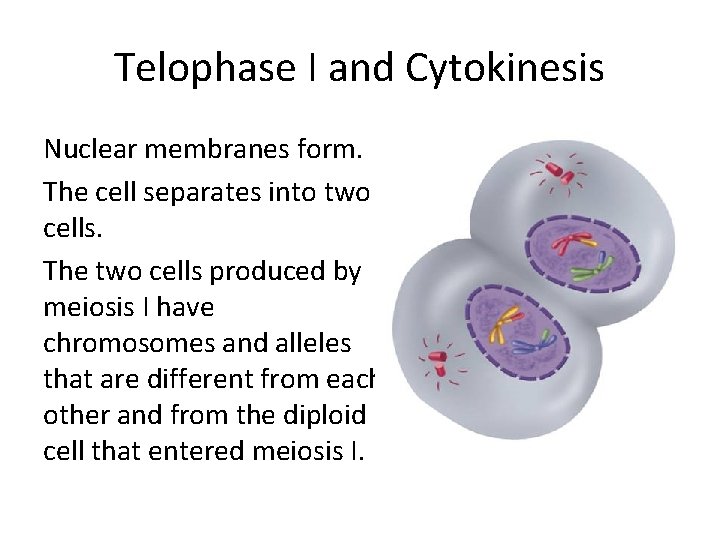
Telophase I and Cytokinesis Nuclear membranes form. The cell separates into two cells. The two cells produced by meiosis I have chromosomes and alleles that are different from each other and from the diploid cell that entered meiosis I.
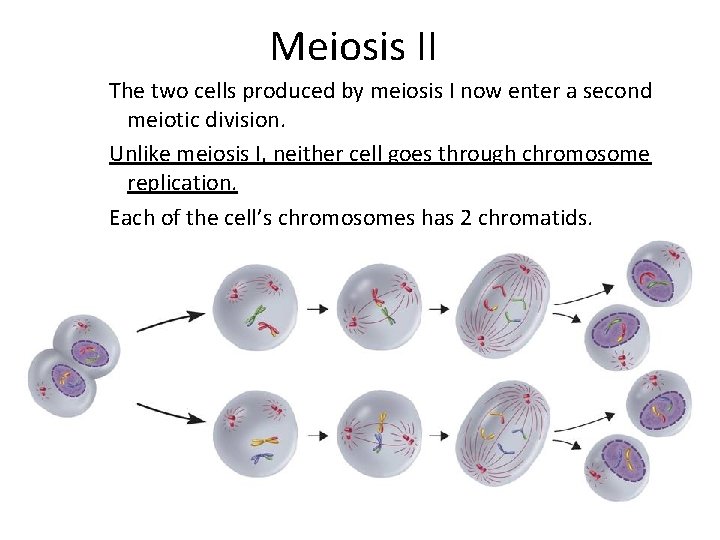
Meiosis II The two cells produced by meiosis I now enter a second meiotic division. Unlike meiosis I, neither cell goes through chromosome replication. Each of the cell’s chromosomes has 2 chromatids.
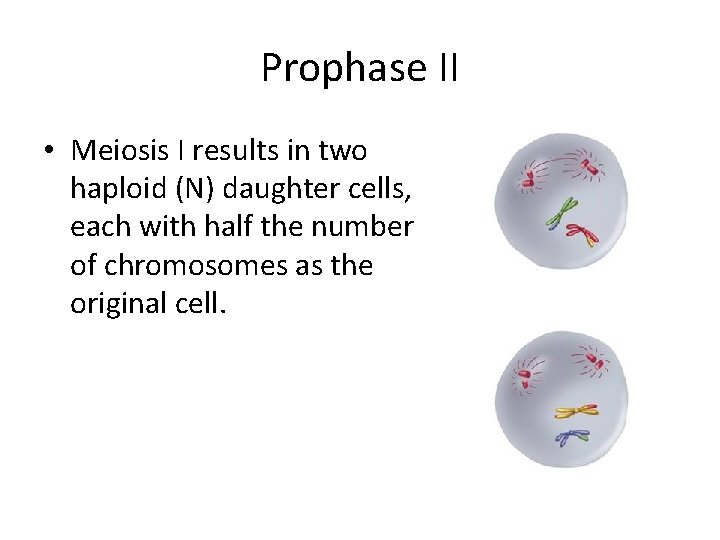
Prophase II • Meiosis I results in two haploid (N) daughter cells, each with half the number of chromosomes as the original cell.
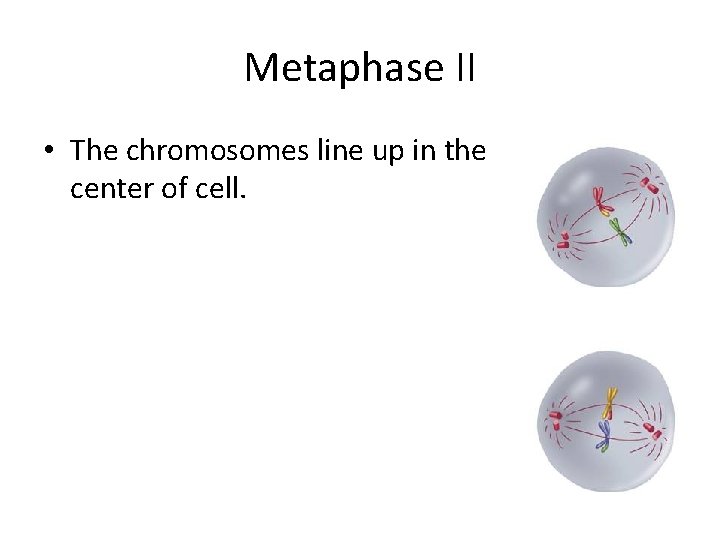
Metaphase II • The chromosomes line up in the center of cell.
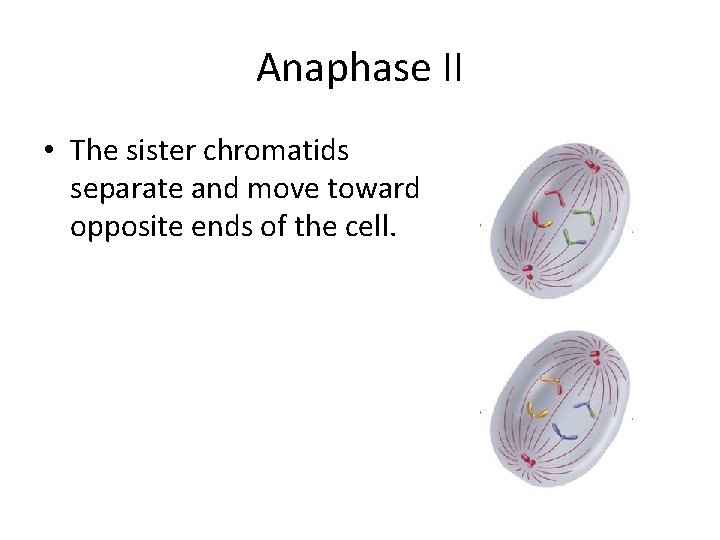
Anaphase II • The sister chromatids separate and move toward opposite ends of the cell.
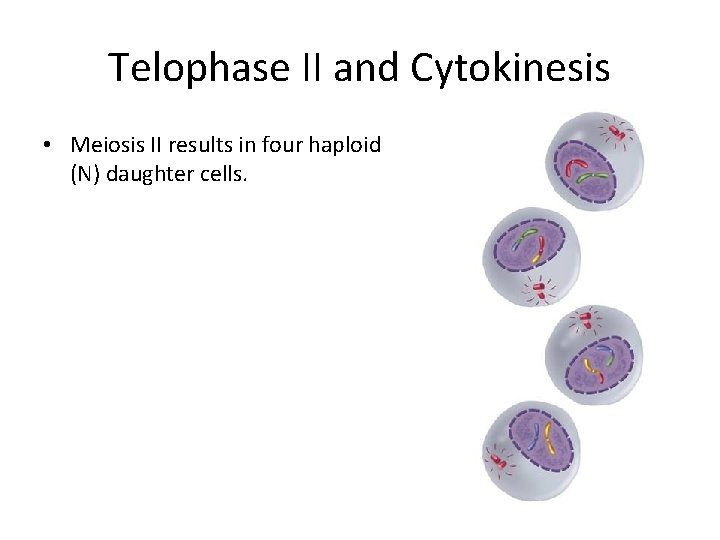
Telophase II and Cytokinesis • Meiosis II results in four haploid (N) daughter cells.
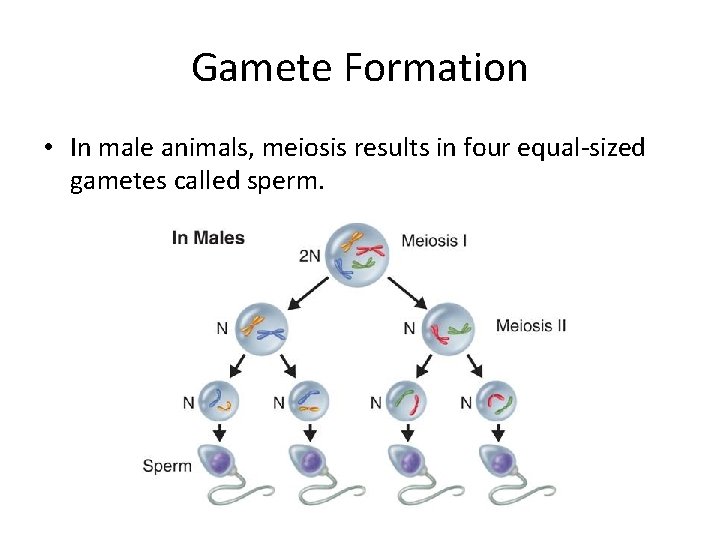
Gamete Formation • In male animals, meiosis results in four equal-sized gametes called sperm.
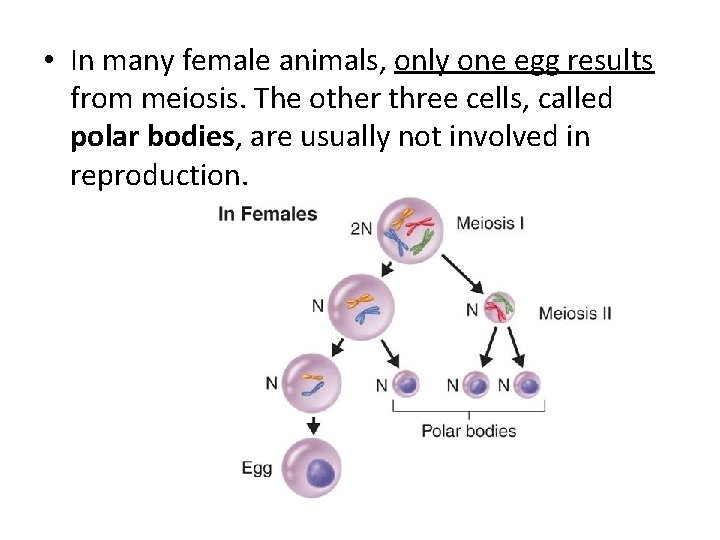
• In many female animals, only one egg results from meiosis. The other three cells, called polar bodies, are usually not involved in reproduction.
Mitosis vs. Meiosis • Mitosis results in the production of two genetically identical diploid cells. Meiosis produces four genetically different haploid cells. • Mitosis • Cells produced by mitosis have the same number of chromosomes and alleles as the original cell. • Mitosis allows an organism to grow and replace cells. • Some organisms reproduce asexually by mitosis. • Meiosis • Cells produced by meiosis have half the number of chromosomes as the parent cell. • These cells are genetically different from the diploid cell and from each other. • Meiosis is how sexually-reproducing organisms produce gametes.