
Flora 1 2 Each organism must inherit a
- Slides: 11
Flora
1. 2. Each organism must inherit a single copy of every gene from each of it’s parents When an organism produces its own gametes, those two sets of genes MUST be separated so that each gamete only contains one set of genes.
� Ex: fruit flies – 8 � 4 chromosomes from male parent � 4 chromosomes from female parent These two sets of chromosomes are said to be homologous • Homologous – chromosomes that have a corresponding chromosome from the opposite sex parent. •
�A cell that contains both sets of homologous chromosomes is said to be diploid �Represented �Ex: by “ 2 N” fruit flies Gametes only contain one set of chromosomes and therefore only one set of genes - such cells are called haploid - written as “N” - ex: fruit flies
� Meiosis – process of reduction division in which the number of chromosomes per cell is cut in half through the splitting of homologous chromosomes in a diploid cell �As two distinct divisions
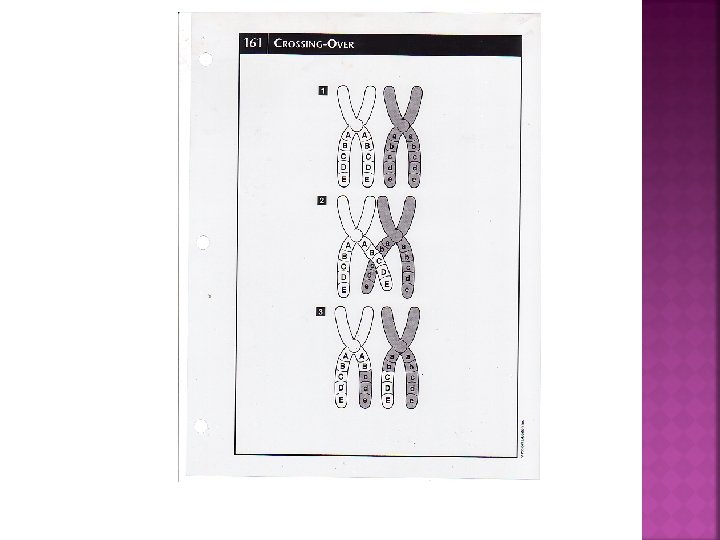
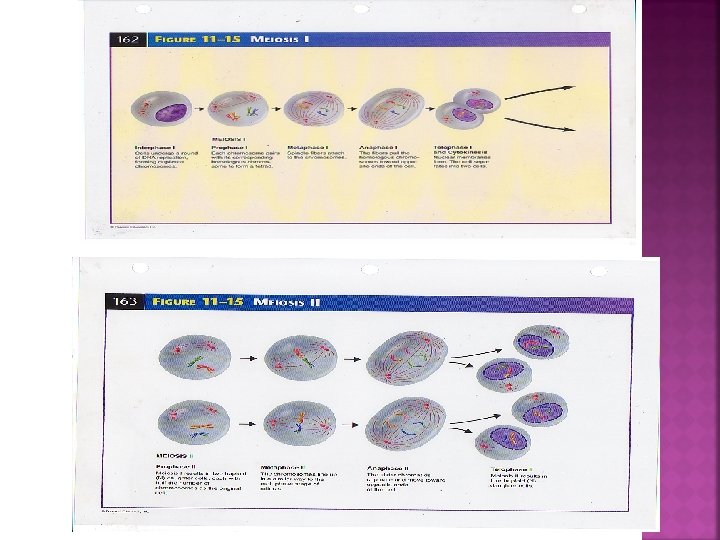
� Prior to meiosis I, each chromosome is replicated � Prophase I – each chromosome pairs with its homologous chromosome to form a tetrad �Tetrad – structure containing 4 chromatids �Crossing over – results in the exchange of alleles between homologous chromosomes Leads to genetic diversity Produces new combinations of alleles
� Metaphase I – spindle fibers attach to chromosomes � Anaphase I – fibers pull homologous chromosomes to opposite ends of the cell � Telophase and cytokinesis – two new cells are formed.
� Two cells produced in meiosis I now enter meiotic division � Prophase II – nuclear envelopes break down � Metaphase II – chromosomes line up in the middle of the cell � Anaphase II – chromatids separate and move toward opposite ends of the cell
� Each of the new daughter cells receive two chromatids and now contain the haploid N=2 �Two � Male chromosomes each cells produced during meiosis are sperm � Female cells produced are eggs/polar bodies � Fertilization of an egg by a sperm will restore the chromosome number to 2 N