Living Well with Dementia Ruth Mantle Alzheimer Scotland









- Slides: 25
Living Well with Dementia Ruth Mantle Alzheimer Scotland Dementia Nurse Consultant Christine Steel National Dementia AHP Consultant
My name is not dementia (2010) “People with dementia often feel that dementia becomes the only thing others know about them. But they remain individuals in their own right and dementia is not the most important thing about them. Many are still able to do what they did before despite their life changing and some things becoming increasingly difficult to do. ”
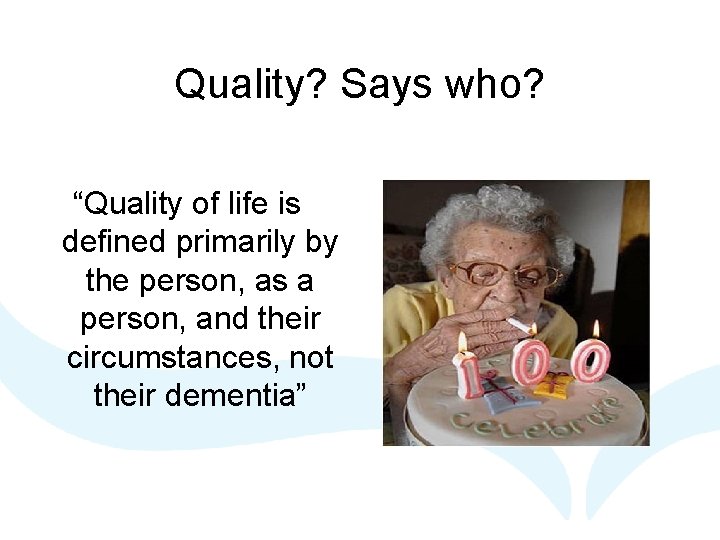
Quality? Says who? “Quality of life is defined primarily by the person, as a person, and their circumstances, not their dementia”
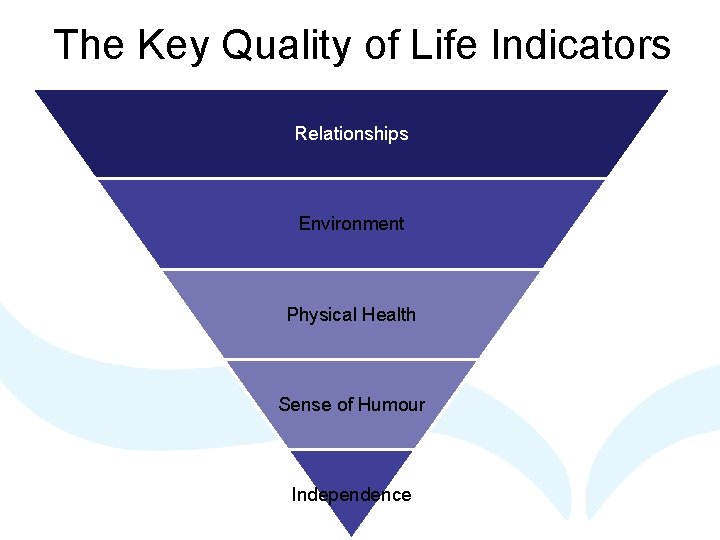
The Key Quality of Life Indicators Relationships Environment Physical Health Sense of Humour Independence
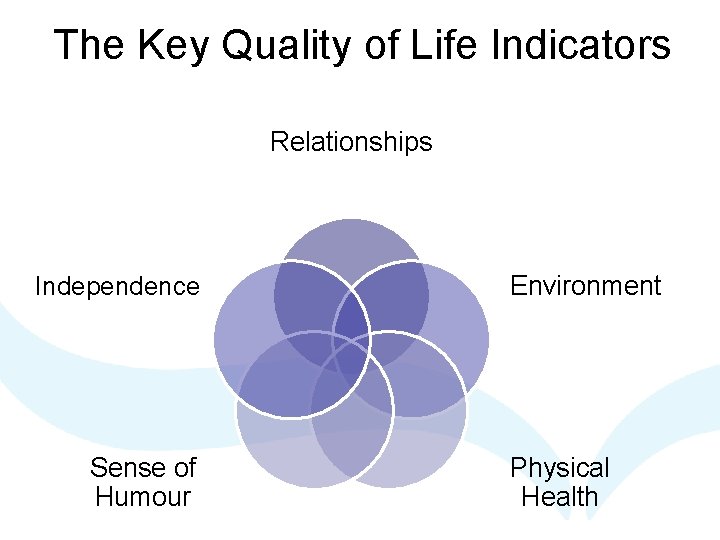
The Key Quality of Life Indicators Relationships Independence Sense of Humour Environment Physical Health
“When the day comes that I have to start asking for help. . . [and]. . . if that independence is taken away. . . then I hope its only taken away from me in the right way. . . I would like to think that I could still be consulted and still have some say in my independence”
“Going to the church, I sing, makes me happy. I miss my church, now I can’t sing, can’t go to church. ”
“Don’t get me wrong, carers are the most important people in the world but you can have carers and keepers. The latter try and assume total responsibility for your life prematurely” (Peter Ashley, Person with dementia)
Appreciative Inquiry “. . is based on a deceptively simple premise: organisations grow in the direction of what they repeatedly ask questions about & focus their attention on. It does not focus on changing people. Instead, it invites people to engage in building the kinds of organisations they want to live in” Gervase Bushe
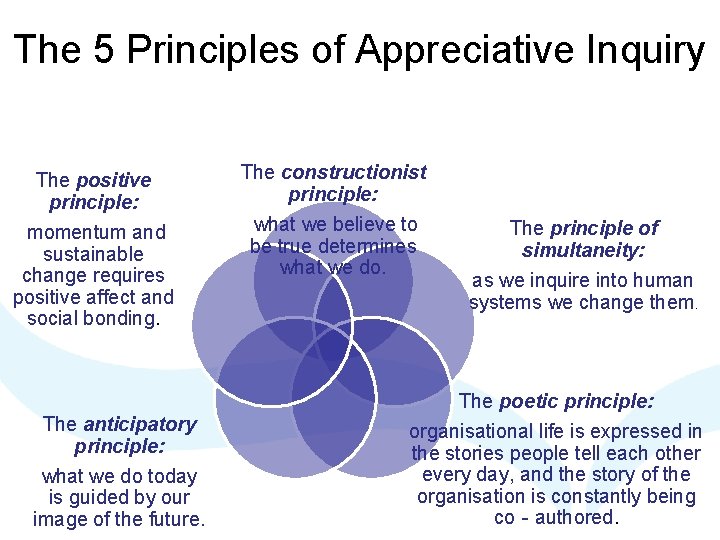
The 5 Principles of Appreciative Inquiry The positive principle: momentum and sustainable change requires positive affect and social bonding. The anticipatory principle: what we do today is guided by our image of the future. The constructionist principle: what we believe to be true determines what we do. The principle of simultaneity: as we inquire into human systems we change them. The poetic principle: organisational life is expressed in the stories people tell each other every day, and the story of the organisation is constantly being co‐authored.
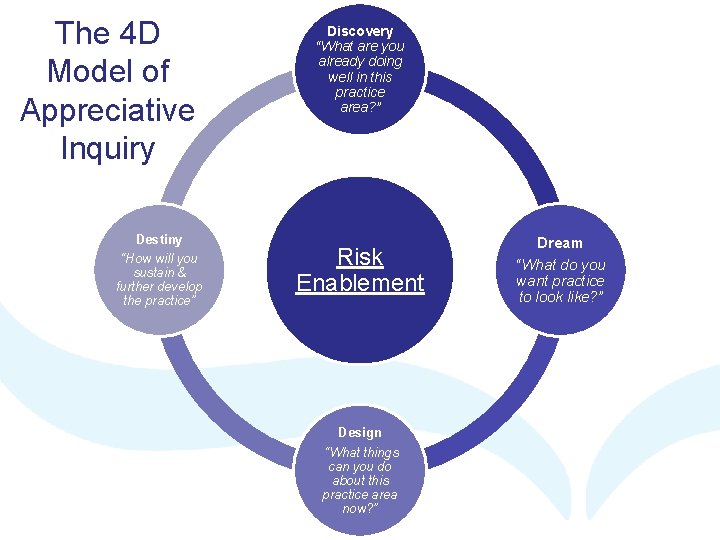
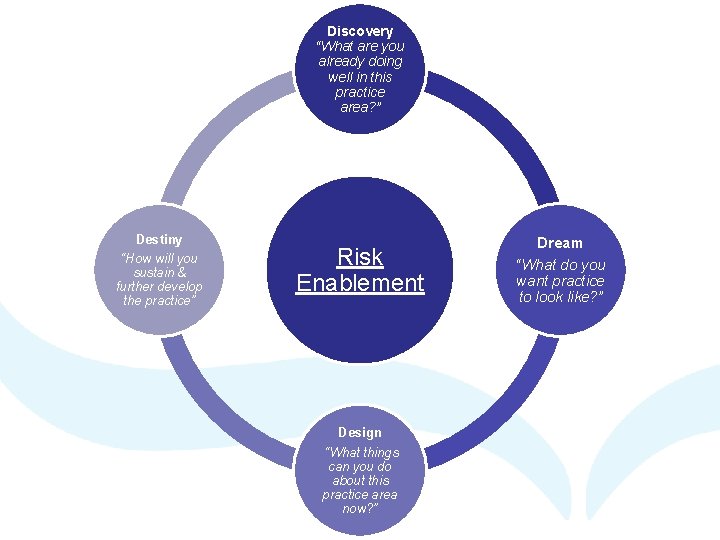
The 4 D Model of Appreciative Inquiry Destiny “How will you sustain & further develop the practice” Discovery “What are you already doing well in this practice area? ” Risk Enablement Design “What things can you do about this practice area now? ” Dream “What do you want practice to look like? ”
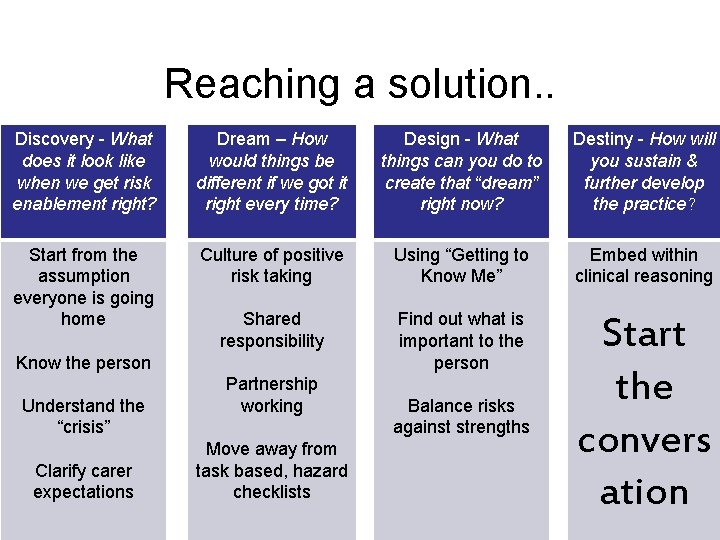
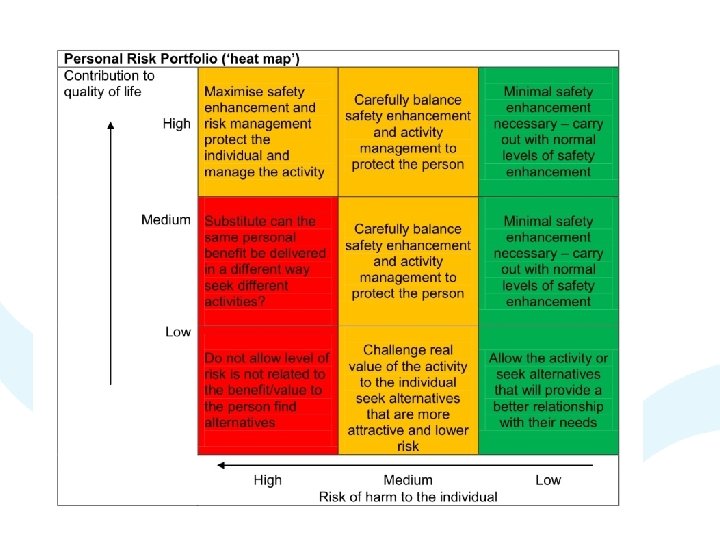
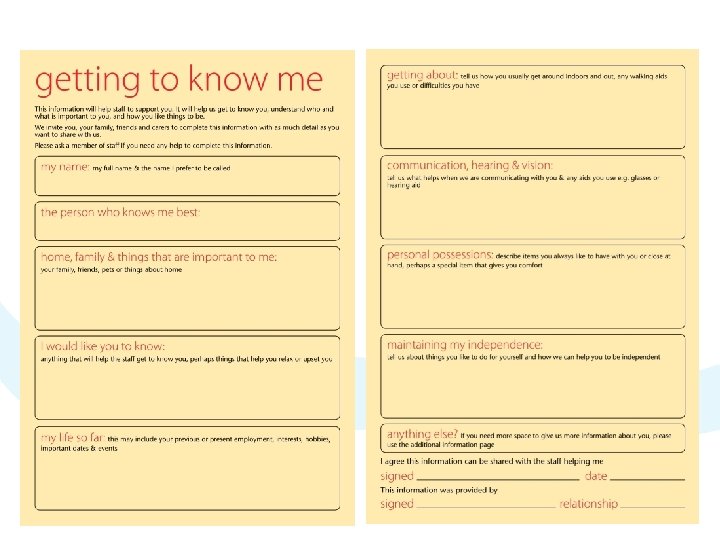
Reaching a solution. . Discovery - What does it look like when we get risk enablement right? Dream – How would things be different if we got it right every time? Design - What things can you do to create that “dream” right now? Destiny - How will you sustain & further develop the practice? Start from the assumption everyone is going home Culture of positive risk taking Using “Getting to Know Me” Embed within clinical reasoning Shared responsibility Find out what is important to the person Start the convers ation Know the person Understand the “crisis” Clarify carer expectations Partnership working Move away from task based, hazard checklists Balance risks against strengths
What will your solution be?
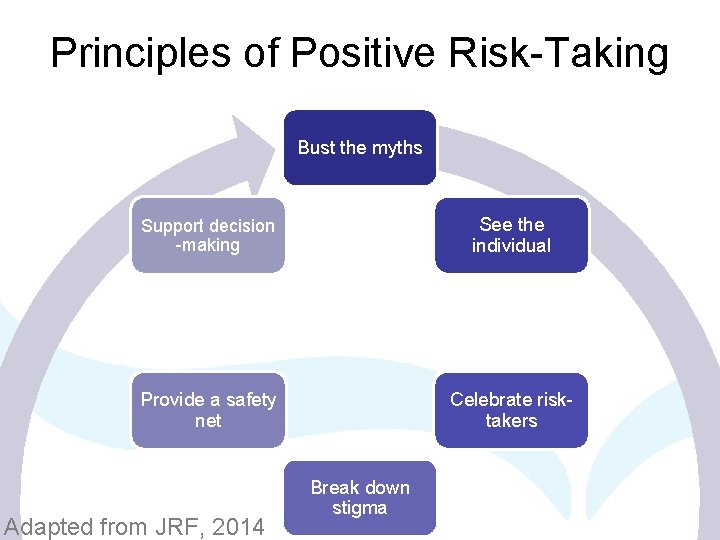
Principles of Positive Risk-Taking Bust the myths Support decision -making See the individual Provide a safety net Celebrate risktakers Adapted from JRF, 2014 Break down stigma
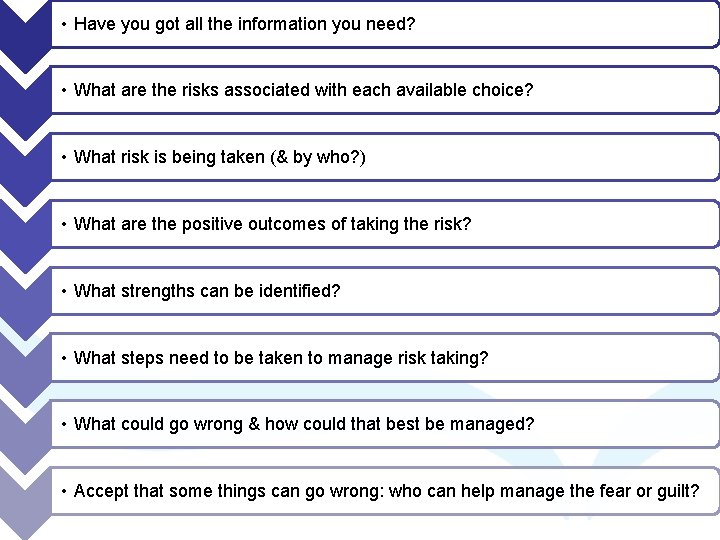
• Have you got all the information you need? • What are the risks associated with each available choice? • What risk is being taken (& by who? ) • What are the positive outcomes of taking the risk? • What strengths can be identified? • What steps need to be taken to manage risk taking? • What could go wrong & how could that best be managed? • Accept that some things can go wrong: who can help manage the fear or guilt?
Emotional Touchpoints
Discovery “What are you already doing well in this practice area? ” Destiny “How will you sustain & further develop the practice” Risk Enablement Design “What things can you do about this practice area now? ” Dream “What do you want practice to look like? ”
Thanks for listening