Literacy Rate of Kenya and Sudan SS 7

- Slides: 7
Literacy Rate of Kenya and Sudan SS 7 CG 3 a: Compare how various factors, including gender, affect access to education in Kenya and Sudan
Kenya • Literacy Rate is 85% • Government has been improving education as a priority. – Programs for building schools. – Eliminate fees for children to attend school. • 85% attend elementary school • 24% attend high school • 2% college (post high school)
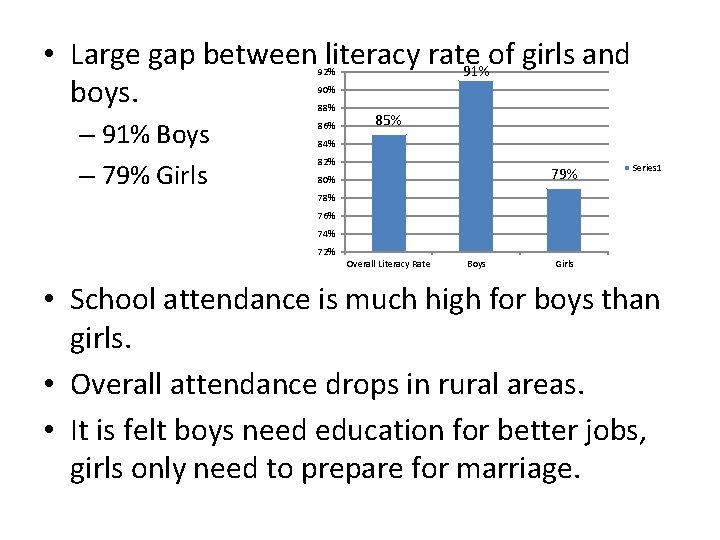
• Large gap between literacy rate of girls and 91% boys. 92% 90% 88% – 91% Boys – 79% Girls 86% 85% 84% 82% 79% 80% Series 1 78% 76% 74% 72% Overall Literacy Rate Boys Girls • School attendance is much high for boys than girls. • Overall attendance drops in rural areas. • It is felt boys need education for better jobs, girls only need to prepare for marriage.
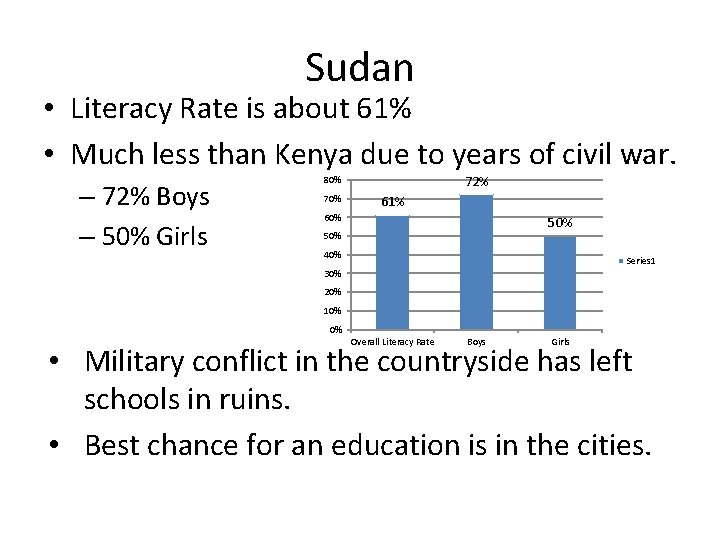
Sudan • Literacy Rate is about 61% • Much less than Kenya due to years of civil war. – 72% Boys – 50% Girls 72% 80% 70% 61% 60% 50% 40% Series 1 30% 20% 10% 0% Overall Literacy Rate Boys Girls • Military conflict in the countryside has left schools in ruins. • Best chance for an education is in the cities.
• 2/3 money is put toward the education of boys, with only 1/3 going toward girls. • Education reform is to expand religious education of students. • Parents in rural areas feel the education of girls is a waste of money and they should only prepare for marriage. • Some girls are sent to school to study the Quran.
• People in Kenya and Sudan do not have access to an education because: – Girls do not receive equal access to education due to cultural importance given to the males. – Traditional roles and culture may not put as much importance on education – African governments cannot afford to invest as much of their GDP into education.
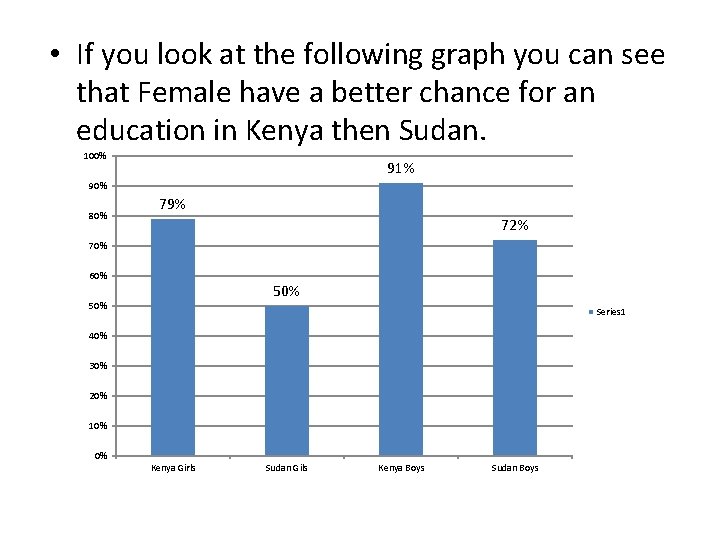
• If you look at the following graph you can see that Female have a better chance for an education in Kenya then Sudan. 100% 91% 90% 80% 79% 72% 70% 60% 50% Series 1 40% 30% 20% 10% 0% Kenya Girls Sudan Gils Kenya Boys Sudan Boys