Light and plant development Photomorphogenesis a change in






- Slides: 51
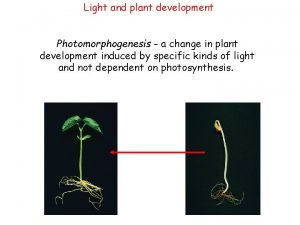
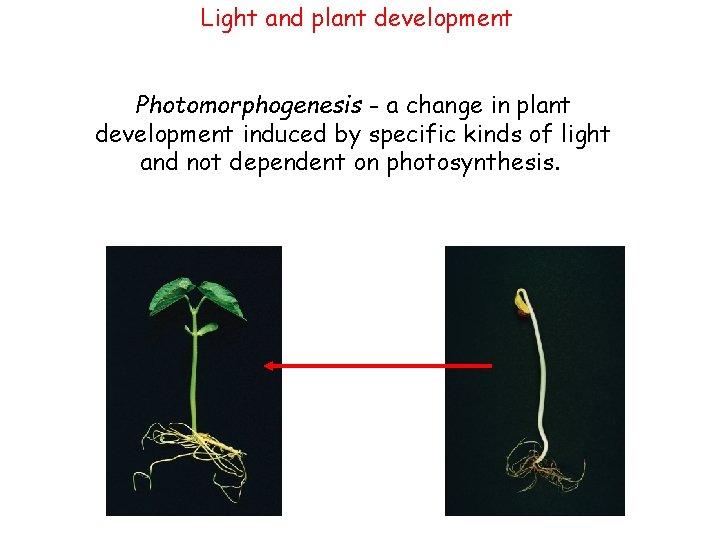
Light and plant development Photomorphogenesis - a change in plant development induced by specific kinds of light and not dependent on photosynthesis.
Photomorphogenesis involves special photoreceptors that initiate developmental changes. Photoreceptors transduce information in the environment into appropriate developmental patterns. Information examples • position in a layered plant canopy • seed depth in soil • presence of competitors • approach of sunrise • day length
Two main photoreceptors 1. Phytochrome (Chapter 17) - a protein pigment that absorbs red and far-red light and interconverts between two forms. involved with many and varied responses 2. Blue-light photoreceptors (Chapter 18) guard cell responses phototropisms
Phytochrome Detects red and far-red light Provides information the environment Answers questions for plants: Am I in the light? Do I have competitors? Is it time to flower?
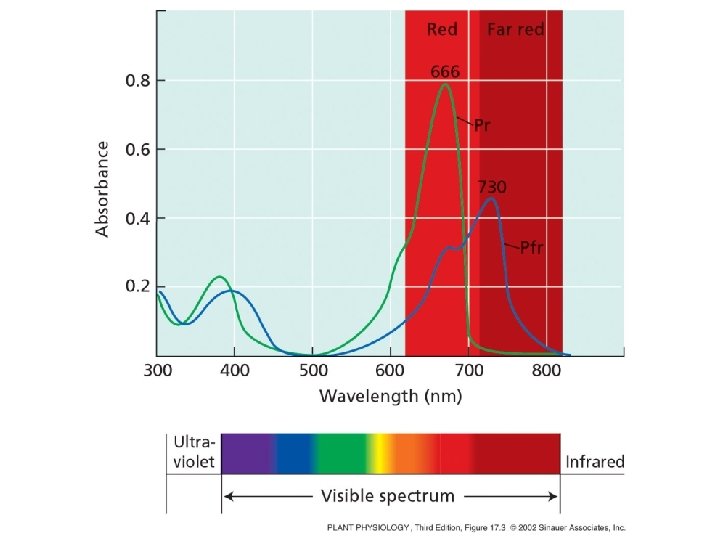
Many phytochrome responses are reversible Absorption of red light will cause a response that is reversed by far red light. Red ≈ 650 - 680 nm Far red ≈ 710 - 740 nm “photoreversible”
"But seeds are invisible. They sleep deep in the heart of the earth's darkness, until some one among them is seized with the desire to awaken. " —Antoine de Saint Exupery, The Little Prince (Harcourt, Brace & World Inc. )
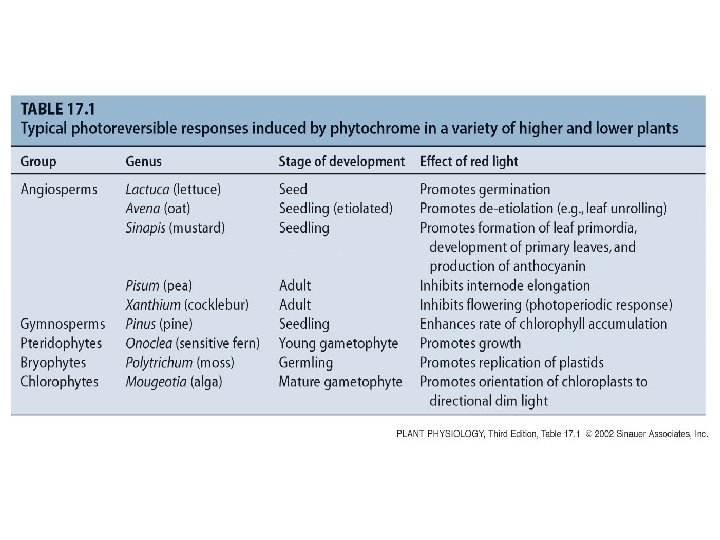
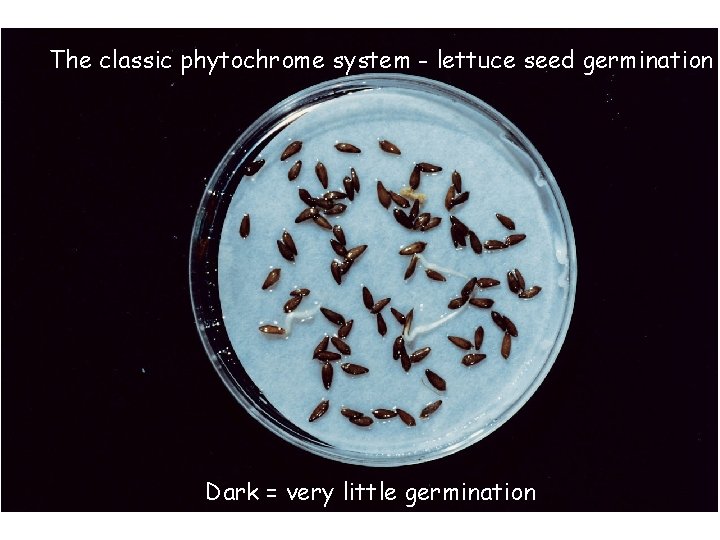
The classic phytochrome system - lettuce seed germination Dark = very little germination
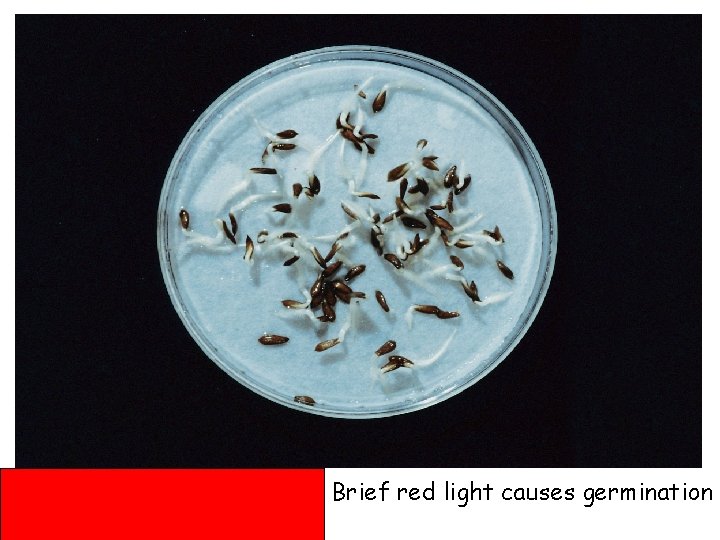
Brief red light causes germination
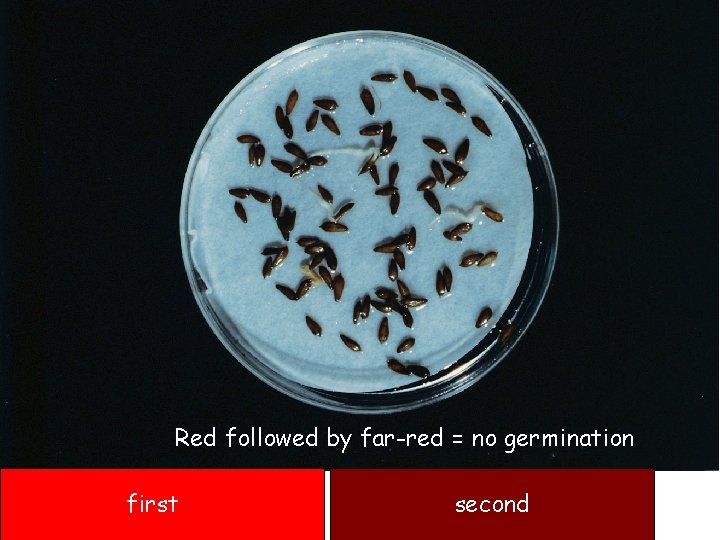
Red followed by far-red = no germination first second
Red then far-red then red again = germination first second third
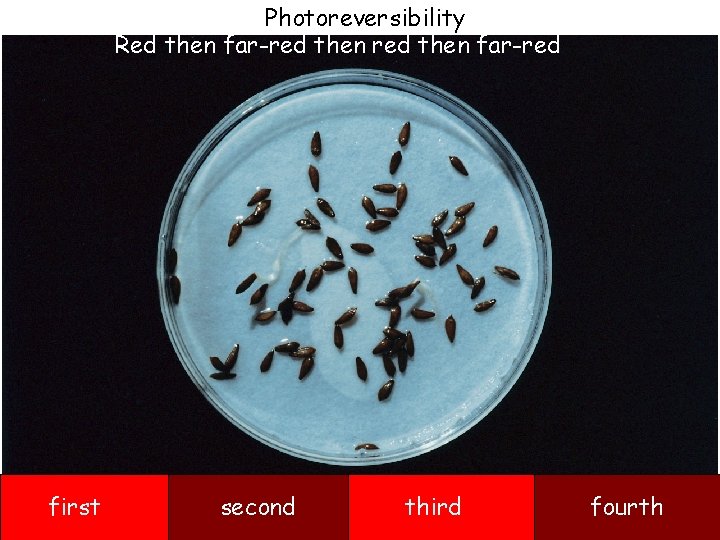
Photoreversibility Red then far-red first second third fourth
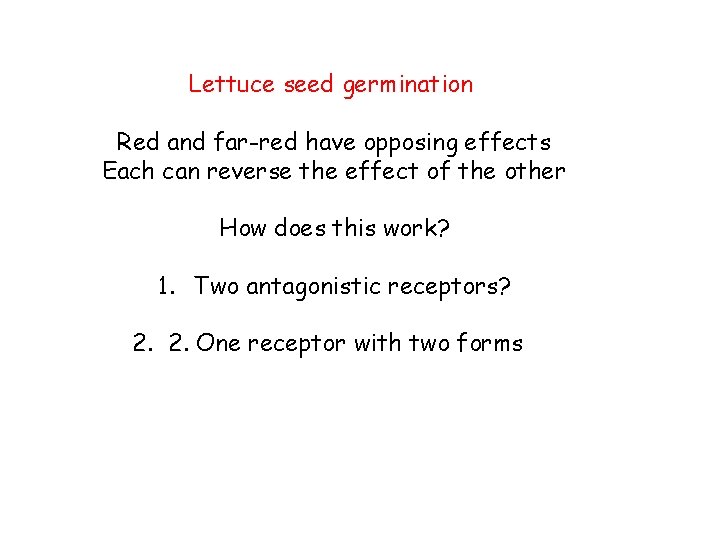
Lettuce seed germination Red and far-red have opposing effects Each can reverse the effect of the other How does this work? 1. Two antagonistic receptors? 2. 2. One receptor with two forms?
Lettuce seed germination Red and far-red have opposing effects Each can reverse the effect of the other How does this work? 1. Two antagonistic receptors 2. 2. One receptor with two forms?
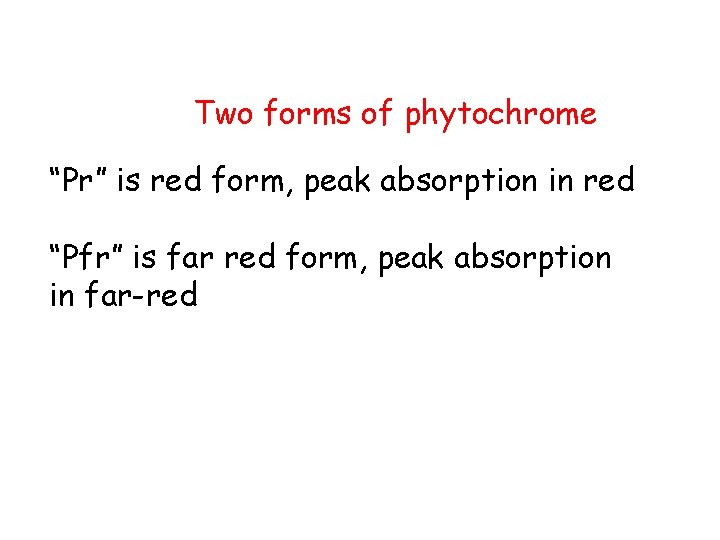
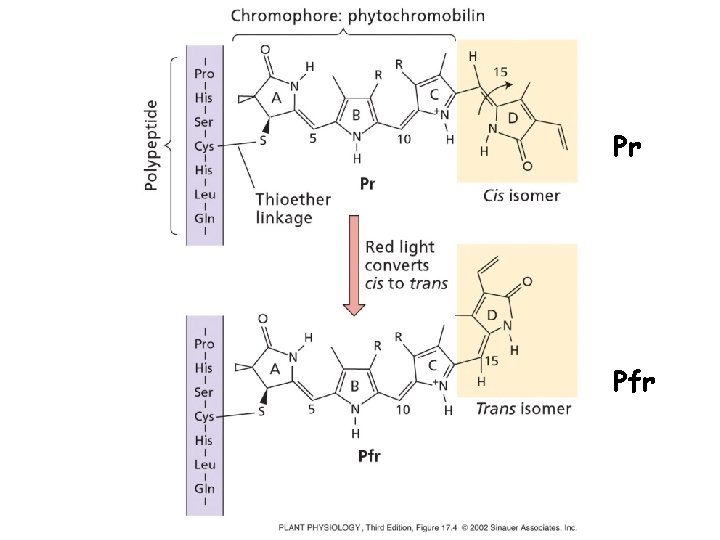
Two forms of phytochrome “Pr” is red form, peak absorption in red “Pfr” is far red form, peak absorption in far-red
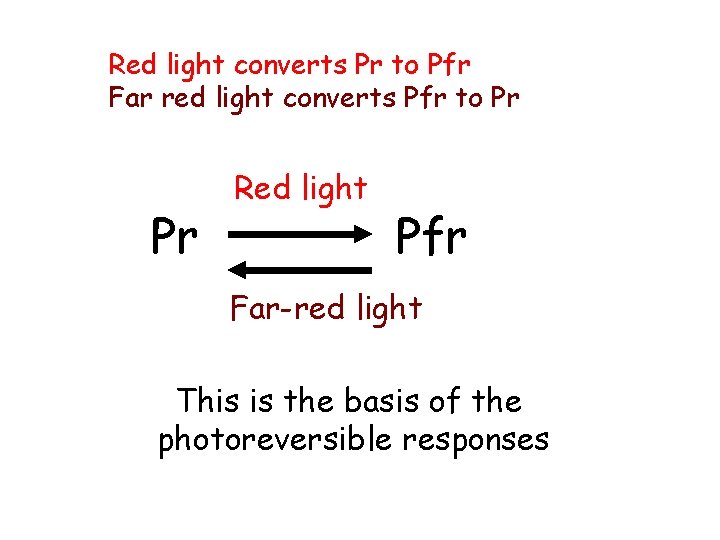
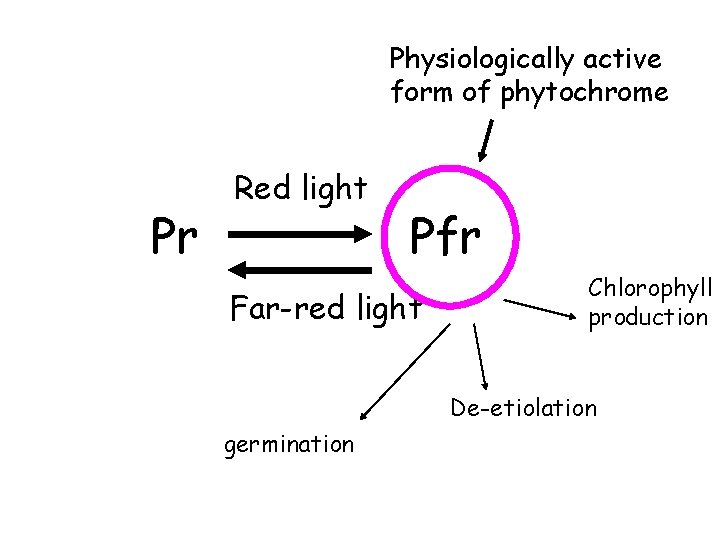
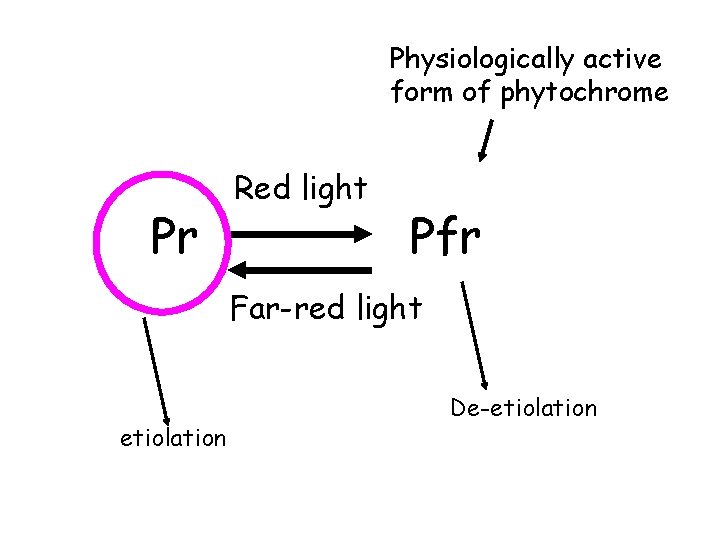
Red light converts Pr to Pfr Far red light converts Pfr to Pr Pr Red light Pfr Far-red light This is the basis of the photoreversible responses
Pr Pfr
Physiologically active form of phytochrome Pr Red light Pfr Far-red light Chlorophyll production De-etiolation germination
Phytochrome location In meristematic regions of etiolated seedlings, areas of active cell division and expansion.
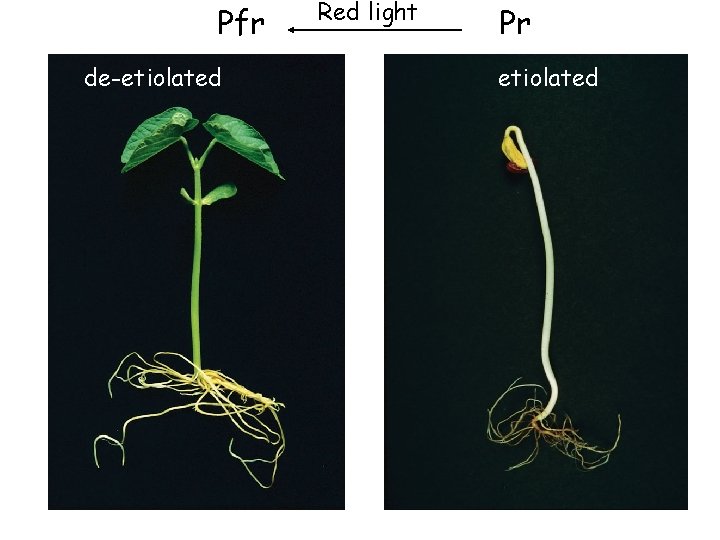
Pfr de-etiolated Red light Pr etiolated
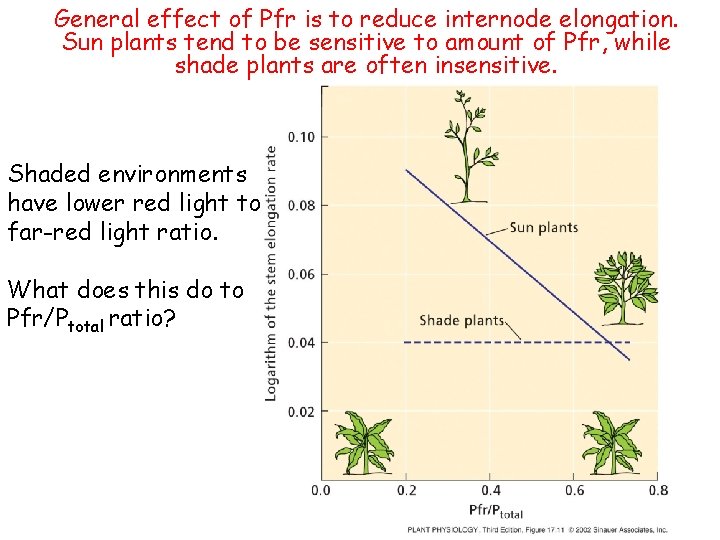
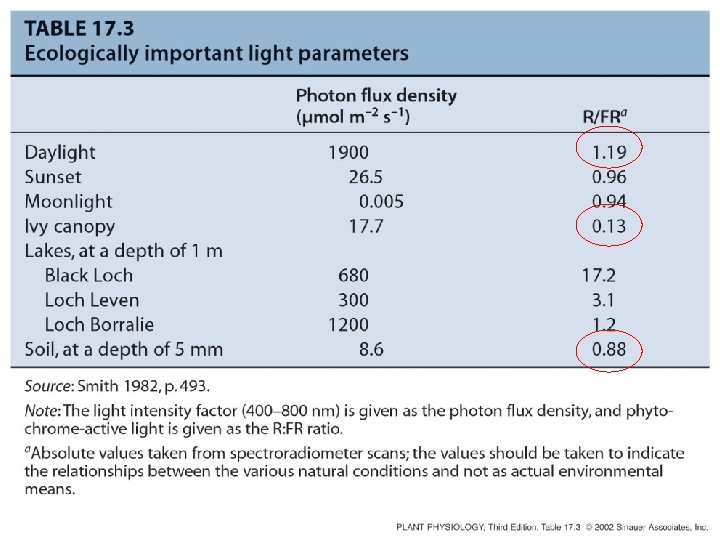
General effect of Pfr is to reduce internode elongation. Sun plants tend to be sensitive to amount of Pfr, while shade plants are often insensitive. Shaded environments have lower red light to far-red light ratio. What does this do to Pfr/Ptotal ratio?
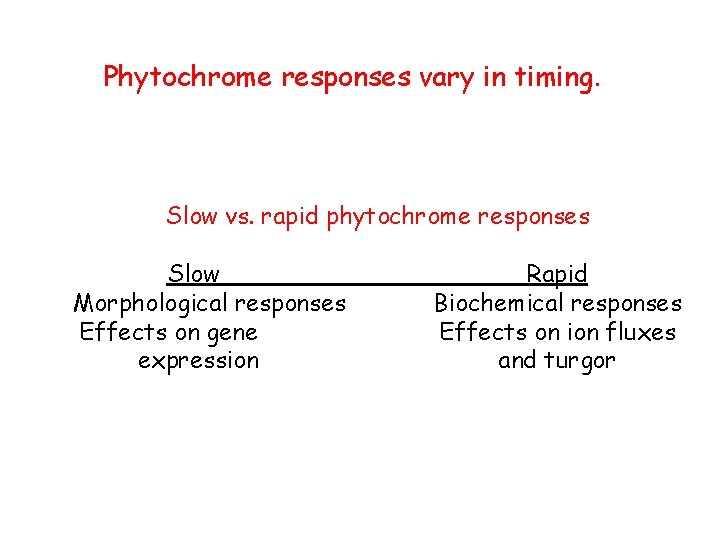
Phytochrome responses vary in timing. Slow vs. rapid phytochrome responses Slow Morphological responses Effects on gene expression Rapid Biochemical responses Effects on ion fluxes and turgor
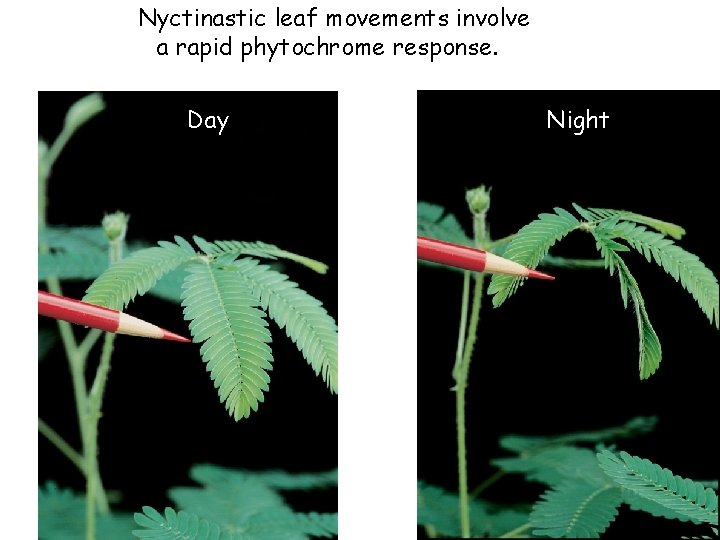
Nyctinastic leaf movements involve a rapid phytochrome response. Day Night
Folding and opening of leaflets involves changes in turgor of two sets of ”motor” cells, the turgor changes being driven by fluxes of K+ and Cl-. Changes in the PMF also involved. Fig. 17. 14
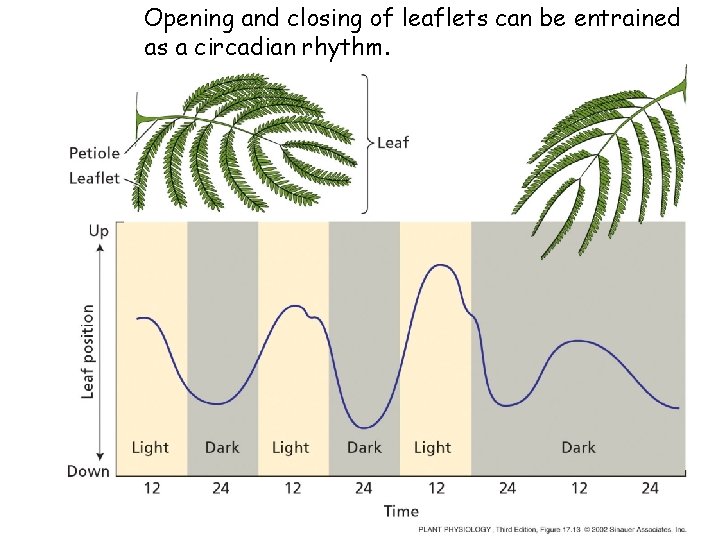
Opening and closing of leaflets can be entrained as a circadian rhythm.
Phytochrome is involved with effects on leaf movement. 1. Red light followed by darkness causes leaflets to close, and this effect can be reversed by far-red light. Example of a rapid response based on an immediate biochemical change. 2. Red/far red treatments influence gene expression of light harvesting proteins, which in turn alters leaf movement responses. Example of a slower response requiring a change in gene expression.
The mechanism of phytochrome-mediated leaf movements Phytochrome (Pfr) regulates H+ pumps and K+ channels of motor cells. Fig. 17. 14
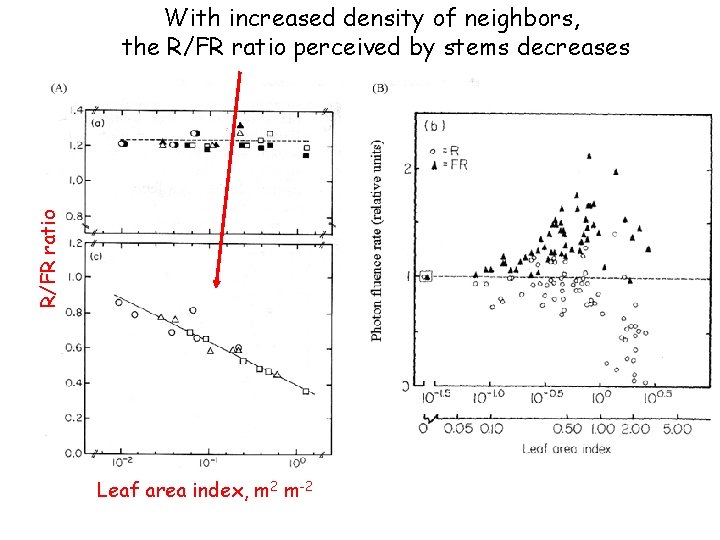
Phytochrome and plant competition: how do plants detect the presence of neighbors that compete for sunlight? Web Essay 17. 2 With increased density of neighbors, the R/FR ratio perceived by stems decreases because of increased FR reflection from leaves and stems.
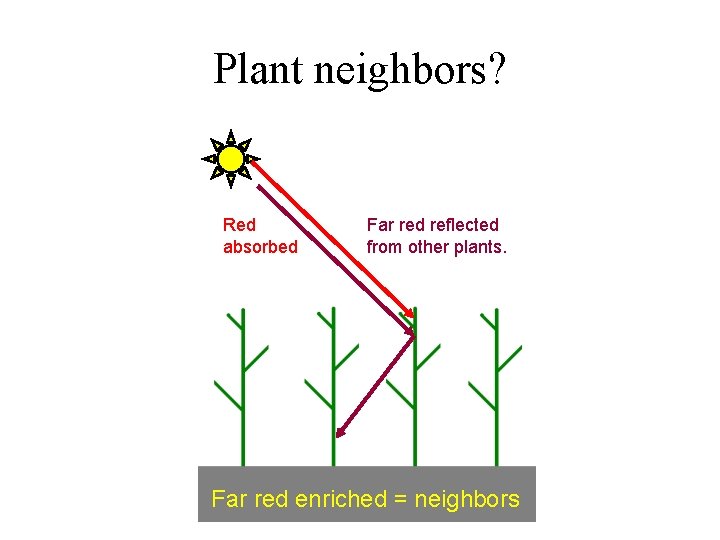
Plant neighbors? Red absorbed Far red reflected from other plants. Far red enriched = neighbors
R/FR ratio With increased density of neighbors, the R/FR ratio perceived by stems decreases i Leaf area index, m 2 m-2
A low R/FR ratio allows internode elongation, a favorable response to potential light competition by neighbors
Physiologically active form of phytochrome Pr Red light Pfr Far-red light etiolation De-etiolation
The effect of FR reflection by neighboring plants can be simulated using mirrors that selectively reflect Red or Far Red light. As for reflection by plants, FR reflection increases internode elongation. Recall that this is because little of the Pfr form is then present to inhibit internode elongation
Filtering out the FR light received by the stem reduces internode elongation at high densities of neighboring plants.
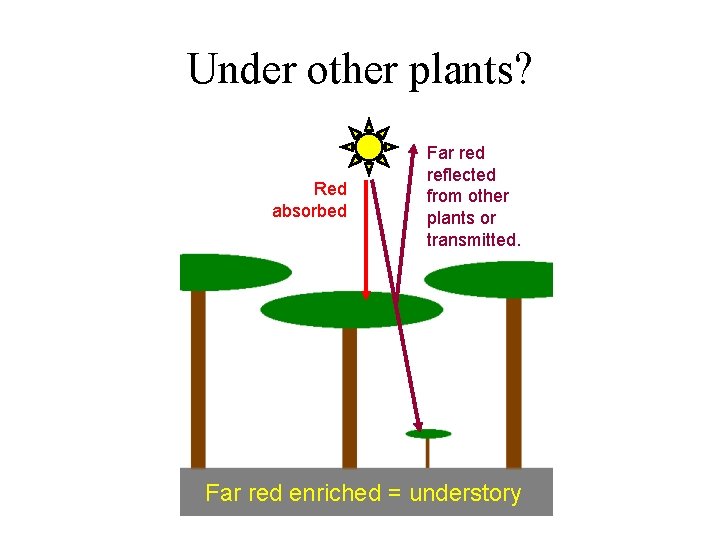
Under other plants? Red absorbed Far red reflected from other plants or transmitted. Far red enriched = understory
Phytochrome and flowering. When is the right time to flower? • Unreliable indicators of time of year – Temperature – Moisture – Light levels • Reliable: length of day/night – Varies with season – Varies with latitude • Detected by phytochrome
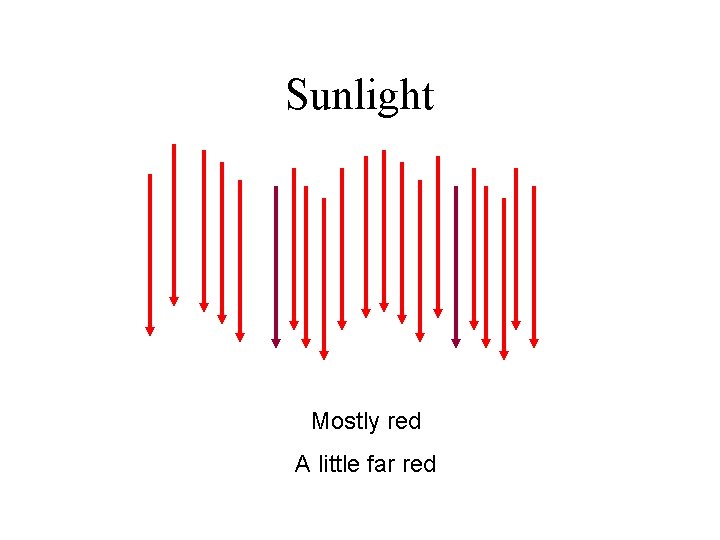
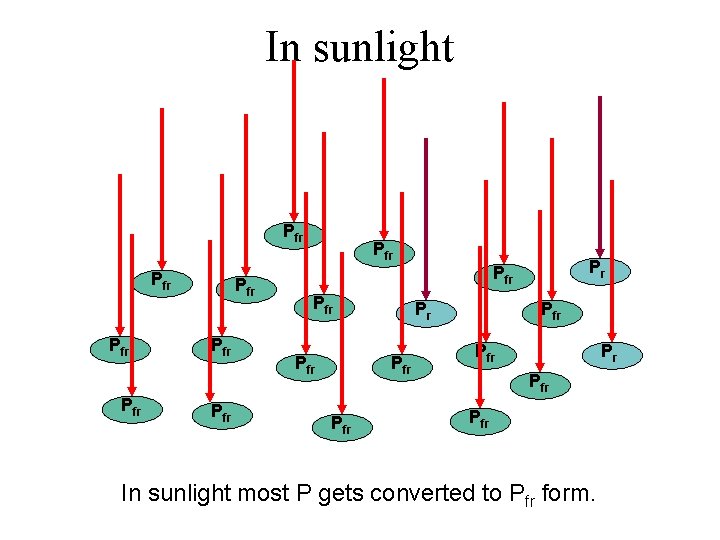
Sunlight Mostly red A little far red
In sunlight Prfr Pfr Pr Pfr Prfr Pfr Prfr Pfrr Pfr In sunlight most P gets converted to Pfr form.
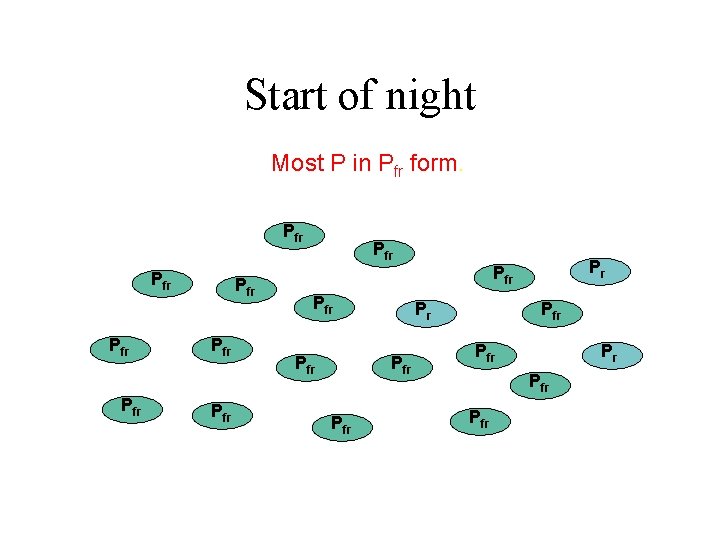
Start of night Most P in Pfr form. Prfr Pfr Pr Pfr Prfr Pfr Prfr Pfrr Pfr
In the dark Pfr form changes gradually to Pr form. Prfr Pfr Pfr Prfr Prfr Prfr Pfrr Prfr
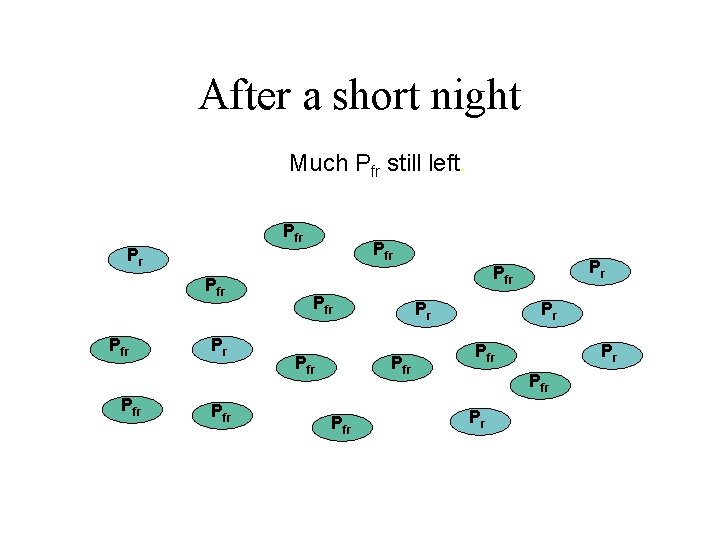
After a short night Much Pfr still left. Prfr Pfr Pfr Prfr Prfr Prfr Pfrr Prfr
Long day plant = Short night plants • Needs short night to flower • Needs Pfr still present at end of night • Pfr promotes flowering for LDPs
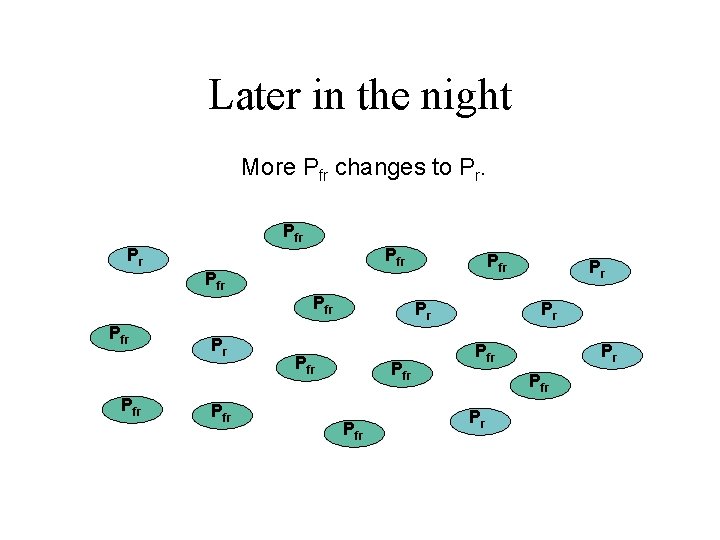
Later in the night More Pfr changes to Pr. Prfr Pfr Pfr Prfr Prfr Pfr Pr Prfr Pfrr Prfr
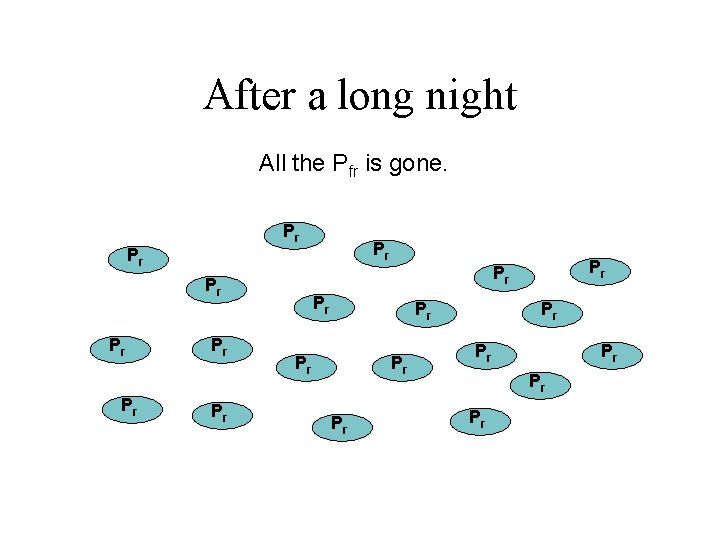
After a long night All the Pfr is gone. Prfr Prfr Prfr Prfr Prfr
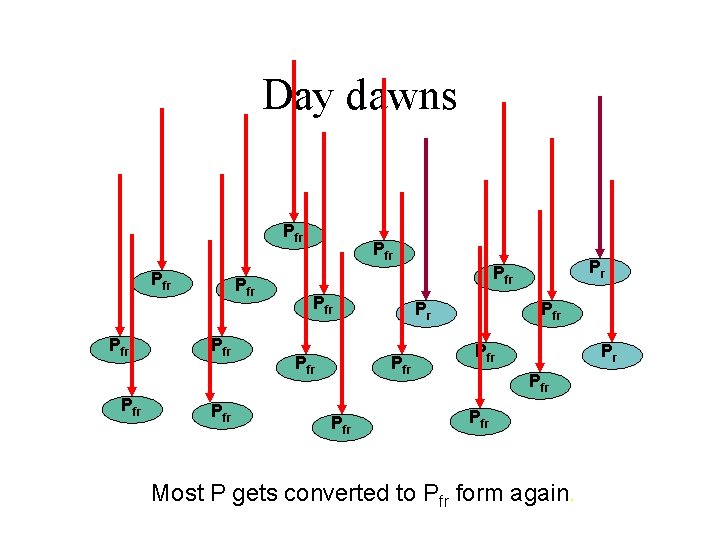
Day dawns Prfr Pfr Pr Pfr Prfr Pfr Prfr Pfrr Pfr Most P gets converted to Pfr form again.
Short day plant = Long night plant • Needs long night • Needs Pfr gone at end of night • Pfr inhibits flowering for SDPs Can trick a SDP into not flowering with a brief flash of red light during the long night, this resets much of its phytochrome to Pfr form.
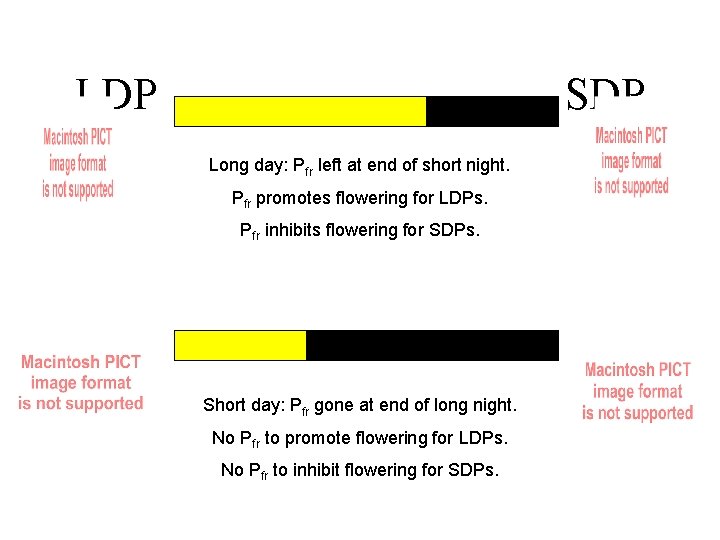
LDP SDP Long day: Pfr left at end of short night. Pfr promotes flowering for LDPs. Pfr inhibits flowering for SDPs. Short day: Pfr gone at end of long night. No Pfr to promote flowering for LDPs. No Pfr to inhibit flowering for SDPs.
Waiting for the right time • Plants grow leaves until it is time to flower • LDPs wait until the day is long enough – Really night short enough – Some time before June 21 • SPDs wait until the day is short enough – Really night long enough – Some time after June 21 • Flower opening happens later
Day neutral plants • Flower when mature enough • Maybe other environmental signals (temp? ) • Day length (dark length) doesn’t matter