Lesson 49 Physical Properties of Matter Day 1
- Slides: 19
Lesson 49 Physical Properties of Matter Day 1
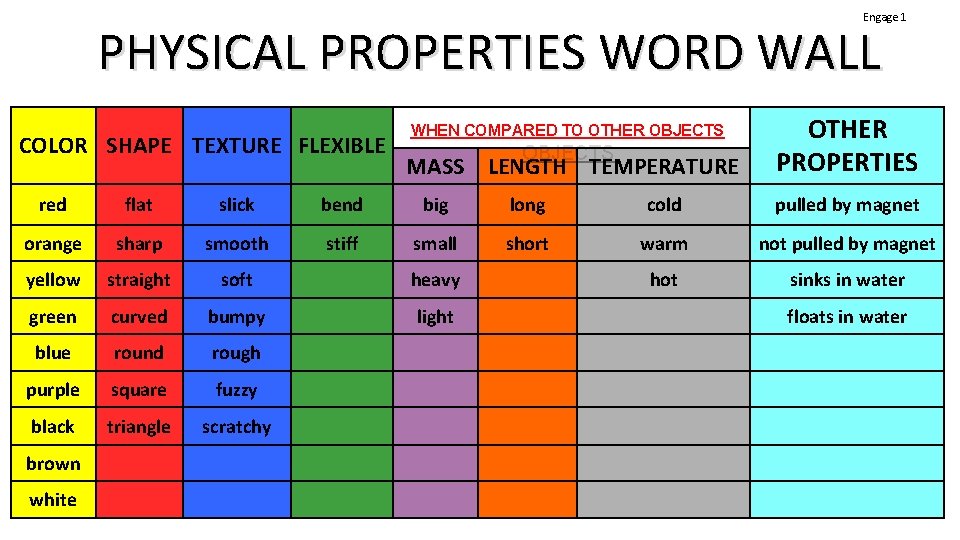
Engage 1 PHYSICAL PROPERTIES WORD WALL COLOR SHAPE TEXTURE FLEXIBLE WHEN COMPARED TO OTHER OBJECTS MASS LENGTH TEMPERATURE OTHER PROPERTIES red flat slick bend big long cold pulled by magnet orange sharp smooth stiff small short warm not pulled by magnet yellow straight soft heavy hot sinks in water green curved bumpy light blue round rough purple square fuzzy black triangle scratchy brown white floats in water
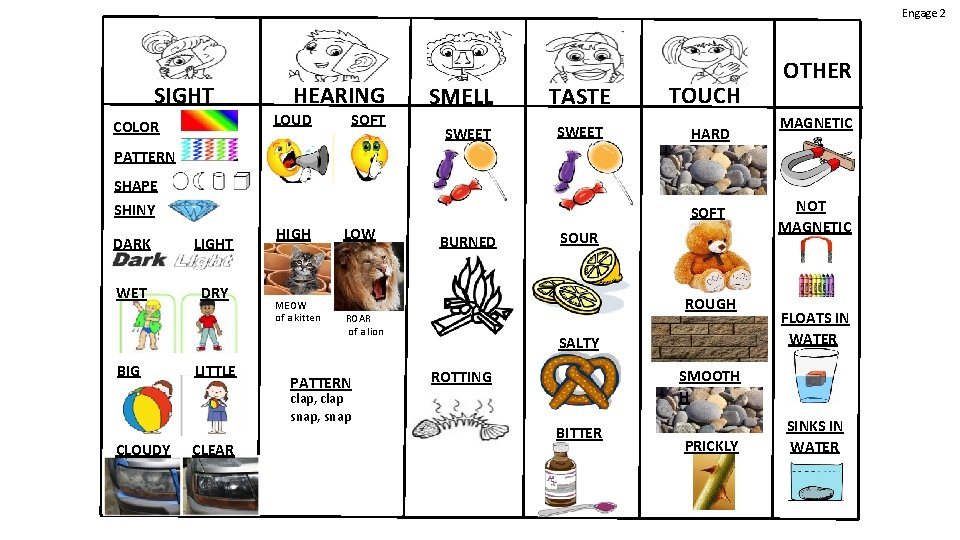
Engage 2 SIGHT COLOR HEARING LOUD SOFT SMELL SWEET TASTE SWEET TOUCH HARD OTHER MAGNETIC PATTERN SHAPE SHINY DARK LIGHT WET DRY BIG LITTLE SOFT HIGH LOW MEOW of a kitten PATTERN SOUR ROUGH ROAR of a lion clap, clap snap, snap CLOUDY CLEAR BURNED SALTY SMOOTH H ROTTING BITTER PRICKLY NOT MAGNETIC FLOATS IN WATER SINKS IN WATER
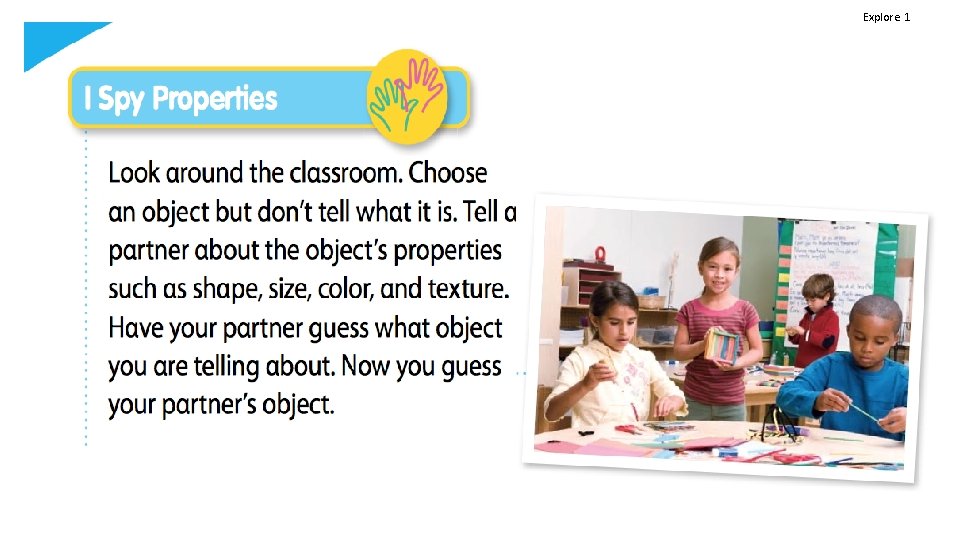
Explore 1
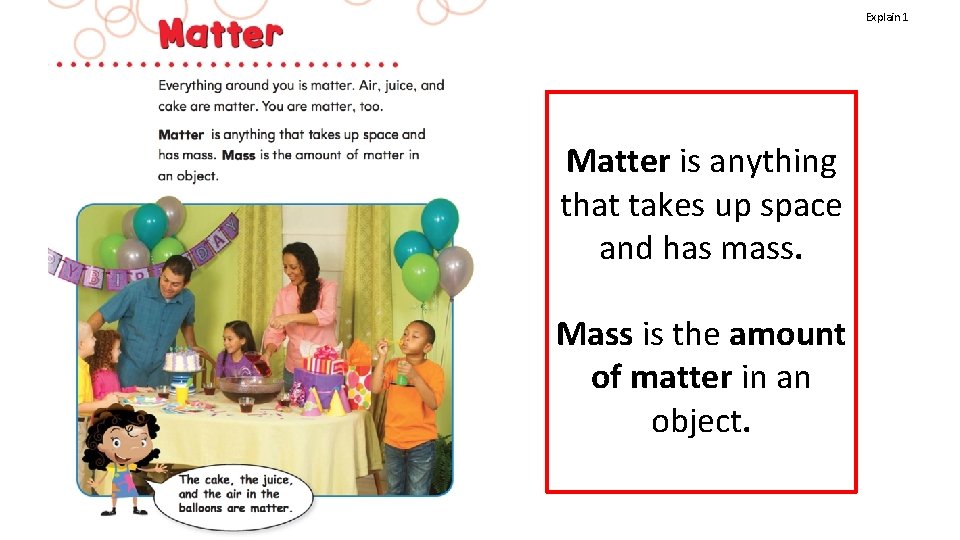
Explain 1 Matter is anything that takes up space and has mass. Mass is the amount of matter in an object.
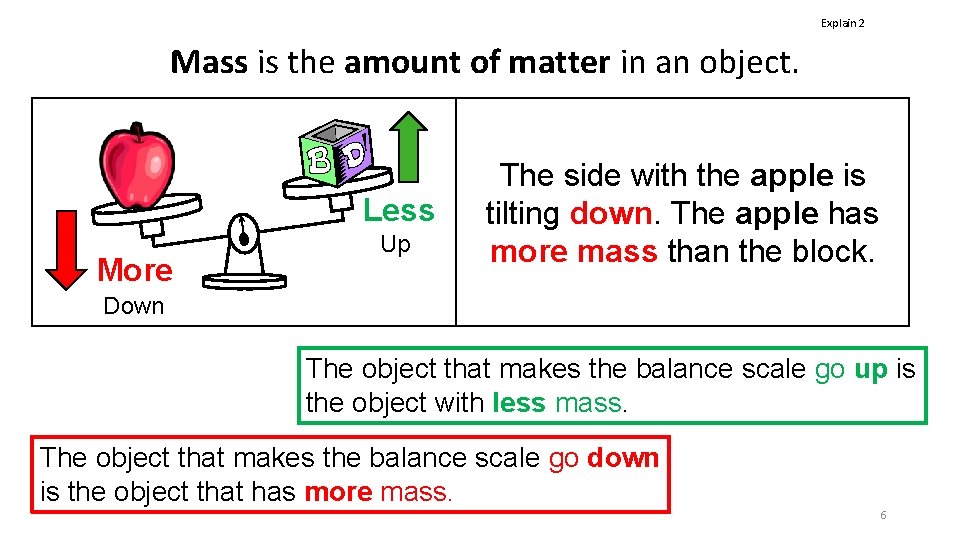
Explain 2 Mass is the amount of matter in an object. Less More Up The side with the apple is tilting down. The apple has more mass than the block. Down The object that makes the balance scale go up is the object with less mass. The object that makes the balance scale go down is the object that has more mass. 6
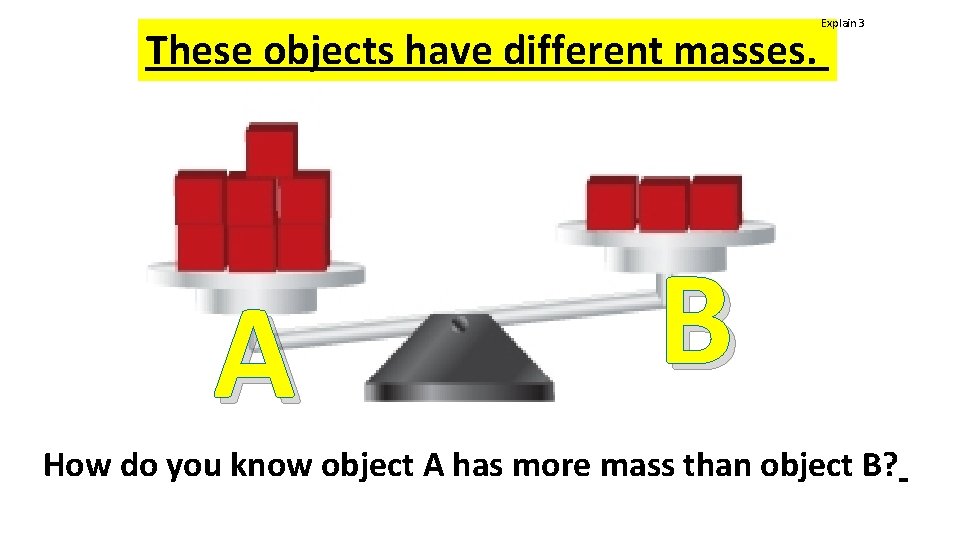
Explain 3 These objects have different masses. A B How do you know object A has more mass than object B?
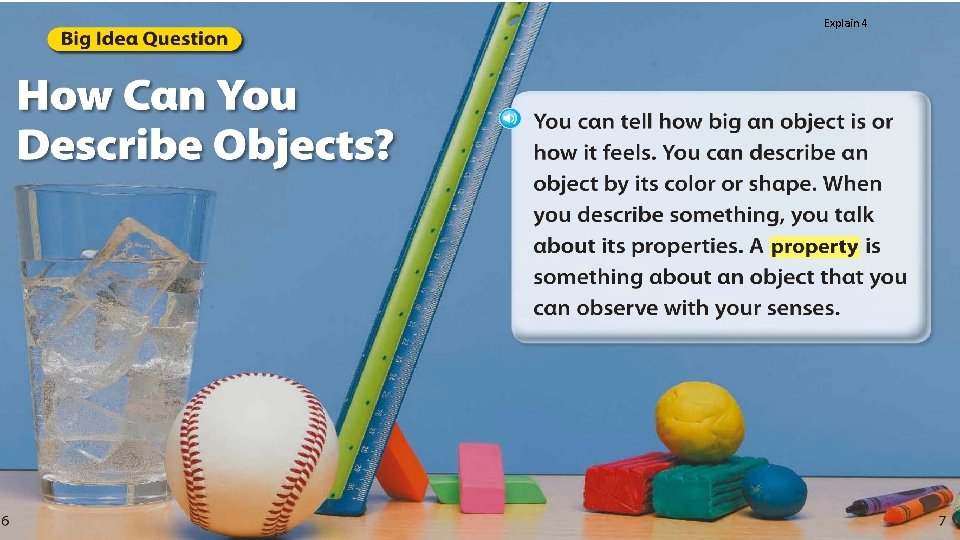
Explain 4
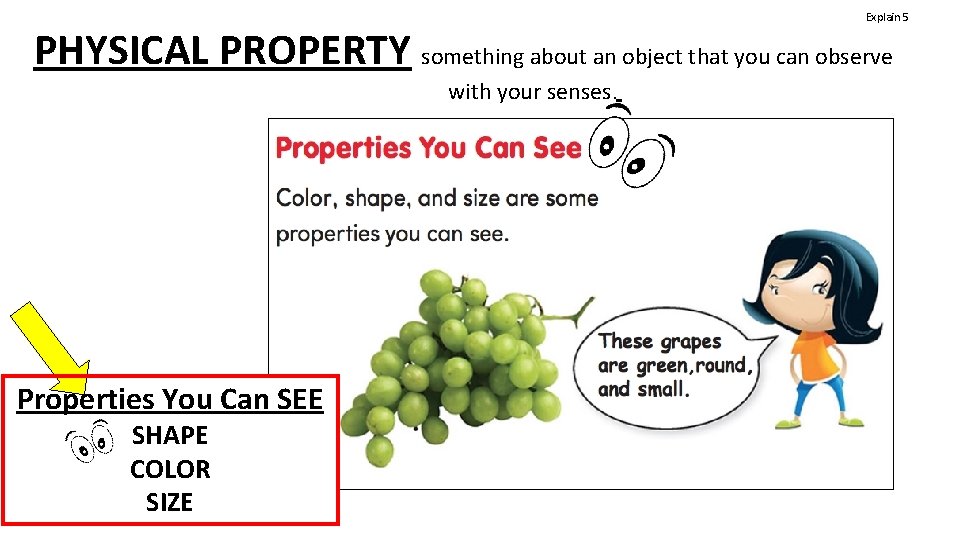
Explain 5 PHYSICAL PROPERTY something about an object that you can observe with your senses. Properties You Can SEE SHAPE COLOR SIZE
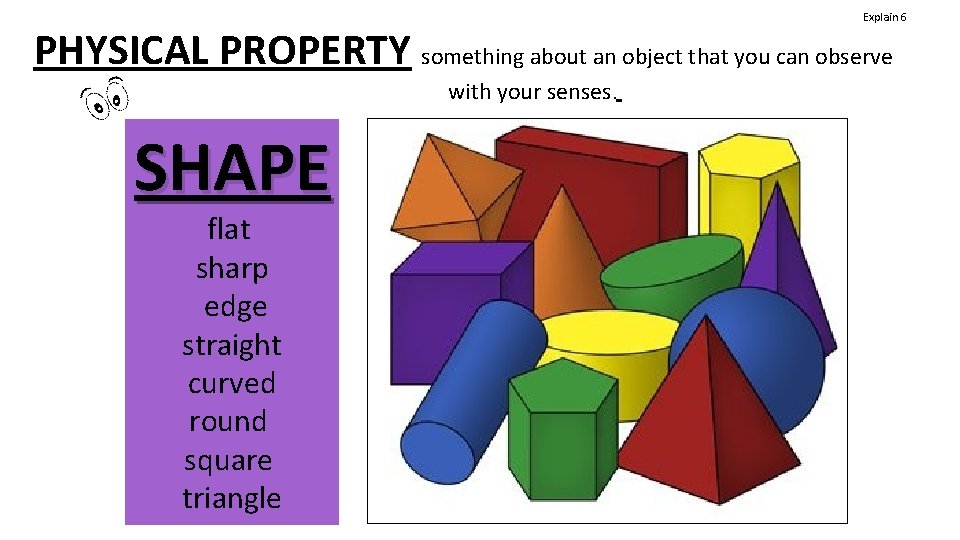
Explain 6 PHYSICAL PROPERTY something about an object that you can observe with your senses. SHAPE flat sharp edge straight curved round square triangle
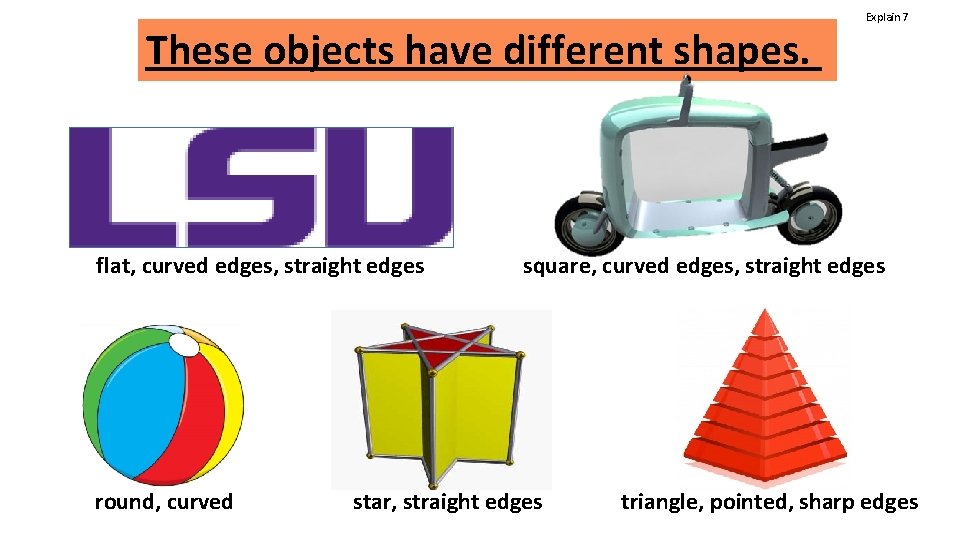
These objects have different shapes. flat, curved edges, straight edges round, curved Explain 7 square, curved edges, straight edges star, straight edges triangle, pointed, sharp edges
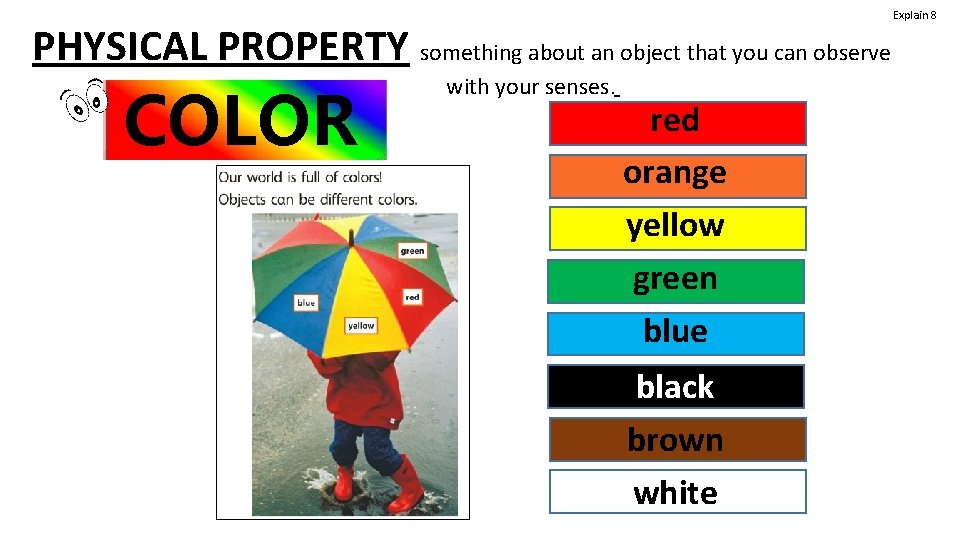
PHYSICAL PROPERTY something about an object that you can observe COLOR with your senses. red orange yellow green blue black brown white Explain 8
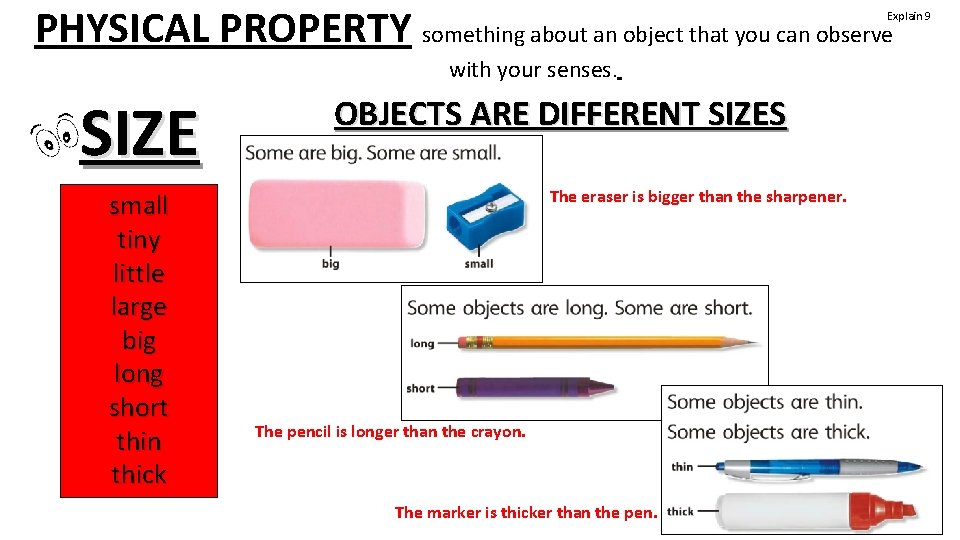
PHYSICAL PROPERTY something about an object that you can observe Explain 9 with your senses. SIZE small tiny little large big long short thin thick OBJECTS ARE DIFFERENT SIZES The eraser is bigger than the sharpener. The pencil is longer than the crayon. The marker is thicker than the pen.
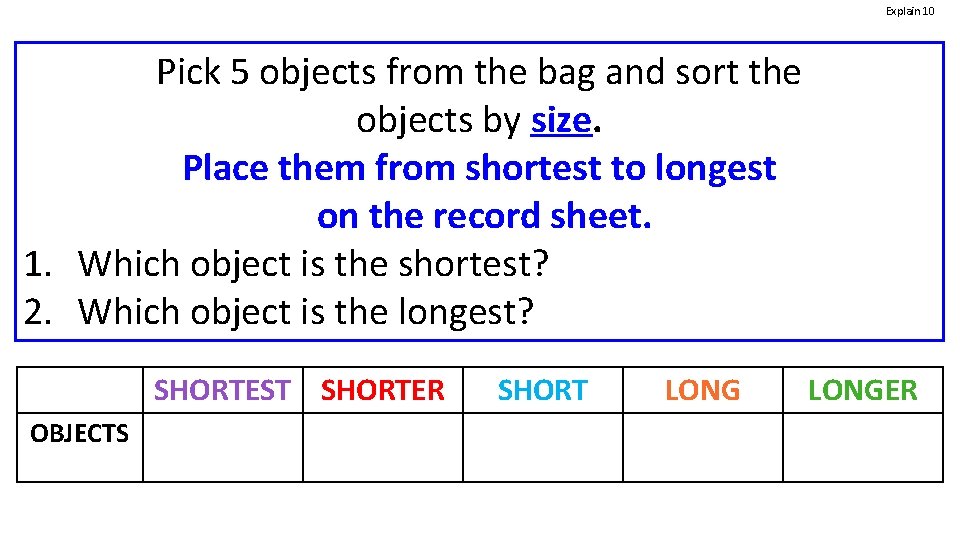
Explain 10 Pick 5 objects from the bag and sort the objects by size. Place them from shortest to longest on the record sheet. 1. Which object is the shortest? 2. Which object is the longest? SHORTEST SHORTER OBJECTS SHORT LONGER
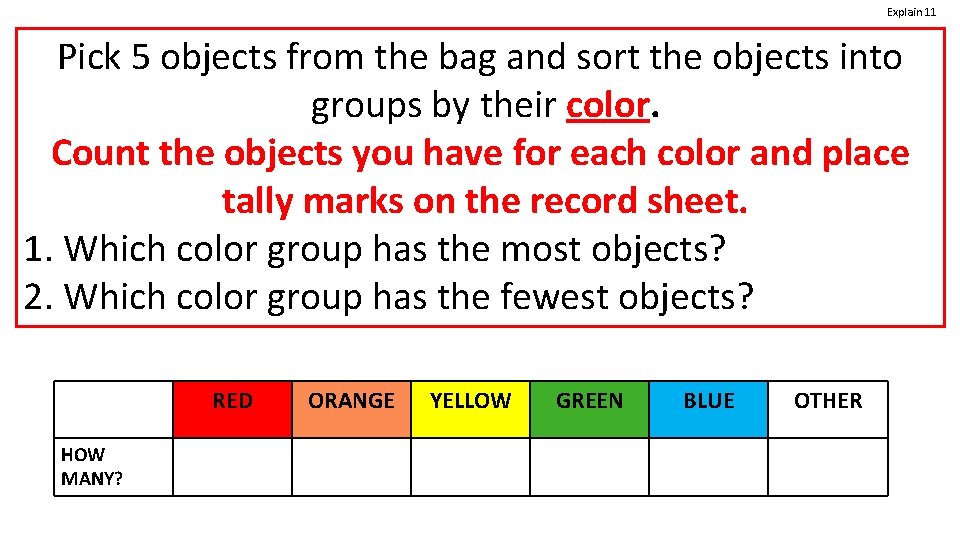
Explain 11 Pick 5 objects from the bag and sort the objects into groups by their color. Count the objects you have for each color and place tally marks on the record sheet. 1. Which color group has the most objects? 2. Which color group has the fewest objects? RED HOW MANY? ORANGE YELLOW GREEN BLUE OTHER
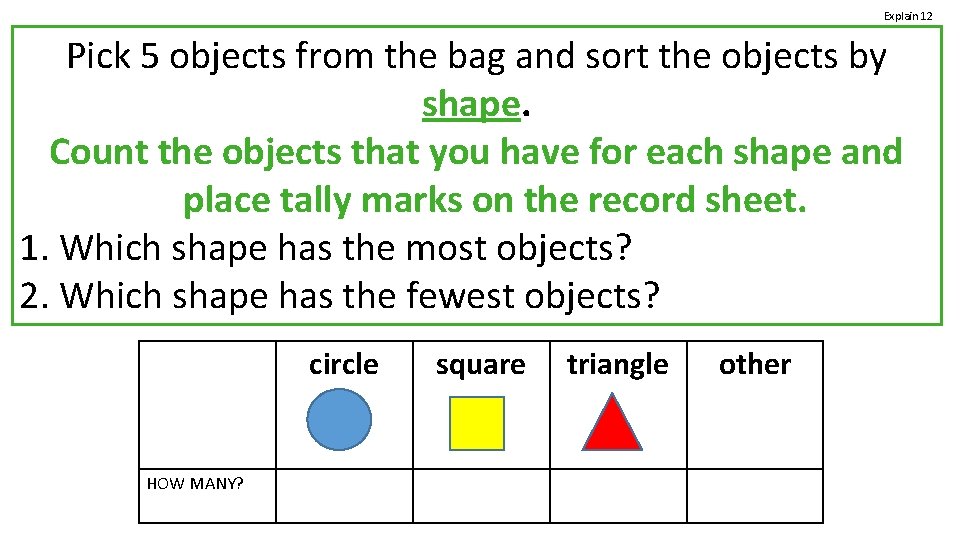
Explain 12 Pick 5 objects from the bag and sort the objects by shape. Count the objects that you have for each shape and place tally marks on the record sheet. 1. Which shape has the most objects? 2. Which shape has the fewest objects? circle HOW MANY? square triangle other
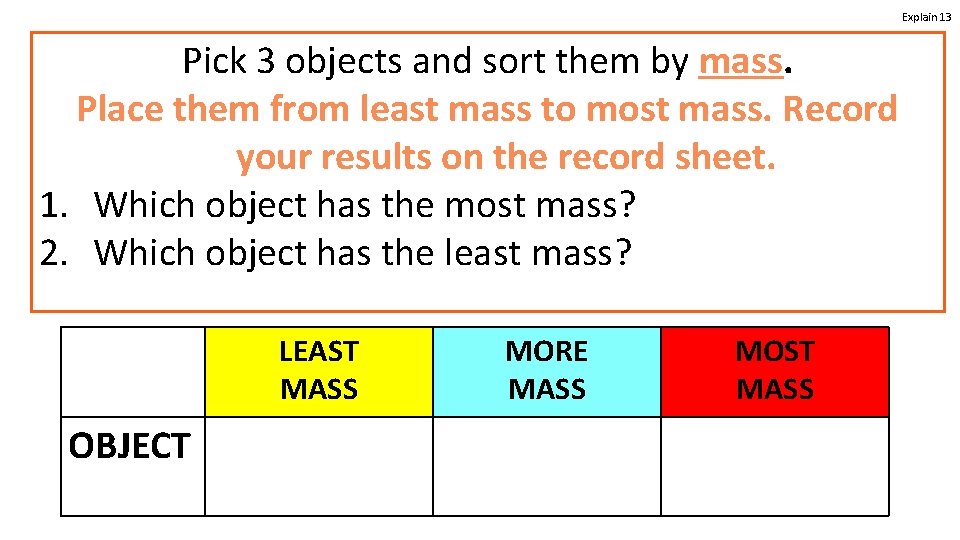
Explain 13 Pick 3 objects and sort them by mass. Place them from least mass to most mass. Record your results on the record sheet. 1. Which object has the most mass? 2. Which object has the least mass? LEAST MASS OBJECT MORE MASS MOST MASS
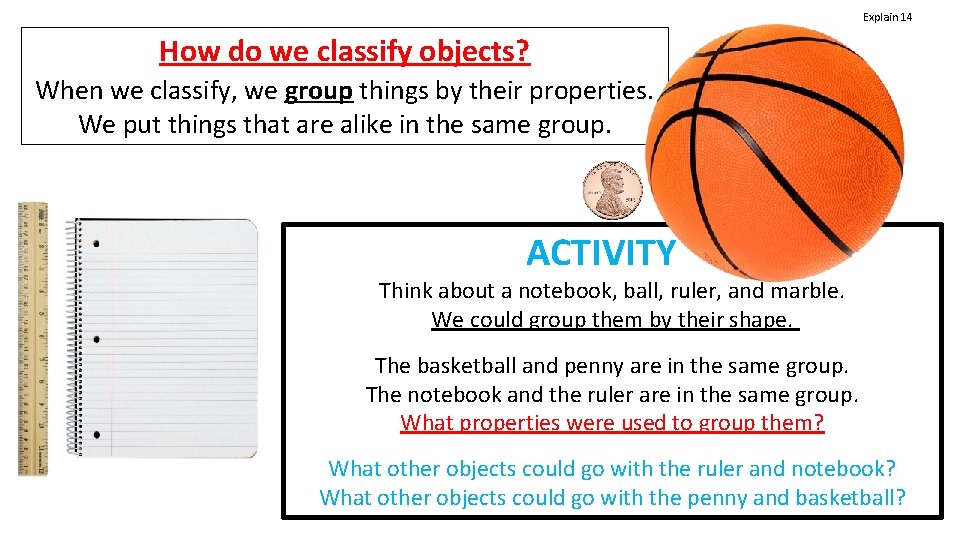
Explain 14 How do we classify objects? When we classify, we group things by their properties. We put things that are alike in the same group. ACTIVITY Think about a notebook, ball, ruler, and marble. We could group them by their shape. The basketball and penny are in the same group. The notebook and the ruler are in the same group. What properties were used to group them? What other objects could go with the ruler and notebook? What other objects could go with the penny and basketball?
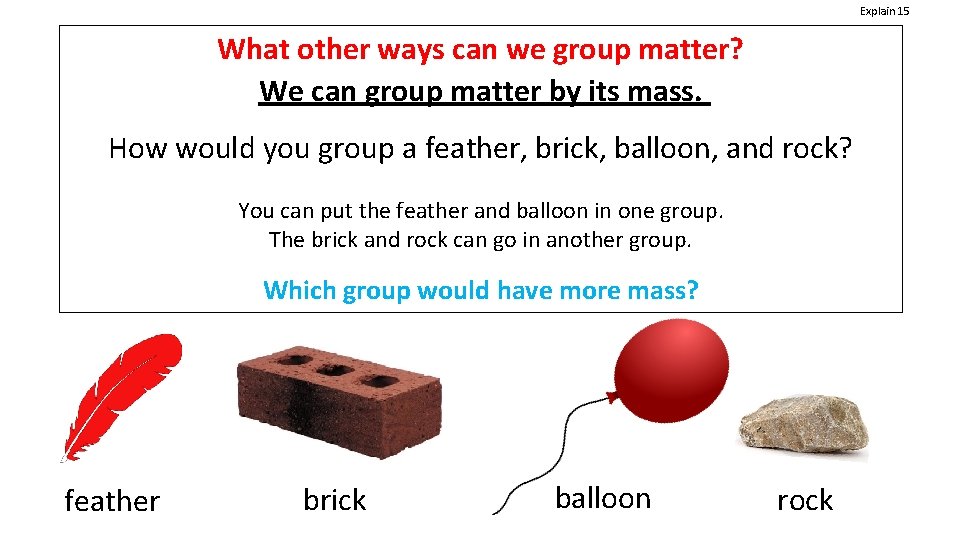
Explain 15 What other ways can we group matter? We can group matter by its mass. How would you group a feather, brick, balloon, and rock? You can put the feather and balloon in one group. The brick and rock can go in another group. Which group would have more mass? feather brick balloon rock