Lectures 13 Design Theory II Professor Xiannong Meng

- Slides: 20
Lectures 13: Design Theory II Professor Xiannong Meng Spring 2018 Lecture and activity contents are based on what Prof Chris Ré used in his CS 145 in the fall 2016 term with permission
2. Finding functional dependencies 2
What you will learn about in this section 1. “Good” vs. “Bad” FDs: Intuition 2. Finding FDs 3. Closures 4. ACTIVITY: Compute the closures 3
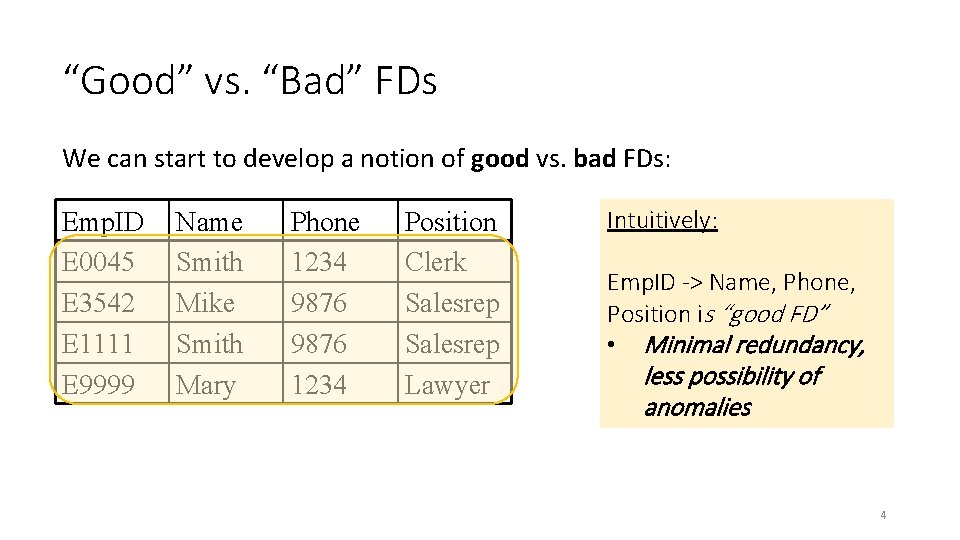
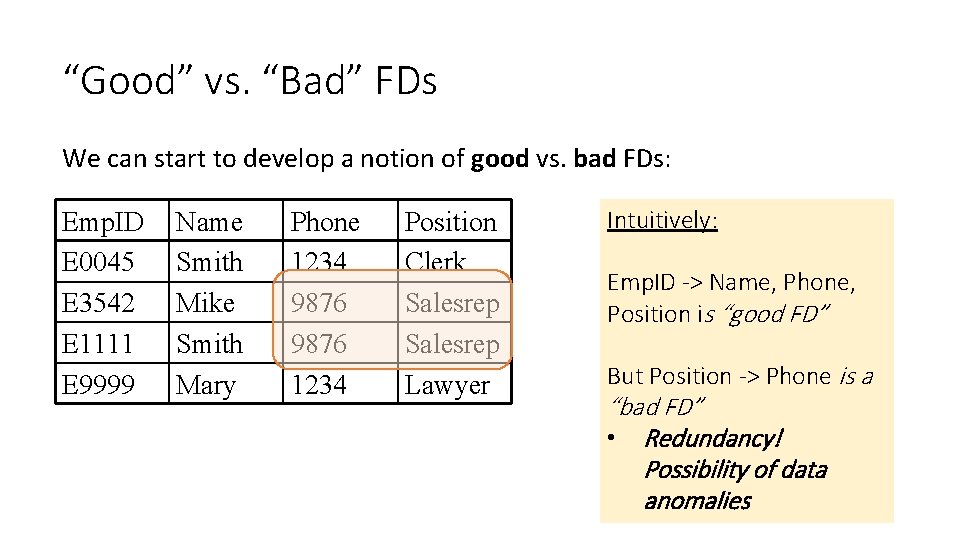
“Good” vs. “Bad” FDs We can start to develop a notion of good vs. bad FDs: Emp. ID E 0045 E 3542 E 1111 E 9999 Name Smith Mike Smith Mary Phone 1234 9876 1234 Position Clerk Salesrep Lawyer Intuitively: Emp. ID -> Name, Phone, Position is “good FD” • Minimal redundancy, less possibility of anomalies 4
“Good” vs. “Bad” FDs We can start to develop a notion of good vs. bad FDs: Emp. ID E 0045 E 3542 E 1111 E 9999 Name Smith Mike Smith Mary Phone 1234 9876 1234 Position Clerk Salesrep Lawyer Intuitively: Emp. ID -> Name, Phone, Position is “good FD” But Position -> Phone is a “bad FD” • Redundancy! Possibility of data anomalies 5
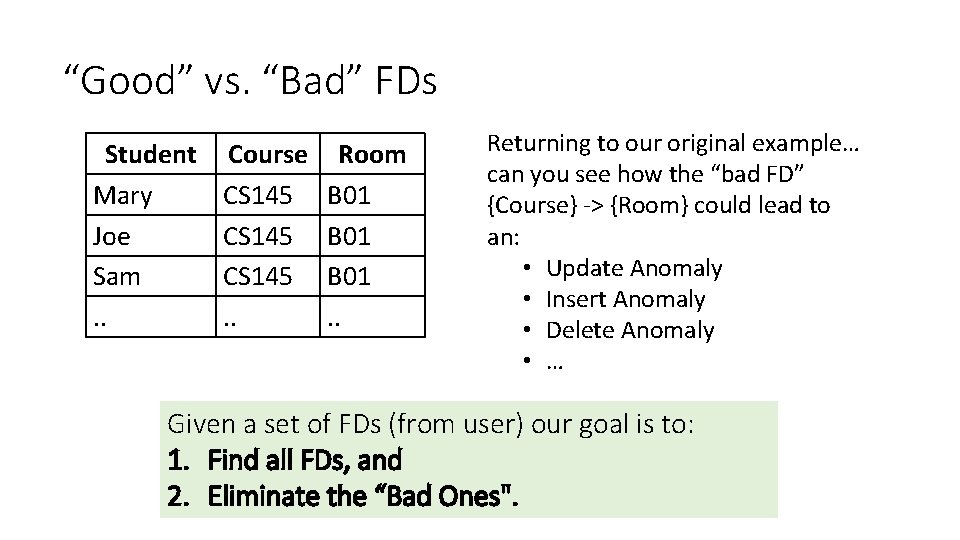
“Good” vs. “Bad” FDs Student Mary Joe Sam. . Course CS 145. . Room B 01. . Returning to our original example… can you see how the “bad FD” {Course} -> {Room} could lead to an: • Update Anomaly • Insert Anomaly • Delete Anomaly • … Given a set of FDs (from user) our goal is to: 1. Find all FDs, and 2. Eliminate the “Bad Ones".
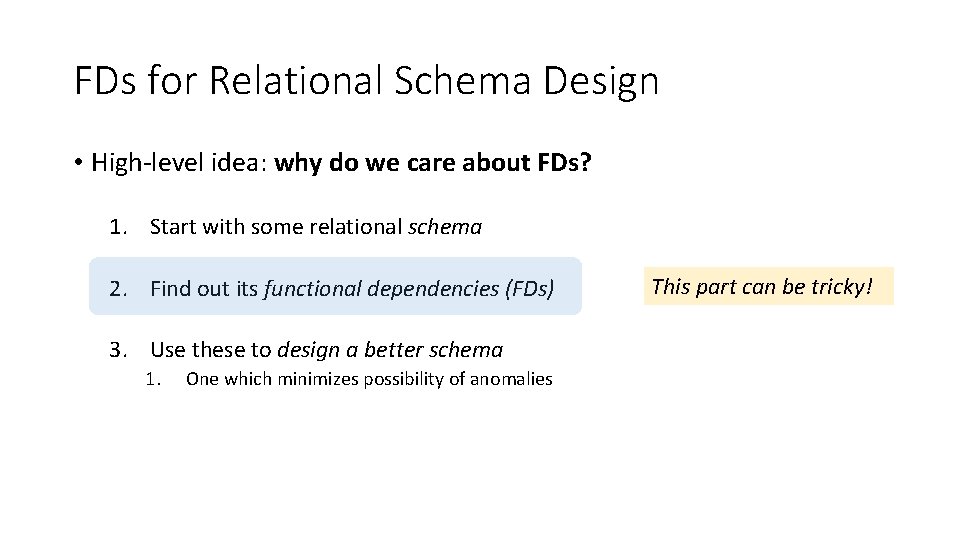
FDs for Relational Schema Design • High-level idea: why do we care about FDs? 1. Start with some relational schema 2. Find out its functional dependencies (FDs) 3. Use these to design a better schema 1. One which minimizes possibility of anomalies This part can be tricky!
Finding Functional Dependencies • There can be a very large number of FDs… • How to find them all efficiently? • We can’t necessarily show that any FD will hold on all instances… • How to do this? We will start with this problem: Given a set of FDs, F, what other FDs must hold?
Finding Functional Dependencies Equivalent to asking: Given a set of FDs, F = {f 1, …fn}, does an FD g hold? Inference problem: How do we decide?
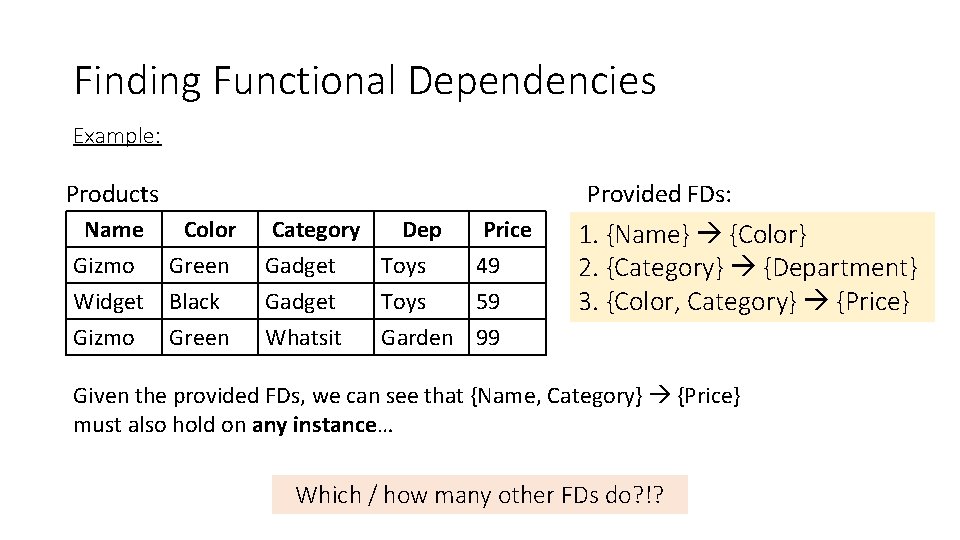
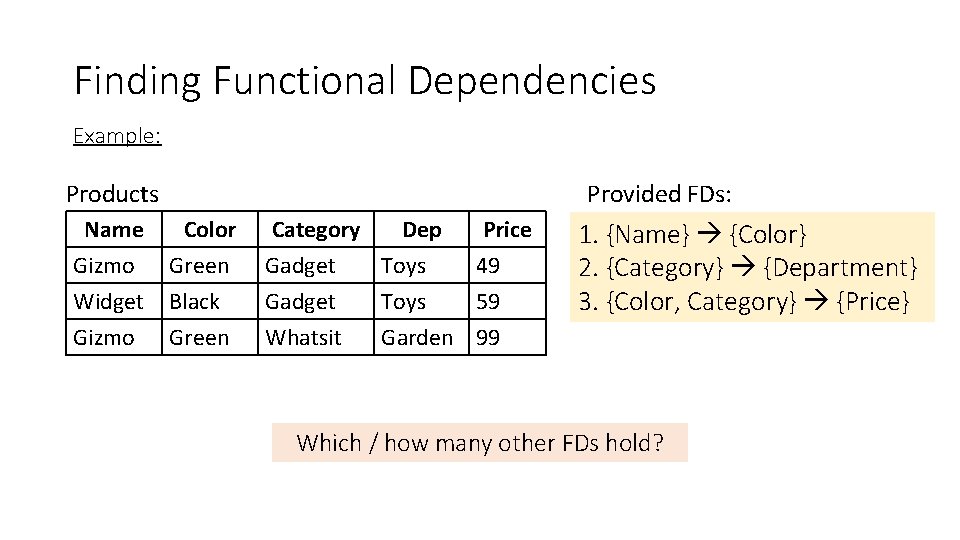
Finding Functional Dependencies Example: Products Name Gizmo Widget Gizmo Provided FDs: Color Green Black Green Category Dep Price Gadget Toys 49 Gadget Toys 59 Whatsit Garden 99 1. {Name} {Color} 2. {Category} {Department} 3. {Color, Category} {Price} Given the provided FDs, we can see that {Name, Category} {Price} must also hold on any instance… Which / how many other FDs do? !?
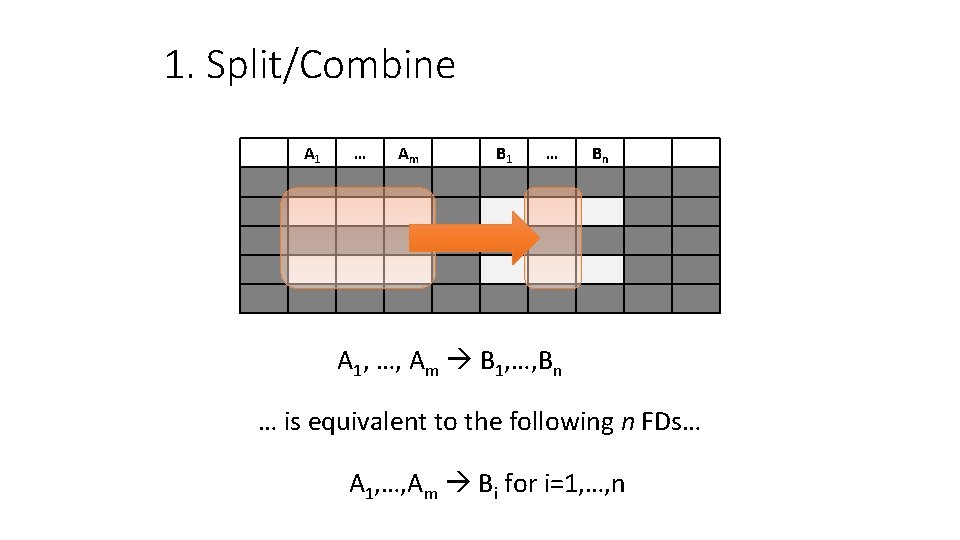
Finding Functional Dependencies Equivalent to asking: Given a set of FDs, F = {f 1, …fn}, does an FD g hold? Inference problem: How do we decide? Answer: Three simple rules called Armstrong’s Rules. 1. Split/Combine, 2. Reduction, and 3. Transitivity… ideas by picture
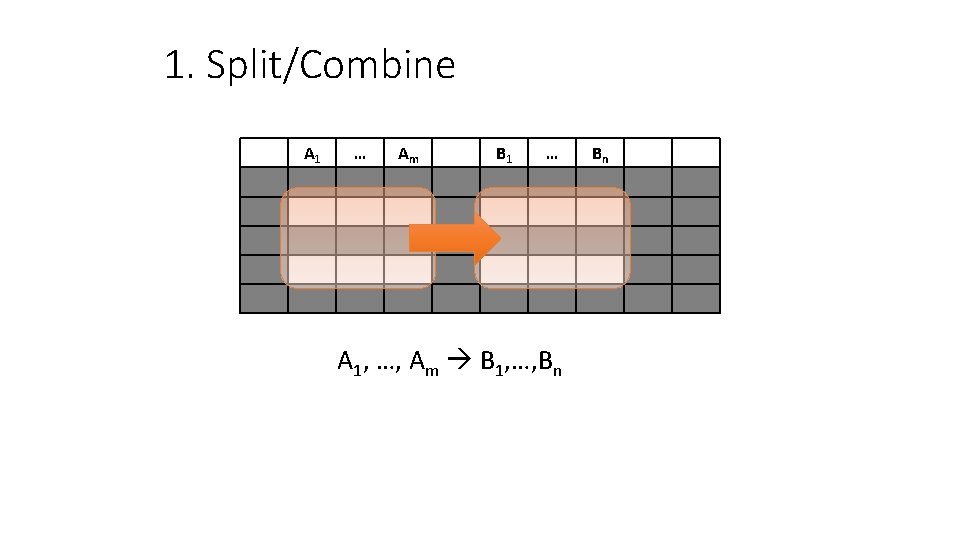
1. Split/Combine A 1 … Am B 1 … A 1, …, Am B 1, …, Bn Bn
1. Split/Combine A 1 … Am B 1 … Bn A 1, …, Am B 1, …, Bn … is equivalent to the following n FDs… A 1, …, Am Bi for i=1, …, n
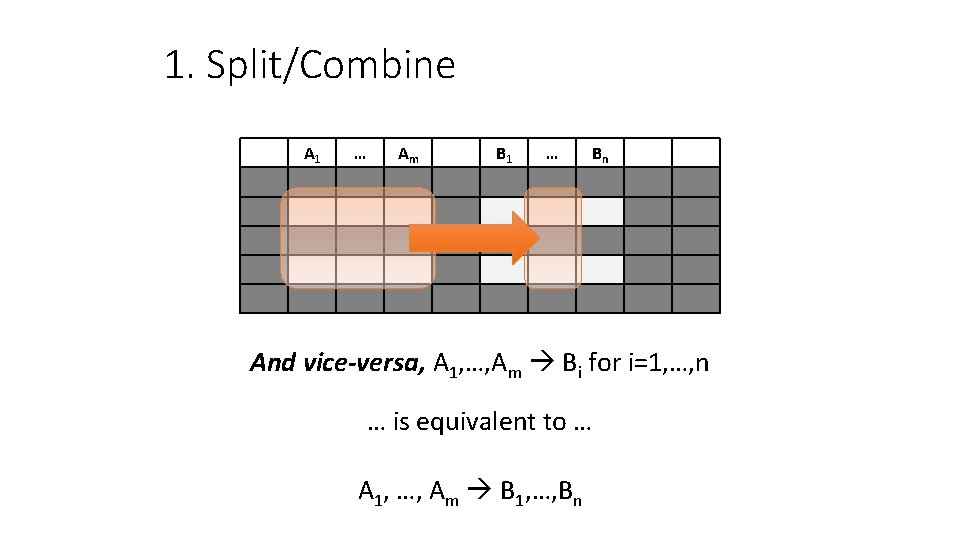
1. Split/Combine A 1 … Am B 1 … Bn And vice-versa, A 1, …, Am Bi for i=1, …, n … is equivalent to … A 1, …, Am B 1, …, Bn
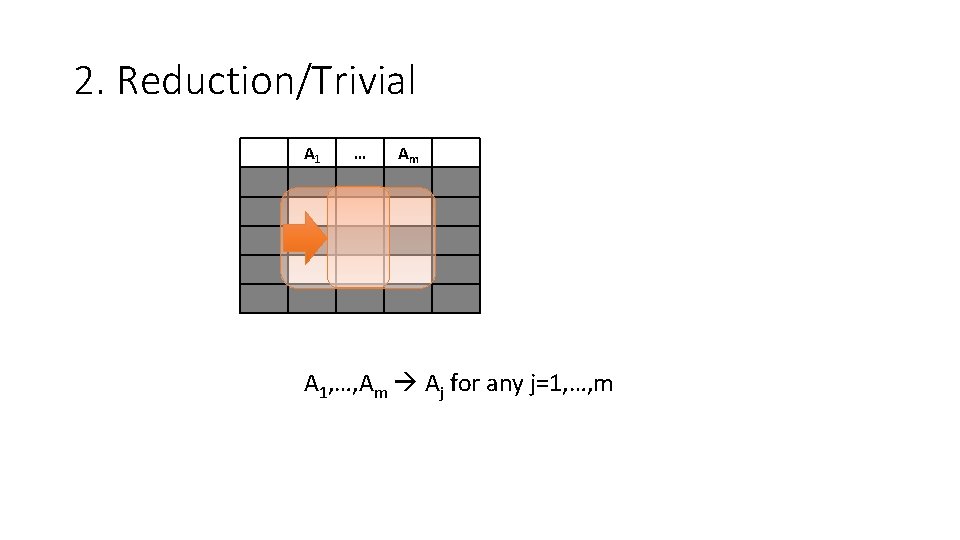
2. Reduction/Trivial A 1 … Am A 1, …, Am Aj for any j=1, …, m
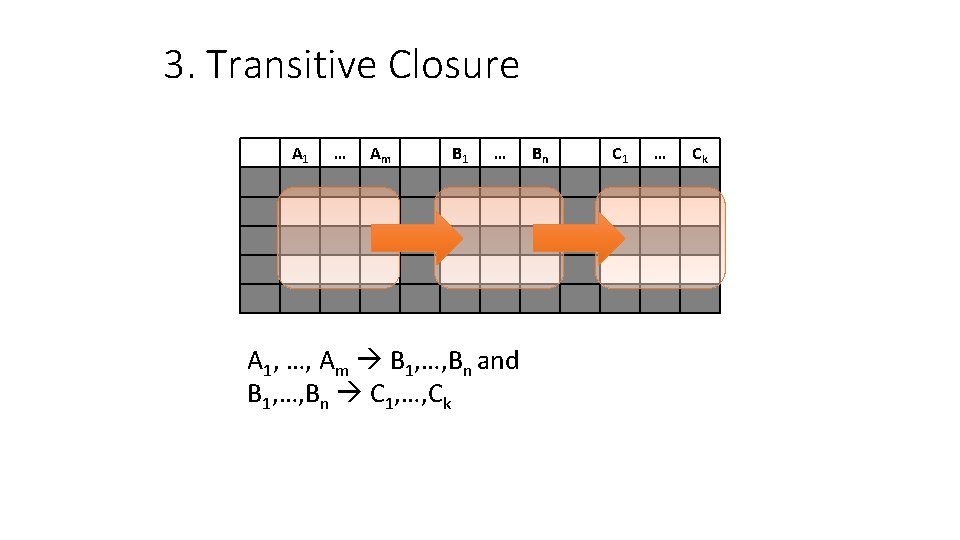
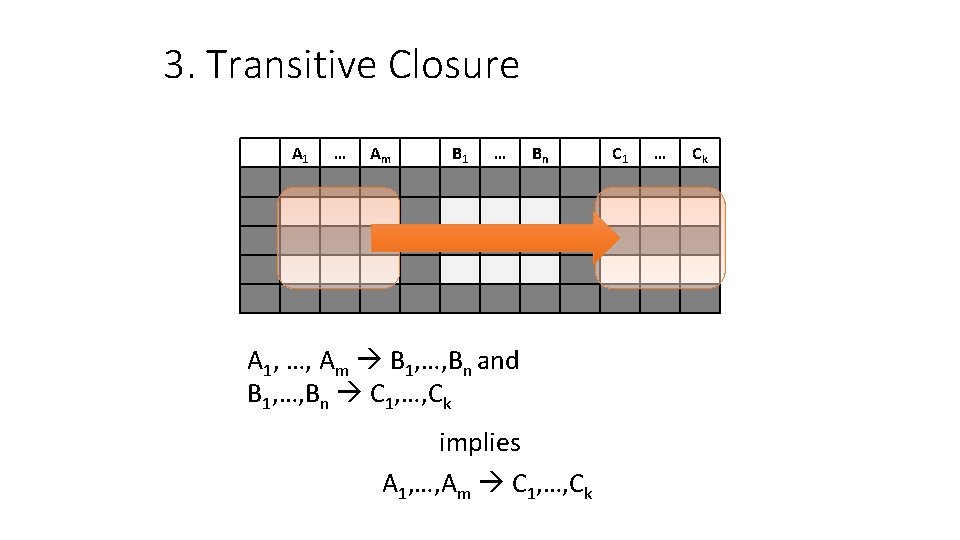
3. Transitive Closure A 1 … Am B 1 … A 1, …, Am B 1, …, Bn and B 1, …, Bn C 1, …, Ck Bn C 1 … Ck
3. Transitive Closure A 1 … Am B 1 … Bn A 1, …, Am B 1, …, Bn and B 1, …, Bn C 1, …, Ck implies A 1, …, Am C 1, …, Ck C 1 … Ck
Finding Functional Dependencies Example: Products Name Gizmo Widget Gizmo Provided FDs: Color Green Black Green Category Dep Price Gadget Toys 49 Gadget Toys 59 Whatsit Garden 99 1. {Name} {Color} 2. {Category} {Department} 3. {Color, Category} {Price} Which / how many other FDs hold?
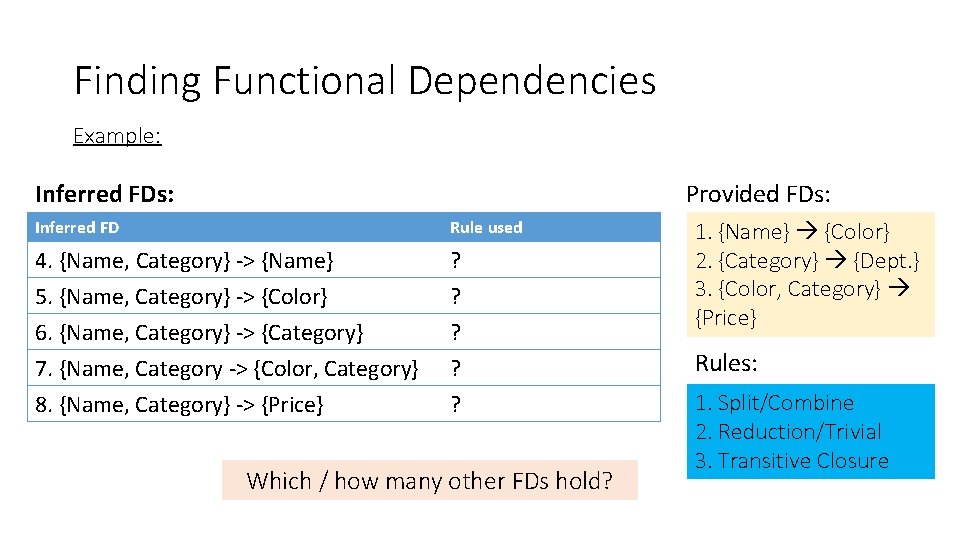
Finding Functional Dependencies Example: Provided FDs: Inferred FDs: Inferred FD Rule used 4. {Name, Category} -> {Name} 5. {Name, Category} -> {Color} 6. {Name, Category} -> {Category} 7. {Name, Category -> {Color, Category} 8. {Name, Category} -> {Price} ? ? ? Which / how many other FDs hold? 1. {Name} {Color} 2. {Category} {Dept. } 3. {Color, Category} {Price} Rules: 1. Split/Combine 2. Reduction/Trivial 3. Transitive Closure
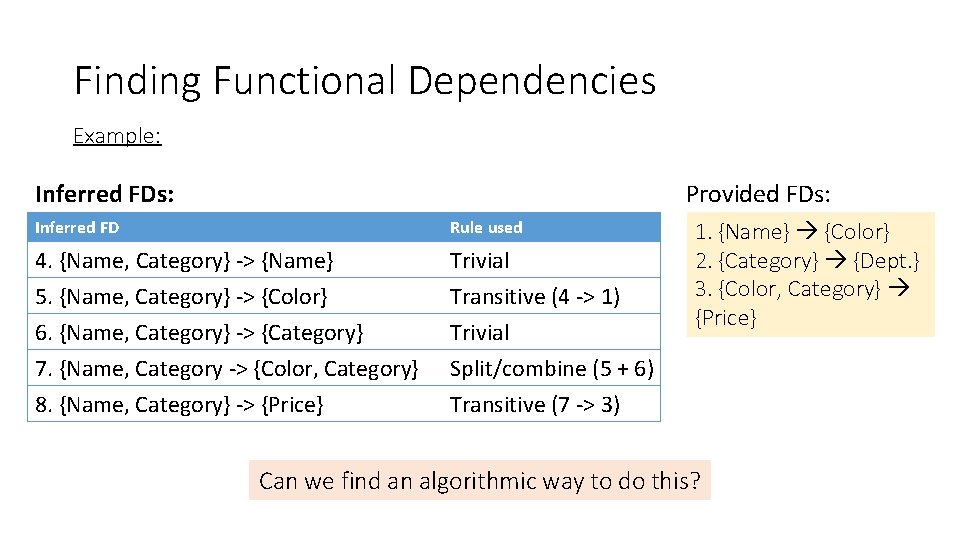
Finding Functional Dependencies Example: Provided FDs: Inferred FDs: Inferred FD Rule used 4. {Name, Category} -> {Name} 5. {Name, Category} -> {Color} 6. {Name, Category} -> {Category} 7. {Name, Category -> {Color, Category} 8. {Name, Category} -> {Price} Trivial Transitive (4 -> 1) Trivial Split/combine (5 + 6) Transitive (7 -> 3) 1. {Name} {Color} 2. {Category} {Dept. } 3. {Color, Category} {Price} Can we find an algorithmic way to do this?