Leading National Assessment Seminar 2020 LNA Seminar NZQA

- Slides: 26
Leading National Assessment Seminar 2020
LNA Seminar NZQA Guiding Principles Equity Quality Innovation
LNA Seminar Welcome You can’t go back and change the beginning, but you can start where you are and change the ending. - C. S Lewis
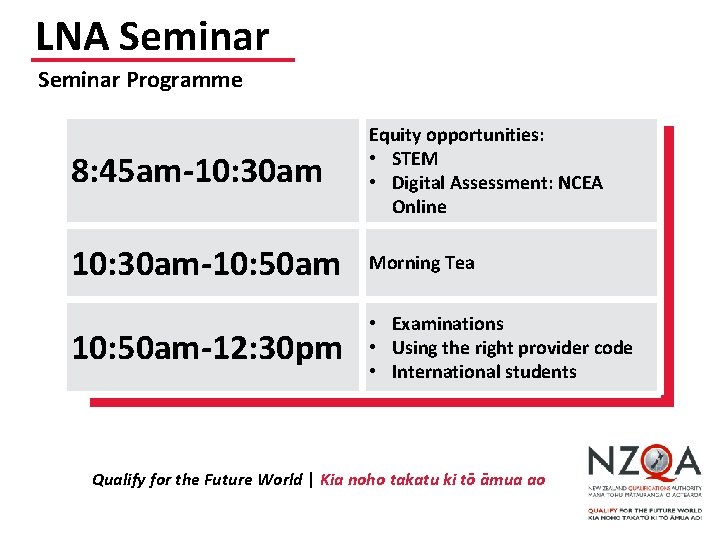
LNA Seminar Programme 8: 45 am-10: 30 am Equity opportunities: • STEM • Digital Assessment: NCEA Online 10: 30 am-10: 50 am Morning Tea 10: 50 am-12: 30 pm • Examinations • Using the right provider code • International students Qualify for the Future World | Kia noho takatu ki tō āmua ao
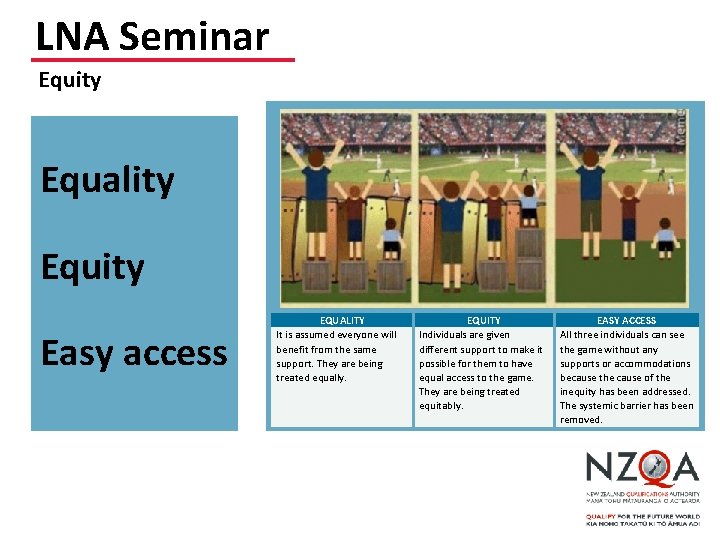
LNA Seminar Equity Equality Equity Easy access EQUALITY It is assumed everyone will benefit from the same support. They are being treated equally. EQUITY Individuals are given different support to make it possible for them to have equal access to the game. They are being treated equitably. EASY ACCESS All three individuals can see the game without any supports or accommodations because the cause of the inequity has been addressed. The systemic barrier has been removed.
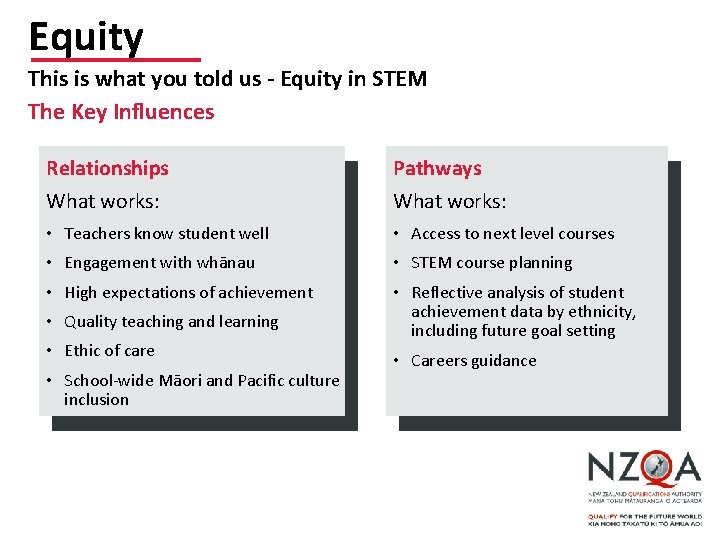
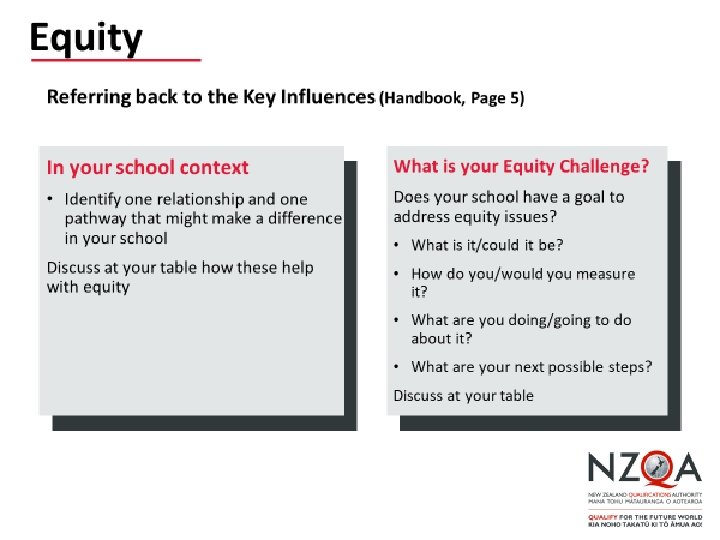
Equity This is what you told us - Equity in STEM The Key Influences Relationships Pathways What works: • Teachers know student well • Access to next level courses • Engagement with whānau • STEM course planning • High expectations of achievement • Reflective analysis of student achievement data by ethnicity, including future goal setting • Quality teaching and learning • Ethic of care • School-wide Māori and Pacific culture inclusion • Careers guidance
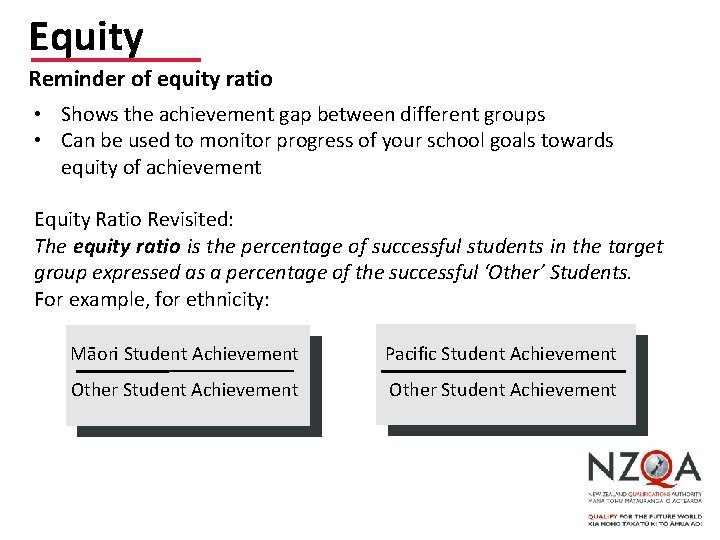
Equity Reminder of equity ratio • Shows the achievement gap between different groups • Can be used to monitor progress of your school goals towards equity of achievement Equity Ratio Revisited: The equity ratio is the percentage of successful students in the target group expressed as a percentage of the successful ‘Other’ Students. For example, for ethnicity: Māori Student Achievement Pacific Student Achievement Other Student Achievement
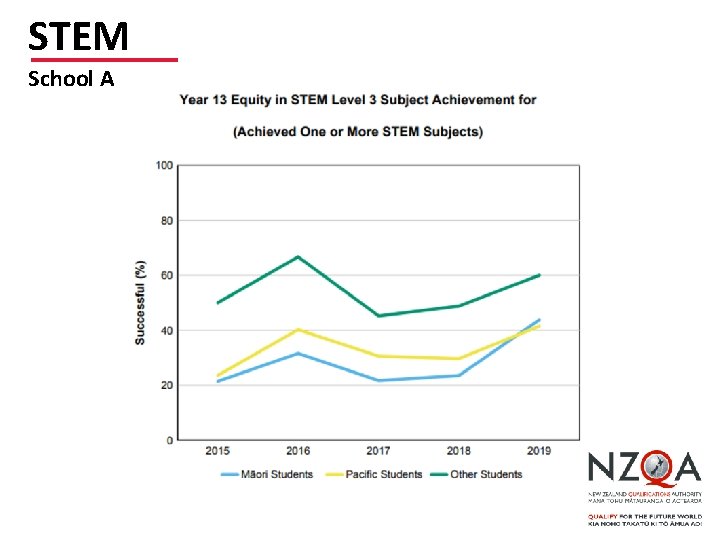
STEM School A
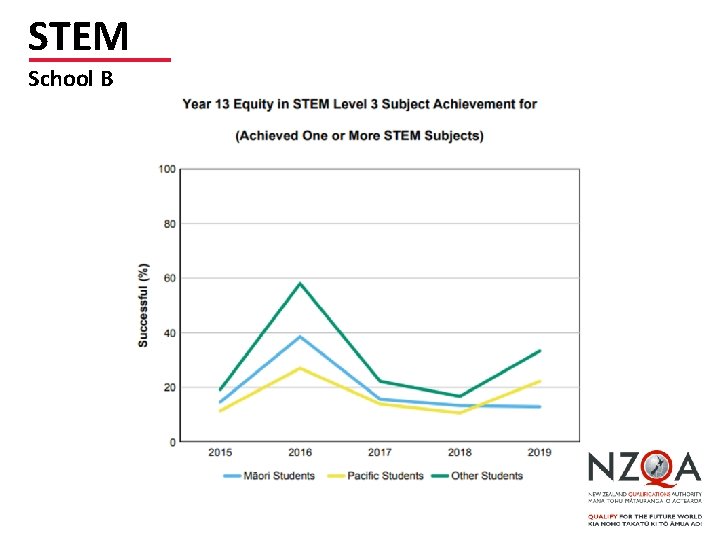
STEM School B
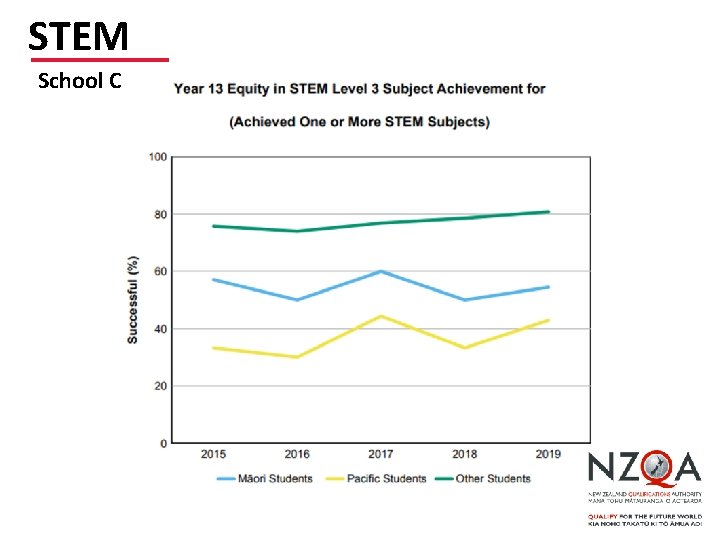
STEM School C
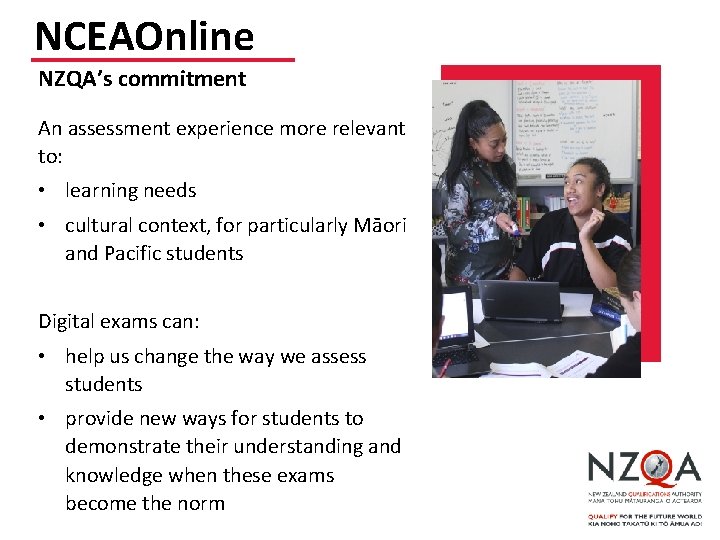
NCEAOnline NZQA’s commitment An assessment experience more relevant to: • learning needs • cultural context, for particularly Māori and Pacific students Digital exams can: • help us change the way we assess students • provide new ways for students to demonstrate their understanding and knowledge when these exams become the norm
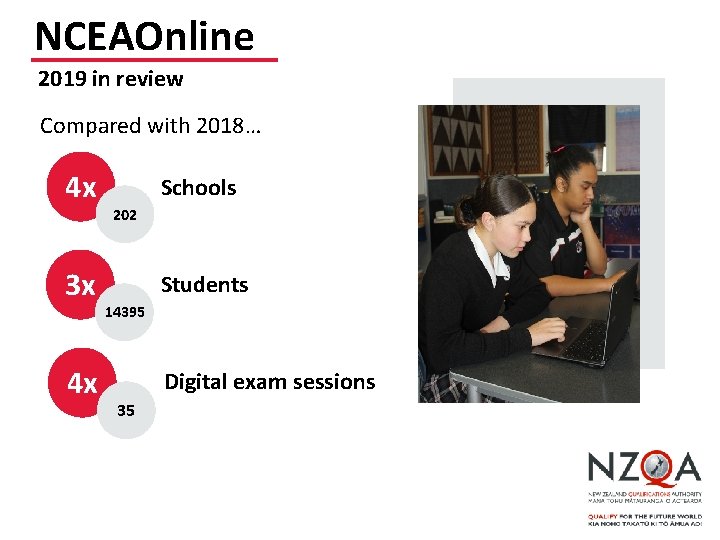
NCEAOnline 2019 in review Compared with 2018… 4 x 3 x 4 x Schools 202 Students 14395 Digital exam sessions 35
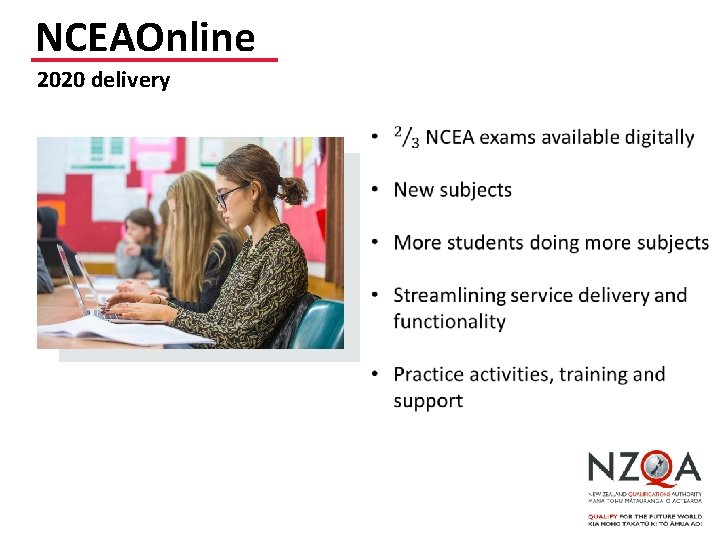
NCEAOnline 2020 delivery
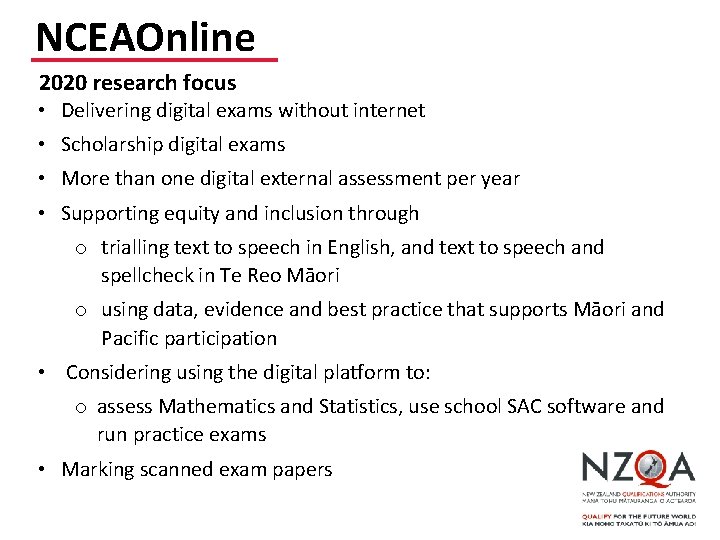
NCEAOnline 2020 research focus • Delivering digital exams without internet • Scholarship digital exams • More than one digital external assessment per year • Supporting equity and inclusion through o trialling text to speech in English, and text to speech and spellcheck in Te Reo Māori o using data, evidence and best practice that supports Māori and Pacific participation • Considering using the digital platform to: o assess Mathematics and Statistics, use school SAC software and run practice exams • Marking scanned exam papers
NCEAOnline Moving forward NZQA is taking a staged approach to digital exams We suggest a similar approach for schools - Dip a toe in: start where you can build confidence - Add students and subjects each year - Work with NZQA and N 4 L for support and preparation - Consider your barriers and what could help
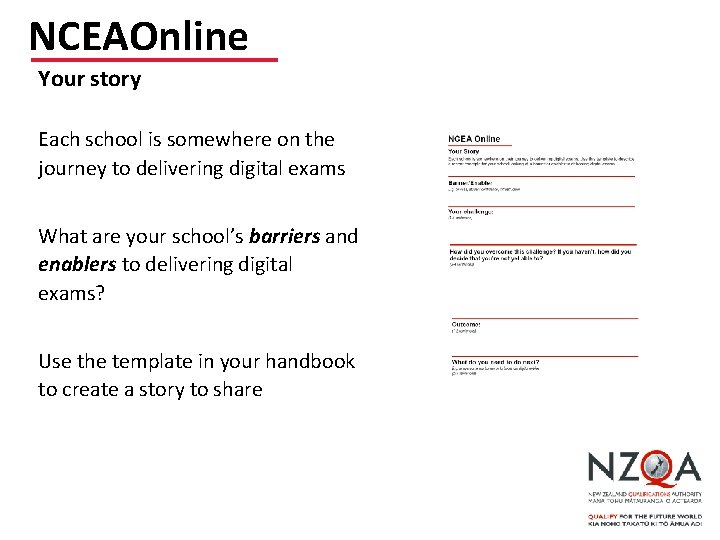
NCEAOnline Your story Each school is somewhere on the journey to delivering digital exams What are your school’s barriers and enablers to delivering digital exams? Use the template in your handbook to create a story to share
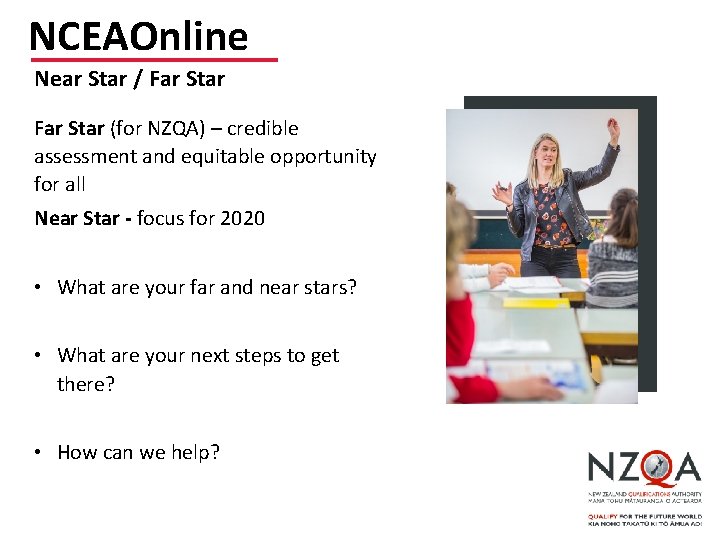
NCEAOnline Near Star / Far Star (for NZQA) – credible assessment and equitable opportunity for all Near Star - focus for 2020 • What are your far and near stars? • What are your next steps to get there? • How can we help?
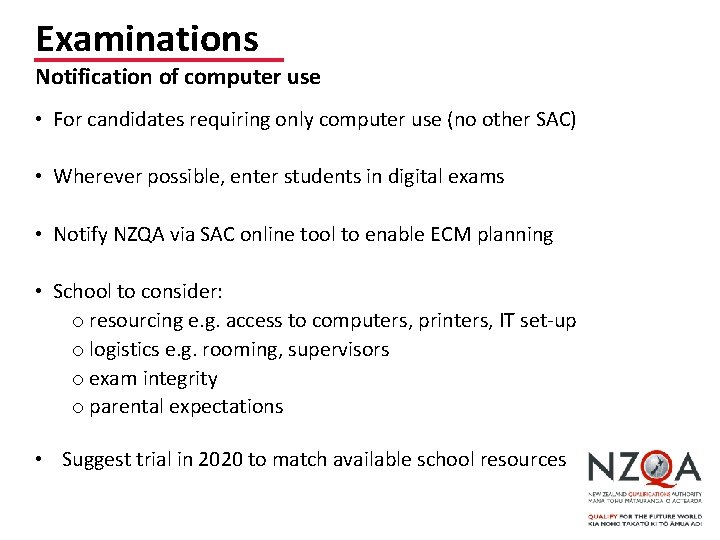
Examinations Notification of computer use • For candidates requiring only computer use (no other SAC) • Wherever possible, enter students in digital exams • Notify NZQA via SAC online tool to enable ECM planning • School to consider: o resourcing e. g. access to computers, printers, IT set-up o logistics e. g. rooming, supervisors o exam integrity o parental expectations • Suggest trial in 2020 to match available school resources
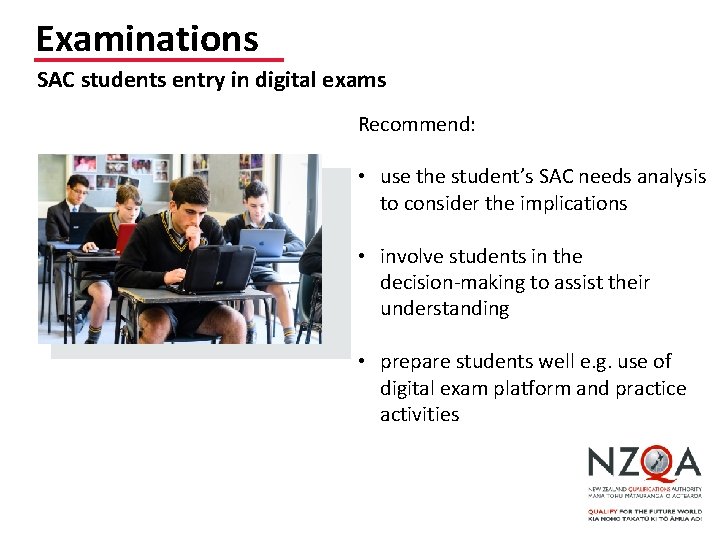
Examinations SAC students entry in digital exams Recommend: • use the student’s SAC needs analysis to consider the implications • involve students in the decision-making to assist their understanding • prepare students well e. g. use of digital exam platform and practice activities
Examinations Effective examination preparation Schools: • support candidates to develop in-depth understanding of learning to: o demonstrate their knowledge and skills well o respond positively to changes in exam papers o use exam techniques effectively NZQA: • provides resources (exemplars / past papers / assessment schedules) to supplement good teaching • uses self review and feedback to improve questions, formats and resources
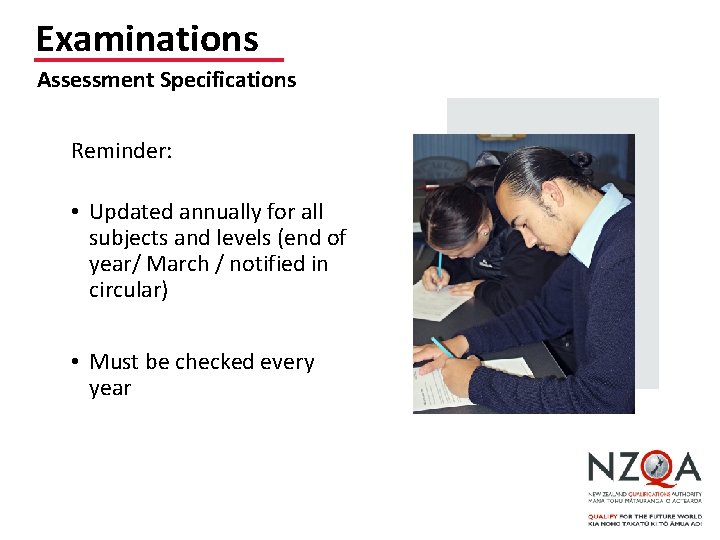
Examinations Assessment Specifications Reminder: • Updated annually for all subjects and levels (end of year/ March / notified in circular) • Must be checked every year
Using the right provider code Important because: 3, 910, 386 internal results reported using school provider code in 2018 Currently • Since 2016 5, 300 external MOU relationships with consented providers • 8. 4% of internal results reported using other provider codes (tertiary and school) • 113 approved sub-contract arrangements ✔ • 101 NZQA investigations • Most investigations involved use of an unconsented provider code
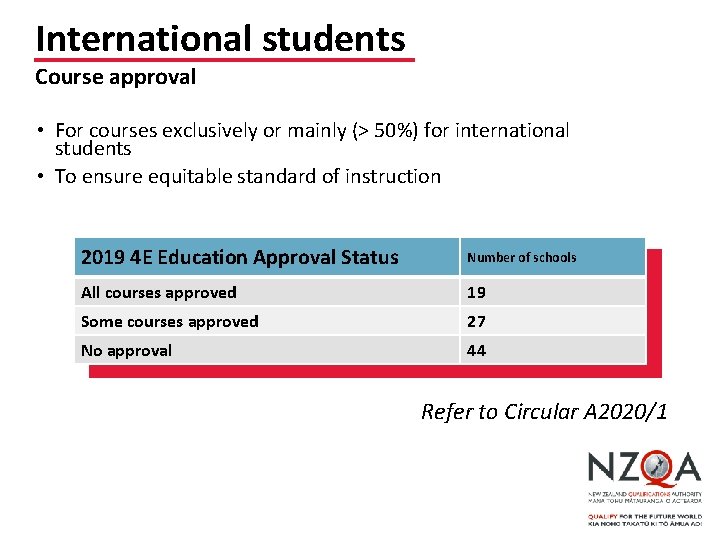
International students Course approval • For courses exclusively or mainly (> 50%) for international students • To ensure equitable standard of instruction 2019 4 E Education Approval Status Number of schools All courses approved 19 Some courses approved 27 No approval 44 Refer to Circular A 2020/1
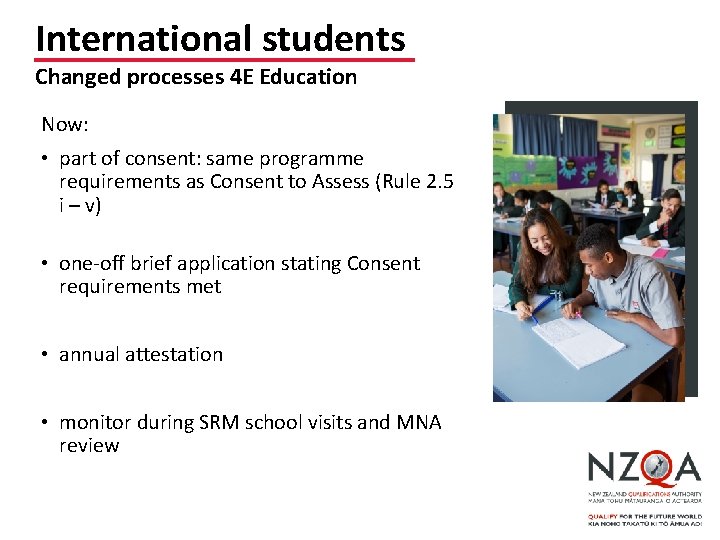
International students Changed processes 4 E Education Now: • part of consent: same programme requirements as Consent to Assess (Rule 2. 5 i – v) • one-off brief application stating Consent requirements met • annual attestation • monitor during SRM school visits and MNA review
International students School responsibilities Schools: • pay NCEA and Scholarship fees to NZQA As Code Signatories: • monitor to ensure students: • met Visa requirements eg attendance, academic progress • undertake the educational instruction they are enrolled for • meet other obligations under the Code Further information will be sent to schools Refer to Circular A 2020/2