KANYA MAHAVIDYALAYA KHARKHODA Presentation of System Testing Presented

- Slides: 15
KANYA MAHAVIDYALAYA KHARKHODA Presentation of System Testing Presented By: Mrs. Nisha Suhag
What is system testing ? ? ? System testing of software or hardware is testing conducted on a complete, integrated system to evaluate the system's compliance with its specified requirements. System testing is carried out by specialists testers or independent testers. System testing should investigate both functional and non-functional requirements of the testing.
What is Functional Requirement? Business Rules Transaction corrections, adjustments and cancellations Administrative functions Authentication Authorization levels External Interfaces Certification Requirements Reporting Requirements Legal or Regulatory Requirements
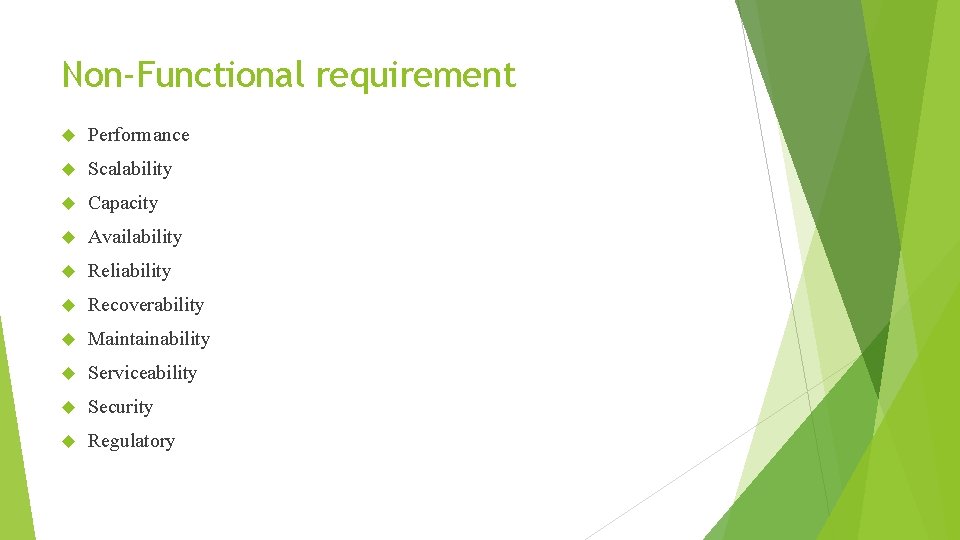
Non-Functional requirement Performance Scalability Capacity Availability Reliability Recoverability Maintainability Serviceability Security Regulatory
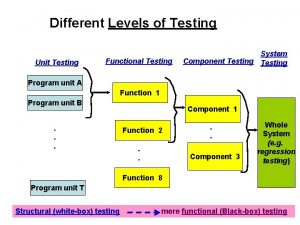
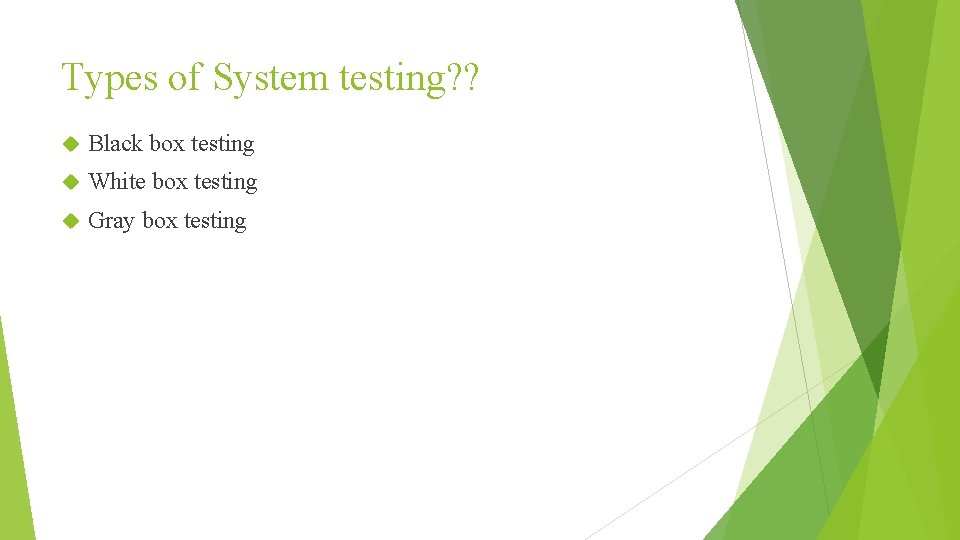
Types of System testing? ? Black box testing White box testing Gray box testing
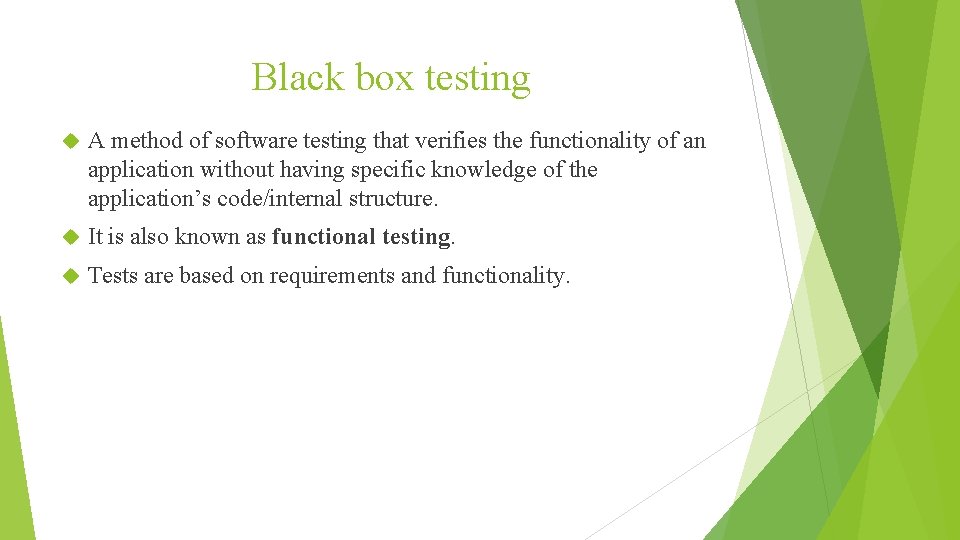
Black box testing A method of software testing that verifies the functionality of an application without having specific knowledge of the application’s code/internal structure. It is also known as functional testing. Tests are based on requirements and functionality.
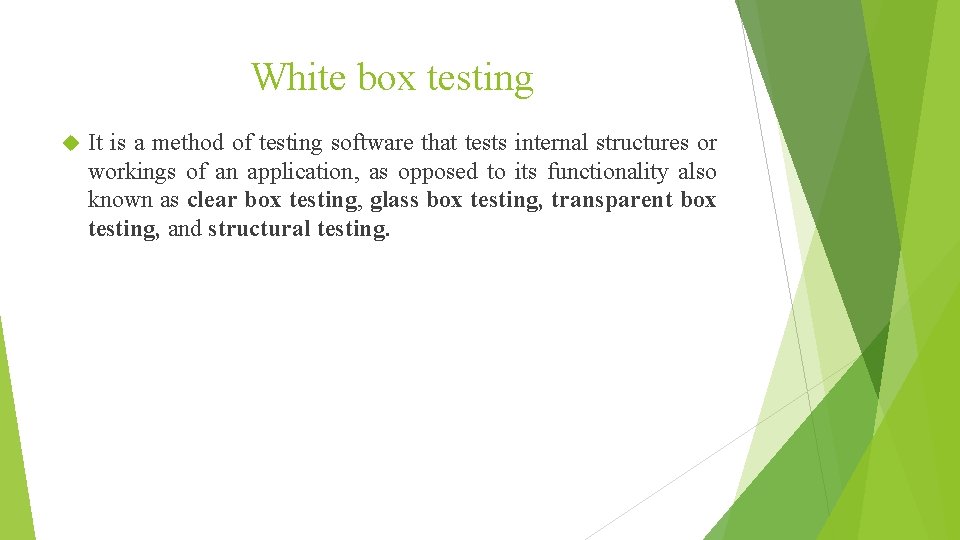
White box testing It is a method of testing software that tests internal structures or workings of an application, as opposed to its functionality also known as clear box testing, glass box testing, transparent box testing, and structural testing.
Gray testing It is a combination of white-box testing and black-box testing. The aim of this testing is to search for the defects if any due to improper structure or improper usage of applications. For a complete software examination, both white box and black box tests are required.
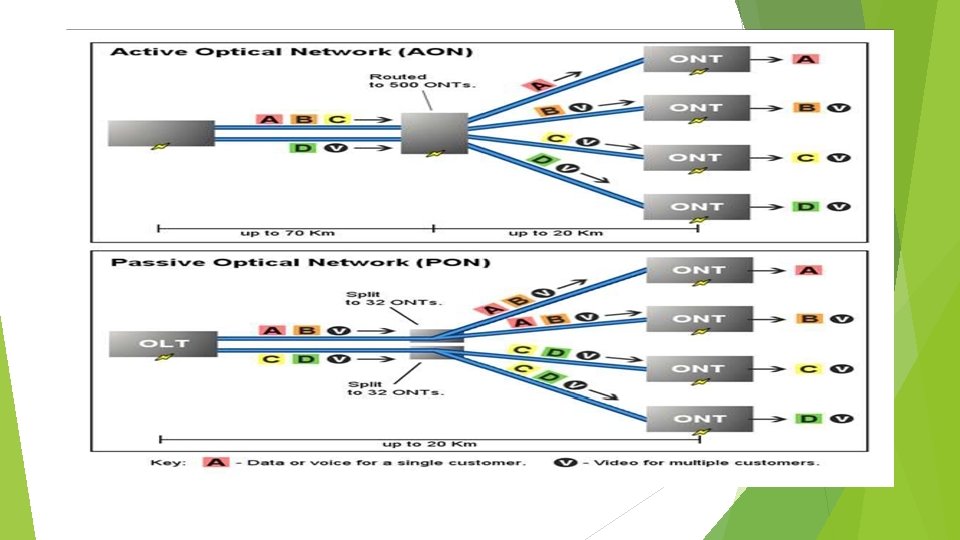
Activity network for system testing Active networking is a communication pattern that allows packets flowing through a telecommunications network to dynamically modify the operation of the network.
Activity network for system testing A test plan entails the following activities. 1. Prepare test plan. 2. Specify conditions for user acceptance testing. 3. Prepare test data for program testing. 4. Prepare test data for transaction path testing. 5. Plan user training. 6. Compile/assemble programs. 7. Prepare job performance aids. 8. Prepare operational documents.
Example of different types of system testing Input Testing On the basis of expected outputs we have to input the data to the system. It should be check that our inputs are correct. If our inputs are wrong or any bug in them we will not be able to get the expected outputs. Installation Testing Every software or any system to run we need to install it or setup it for doing any work. If we have any problem to in install part then our system will not work properly even we can’t access the software. So this part is very important. And we have to check that is there any problem in installation or not.
Example of different types of system testing Graphical User Interface Testing To generate a set of test cases, test designers attempt to cover all the functionality of the system and fully exercise the GUI itself. The difficulty in accomplishing this task is twofold: to deal with domain size and with sequences. In addition, the tester faces more difficulty when they have to do regression testing. Compatibility Testing Compatibility testing, part of software non-functional tests, is testing conducted on the application to evaluate the application's compatibility with the computing environment.
Example of different types of system testing Usability Testing Usability testing is a technique used in user-centered interaction design to evaluate a product by testing it on users. This can be seen as an irreplaceable usability practice, since it gives direct input on how real users use the system. This is in contrast with usability inspection methods where experts use different methods to evaluate a user interface without involving users. Exception Handling Exception handling is the process of responding to the occurrence, during computation, of exceptions – anomalous or exceptional conditions requiring special processing – often changing the normal flow of program execution.