Iron Chef Serving up high quality care in
- Slides: 28
Iron Chef: Serving up high quality care in the setting of iron deficiency and iron overload Donald Houston MD Ph. D FRCPC Emily Rimmer MD MSc. FRCPC May 1, 2020
Iron deficiency anemia (IDA): It’s easy as 1, 2, 3 Emily Rimmer MD MSc. FRCPC May 1, 2020
Presenter Disclosure • Faculty / Speaker’s name: Emily Rimmer • Relationships with commercial interests: – Grants/Research Support: none – Speakers Bureau/Honoraria: none – Consulting Fees: none – Other: none
Mitigating Potential Bias • Not Applicable
Learning Objectives 1. Recognize the burden of iron deficiency 2. Understand investigations to diagnose iron deficiency 3. List the investigations required to identify cause of iron deficiency 4. Apply strategies to manage iron deficiency
Come on, come on, let me tell you what it’s all about…. • I-D-A, its easy as 1 -2 -3… • Step 1 – Identify iron deficiency • Step 2 – Investigate cause of iron deficiency • Step 3 – Iron repletion
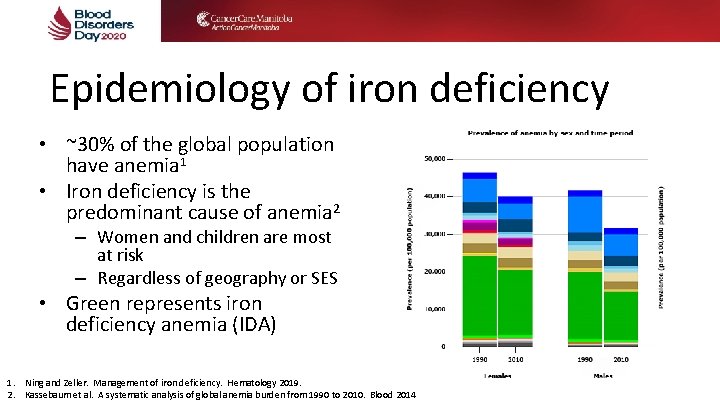
Epidemiology of iron deficiency • ~30% of the global population have anemia 1 • Iron deficiency is the predominant cause of anemia 2 – Women and children are most at risk – Regardless of geography or SES • Green represents iron deficiency anemia (IDA) 1. Ning and Zeller. Management of iron deficiency. Hematology 2019. 2. Kassebaum et al. A systematic analysis of global anemia burden from 1990 to 2010. Blood 2014
Iron deficiency (ID) • Iron deficiency is highly prevalent: ~2 billion individuals • Symptoms: – Fatigue, pica, depression, headache, restless legs syndrome – Anemia: dyspnea with exertion, lightheadedness, palpitations • Many patients with ID are not anemic. Do they require treatment? – Will treatment improve their fatigue or quality of life? – Will it enhance physical performance?
The iron deficient but non-anemic patient… • • • Meta-analysis of 18 randomized controlled trials Total n = 1162 individuals; mostly young healthy females Follow up duration: 90 days to 4 months Oral iron preparations studied in 14 trials Mean daily dose was 87 mg (elemental) Bottom line: Iron supplementation reduced self reported fatigue, but didn’t really change measures of work capacity 1. Efficacy of iron replacement therapy on fatigue and work capacity in non-anemic adults with iron depletion: a systematic review of randomized trials. Houston et al BMJ Open. 2018
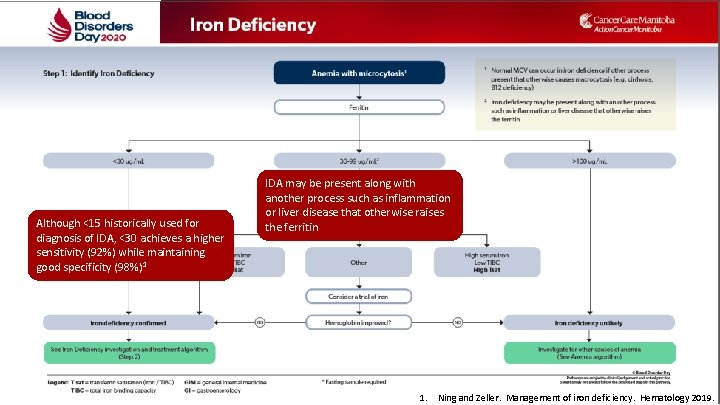
Step 1: Identify iron deficiency (ID) • ID can occur in presence or absence of anemia (A) • IDA is typically associated with microcytosis – All microcytic anemia are due to impairment of hemoglobin synthesis • Serum ferritin is the single best to identify ID/IDA – Drawback is ferritin is acute phase reactant
Although <15 historically used for diagnosis of IDA, <30 achieves a higher sensitivity (92%) while maintaining good specificity (98%)1 IDA may be present along with another process such as inflammation or liver disease that otherwise raises the ferritin 1. Ning and Zeller. Management of iron deficiency. Hematology 2019.
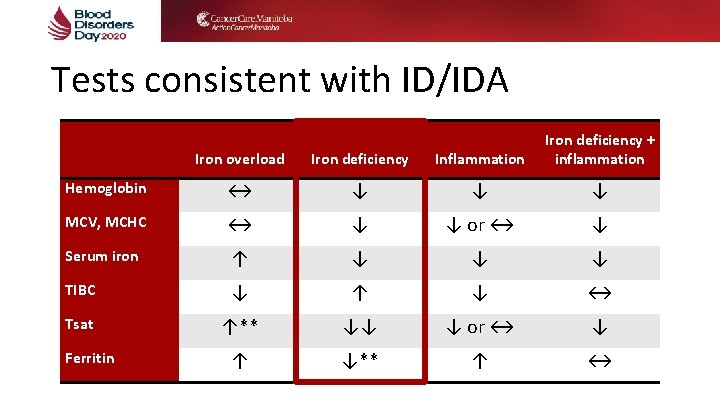
Tests consistent with ID/IDA Iron overload Iron deficiency Inflammation Iron deficiency + inflammation Hemoglobin ↔ ↓ ↓ ↓ MCV, MCHC ↔ ↓ ↓ or ↔ ↓ Serum iron ↑ ↓ ↓ ↓ TIBC ↓ ↑ ↓ ↔ Tsat ↑** ↓↓ ↓ or ↔ ↓ ↑ ↓** ↑ ↔ Ferritin
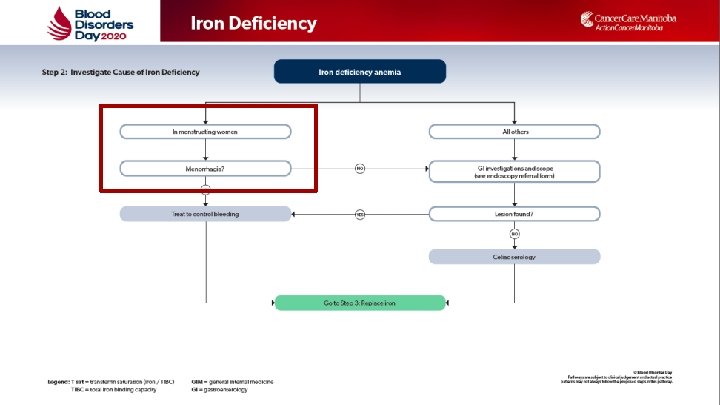
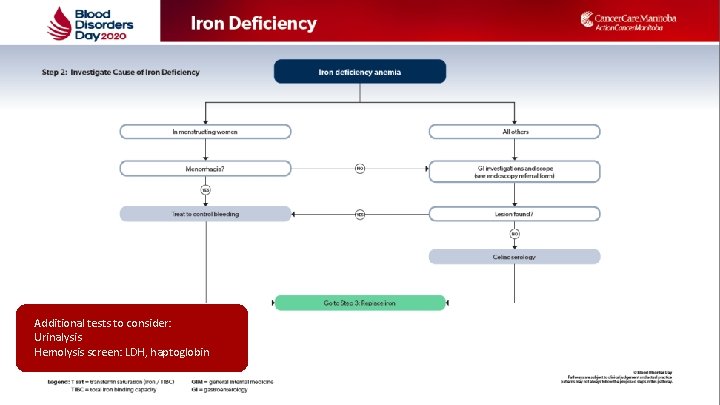
Step 2: Investigate cause of IDA • NB: IDA is a symptom NOT a diagnosis • To effectively manage IDA, the etiology MUST be identified and, if possible, corrected
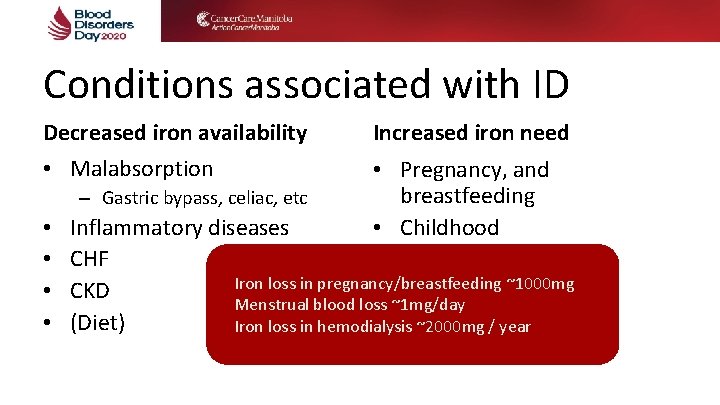
Conditions associated with ID Decreased iron availability Increased iron need • Malabsorption • Pregnancy, and breastfeeding • Childhood • Blood loss – Gastric bypass, celiac, etc • • Inflammatory diseases CHF Iron loss in pregnancy/breastfeeding ~1000 mg – GI, GU, vaginal, blood CKD Menstrual blood loss ~1 mg/day donation, epistaxis (Diet) Iron loss in hemodialysis ~2000 mg / year
• Insert algorithm
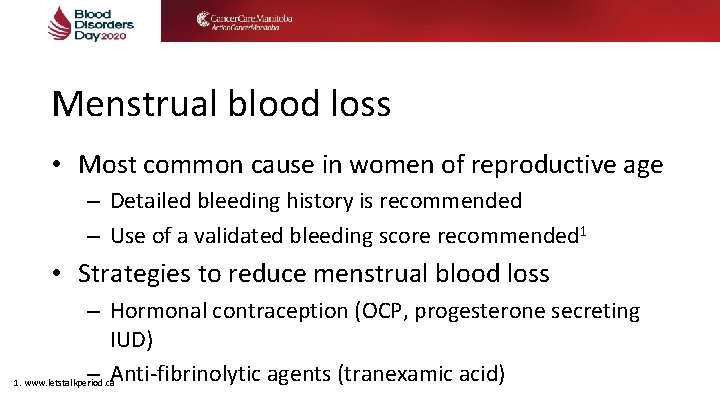
Menstrual blood loss • Most common cause in women of reproductive age – Detailed bleeding history is recommended – Use of a validated bleeding score recommended 1 • Strategies to reduce menstrual blood loss – Hormonal contraception (OCP, progesterone secreting IUD) – Anti-fibrinolytic agents (tranexamic acid) 1. www. letstalkperiod. ca
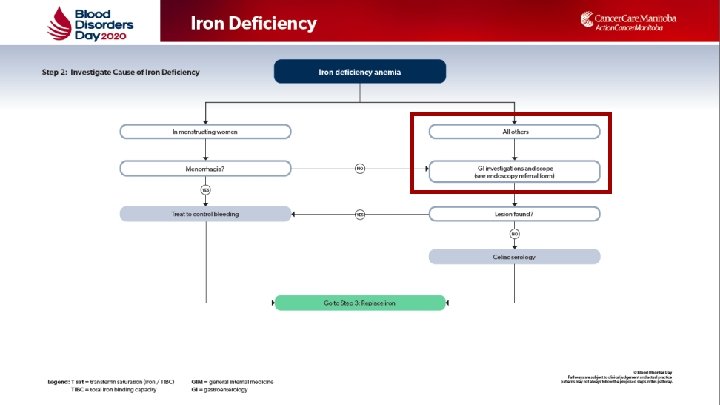
• Insert algorithm
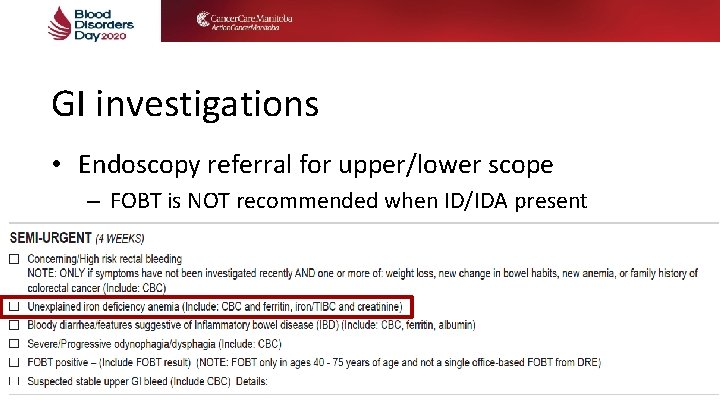
GI investigations • Endoscopy referral for upper/lower scope – FOBT is NOT recommended when ID/IDA present • GI malignancies can occur at any age! • https: //wrha. mb. ca/endoscopy/central-intake/
• Insert algorithm Additional tests to consider: Urinalysis Hemolysis screen: LDH, haptoglobin
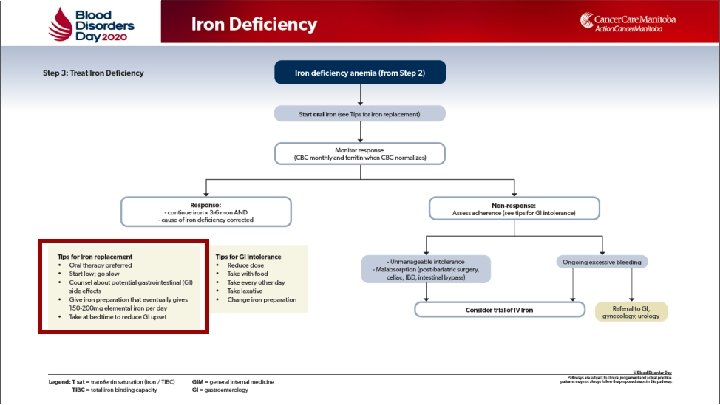
Step 3: Iron replacement • When to treat: – When ID confirmed AND causes considered – With anemia, but likely without anemia • Oral iron supplementation – Preferred • Intravenous iron • Avoid RBC transfusion in IDA unless hemodynamic instability
algorithm
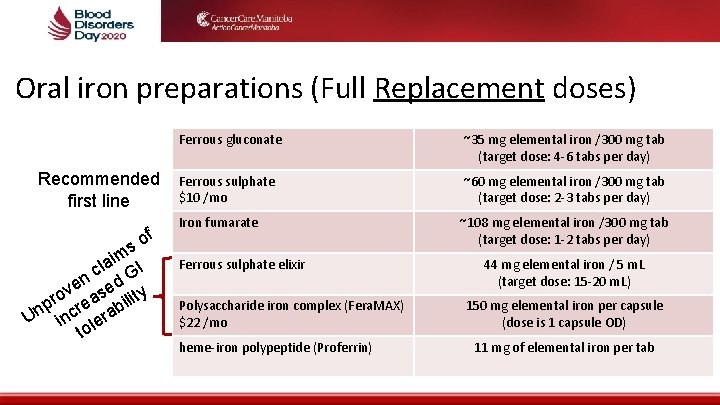
Oral iron preparations (Full Replacement doses) Recommended first line f o s im I a l n c ed G e rov reas bility p Un inc lera to Ferrous gluconate ~35 mg elemental iron /300 mg tab (target dose: 4 -6 tabs per day) Ferrous sulphate $10 /mo ~60 mg elemental iron /300 mg tab (target dose: 2 -3 tabs per day) Iron fumarate ~108 mg elemental iron /300 mg tab (target dose: 1 -2 tabs per day) Ferrous sulphate elixir Polysaccharide iron complex (Fera. MAX) $22 /mo heme-iron polypeptide (Proferrin) 44 mg elemental iron / 5 m. L (target dose: 15 -20 m. L) 150 mg elemental iron per capsule (dose is 1 capsule OD) 11 mg of elemental iron per tab
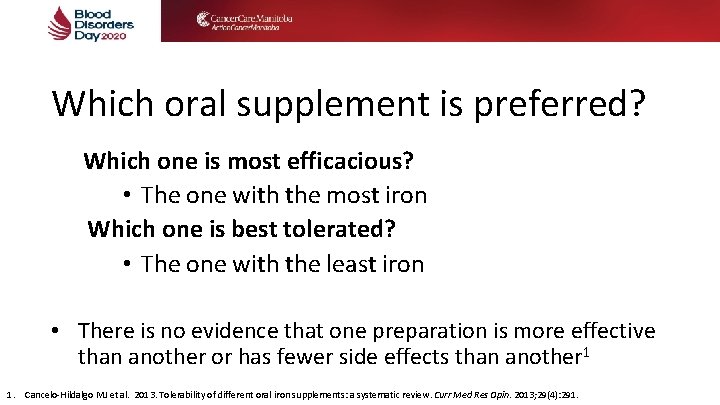
Which oral supplement is preferred? Which one is most efficacious? • The one with the most iron Which one is best tolerated? • The one with the least iron • There is no evidence that one preparation is more effective than another or has fewer side effects than another 1 1. Cancelo-Hildalgo MJ et al. 2013. Tolerability of different oral iron supplements: a systematic review. Curr Med Res Opin. 2013; 29(4): 291.
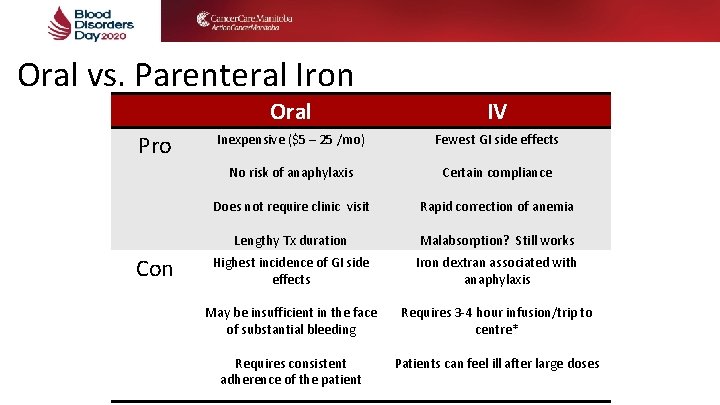
Oral vs. Parenteral Iron Pro Con Oral IV Inexpensive ($5 – 25 /mo) Fewest GI side effects No risk of anaphylaxis Certain compliance Does not require clinic visit Rapid correction of anemia Lengthy Tx duration Malabsorption? Still works Highest incidence of GI side effects Iron dextran associated with anaphylaxis May be insufficient in the face of substantial bleeding Requires 3 -4 hour infusion/trip to centre* Requires consistent adherence of the patient Patients can feel ill after large doses
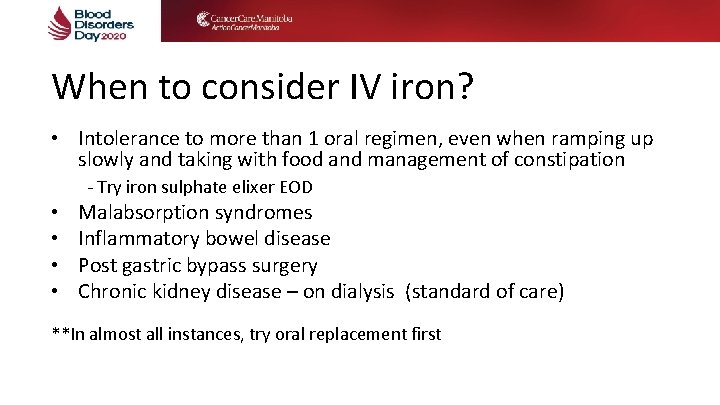
When to consider IV iron? • Intolerance to more than 1 oral regimen, even when ramping up slowly and taking with food and management of constipation - Try iron sulphate elixer EOD • • Malabsorption syndromes Inflammatory bowel disease Post gastric bypass surgery Chronic kidney disease – on dialysis (standard of care) **In almost all instances, try oral replacement first
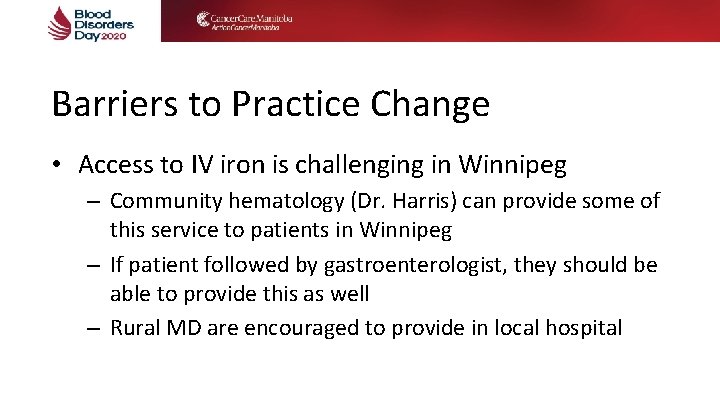
Barriers to Practice Change • Access to IV iron is challenging in Winnipeg – Community hematology (Dr. Harris) can provide some of this service to patients in Winnipeg – If patient followed by gastroenterologist, they should be able to provide this as well – Rural MD are encouraged to provide in local hospital
Take home message(s) • • Iron deficiency anemia is common Oral iron supplementation is preferred Forewarn patients about GI side effects Start low, go slow
Thank you erimmer@cancercare. mb. ca