Introduction to Macroeconomics Chapter 2 Opportunity Cost Specialization

- Slides: 31
Introduction to Macroeconomics Chapter 2 Opportunity Cost, Specialization, and Trade
Chapter 2. Opportunity Cost, Specialization, and Trade 1. Microeconomics – Specialization by Individuals 2. Macroeconomics – Production Possibilities Curve (PPC) 3. Applications Introduction to Macroeconomics
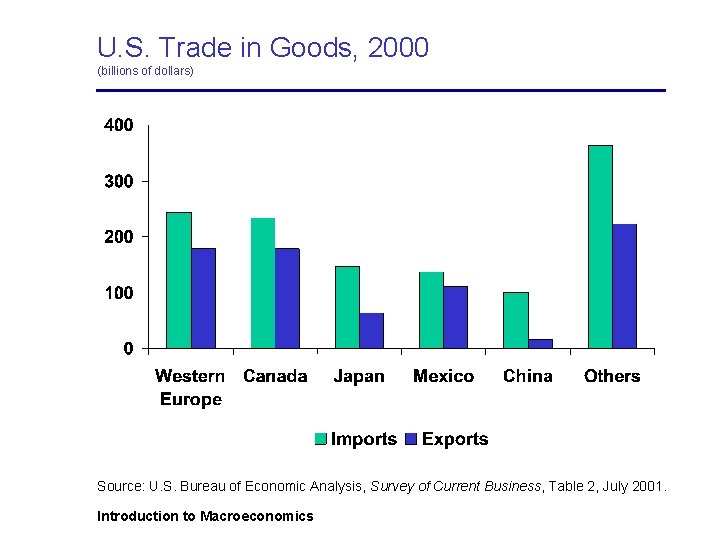
U. S. Trade in Goods, 2000 (billions of dollars) Source: U. S. Bureau of Economic Analysis, Survey of Current Business, Table 2, July 2001. Introduction to Macroeconomics
1. Specialization by Individuals • Division of Labor • Opportunity Cost • Costs of Exchange • Comparative and Absolute Advantage Introduction to Macroeconomics
1. Specialization by Individuals Division of Labor Reasons for Specialization • Increase skill from repetition • Reduce time wasted shifting between tasks • Incentive to invest resources in developing specialized tools and machines • Opportunity Cost Introduction to Macroeconomics
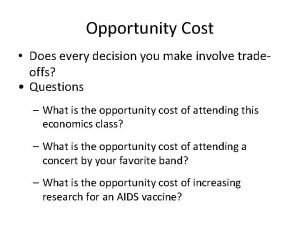
1. Specialization by Individuals Opportunity Cost The highest valued alternative foregone (given up) in making any choice. Introduction to Macroeconomics
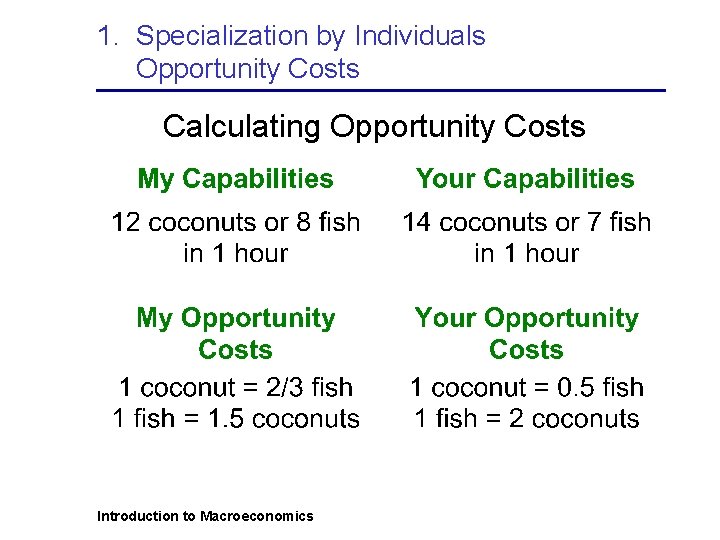
1. Specialization by Individuals Opportunity Costs Calculating Opportunity Costs Introduction to Macroeconomics
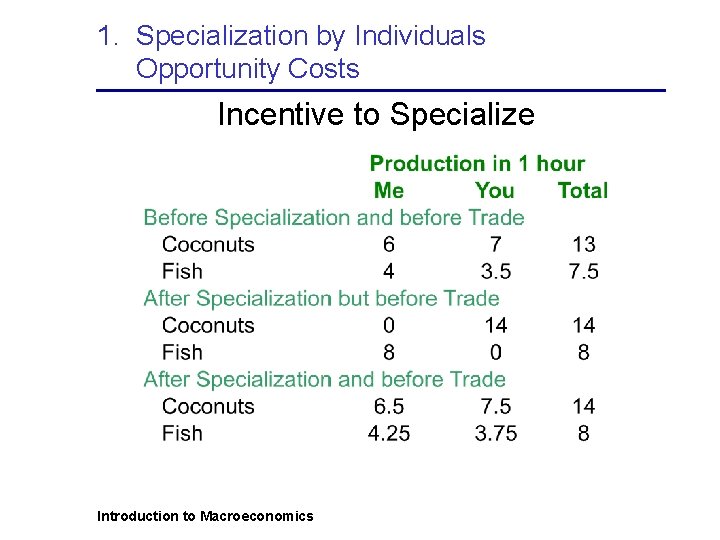
1. Specialization by Individuals Opportunity Costs Incentive to Specialize Introduction to Macroeconomics
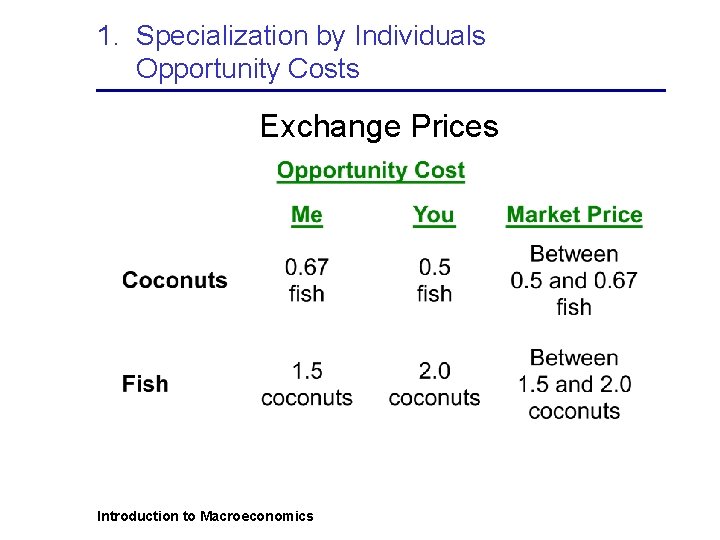
1. Specialization by Individuals Opportunity Costs Exchange Prices Introduction to Macroeconomics
1. Specialization by Individuals Costs of Exchange • Negotiation costs • Transportation costs • Artificial barriers to trade (e. g. , import tariffs) Introduction to Macroeconomics
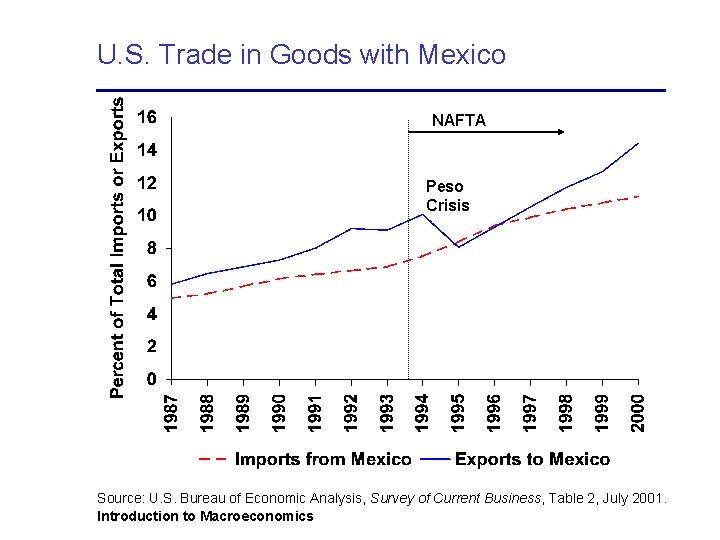
U. S. Trade in Goods with Mexico NAFTA Peso Crisis Source: U. S. Bureau of Economic Analysis, Survey of Current Business, Table 2, July 2001. Introduction to Macroeconomics
Notes Page Introduction to Macroeconomics
1. Specialization by Individuals Comparative and Absolute Advantage • Absolute Advantage - a person can produce a good or service with fewer resources than can another person • Comparative Advantage - a person can produce a good or service with lower opportunity cost than can another person Introduction to Macroeconomics
2. Production Possibilities Curve (PPC) • Assumptions • Opportunity Costs • Comparative and Absolute Advantage • Where Should the Economy Operate? Introduction to Macroeconomics
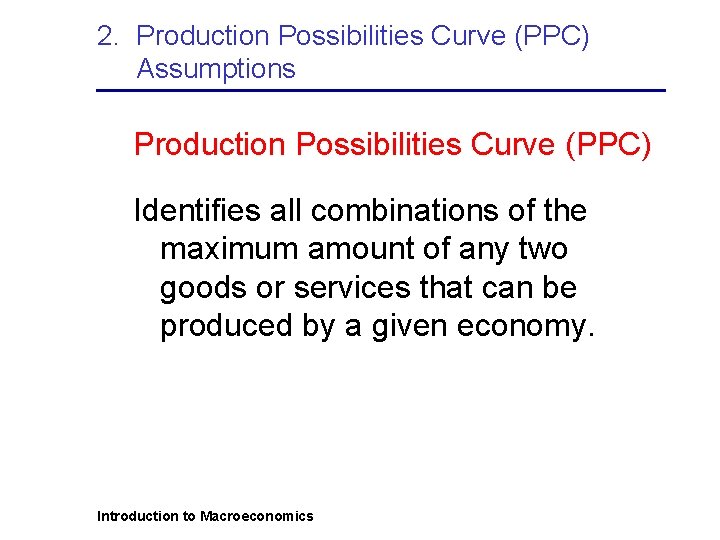
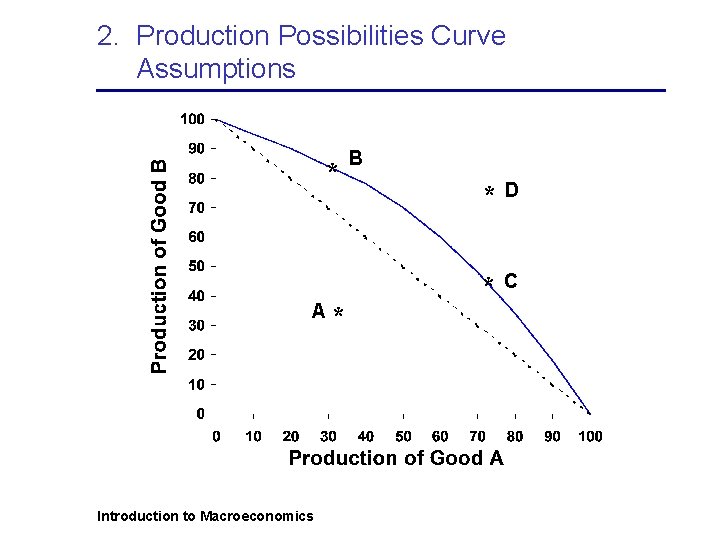
2. Production Possibilities Curve (PPC) Assumptions Production Possibilities Curve (PPC) Identifies all combinations of the maximum amount of any two goods or services that can be produced by a given economy. Introduction to Macroeconomics
2. Production Possibilities Curve Assumptions * A* Introduction to Macroeconomics B * D * C
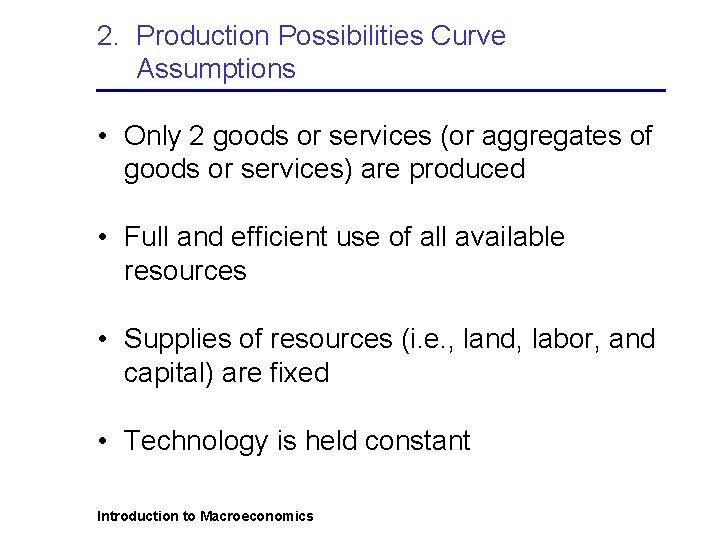
2. Production Possibilities Curve Assumptions • Only 2 goods or services (or aggregates of goods or services) are produced • Full and efficient use of all available resources • Supplies of resources (i. e. , land, labor, and capital) are fixed • Technology is held constant Introduction to Macroeconomics
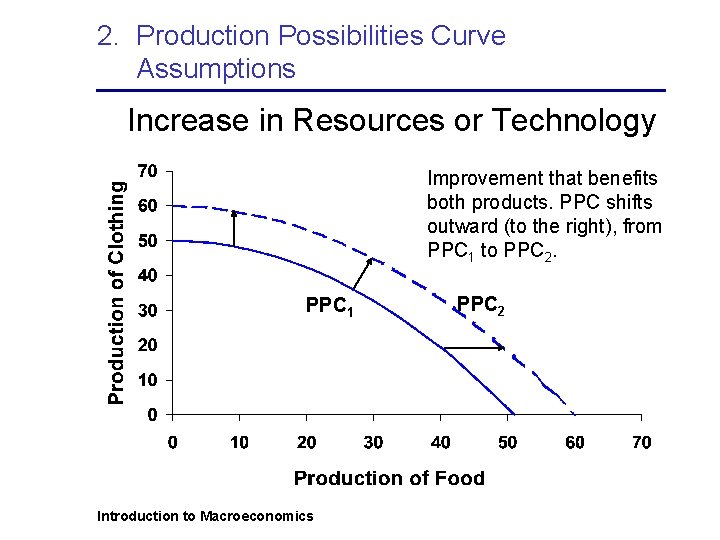
2. Production Possibilities Curve Assumptions Increase in Resources or Technology Improvement that benefits both products. PPC shifts outward (to the right), from PPC 1 to PPC 2. PPC 1 Introduction to Macroeconomics PPC 2
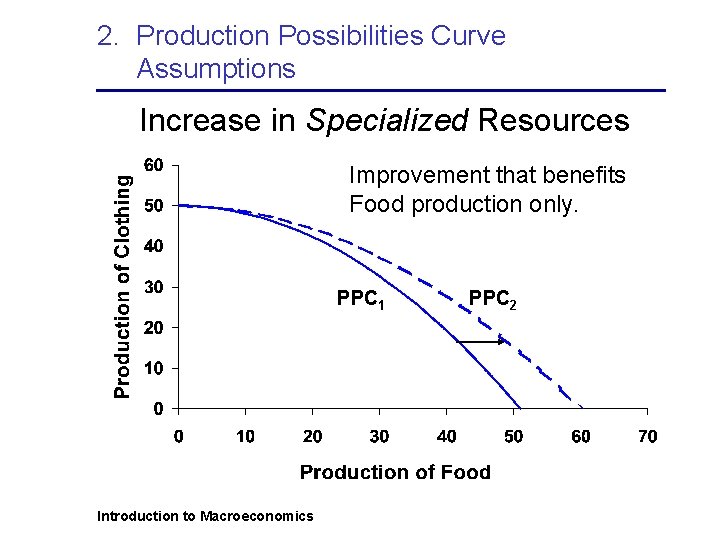
2. Production Possibilities Curve Assumptions Increase in Specialized Resources Improvement that benefits Food production only. PPC 1 Introduction to Macroeconomics PPC 2
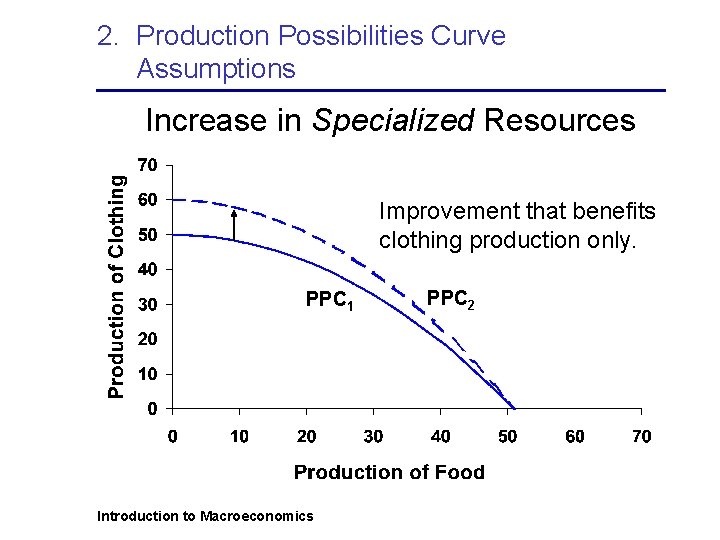
2. Production Possibilities Curve Assumptions Increase in Specialized Resources Improvement that benefits clothing production only. PPC 1 Introduction to Macroeconomics PPC 2
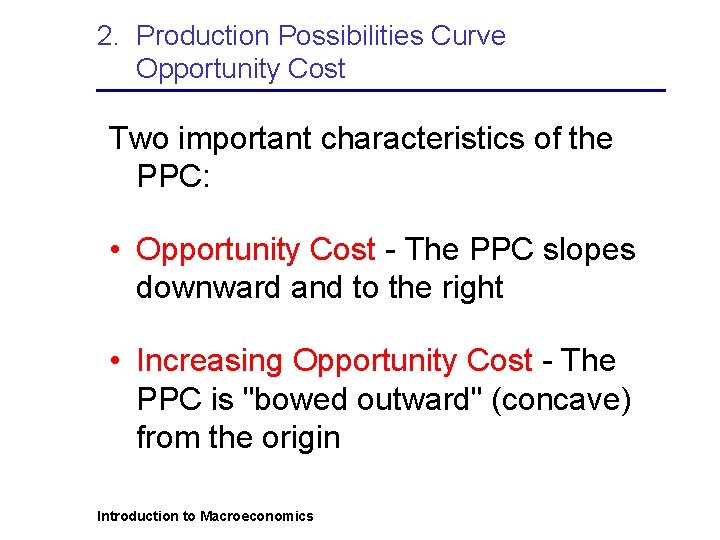
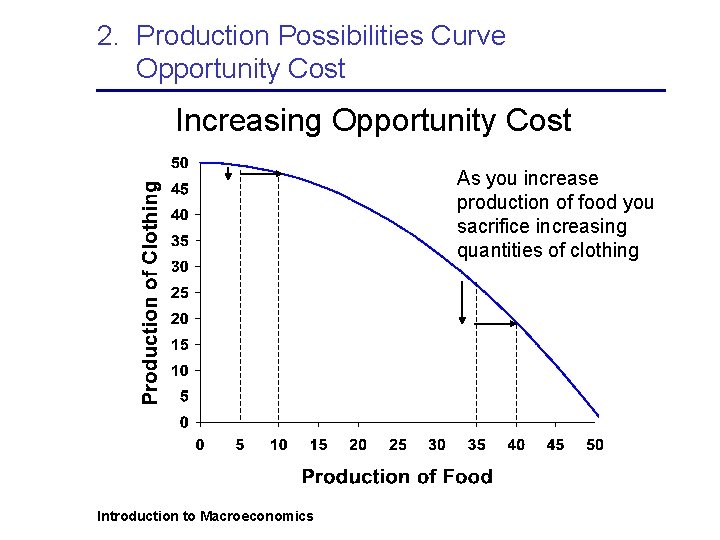
2. Production Possibilities Curve Opportunity Cost Two important characteristics of the PPC: • Opportunity Cost - The PPC slopes downward and to the right • Increasing Opportunity Cost - The PPC is "bowed outward" (concave) from the origin Introduction to Macroeconomics
2. Production Possibilities Curve Opportunity Cost Increasing Opportunity Cost As you increase production of food you sacrifice increasing quantities of clothing Introduction to Macroeconomics
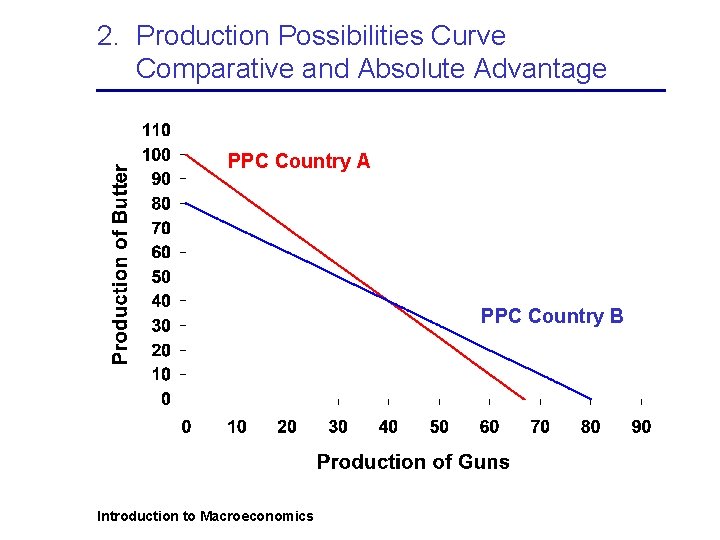
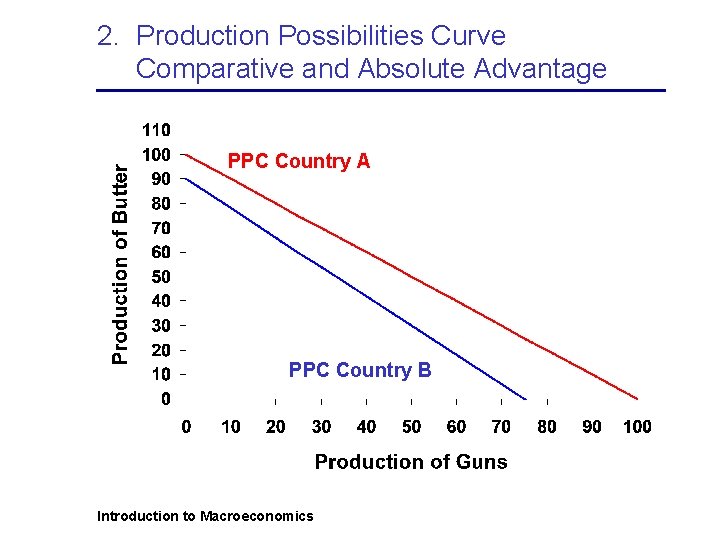
2. Production Possibilities Curve Comparative and Absolute Advantage Assumptions: • 2 countries • 2 products • Straight-line PPCs to simplify model (constant opportunity cost) Introduction to Macroeconomics
2. Production Possibilities Curve Comparative and Absolute Advantage PPC Country A PPC Country B Introduction to Macroeconomics
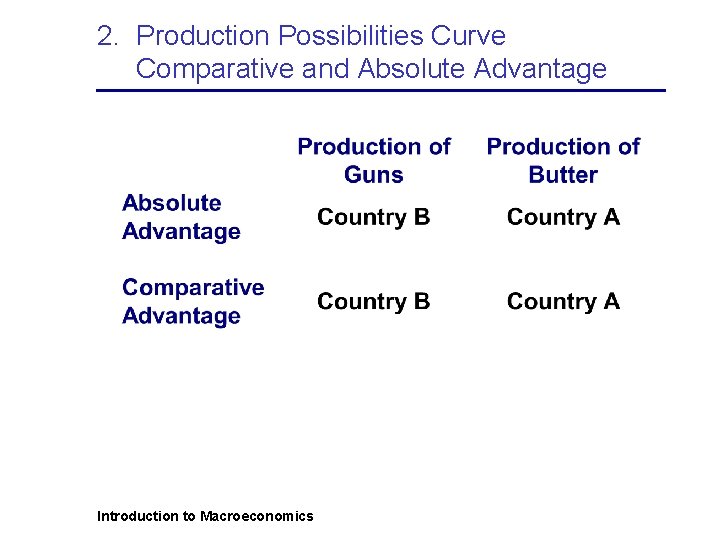
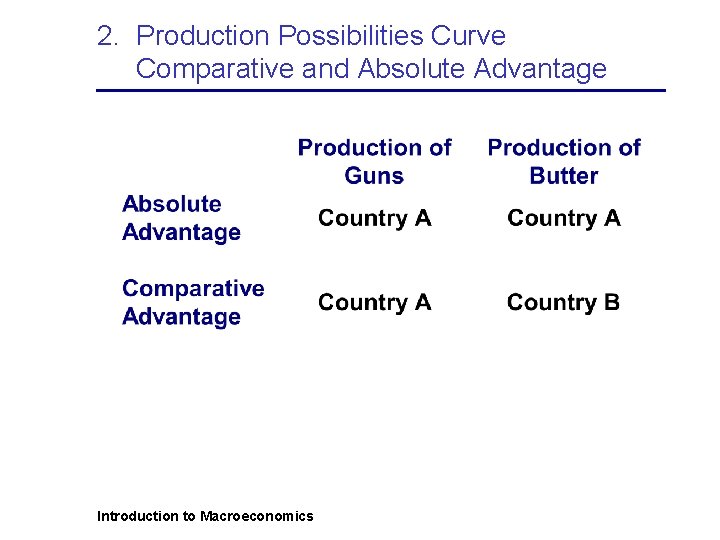
2. Production Possibilities Curve Comparative and Absolute Advantage Introduction to Macroeconomics
2. Production Possibilities Curve Comparative and Absolute Advantage PPC Country A PPC Country B Introduction to Macroeconomics
2. Production Possibilities Curve Comparative and Absolute Advantage Introduction to Macroeconomics
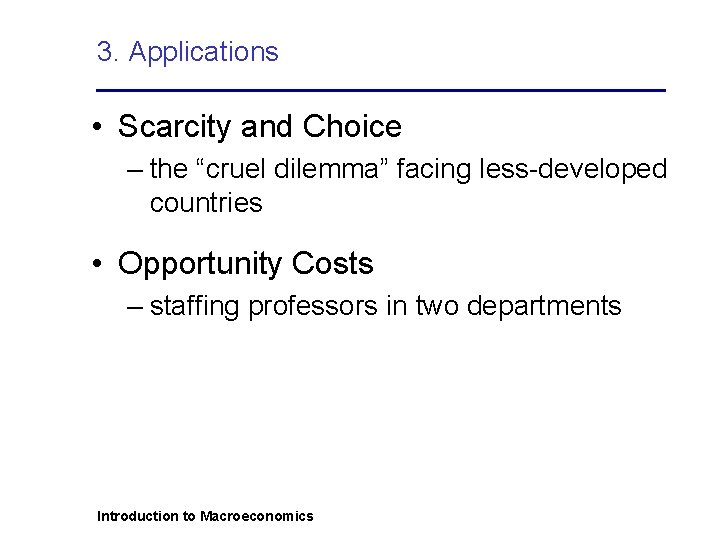
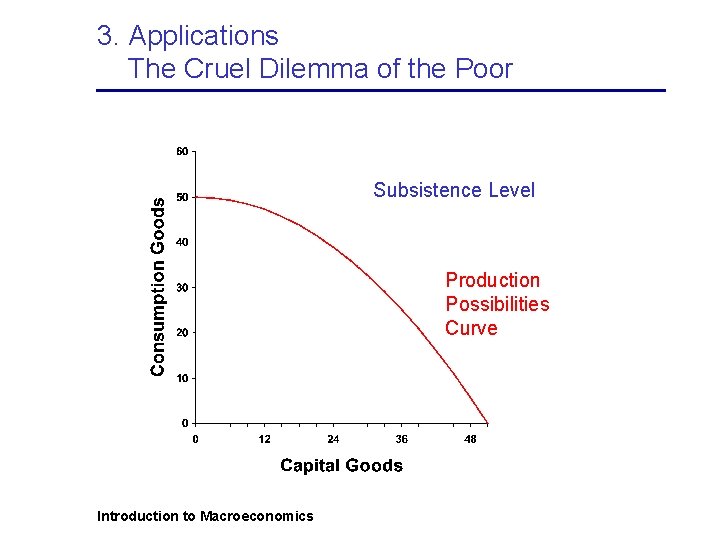
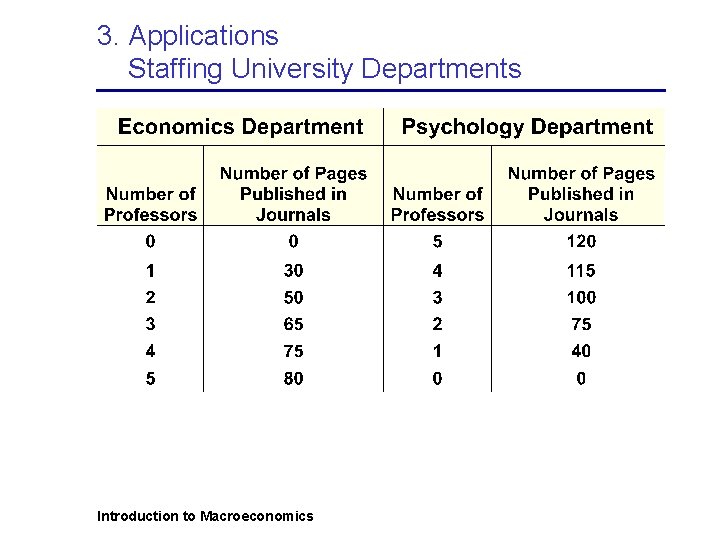
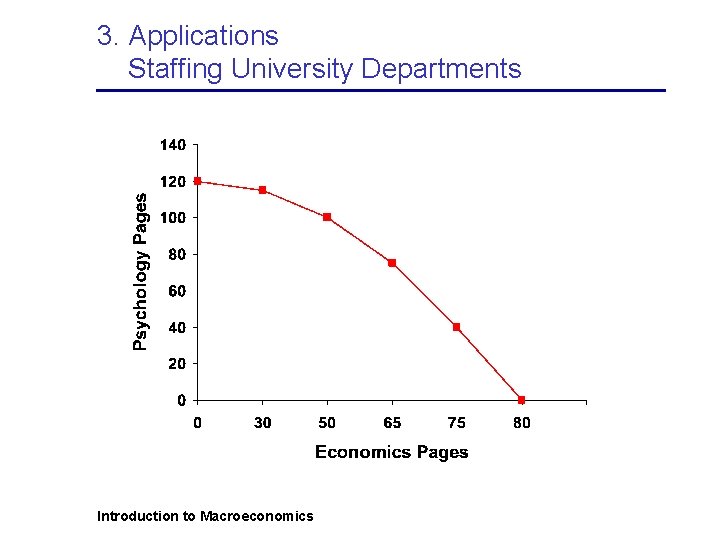
3. Applications • Scarcity and Choice – the “cruel dilemma” facing less-developed countries • Opportunity Costs – staffing professors in two departments Introduction to Macroeconomics
3. Applications The Cruel Dilemma of the Poor Subsistence Level Production Possibilities Curve Introduction to Macroeconomics
3. Applications Staffing University Departments Introduction to Macroeconomics
3. Applications Staffing University Departments Introduction to Macroeconomics