Introduction To Financial Management Chapter 1 Topics 1



- Slides: 34
Introduction To Financial Management Chapter 1
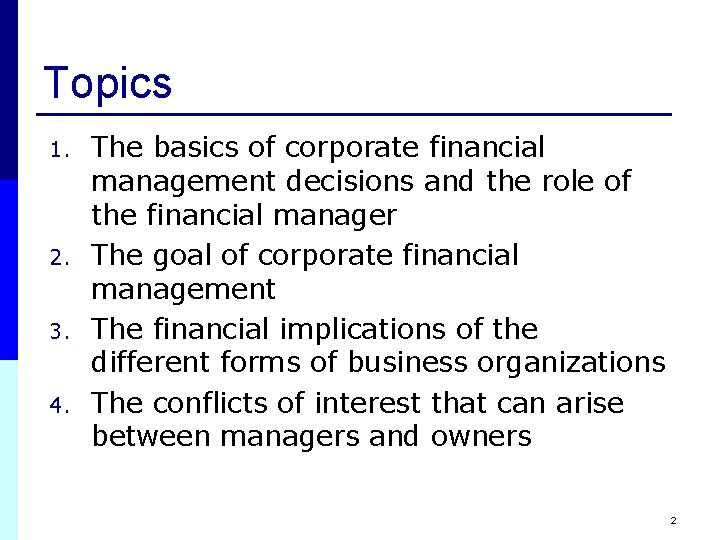
Topics 1. 2. 3. 4. The basics of corporate financial management decisions and the role of the financial manager The goal of corporate financial management The financial implications of the different forms of business organizations The conflicts of interest that can arise between managers and owners 2
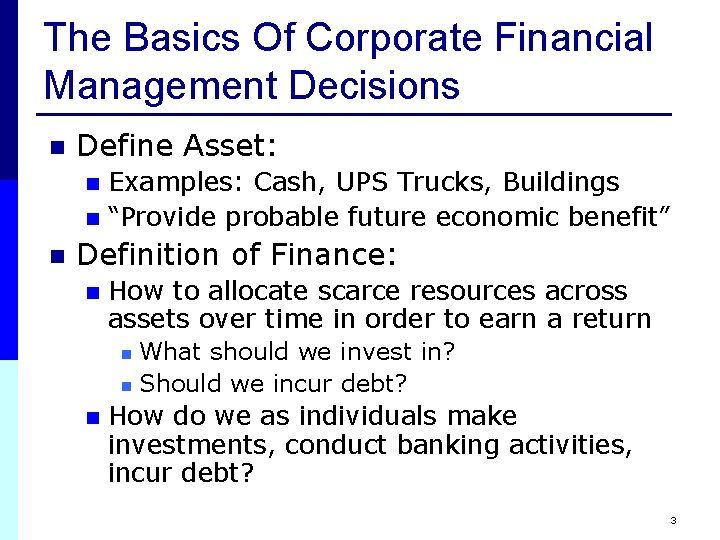
The Basics Of Corporate Financial Management Decisions n Define Asset: Examples: Cash, UPS Trucks, Buildings n “Provide probable future economic benefit” n n Definition of Finance: n How to allocate scarce resources across assets over time in order to earn a return What should we invest in? n Should we incur debt? n n How do we as individuals make investments, conduct banking activities, incur debt? 3
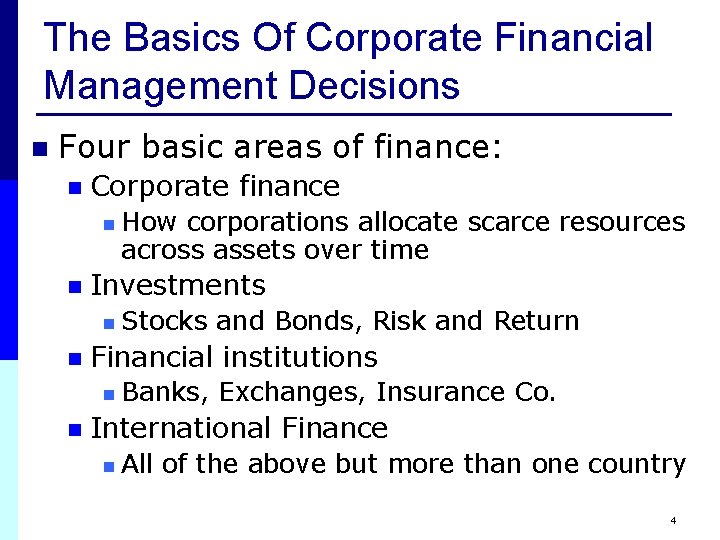
The Basics Of Corporate Financial Management Decisions n Four basic areas of finance: n Corporate finance n How corporations allocate scarce resources across assets over time n Investments n Stocks n Financial institutions n Banks, n and Bonds, Risk and Return Exchanges, Insurance Co. International Finance n All of the above but more than one country 4
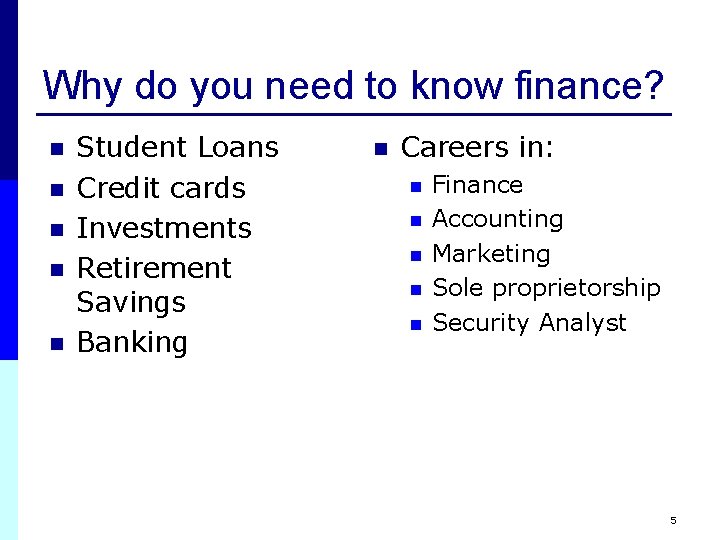
Why do you need to know finance? n n n Student Loans Credit cards Investments Retirement Savings Banking n Careers in: n n n Finance Accounting Marketing Sole proprietorship Security Analyst 5
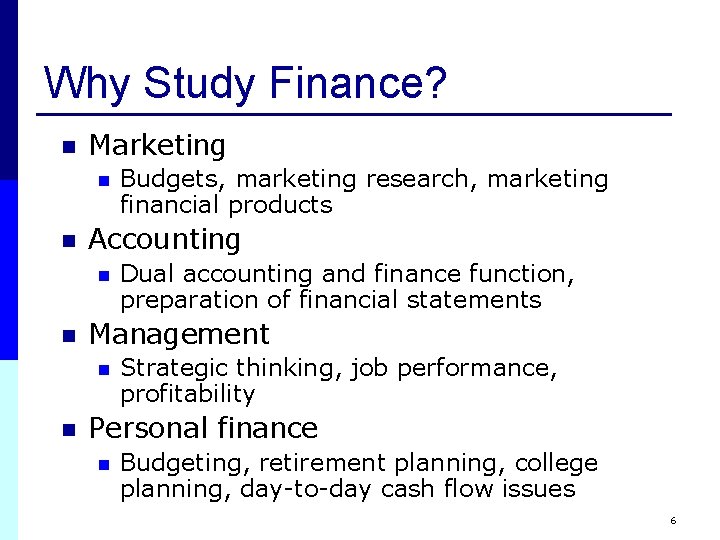
Why Study Finance? n Marketing n n Accounting n n Dual accounting and finance function, preparation of financial statements Management n n Budgets, marketing research, marketing financial products Strategic thinking, job performance, profitability Personal finance n Budgeting, retirement planning, college planning, day-to-day cash flow issues 6
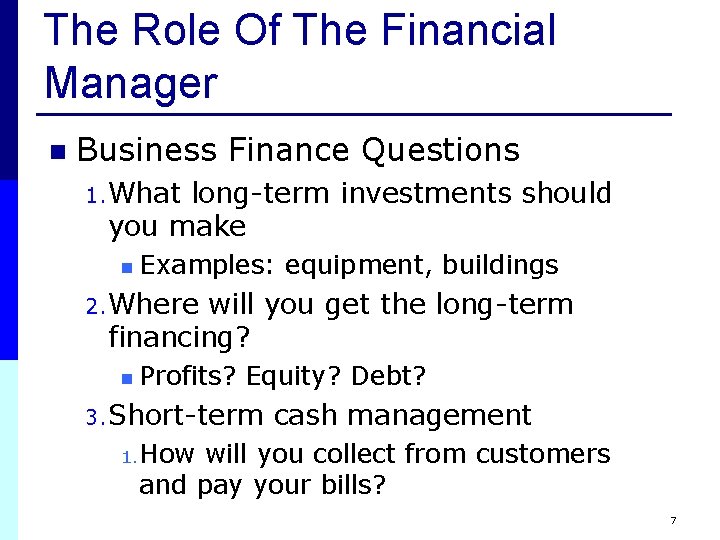
The Role Of The Financial Manager n Business Finance Questions 1. What long-term investments should you make n Examples: equipment, buildings 2. Where will you get the long-term financing? n Profits? Equity? Debt? 3. Short-term cash management 1. How will you collect from customers and pay your bills? 7
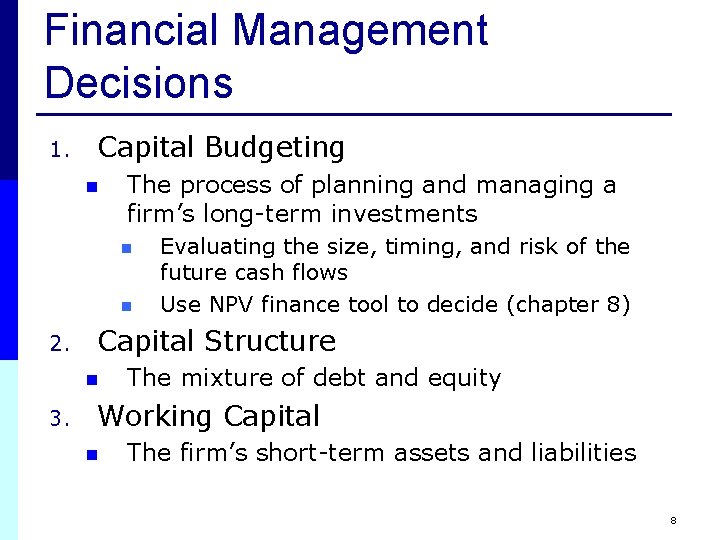
Financial Management Decisions 1. Capital Budgeting n The process of planning and managing a firm’s long-term investments n n 2. Capital Structure n 3. Evaluating the size, timing, and risk of the future cash flows Use NPV finance tool to decide (chapter 8) The mixture of debt and equity Working Capital n The firm’s short-term assets and liabilities 8
The Role Of The Financial Manager 9
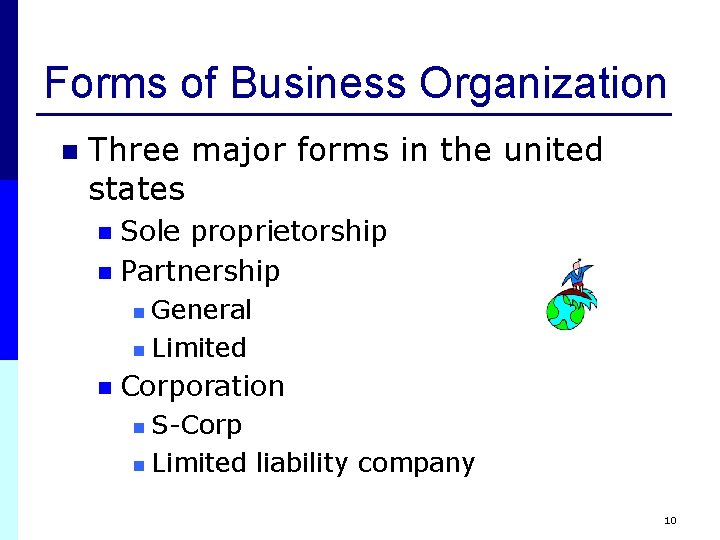
Forms of Business Organization n Three major forms in the united states Sole proprietorship n Partnership n n General n Limited n Corporation n S-Corp n Limited liability company 10
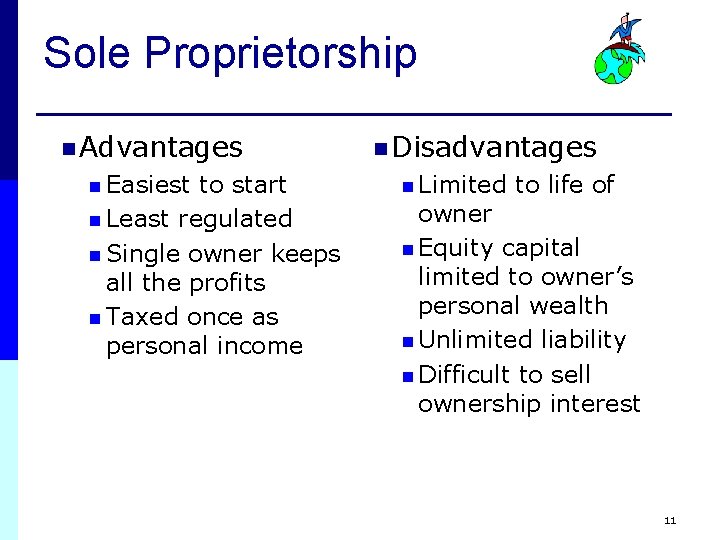
Sole Proprietorship n Advantages n Easiest to start n Least regulated n Single owner keeps all the profits n Taxed once as personal income n Disadvantages n Limited to life of owner n Equity capital limited to owner’s personal wealth n Unlimited liability n Difficult to sell ownership interest 11
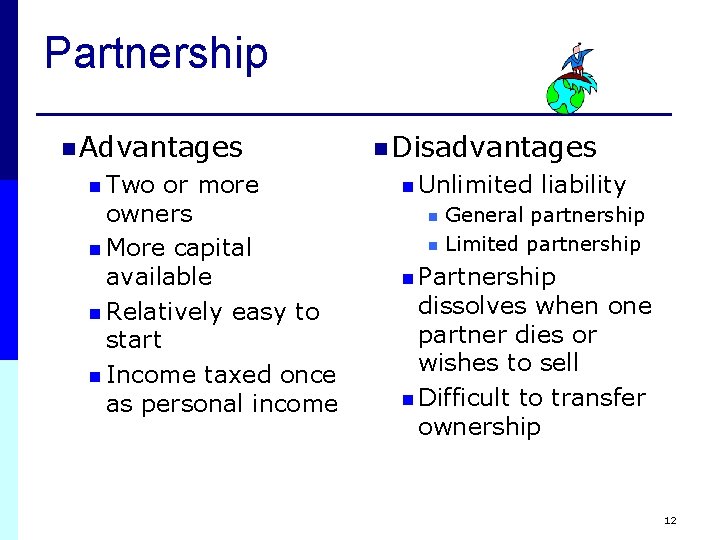
Partnership n Advantages n Two or more owners n More capital available n Relatively easy to start n Income taxed once as personal income n Disadvantages n Unlimited n n liability General partnership Limited partnership n Partnership dissolves when one partner dies or wishes to sell n Difficult to transfer ownership 12
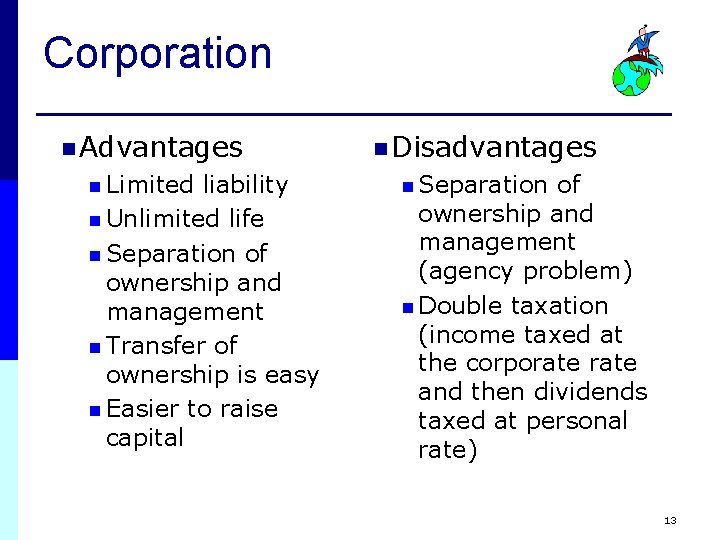
Corporation n Advantages n Limited liability n Unlimited life n Separation of ownership and management n Transfer of ownership is easy n Easier to raise capital n Disadvantages n Separation of ownership and management (agency problem) n Double taxation (income taxed at the corporate and then dividends taxed at personal rate) 13
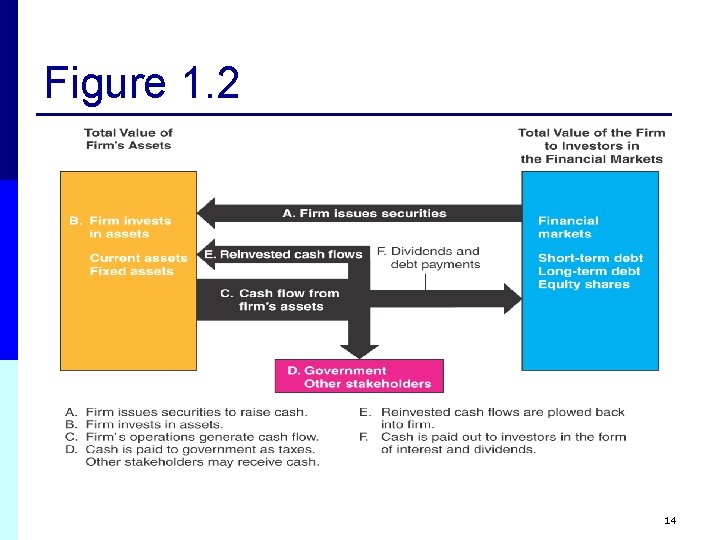
Figure 1. 2 14
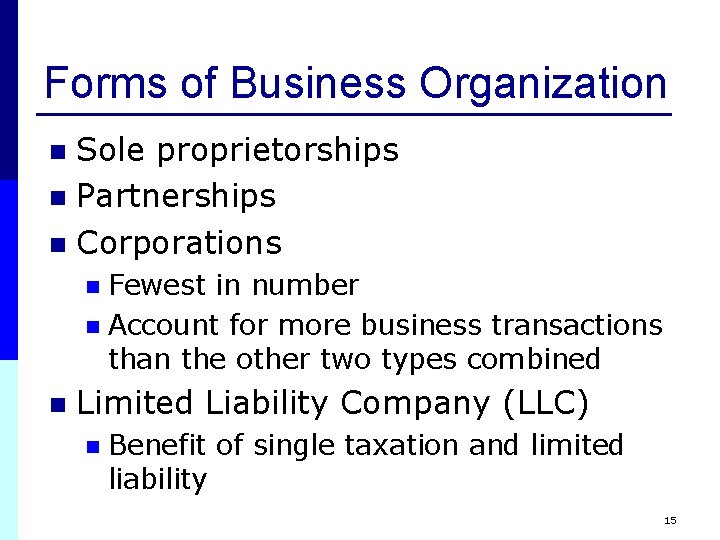
Forms of Business Organization Sole proprietorships n Partnerships n Corporations n Fewest in number n Account for more business transactions than the other two types combined n n Limited Liability Company (LLC) n Benefit of single taxation and limited liability 15
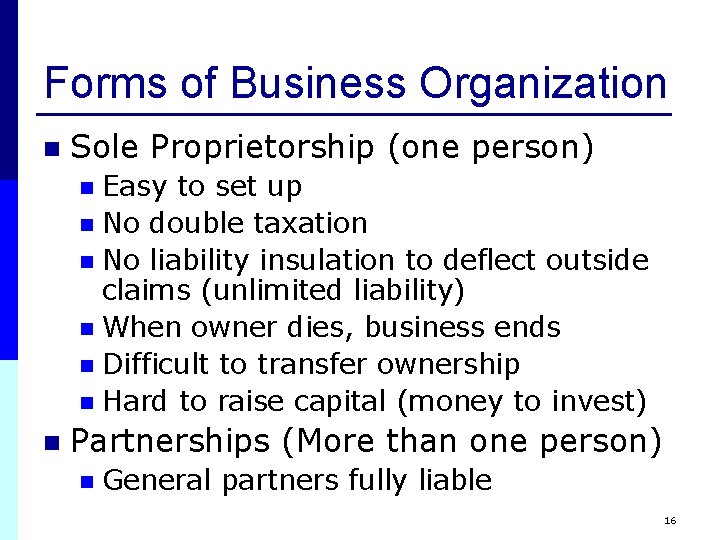
Forms of Business Organization n Sole Proprietorship (one person) Easy to set up n No double taxation n No liability insulation to deflect outside claims (unlimited liability) n When owner dies, business ends n Difficult to transfer ownership n Hard to raise capital (money to invest) n n Partnerships (More than one person) n General partners fully liable 16
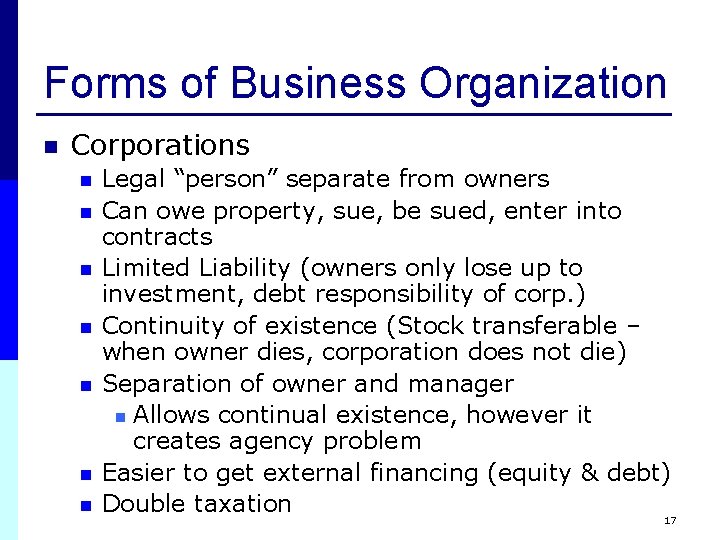
Forms of Business Organization n Corporations n n n n Legal “person” separate from owners Can owe property, sue, be sued, enter into contracts Limited Liability (owners only lose up to investment, debt responsibility of corp. ) Continuity of existence (Stock transferable – when owner dies, corporation does not die) Separation of owner and manager n Allows continual existence, however it creates agency problem Easier to get external financing (equity & debt) Double taxation 17
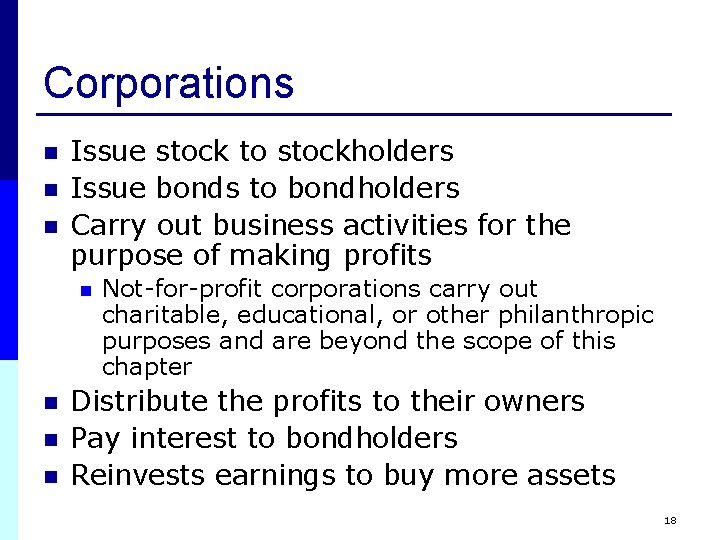
Corporations n n n Issue stock to stockholders Issue bonds to bondholders Carry out business activities for the purpose of making profits n n Not-for-profit corporations carry out charitable, educational, or other philanthropic purposes and are beyond the scope of this chapter Distribute the profits to their owners Pay interest to bondholders Reinvests earnings to buy more assets 18
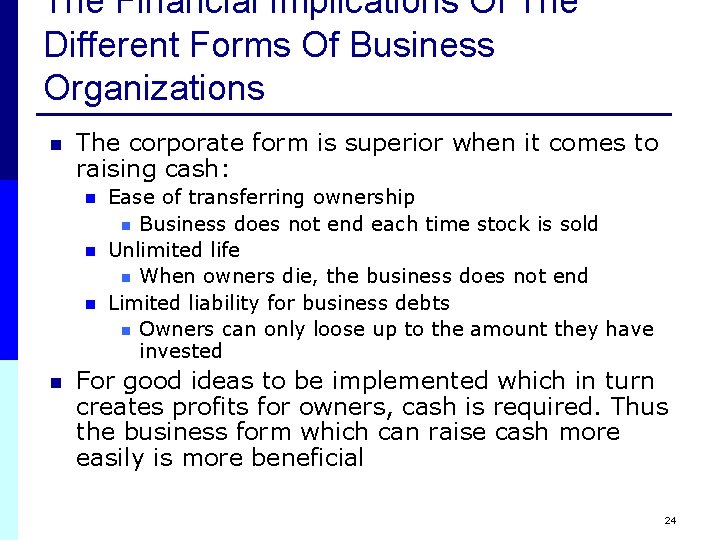
The Financial Implications Of The Different Forms Of Business Organizations n The corporate form is superior when it comes to raising cash: n n Ease of transferring ownership n Business does not end each time stock is sold Unlimited life n When owners die, the business does not end Limited liability for business debts n Owners can only loose up to the amount they have invested For good ideas to be implemented which in turn creates profits for owners, cash is required. Thus the business form which can raise cash more easily is more beneficial 24
Page 10 In Textbook Link to: www. buisnessfinancemag. com Is filled with ads… n n Better to go to www. Google. com and click on News 25
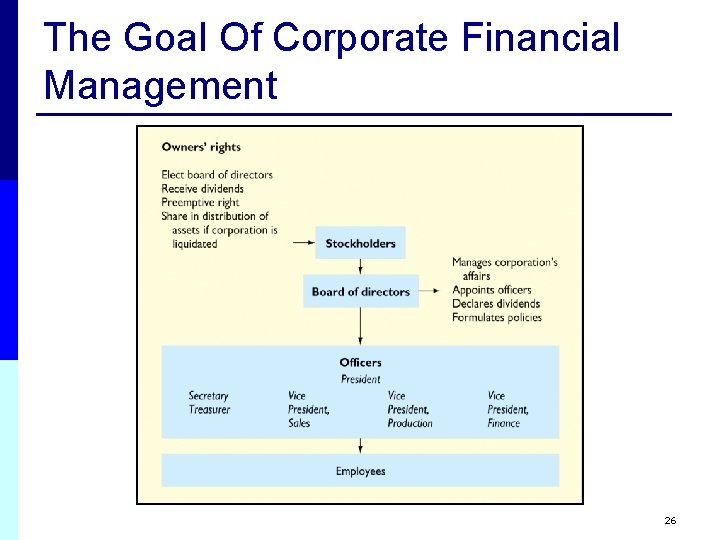
The Goal Of Corporate Financial Management 26
The Goal Of Corporate Financial Management n Presume: n n The stockholders elect the Bof. D The Bof. D hire the managers The managers work for the stockholders Goal: n The financial managers have a fiduciary duty to identify goods and services that add value to the firm because they are desired and valued in the free marketplace, which in turn increases current and future revenues, which in turn increases stock price/equity value 27
The Goal Of Corporate Financial Management n The goal of financial management is to maximize the current value per share of existing stock (market value of equity) n This is theoretically a good goal n n Do some managers employ creative accounting so that it looks like stock value goes up? Financial managers should not take illegal or unethical actions to increase stock value 28
The Goal Of Corporate Financial Management 1. Managers commit assets in a particular direction in order to earn a return 1. Capital budgeting using NPV model (ch. 9) n 2. Cash Flow is what the managers will use to make decisions (ch. 5) Goal is to maximize returns at a given risk level (risk and return are considered together) (ch. 11) 29
The Goal Of Corporate Financial Management 2. Corporation must continually get cash to acquire assets to earn a return 1. 2. 3. Corporation acquires cash from financial markets through equity or debt Corporation reinvests earnings (remaining amount paid to owners) More assets, more sales, higher return, higher stock value (theoretically) 30
The Goal Of Corporate Financial Management 3. All this is done to increase the current stock price 1. 2. Owners’ stock value is increased Managers salaries should be based on stock value and so their salaries increase (theoretically) 31
Goal Of Financial Management n What should be the goal of a corporation? n n n Maximize profit? Minimize costs? Maximize market share? Maximize the current value of the company’s stock? Does this mean we should do anything and everything to maximize owner wealth? Sarbanes-Oxley Act n Makes managers personally responsible for financial statements 32
The Conflicts Of Interest That Can Arise Between Managers And Owners n Creative accounting so that it looks like stock value goes up? n Enron: n n World Com: n n Former Enron CFO Andrew Fastow, the alleged mastermind behind Enron's complex network of offshore partnerships and questionable accounting practices* Former CEO, Bernard Ebbers was convicted (2005) of fraud and conspiracy in the largest (to date) accounting scandal in U. S. history, as a result of World. Com's false financial reporting, and subsequent 11 billion dollar loss to investors* *Wikipedia Andrew and Bernard were agents that were supposed to be serving the stockholders 33
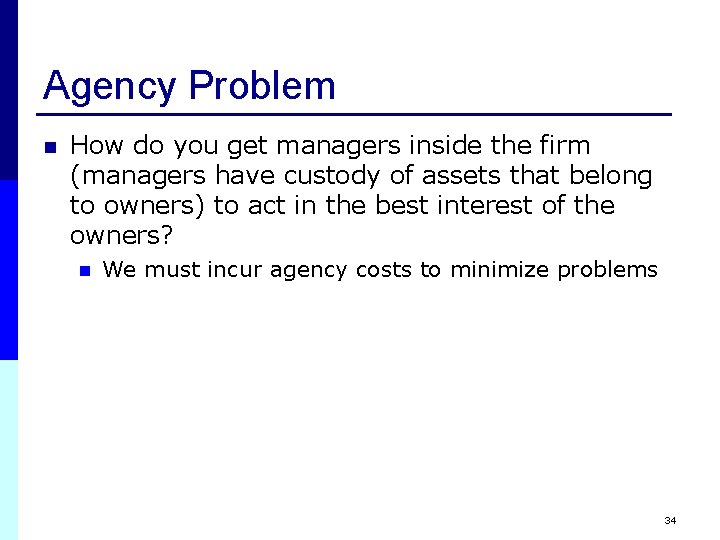
Agency Problem n How do you get managers inside the firm (managers have custody of assets that belong to owners) to act in the best interest of the owners? n We must incur agency costs to minimize problems 34
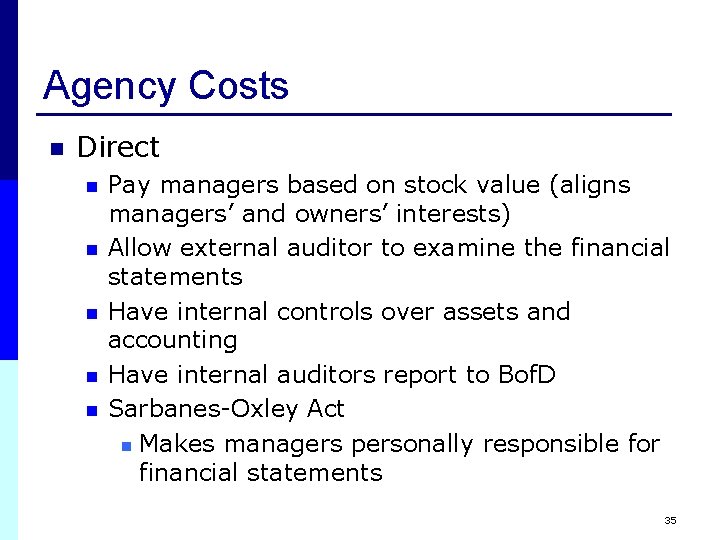
Agency Costs n Direct n n n Pay managers based on stock value (aligns managers’ and owners’ interests) Allow external auditor to examine the financial statements Have internal controls over assets and accounting Have internal auditors report to Bof. D Sarbanes-Oxley Act n Makes managers personally responsible for financial statements 35
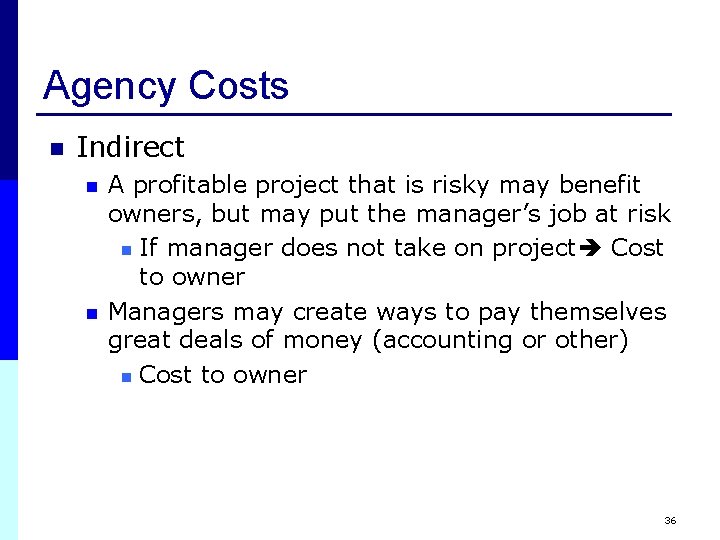
Agency Costs n Indirect n n A profitable project that is risky may benefit owners, but may put the manager’s job at risk n If manager does not take on project Cost to owner Managers may create ways to pay themselves great deals of money (accounting or other) n Cost to owner 36
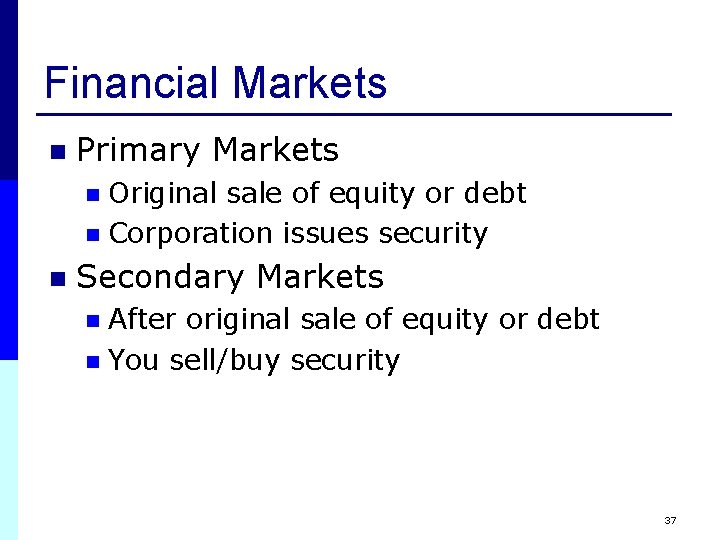
Financial Markets n Primary Markets Original sale of equity or debt n Corporation issues security n n Secondary Markets After original sale of equity or debt n You sell/buy security n 37
Financial Markets n n Secondary Markets: Dealer Markets (Over-the-counter markets (OTC)) n Dealers buy and sell for themselves n n (think of car lot) Most debt is sold this way Example: NASDAQ Auction Markets (Exchanges) n Brokers and agents match buyers and sellers n n n (think of real estate agent) Most of the large firms’ equity is sold this way Example: NYSE 38
Summary Slide n n n The Basics Of Corporate Financial Management Decisions Why do you need to know finance? The Role Of The Financial Manager Financial Management Decisions Forms of Business Organization The Financial Implications Of The Different Forms Of Business Organizations The Goal Of Corporate Financial Management The Conflicts Of Interest That Can Arise Between Managers And Owners Agency Problem Agency Costs Financial Markets 39