Introduction to Computational Linguistics Eleni Miltsakaki AUTH Fall
- Slides: 23
Introduction to Computational Linguistics Eleni Miltsakaki AUTH Fall 2005 -Lecture 2 1
Outline of English syntax • Words • Phrases • Simple Sentences 2
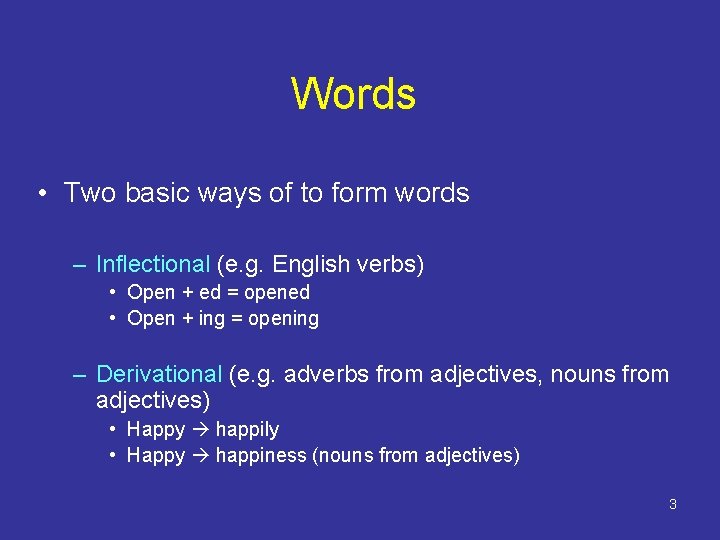
Words • Two basic ways of to form words – Inflectional (e. g. English verbs) • Open + ed = opened • Open + ing = opening – Derivational (e. g. adverbs from adjectives, nouns from adjectives) • Happy happily • Happy happiness (nouns from adjectives) 3
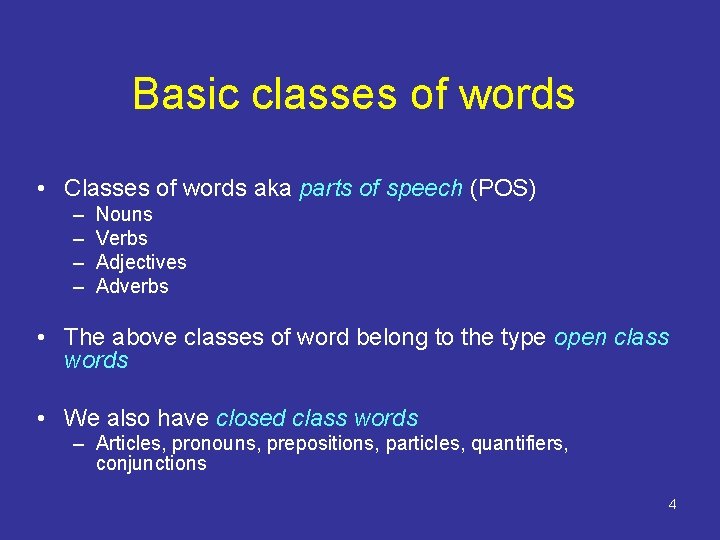
Basic classes of words • Classes of words aka parts of speech (POS) – – Nouns Verbs Adjectives Adverbs • The above classes of word belong to the type open class words • We also have closed class words – Articles, pronouns, prepositions, particles, quantifiers, conjunctions 4
Basic phrases • A word from an open class can be used to form the basis of a phrase • The basis of a phrase is called the head 5
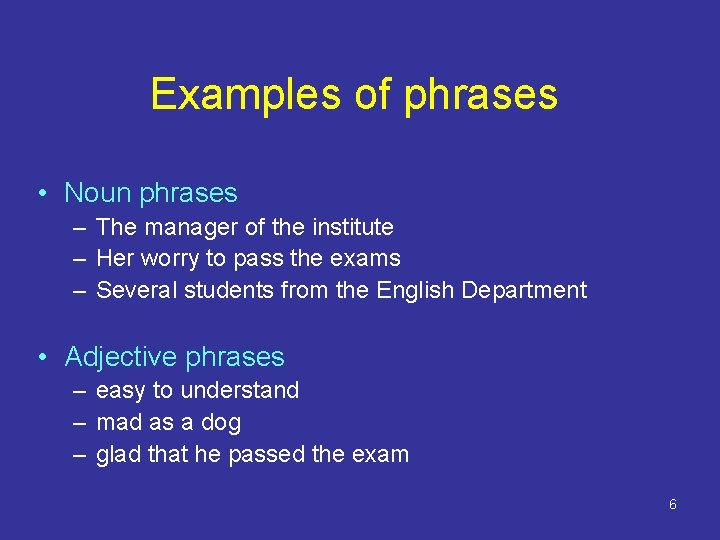
Examples of phrases • Noun phrases – The manager of the institute – Her worry to pass the exams – Several students from the English Department • Adjective phrases – easy to understand – mad as a dog – glad that he passed the exam 6
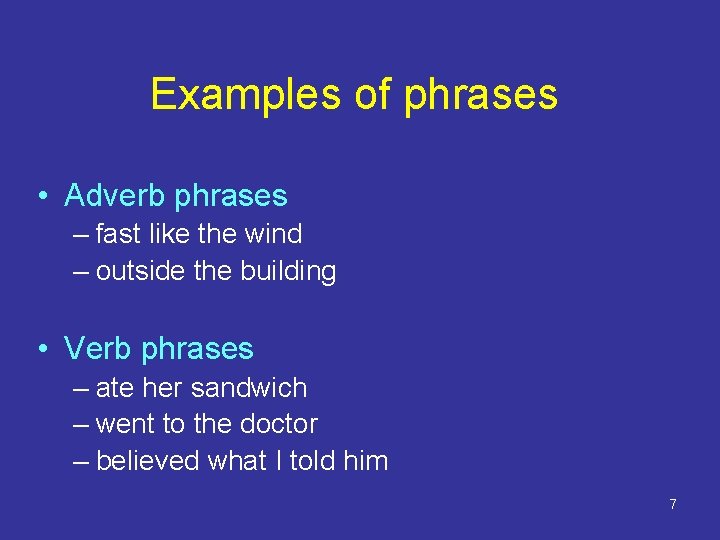
Examples of phrases • Adverb phrases – fast like the wind – outside the building • Verb phrases – ate her sandwich – went to the doctor – believed what I told him 7
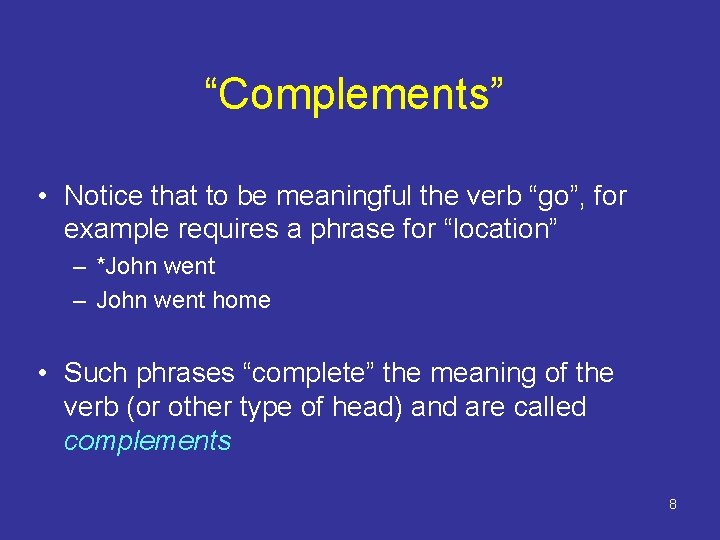
“Complements” • Notice that to be meaningful the verb “go”, for example requires a phrase for “location” – *John went – John went home • Such phrases “complete” the meaning of the verb (or other type of head) and are called complements 8
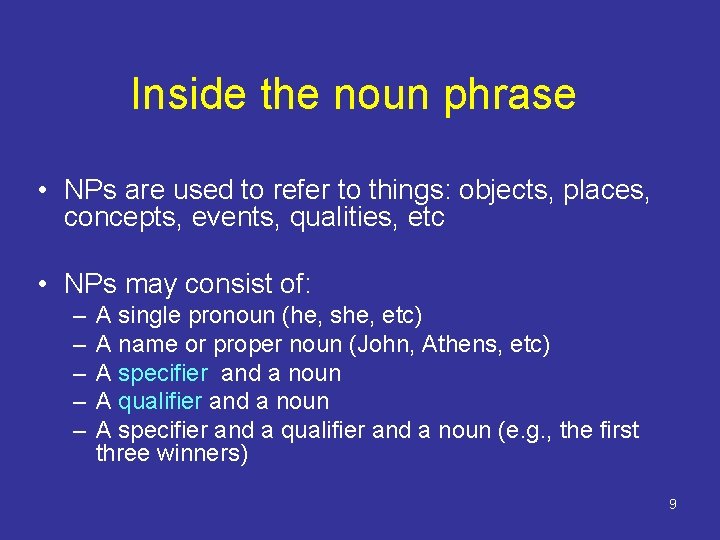
Inside the noun phrase • NPs are used to refer to things: objects, places, concepts, events, qualities, etc • NPs may consist of: – – – A single pronoun (he, she, etc) A name or proper noun (John, Athens, etc) A specifier and a noun A qualifier and a noun A specifier and a qualifier and a noun (e. g. , the first three winners) 9
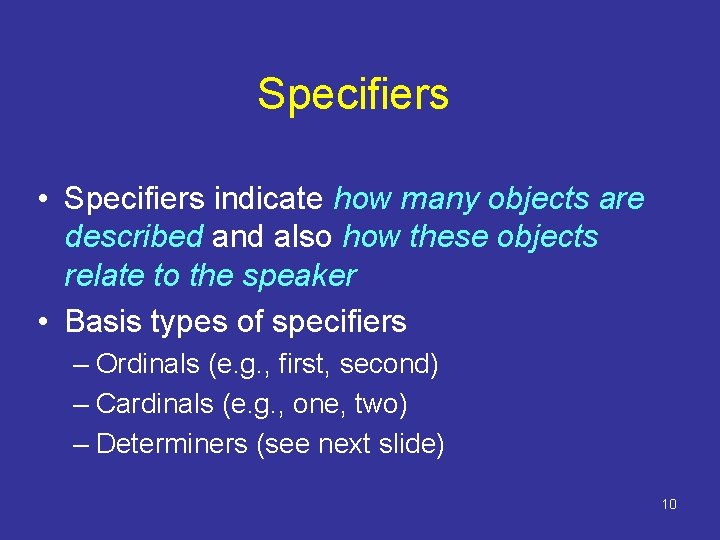
Specifiers • Specifiers indicate how many objects are described and also how these objects relate to the speaker • Basis types of specifiers – Ordinals (e. g. , first, second) – Cardinals (e. g. , one, two) – Determiners (see next slide) 10
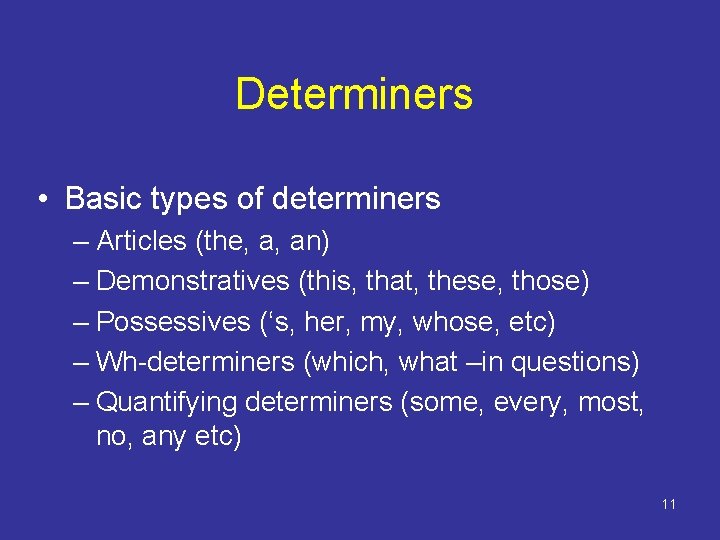
Determiners • Basic types of determiners – Articles (the, a, an) – Demonstratives (this, that, these, those) – Possessives (‘s, her, my, whose, etc) – Wh-determiners (which, what –in questions) – Quantifying determiners (some, every, most, no, any etc) 11
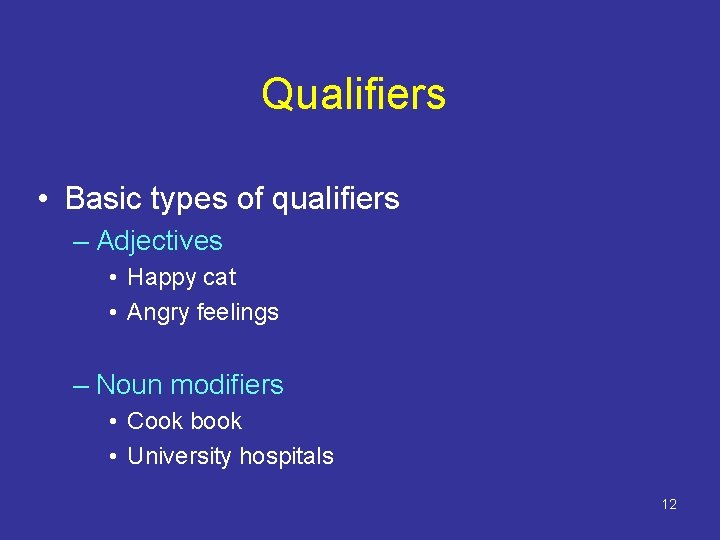
Qualifiers • Basic types of qualifiers – Adjectives • Happy cat • Angry feelings – Noun modifiers • Cook book • University hospitals 12
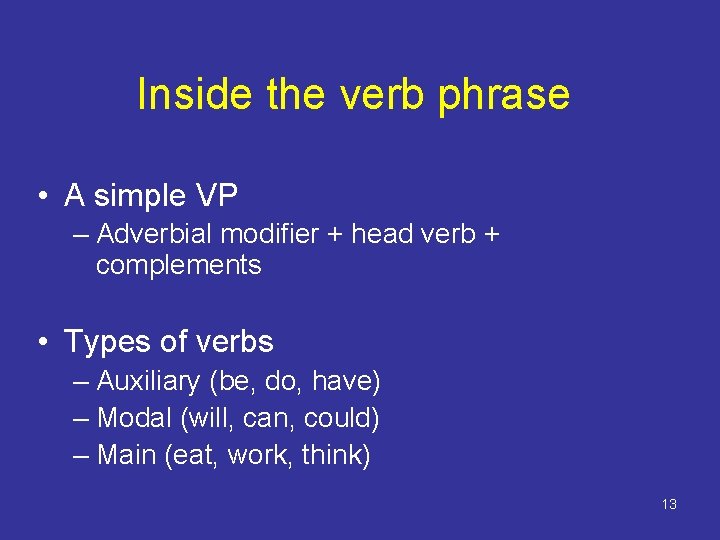
Inside the verb phrase • A simple VP – Adverbial modifier + head verb + complements • Types of verbs – Auxiliary (be, do, have) – Modal (will, can, could) – Main (eat, work, think) 13
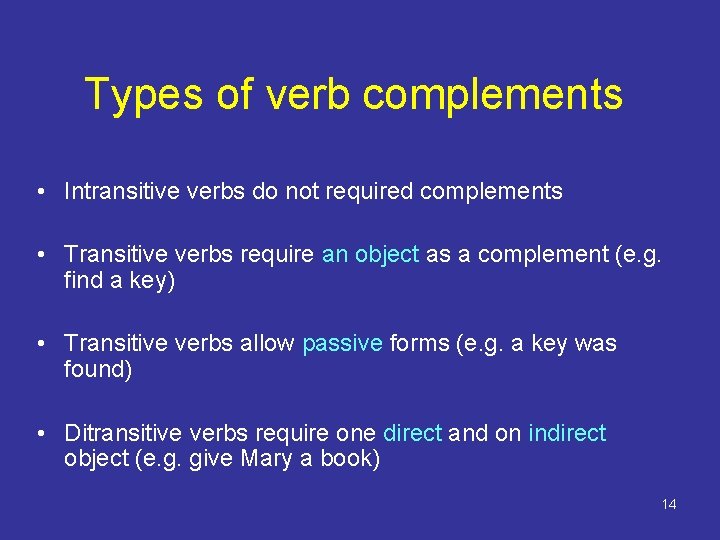
Types of verb complements • Intransitive verbs do not required complements • Transitive verbs require an object as a complement (e. g. find a key) • Transitive verbs allow passive forms (e. g. a key was found) • Ditransitive verbs require one direct and on indirect object (e. g. give Mary a book) 14
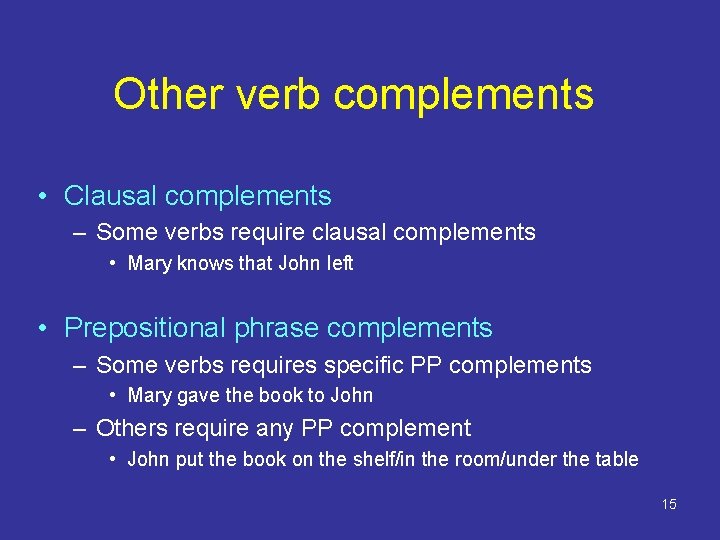
Other verb complements • Clausal complements – Some verbs require clausal complements • Mary knows that John left • Prepositional phrase complements – Some verbs requires specific PP complements • Mary gave the book to John – Others require any PP complement • John put the book on the shelf/in the room/under the table 15
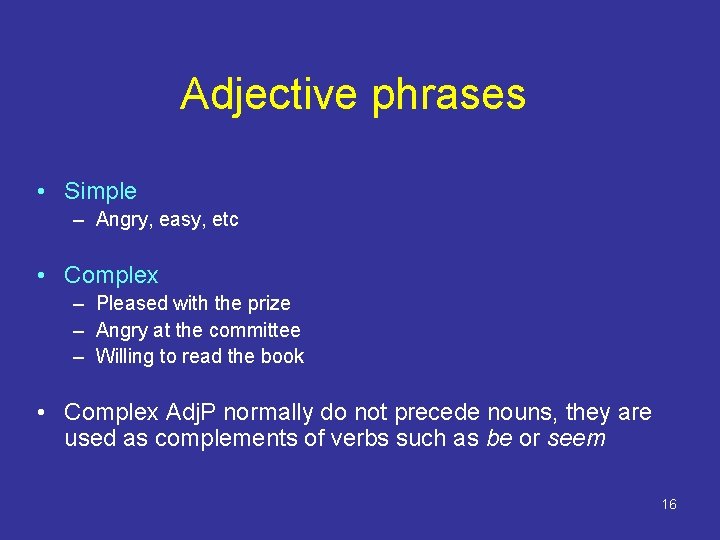
Adjective phrases • Simple – Angry, easy, etc • Complex – Pleased with the prize – Angry at the committee – Willing to read the book • Complex Adj. P normally do not precede nouns, they are used as complements of verbs such as be or seem 16
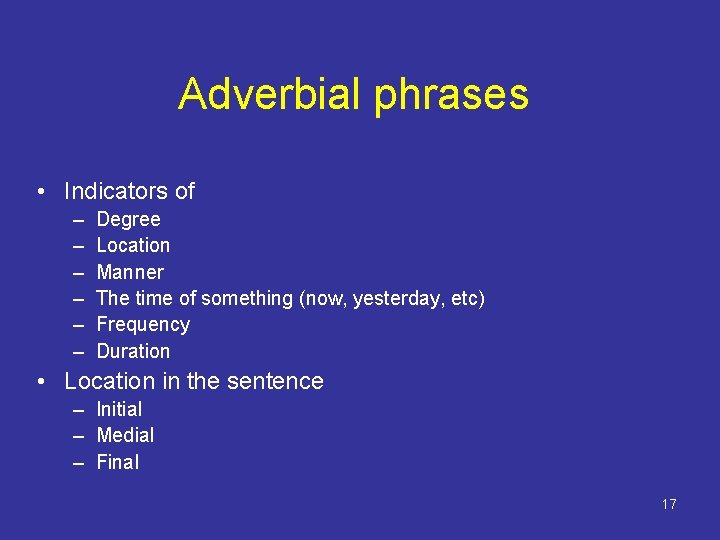
Adverbial phrases • Indicators of – – – Degree Location Manner The time of something (now, yesterday, etc) Frequency Duration • Location in the sentence – Initial – Medial – Final 17
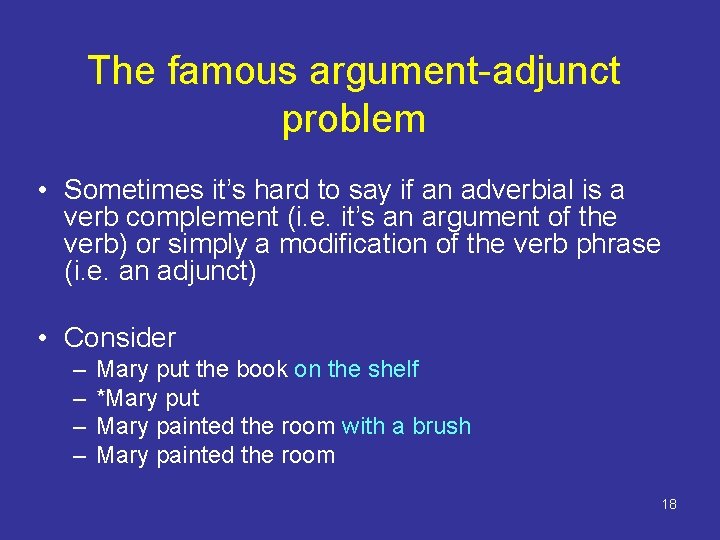
The famous argument-adjunct problem • Sometimes it’s hard to say if an adverbial is a verb complement (i. e. it’s an argument of the verb) or simply a modification of the verb phrase (i. e. an adjunct) • Consider – – Mary put the book on the shelf *Mary put Mary painted the room with a brush Mary painted the room 18
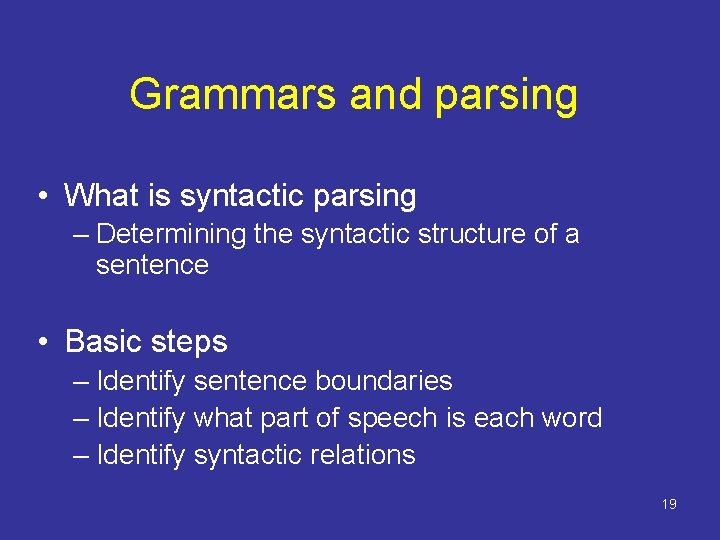
Grammars and parsing • What is syntactic parsing – Determining the syntactic structure of a sentence • Basic steps – Identify sentence boundaries – Identify what part of speech is each word – Identify syntactic relations 19
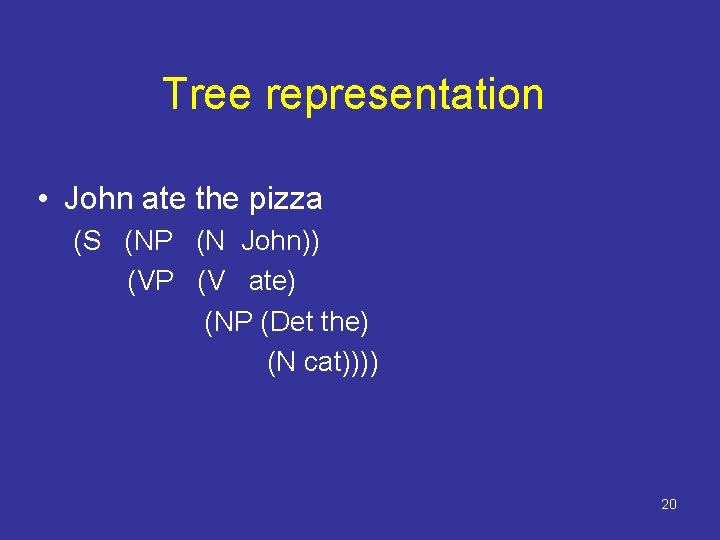
Tree representation • John ate the pizza (S (NP (N John)) (VP (V ate) (NP (Det the) (N cat)))) 20
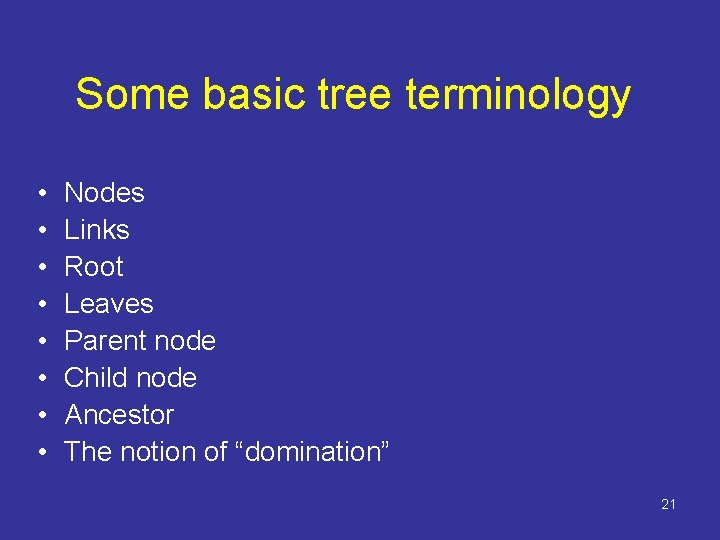
Some basic tree terminology • • Nodes Links Root Leaves Parent node Child node Ancestor The notion of “domination” 21
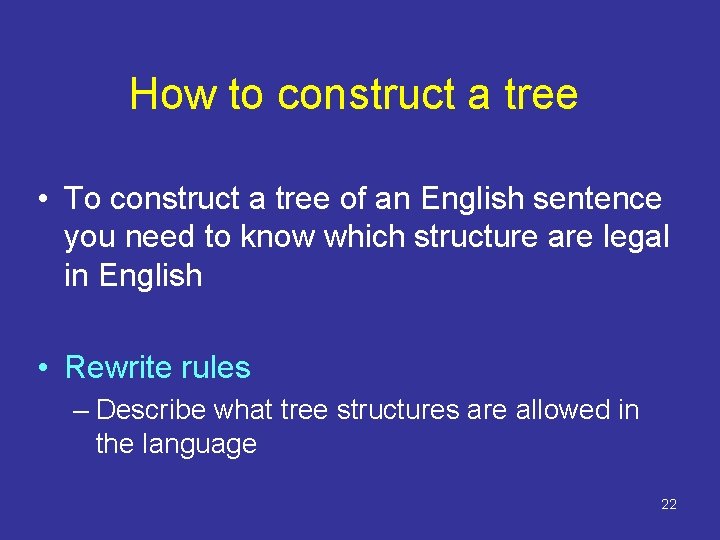
How to construct a tree • To construct a tree of an English sentence you need to know which structure are legal in English • Rewrite rules – Describe what tree structures are allowed in the language 22
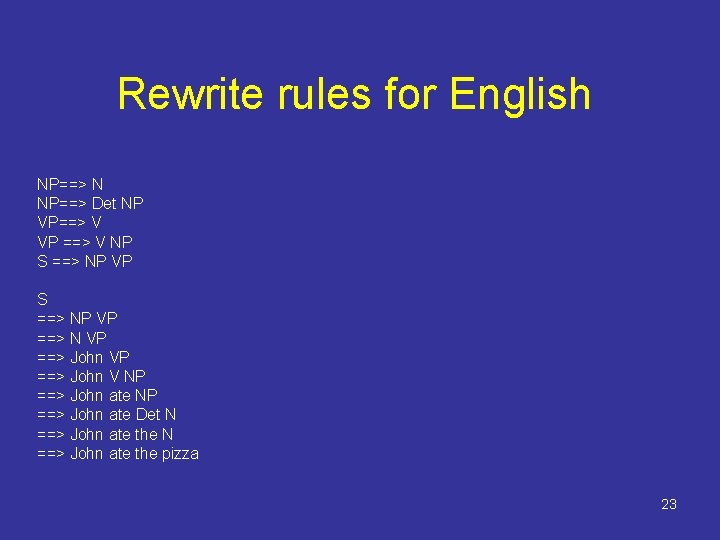
Rewrite rules for English NP==> N NP==> Det NP VP==> V VP ==> V NP S ==> NP VP ==> N VP ==> John V NP ==> John ate Det N ==> John ate the pizza 23