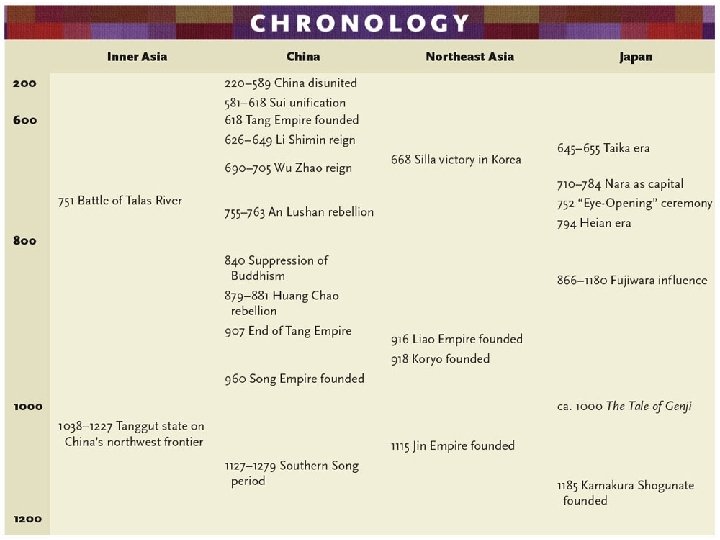
Inner East Asia Sui Tang Song 600 1200

- Slides: 30
Inner & East Asia: Sui, Tang, Song 600 -1200 CE
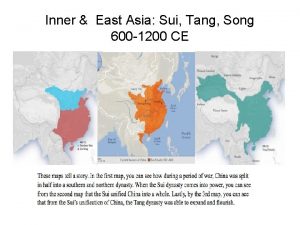
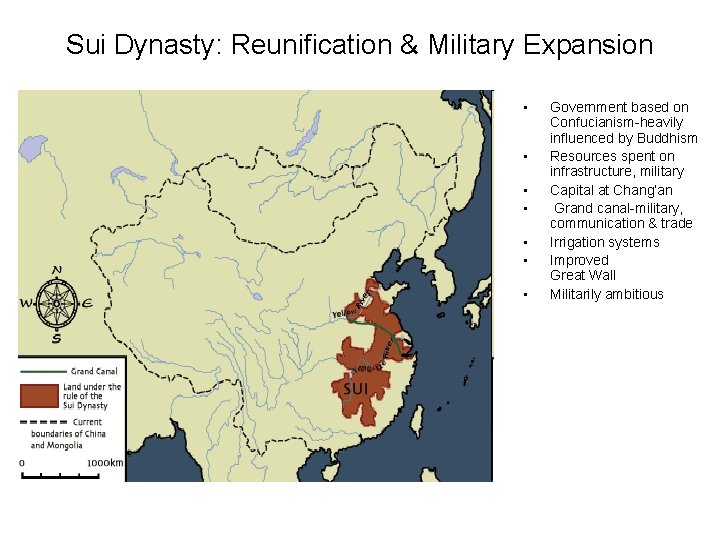
Sui Dynasty: Reunification & Military Expansion • • Government based on Confucianism-heavily influenced by Buddhism Resources spent on infrastructure, military Capital at Chang’an Grand canal-military, communication & trade Irrigation systems Improved Great Wall Militarily ambitious
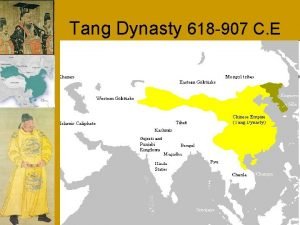
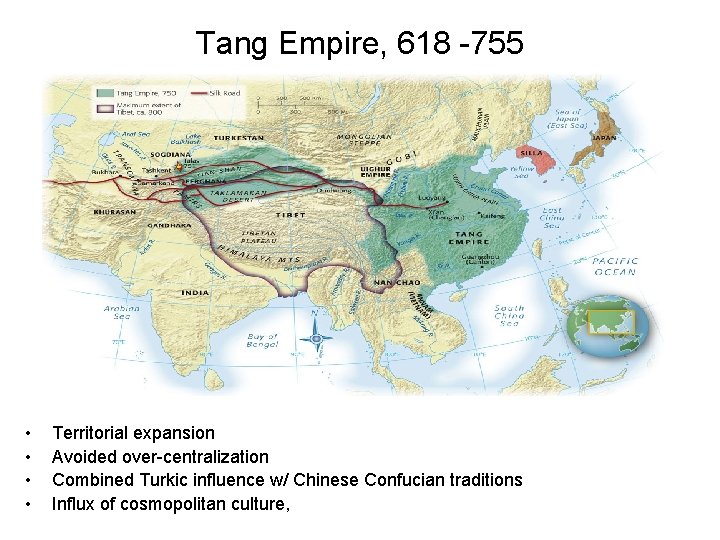
Tang Empire, 618 -755 • • Territorial expansion Avoided over-centralization Combined Turkic influence w/ Chinese Confucian traditions Influx of cosmopolitan culture,
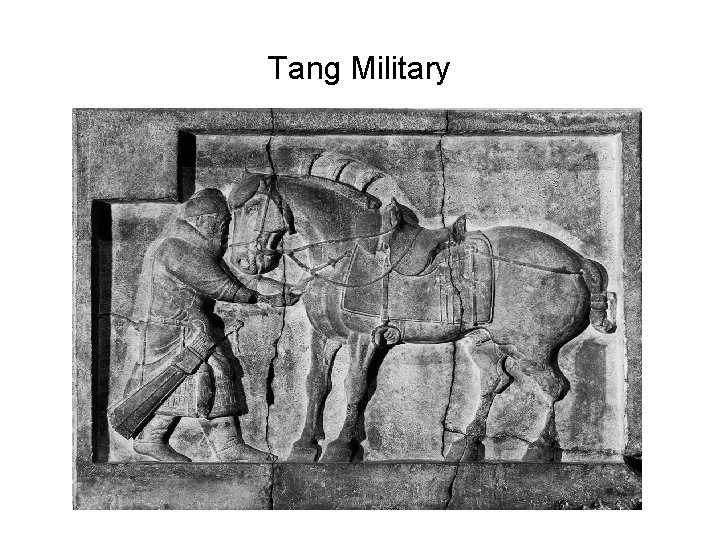
Tang Military
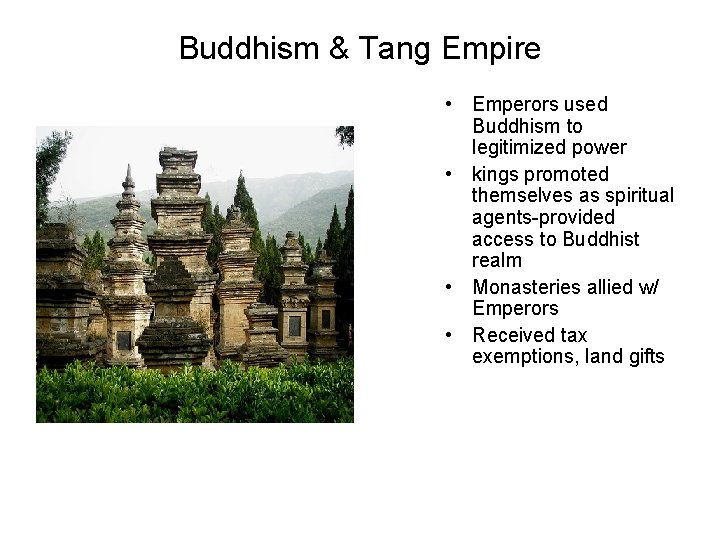
Buddhism & Tang Empire • Emperors used Buddhism to legitimized power • kings promoted themselves as spiritual agents-provided access to Buddhist realm • Monasteries allied w/ Emperors • Received tax exemptions, land gifts
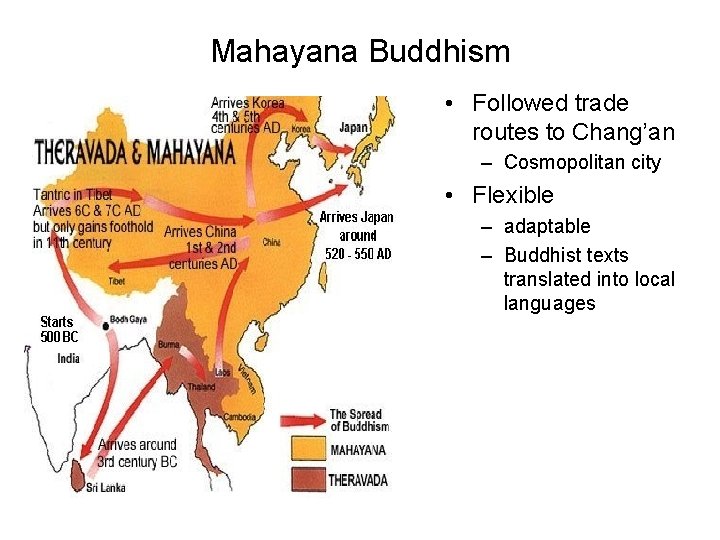
Mahayana Buddhism • Followed trade routes to Chang’an – Cosmopolitan city • Flexible – adaptable – Buddhist texts translated into local languages
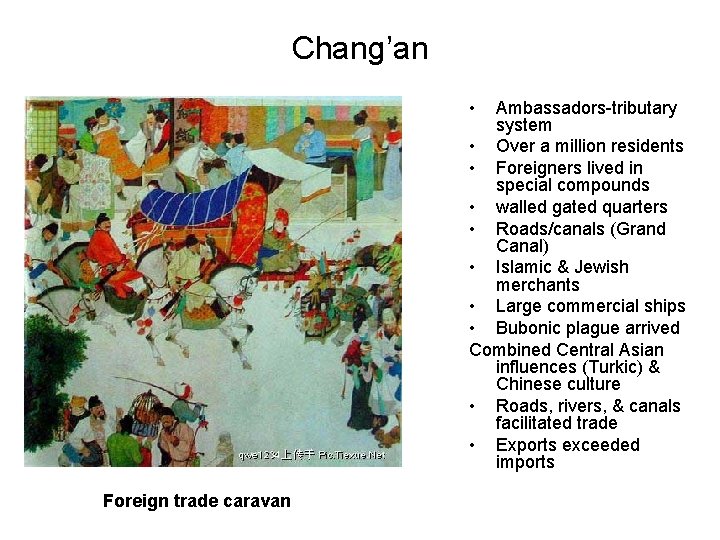
Chang’an • Ambassadors-tributary system • Over a million residents • Foreigners lived in special compounds • walled gated quarters • Roads/canals (Grand Canal) • Islamic & Jewish merchants • Large commercial ships • Bubonic plague arrived Combined Central Asian influences (Turkic) & Chinese culture • Roads, rivers, & canals facilitated trade • Exports exceeded imports Foreign trade caravan
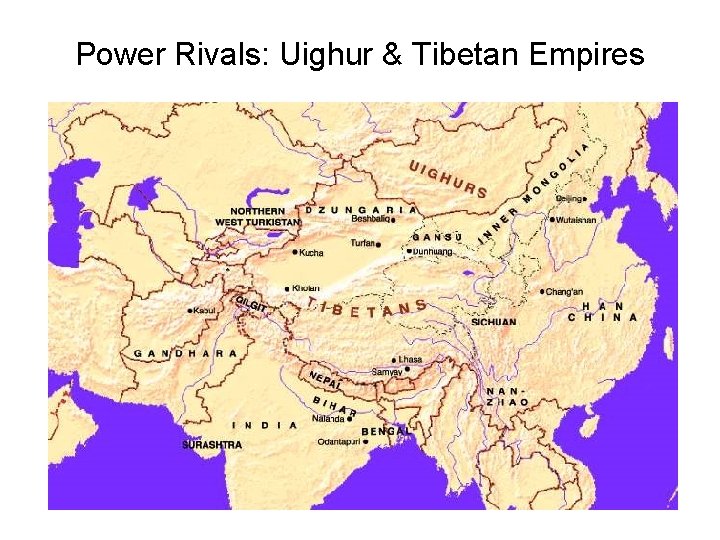
Power Rivals: Uighur & Tibetan Empires
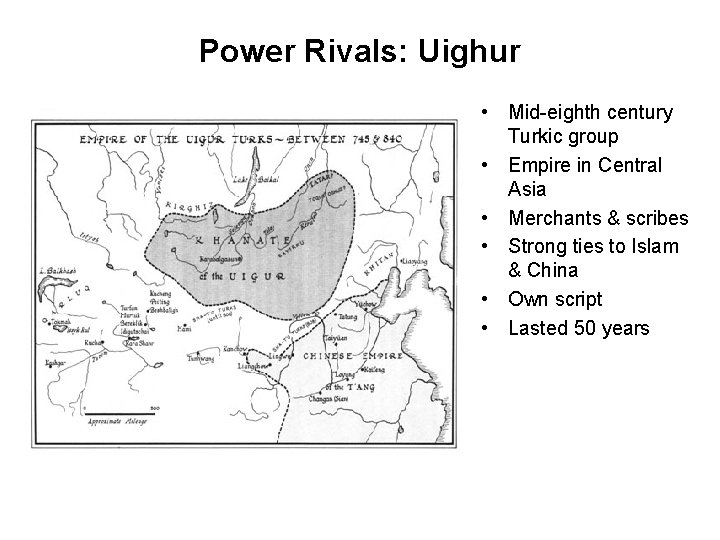
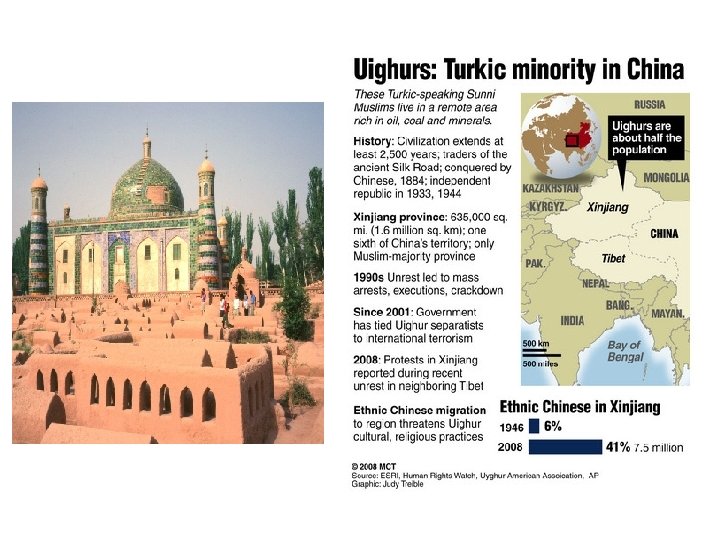
Power Rivals: Uighur • Mid-eighth century Turkic group • Empire in Central Asia • Merchants & scribes • Strong ties to Islam & China • Own script • Lasted 50 years
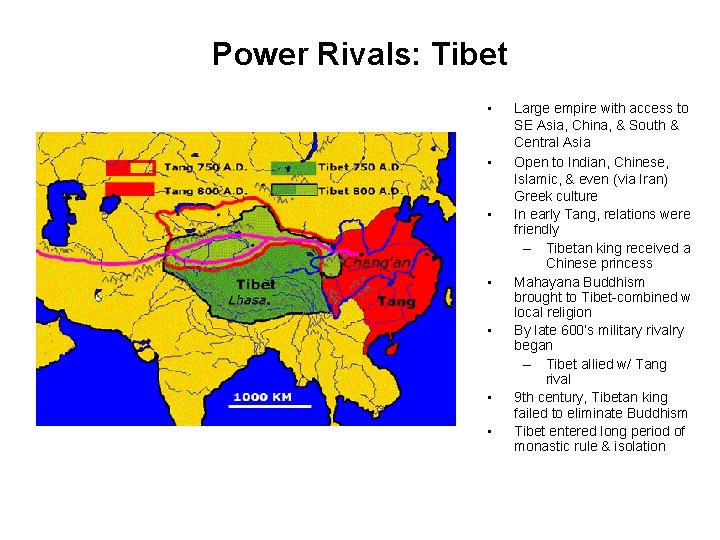
Power Rivals: Tibet • • Large empire with access to SE Asia, China, & South & Central Asia Open to Indian, Chinese, Islamic, & even (via Iran) Greek culture In early Tang, relations were friendly – Tibetan king received a Chinese princess Mahayana Buddhism brought to Tibet-combined w local religion By late 600’s military rivalry began – Tibet allied w/ Tang rival 9 th century, Tibetan king failed to eliminate Buddhism Tibet entered long period of monastic rule & isolation
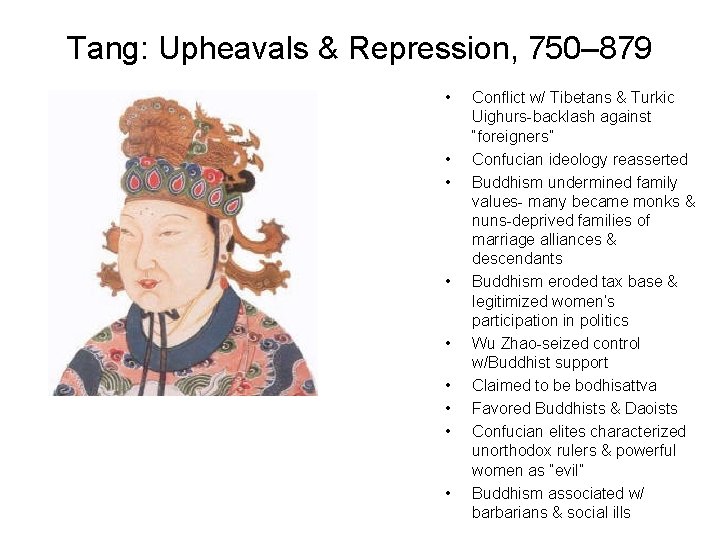
Tang: Upheavals & Repression, 750– 879 • • • Conflict w/ Tibetans & Turkic Uighurs-backlash against “foreigners” Confucian ideology reasserted Buddhism undermined family values- many became monks & nuns-deprived families of marriage alliances & descendants Buddhism eroded tax base & legitimized women’s participation in politics Wu Zhao-seized control w/Buddhist support Claimed to be bodhisattva Favored Buddhists & Daoists Confucian elites characterized unorthodox rulers & powerful women as “evil” Buddhism associated w/ barbarians & social ills
End of Tang 879 -907 • Territory expanded-many internal rebellions • 907 - Tang state collapsed • Regional military governors established own kingdoms • None able to integrate territory on same scale • East Asia cut off from communication w/ Islamic world & Europe
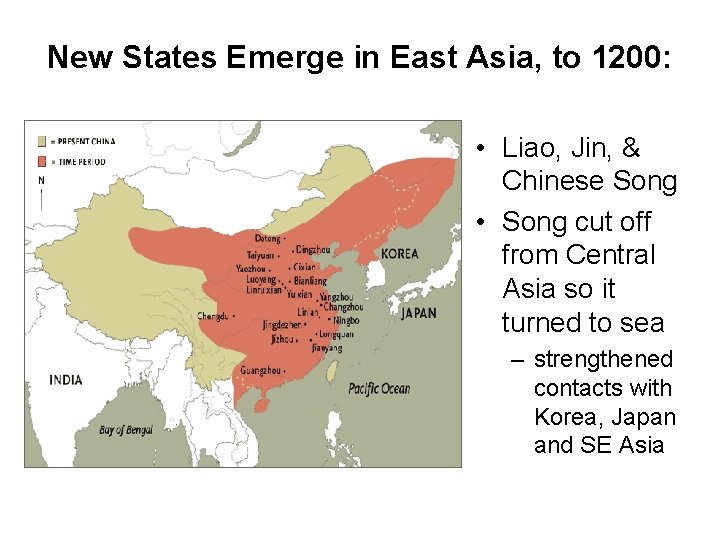
New States Emerge in East Asia, to 1200: • Liao, Jin, & Chinese Song • Song cut off from Central Asia so it turned to sea – strengthened contacts with Korea, Japan and SE Asia
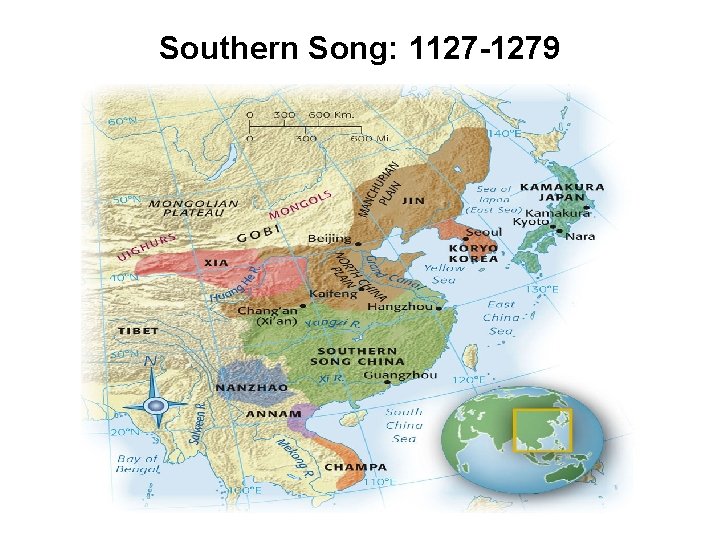
Southern Song: 1127 -1279
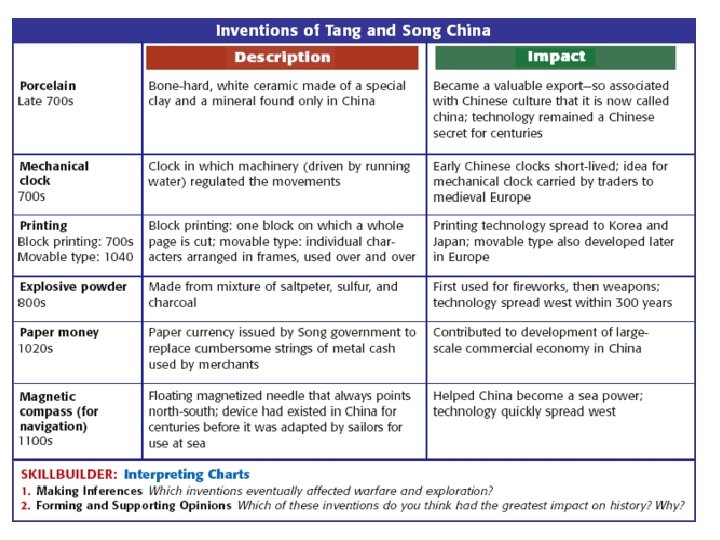
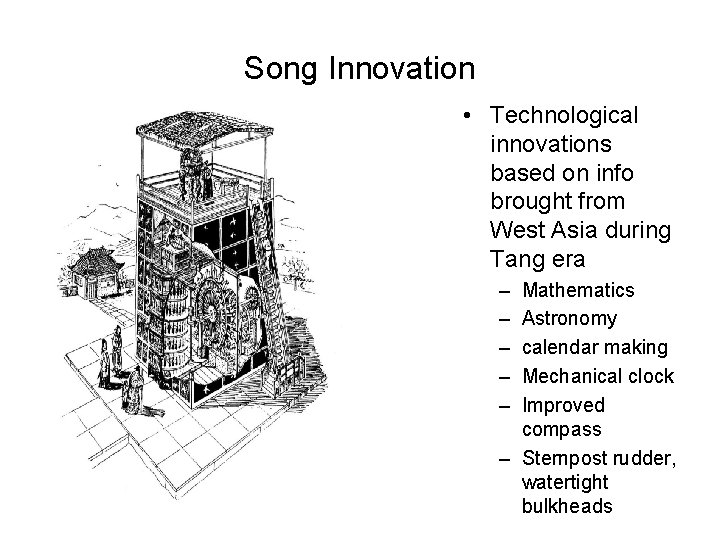
Song Innovation • Technological innovations based on info brought from West Asia during Tang era – – – Mathematics Astronomy calendar making Mechanical clock Improved compass – Sternpost rudder, watertight bulkheads
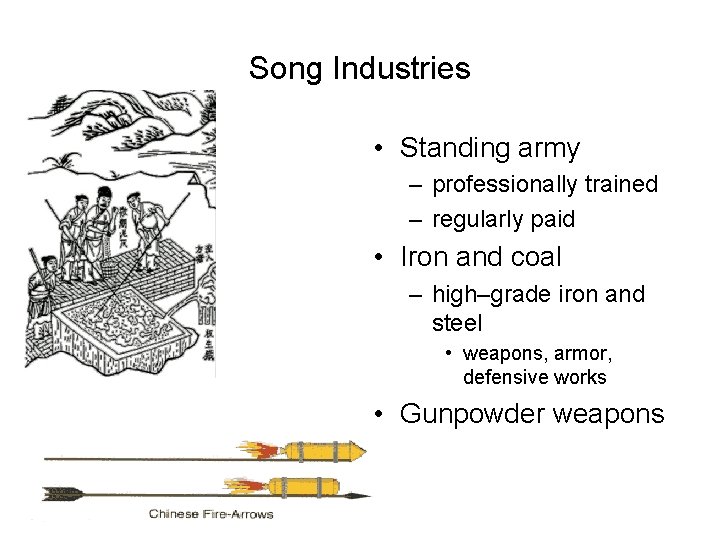
Song Industries • Standing army – professionally trained – regularly paid • Iron and coal – high–grade iron and steel • weapons, armor, defensive works • Gunpowder weapons
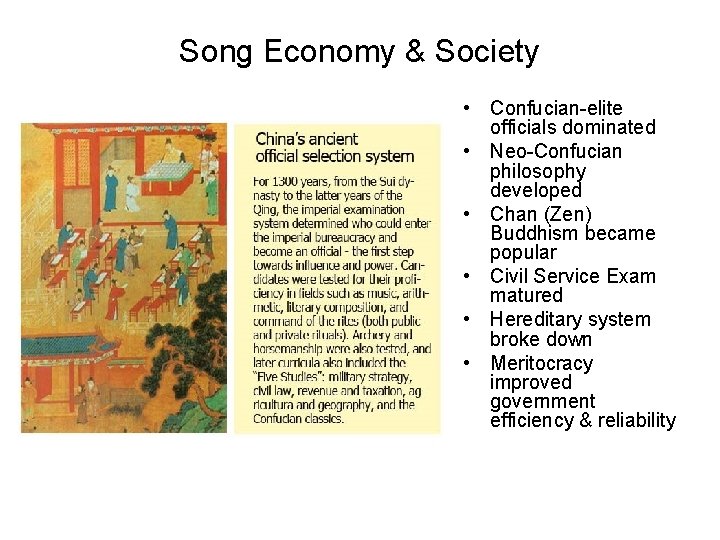
Song Economy & Society • Confucian-elite officials dominated • Neo-Confucian philosophy developed • Chan (Zen) Buddhism became popular • Civil Service Exam matured • Hereditary system broke down • Meritocracy improved government efficiency & reliability
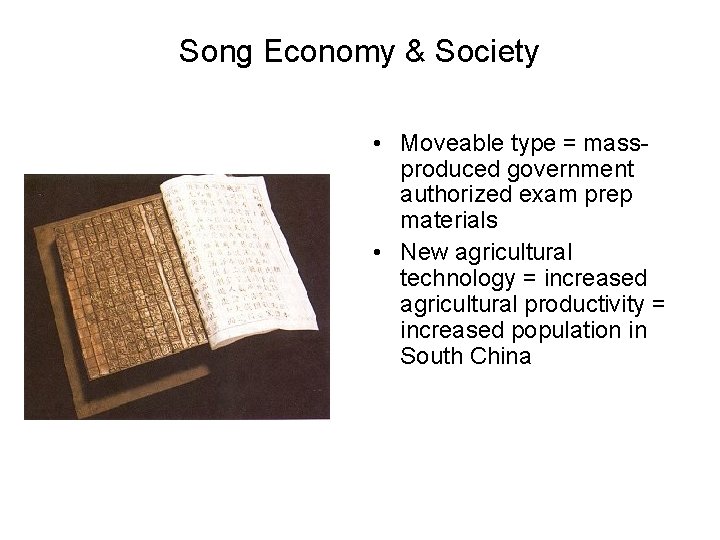
Song Economy & Society • Moveable type = massproduced government authorized exam prep materials • New agricultural technology = increased agricultural productivity = increased population in South China
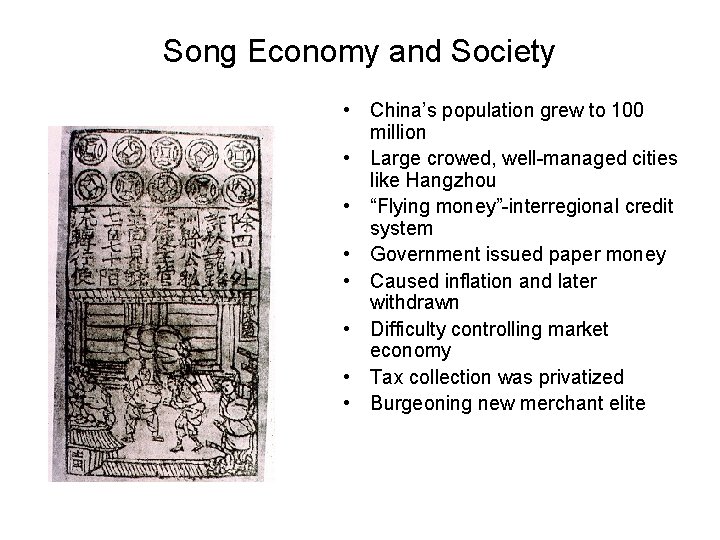
Song Economy and Society • China’s population grew to 100 million • Large crowed, well-managed cities like Hangzhou • “Flying money”-interregional credit system • Government issued paper money • Caused inflation and later withdrawn • Difficulty controlling market economy • Tax collection was privatized • Burgeoning new merchant elite
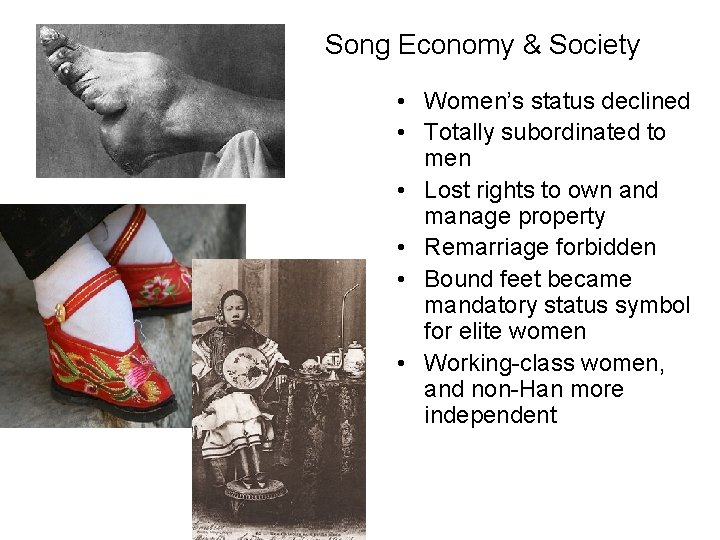
Song Economy & Society • Women’s status declined • Totally subordinated to men • Lost rights to own and manage property • Remarriage forbidden • Bound feet became mandatory status symbol for elite women • Working-class women, and non-Han more independent
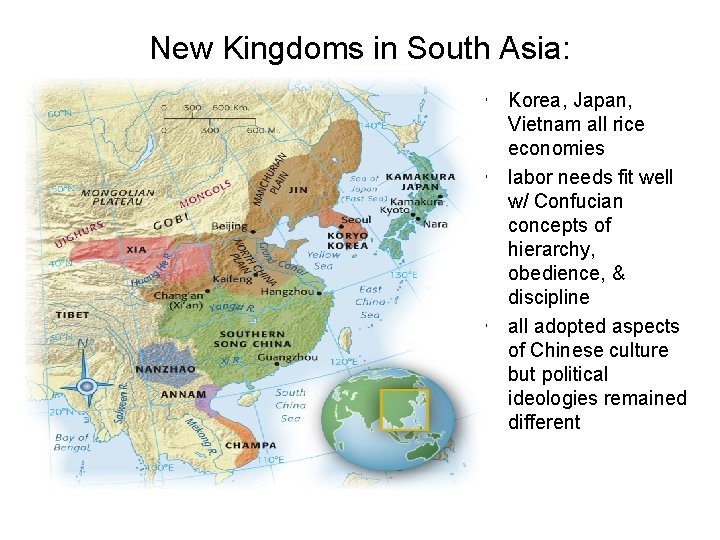
New Kingdoms in South Asia: • Korea, Japan, Vietnam all rice economies • labor needs fit well w/ Confucian concepts of hierarchy, obedience, & discipline • all adopted aspects of Chinese culture but political ideologies remained different
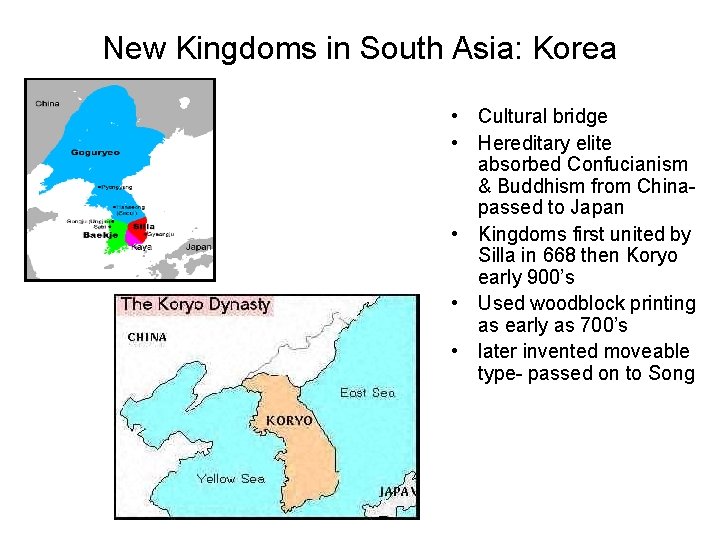
New Kingdoms in South Asia: Korea • Cultural bridge • Hereditary elite absorbed Confucianism & Buddhism from Chinapassed to Japan • Kingdoms first united by Silla in 668 then Koryo early 900’s • Used woodblock printing as early as 700’s • later invented moveable type- passed on to Song
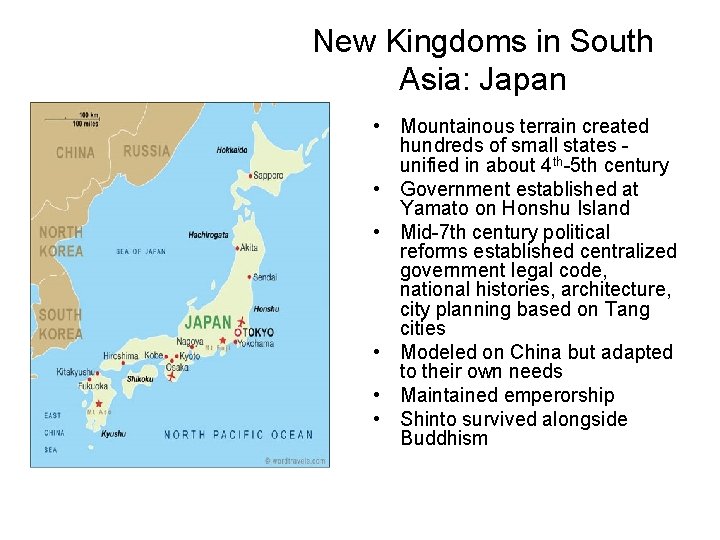
New Kingdoms in South Asia: Japan • Mountainous terrain created hundreds of small states unified in about 4 th-5 th century • Government established at Yamato on Honshu Island • Mid-7 th century political reforms established centralized government legal code, national histories, architecture, city planning based on Tang cities • Modeled on China but adapted to their own needs • Maintained emperorship • Shinto survived alongside Buddhism
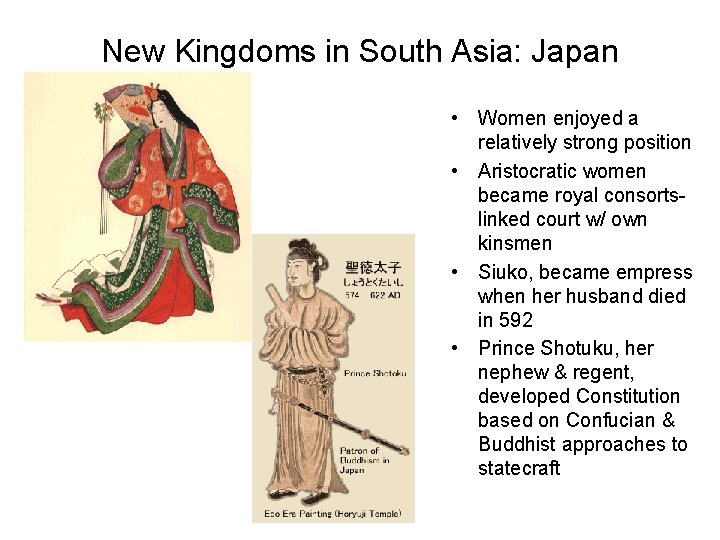
New Kingdoms in South Asia: Japan • Women enjoyed a relatively strong position • Aristocratic women became royal consortslinked court w/ own kinsmen • Siuko, became empress when her husband died in 592 • Prince Shotuku, her nephew & regent, developed Constitution based on Confucian & Buddhist approaches to statecraft
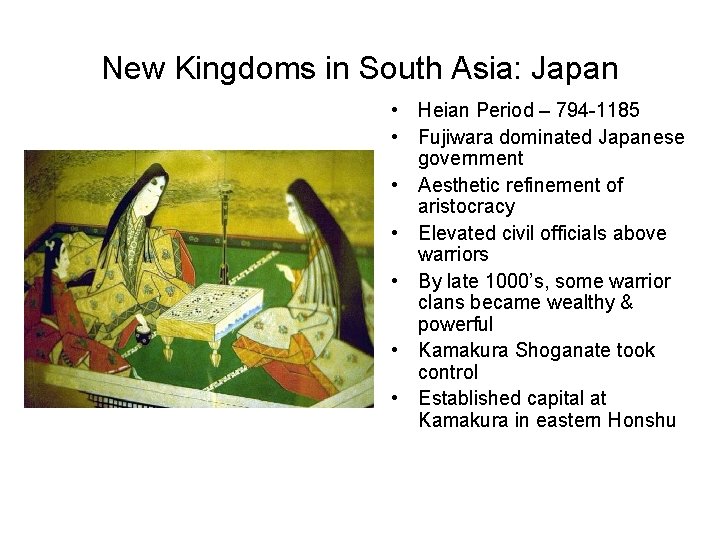
New Kingdoms in South Asia: Japan • Heian Period – 794 -1185 • Fujiwara dominated Japanese government • Aesthetic refinement of aristocracy • Elevated civil officials above warriors • By late 1000’s, some warrior clans became wealthy & powerful • Kamakura Shoganate took control • Established capital at Kamakura in eastern Honshu
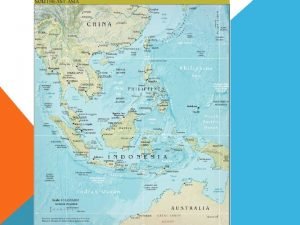
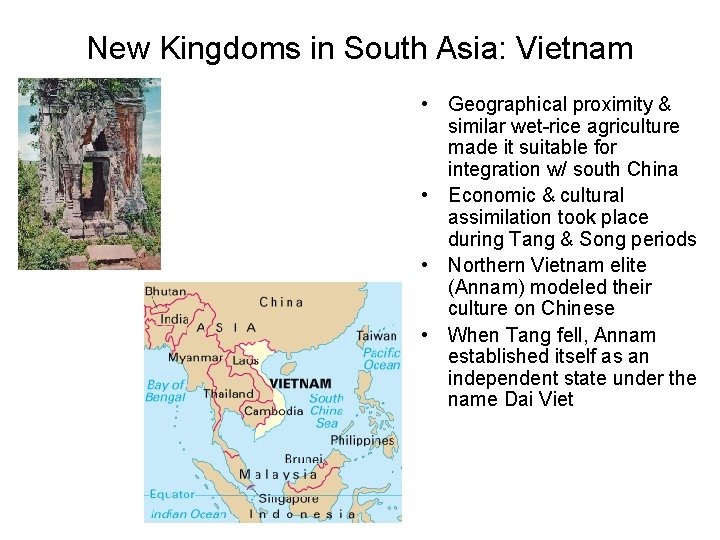
New Kingdoms in South Asia: Vietnam • Geographical proximity & similar wet-rice agriculture made it suitable for integration w/ south China • Economic & cultural assimilation took place during Tang & Song periods • Northern Vietnam elite (Annam) modeled their culture on Chinese • When Tang fell, Annam established itself as an independent state under the name Dai Viet
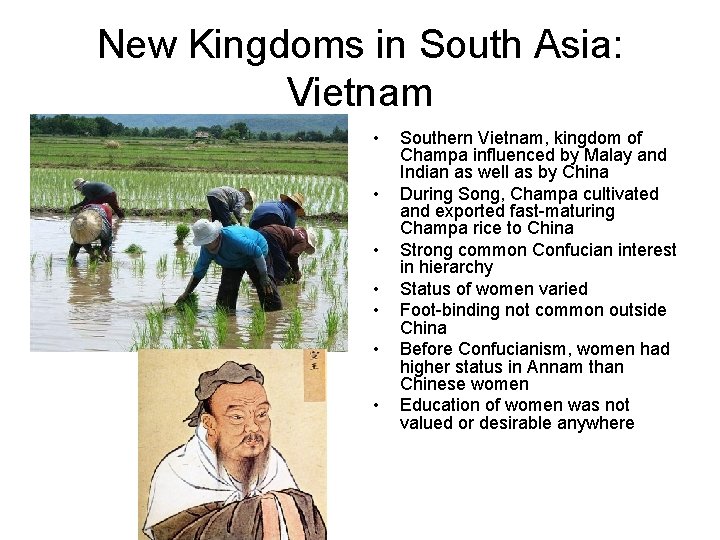
New Kingdoms in South Asia: Vietnam • • Southern Vietnam, kingdom of Champa influenced by Malay and Indian as well as by China During Song, Champa cultivated and exported fast-maturing Champa rice to China Strong common Confucian interest in hierarchy Status of women varied Foot-binding not common outside China Before Confucianism, women had higher status in Annam than Chinese women Education of women was not valued or desirable anywhere