Incidence of renal Fanconi Syndrome in patients taking
- Slides: 7
Incidence of renal Fanconi Syndrome in patients taking antiretroviral therapy including tenofovir disoproxil fumarate. Medland NA, Chow EPF, Walker RG, Chen M, Read THR, Fairley CK Melbourne Sexual Health Centre
Background • Renal Fanconi Syndrome (FS): – Linked to use of tenofovir disoproxil fumarate (TDF) – Leakage from impaired proximal tubule into the urine of substances normally absorbed back: glucose, amino acids, phosphate, bicarbonate – Acute kidney injury, – chronic bone calcium loss – Relationship with TDF poorly studied
Methods • Retrospective cohort of patients taking TDF 20022016 • FS defined as normoglycaemic glycosuria plus proteinuria plus either: reduced e. GFR, hypophosphatemia, phosphaturia, metabolic acidosis • Cox regression (time to FS): ritonavir coadministration, age, sex, co-morbidities (hypertension, hyperlipidemia, diabetes, viral hepatitis), CD 4 cell count nadir and baseline e. GFR
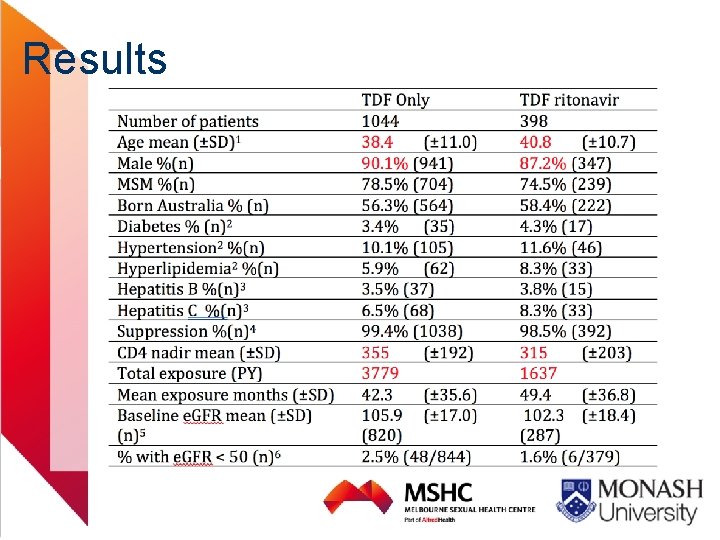
Results
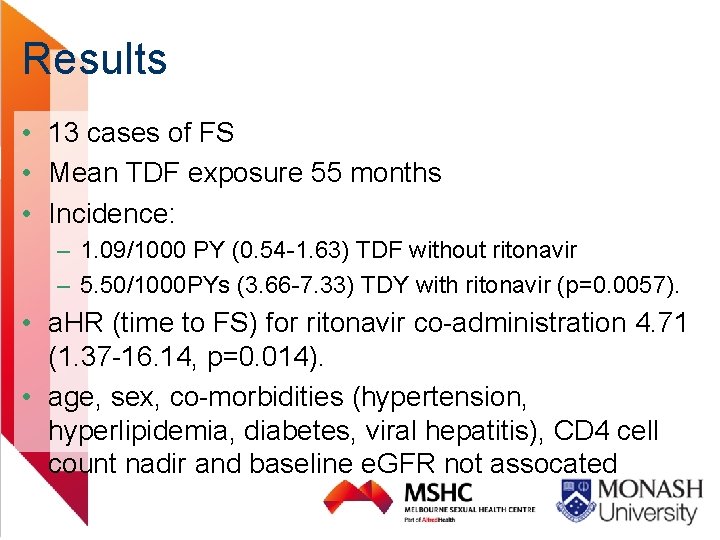
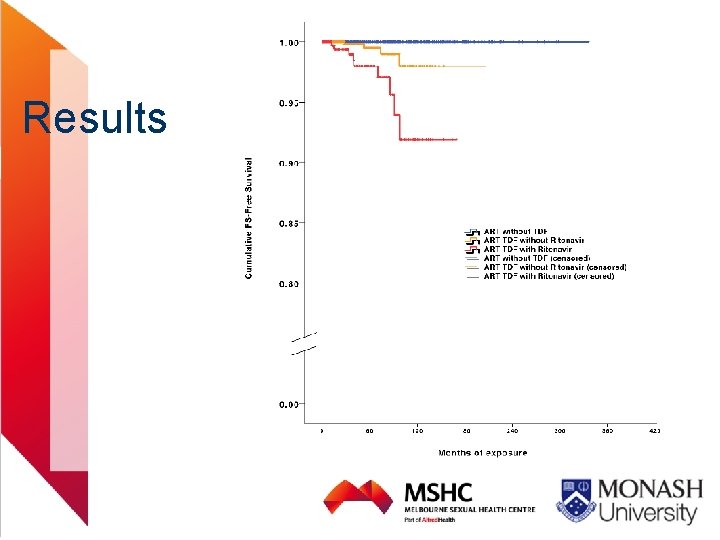
Results • 13 cases of FS • Mean TDF exposure 55 months • Incidence: – 1. 09/1000 PY (0. 54 -1. 63) TDF without ritonavir – 5. 50/1000 PYs (3. 66 -7. 33) TDY with ritonavir (p=0. 0057). • a. HR (time to FS) for ritonavir co-administration 4. 71 (1. 37 -16. 14, p=0. 014). • age, sex, co-morbidities (hypertension, hyperlipidemia, diabetes, viral hepatitis), CD 4 cell count nadir and baseline e. GFR not assocated
Results
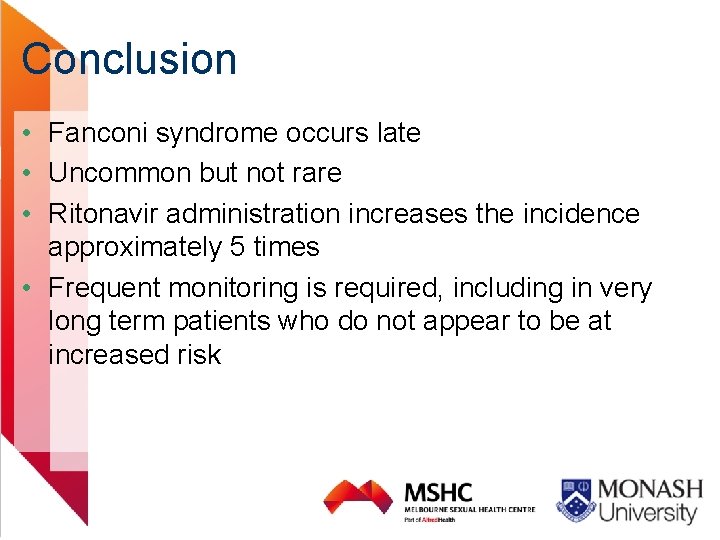
Conclusion • Fanconi syndrome occurs late • Uncommon but not rare • Ritonavir administration increases the incidence approximately 5 times • Frequent monitoring is required, including in very long term patients who do not appear to be at increased risk