Improvement the watering technique on indoor plants Pok


- Slides: 26
Improvement the watering technique on indoor plants Pok Oi Hospital Tang Pui King Memorial College Member: NG Lui , Angela (Leader) NG Tsz Chiu , 呀超 YU Yan Wa , Irene YUEN Pui San , 波子 Teacher: Miss CHAN Wai Mentor: Mr. William LAU Supervisor: Dr. Paul SHIN
Contents Introduction Purpose Principles of Gadgets Experimental Procedures Results Data Analysis Discussion Conclusion References
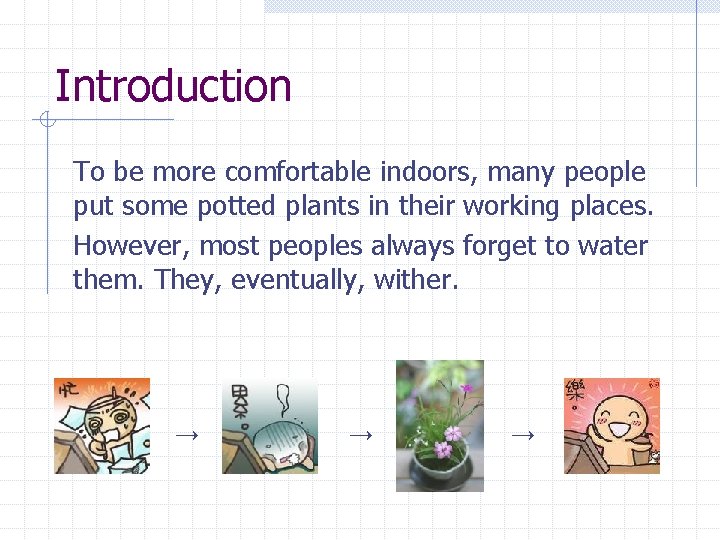
Introduction To be more comfortable indoors, many people put some potted plants in their working places. However, most peoples always forget to water them. They, eventually, wither. → → →
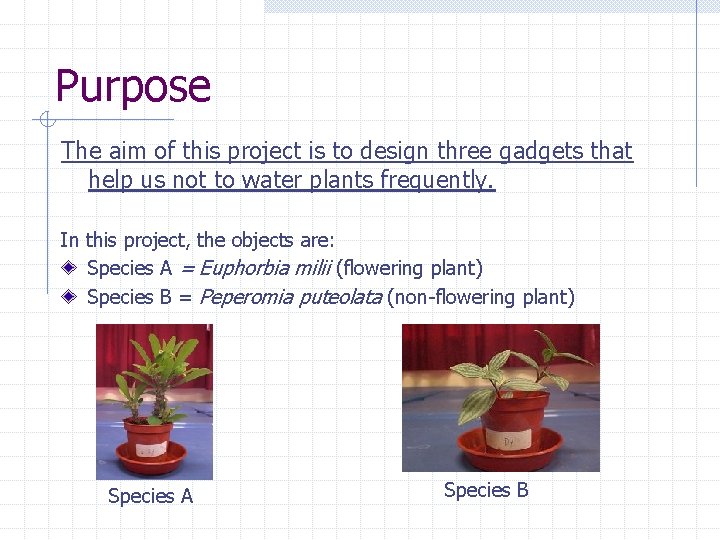
Purpose The aim of this project is to design three gadgets that help us not to water plants frequently. In this project, the objects are: Species A = Euphorbia milii (flowering plant) Species B = Peperomia puteolata (non-flowering plant) Species A Species B
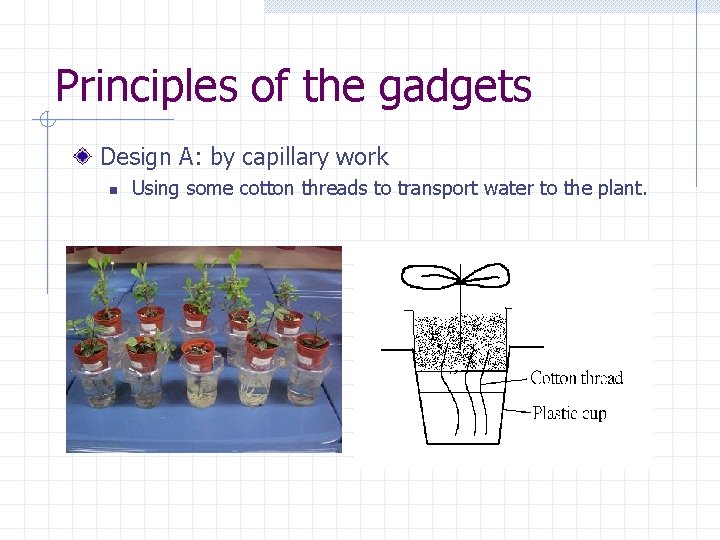
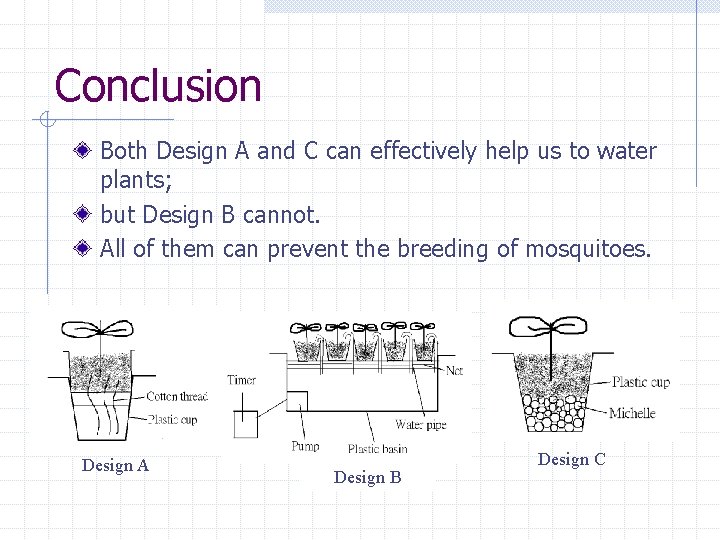
Principles of the gadgets Design A: by capillary work n Using some cotton threads to transport water to the plant.
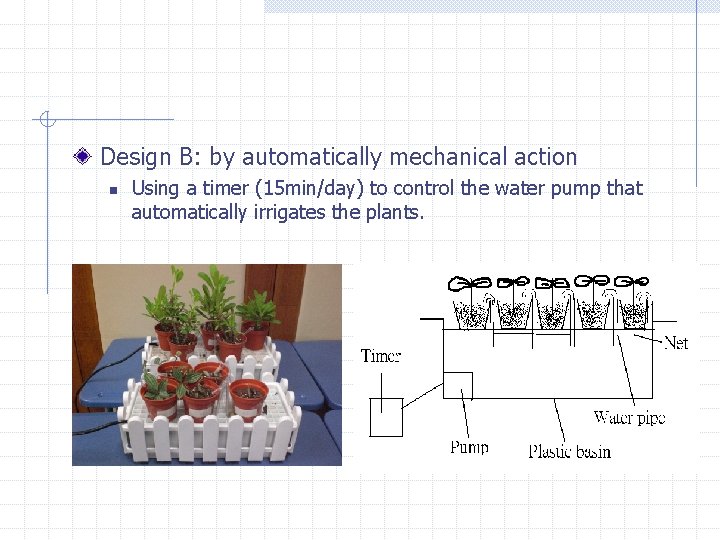
Design B: by automatically mechanical action n Using a timer (15 min/day) to control the water pump that automatically irrigates the plants.
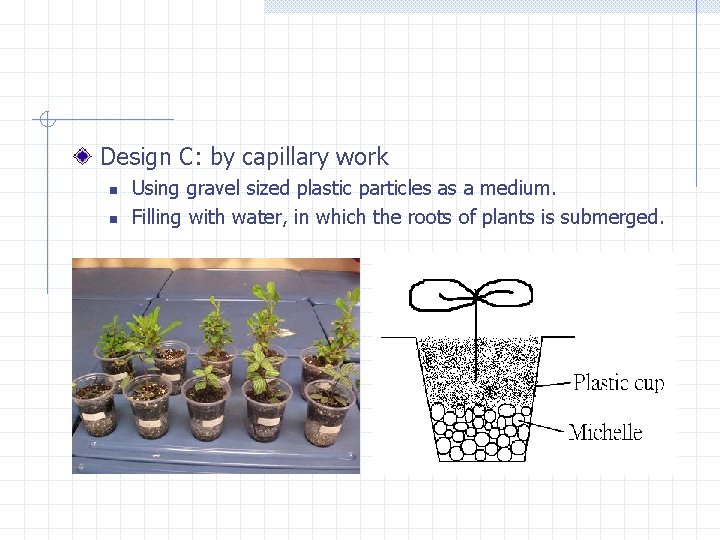
Design C: by capillary work n n Using gravel sized plastic particles as a medium. Filling with water, in which the roots of plants is submerged.
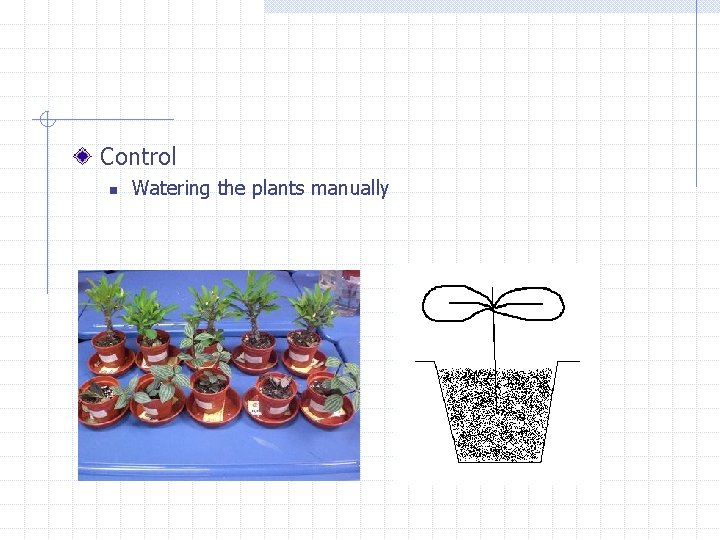
Control n Watering the plants manually
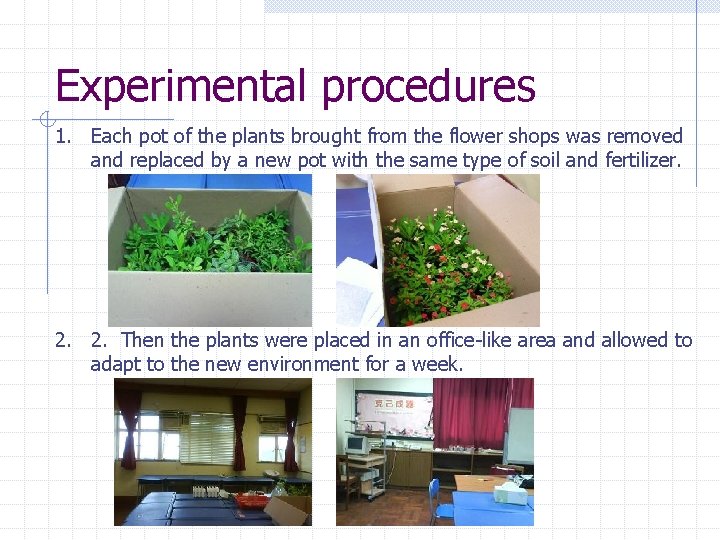
Experimental procedures 1. Each pot of the plants brought from the flower shops was removed and replaced by a new pot with the same type of soil and fertilizer. 2. 2. Then the plants were placed in an office-like area and allowed to adapt to the new environment for a week.
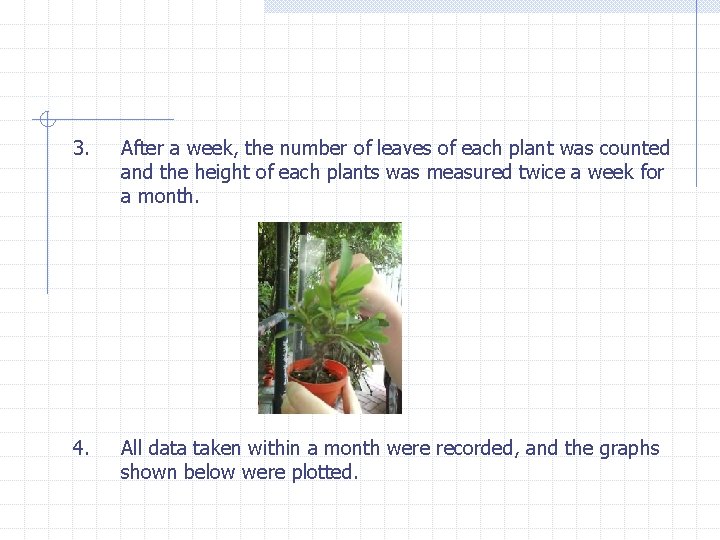
3. After a week, the number of leaves of each plant was counted and the height of each plants was measured twice a week for a month. 4. All data taken within a month were recorded, and the graphs shown below were plotted.
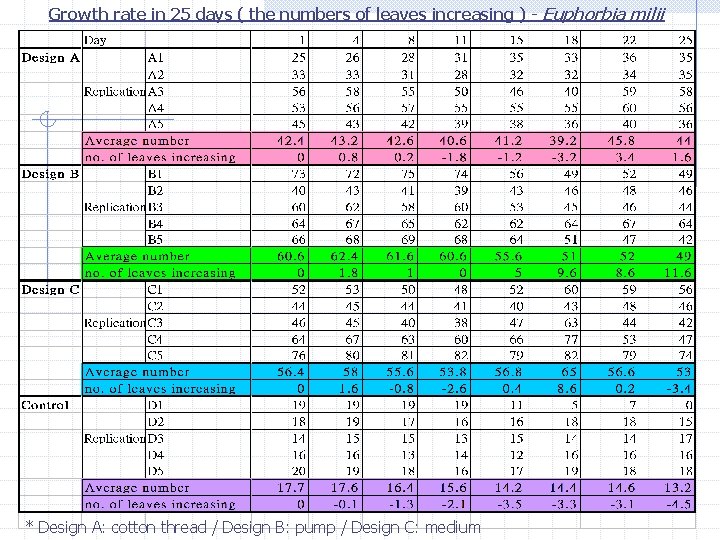
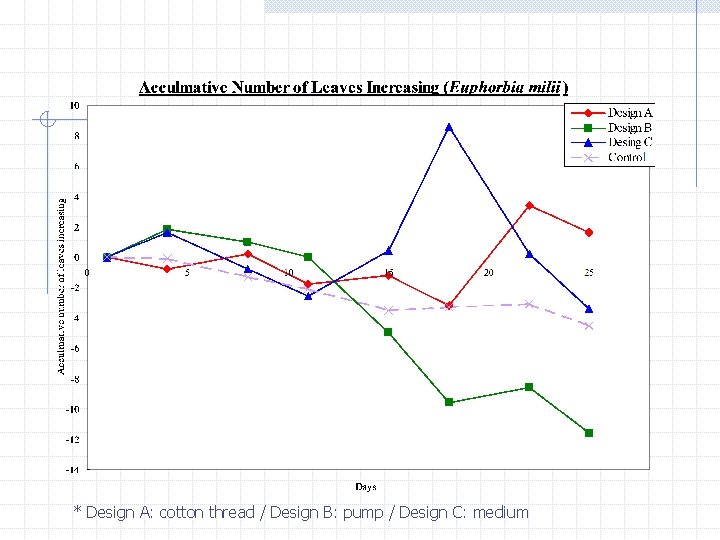
Growth rate in 25 days ( the numbers of leaves increasing ) - Euphorbia milii * Design A: cotton thread / Design B: pump / Design C: medium
* Design A: cotton thread / Design B: pump / Design C: medium
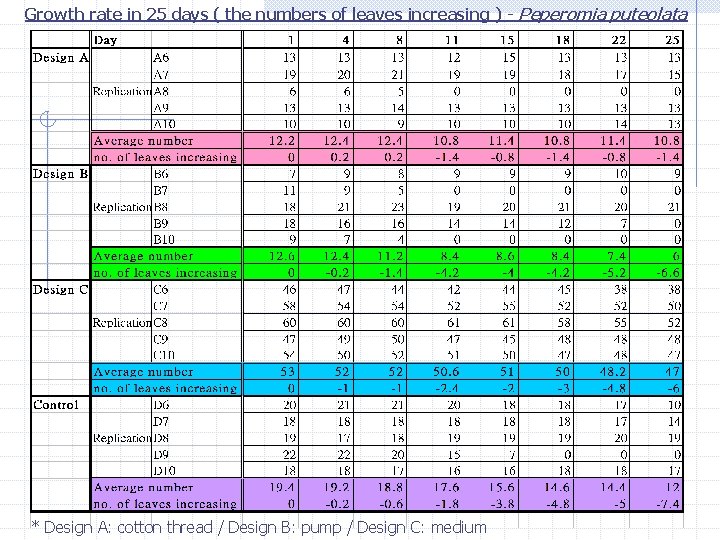
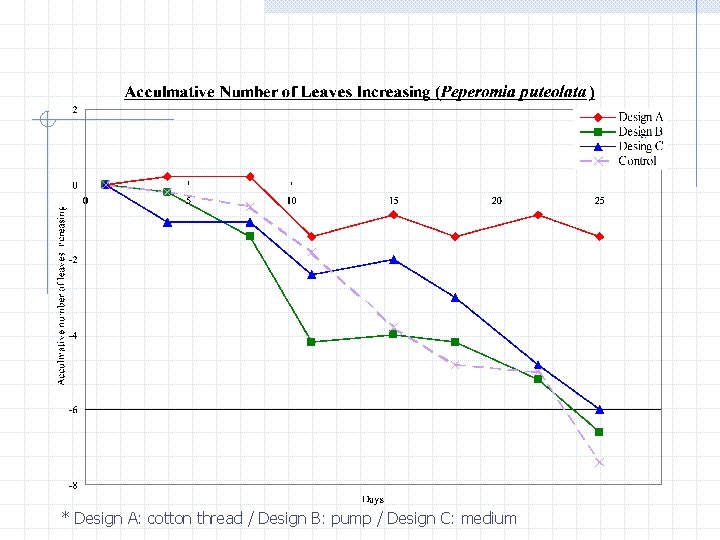
Growth rate in 25 days ( the numbers of leaves increasing ) - Peperomia puteolata * Design A: cotton thread / Design B: pump / Design C: medium
* Design A: cotton thread / Design B: pump / Design C: medium
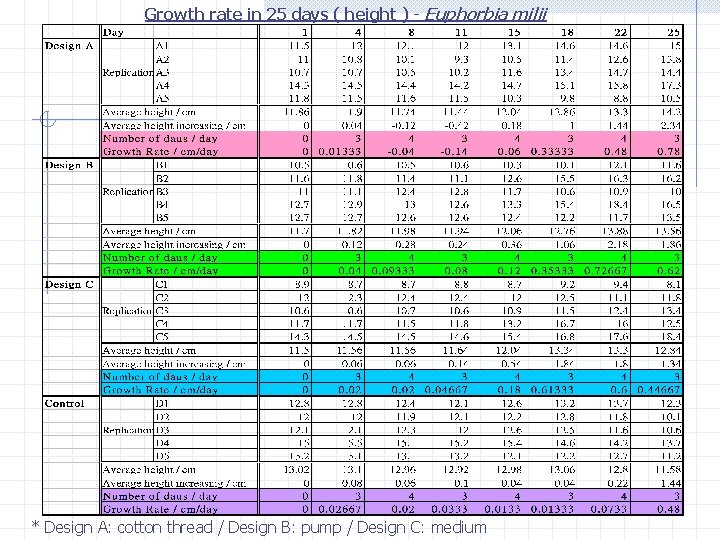
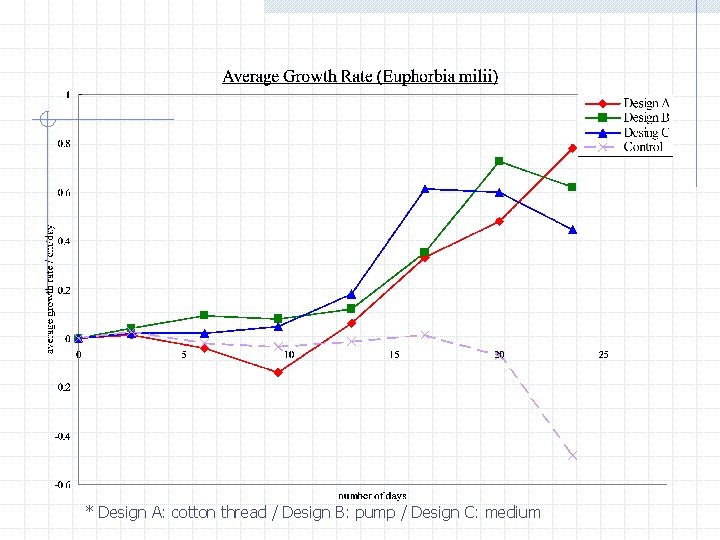
Growth rate in 25 days ( height ) - Euphorbia milii * Design A: cotton thread / Design B: pump / Design C: medium
* Design A: cotton thread / Design B: pump / Design C: medium
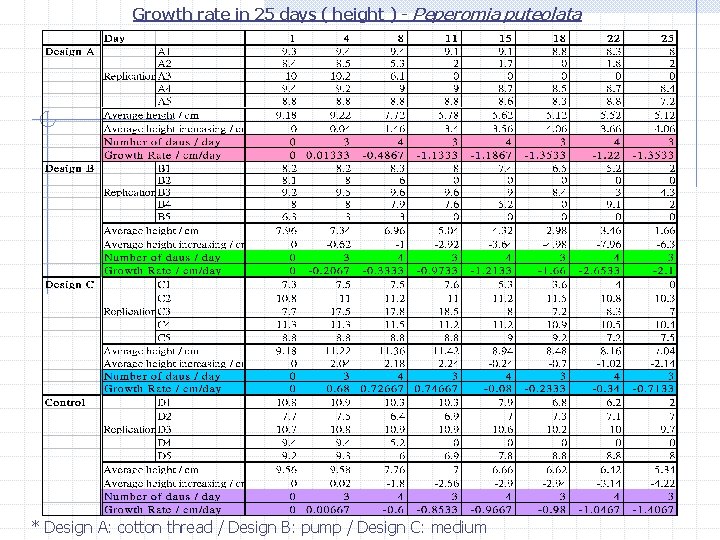
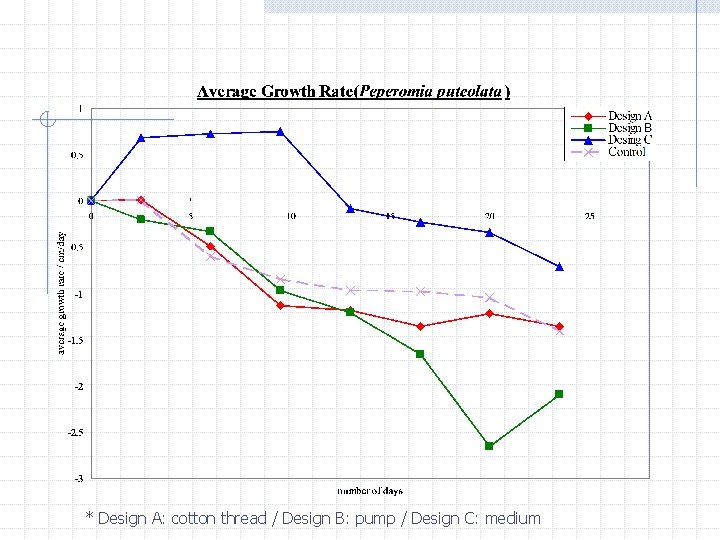
Growth rate in 25 days ( height ) - Peperomia puteolata * Design A: cotton thread / Design B: pump / Design C: medium
* Design A: cotton thread / Design B: pump / Design C: medium
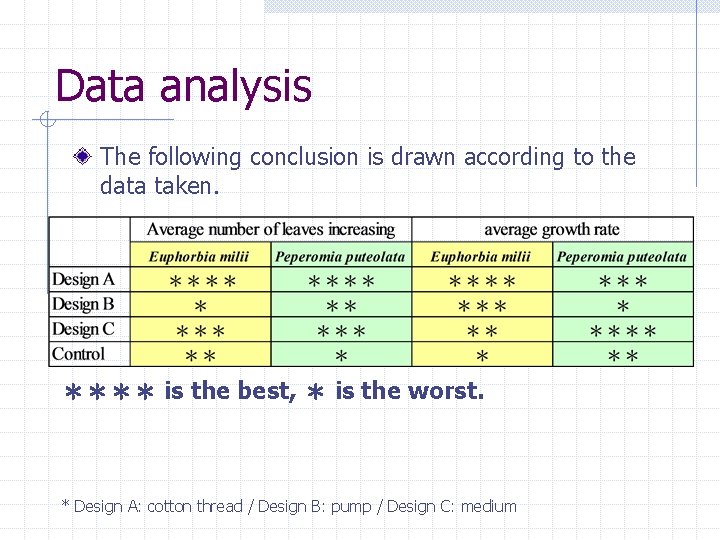
Data analysis The following conclusion is drawn according to the data taken. **** is the best, * is the worst. * Design A: cotton thread / Design B: pump / Design C: medium
Discussion Errors: The density of the soil in each pot was not consistent. Maybe the concentration of fertilizer used is not the best for plants to grow. Different potted plants have different shapes so it is difficult to measure their height accurately. * Design A: cotton thread / Design B: pump / Design C: medium
Limitations: No advanced equipments were provided for measuring the water content in soil. Only a few types of famous indoor plants were allow to chose for the project due to the hot summer climate. Time for adaptation and experiment were not enough. Therefore, no obvious and reliable differences can be observe among the different groups. The condition in the school laboratory was not the same as the real offices. * Design A: cotton thread / Design B: pump / Design C: medium
Improvements: The density of the soil in each pot should be the same by using same weight and same deep of the soil. Before using the fertilizer, we should test which concentration of the fertilizer is suitable for the plants. Water should be refilled to design C if the water level drops below the plastic beads. * Design A: cotton thread / Design B: pump / Design C: medium
Conclusion Both Design A and C can effectively help us to water plants; but Design B cannot. All of them can prevent the breeding of mosquitoes. Design A Design B Design C
Reference http: //hk. knowledge. yahoo. com/question/? qid=7007 010401650 http: //hk. knowledge. yahoo. com/question/? qid=7006 120302940 http: //www. lungshangarden. com. hk/products. htm http: //hk. geocities. com/lo_king_chung_william/straw berry. html http: //association. cc. ntu. edu. tw/~ntuflower/knowled ge/nature 5. htm http: //hk. geocities. com/ken 35082000/18. htm
The End Thank you very much
Q&A session