IATI Data in Use Winnie Kamau Association of


- Slides: 36
IATI Data in Use
Winnie Kamau | Association of Freelance Journalists Horia Sohir Debbiche | African Development Bank James Coe | Publish What You Fund Aria Grabowski | Oxfam America Thea Schepers | Plan Nederland
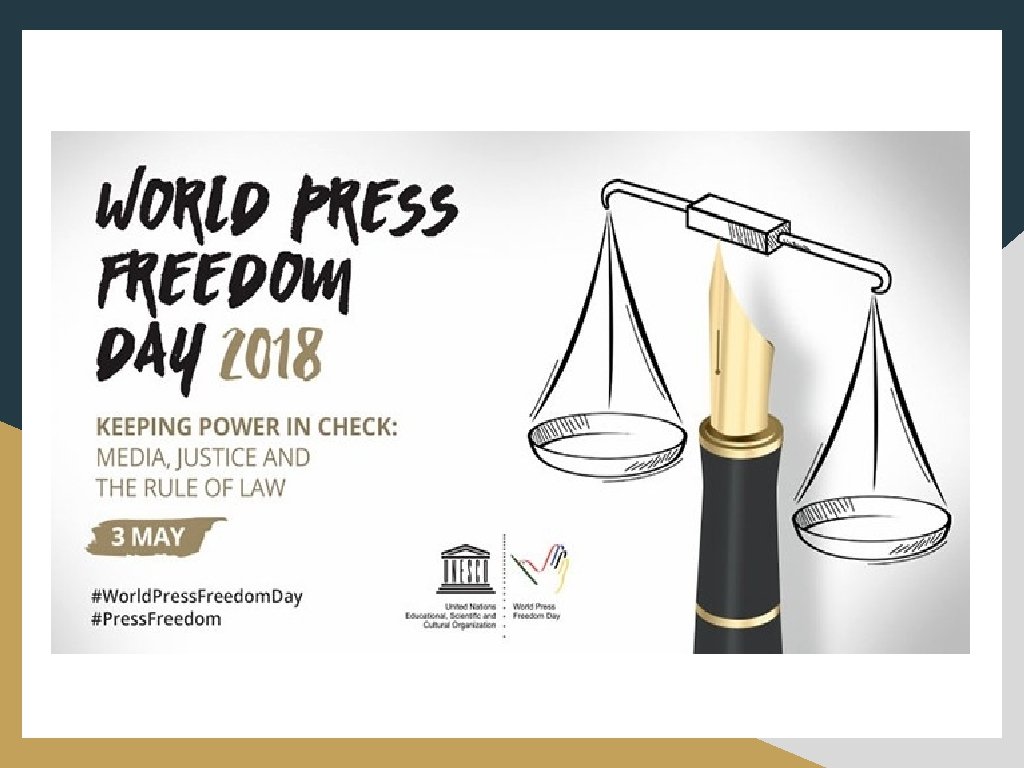
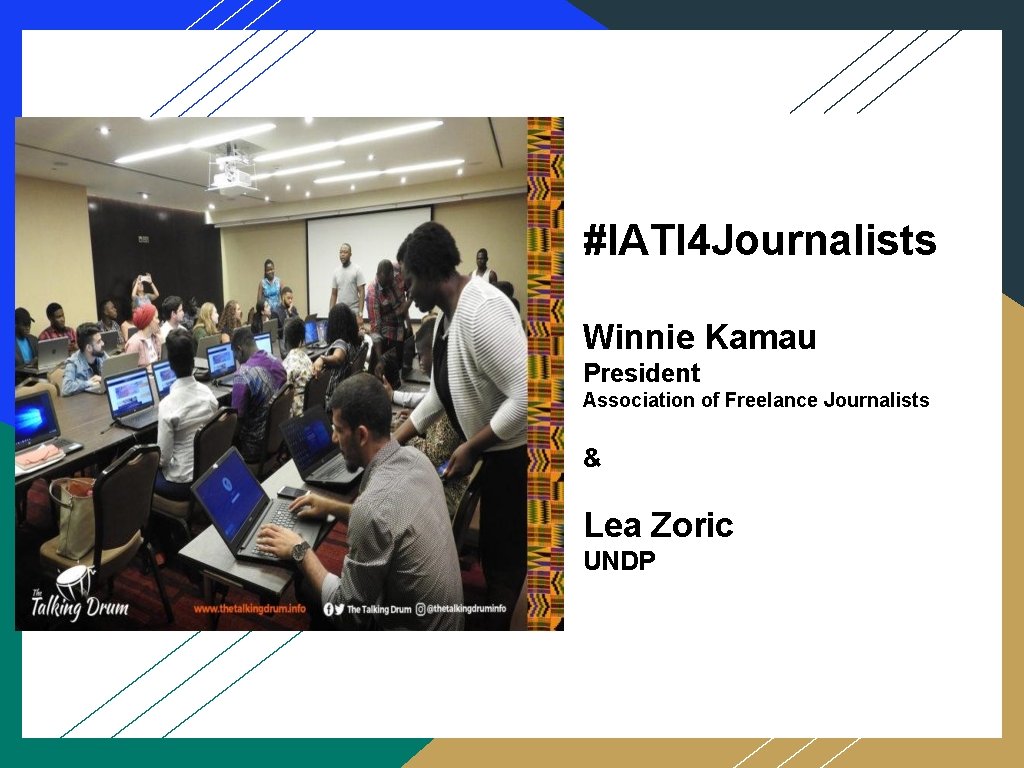
Promoting IATI Data @ World Press Freedom Day (WPFD) Accra, Ghana
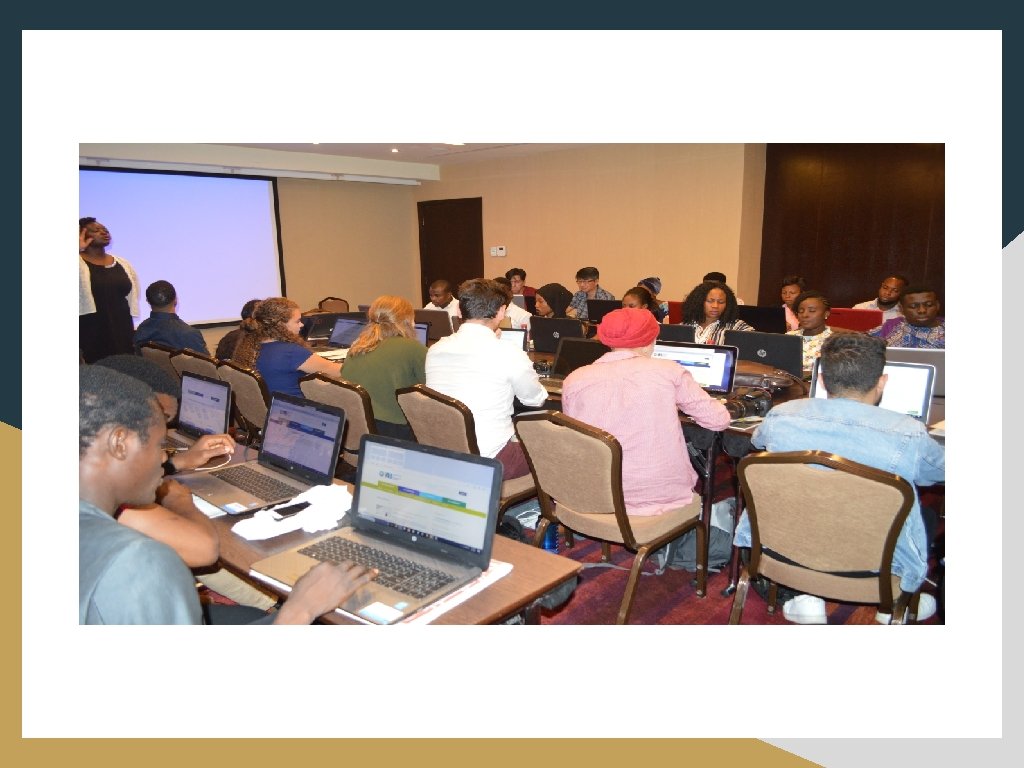
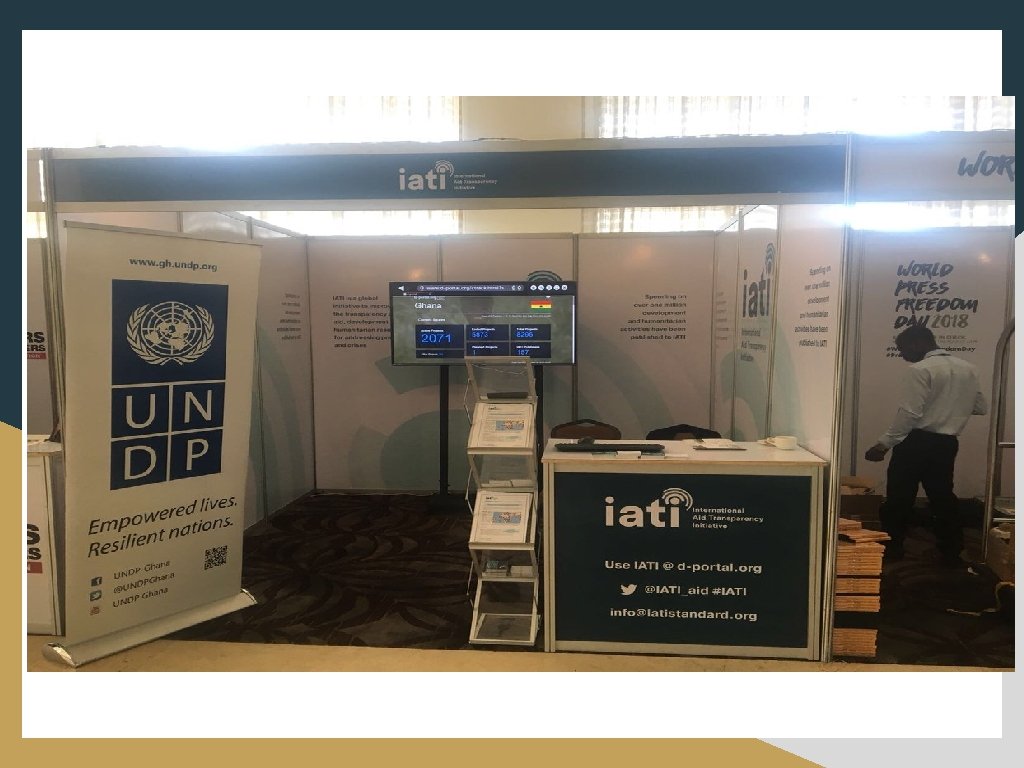
D- Portal an easy access and a source of data The D-portal can help aid in investigative stories By ensuring journalists have access to IATI for their investigations, authorities can be held accountable for where development resources go and how effectively they are being used to achieve sustainable development. This was an ideal forum to promote the use of IATI data to help deliver sustainable development outcomes and share the US$145 billion of development spending published to the International Aid Transparency Initiative (IATI).
#IATI 4 Journalists Winnie Kamau President Association of Freelance Journalists & Lea Zoric UNDP
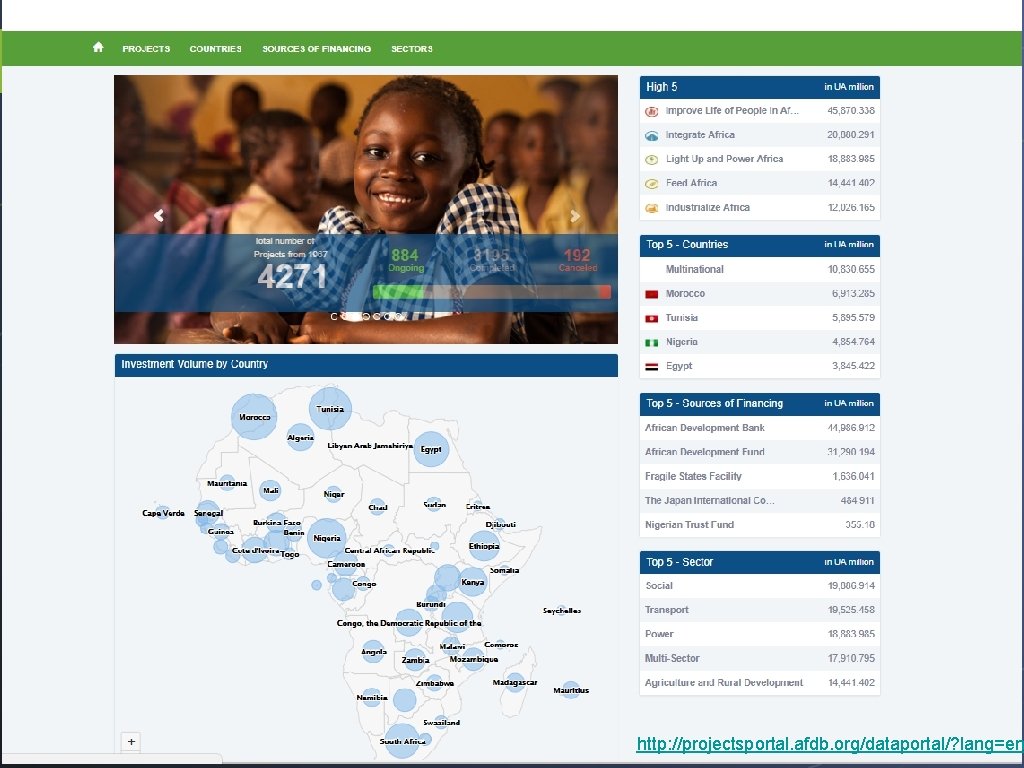
Projects data portal ALL information on Bank’s projects in ONE single place
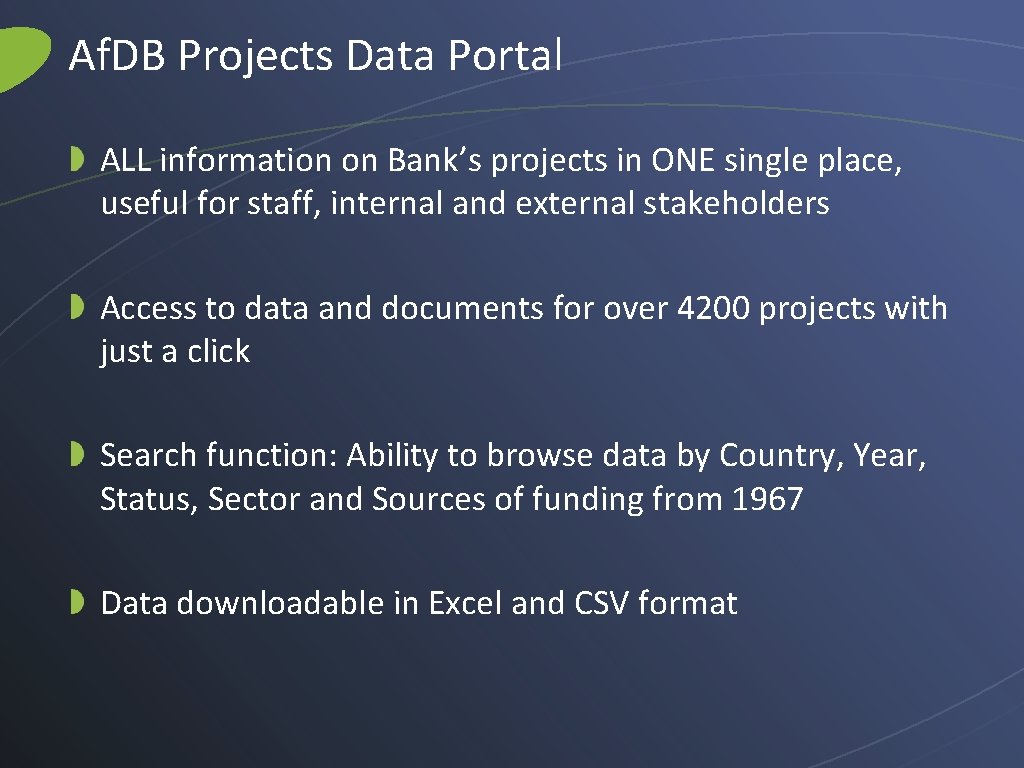
Af. DB Projects Data Portal ALL information on Bank’s projects in ONE single place, useful for staff, internal and external stakeholders Access to data and documents for over 4200 projects with just a click Search function: Ability to browse data by Country, Year, Status, Sector and Sources of funding from 1967 Data downloadable in Excel and CSV format
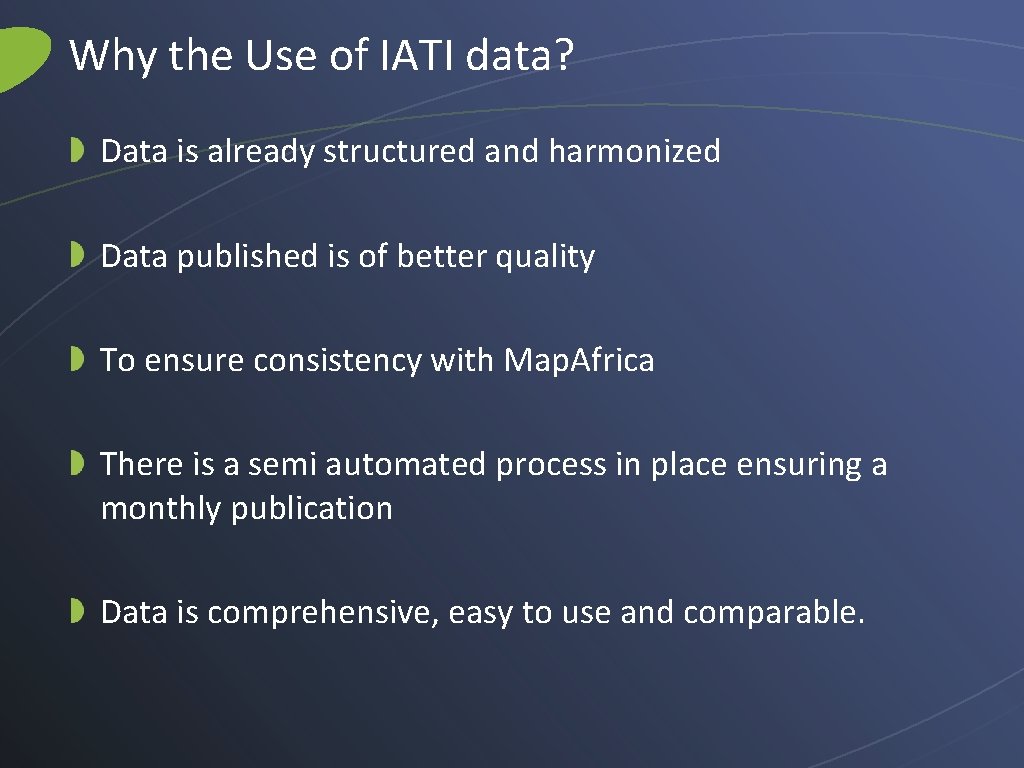
Why the Use of IATI data? Data is already structured and harmonized Data published is of better quality To ensure consistency with Map. Africa There is a semi automated process in place ensuring a monthly publication Data is comprehensive, easy to use and comparable.
http: //projectsportal. afdb. org/dataportal/? lang=en
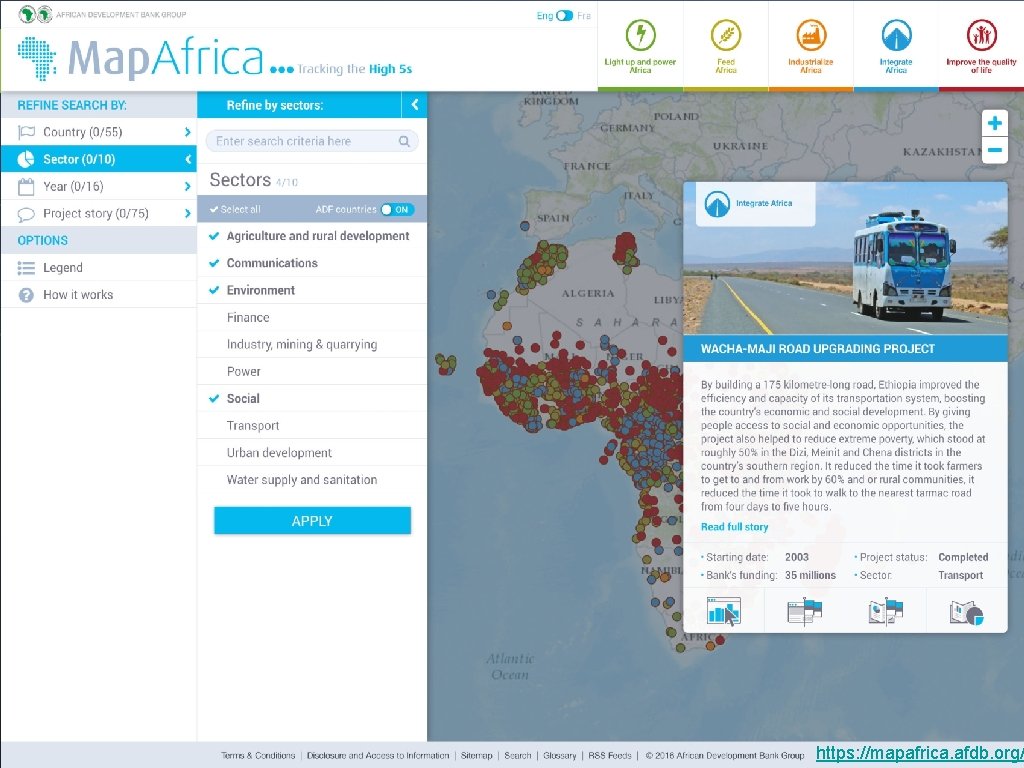
Map. Africa From 2. 0 to 3. 0
NEW DESIGN https: //mapafrica. afdb. org/
US Foreign Assistance Study: Preliminary IATI findings 10 July 2018
Overview Objectives: 1. To use available aid data, alongside in-country research, to assess the potential impact of the FY ‘ 19 budget request on US foreign aid. 2. To develop insights and recommendations on how to improve aid data after having used it ourselves.
How did we use IATI? • One of many sources. IATI was one piece of the puzzle, alongside DAC, AIMS, economic data, World Bank development indicators, independent indices etc. • Landscape analysis. Who is doing what, how does each donor approach differ from the others? • Library. IATI is more than data, it is a central repository of useful documentation. • Budget information and strategic documentation. Sometimes available in the organisation file.
Strengths of IATI… • A constant: Regular first port of call, and a constant source of data I could turn to. • Timely: Despite gaps, it offered a window into what is happening now. • Project level insights. We could not aggregate the data but it was a fast and relatively reliable source of project level information. • Time-saving: When donors get it right, it saved time by enabling a swifter analysis.
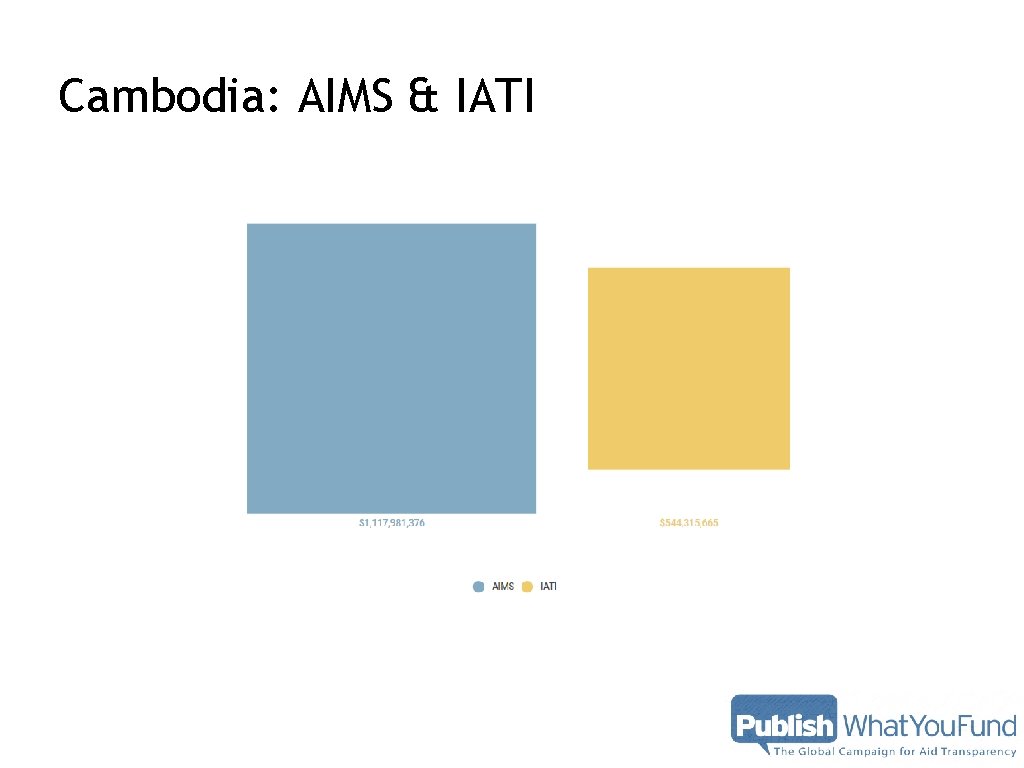
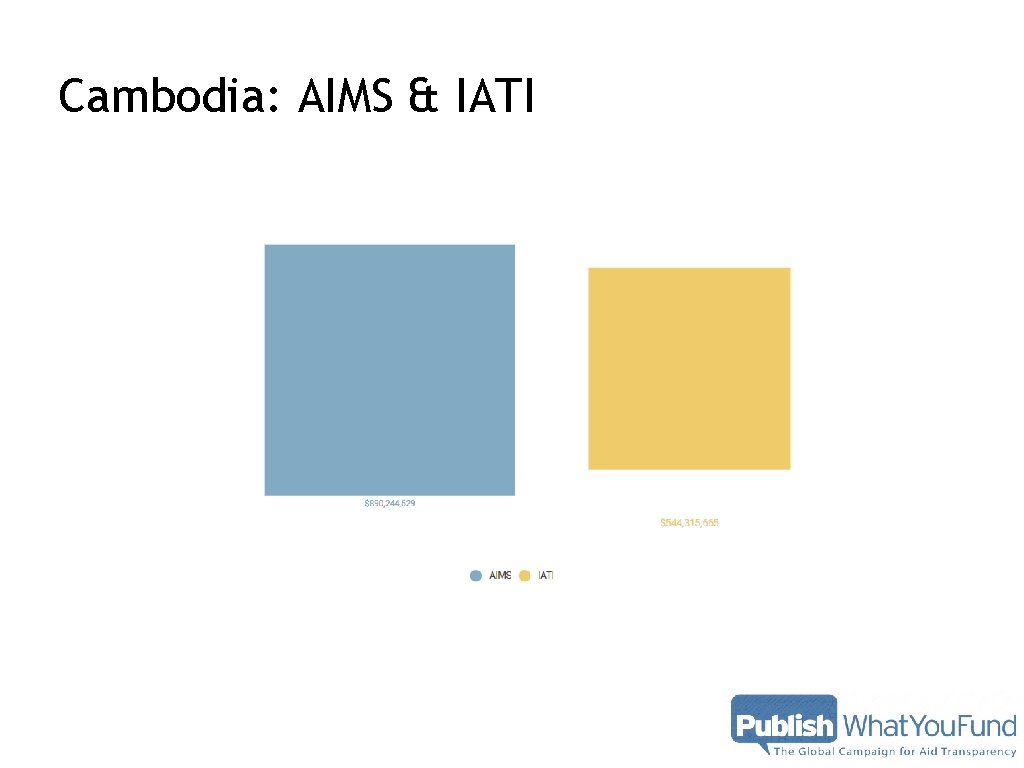
Cambodia: AIMS & IATI
Cambodia: AIMS & IATI
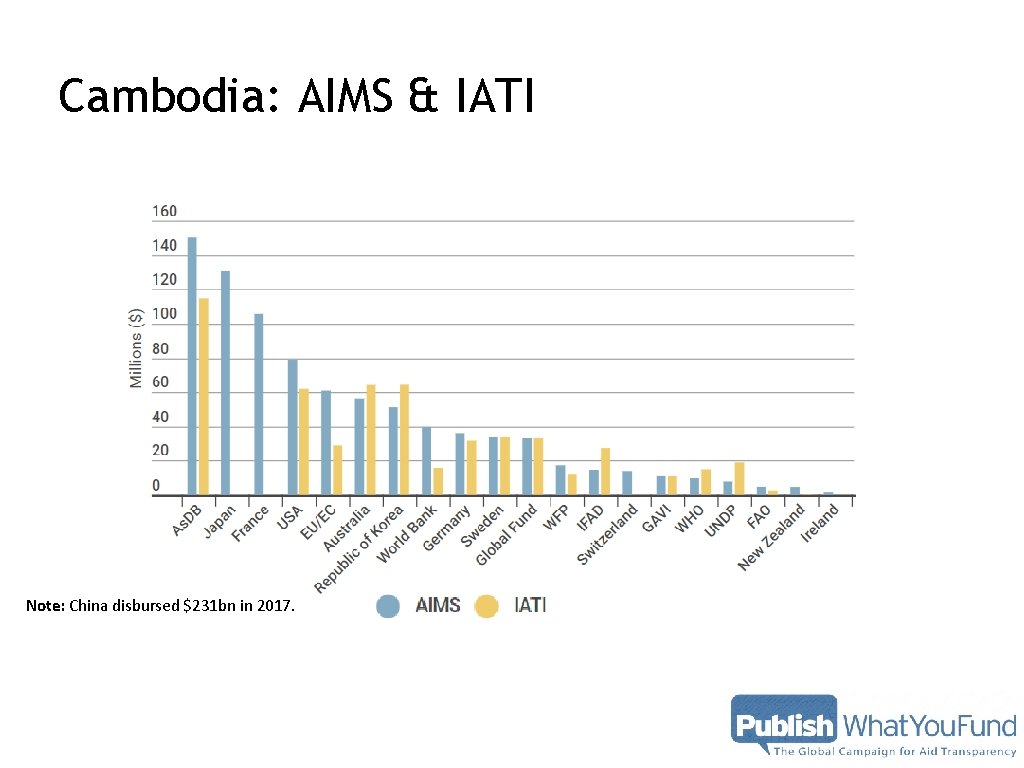
Cambodia: AIMS & IATI Note: China disbursed $231 bn in 2017.
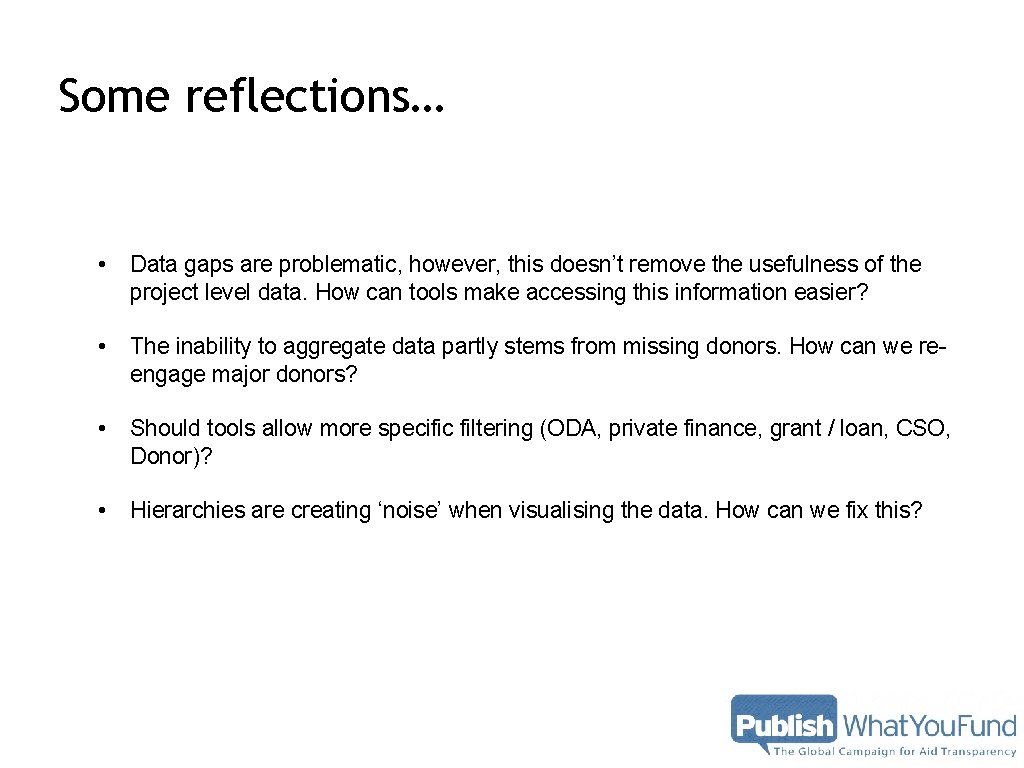
Some reflections… • Data gaps are problematic, however, this doesn’t remove the usefulness of the project level data. How can tools make accessing this information easier? • The inability to aggregate data partly stems from missing donors. How can we reengage major donors? • Should tools allow more specific filtering (ODA, private finance, grant / loan, CSO, Donor)? • Hierarchies are creating ‘noise’ when visualising the data. How can we fix this?
US Foreign Assistance Study www. publishwhatyoufund. org/projects/usforeign-assistance/ @aidtransparency
Using Aid data in Uganda An adventure in introducing IATI to civil society and media in Uganda Aria Grabowski July 10, 2018
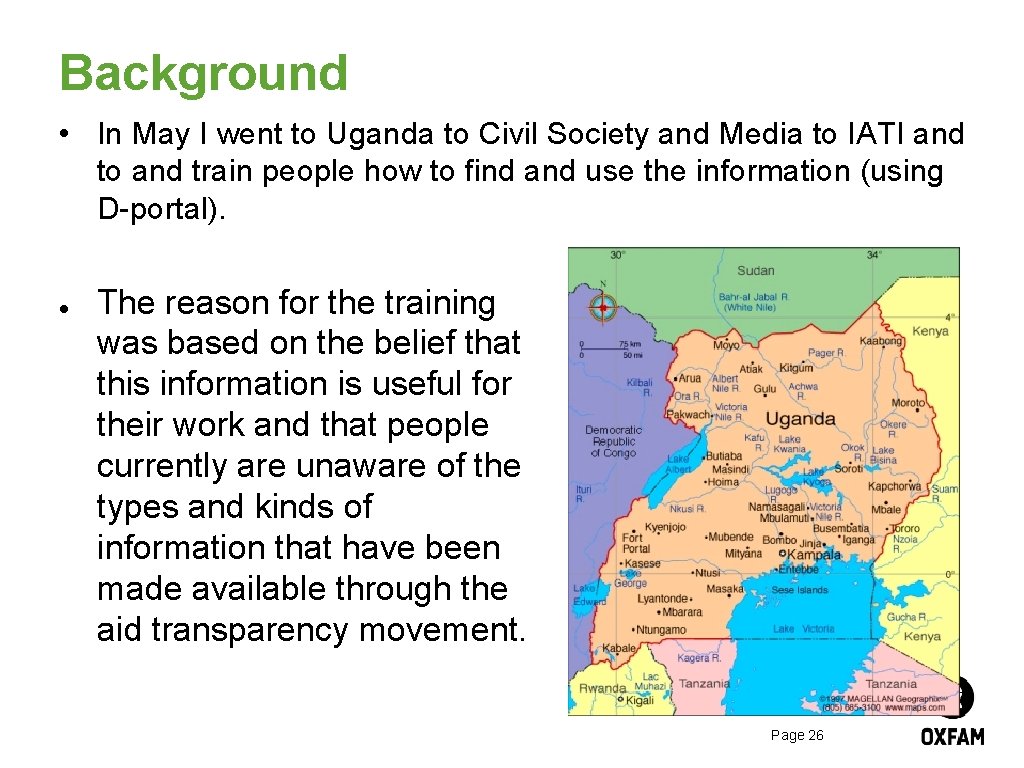
Background • In May I went to Uganda to Civil Society and Media to IATI and to and train people how to find and use the information (using D-portal). • The reason for the training was based on the belief that this information is useful for their work and that people currently are unaware of the types and kinds of information that have been made available through the aid transparency movement. Page 26
Exciting News • Training Participants were really excited about the information available. • Even if they had heard of IATI they had no idea how much useful information was available. • While the training was still on going participants started to search for projects they had heard of and were curious about. Page 27
Feedback • Not all publishers are created equally. Training participants want detailed information on project, so publishers that shared more detailed documents were more helpful. • They also quickly noticed inconsistencies. • There was also a lot of demand for the ability to filter by loan or grant. Page 28
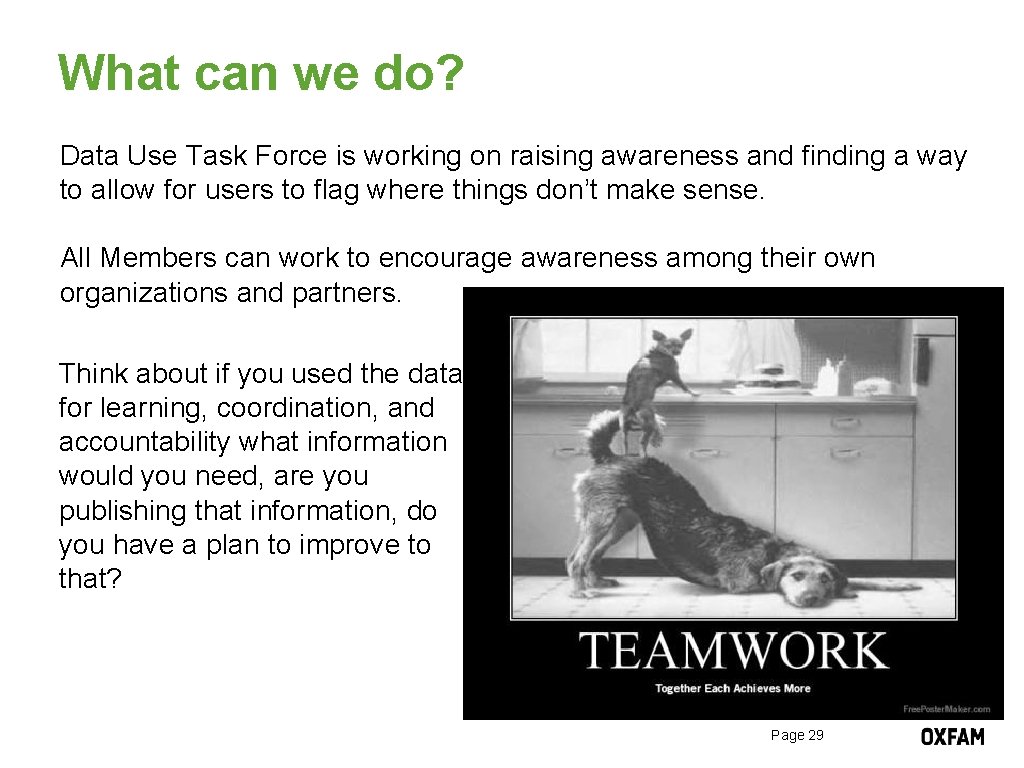
What can we do? Data Use Task Force is working on raising awareness and finding a way to allow for users to flag where things don’t make sense. All Members can work to encourage awareness among their own organizations and partners. Think about if you used the data for learning, coordination, and accountability what information would you need, are you publishing that information, do you have a plan to improve to that? Page 29
IATI in Power BI Using IATI files to create an Alliance dashboard in Power BI
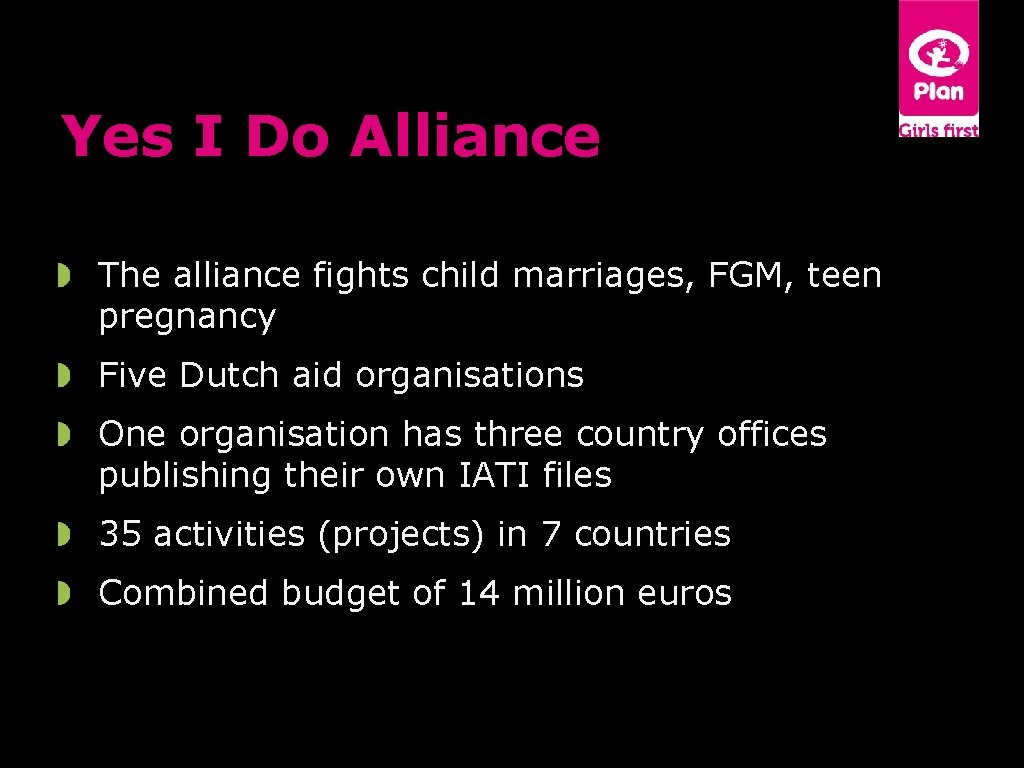
Yes I Do Alliance The alliance fights child marriages, FGM, teen pregnancy Five Dutch aid organisations One organisation has three country offices publishing their own IATI files 35 activities (projects) in 7 countries Combined budget of 14 million euros
Approach Use IATI files: Standardised No need to collect info: IATI files are already online Use Power Bi: • The lead partner used it already • Affordable • Refresh is extremely easy
Demo
Lessons learnt Unify the choices between partners (indicator periods, etc. ) Difference in files was not as big a problem as we feared: there was a solution for every issue Only do it yourself with an in-house data analyst; get help from an IT partner or Power BI specialist if you’re stuck
How about
Question