Human Resource Management Gaining a Competitive Advantage Chapter
- Slides: 26
Human Resource Management: Gaining a Competitive Advantage Chapter 7 Training Mc. Graw-Hill/Irwin Copyright © 2010 by the Mc. Graw-Hill Companies, Inc. All rights reserved.
Learning Objectives Ø Discuss how training can contribute to companies’ business strategy. Ø Explain the manager’s role in identifying training needs and supporting training on the job. Ø Conduct a needs assessment. Ø Evaluate employees’ readiness for training. Ø Discuss the strengths and weaknesses of presentation, hands-on, and group training methods. 7 -2
Learning Objectives Ø Explain potential e-learning training advantages. Ø Design a training session to maximize learning. Ø Choose an appropriate evaluation design based on training objectives and analysis of constraints. Ø Design a cross-cultural preparation program. Ø Develop a program for effectively managing diversity. 7 -3
Training can. . . Ø Increase employees’ knowledge of foreign competitors and cultures. Ø Help ensure that employees have skills to work with new technology. Ø Help employees understand how to work effectively in teams to contribute to product and service quality. 7 -4
Training can. . . § Ensure that the company’s culture emphasizes innovation, creativity, and learning. § Ensure employment security by providing new ways for employees to contribute when their : § jobs change or interests change § skills become obsolete § Prepare employees to accept and work more effectively with each other, particularly with minorities and women. 7 -5
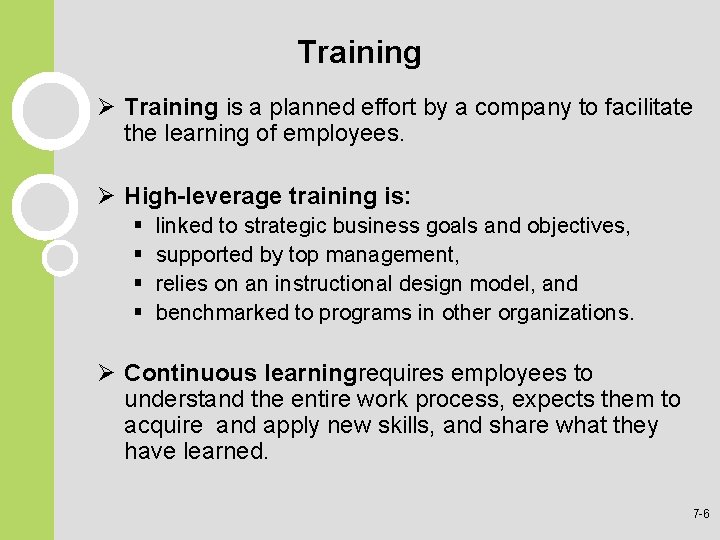
Training Ø Training is a planned effort by a company to facilitate the learning of employees. Ø High-leverage training is: § § linked to strategic business goals and objectives, supported by top management, relies on an instructional design model, and benchmarked to programs in other organizations. Ø Continuous learningrequires employees to understand the entire work process, expects them to acquire and apply new skills, and share what they have learned. 7 -6
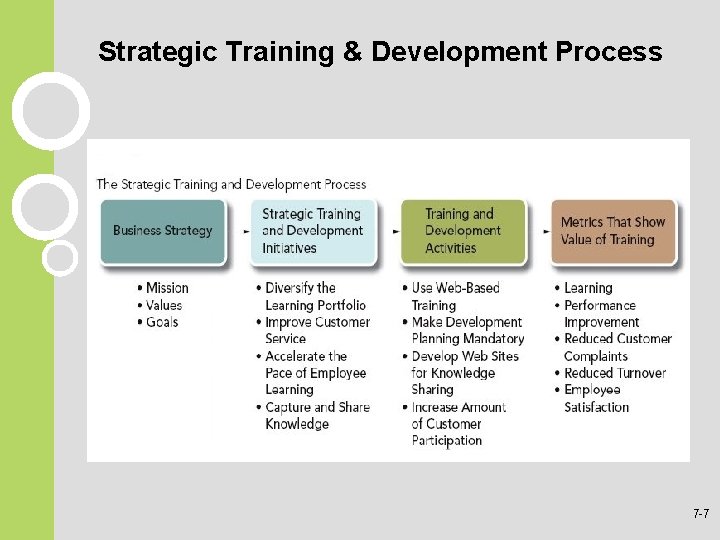
Strategic Training & Development Process 7 -7
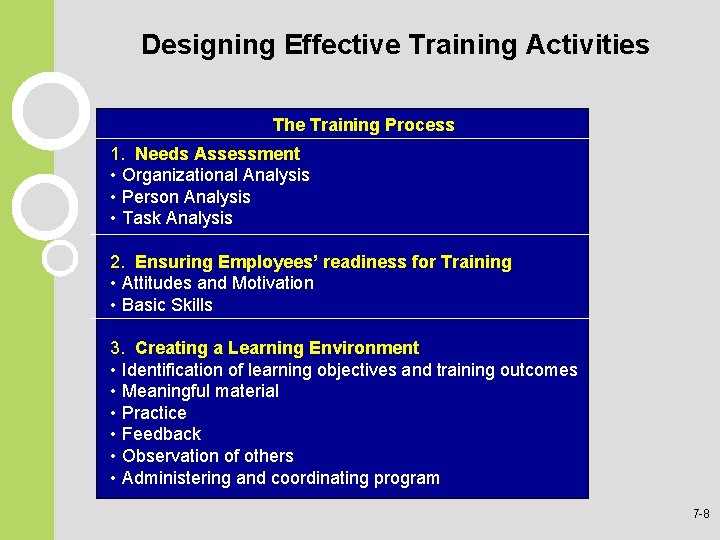
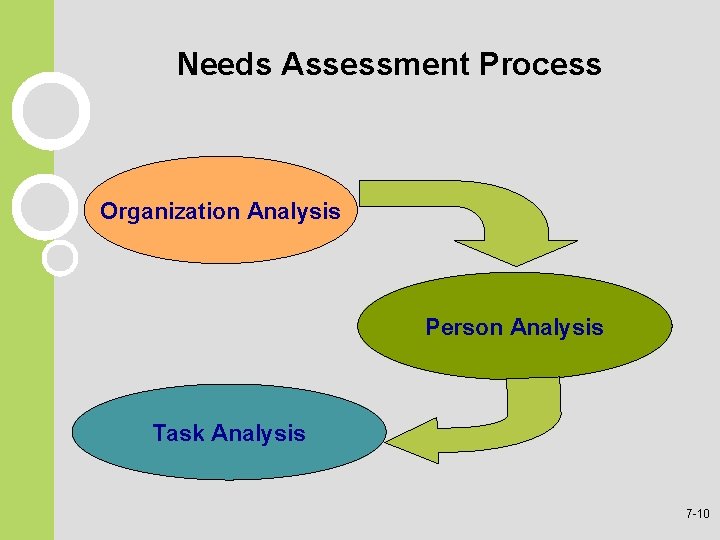
Designing Effective Training Activities The Training Process 1. Needs Assessment • Organizational Analysis • Person Analysis • Task Analysis 2. Ensuring Employees’ readiness for Training • Attitudes and Motivation • Basic Skills 3. Creating a Learning Environment • Identification of learning objectives and training outcomes • Meaningful material • Practice • Feedback • Observation of others • Administering and coordinating program 7 -8
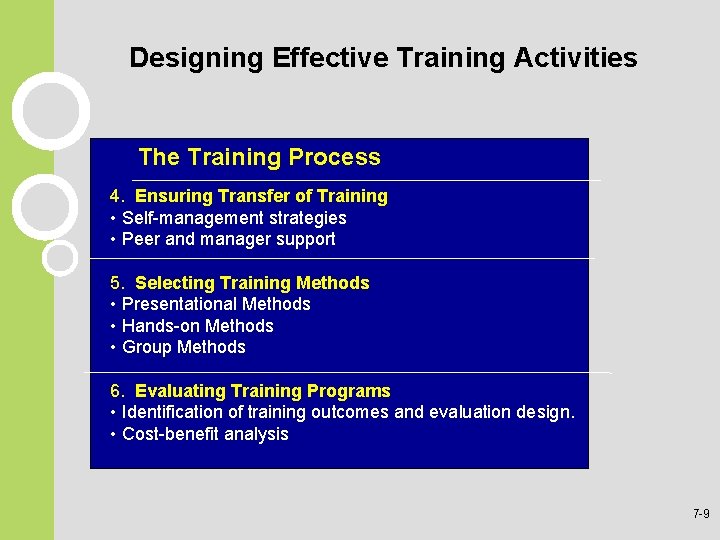
Designing Effective Training Activities The Training Process 4. Ensuring Transfer of Training • Self-management strategies • Peer and manager support 5. Selecting Training Methods • Presentational Methods • Hands-on Methods • Group Methods 6. Evaluating Training Programs • Identification of training outcomes and evaluation design. • Cost-benefit analysis 7 -9
Needs Assessment Process Organization Analysis Person Analysis Task Analysis 7 -10
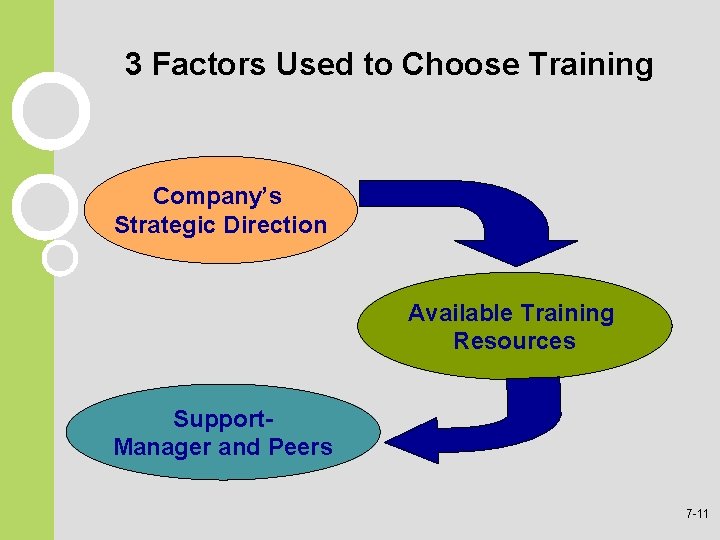
3 Factors Used to Choose Training Company’s Strategic Direction Available Training Resources Support. Manager and Peers 7 -11
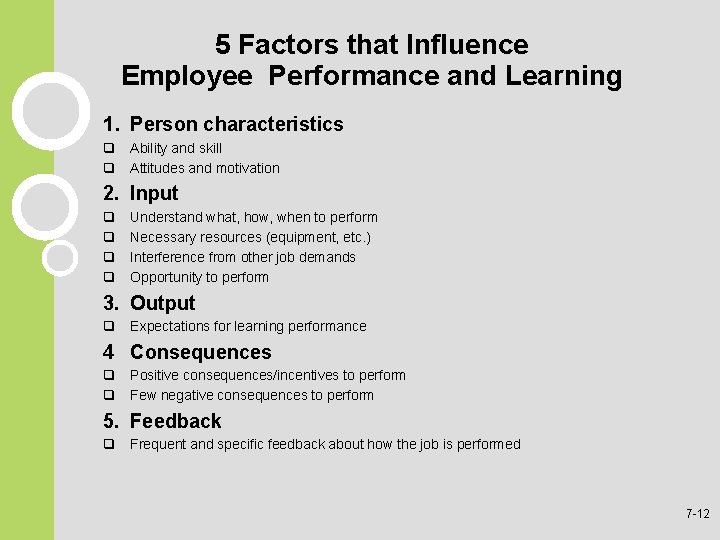
5 Factors that Influence Employee Performance and Learning 1. Person characteristics q Ability and skill q Attitudes and motivation 2. Input q q Understand what, how, when to perform Necessary resources (equipment, etc. ) Interference from other job demands Opportunity to perform 3. Output q Expectations for learning performance 4 Consequences q Positive consequences/incentives to perform q Few negative consequences to perform 5. Feedback q Frequent and specific feedback about how the job is performed 7 -12
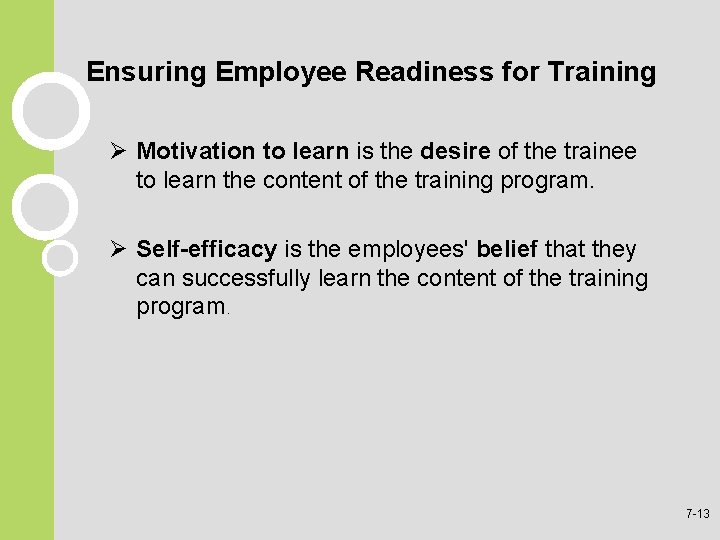
Ensuring Employee Readiness for Training Ø Motivation to learn is the desire of the trainee to learn the content of the training program. Ø Self-efficacy is the employees' belief that they can successfully learn the content of the training program. 7 -13
Ensuring Employee Readiness for Training To increase employees' self-efficacy level: 1. Let employees know that the purpose of training isto improve performance rather than to identify areas in which employees are incompetent. 2. Provideas much information as possible about the training program and purpose prior to actual training. 3. Show employees their peers’training success. 4. Provideemployees feedbackthat § § learning is under their control they have the ability and responsibility to overcome learning difficulties experienced in the program. 7 -14
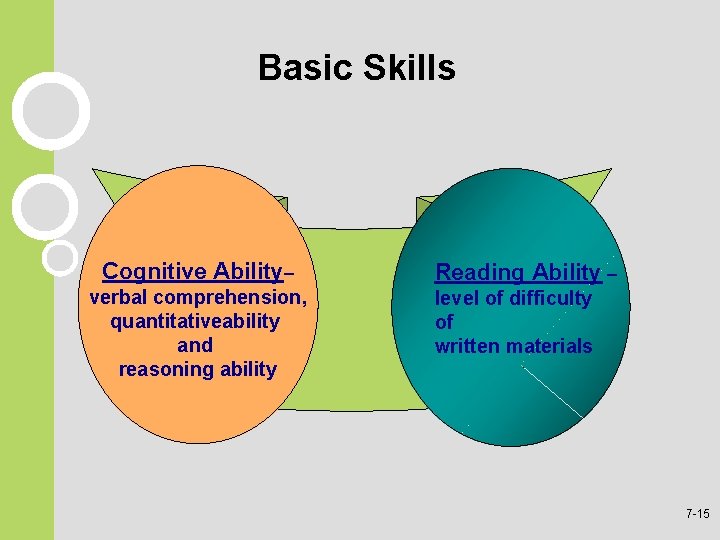
Basic Skills S Cognitive Ability – K verbal comprehension, I quantitativeability L and L reasoning ability S Reading Ability – level of difficulty of written materials 7 -15
Creating a Learning Environment Ø 7 Conditions for Learning 1. Need to know why they should learn. 2. Meaningful training content. 3. Opportunities to practice. 4. Feedback. 5. Observe experience and interact with others 6. Good program coordination and administration 7. Commit training content to memory 7 -16
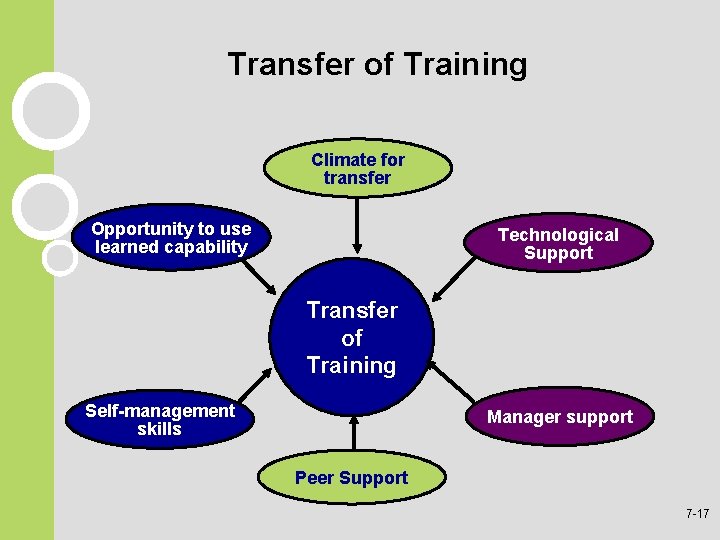
Transfer of Training Climate for transfer Opportunity to use learned capability Technological Support Transfer of Training Self-management skills Manager support Peer Support 7 -17
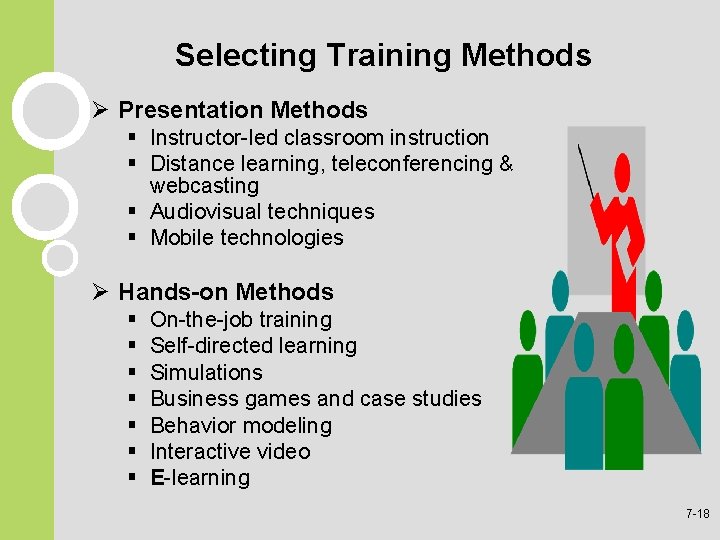
Selecting Training Methods Ø Presentation Methods § Instructor-led classroom instruction § Distance learning, teleconferencing & webcasting § Audiovisual techniques § Mobile technologies Ø Hands-on Methods § § § § On-the-job training Self-directed learning Simulations Business games and case studies Behavior modeling Interactive video E-learning 7 -18
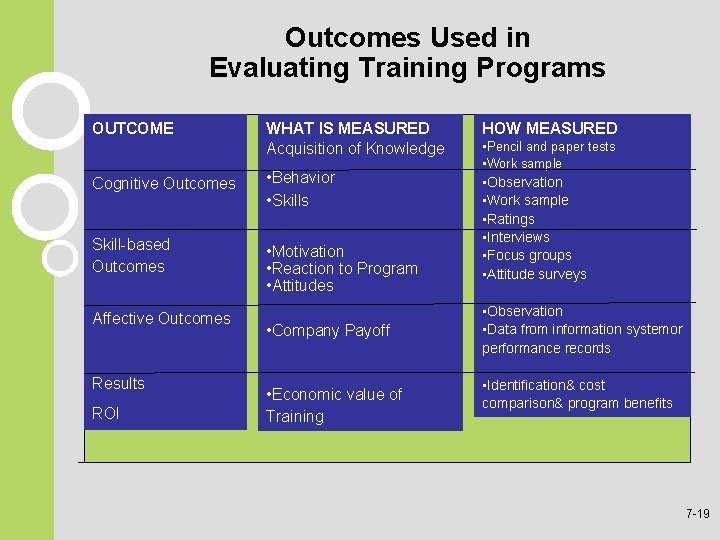
Outcomes Used in Evaluating Training Programs OUTCOME WHAT IS MEASURED Acquisition of Knowledge Cognitive Outcomes • Behavior • Skills Skill-based Outcomes • Motivation • Reaction to Program • Attitudes Affective Outcomes Results ROI • Company Payoff • Economic value of Training HOW MEASURED • Pencil and paper tests • Work sample • Observation • Work sample • Ratings • Interviews • Focus groups • Attitude surveys • Observation • Data from information systemor performance records • Identification& cost comparison& program benefits 7 -19
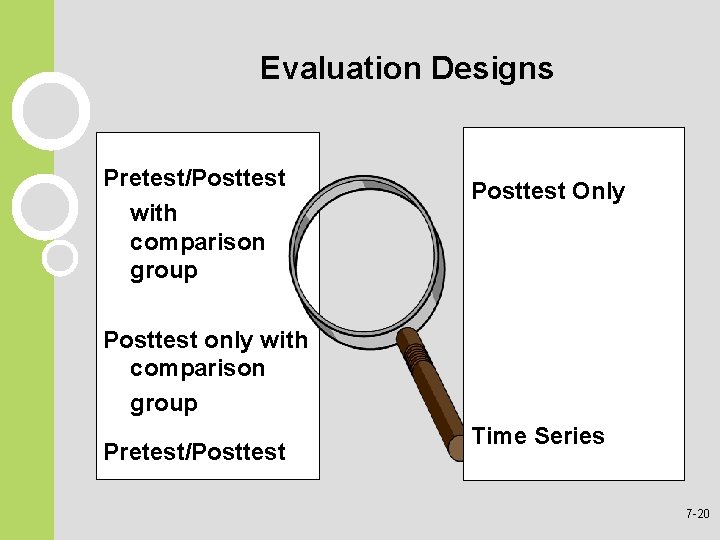
Evaluation Designs Pretest/Posttest with comparison group Posttest Only Posttest only with comparison group Pretest/Posttest Time Series 7 -20
Determining Return on Investment Ø Cost-benefit analysis is the process of determining a training program’s economic benefits using accounting methods. • Determining costs • Determining benefits • Making the analysis 7 -21
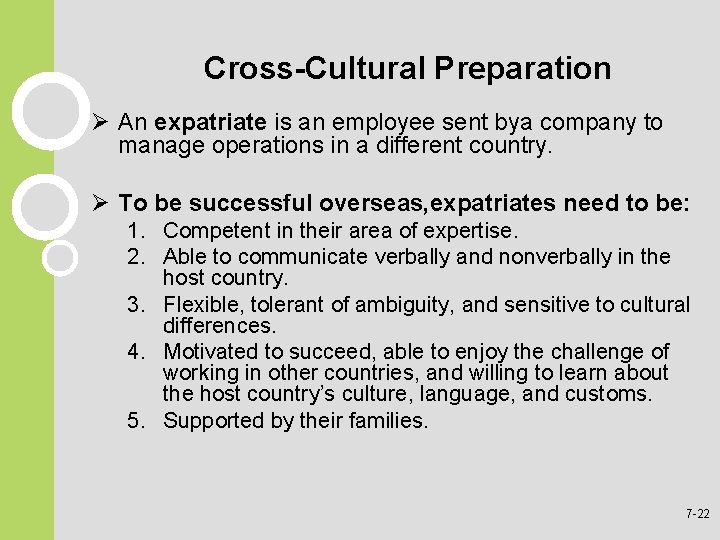
Cross-Cultural Preparation Ø An expatriate is an employee sent bya company to manage operations in a different country. Ø To be successful overseas, expatriates need to be: 1. Competent in their area of expertise. 2. Able to communicate verbally and nonverbally in the host country. 3. Flexible, tolerant of ambiguity, and sensitive to cultural differences. 4. Motivated to succeed, able to enjoy the challenge of working in other countries, and willing to learn about the host country’s culture, language, and customs. 5. Supported by their families. 7 -22
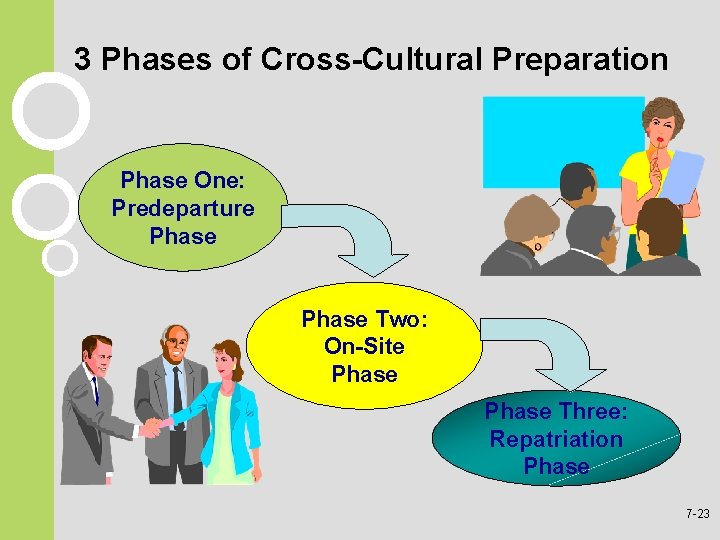
3 Phases of Cross-Cultural Preparation Phase One: Predeparture Phase Two: On-Site Phase Three: Repatriation Phase 7 -23
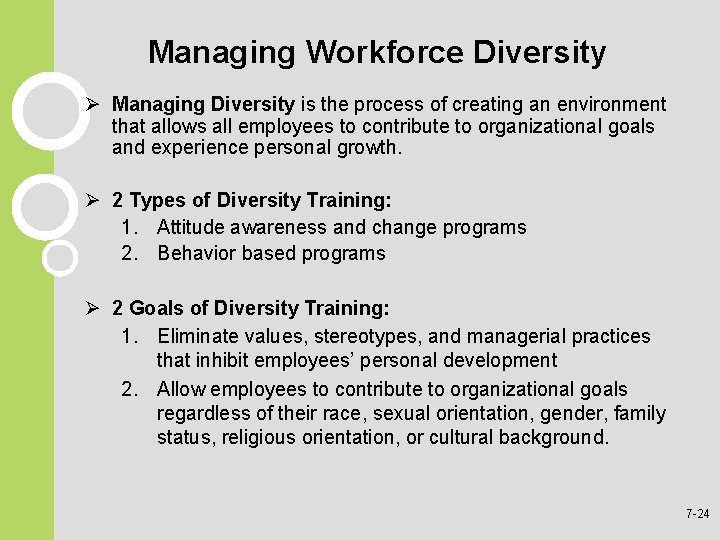
Managing Workforce Diversity Ø Managing Diversity is the process of creating an environment that allows all employees to contribute to organizational goals and experience personal growth. Ø 2 Types of Diversity Training: 1. Attitude awareness and change programs 2. Behavior based programs Ø 2 Goals of Diversity Training: 1. Eliminate values, stereotypes, and managerial practices that inhibit employees’ personal development 2. Allow employees to contribute to organizational goals regardless of their race, sexual orientation, gender, family status, religious orientation, or cultural background. 7 -24
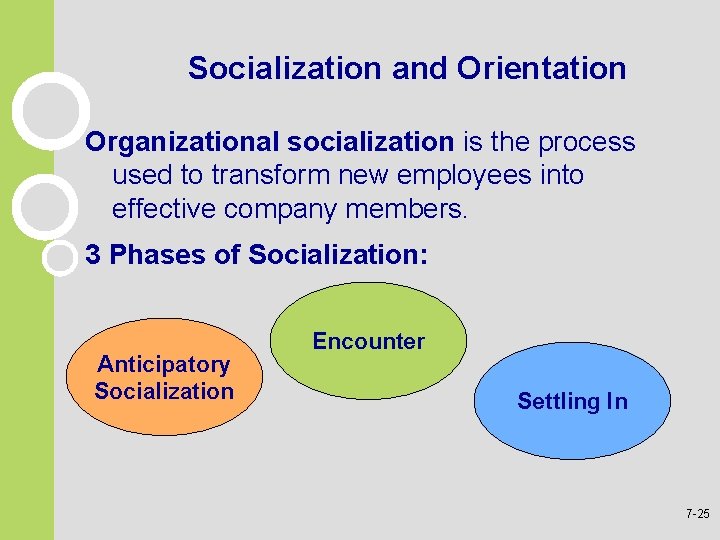
Socialization and Orientation Organizational socialization is the process used to transform new employees into effective company members. 3 Phases of Socialization: Anticipatory Socialization Encounter Settling In 7 -25
Summary Ø Technological innovations, new product markets, and a diverse workforce have increased the need for companies to reexamine how their training practices contribute to learning. Ø The key to successful training is choosing the training method that best contributes to effectiveness. Ø Managing diversity and cross-cultural preparation are two training issues relevant to capitalize on a diverse workforce and global markets. 7 -26