HUM 2461 Humanities of Latin America SFC Spring

- Slides: 20
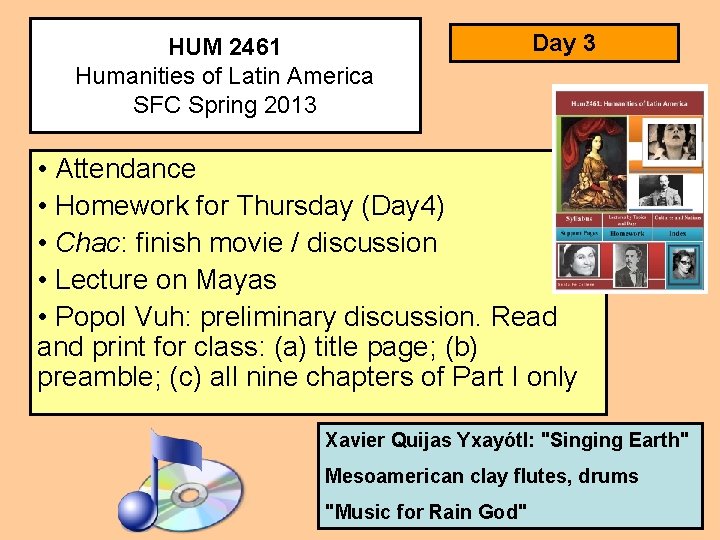
HUM 2461 Humanities of Latin America SFC Spring 2013 Day 3 • Attendance • Homework for Thursday (Day 4) • Chac: finish movie / discussion • Lecture on Mayas • Popol Vuh: preliminary discussion. Read and print for class: (a) title page; (b) preamble; (c) all nine chapters of Part I only Xavier Quijas Yxayótl: "Singing Earth" Mesoamerican clay flutes, drums "Music for Rain God"
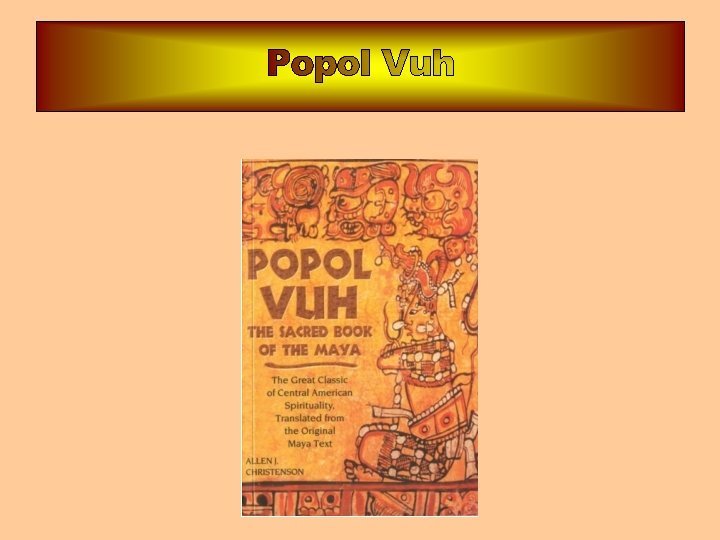
Notes on Popol Vuh Book of the People The Sacred Book
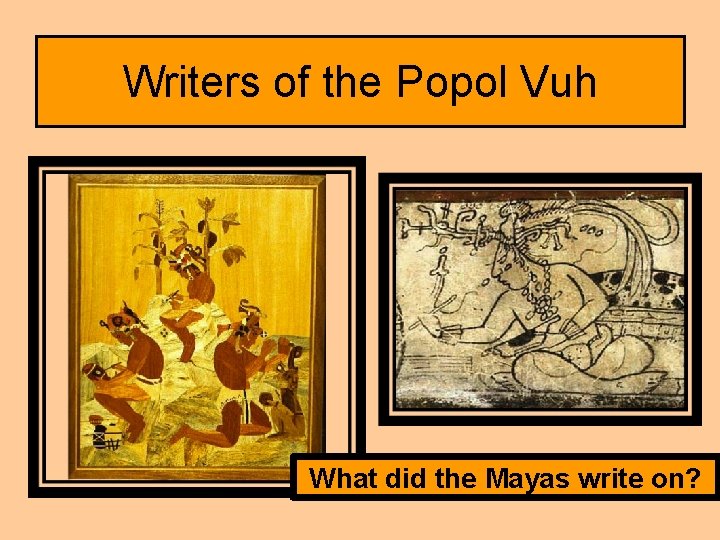
Writers of the Popol Vuh What did the Mayas write on?
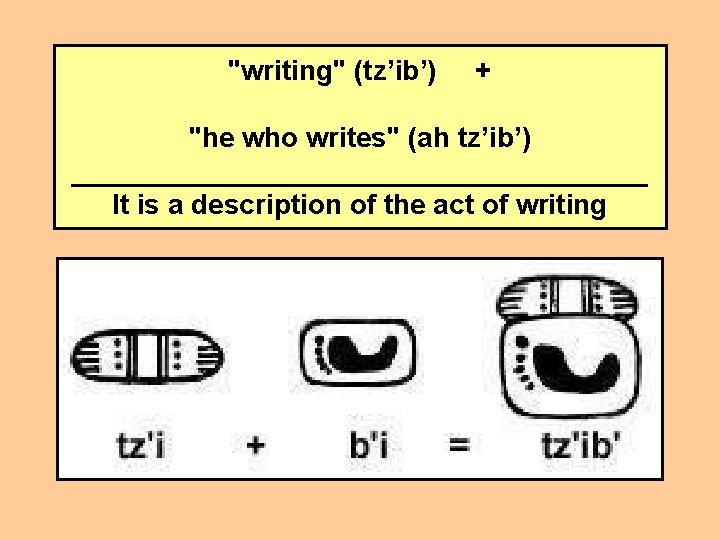
"writing" (tz’ib’) + "he who writes" (ah tz’ib’) ___________________ It is a description of the act of writing
Notes on Popol Vuh (1) • 2500 BCE – 1550 CE: oral text • Myth: "gift of Quetzalcóatl to humans" • 353 CE: Mayas invent 365 -day calendar • ca. 1550: Maya Quiché MS – Diego Reynoso, town councilman – Santa Cruz Quiché, Guatemala • ca. 1700: Fr. Francisco Ximénez – Spanish translation – Newberry Library, Chicago
Notes on Popol Vuh (1 a) • Three parts: • Part 1 9 chapters • Part 2 14 chapters • Part 3 5 chapters • The oldest literary/religious printed work in Latin America (16 th Century edition). • Oral text (between 2500 B. C. E. and 1550 C. E. )
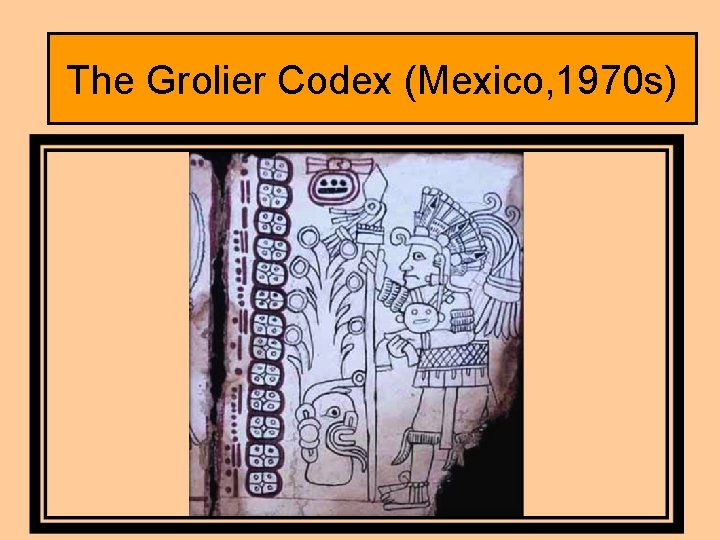
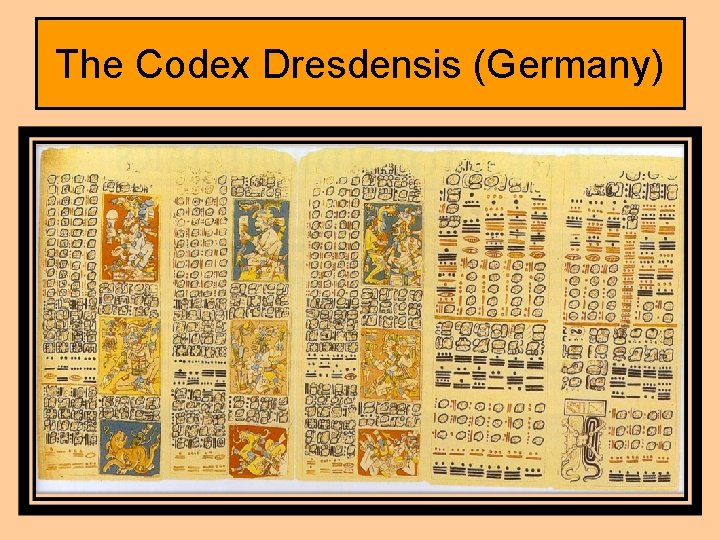
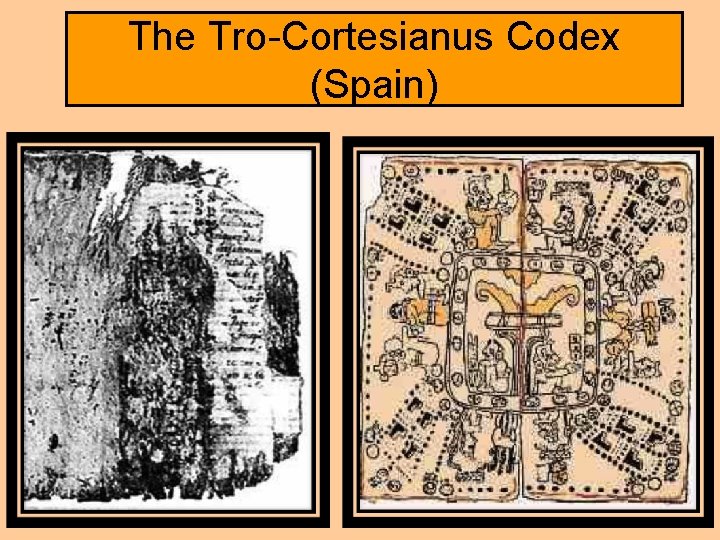
Notes on Popol Vuh (1 b) • Religious (creation and gods). • 4 Codex (books) found 1. The Paris Codex (1930 s) 2. The Grolier Codex (1970 s) 3. The Dresden Codex (1810, Alexander von Humbolt) 4. The Madrid Codex (Under possession of Juan de Tro y Ortolano in Madrid in 1866)
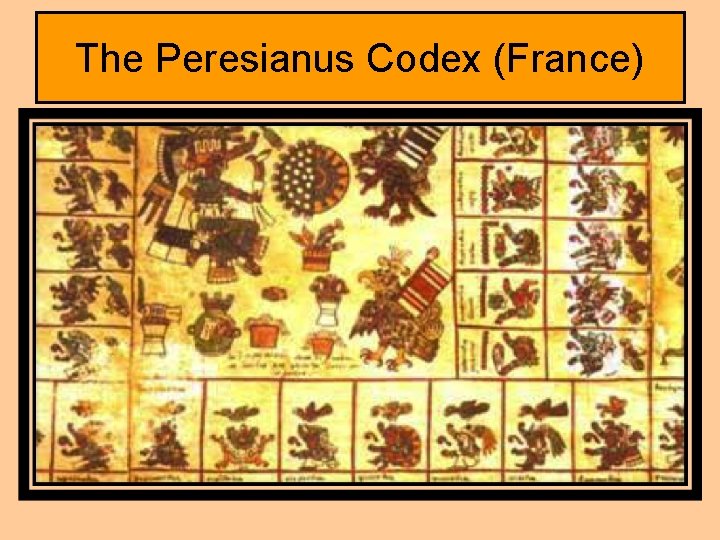
The Peresianus Codex (France)
The Grolier Codex (Mexico, 1970 s)
The Codex Dresdensis (Germany)
The Tro-Cortesianus Codex (Spain)
Notes on Popol Vuh (2) • Retranslation into Maya Quiché • Opening 2 lines: – Are, u xe 'oher tzih. – Varal K'iche, u bi. • This is the root of the former word. • Here is Quiché by name.
Notes on Popol Vuh (3) • Genre: near-heroic myth and history – no single hero – myth and history of a people (Quiché Maya) – origins to 1550 • Coherent literary work –order, scope, unity, episodes • Popol Vuh: totality of the Maya Epoch • Next Epoch: "Holy Cross"
Notes on Popol Vuh (4) • 4 Mythic Cycles • 1 st Cycle: wood "men" puppets (to line 820) • 2 nd Cycle: destruction of 7 Parrot & sons (l. 1674) • 3 rd Cycle: Hero twins become Sun & Moon (l. 4708) • 4 th Cycle: ½ of whole text (men learn to pray) – first Fathers to present – Heart of Heaven & Earth
Notes on Popol Vuh (5) • Quiché people in 4 th creation • First Fathers, from corn by creator • Quiché: most powerful Maya in Guatemala in 1550 • Modern Quiché call their language Cakchiquel • Quiché society: patriarchal, patrilineal, patrilocal • "God" in Quiché: Dios qahavixel • Public religious drama / private divination
Notes on Popol Vuh (6) • Quiché (Yucatán, Aztec) calendar: sacred mystery • Quiché "count of days" – 260 days (13 deified numbers x 20 days) – Solar calendar: 18 months x 20 days) + 5 – year cycles only begin on 4 days (of 20 days) – 13 -year cycle x 4 beginning days = 52 years
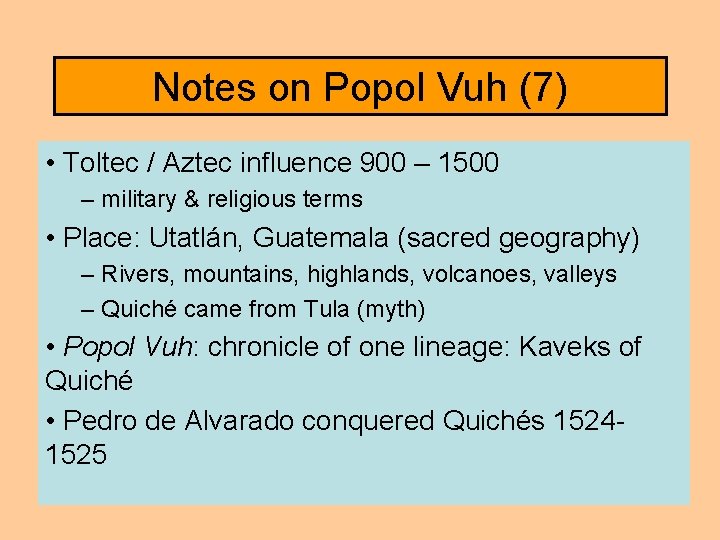
Notes on Popol Vuh (7) • Toltec / Aztec influence 900 – 1500 – military & religious terms • Place: Utatlán, Guatemala (sacred geography) – Rivers, mountains, highlands, volcanoes, valleys – Quiché came from Tula (myth) • Popol Vuh: chronicle of one lineage: Kaveks of Quiché • Pedro de Alvarado conquered Quichés 15241525
HTTP: //WWW. FAMSI. ORG/MAYAWRITING/C ODICES/