Horizon Europe THE NEXT EU RESEARCH INNOVATION INVESTMENT
- Slides: 29
Horizon Europe THE NEXT EU RESEARCH & INNOVATION INVESTMENT PROGRAMME (2021 – 2027) #Horizon. EU Based on the Commission Proposal for Horizon Europe, the common understanding between co-legislators and the Partial General Approach, both approved in April 2019 Research and Innovation
Communication, Dissemination and Exploitation (D&E), Key Impact Pathways indicators and Open access to data and publications in Horizon Europe Regional Stakeholder Workshop on Horizon Europe implementation Ruse, Bulgaria 22 January 2020
Requirements for Communication, Dissemination & Exploitation
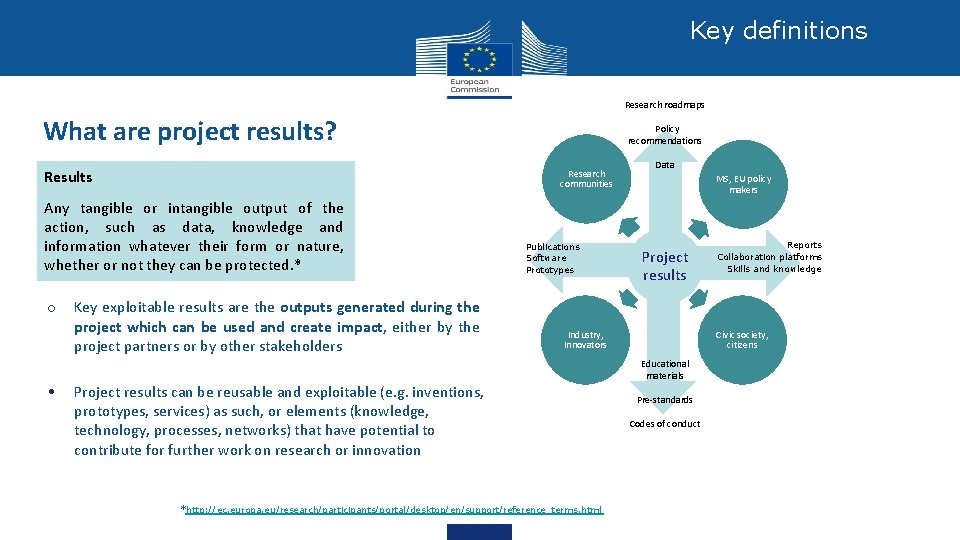
Key definitions Research roadmaps What are project results? Research communities Results Any tangible or intangible output of the action, such as data, knowledge and information whatever their form or nature, whether or not they can be protected. * o Policy recommendations Key exploitable results are the outputs generated during the project which can be used and create impact, either by the project partners or by other stakeholders Publications Software Prototypes Data MS, EU policy makers Project results Industry, Innovators Civic society, citizens Educational materials • Project results can be reusable and exploitable (e. g. inventions, prototypes, services) as such, or elements (knowledge, technology, processes, networks) that have potential to contribute for further work on research or innovation *http: //ec. europa. eu/research/participants/portal/desktop/en/support/reference_terms. html Reports Collaboration platforms Skills and knowledge Pre-standards Codes of conduct
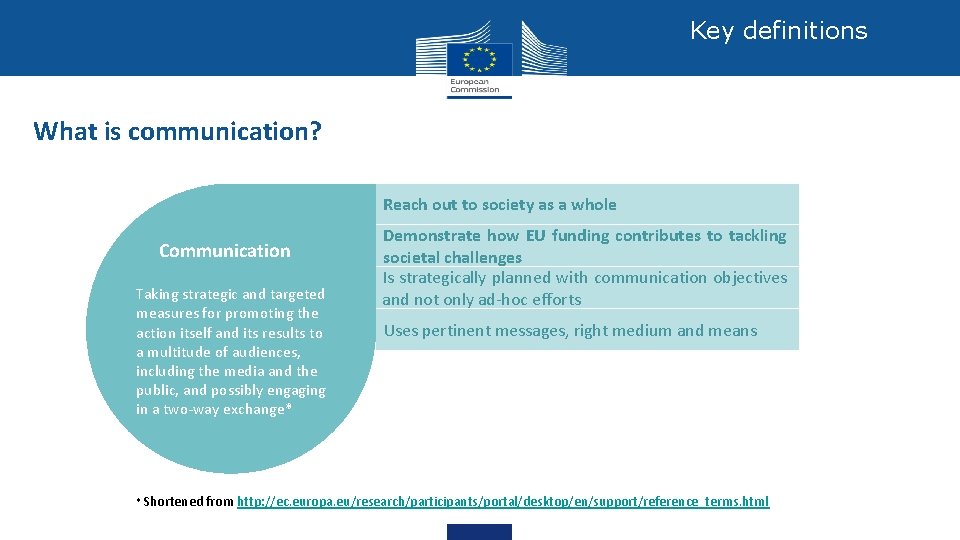
Key definitions What is communication? Reach out to society as a whole Communication Taking strategic and targeted measures for promoting the action itself and its results to a multitude of audiences, including the media and the public, and possibly engaging in a two-way exchange* Demonstrate how EU funding contributes to tackling societal challenges Is strategically planned with communication objectives and not only ad-hoc efforts Uses pertinent messages, right medium and means * Shortened from http: //ec. europa. eu/research/participants/portal/desktop/en/support/reference_terms. html
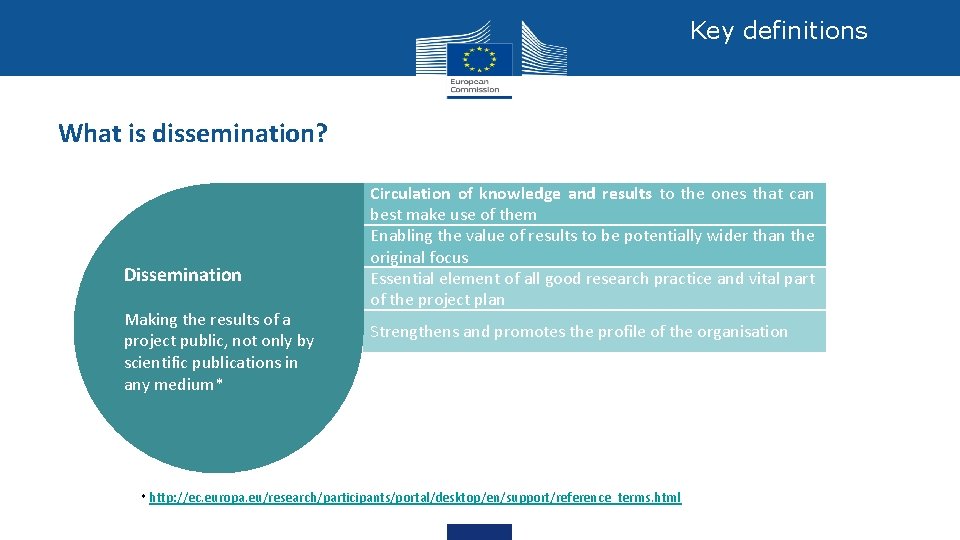
Key definitions What is dissemination? Dissemination Making the results of a project public, not only by scientific publications in any medium* Circulation of knowledge and results to the ones that can best make use of them Enabling the value of results to be potentially wider than the original focus Essential element of all good research practice and vital part of the project plan Strengthens and promotes the profile of the organisation * http: //ec. europa. eu/research/participants/portal/desktop/en/support/reference_terms. html
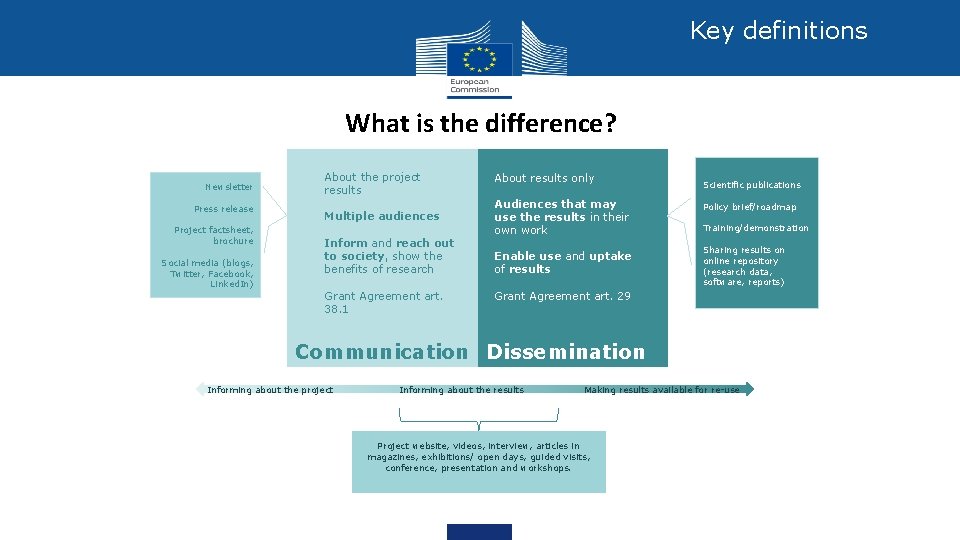
Key definitions What is the difference? Newsletter Press release Project factsheet, brochure Social media (blogs, Twitter, Facebook, Linked. In) About the project results Multiple audiences Inform and reach out to society, show the benefits of research Grant Agreement art. 38. 1 About results only Audiences that may use the results in their own work Enable use and uptake of results Scientific publications Policy brief/roadmap Training/demonstration Sharing results on online repository (research data, software, reports) Grant Agreement art. 29 Communication Dissemination Informing about the project Informing about the results Making results available for re-use Project website, videos, interview, articles in magazines, exhibitions/ open days, guided visits, conference, presentation and workshops.
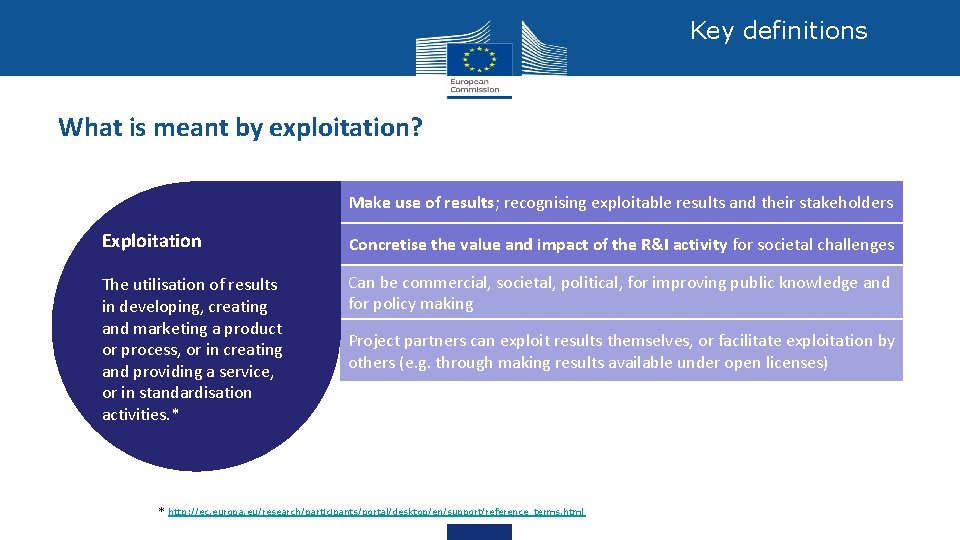
Key definitions What is meant by exploitation? Make use of results; recognising exploitable results and their stakeholders Exploitation Concretise the value and impact of the R&I activity for societal challenges The utilisation of results in developing, creating and marketing a product or process, or in creating and providing a service, or in standardisation activities. * Can be commercial, societal, political, for improving public knowledge and for policy making Project partners can exploit results themselves, or facilitate exploitation by others (e. g. through making results available under open licenses) * http: //ec. europa. eu/research/participants/portal/desktop/en/support/reference_terms. html
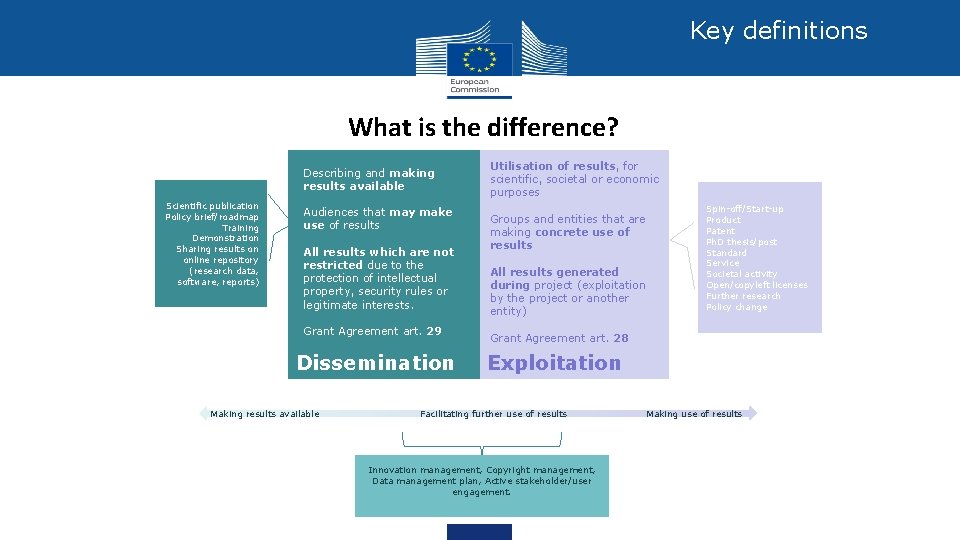
Key definitions What is the difference? Describing and making results available Scientific publication Policy brief/roadmap Training Demonstration Sharing results on online repository (research data, software, reports) Audiences that may make use of results All results which are not restricted due to the protection of intellectual property, security rules or legitimate interests. Grant Agreement art. 29 Dissemination Making results available Utilisation of results, for scientific, societal or economic purposes Groups and entities that are making concrete use of results All results generated during project (exploitation by the project or another entity) Spin-off/Start-up Product Patent Ph. D thesis/post Standard Service Societal activity Open/copyleft licenses Further research Policy change Grant Agreement art. 28 Exploitation Facilitating further use of results Innovation management, Copyright management, Data management plan, Active stakeholder/user engagement. Making use of results
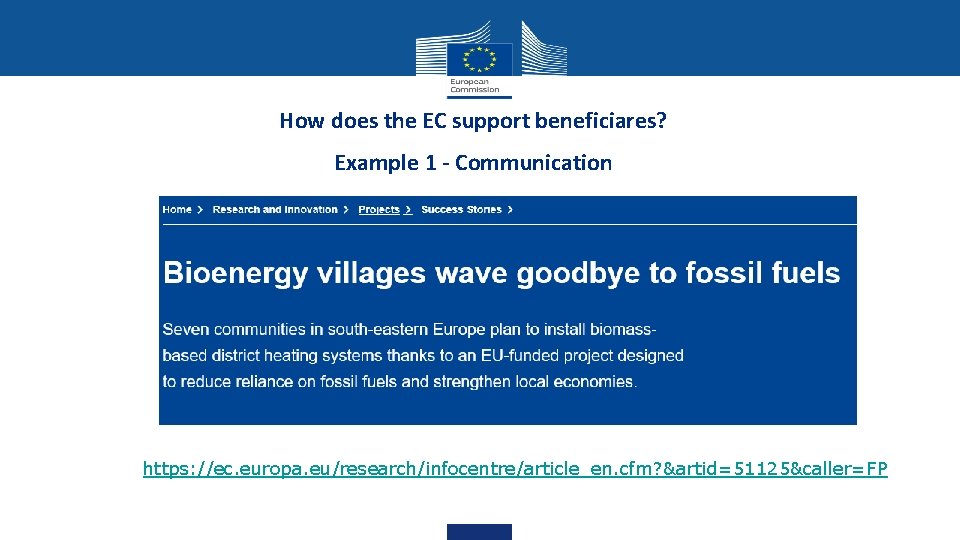
How does the EC support beneficiares? Example 1 - Communication https: //ec. europa. eu/research/infocentre/article_en. cfm? &artid=51125&caller=FP
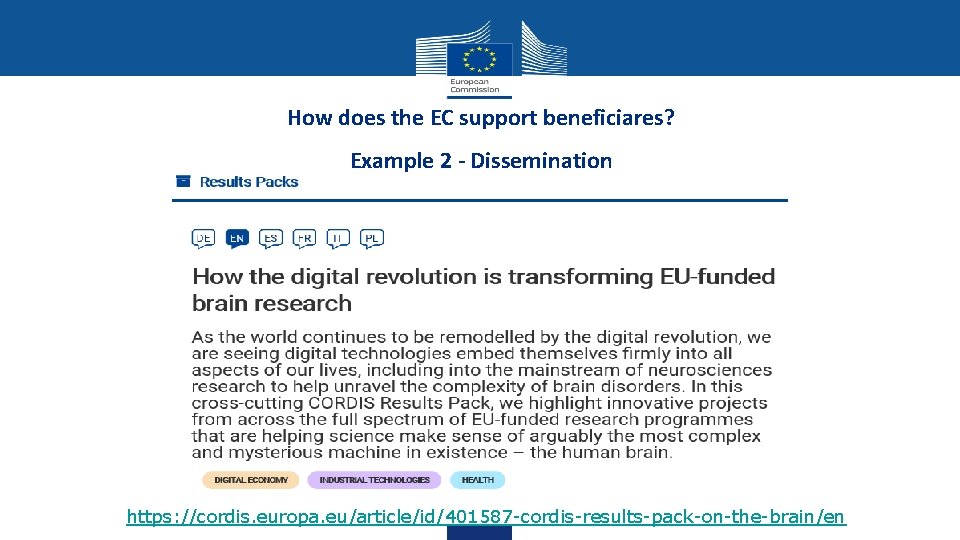
How does the EC support beneficiares? Example 2 - Dissemination https: //cordis. europa. eu/article/id/401587 -cordis-results-pack-on-the-brain/en
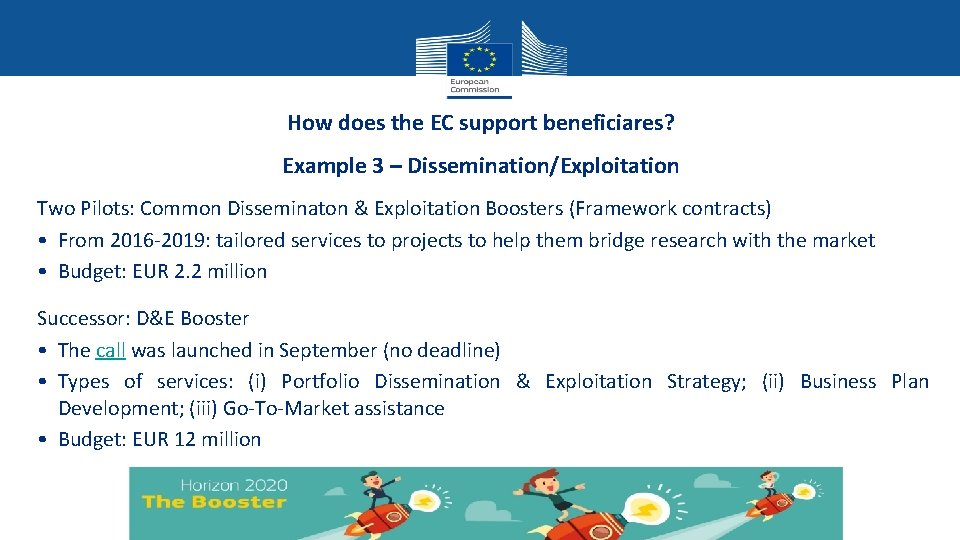
How does the EC support beneficiares? Example 3 – Dissemination/Exploitation Two Pilots: Common Disseminaton & Exploitation Boosters (Framework contracts) • From 2016 -2019: tailored services to projects to help them bridge research with the market • Budget: EUR 2. 2 million Successor: D&E Booster • The call was launched in September (no deadline) • Types of services: (i) Portfolio Dissemination & Exploitation Strategy; (ii) Business Plan Development; (iii) Go-To-Market assistance • Budget: EUR 12 million
Why does it not always happen? From the side of the project/beneficiaries • Lack of capacity or skills • Focus on scientific work and not so much on how this can benefit end users • Interpreted as an activity after the project lifetime • Not truly part of the overall project design From the side of the Commission • The current reporting on D&E may not be fit for the purpose • Limited follow up on the project results after the end of the project
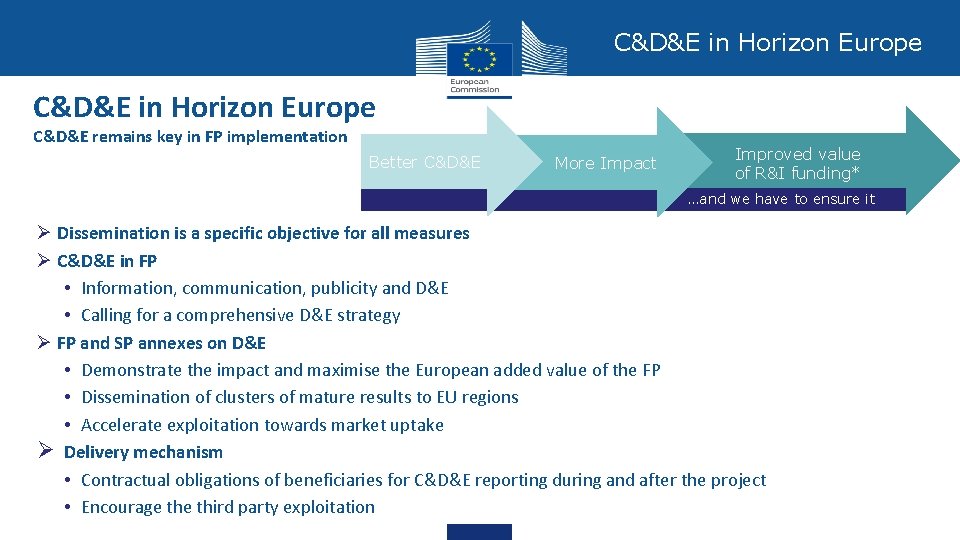
C&D&E in Horizon Europe C&D&E remains key in FP implementation Better C&D&E More Impact Improved value of R&I funding* …and we have to ensure it Ø Dissemination is a specific objective for all measures Ø C&D&E in FP • Information, communication, publicity and D&E • Calling for a comprehensive D&E strategy Ø FP and SP annexes on D&E • Demonstrate the impact and maximise the European added value of the FP • Dissemination of clusters of mature results to EU regions • Accelerate exploitation towards market uptake Ø Delivery mechanism • Contractual obligations of beneficiaries for C&D&E reporting during and after the project • Encourage third party exploitation
C&D&E orientations in Horizon Europe • Focus on strengthening the link between science and society • Outreach activities addressing novelties of Horizon Europe • Enhanced communication with National Contact Points (NCPs) • Enhanced reporting and data collection for supporting the D&E objectives • Introducing a feedback to policy framework for translating R&I results into policy making & programming
C&D&E orientations in Horizon Europe • Encouraging third party exploitation (where appropriate) • Emphasis on continuous reporting on D&E (even after the end of the project) • Improvements on the proposal/reporting template to introduce more specific language on D&E • Fostering synergies with other EU programmes and initiatives • Introducing incentives for exploitation, provide support to beneficiaries through existing tools for increasing the use of their results
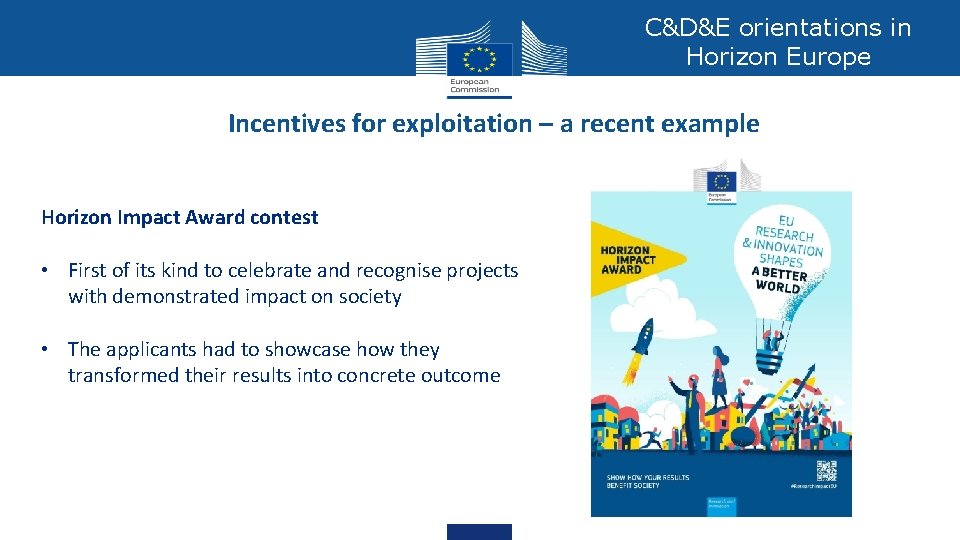
C&D&E orientations in Horizon Europe Incentives for exploitation – a recent example Horizon Impact Award contest • First of its kind to celebrate and recognise projects with demonstrated impact on society • The applicants had to showcase how they transformed their results into concrete outcome
C&D&E orientations in Horizon Europe Enhanced D&E support to beneficiaries – a new initiative • Horizon Results Platform • Results are presented in visually attractive way (e. g. videos), and optionally with more in-depth content references • Beneficiary-driven • Beneficiaries can demonstrate their needs to ‘unblock’ them from scaling up their results
C&D&E orientations in Horizon Europe Horizon Results Platform • Integrated with Innovation Radar • Integrated with the D&E Booster services • Integrated with a targeted dissemination strategy
Open Science in Horizon Europe
What is the general orientation? • Open Science as modus operandi for science in the FP • Towards a more open, collaborative, data-intensive and networked way of conducting research and sharing research results, enabled by developments in ICT and related infrastructures and the increasing proliferation of data
Open Access to publications in Horizon Europe • Open access via repositories kept but made immediate • Copyright retention • Publication in hybrid journals allowed (but costs not eligible)
Open Access to Research data in Horizon Europe • Mandatory Data Management Plan • FAIR principle • Open by default (exceptions will apply) • European Open Science Cloud
Key impact pathways in Horizon Europe
Key Impact Pathways The KIPs will aim to: § Tell the story of the progress of the Programme as a whole, according to its objectives § Monitor progress at any moment in time (short-term, mid-term, long-term)
Key Impact Pathways In this process, we need to : § Know who the individual researchers are (e. g. through unique identifiers) § Track the FP outputs better, through a structured reference to the funding source in publications, patents and other IPR applications § Make more use of available data and links to relevant existing databases so as to minimise the administrative burden of beneficiaries
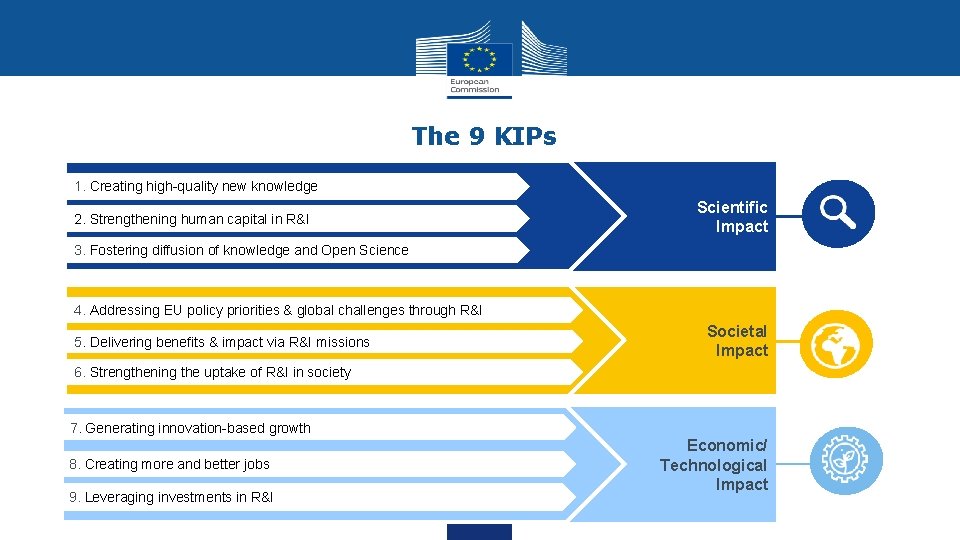
The 9 KIPs 1. Creating high-quality new knowledge 2. Strengthening human capital in R&I Scientific Impact 3. Fostering diffusion of knowledge and Open Science 4. Addressing EU policy priorities & global challenges through R&I 5. Delivering benefits & impact via R&I missions Societal Impact 6. Strengthening the uptake of R&I in society 7. Generating innovation-based growth 8. Creating more and better jobs 9. Leveraging investments in R&I Economic/ Technological Impact
Take away messages • Increased emphasis on Dissemination & Exploitation for fostering the visiblity, availability, use, uptake and valorisation of R&I results • Open Science as modus operandi for enhancing knowledge circulation • Key Impact Pathways for more efficient and effective Programme monitoring
Thank you ! 29 Research and Innovation