Hens teeth Or not NEUROPSYCHIATRIC CONDITIONS IN CHILDHOOD
- Slides: 34
Hen’s teeth. . Or not? ? NEUROPSYCHIATRIC CONDITIONS IN CHILDHOOD Dr Kirsty Yates Community Paediatrics, GNCH
The problem: 5 year old boy “His behaviour is terrible. He makes these weird movements all the time. He doesn’t seem to be learning at school and they’re also complaining about his behaviour!”
What else do you want to know? ?
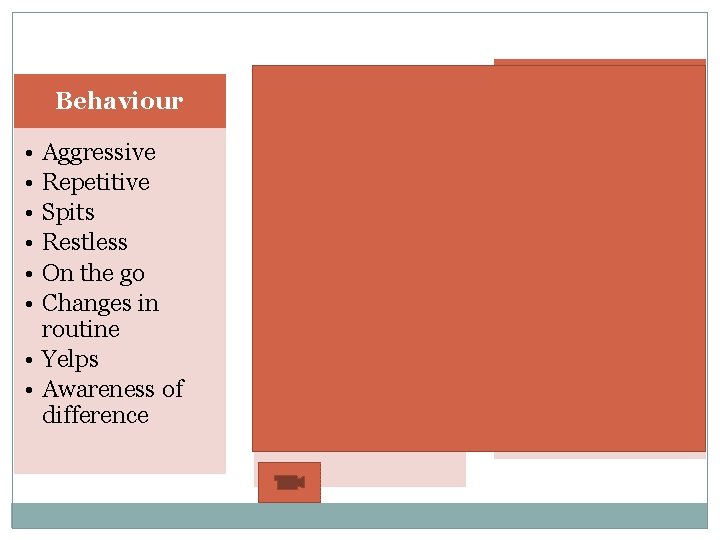
Education Behaviour • • • Aggressive Repetitive Spits Restless On the go Changes in routine • Yelps • Awareness of difference Movements • Since 3 -4 yr • Daily • • • Grimace Blink Flap hands R arm stretches Increase when anxious • Not learning • Kept back in nursery • Going to ARC • • Poor conc Reasurrance Seek cuddles Copies speech/phrases
What are your initial thoughts? ? a) I’m not worried – reassure mum b) I would like some more information
Family History Past Medical History Social History Examination
Background Ex prem: Twin II 34+4 wk C/S Maternal methadone and diazepam SCBU – vomiting –ºNAS Physically healthy Seen for child protection medical 3 y 1 m. GDD – follow up
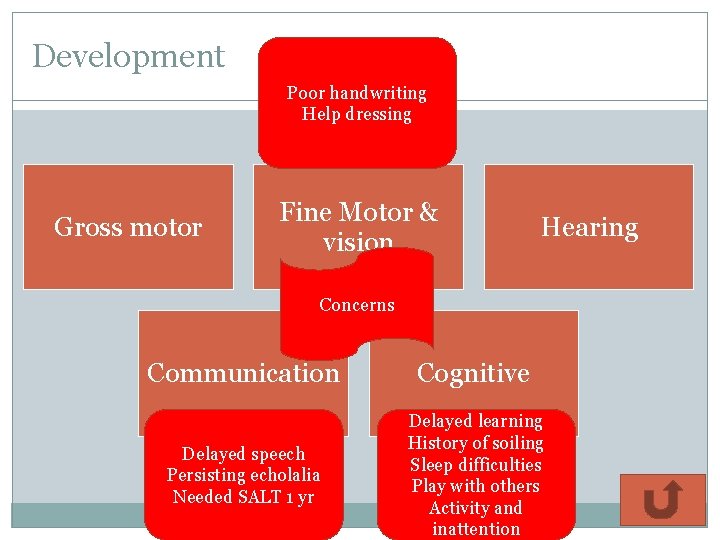
Development Poor handwriting Help dressing Gross motor Fine Motor & vision Hearing Concerns Communication Cognitive Delayed speech Persisting echolalia Needed SALT 1 yr Delayed learning History of soiling Sleep difficulties Play with others Activity and inattention
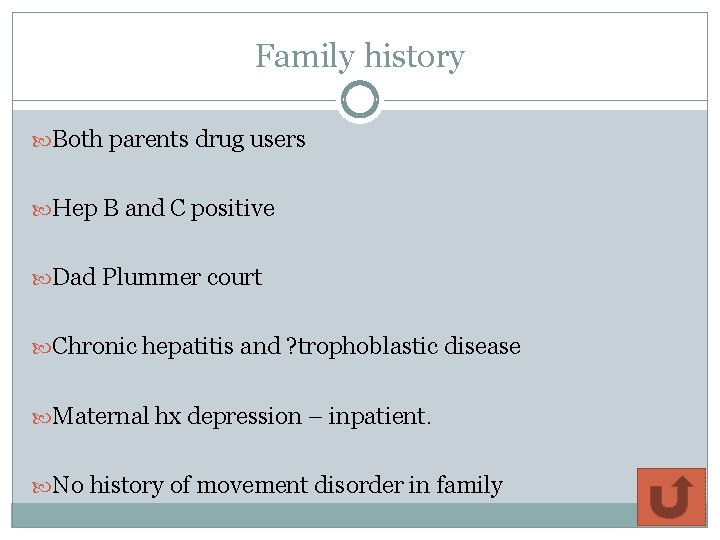
Family history Both parents drug users Hep B and C positive Dad Plummer court Chronic hepatitis and ? trophoblastic disease Maternal hx depression – inpatient. No history of movement disorder in family
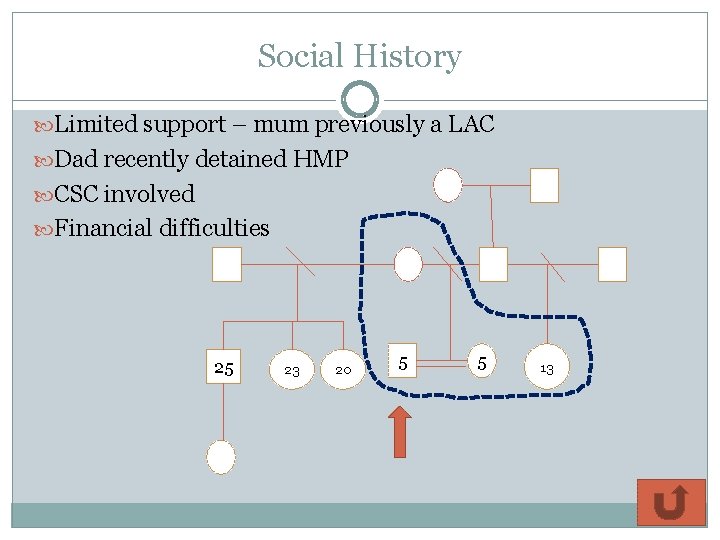
Social History Limited support – mum previously a LAC Dad recently detained HMP CSC involved Financial difficulties 25 23 20 5 5 13
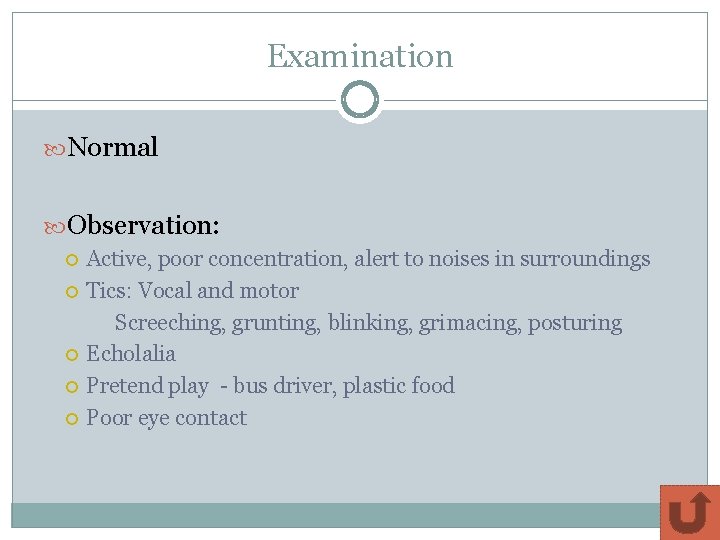
Examination Normal Observation: Active, poor concentration, alert to noises in surroundings Tics: Vocal and motor Screeching, grunting, blinking, grimacing, posturing Echolalia Pretend play - bus driver, plastic food Poor eye contact
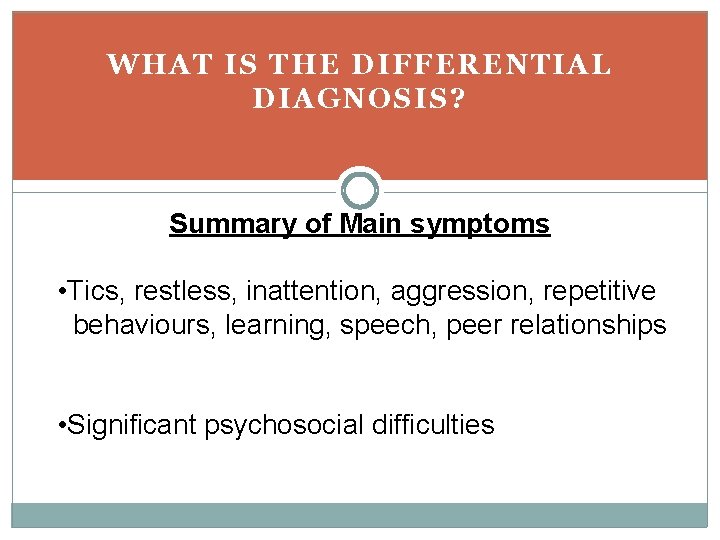
WHAT IS THE DIFFERENTIAL DIAGNOSIS? Summary of Main symptoms • Tics, restless, inattention, aggression, repetitive behaviours, learning, speech, peer relationships • Significant psychosocial difficulties
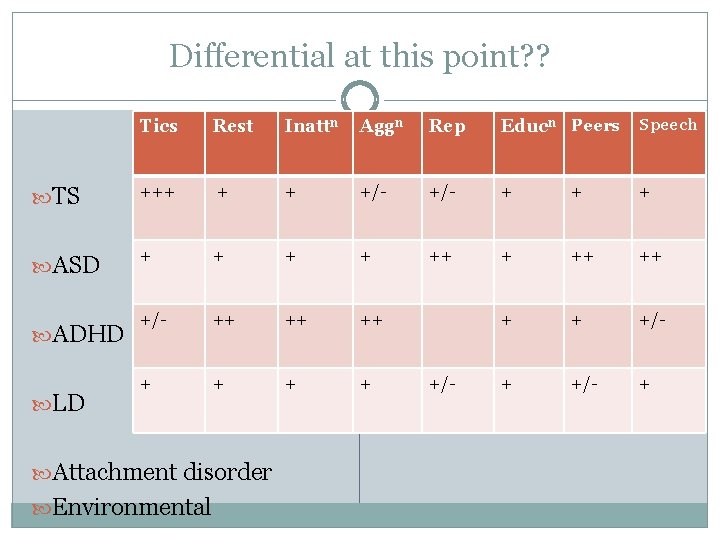
Differential at this point? ? Tics Rest Inattn Aggn Rep Educn Peers Speech TS +++ + + +/- + + + ASD + + ++ ++ +/- ++ ++ ++ + + +/- + ADHD LD Attachment disorder Environmental +/-
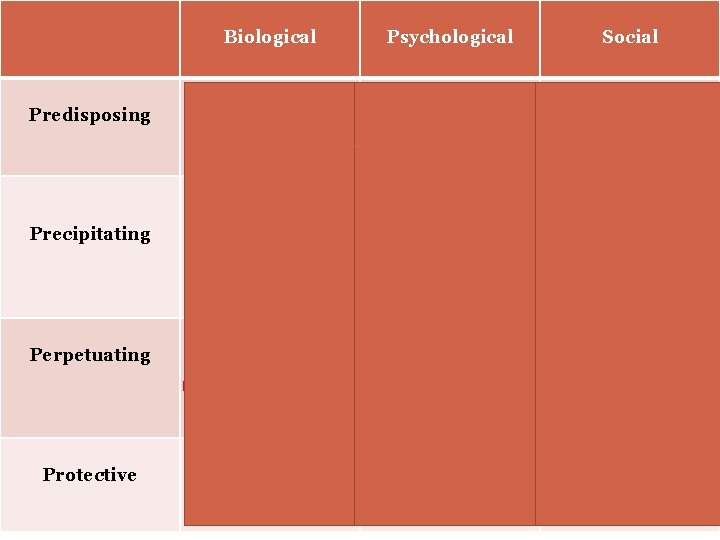
Biological Predisposing Precipitating Perpetuating Protective Prematurity Drugs in Utero Developmental delay Learning difficulties SAL delay ? other condition Maternal health problems Psychological Social Temperament Mat depression Parents drug users Separated Financial difficulties Separation from mum In LAC Maternal absence Understanding of social relationships Learning difficulties SAL delay Maternal health problems Attachment Poor engagement ? Parenting Lack social network Physically healthy Twin is “normal” Relationship with twin Father/Mat GM supportive Multiple agencies Attends school
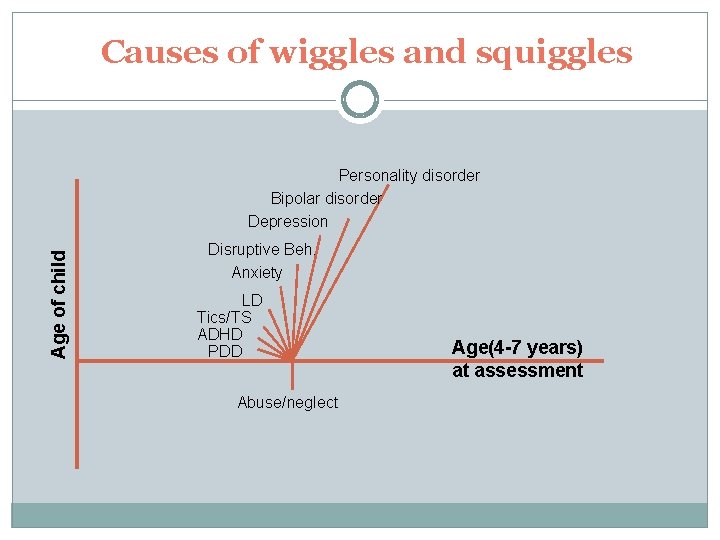
Causes of wiggles and squiggles Age of child Personality disorder Bipolar disorder Depression Disruptive Beh. Anxiety LD Tics/TS ADHD PDD Abuse/neglect Age(4 -7 years) at assessment
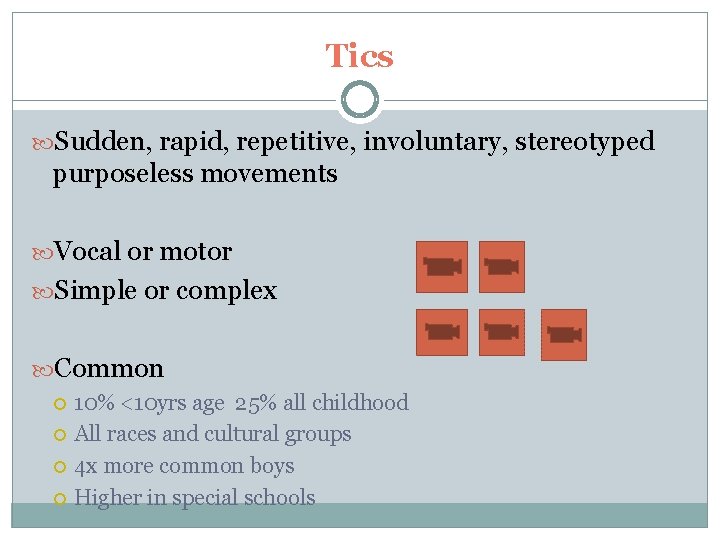
Tics Sudden, rapid, repetitive, involuntary, stereotyped purposeless movements Vocal or motor Simple or complex Common 10% <10 yrs age 25% all childhood All races and cultural groups 4 x more common boys Higher in special schools
Causes of TICS Idiopathic ASD/Aspergers Huntingtons disease Familial TS Wilsons disease Fragile X Hallervorden-Spatz Acquired Carbon monoxide poisoning Drugs Trauma/Tumour
Differential diagnosis of Repetitive behaviours Chorea Stereotypies Choreoathetosis Compulsions Dystonia Perserveration Tremor SIB Myoclonus
Categories of Tic disorders DSM IV Transient tic disorder Chronic motor or vocal tic disorder Combined motor and vocal tic disorder (Tourette)
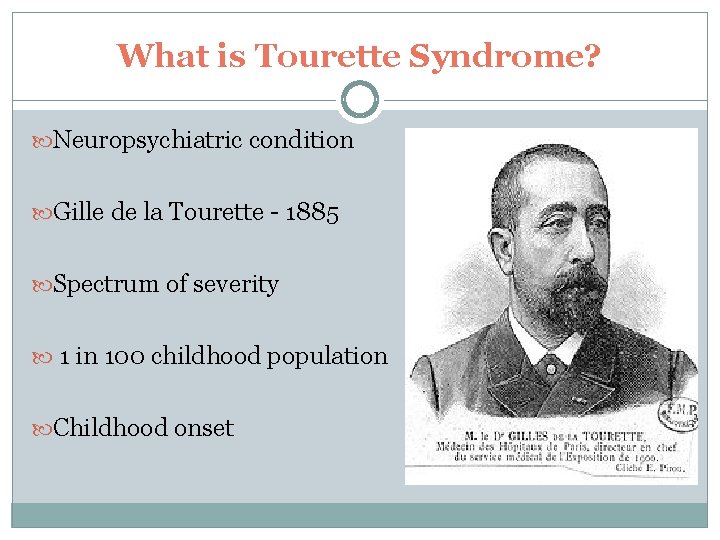
What is Tourette Syndrome? Neuropsychiatric condition Gille de la Tourette - 1885 Spectrum of severity 1 in 100 childhood population Childhood onset
Diagnosis Multiple motor tics + one or more vocal tics at some point >1 year duration Periods of remission <2 months Tics change over time in location, frequency, type, complexity & severity. <18 yrs onset Not explainable by other medical conditions
Clinical Characteristics Mean age onset 7 yrs (2 -18 y) Tics Echophenomenon Coprolalia/ Copropraxia Paliphenomena Other stuff. .
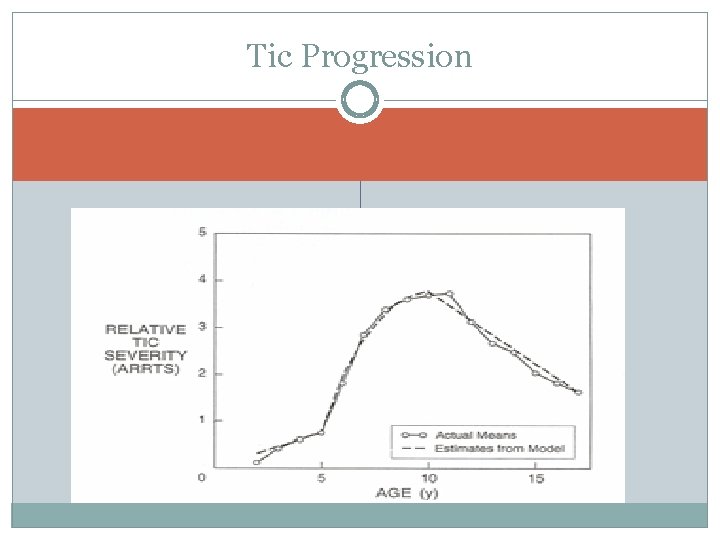
Tic Progression
Aetiology Precise location in brain unknown ? basal ganglia/frontal cortex – dopamine transport, release & uptake Biological , genetic (concordance in twins) PANDAS Exacerbations by environmental factors
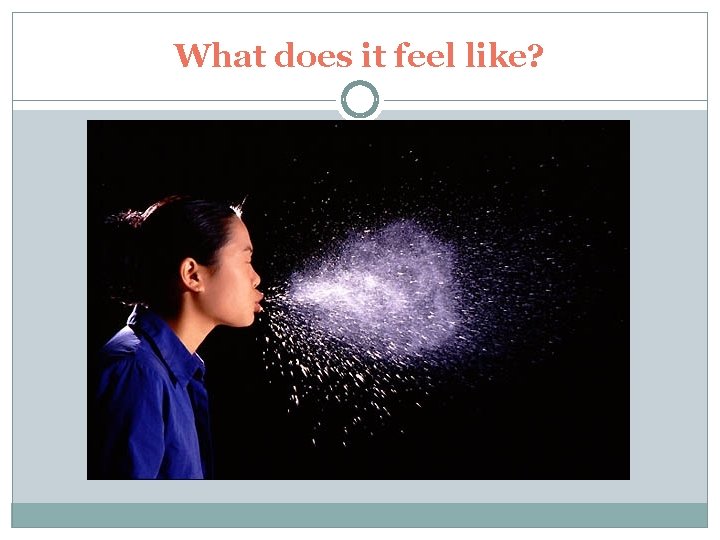
What does it feel like?
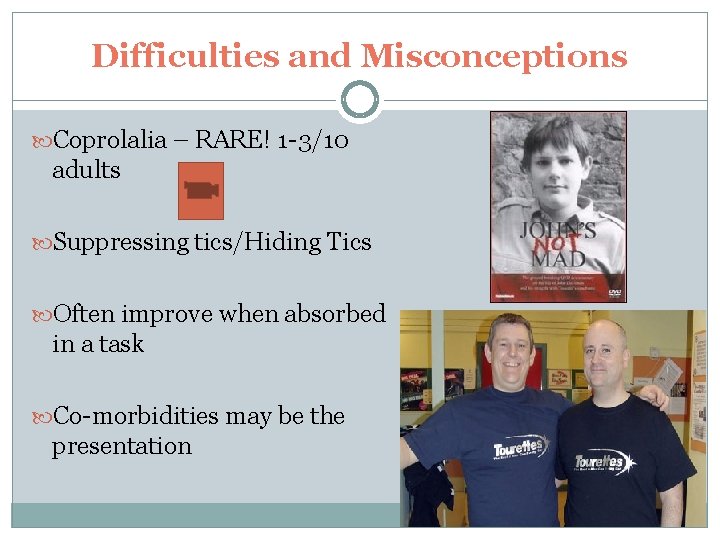
Difficulties and Misconceptions Coprolalia – RARE! 1 -3/10 adults Suppressing tics/Hiding Tics Often improve when absorbed in a task Co-morbidities may be the presentation
What should you say? 1. It’s not their fault, 2. Acceptance and understanding essential 3. Tics can change; Course can wax and wane 4. Tics be suppressed, but often payback 5. Exacerbations at times of stress, boredom, excitement and illness
Tics and the “other stuff” Physical, educational, economical and social consequences 12% have tics only Often Tics not the main problems. Tics as a marker
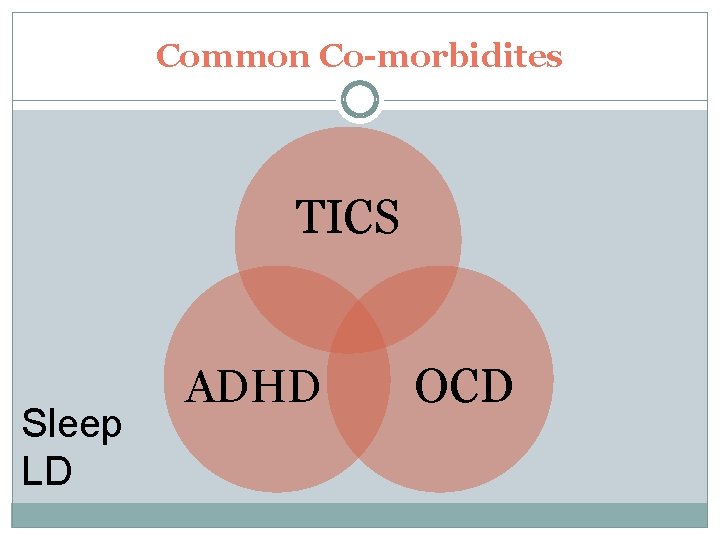
Common Co-morbidites TICS Sleep LD ADHD OCD
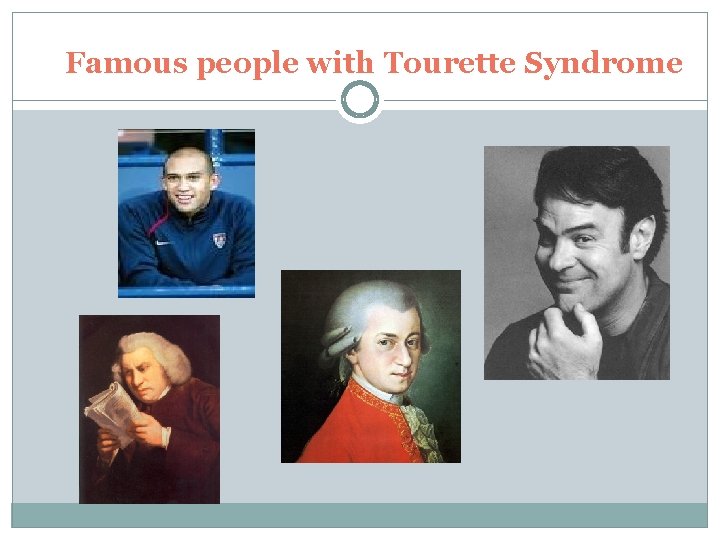
Famous people with Tourette Syndrome
Treatment Drug treatment available for Tics but often side effects with sedation and weight gain, extrapyramidal side effects Should be started & monitored by specialist. Strategies: Ignoring the tics CBT – OCD element Behavioural analysis Competing response, relaxation, massed negative Future: ? DBS, ? Immunological therapies
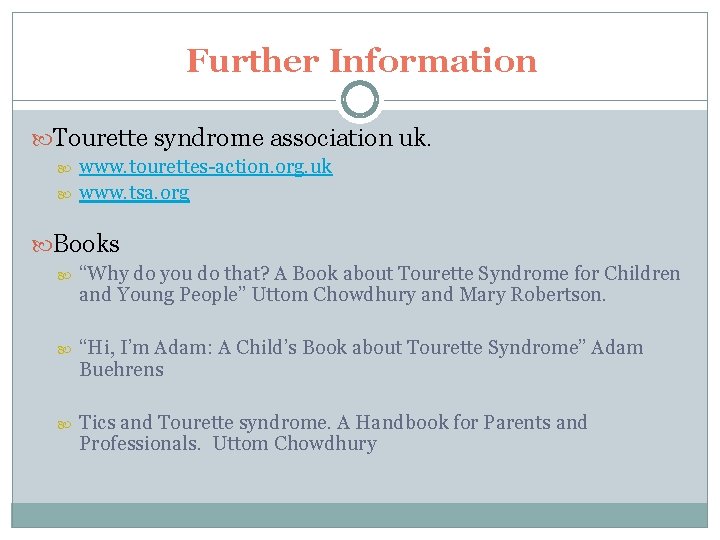
Further Information Tourette syndrome association uk. www. tourettes-action. org. uk www. tsa. org Books “Why do you do that? A Book about Tourette Syndrome for Children and Young People” Uttom Chowdhury and Mary Robertson. “Hi, I’m Adam: A Child’s Book about Tourette Syndrome” Adam Buehrens Tics and Tourette syndrome. A Handbook for Parents and Professionals. Uttom Chowdhury
Take home messages 1. Tics are common 2. Tourettes has a spectrum of severity and is more common than we think 3. Tics as a symptom on their own do not necessarily require treatment but parental education and understanding paramount. 4. Tics/TS can be a marker for other neurobiological conditions that have worse consequences
Questions?