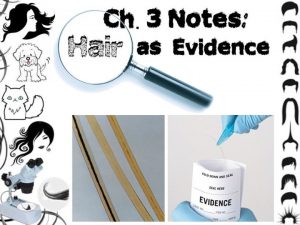
Hair as Evidence What can it do for

- Slides: 35
Hair as Evidence What can it do for us?
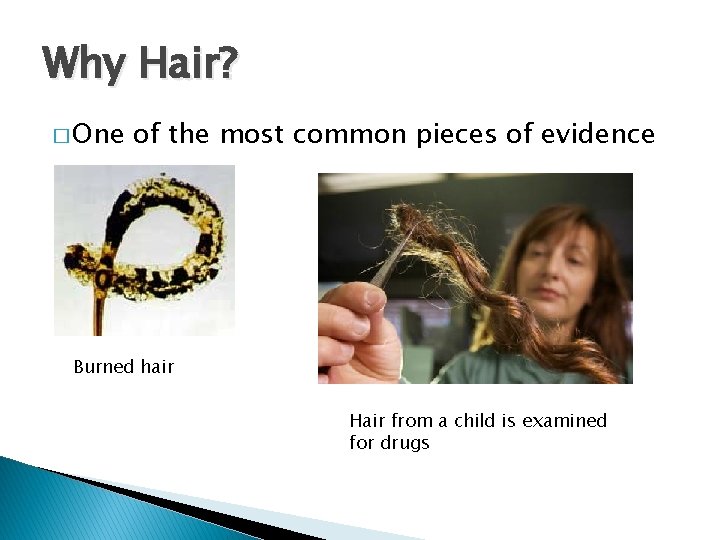
Why Hair? � One of the most common pieces of evidence Burned hair Hair from a child is examined for drugs
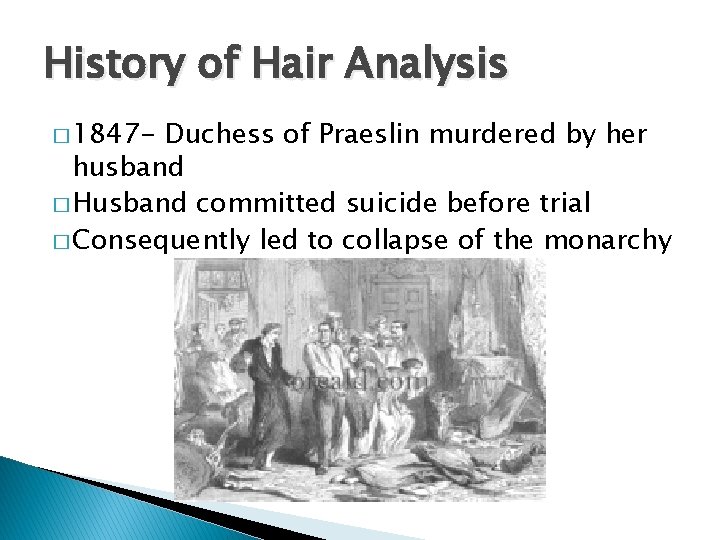
History of Hair Analysis � 1847 - Duchess of Praeslin murdered by her husband � Husband committed suicide before trial � Consequently led to collapse of the monarchy
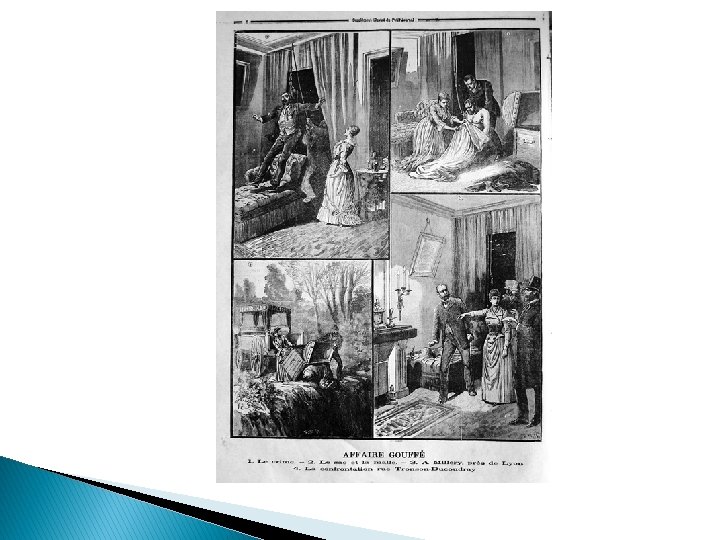
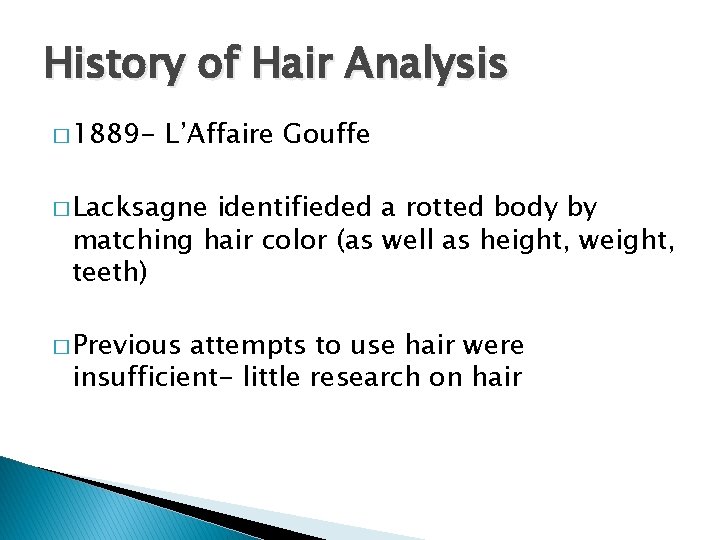
History of Hair Analysis � 1889 - L’Affaire Gouffe � Lacksagne identifieded a rotted body by matching hair color (as well as height, weight, teeth) � Previous attempts to use hair were insufficient- little research on hair
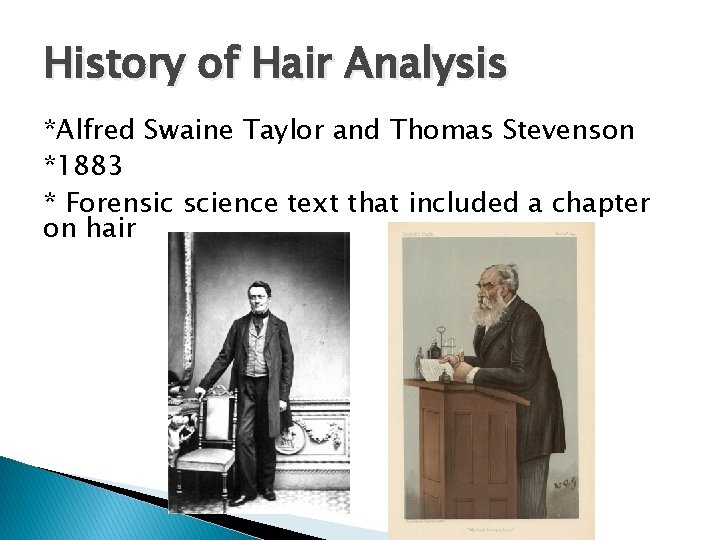
History of Hair Analysis *Alfred Swaine Taylor and Thomas Stevenson *1883 * Forensic science text that included a chapter on hair
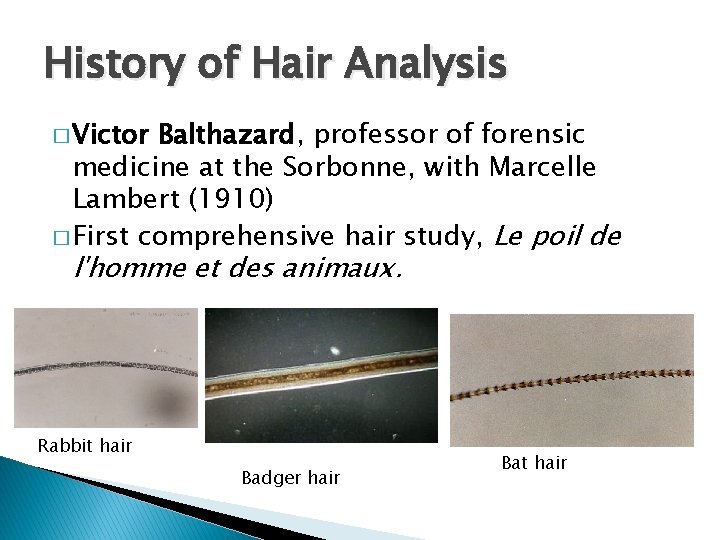
History of Hair Analysis � Victor Balthazard, professor of forensic medicine at the Sorbonne, with Marcelle Lambert (1910) � First comprehensive hair study, Le poil de l'homme et des animaux. Rabbit hair Badger hair Bat hair
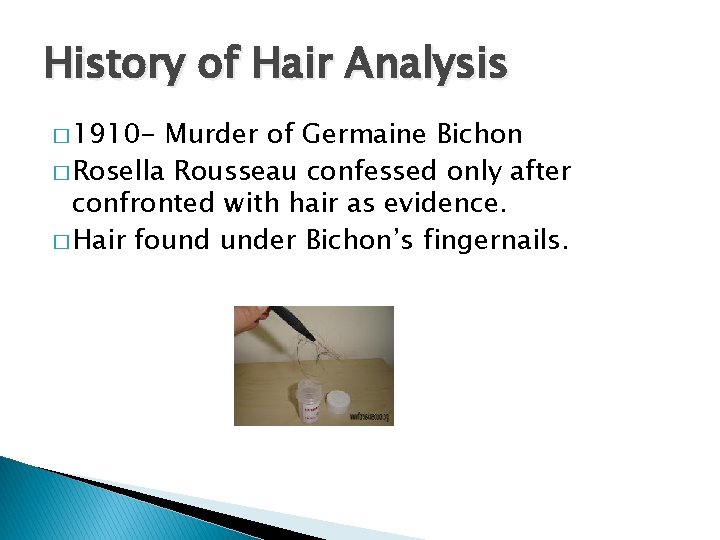
History of Hair Analysis � 1910 - Murder of Germaine Bichon � Rosella Rousseau confessed only after confronted with hair as evidence. � Hair found under Bichon’s fingernails.
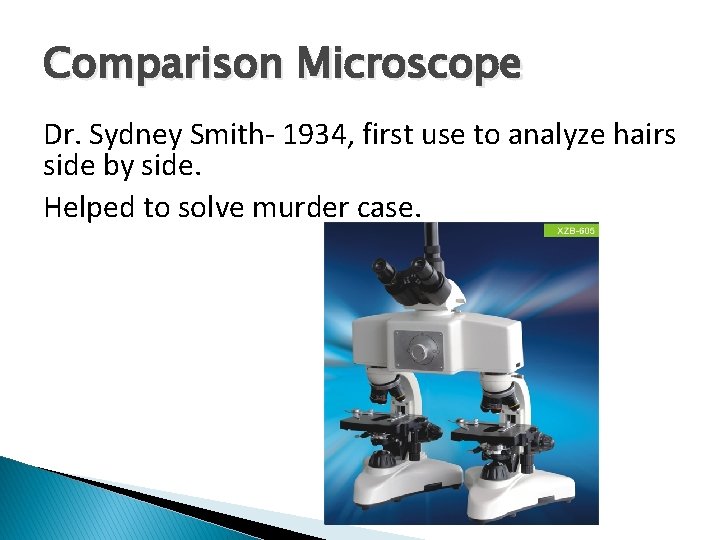
Comparison Microscope Dr. Sydney Smith- 1934, first use to analyze hairs side by side. Helped to solve murder case.
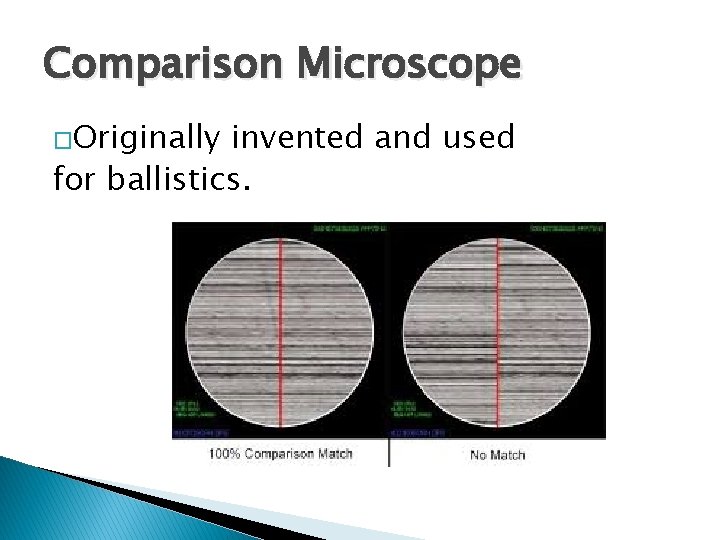
Comparison Microscope �Originally invented and used for ballistics.
Neutron Activation Analysis � Bombard sample with neutrons � Sample spontaneously emits energy � Measure the energy emitted to determine the presence and amounts of more than 60 elements.
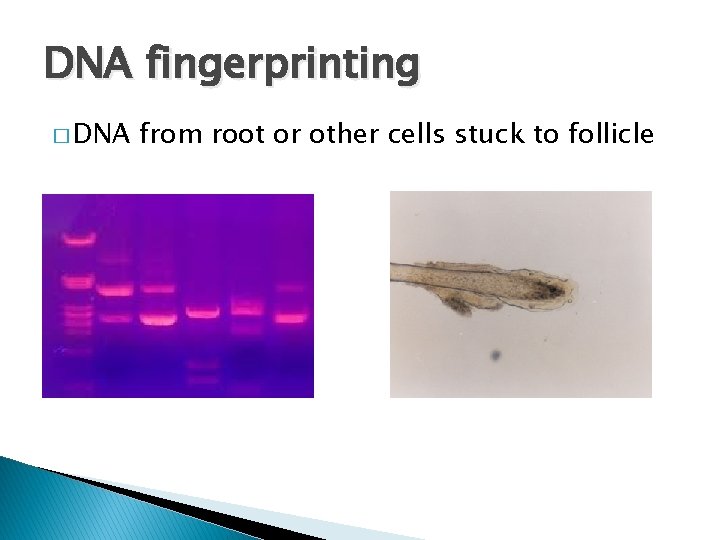
DNA fingerprinting � DNA from root or other cells stuck to follicle
For Discussion are the possible limitations of using hair as evidence in a crime investigation? � What are the possible advantages of using hair evidence? � What reasons might have prevented investigators from using hair in investigations before 1910? � What kinds of technology advances have made it possible for investigators to use hair as evidence?
For Discussion are the possible limitations of using hair as evidence in a crime investigation? � What are the possible advantages of using hair evidence? � What reasons might have prevented investigators from using hair in investigations before 1910? � What kinds of technology advances have made it possible for investigators to use hair as evidence?
For Discussion are the possible limitations of using hair as evidence in a crime investigation? � What are the possible advantages of using hair evidence? � What reasons might have prevented investigators from using hair in investigations before 1910? � What kinds of technology advances have made it possible for investigators to use hair as evidence?
For Discussion are the possible limitations of using hair as evidence in a crime investigation? � What are the possible advantages of using hair evidence? � What reasons might have prevented investigators from using hair in investigations before 1910? � What kinds of technology advances have made it possible for investigators to use hair as evidence?
What is hair? And who has it?
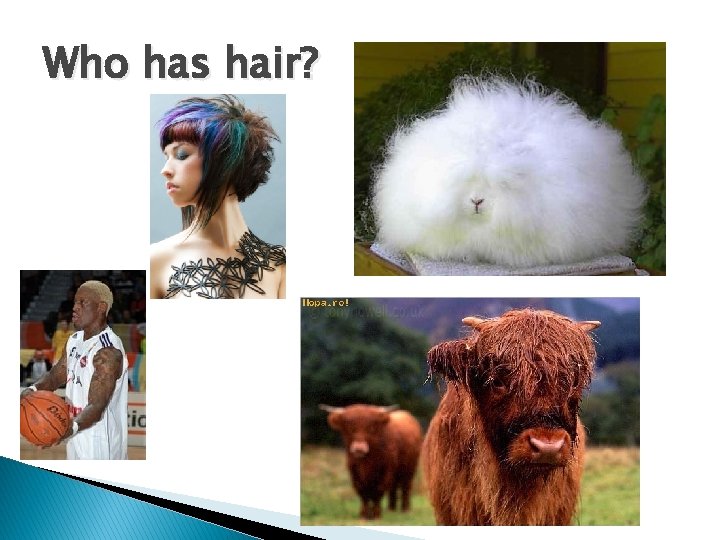
Who has hair?
Why do we have hair? ? ? ? ? ?
Why do mammals have hair? 1. 2. 3. 4. Warmth Decrease friction Protect against sunlight Act as a sense organ
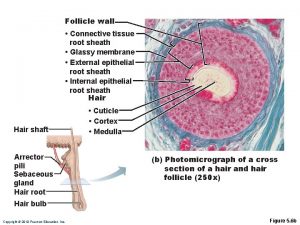
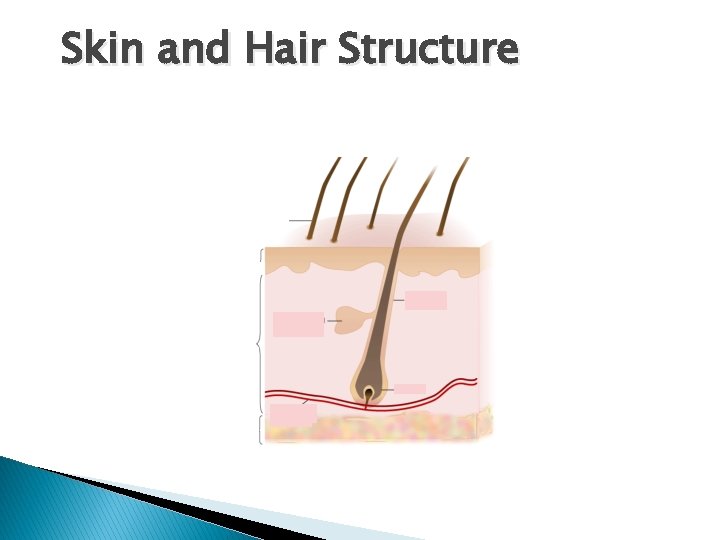
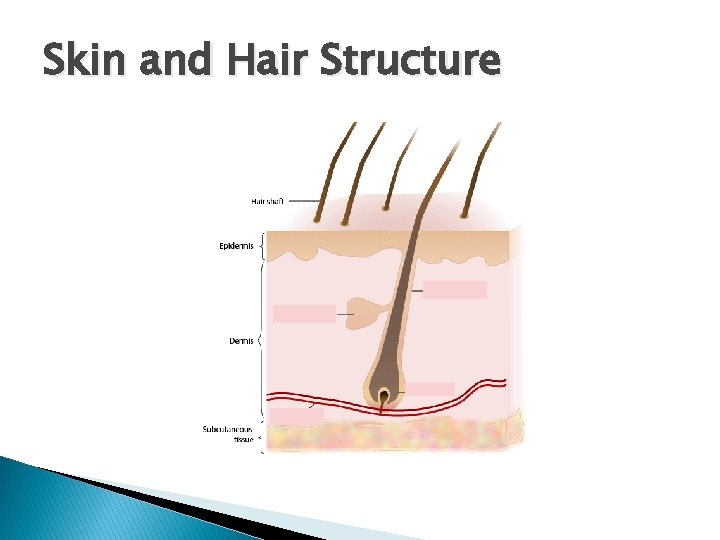
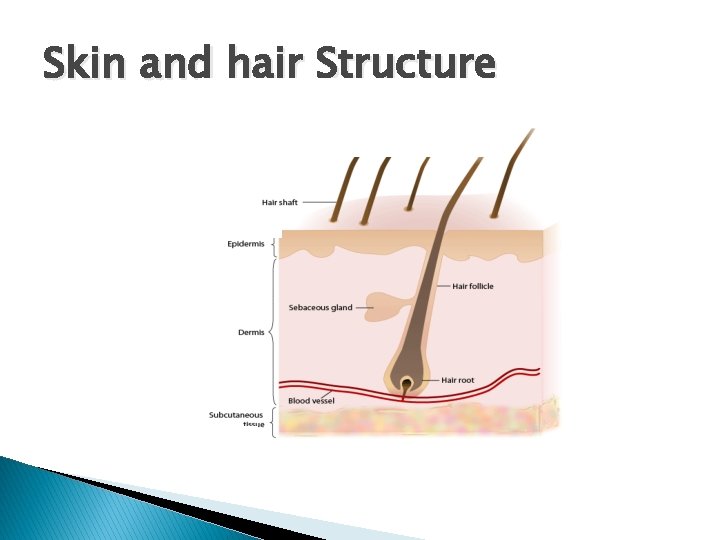
Skin and Hair Structure
Skin and Hair Structure
Skin and hair Structure
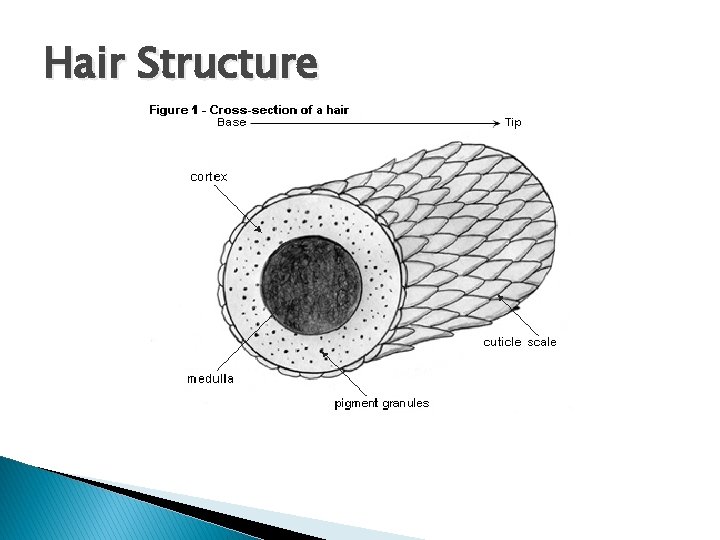
Hair Structure
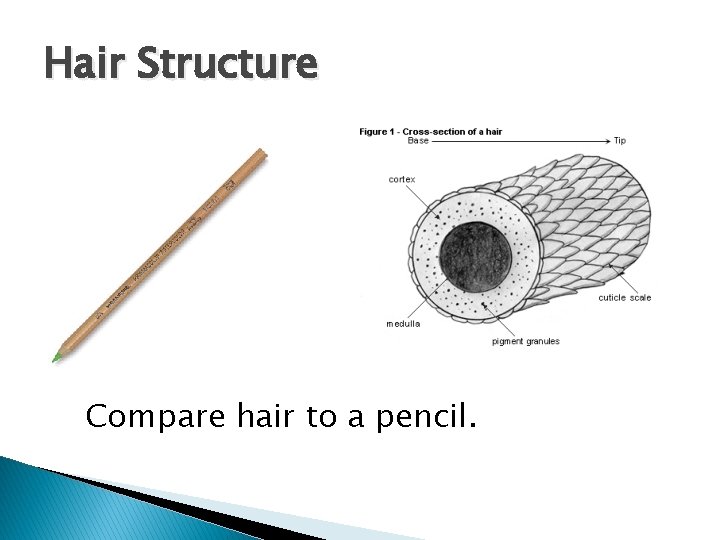
Hair Structure Compare hair to a pencil.
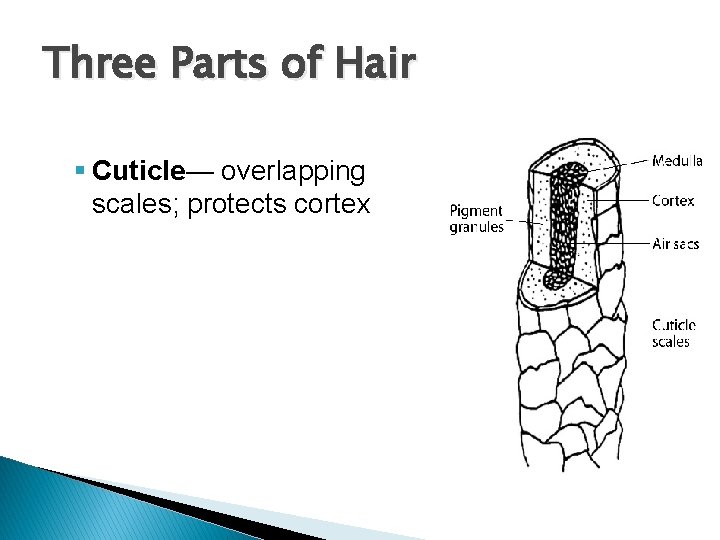
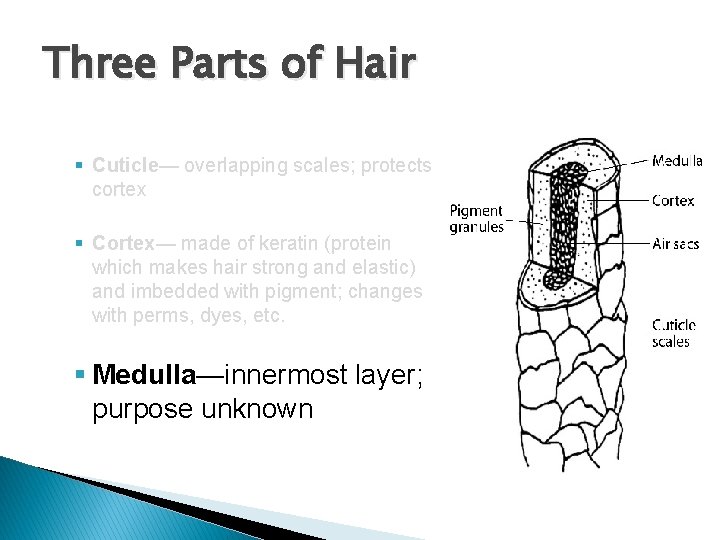
Three Parts of Hair Composed of: § Cuticle— overlapping scales; protects cortex
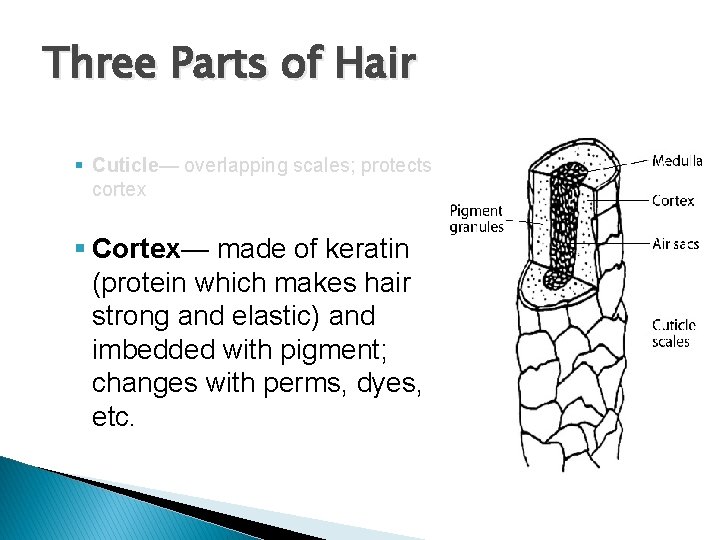
Three Parts of Hair Composed of: § Cuticle— overlapping scales; protects cortex § Cortex— made of keratin (protein which makes hair strong and elastic) and imbedded with pigment; changes with perms, dyes, etc.
Three Parts of Hair Composed of: § Cuticle— overlapping scales; protects cortex § Cortex— made of keratin (protein which makes hair strong and elastic) and imbedded with pigment; changes with perms, dyes, etc. § Medulla—innermost layer; purpose unknown
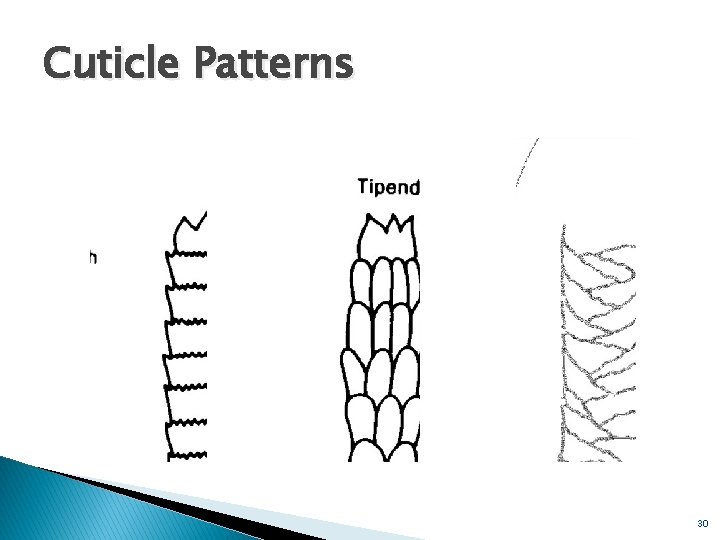
Cuticle Patterns 30
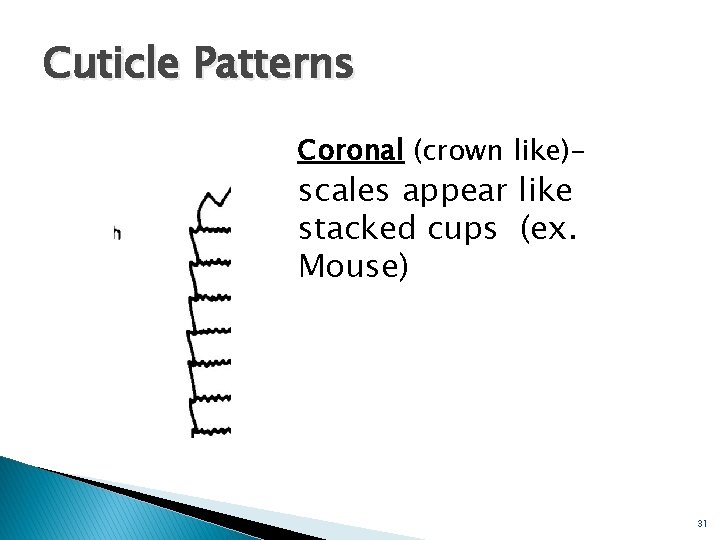
Cuticle Patterns Coronal (crown like)- scales appear like stacked cups (ex. Mouse) 31
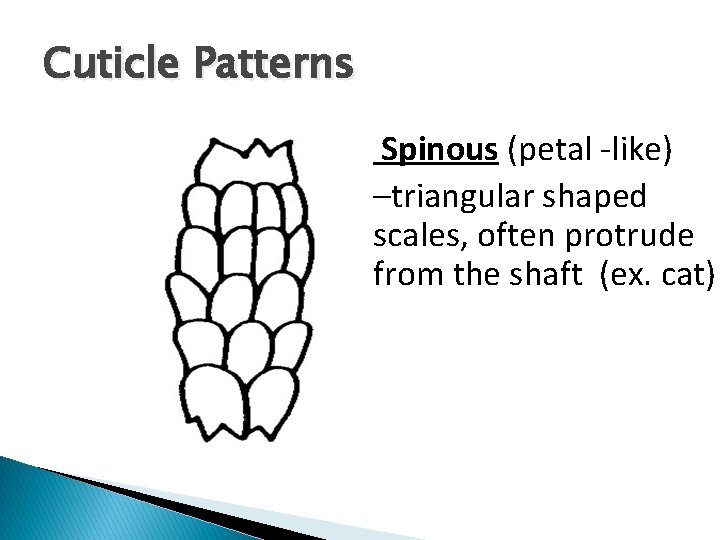
Cuticle Patterns Spinous (petal -like) –triangular shaped scales, often protrude from the shaft (ex. cat)
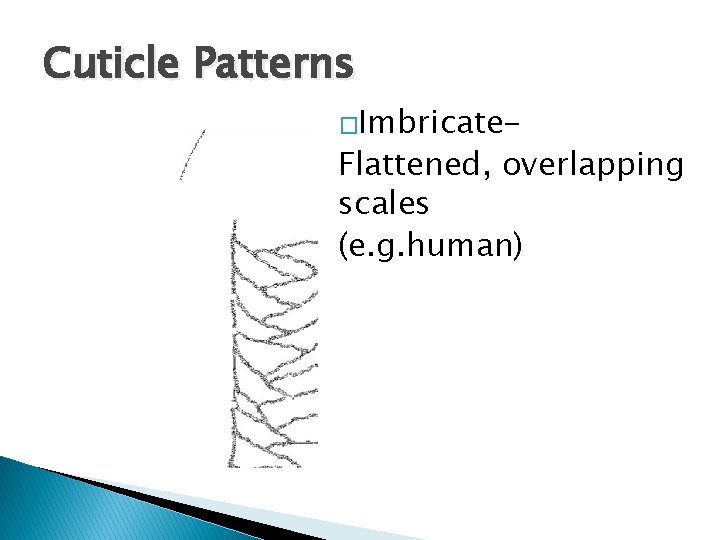
Cuticle Patterns �Imbricate- Flattened, overlapping scales (e. g. human)
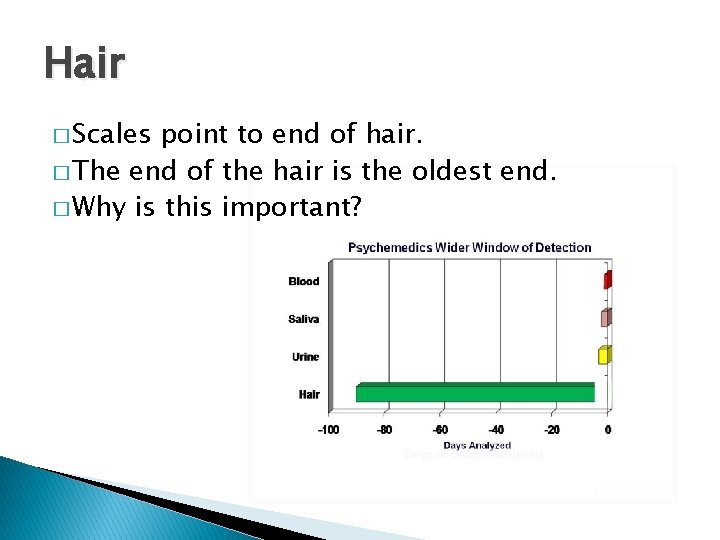
Hair � Scales point to end of hair. � The end of the hair is the oldest end. � Why is this important?
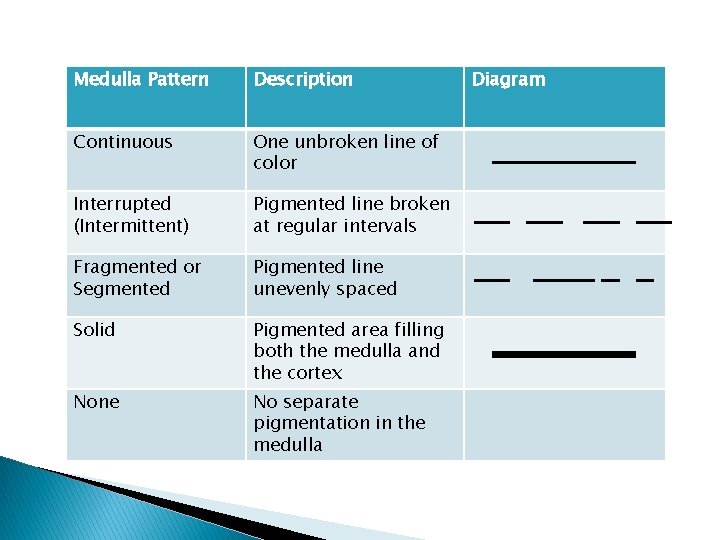
Medulla Pattern Description Continuous One unbroken line of color Interrupted (Intermittent) Pigmented line broken at regular intervals Fragmented or Segmented Pigmented line unevenly spaced Solid Pigmented area filling both the medulla and the cortex None No separate pigmentation in the medulla Diagram