
Hair and Fiber Hair Evidence From hair one
Hair and Fiber
Hair Evidence From hair one can determine: § § § If the source is human or animal Race (sometimes) Origin of the location on the source’s body Whether the hair was forcibly removed If the hair has been treated with chemicals If drugs have been ingested
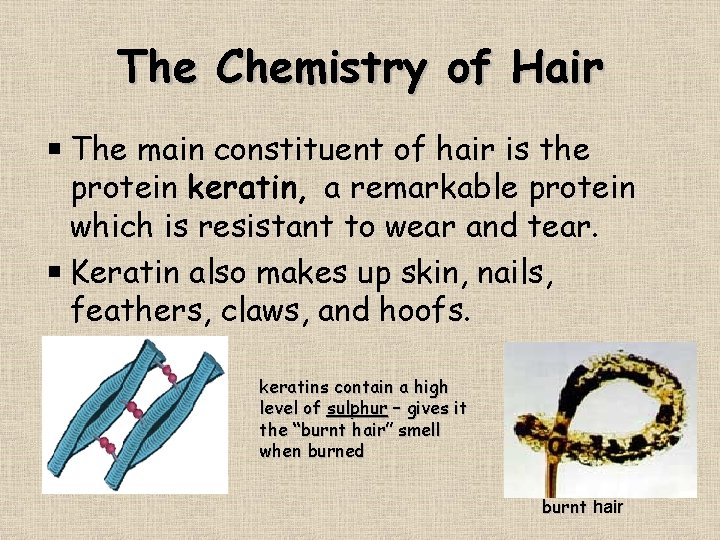
The Chemistry of Hair The main constituent of hair is the protein keratin, a remarkable protein which is resistant to wear and tear. Keratin also makes up skin, nails, feathers, claws, and hoofs. keratins contain a high level of sulphur – gives it the “burnt hair” smell when burned burnt hair
Hair also contains: - fats - pigment (melanin) - small amounts of vitamins - traces of zinc and other metals - water makes up only 10 -13% of the hair Øimportant for its physical and chemical properties Ø
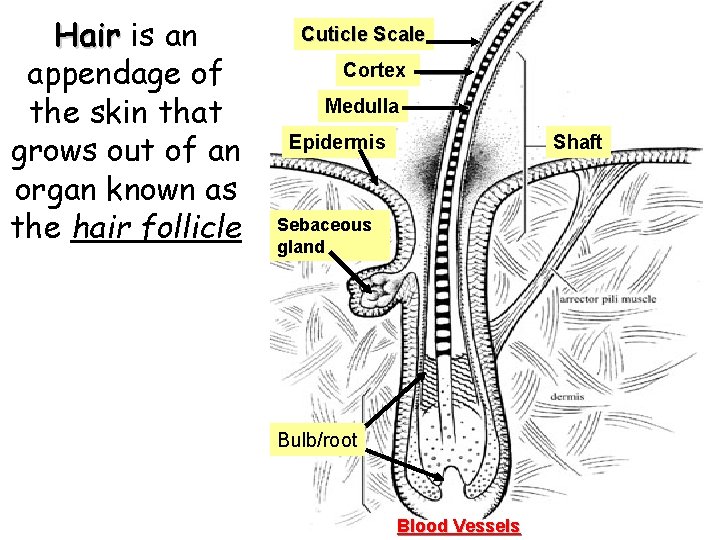
Hair is an appendage of the skin that grows out of an organ known as the hair follicle Cuticle Scale Cortex Medulla Epidermis Shaft Sebaceous gland Bulb/root Blood Vessels
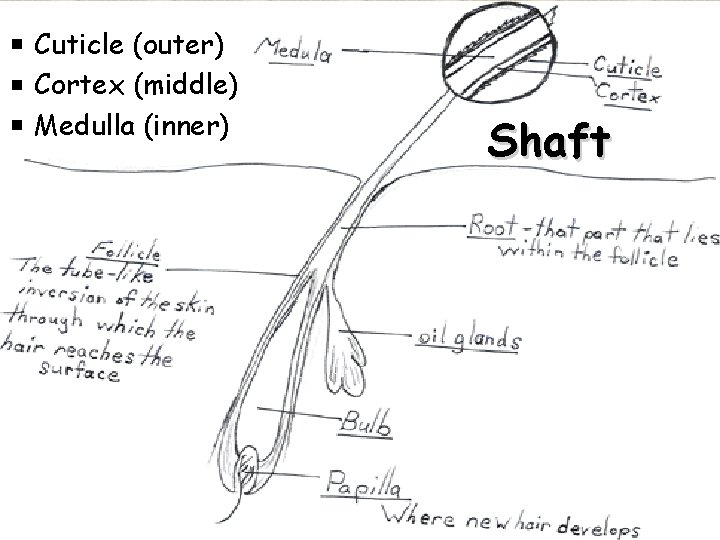
Cuticle (outer) Cortex (middle) Medulla (inner) Shaft
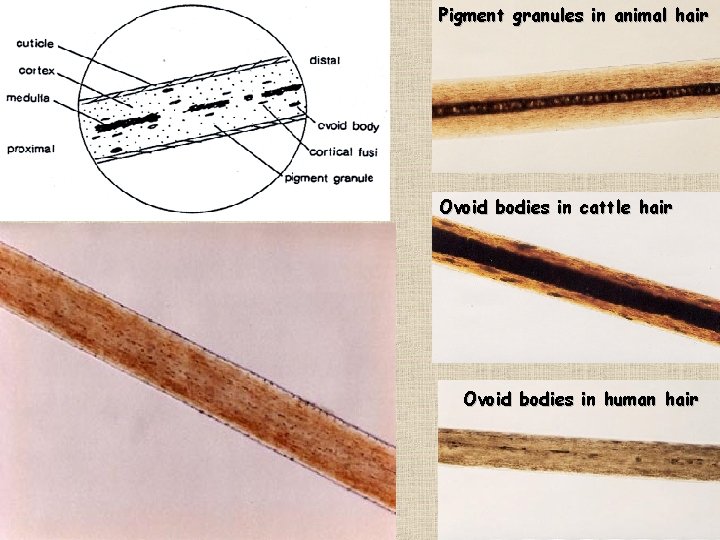
Pigment granules in animal hair Ovoid bodies in cattle hair Ovoid bodies in human hair
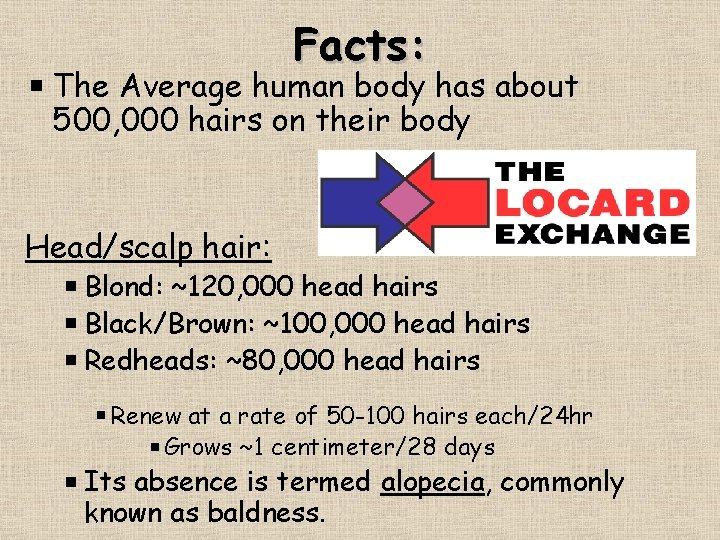
Facts: The Average human body has about 500, 000 hairs on their body Head/scalp hair: Blond: ~120, 000 head hairs Black/Brown: ~100, 000 head hairs Redheads: ~80, 000 head hairs Renew at a rate of 50 -100 hairs each/24 hr Grows ~1 centimeter/28 days Its absence is termed alopecia, commonly known as baldness.
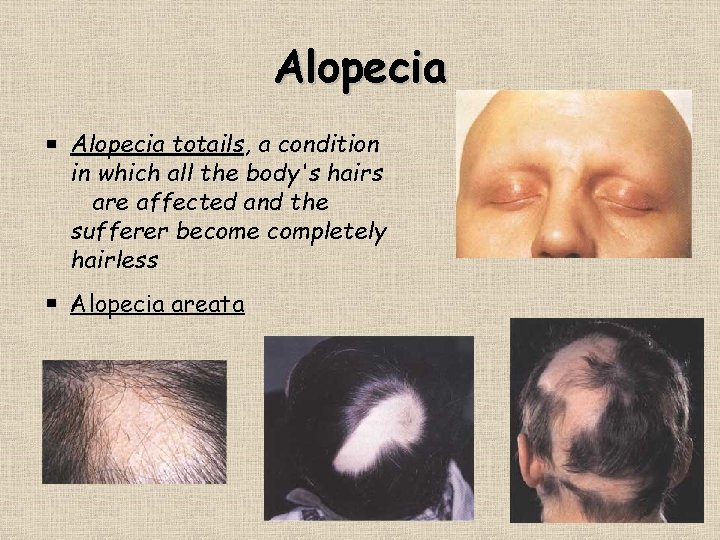
Alopecia totails, a condition in which all the body's hairs are affected and the sufferer become completely hairless Alopecia areata
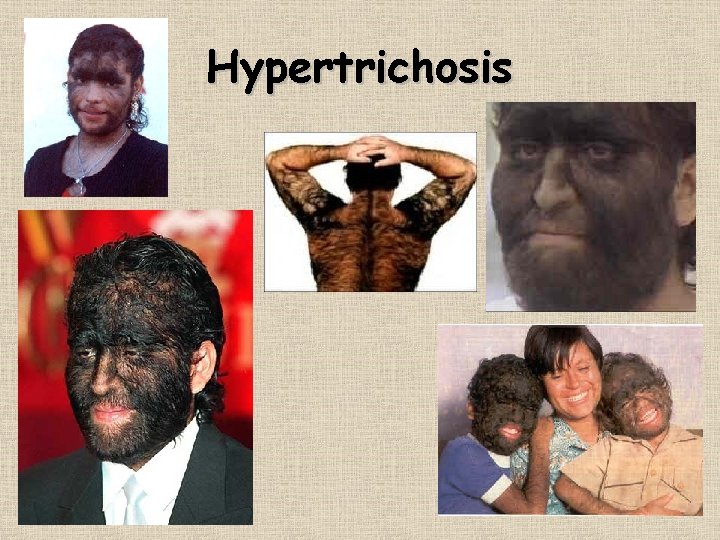
Hypertrichosis
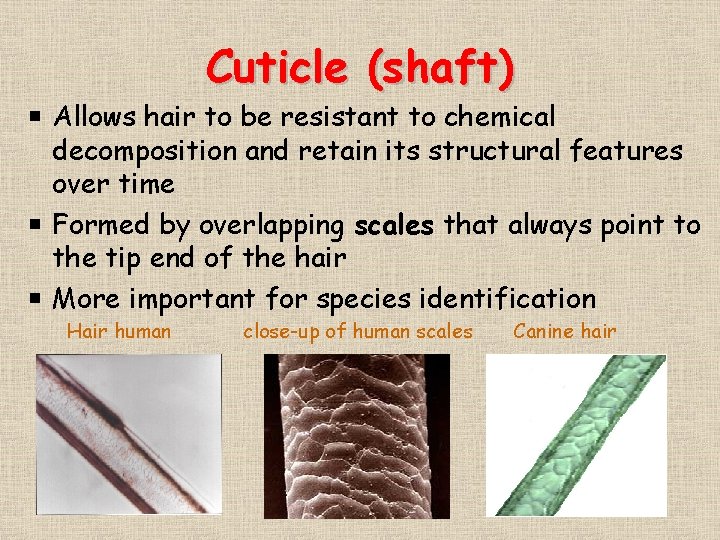
Cuticle (shaft) Allows hair to be resistant to chemical decomposition and retain its structural features over time Formed by overlapping scales that always point to the tip end of the hair More important for species identification Hair human close-up of human scales Canine hair
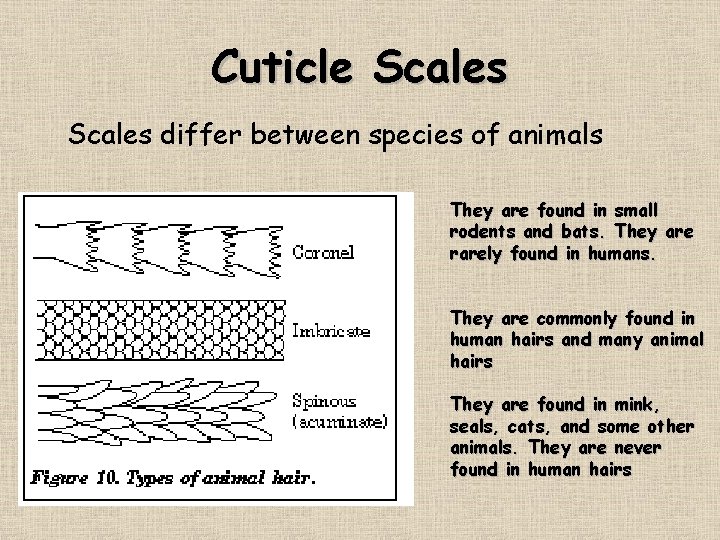
Cuticle Scales differ between species of animals They are found in small rodents and bats. They are rarely found in humans. They are commonly found in human hairs and many animal hairs They are found in mink, seals, cats, and some other animals. They are never found in human hairs
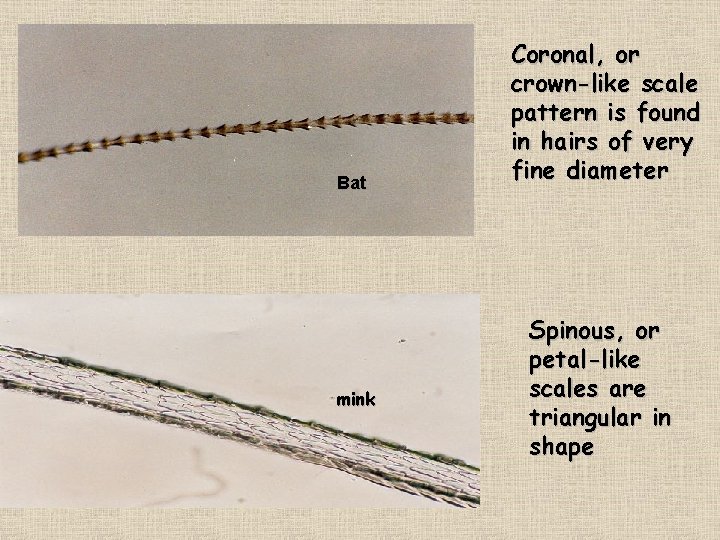
Bat mink Coronal, or crown-like scale pattern is found in hairs of very fine diameter Spinous, or petal-like scales are triangular in shape
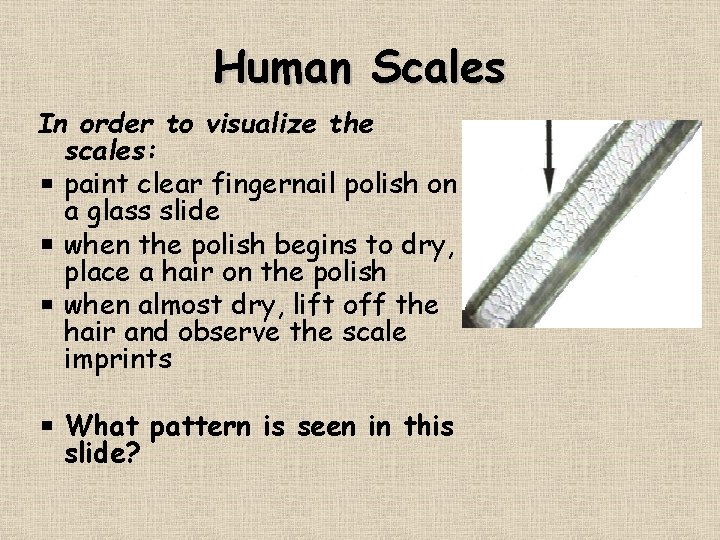
Human Scales In order to visualize the scales: paint clear fingernail polish on a glass slide when the polish begins to dry, place a hair on the polish when almost dry, lift off the hair and observe the scale imprints What pattern is seen in this slide?
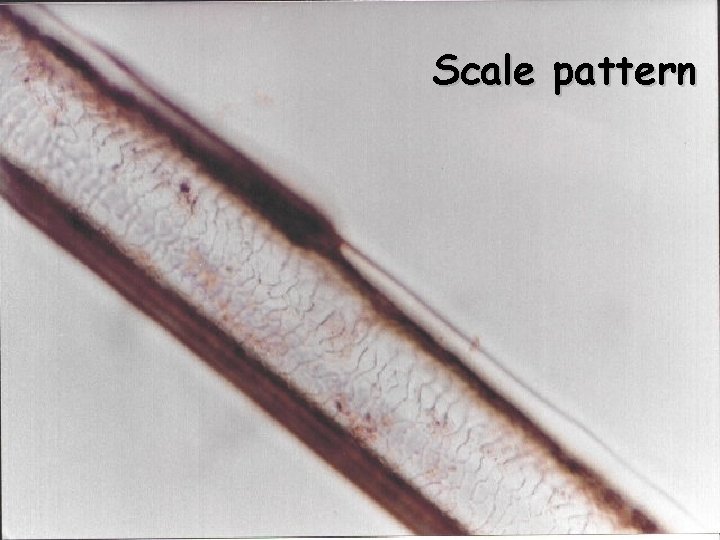
Scale pattern
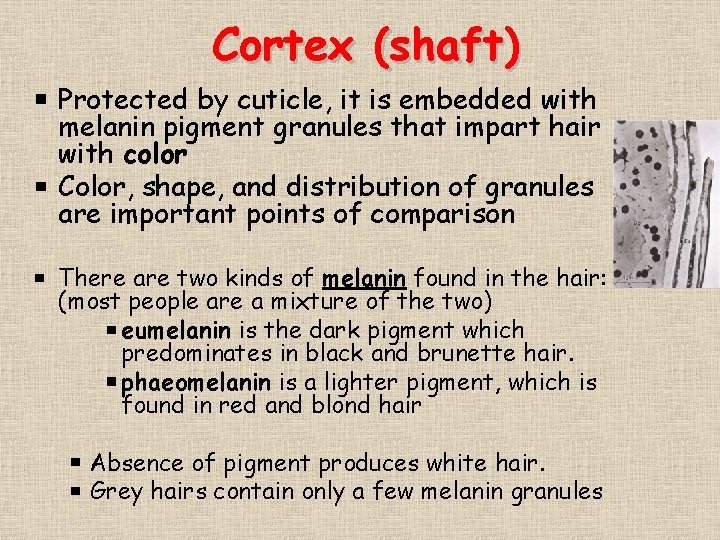
Cortex (shaft) Protected by cuticle, it is embedded with melanin pigment granules that impart hair with color Color, shape, and distribution of granules are important points of comparison There are two kinds of melanin found in the hair: (most people are a mixture of the two) eumelanin is the dark pigment which predominates in black and brunette hair. phaeomelanin is a lighter pigment, which is found in red and blond hair Absence of pigment produces white hair. Grey hairs contain only a few melanin granules
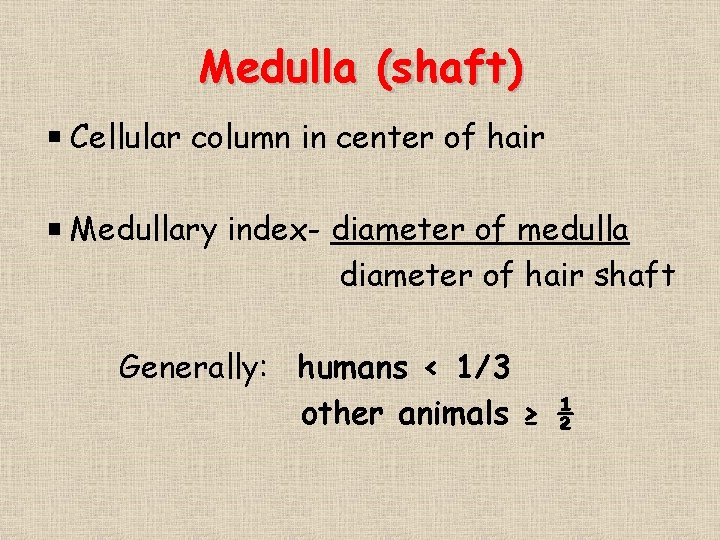
Medulla (shaft) Cellular column in center of hair Medullary index- diameter of medulla diameter of hair shaft Generally: humans < 1/3 other animals ≥ ½
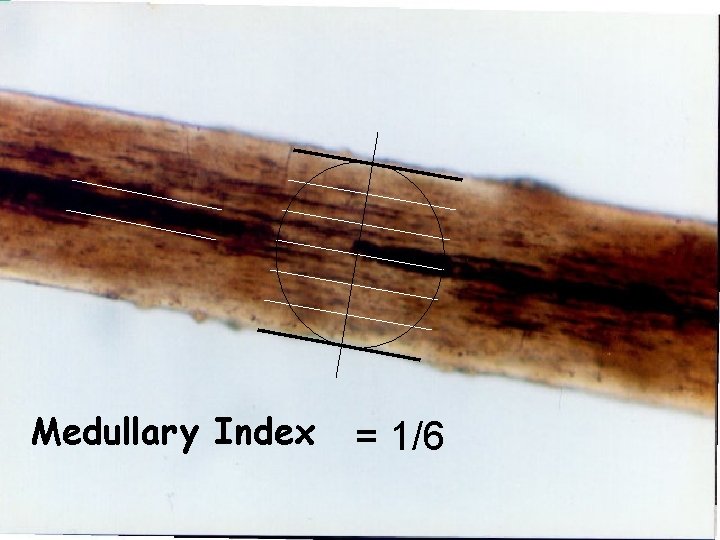
Medullary Index = 1/6
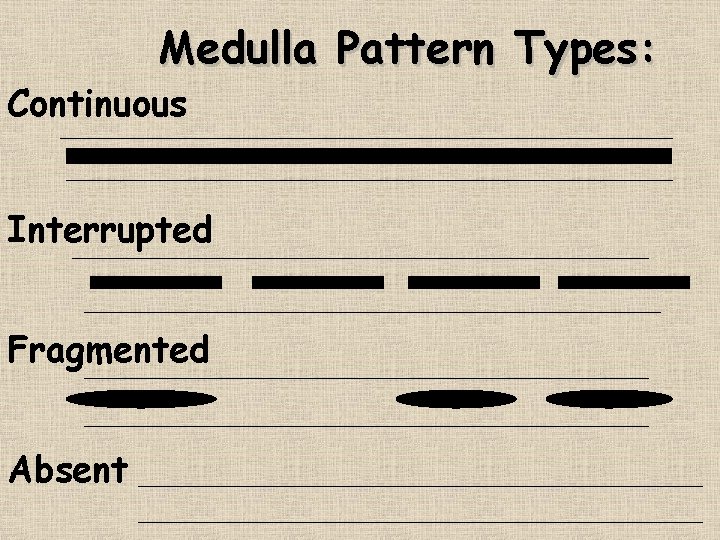
Medulla Pattern Types: Continuous Interrupted Fragmented Absent
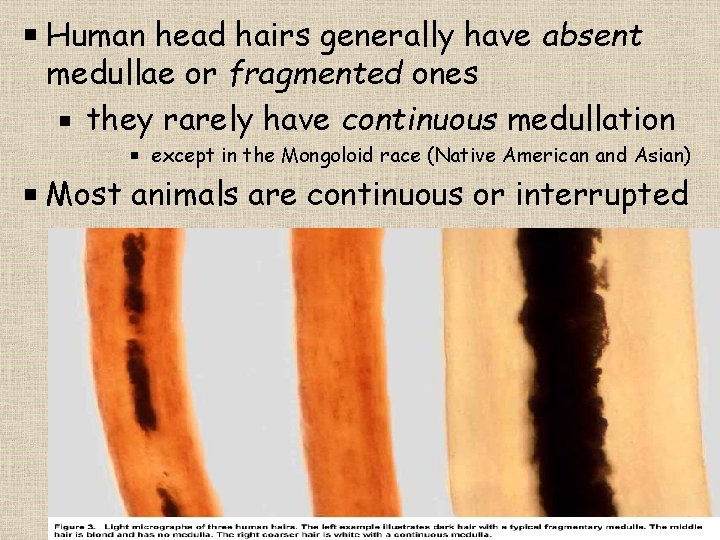
Human head hairs generally have absent medullae or fragmented ones they rarely have continuous medullation except in the Mongoloid race (Native American and Asian) Most animals are continuous or interrupted
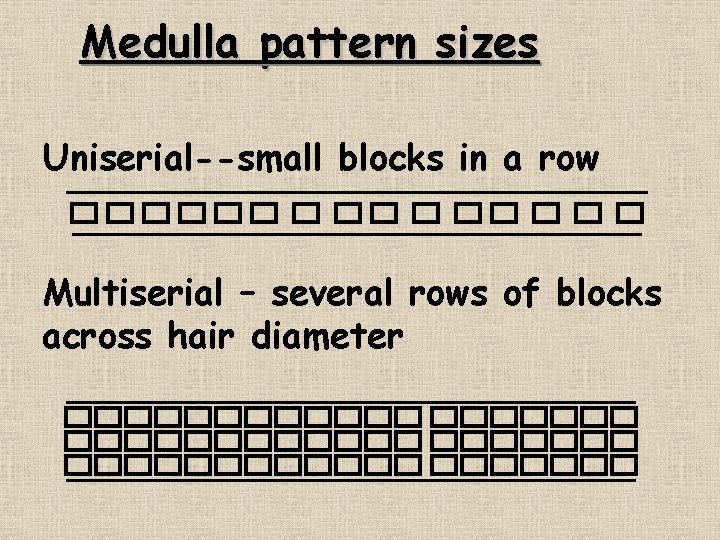
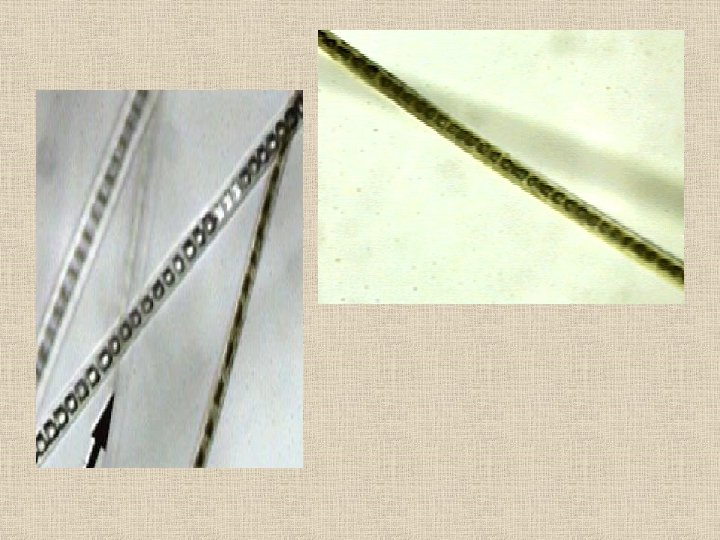
Medulla pattern sizes Uniserial--small blocks in a row Multiserial – several rows of blocks across hair diameter
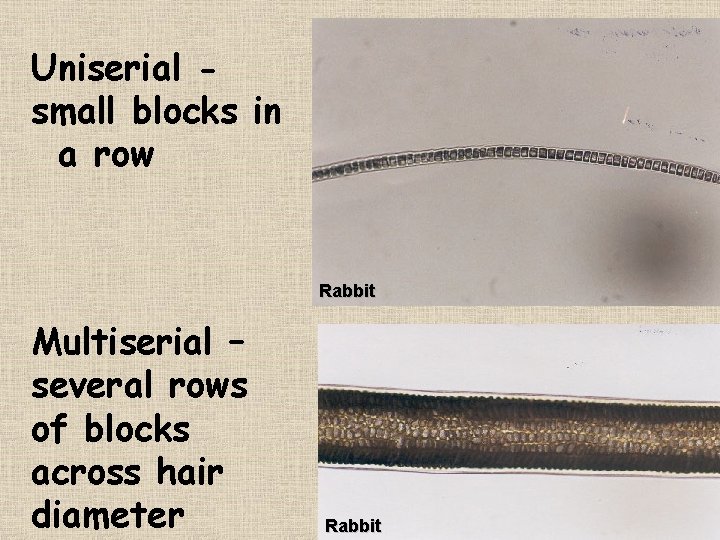
Uniserial small blocks in a row Rabbit Multiserial – several rows of blocks across hair diameter Rabbit
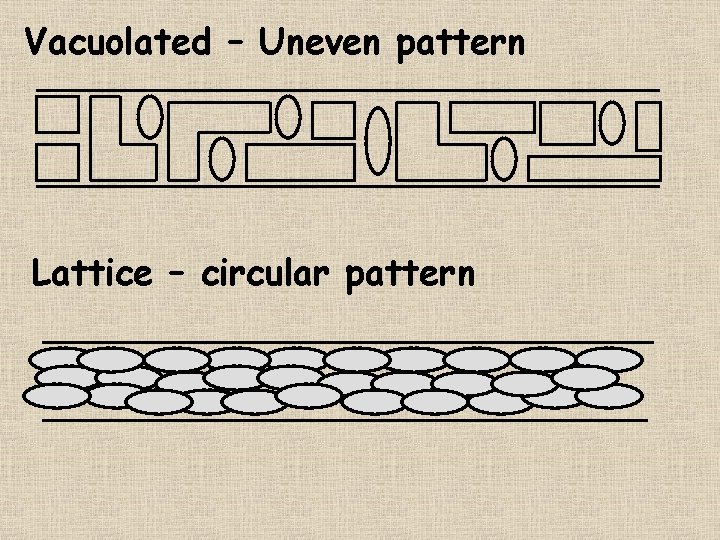
Vacuolated – Uneven pattern Lattice – circular pattern
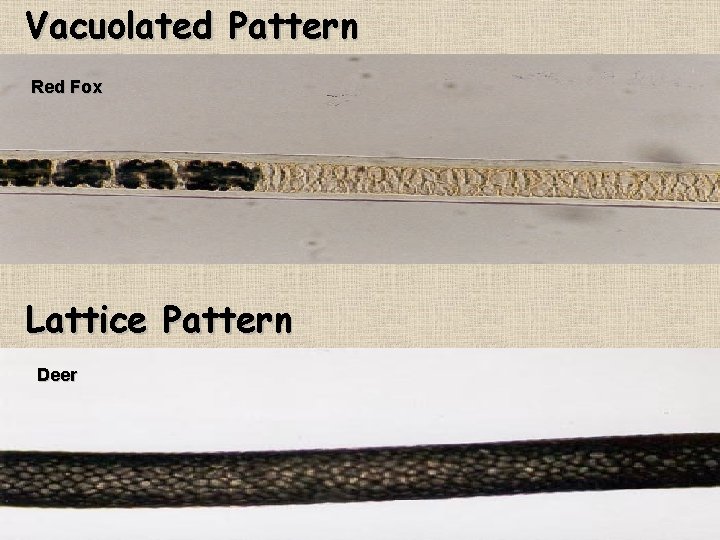
Vacuolated Pattern Red Fox Lattice Pattern Deer
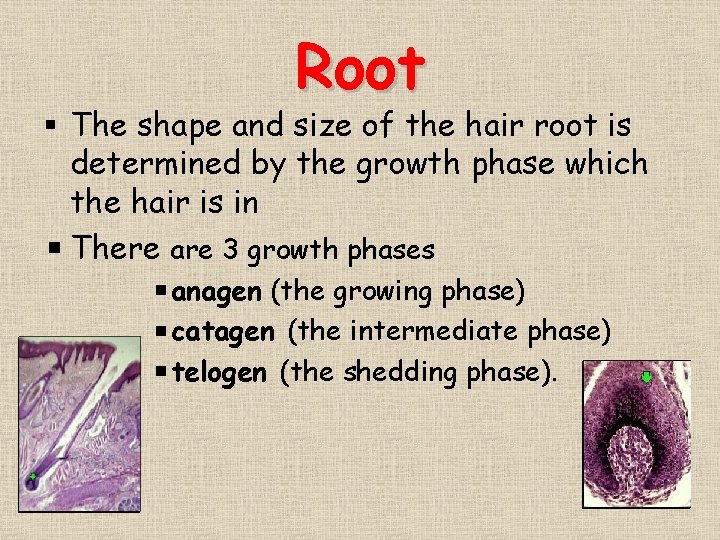
Root § The shape and size of the hair root is determined by the growth phase which the hair is in There are 3 growth phases anagen (the growing phase) catagen (the intermediate phase) telogen (the shedding phase).
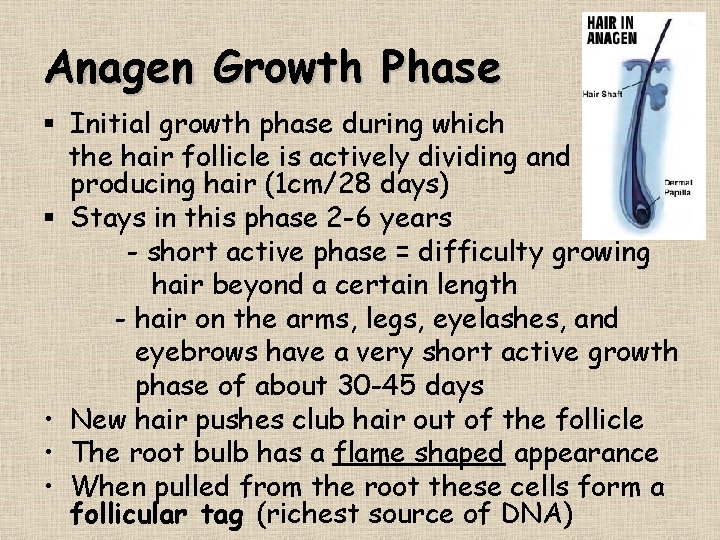
Anagen Growth Phase § Initial growth phase during which the hair follicle is actively dividing and producing hair (1 cm/28 days) § Stays in this phase 2 -6 years - short active phase = difficulty growing hair beyond a certain length - hair on the arms, legs, eyelashes, and eyebrows have a very short active growth phase of about 30 -45 days • New hair pushes club hair out of the follicle • The root bulb has a flame shaped appearance • When pulled from the root these cells form a follicular tag (richest source of DNA)
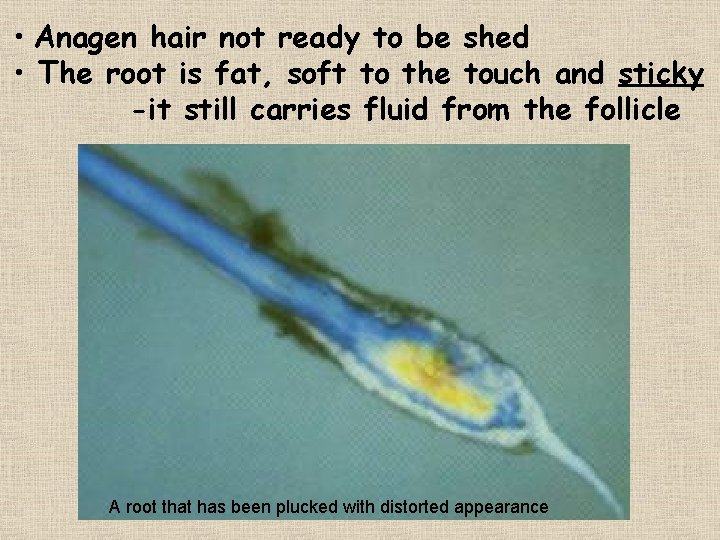
• Anagen hair not ready to be shed • The root is fat, soft to the touch and sticky -it still carries fluid from the follicle A root that has been plucked with distorted appearance
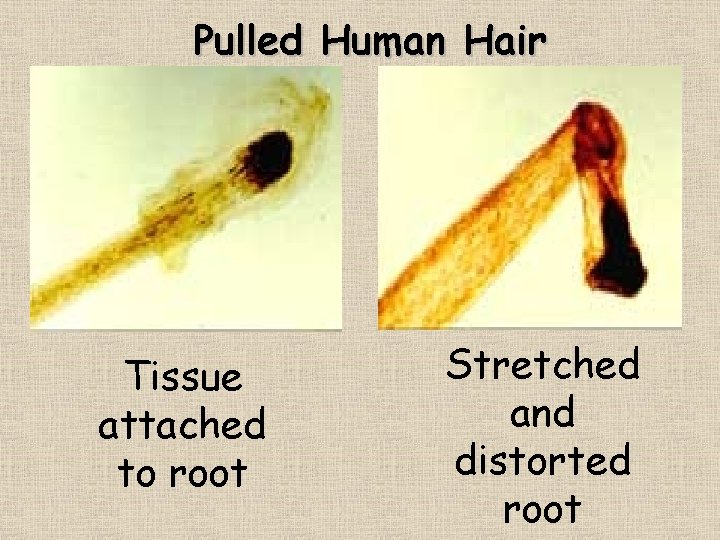
Pulled Human Hair Tissue attached to root Stretched and distorted root
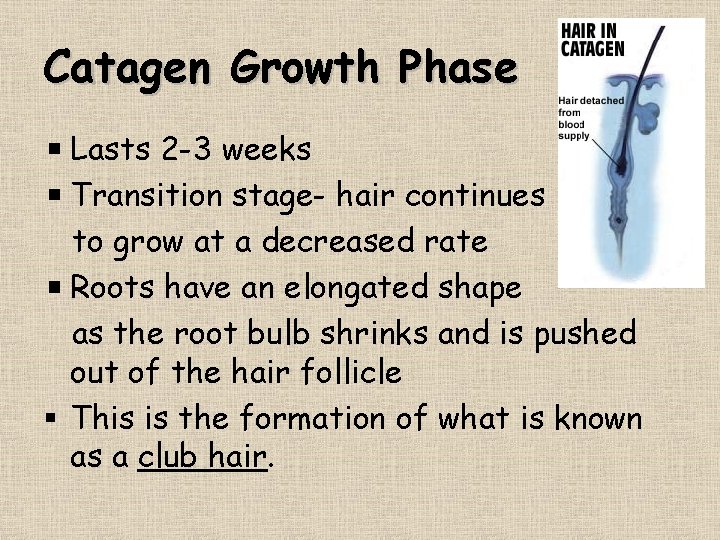
Catagen Growth Phase Lasts 2 -3 weeks Transition stage- hair continues to grow at a decreased rate Roots have an elongated shape as the root bulb shrinks and is pushed out of the hair follicle § This is the formation of what is known as a club hair.
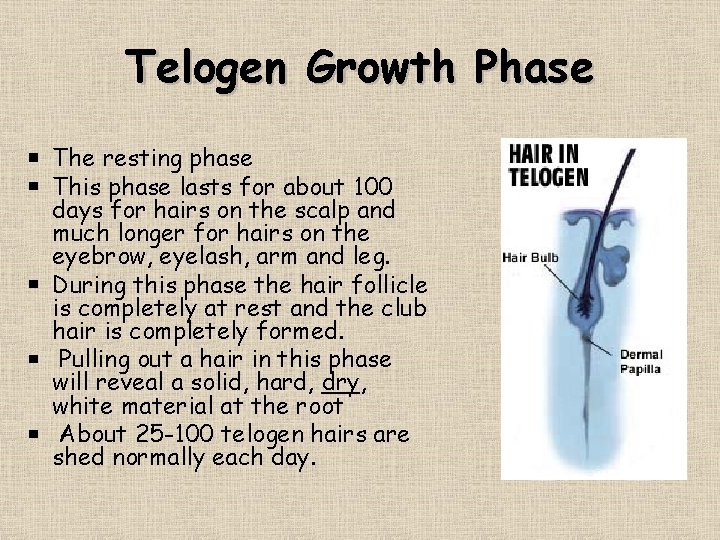
Telogen Growth Phase The resting phase This phase lasts for about 100 days for hairs on the scalp and much longer for hairs on the eyebrow, eyelash, arm and leg. During this phase the hair follicle is completely at rest and the club hair is completely formed. Pulling out a hair in this phase will reveal a solid, hard, dry, white material at the root About 25 -100 telogen hairs are shed normally each day.
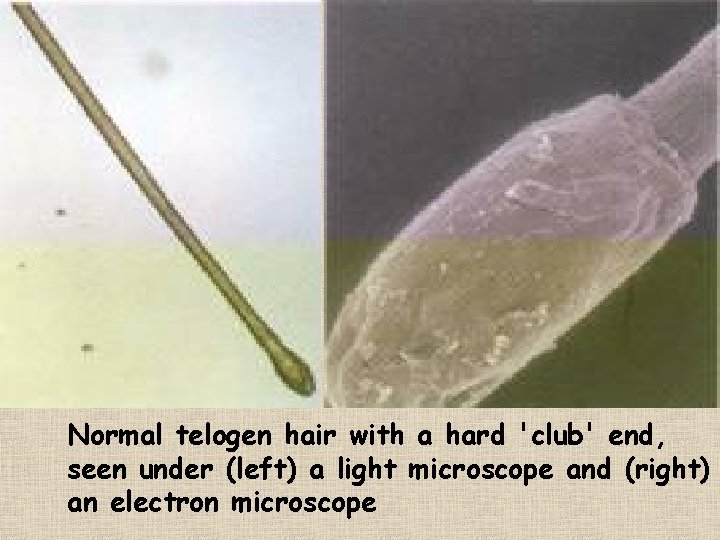
Normal telogen hair with a hard 'club' end, seen under (left) a light microscope and (right) an electron microscope
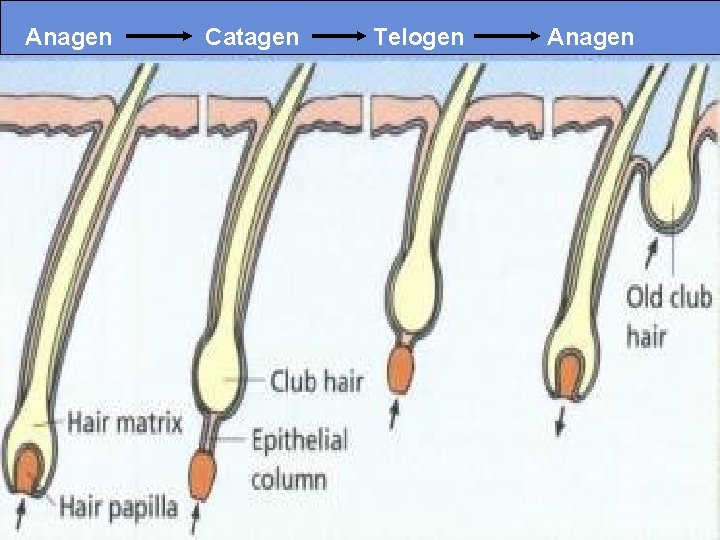
Anagen Catagen Telogen Anagen
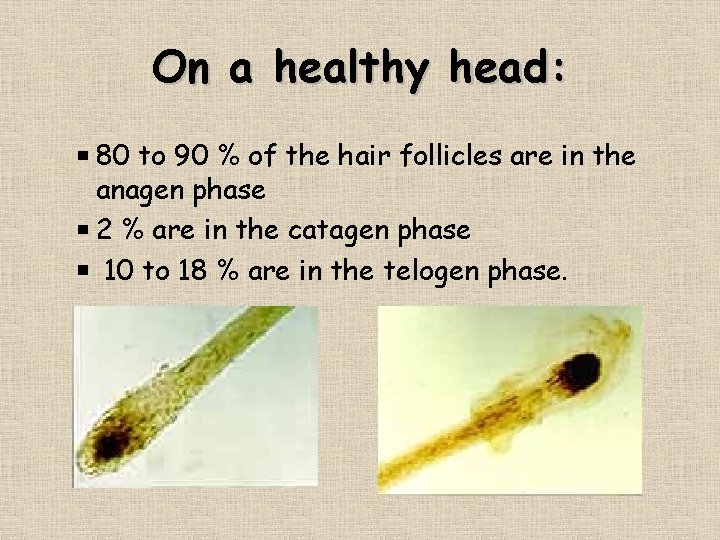
On a healthy head: 80 to 90 % of the hair follicles are in the anagen phase 2 % are in the catagen phase 10 to 18 % are in the telogen phase.
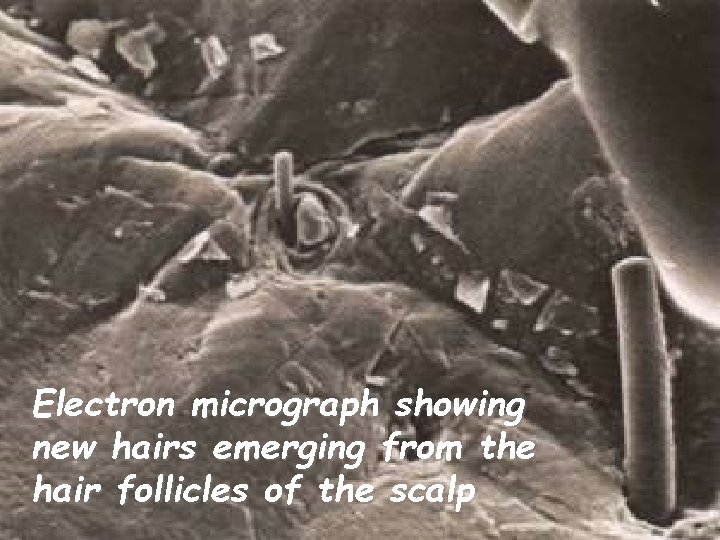
Electron micrograph showing new hairs emerging from the hair follicles of the scalp
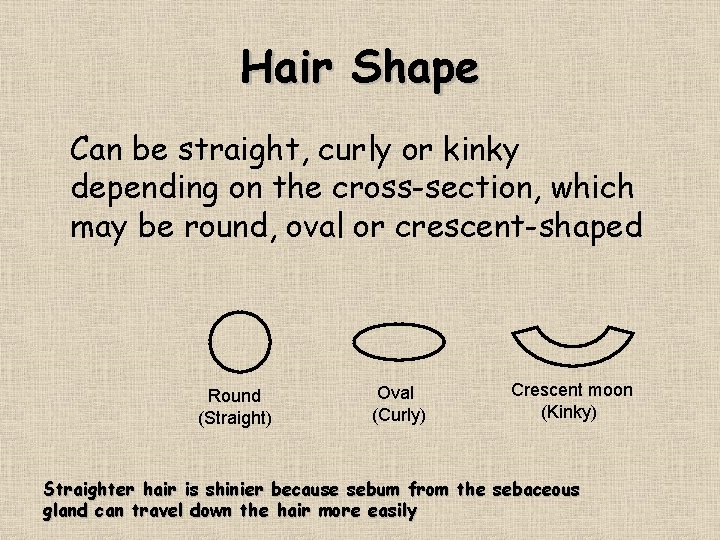
Hair Shape Can be straight, curly or kinky depending on the cross-section, which may be round, oval or crescent-shaped Round (Straight) Oval (Curly) Crescent moon (Kinky) Straighter hair is shinier because sebum from the sebaceous gland can travel down the hair more easily
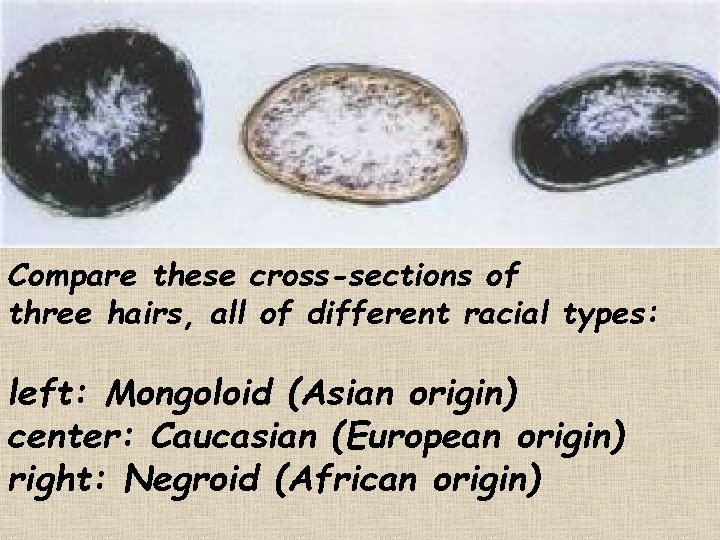
Compare these cross-sections of three hairs, all of different racial types: left: Mongoloid (Asian origin) center: Caucasian (European origin) right: Negroid (African origin)
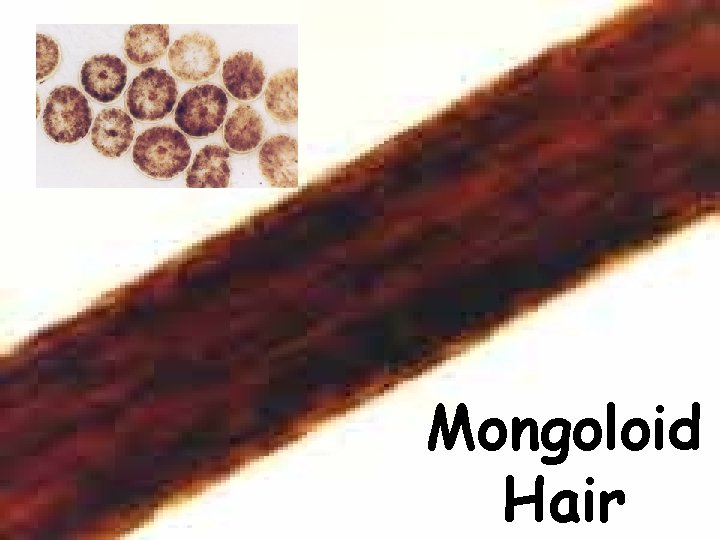
Mongoloid Hair
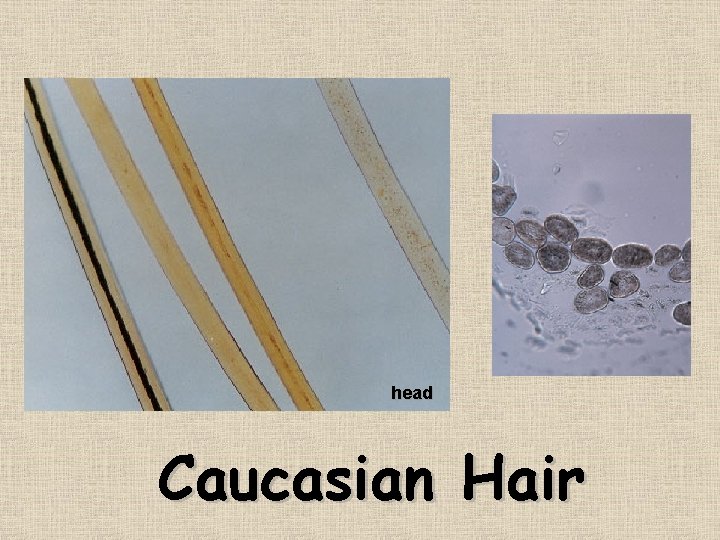
head Caucasian Hair
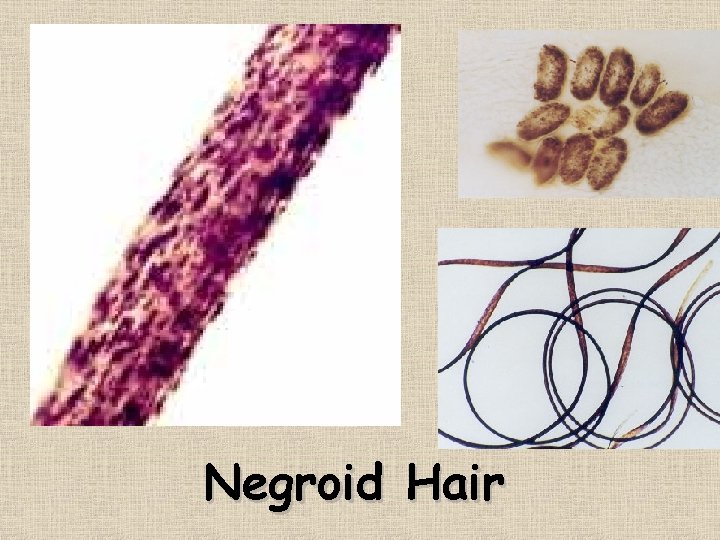
Negroid Hair
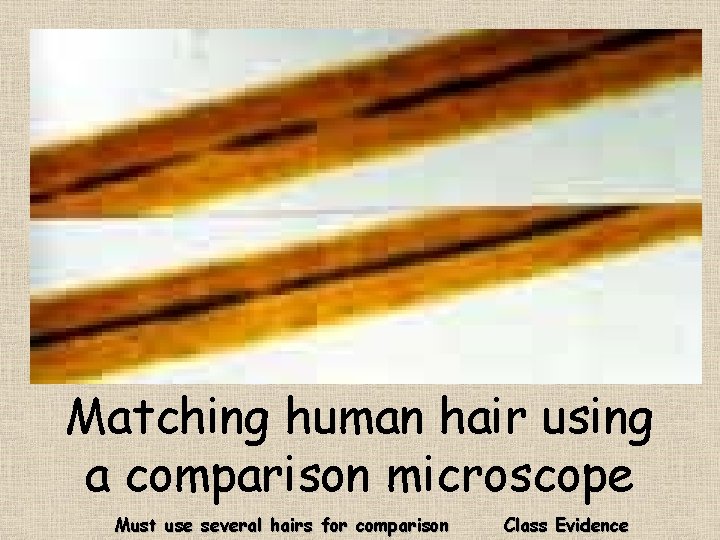
Matching human hair using a comparison microscope Must use several hairs for comparison Class Evidence
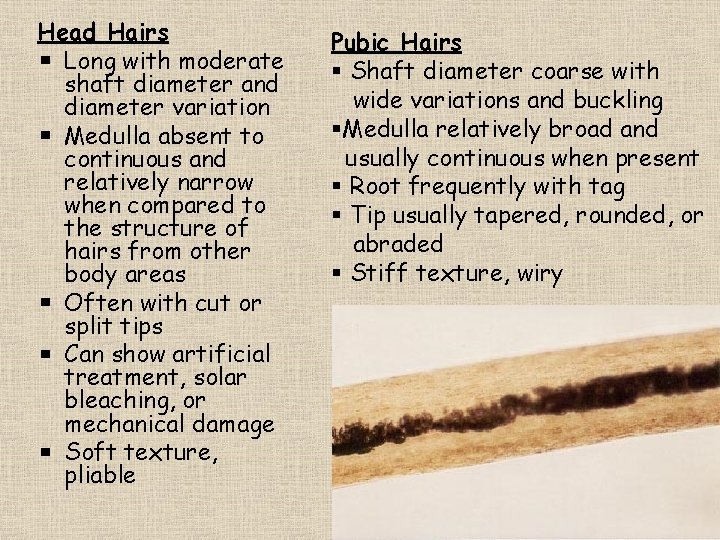
Head Hairs Long with moderate shaft diameter and diameter variation Medulla absent to continuous and relatively narrow when compared to the structure of hairs from other body areas Often with cut or split tips Can show artificial treatment, solar bleaching, or mechanical damage Soft texture, pliable Pubic Hairs § Shaft diameter coarse with wide variations and buckling §Medulla relatively broad and usually continuous when present § Root frequently with tag § Tip usually tapered, rounded, or abraded § Stiff texture, wiry
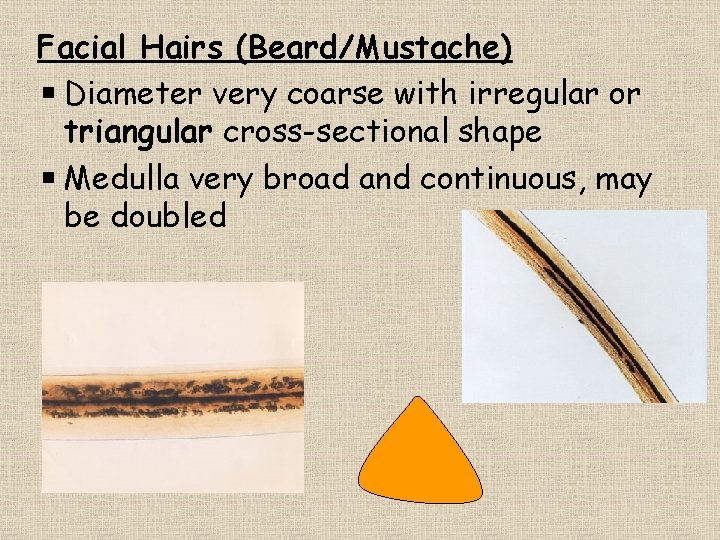
Facial Hairs (Beard/Mustache) Diameter very coarse with irregular or triangular cross-sectional shape Medulla very broad and continuous, may be doubled
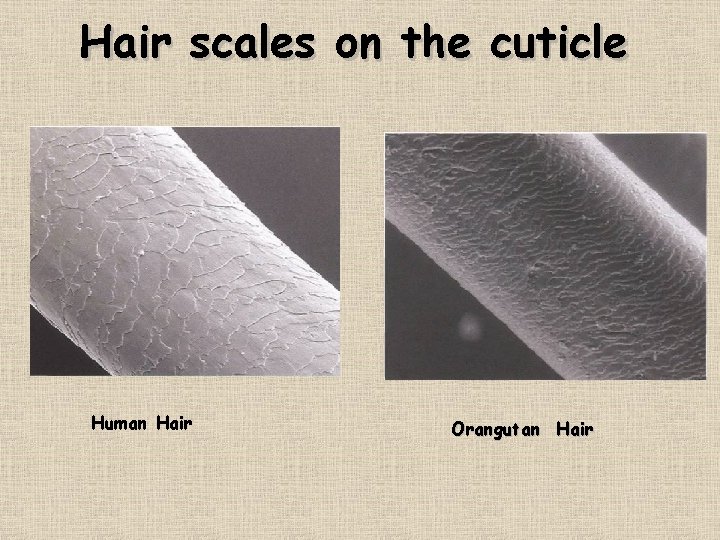
Hair scales on the cuticle Human Hair Orangutan Hair
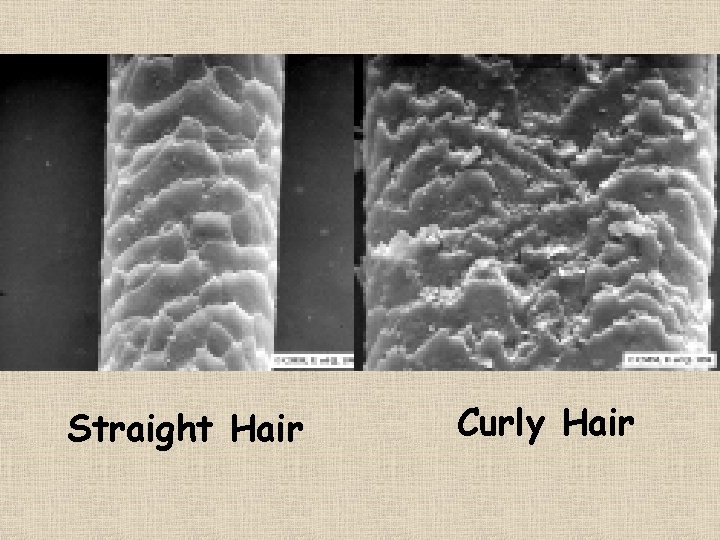
Straight Hair Curly Hair
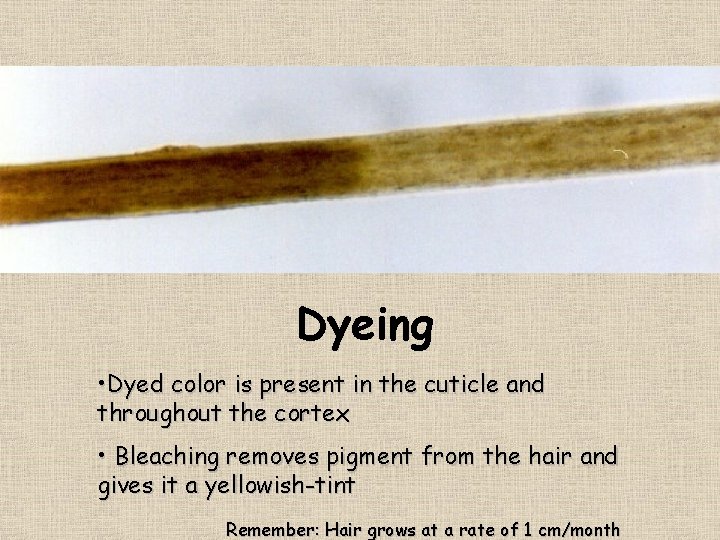
Dyeing • Dyed color is present in the cuticle and throughout the cortex • Bleaching removes pigment from the hair and gives it a yellowish-tint Remember: Hair grows at a rate of 1 cm/month
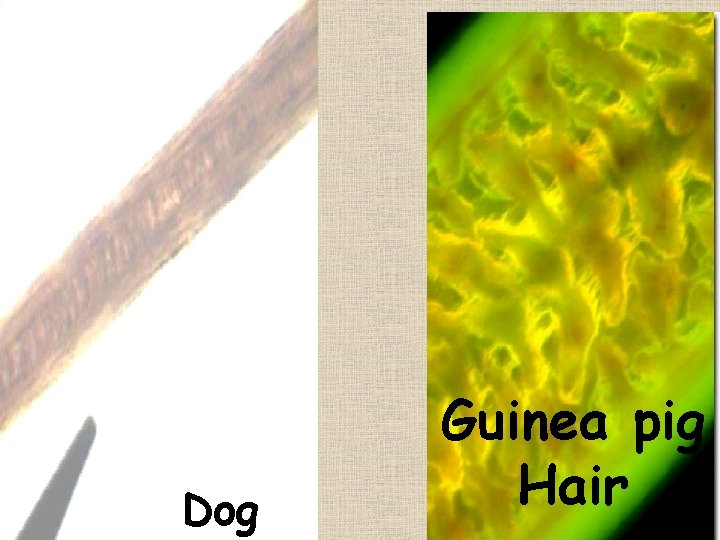
Dog Guinea pig Hair
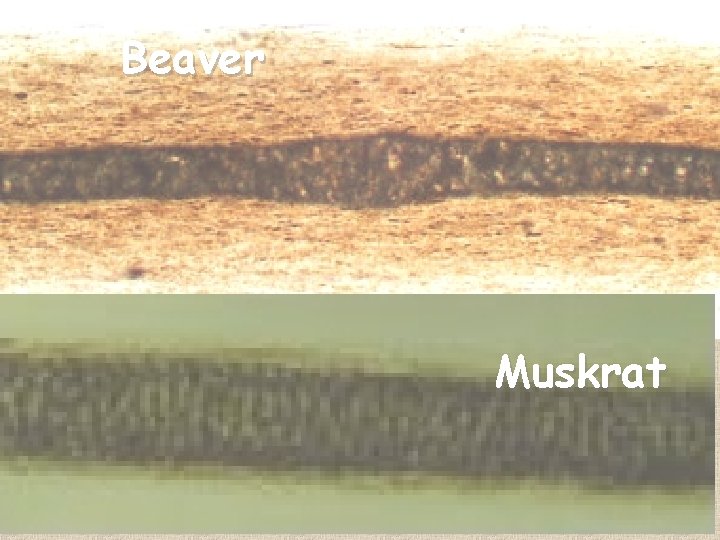
Beaver Muskrat
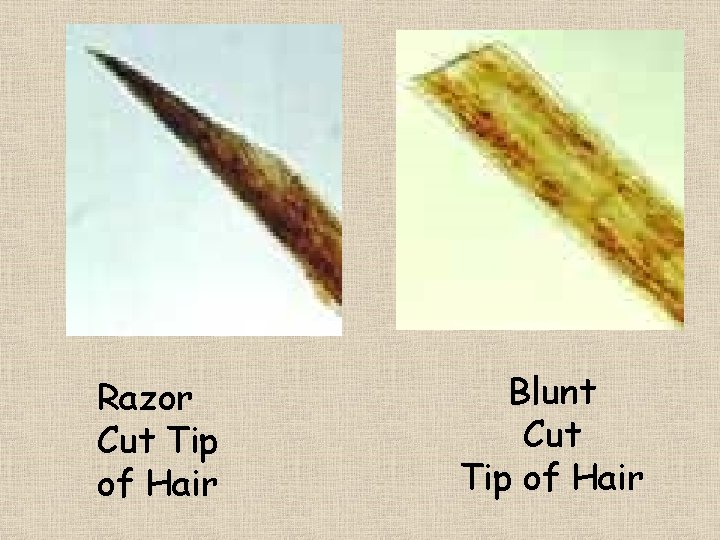
Razor Cut Tip of Hair Blunt Cut Tip of Hair
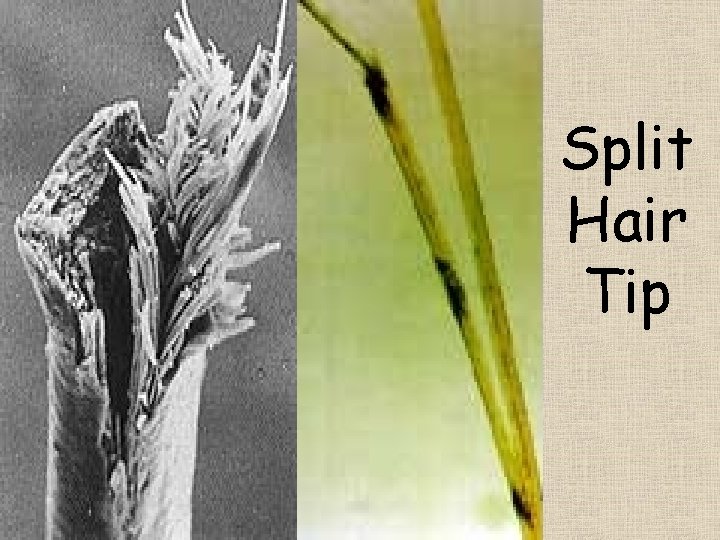
Split Hair Tip
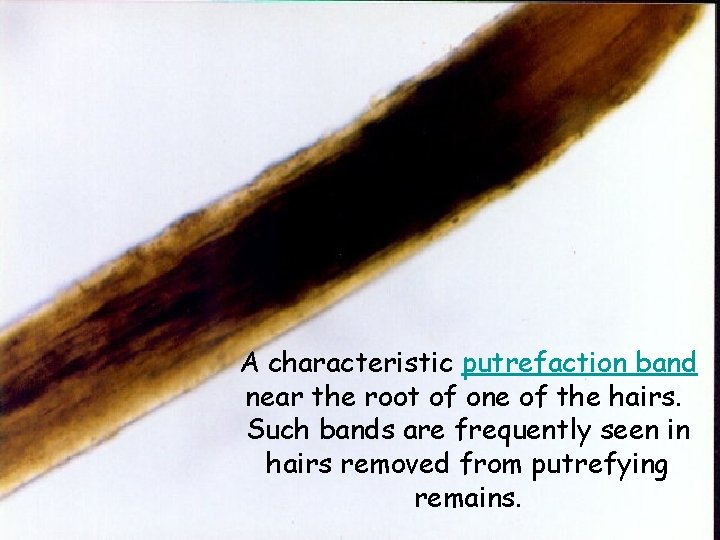
A characteristic putrefaction band near the root of one of the hairs. Such bands are frequently seen in hairs removed from putrefying remains.
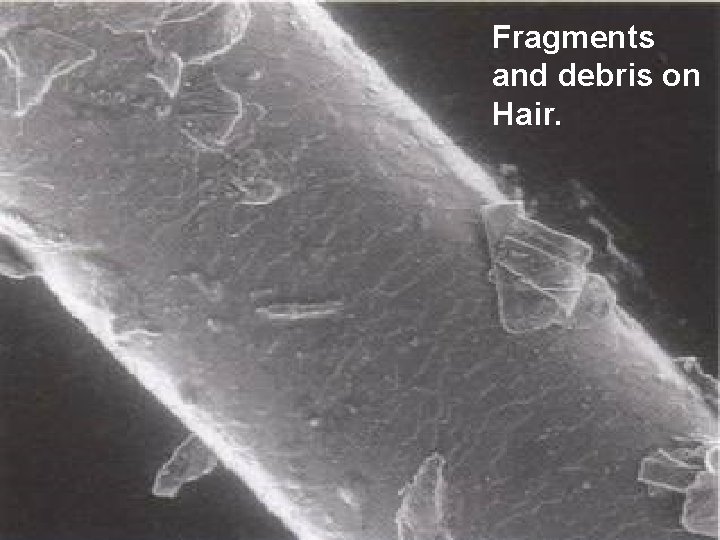
Fragments and debris on Hair.
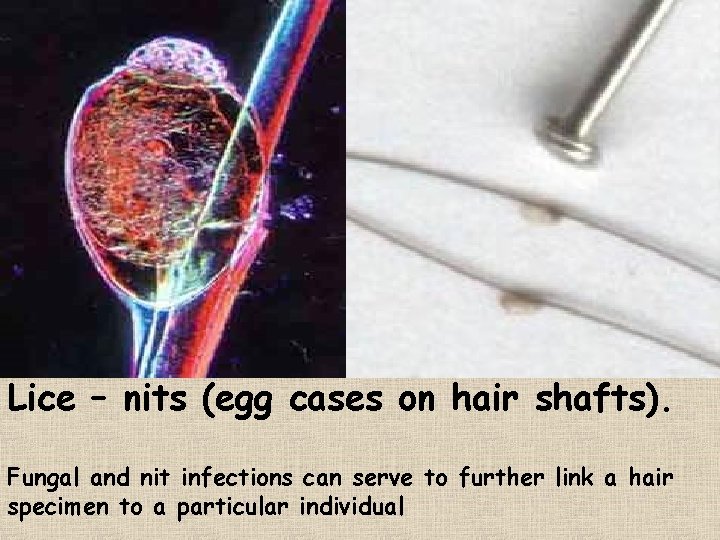
Lice – nits (egg cases on hair shafts). Fungal and nit infections can serve to further link a hair specimen to a particular individual
Hair Comparison § § Color Length Diameter Distribution, shape and color intensity of pigment granules § Dyed hair has color in cuticle and cortex § Bleaching removes pigment and gives a yellow tint § Scale types § Presence or absence of medulla § Medullary type § Medullary pattern § Medullary index
Collection of Hair § Questioned hairs must be accompanied by an adequate number of control samples. § from victim § from possible suspects § from others who may have deposited hair at the scene § Control Sample § 50 full-length hairs from all areas of scalp § 24 full-length pubic hairs
Hair Toxicology § Advantages: § Easy to collect and store § Is externally available § Can provide information on the individual’s history of drug use or of poisoning. § Collections must be taken from different locations on the body to get an accurate timeline.
DNA from Hair § The root contains nuclear DNA. If the hair has been forcibly removed, some folicular tissue may be attached containing DNA. § The hair shaft contains abundant mitochondrial DNA, inherited only from the mother. It can be typed by comparing relatives if no DNA from the body is available. This process is more difficult and costly than using nuclear DNA.
Fiber Evidence
Fibers § Are considered class evidence § Have probative value § Are common trace evidence at a crime scene § Can be characterized based on comparison of both physical and chemical properties
Fabric § Fabric is made of fibers. Fibers are made of twisted filaments § Types of fibers and fabric § Natural—animal, vegetable or inorganic § Artificial—synthesized or created from altered natural sources
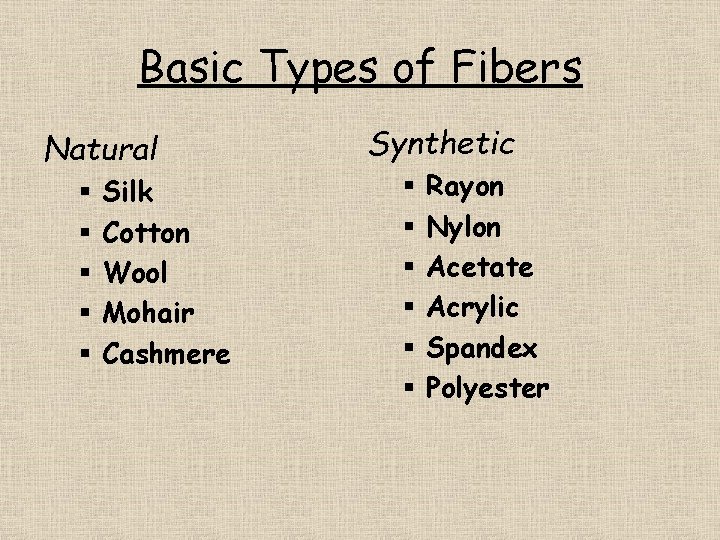
Basic Types of Fibers Natural § § § Silk Cotton Wool Mohair Cashmere Synthetic § § § Rayon Nylon Acetate Acrylic Spandex Polyester
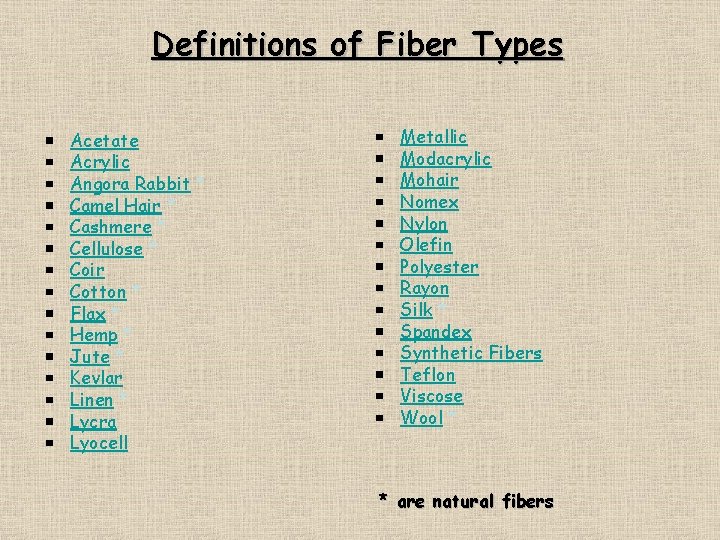
Definitions of Fiber Types Acetate Acrylic Angora Rabbit * Camel Hair * Cashmere * Cellulose * Coir Cotton * Flax * Hemp * Jute * Kevlar Linen * Lycra Lyocell Metallic Modacrylic Mohair Nomex Nylon Olefin Polyester Rayon Silk * Spandex Synthetic Fibers Teflon Viscose Wool * * are natural fibers
Classification v Natural fibers are classified according to their origin: § Cellulose or Vegetable § Protein or Animal § Mineral
Man-Made Fibers Over half of all fibers used in the production of textile materials are manufactured. Some manufactured fibers originate from natural materials such as cotton or wood, (regenerated rayon) whereas others originate from synthetic materials (nylon, polyester, etc). Certain types of manufactured fibers are more common than others – Polyester and nylon fibers are the most commonly encountered manufactured fibers, followed by rayons, acetates, and acrylics. The amount of production, the end use, the crosssectional shape, microscopic characteristics, and other traits of the fiber help to influence the degree of rarity of a particular fiber type.
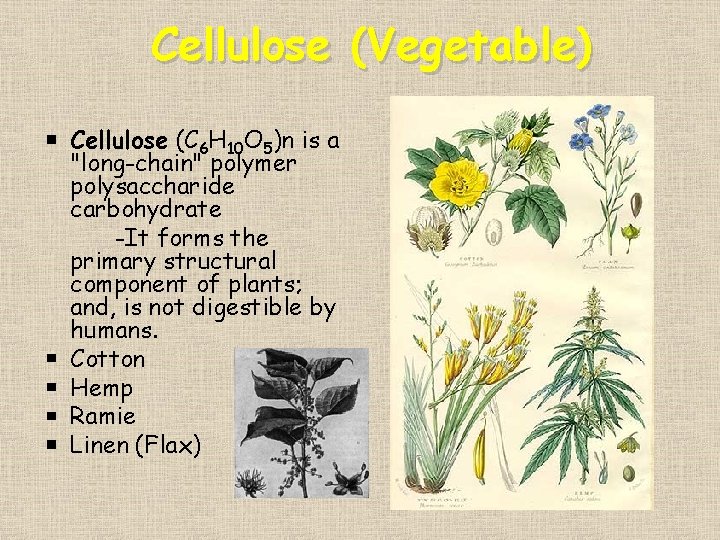
Cellulose (Vegetable) Cellulose (C 6 H 10 O 5)n is a "long-chain" polymer polysaccharide carbohydrate -It forms the primary structural component of plants; and, is not digestible by humans. Cotton Hemp Ramie Linen (Flax)
Cellulose Fibers (natural & manufactured) Cotton—vegetable fiber; strong, tough, flexible, moisture absorbent, not shape retentive -----Rayon— chemically-altered cellulose; soft, lustrous, versatile Cellulose acetate— cellulose chemicallyaltered to create an entirely new compound not found in nature.
Fiber as Class Evidence The rarity or commonness of the fiber types found at a crime scene or on a victim or suspect affects their probative value. Cotton fibers are by far the most commonly used plant fibers in textile production. The type of cotton, the fibers' length, and the degree of twist contribute to the diversity found in cotton fibers. Processing techniques such as mercerization, and color applications also influence the value of cotton fiber identifications. The presence of other less common plant fibers at a crime scene or on the clothing of a victim or suspect increases its significance.
Protein (Animal) The most common animal fiber used in textile production is wool originating from sheep. The fineness or coarseness of woolen fibers often dictates the end use of wool. The finer woolen fibers are used in the production of clothing, whereas the coarser fibers are found in carpet. The diameter and the degree of scale protrusion of the fibers are other important characteristics. Woolen fibers from other animals may also be found, including camel, alpaca, cashmere, and mohair. The identification of less common animal hairs, fibers, or both at a crime scene or on the clothing of a suspect or victim would have increased significance.
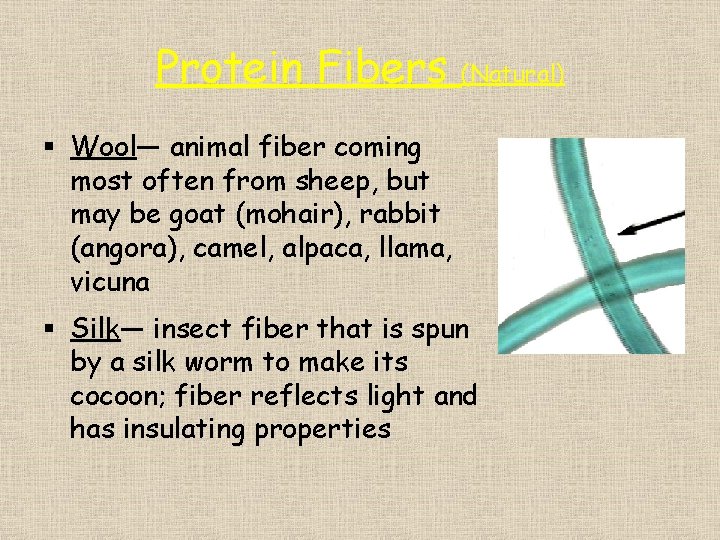
Protein Fibers (Natural) § Wool— animal fiber coming most often from sheep, but may be goat (mohair), rabbit (angora), camel, alpaca, llama, vicuna § Silk— insect fiber that is spun by a silk worm to make its cocoon; fiber reflects light and has insulating properties
Mineral Fibers (natural & man-made) § Asbestos— a natural fiber that has been used in fire-resistant substances ---- § Rock wool— a manufactured mineral fiber § Fiberglass— a manufactured inorganic fiber
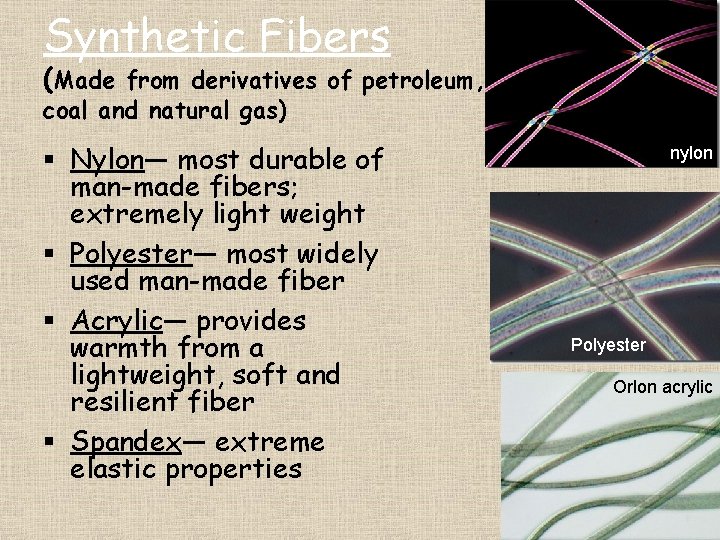
Synthetic Fibers (Made from derivatives of petroleum, coal and natural gas) § Nylon— most durable of man-made fibers; extremely light weight § Polyester— most widely used man-made fiber § Acrylic— provides warmth from a lightweight, soft and resilient fiber § Spandex— extreme elastic properties nylon Polyester Orlon acrylic
Polymers § Synthetic fibers are made of polymers which are long chains of repeating chemical units. § The word polymer means many (poly), units (mer). § The repeating units of a polymer are called monomers. § By varying the chemical structure of the monomers or by varying the way they are joined together, polymers are created that have different properties. § As a result of these differences, forensically they can be distinguished from one another.
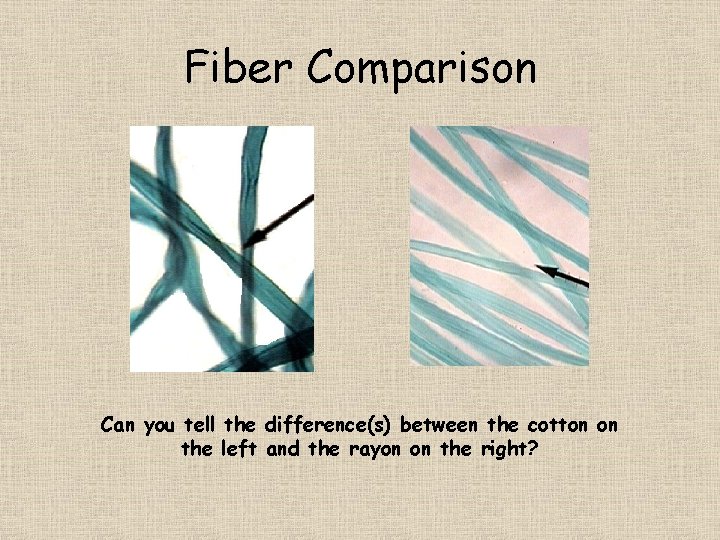
Fiber Comparison Can you tell the difference(s) between the cotton on the left and the rayon on the right?
Fabric Production Fabrics are composed of individual threads or yarns, made of fibers, that are knitted, woven, bonded, crocheted, felted, knotted or laminated Most are either woven or knitted. The degree of stretch, absorbency, water repellence, softness and durability are all individual qualities of the different fabrics
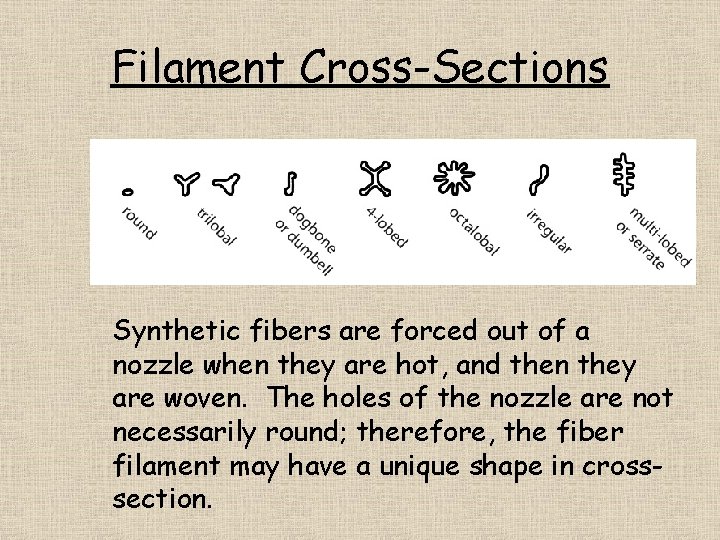
Filament Cross-Sections Synthetic fibers are forced out of a nozzle when they are hot, and then they are woven. The holes of the nozzle are not necessarily round; therefore, the fiber filament may have a unique shape in crosssection.
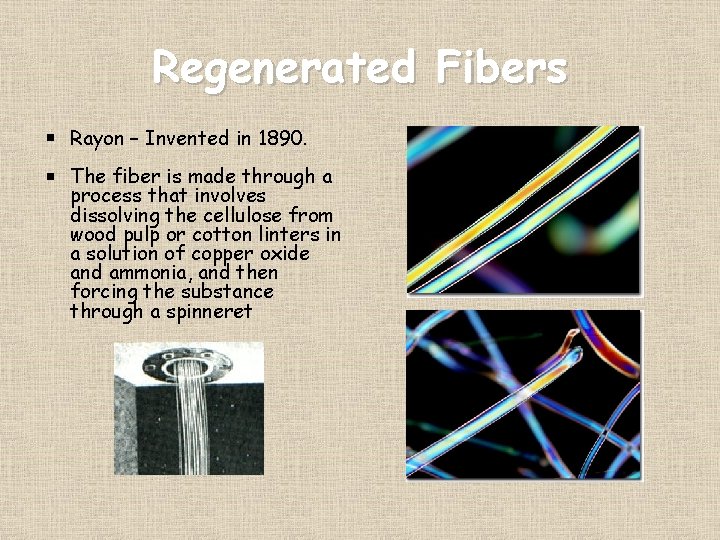
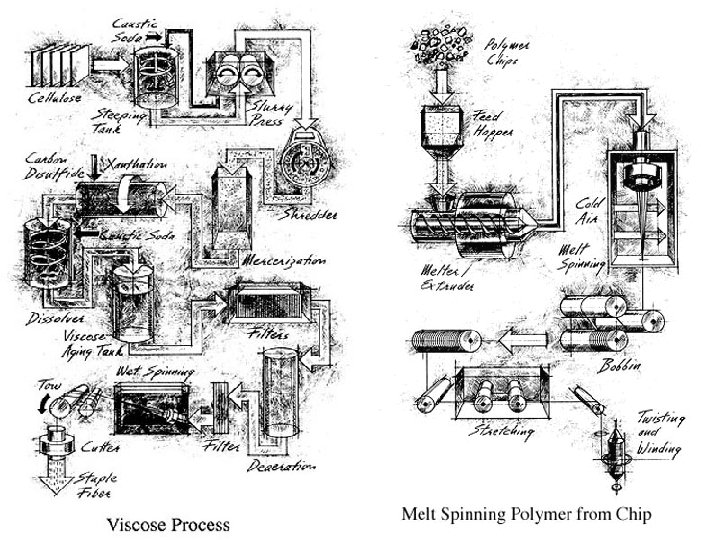
Regenerated Fibers Rayon – Invented in 1890. The fiber is made through a process that involves dissolving the cellulose from wood pulp or cotton linters in a solution of copper oxide and ammonia, and then forcing the substance through a spinneret
Fabric Type Fabric construction affects the number and types of fibers that may be transferred. Tightly woven or knitted fabrics shed fewer fibers than loosely knit or woven fabrics. Fabrics composed of filament yarns shed less than fabric composed of spun yarns. Certain types of fibers also transfer more readily. The condition and wear of the fabric also affects the degree of fiber transfers: Newer fabrics may have an abundance of loosely adhering fibers on the surface of the fabric, whereas worn fabrics may have damaged areas that easily shed fibers. Damage to a fabric caused during physical contact greatly increases the likelihood of fiber transfer.
Weave Terminology § Yarn— a continuous strand of fibers or filaments, either twisted or not § Warp— lengthwise yarn § Weft— crosswise yarn § Blend— a fabric made up of two or more different types of fiber.
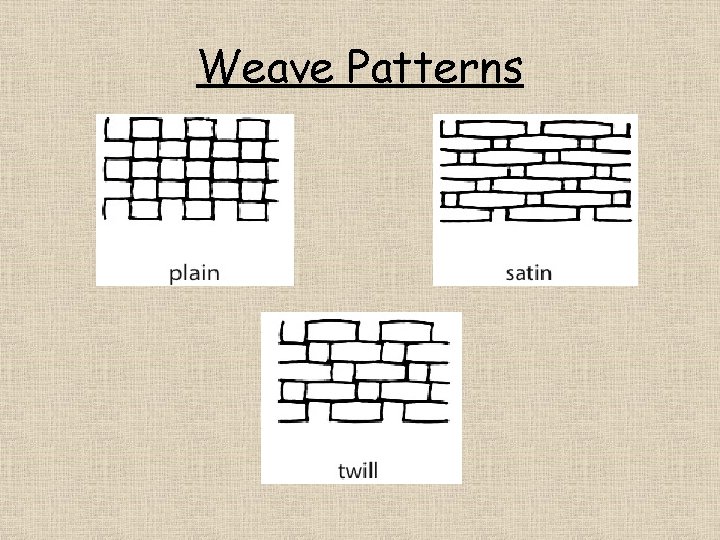
Weave Patterns
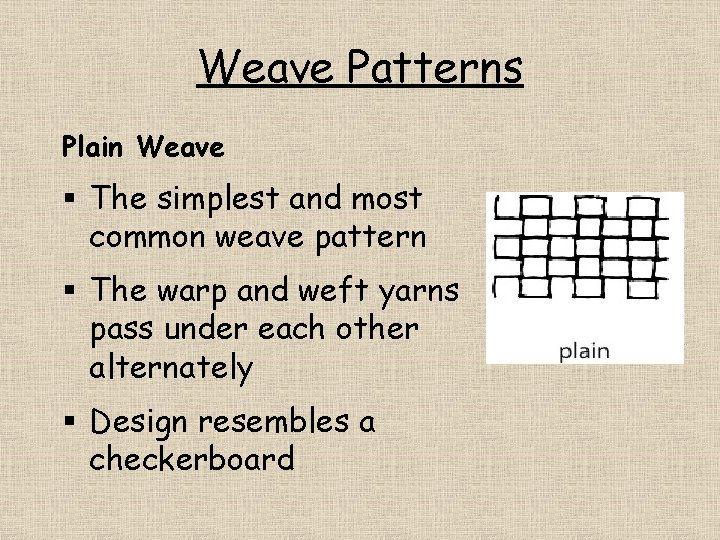
Weave Patterns Plain Weave § The simplest and most common weave pattern § The warp and weft yarns pass under each other alternately § Design resembles a checkerboard
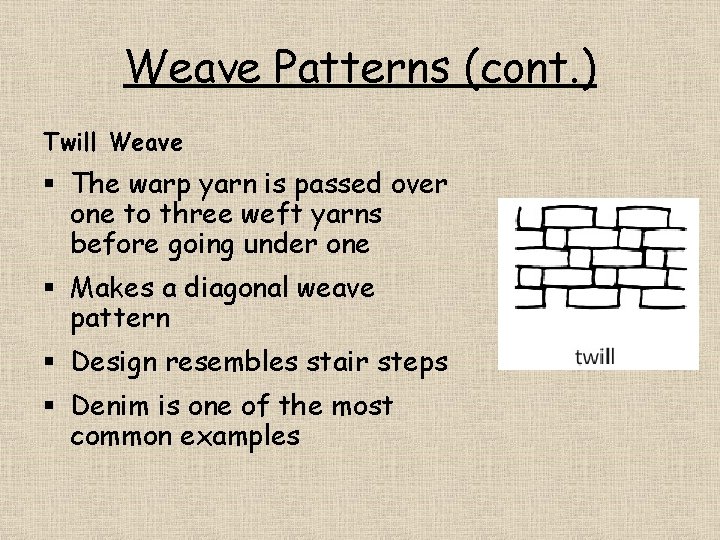
Weave Patterns (cont. ) Twill Weave § The warp yarn is passed over one to three weft yarns before going under one § Makes a diagonal weave pattern § Design resembles stair steps § Denim is one of the most common examples
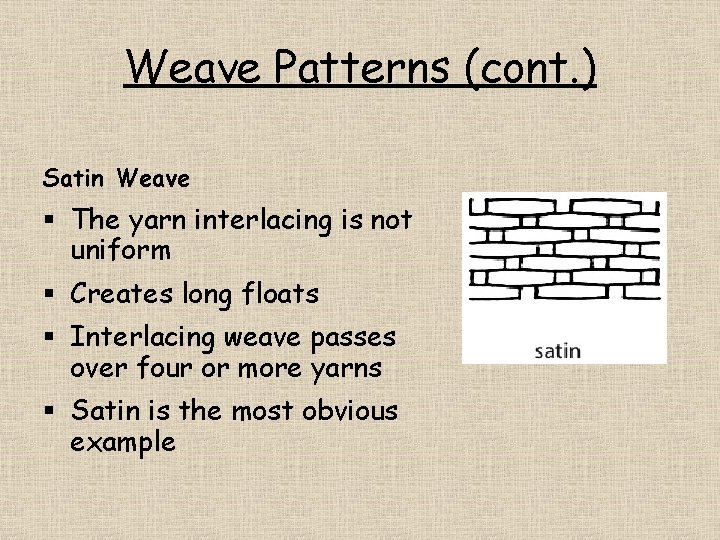
Weave Patterns (cont. ) Satin Weave § The yarn interlacing is not uniform § Creates long floats § Interlacing weave passes over four or more yarns § Satin is the most obvious example
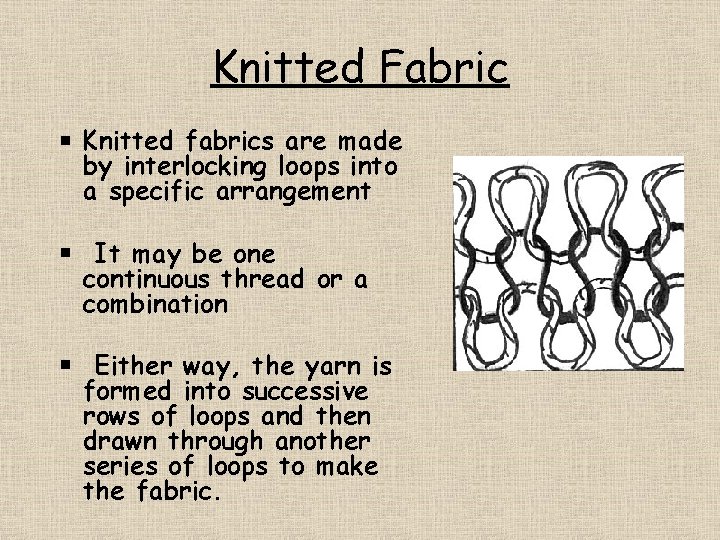
Knitted Fabric Knitted fabrics are made by interlocking loops into a specific arrangement It may be one continuous thread or a combination Either way, the yarn is formed into successive rows of loops and then drawn through another series of loops to make the fabric.
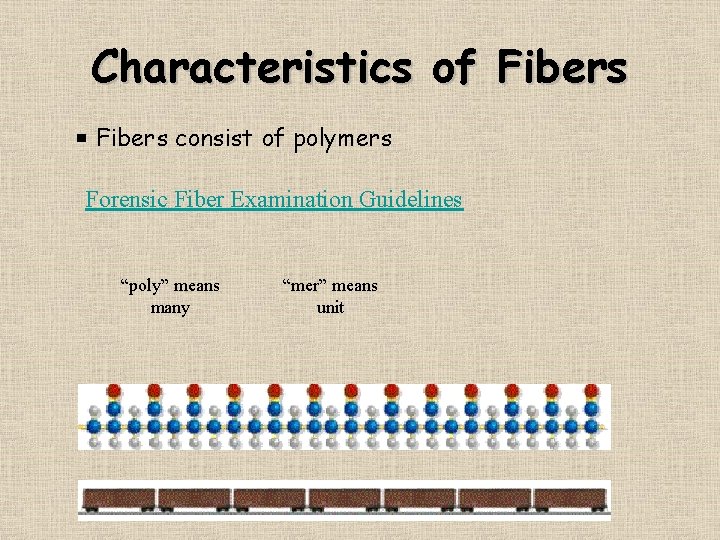
Characteristics of Fibers consist of polymers Forensic Fiber Examination Guidelines “poly” means many “mer” means unit
Testing for Identification § Microscopic observation § Burning— observation of how a fiber burns, the odor, color of flame, smoke and the appearance of the residue § Thermal decomposition— gently heating to break down the fiber to the basic monomers § Chemical tests— solubility and decomposition § Density— mass of object divided by the volume of the object § Refractive Index— measuring the bending of light as it passes from air into a solid or liquid § Fluorescence— used for comparing fibers as well as spotting fibers for collection
Number of Fibers The number of fibers identified on the clothing of a victim associated to the clothing of a suspect is important in determining actual contact. The greater the number of fibers, the more likely that direct contact occurred between these individuals. The converse is not necessarily true, however, and even one fiber association can have probative and scientific value. Finding no fibers does not de facto mean that no contact occurred. Each case is different, and the examiner must weigh all of the relevant factors before determining the significance of the evidence.
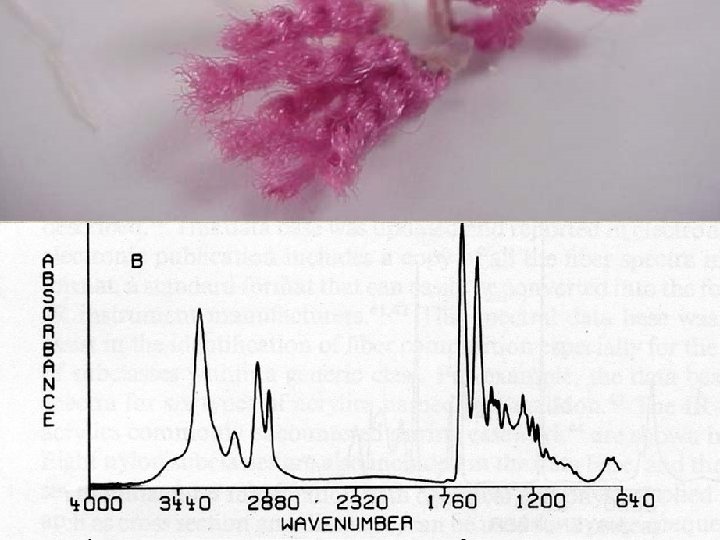
Fiber Color or Colors One of the greatest variations seen in textiles is color. Thus, color greatly influences the significance of a fiber comparison. Individual fibers can be colored before being spun into yarn, yarns can be dyed after being spun, or the fabric can be dyed before or after its construction. Color can also be applied to the surface of a fabric by printing. The absorbance of the dye along the fiber length suggests the dyes and dyeing method used. Fading and discoloration may also add increased significance to a fiber association. Infrared spectrophotometry can be used to provide a “fingerprint” of the dye
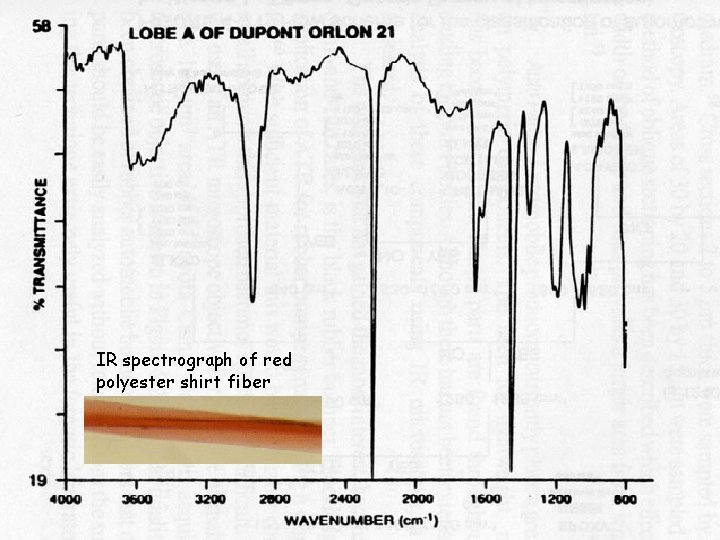
IR spectrograph of red polyester shirt fiber
Dyes § Components that make up dyes can be separated and matched to an unknown. § There are more than 7000 different dye formulations. § Chromatography is used to separate dyes for comparative analysis. § The way a fabric accepts a particular dye may also be used to identify and compare samples.
Identification and Comparison of Fibers § Fourier Transform Infrared analysis (FTIR) — based on selective absorption of wavelengths of light § Optical microscopy— uses polarizing light and comparison microscopes § Pyrolysis gas chromatography-mass spectrometry (PGC-MS)— burns a sample under controlled conditions, separates and analyzes each combustion product
Fiber Location Where the fibers are found also affects the probative value of a particular fiber association The location of fibers on different areas of the body or on specific items at the scene can influence the significance of the fiber association.
Collection of Fiber Evidence § Bag clothing items individually in paper bags. Make sure that different items are not placed on the same surface before being bagged. § Make tape lifts of exposed skin areas of bodies and any inanimate objects § Removed fibers should be folded into a small sheet of paper and stored in a paper bag.
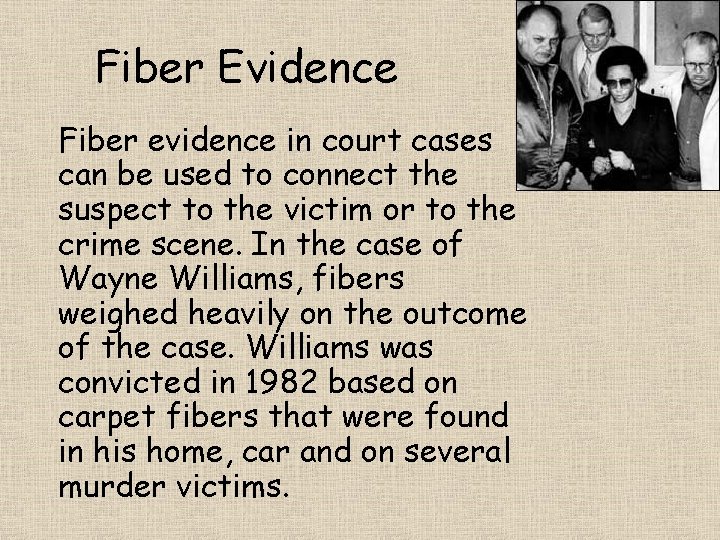
Fiber Evidence Fiber evidence in court cases can be used to connect the suspect to the victim or to the crime scene. In the case of Wayne Williams, fibers weighed heavily on the outcome of the case. Williams was convicted in 1982 based on carpet fibers that were found in his home, car and on several murder victims.
U. S. Annual Production for Manufactured Fibers: 1995 (millions of pounds) Fiber Polyester Product 3, 887 Nylon 270 Olefin 521 Rayon/Acetate/Tri acetate 498 Acrylic/Modacrylic 432 (Table 1 [6]). All these fibers were used in a variety of applications including but not limited to clothing, household textiles, carpeting, and industrial textiles.
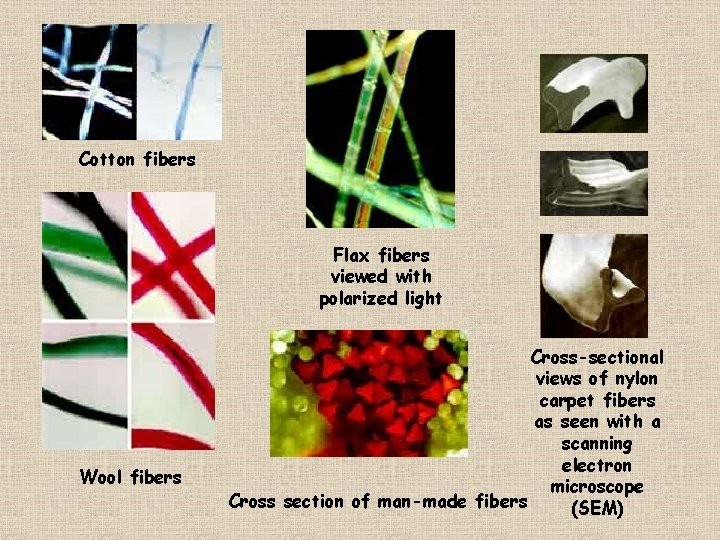
Cotton fibers Flax fibers viewed with polarized light Wool fibers Cross-sectional views of nylon carpet fibers as seen with a scanning electron microscope Cross section of man-made fibers (SEM)
- Slides: 97