Gulag WWII and the longrun patterns of Soviet

- Slides: 33
Gulag, WWII and the long-run patterns of Soviet city growth Tatiana Mikhailova MSSE, September 2012
Questions: history of Soviet city growth • Wartime evacuation of industry = driver of city growth? • Decline of the western regions: war destruction or policy? – Shift of population center: 1926 -1959 east, 1959 -1970 • Role of GULAG and forced migrations – Kulaks (1920 s-1930 s) – rural-to-urban migration, deportations to (sub)urban and rural location – Ethnic deportations (1940 s) – rural destinations – GULAG camps – source of labor where it was scarce • urban and rural locations This paper: city-level data + new data on GULAG and evacuation
Questions: spatial structure of the economy • Exogenous shocks: are they permanent or temporary? – Natural experiments: Davis & Weinstein, 2002 (+ others); Redding, Sturm, Wolf, 2007; Redding & Sturm, 2008 – Wartime destruction does not alter spatial economy in long run – Changes in market access do • USSR – a different type of natural experiment – don’t destroy, create (agglomeration externalities)
Experiment of Soviet location policy: not exogenous • Soviet locational principles -Rodgers (1974) – be close to raw materials, minimize transport costs – equalization of regional development – defense “…enhancement of the Soviet capability for supplying a protracted war of resources was not an accidental by-product of Soviet industrialization, but was a deliberate element in the complex of goals set out in the transition period of 1928 -31. ” – M. Harrison (1990), “Stalinist Industrialisation and the Test of War” • What was achieved? – Shift of industry to the east in 1930 s? Harrison (1990), Stone(2005): insufficient • WWII evacuation = forced implementation of existing plan
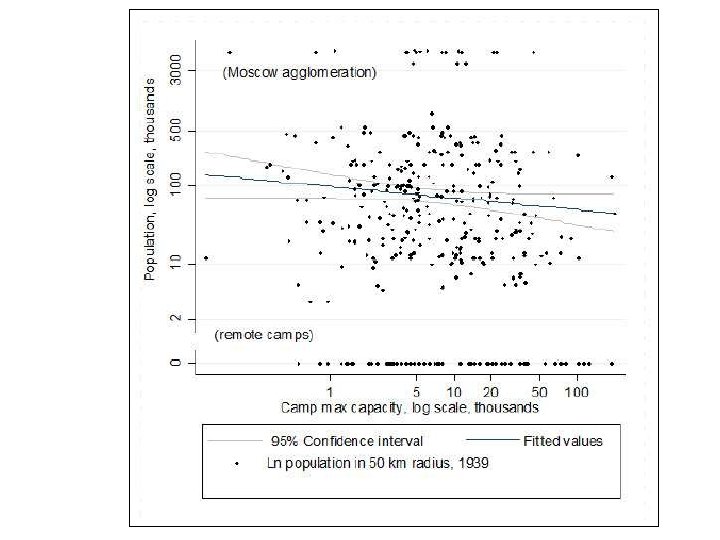
New data - 1 • GULAG – “Sistema Ispravitel’no-trudovykh uchrezhdenii…”, Memorial, 1998 – Camp location, population, years of operation, type of industry/activity • latitude, longitude • person-years • agriculture&forestry, industry, mining, construction (industrial, primary ind. , housing, infrastructure) – Match to cities: • Camps in 20 km, 50 km • Distance to camp
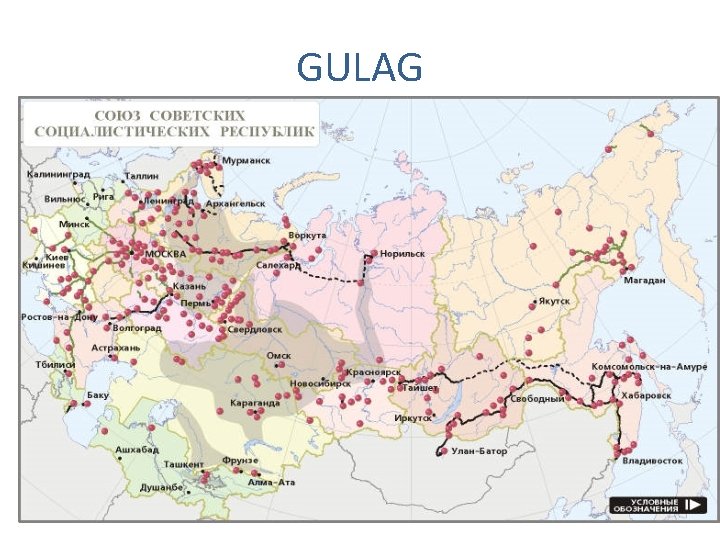
GULAG
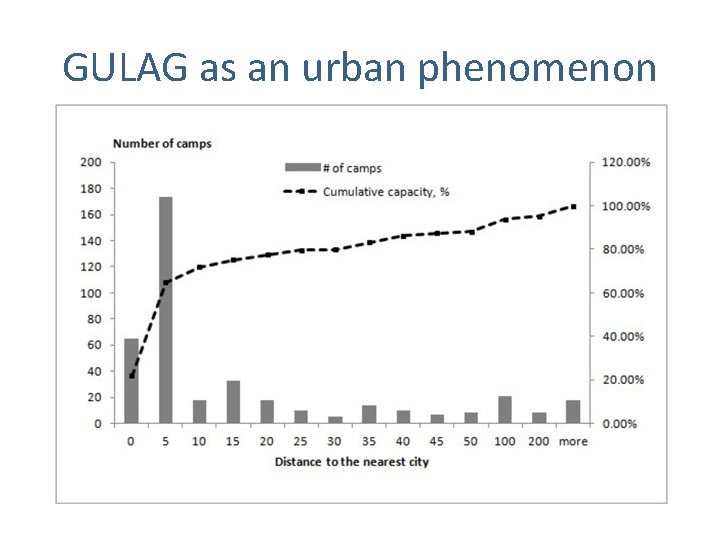
GULAG as an urban phenomenon
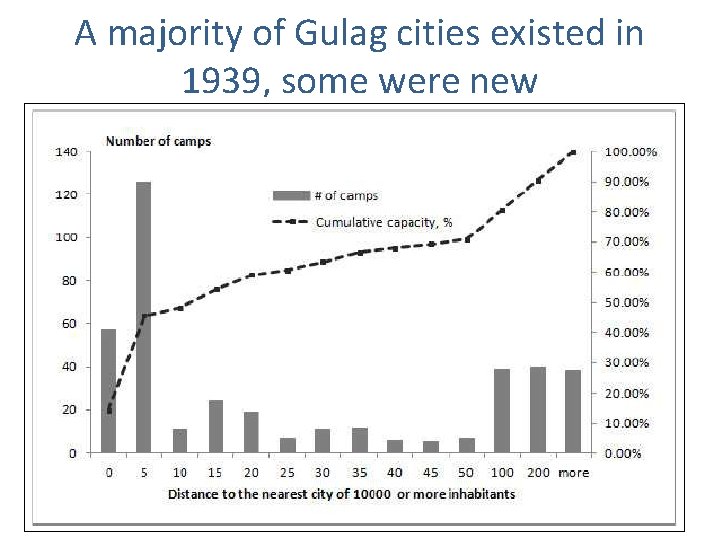
A majority of Gulag cities existed in 1939, some were new
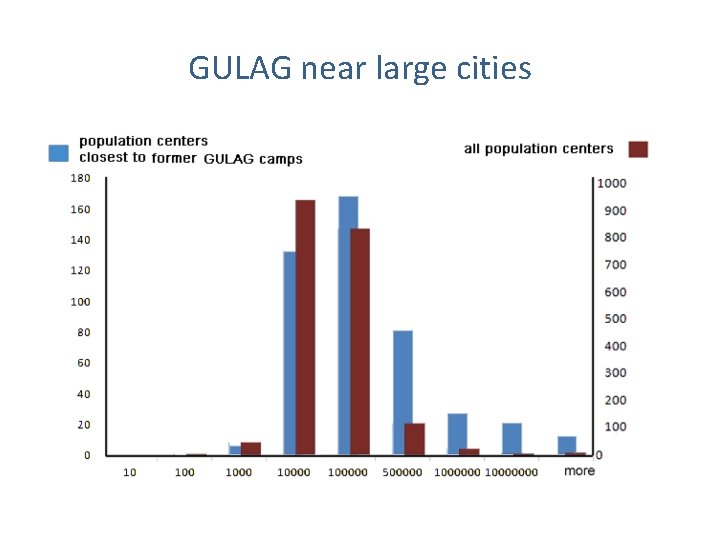
GULAG near large cities
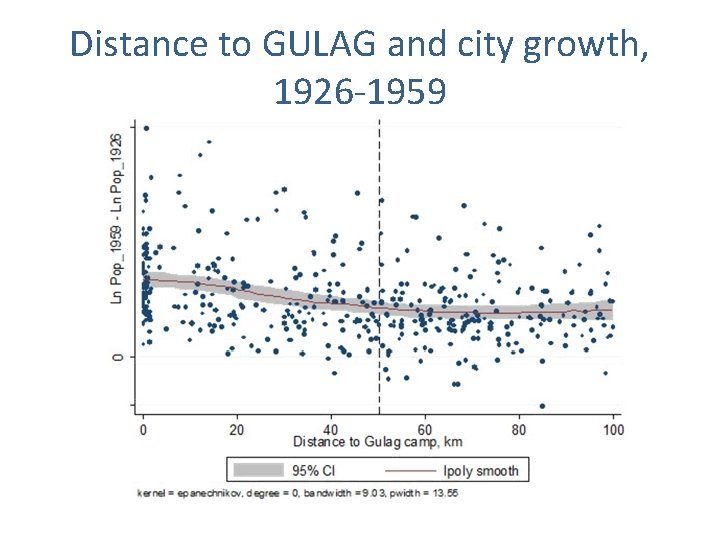
Distance to GULAG and city growth, 1926 -1959
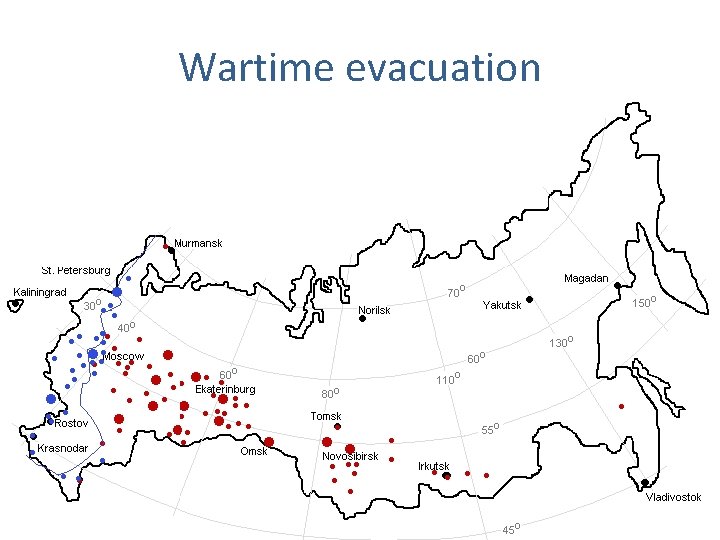
New data - 2 • Wartime evacuation of industry – “Factories, Research and Design Establishments of the Soviet Defense Industry” database, U Warwick • extract those that moved in 1941 -1946 (evacuation and back) • record: city-origin, city-destination, returned/not – Match to cities
Wartime evacuation
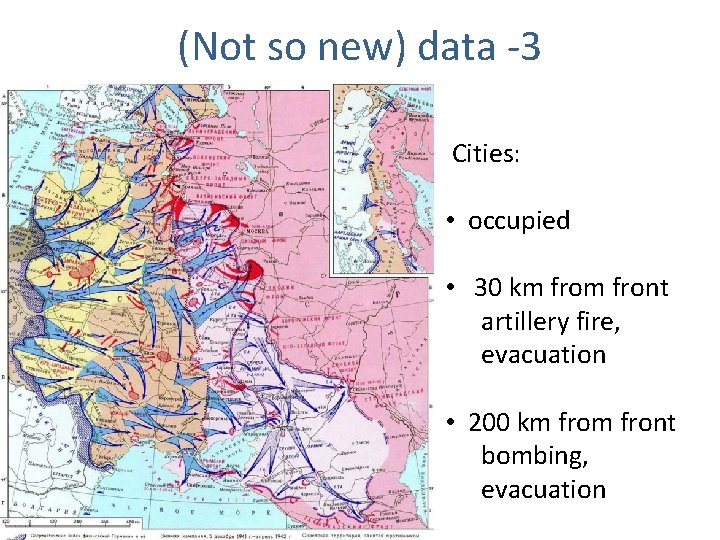
(Not so new) data -3 Cities: • occupied • 30 km front artillery fire, evacuation • 200 km front bombing, evacuation
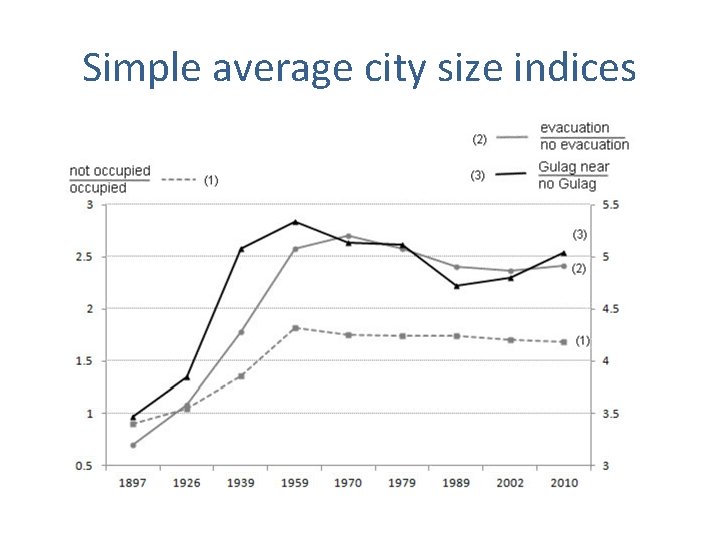
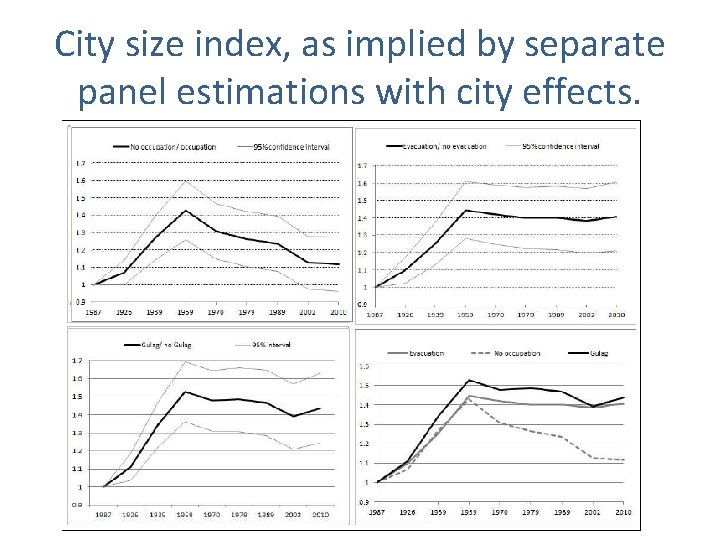
Simple average city size indices
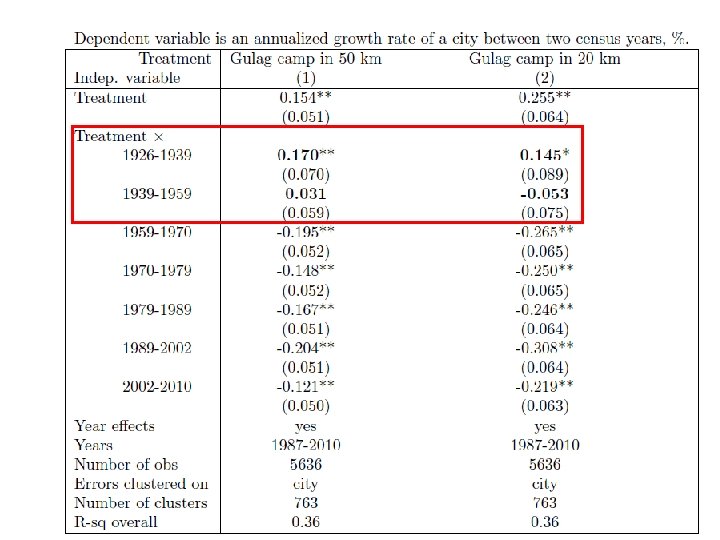
What is the role of policy vs. other factors? • Estimate the effect of treatment, controlling for city characteristics – via individual effects in panel data (observable, unobservable) – explicitly (matching)
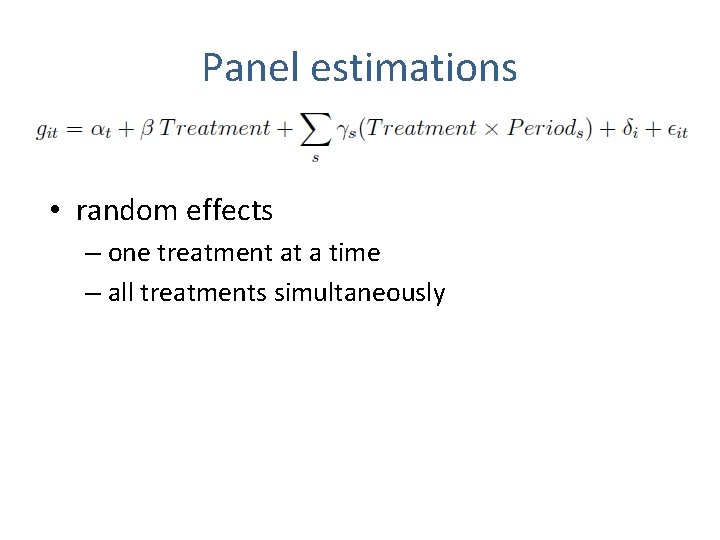
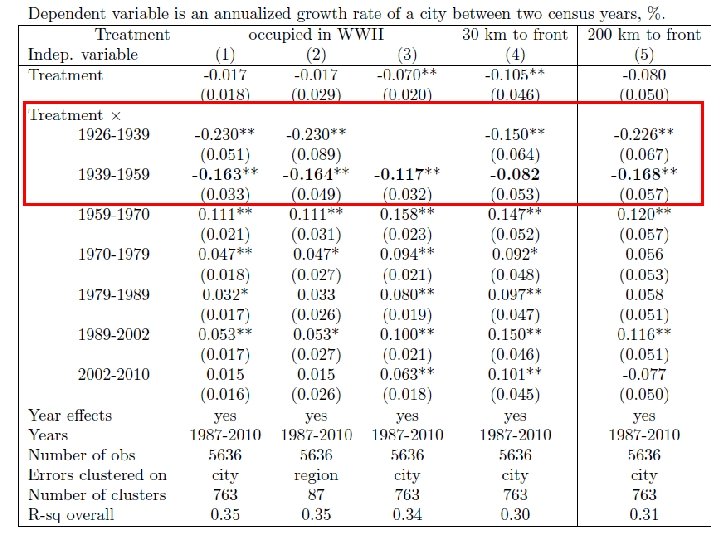
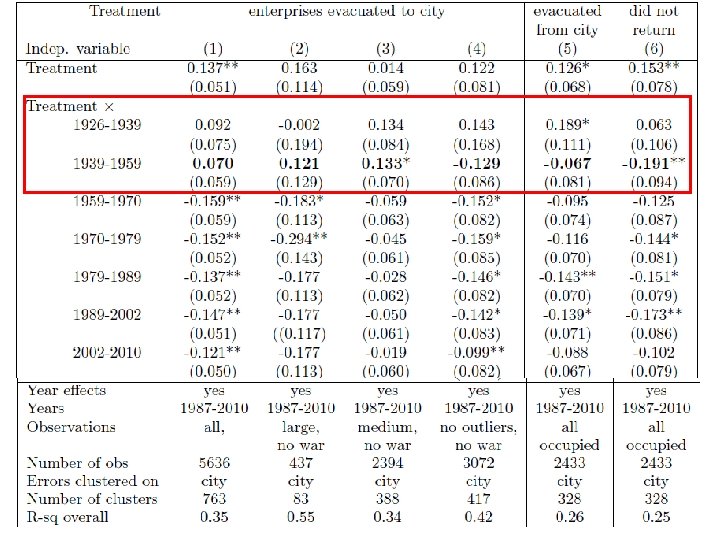
Panel estimations • random effects – one treatment at a time – all treatments simultaneously
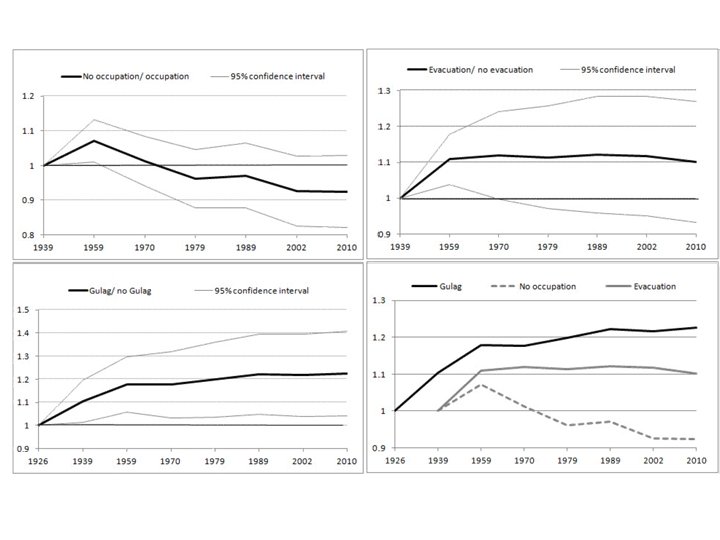
City size index, as implied by separate panel estimations with city effects.
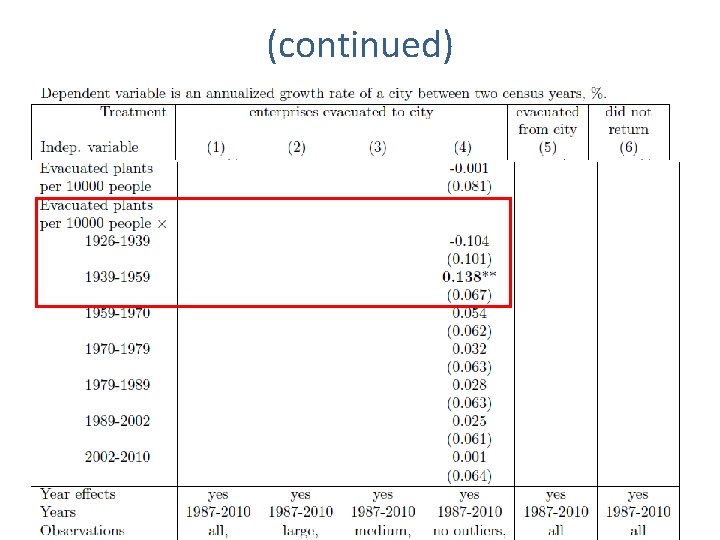
(continued)
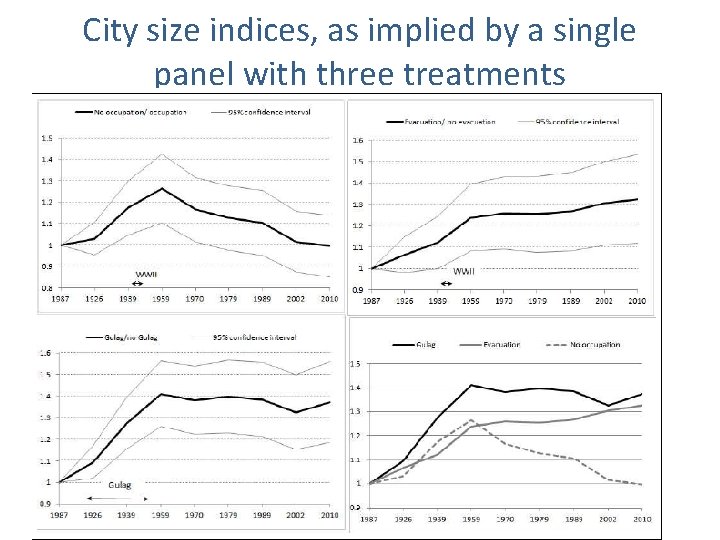
City size indices, as implied by a single panel with three treatments
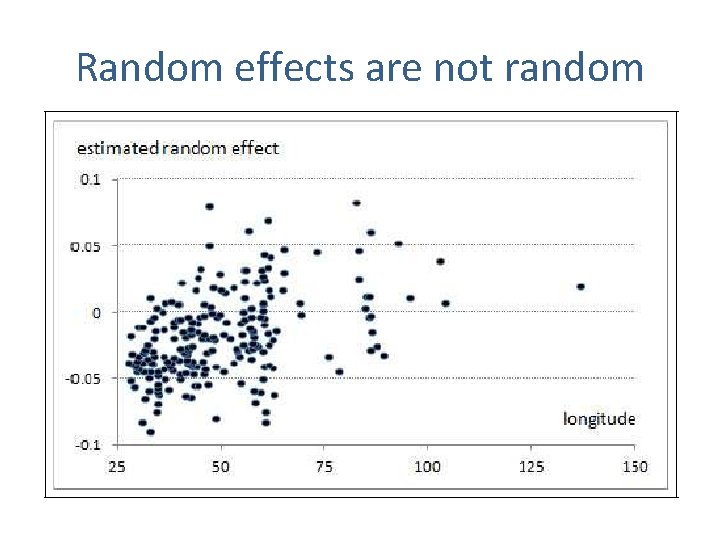
Random effects are not random
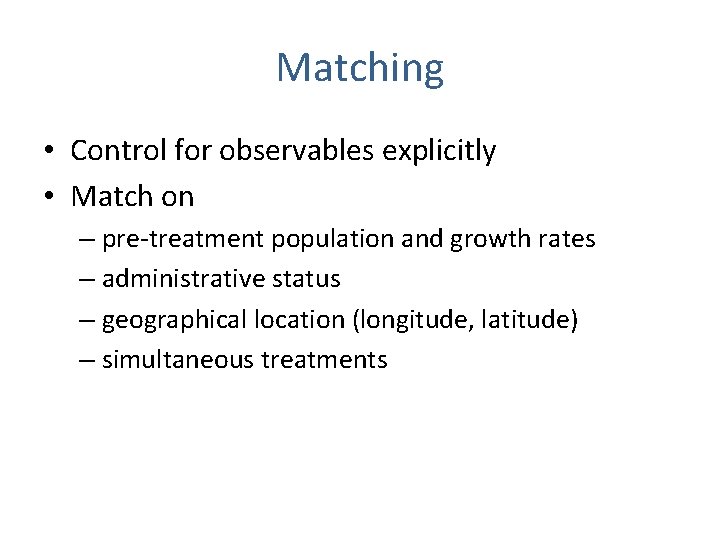
Matching • Control for observables explicitly • Match on – pre-treatment population and growth rates – administrative status – geographical location (longitude, latitude) – simultaneous treatments
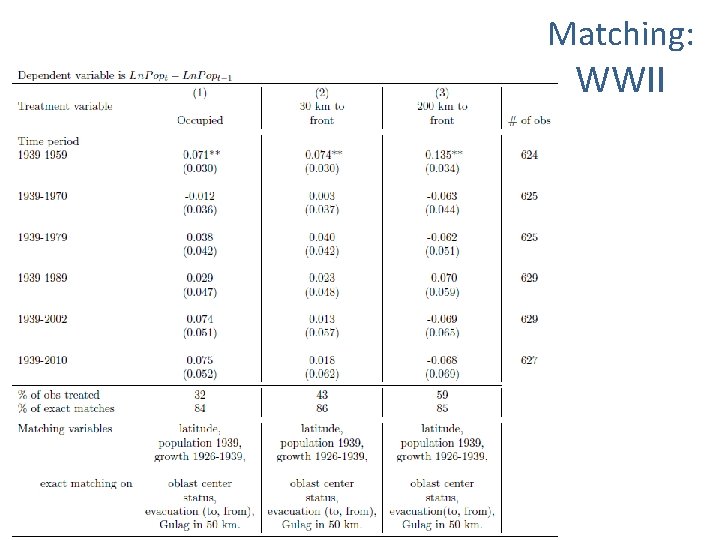
Matching: WWII
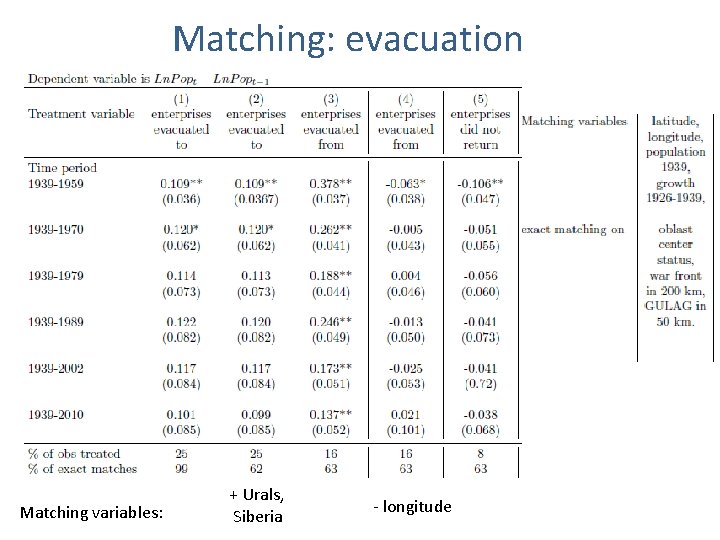
Matching: evacuation Matching variables: + Urals, Siberia - longitude
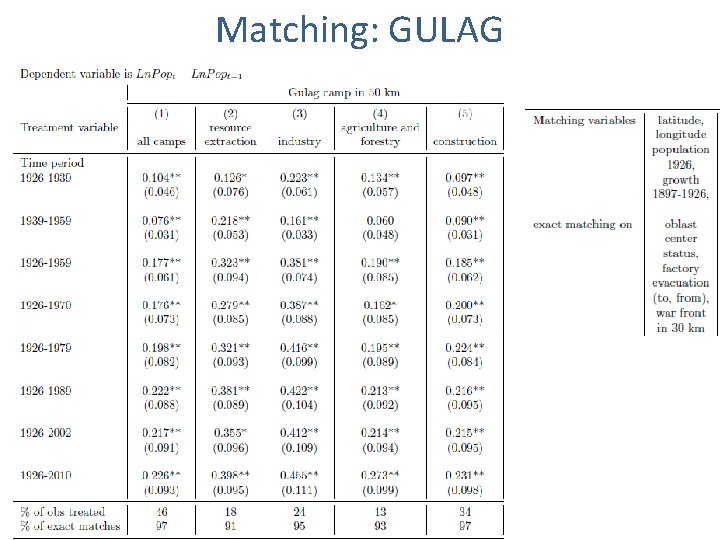
Matching: GULAG
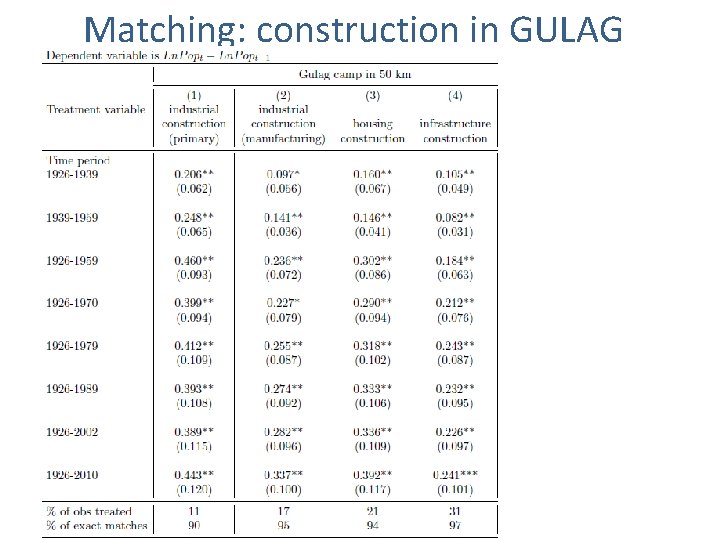
Matching: construction in GULAG
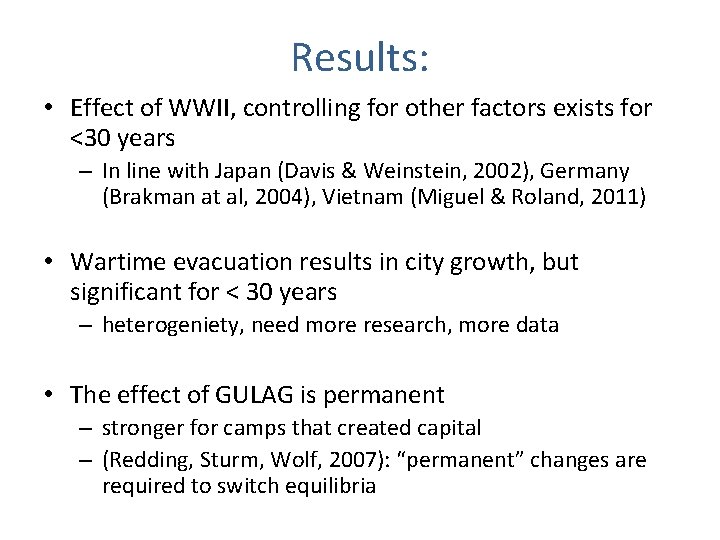
Results: • Effect of WWII, controlling for other factors exists for <30 years – In line with Japan (Davis & Weinstein, 2002), Germany (Brakman at al, 2004), Vietnam (Miguel & Roland, 2011) • Wartime evacuation results in city growth, but significant for < 30 years – heterogeniety, need more research, more data • The effect of GULAG is permanent – stronger for camps that created capital – (Redding, Sturm, Wolf, 2007): “permanent” changes are required to switch equilibria